
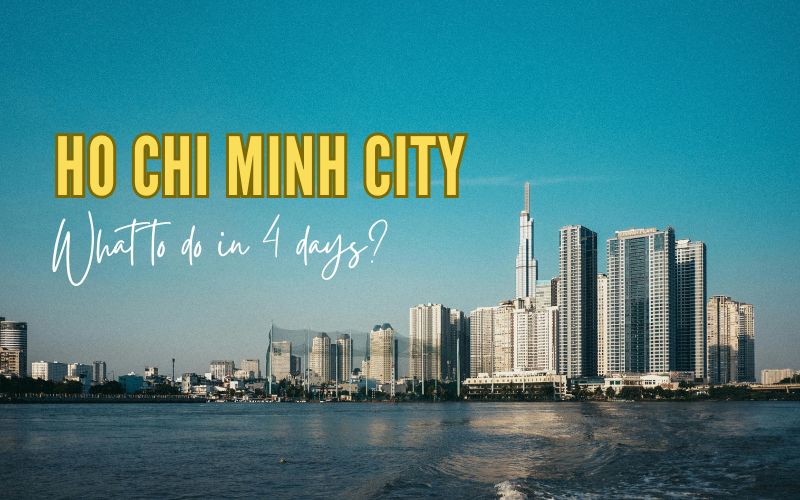
Ho Chi Minh City, or Saigon as most locals still call it, is the energetic heart of Vietnam. It is a place where history from the 19th century sits right next to skyscrapers that didn’t exist five years ago. Spending 4 days in Ho Chi Minh City gives you enough time to see the major historical sites, eat your way through the local markets, and take a trip out to the countryside without feeling like you are constantly rushing.
When Is the Best Time to Travel 4 Days in Ho Chi Minh City?
The best time to visit is during the dry season, which runs from December to April. During these months, the weather is consistent and the humidity is lower, making it much easier to walk between landmarks or sit at an outdoor cafe.
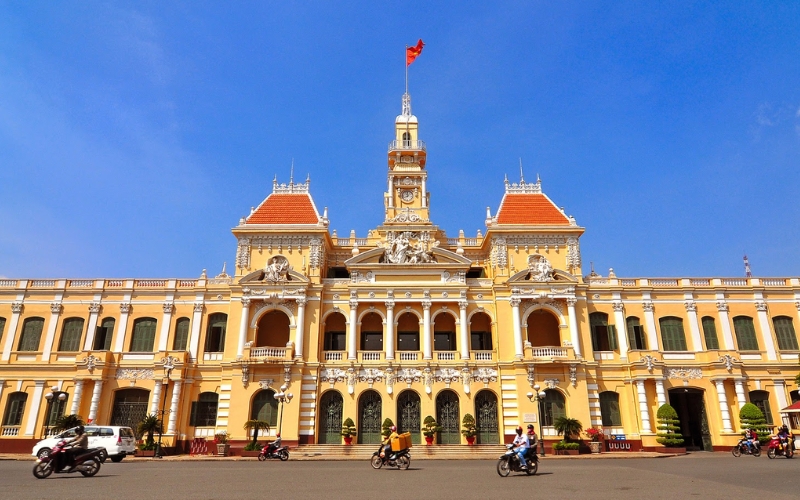
Ho Chi Minh City Hall, or Ho Chi Minh City People’s Committee
Dry Season: December to April (The Peak Window)
This is widely considered the ideal time for exploration.
- December to February: These are the “coolest” months. In early year, you can expect crisp mornings around 21°C (70°F) and daytime highs that rarely feel suffocating.
- March and April: The heat intensifies during these months. April is often the hottest month of the year, with temperatures regularly hitting 35°C (95°F). If you visit now, plan your outdoor sightseeing for early morning and retreat to air-conditioned museums or cafes during the midday peak.
Lunar New Year (Tet)
A major highlight for year is Tet (Lunar New Year), which usually falls on February.
- The Experience: In the week leading up to February 17, the city is a riot of color. Flower markets at 23/9 Park and Tao Dan Park are in full bloom.
- The Trade-off: During the actual holiday (roughly Feb 17-20), the city becomes uncharacteristically quiet as locals return to their home provinces. Many small family-run shops and local eateries will close. However, the major streets are empty of traffic, making it a surreal and peaceful time to walk around.
Note: Travel and accommodation prices during the Tet period often increase significantly due to high demand.
Rainy Season: May to November (The Green Season)
Don’t let the term “rainy season” discourage you.
- The Pattern: Rain usually comes in short, predictable afternoon bursts. It rarely rains all day. Once the downpour ends, the air feels much fresher and cooler.
- The Benefits: This is the best time for budget travelers. You will find better deals on boutique hotels and fewer crowds at the Cu Chi Tunnels or the War Remnants Museum. The surrounding Mekong Delta is also at its most lush and green during these months.
What Are the Must-Try Activities When Visiting Ho Chi Minh City?
The must-try activities in Ho Chi Minh City include exploring the Cu Chi Tunnels, visiting the War Remnants Museum, watching the A O Show at the Opera House, and taking a sunset cruise on the Saigon River. These experiences offer the best blend of the city’s wartime resilience, French colonial history, and its modern, high-energy lifestyle.
Explore iconic landmarks
Most of the city’s famous sites are in District 1 and are easy to reach on foot. You should start at the Independence Palace, which looks exactly as it did in 1975. A short walk from there is the War Remnants Museum. It is a heavy experience, but necessary if you want to understand the resilience of the Vietnamese people.
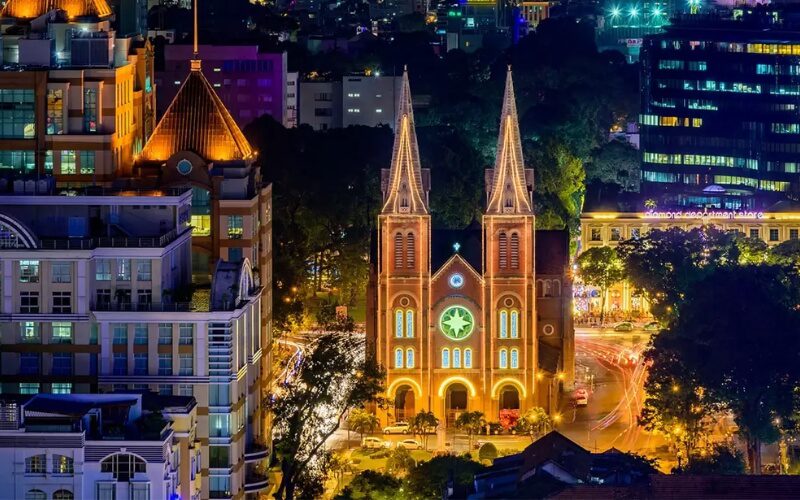
Saigon Notre Dame Cathedral
The Saigon Central Post Office and the Notre Dame Cathedral are right next to each other. Both show the heavy influence of French architecture. While the Cathedral is currently undergoing a long-term restoration project (expected to continue), you can still admire the exterior. For a quieter, local experience, head to the Jade Emperor Pagoda in District 3. It is filled with wood carvings and the scent of incense, offering a calm break from the city noise.
Panoramic view of the city from Saigon Skydeck
The Bitexco Financial Tower was once the tallest building in the city, and its 49th-floor Skydeck is still one of the best places for a 360-degree view. It is especially worth visiting at sunset. You can see how the Saigon River winds through the city and look down at the tiny-looking motorbikes below. There are binoculars and touchscreens to help you identify specific buildings, but the main draw is simply seeing the scale of the urban sprawl.
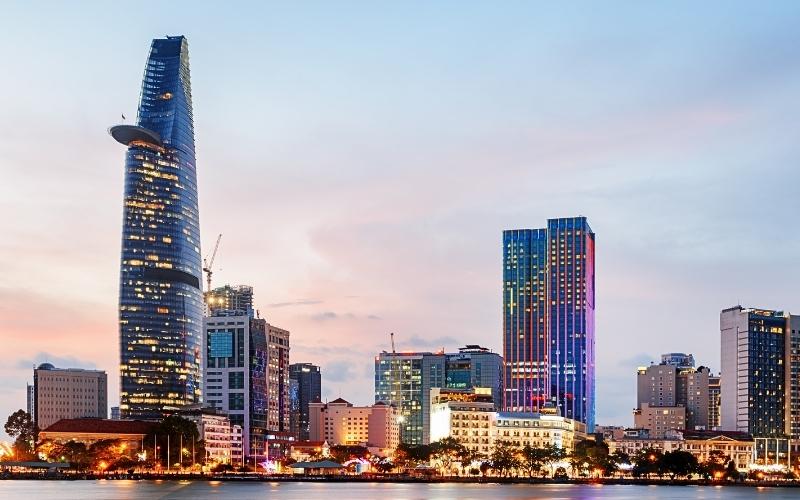
A View of Bitexco Financial Tower from afar
Discover the Cu Chi Tunnels
Cu Chi Tunnels is a 200km network of underground tunnels used during the war. It is about a 90-minute drive from the city center. You can choose between two sites: Ben Dinh (more tourist-focused and closer) or Ben Duoc (further away, but more authentic with larger original tunnel sections). You will learn how people lived, cooked, and fought underground for years. If you aren’t claustrophobic, you can even crawl through a widened section of the tunnels yourself.
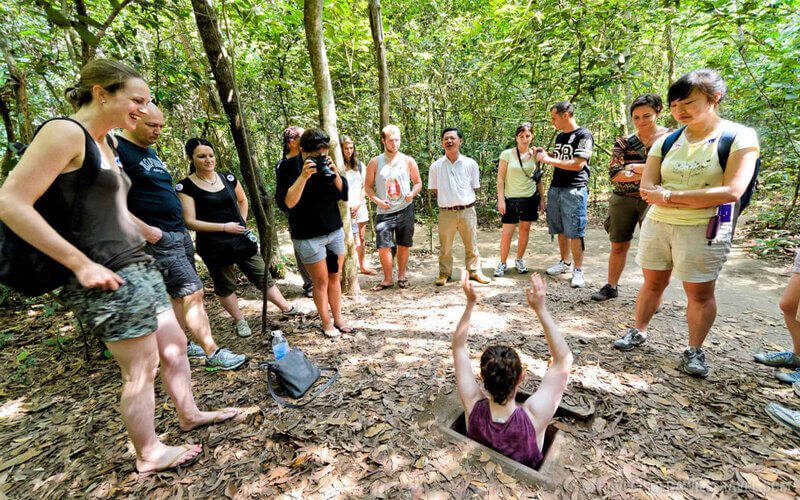
Cu Chi Tunnels
See Saigon from a double-decker bus
If you are short on time or want to avoid walking in the heat, the Hop-on Hop-off bus is a very practical tool. It starts near the Opera House and loops around the major landmarks. The top deck is open-air, which is great for taking photos without windows in the way. It’s a good way to get your bearings on your first day before you start exploring specific areas more deeply.
Nourish your soul with the A O Show
This performance takes place at the Saigon Opera House and is often described as a “bamboo circus.” It uses traditional music and acrobatics to tell the story of Vietnam’s transition from quiet village life to the rush of the modern city. It’s high-energy and very visual, so there is no language barrier to worry about. It is widely considered the best cultural show in the country.

A chamber music concert at Saigon Opera House
Take a cruise along the Saigon River
The river is the reason this city exists where it does. You can take a luxury dinner cruise with live music, or for a much cheaper local experience, hop on the Saigon Waterbus. The Waterbus is a public transport boat that costs very little and takes you past the new skyscrapers of District 2 and Binh Thanh. It’s a great way to see the “new” Saigon that many tourists miss.
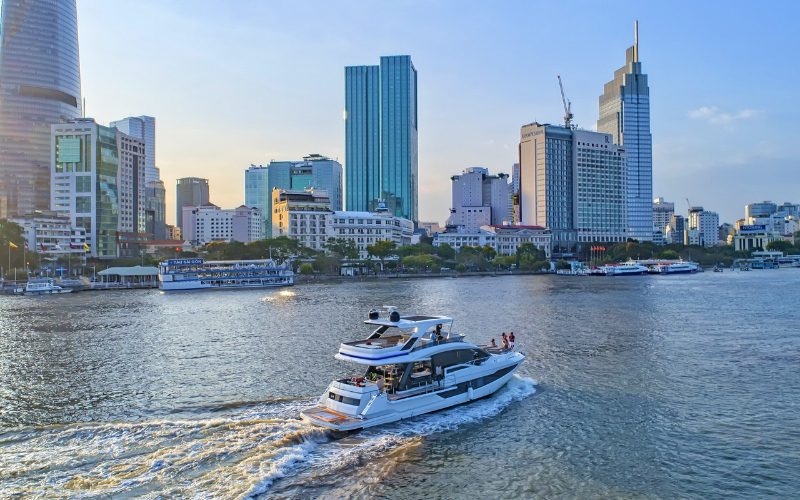
Cruise the Saigon River
Immerse yourself in the city’s bustling nightlife
Saigon really wakes up after 6:00 PM. Bui Vien Street is the center of the action for many, it’s loud, crowded, and full of energy. If that is too much for you, the city has an incredible rooftop bar culture. Places like the Social Club or Chill Skybar offer a more sophisticated way to watch the city lights. Also, don’t miss the Ben Thanh Night Market, where the street food stalls set up right outside the main market building as soon as the sun goes down.
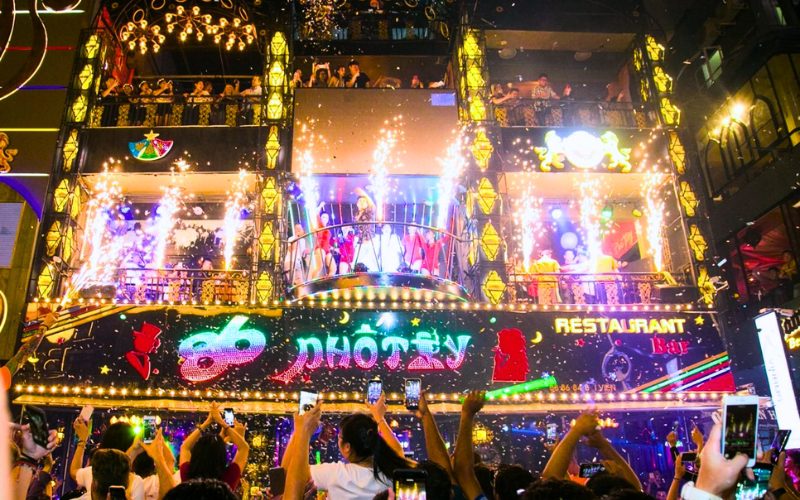
Music Party on Bui Vien Street
Suggested Ho Chi Minh City Itineraries
Saigon is a city that never really stops, so this schedule is about jumping into the middle of the chaos but also finding a few quiet moments to breathe. So, we have 3 options that might be suitable for you below:
1. Ho Chi Minh City tour in 3 days
Day 1: Arrive in Saigon, transfer to your downtown hotel, and, if time allows, visit major city highlights such as the War Remnants Museum, Reunification Palace, and Ben Thanh Market. Later, explore the famous Cu Chi Tunnels, including underground passages, bunkers, trap systems, and the rice paper village. Overnight in Saigon.
Day 2: Take a full-day trip to My Tho and Ben Tre in the Mekong Delta. Enjoy a river cruise, visit small islands, walk through village paths and fruit gardens, listen to traditional music, ride a horse cart and rowing boat, taste local specialties, and stop at Vinh Trang Pagoda on the way back. Overnight in Saigon.
Day 3: Enjoy breakfast at the hotel, then spend free time at leisure until your transfer to the airport for departure.
>>> Interested in this itinerary? Check more detail in here.
2. Ho Chi Minh City tour in 4 days
Day 1: Arrive and Settle In.
Once you land at Tan Son Nhat, our driver will meet you and head straight to the city center. If you aren’t too tired, just start walking. District 1 is the best place to get your bearings. You’ll see the sidewalk coffee culture in full swing immediately. We’ll wrap up the day with a welcome dinner at a local spot to introduce you to Southern Vietnamese flavors.
Day 2: The Big Landmarks and Underground Tunnels.
We start with the heavy hitters: the Reunification Palace, the Post Office, and the Cathedral. These aren’t just for photos, they are the best way to understand how the city’s identity was formed. After a stop at the Jade Emperor Pagoda and the War Remnants Museum, we drive out to the Cu Chi Tunnels. It’s a 90-minute trip that feels like stepping back into a different world. You’ll see exactly how thousands of people lived and worked underground during the war.
Day 3: A Change of Pace in the Mekong Delta.
Today is a long but rewarding day. We head to Cai Be to hop on a speedboat. The floating market here is a great place to see the river-based trade that still feeds much of the region. You’ll spend time in Vinh Long, walking through fruit orchards and seeing family-run workshops making coconut candy and rice snacks. Lunch comes with a side of traditional folk music before we head back to the city.
Day 4: Markets and Last-Minute Finds.
Your final morning is open. If you want to see a local market that isn’t just for tourists, head to Tan Dinh Church. It’s right next to the famous “Pink Church”. You can do some last-minute shopping at the modern malls or just grab one last iced coffee on the street. When you’re ready, we’ll have a car waiting to take you back to the airport.
>>> Full detail itinerary in here.
3. Ho Chi Minh City tour in 5 Days
Day 1: Arrive in Ho Chi Minh City, transfer to the hotel, then visit key historical landmarks including the War Remnants Museum, Reunification Palace, Notre Dame Cathedral, Central Post Office, and Museum of Fine Arts. Meals: lunch, dinner.
Day 2: Explore the city’s famous spiritual sites such as Ngoc Hoang Pagoda, Thien Hau Temple, and Giac Lam Pagoda. End the day with a walk along Nguyen Hue Walking Street. Meals: breakfast, lunch, dinner.
Day 3: Take an excursion to Can Gio Mangrove Biosphere Reserve to visit Crocodile Farm and Monkey Island, with an optional motorboat ride through the waterways. Return to the hotel for free time. Meals: breakfast, lunch.
Day 4: Visit the historic Cu Chi Tunnels, an underground tunnel network used during the war. In the afternoon, either relax or join an optional Saigon street food tour. Meals: breakfast, lunch.
Day 5: Enjoy a peaceful visit to Binh Quoi Village before checking out and transferring to the airport for departure. Meals: breakfast, lunch.
>>> View full detail in here.
Note: If the 3 itineraries above don’t meet your expectations, we’re always ready to customize the tour to your liking. So, don’t hesitate to share your wish with us!
How much does a 4-day trip to Ho Chi Minh City cost?
Vietnam is still one of the best value-for-money destinations in the world. You can live like a local for very little, or find some of the most impressive luxury hotels in Southeast Asia if you want to splurge.
Estimated Budget for 4 Days (Per Person)
| Category | Budget | Mid-Range | Luxury |
| Accommodation | $15 – $25 | $40 – $90 | $160+ |
| Food & Drink | $10 – $18 | $30 – $60 | $110+ |
| Activities & Tours | $8 – $12 | $25 – $50 | $80+ |
| Local Transport | $3 – $6 | $10 – $20 | $40+ |
| Total per day | $36 – $61 | $105 – $220 | $390+ |
A few notes on the numbers: These figures are based on 2026 price trends. For example, a bowl of Pho at a local stall usually costs around $2-$3 (50,000-75,000 VND), while a nice dinner at a mid-range restaurant might be $15-$25. Keep in mind that prices can shift depending on the exchange rate or if you’re visiting during a major holiday like Tet.
Note: Travel costs can vary based on your specific dates and preferences. If you’d like a more precise quote for your trip, feel free to reach out to us.
Best Travel Tips Visiting Ho Chi Minh City
The best travel tips for Ho Chi Minh City include using ride-hailing apps like Grab or Xanh SM for transparent pricing, staying connected with a local eSIM, and keeping your phone away from the street edge to avoid snatch-and-grab theft. Following these three core rules will eliminate 90% of the common frustrations travelers face in the city.
Use the right apps for transport
While there are plenty of taxis on the street, using an app is much safer and easier.
- Xanh SM: This is a newer, all-electric taxi service that has become very popular. Look for the bright cyan-colored cars. Their drivers are professional, the cars are silent, and the pricing is fixed in the app so there is no haggling.
- Grab: Still the go-to for motorbikes (xe om) and food delivery.
- Be: A great local alternative if Grab is experiencing high-demand surcharges.
Connect instantly with an eSIM
In this year, you no longer need to hunt for a physical SIM card at the airport. You can download an eSIM from providers like Gigago or Airalo before you even land. If you need a local phone number for apps like Grab, choose a plan that includes a “Vinaphone” or “Viettel” number. Having data the moment you step off the plane makes finding your driver much simpler.
Master the “Saigon Sidewalk” safety
Saigon is a safe city, but petty crime like phone snatching is the one thing you need to watch out for.
- The “Street-Side” Rule: Never hold your phone or bag on the side of your body closest to the traffic.
- Step Back: If you need to check Google Maps, step away from the curb and towards the front of a shop before taking your phone out.
- Crossing the Road: Walk at a slow, steady pace. Do not run and do not stop. Motorbike riders are like water; they will flow around you as long as your movement is predictable.
Avoid the “Friendly” Scams
Most locals are genuinely helpful, but there are a couple of classic tourist traps to avoid around the Independence Palace and the War Remnants Museum.
- The Coconut/Yoke Photo: A vendor might offer to let you hold their heavy bamboo poles for a “free” photo. Once the photo is taken, they will often demand a high price or insist you buy a coconut you didn’t ask for. Just a polite “No, thank you” is enough.
- The Shoe Shine: If someone points at your shoes and starts “fixing” them without your permission, walk away immediately. They often use cheap glue and then demand a large payment.
Conclusion
Spending 4 days in Ho Chi Minh City is the perfect way to experience the essence of this vibrant metropolis. From iconic landmarks and rich history to dynamic street life and great food, the city offers a captivating blend of tradition and modernity. Contact us now to create lasting memories and immerse yourself in the dynamic charm of Ho Chi Minh City.
Read more:


Hi, I am going to Ho Chi Minh City this March, and I want to try local food here. Could you please suggest to me some popular local restaurants? Thank you so much!
Hi Daniel, thank you so much for reaching us!
For an authentic food adventure in Ho Chi Minh City, we suggest you go to these restaurants:
Anan Saigon, which is located in the bustling Old Market area, offers a modern twist on traditional Vietnamese dishes. Chef Peter Cuong Franklin combines local ingredients with contemporary techniques, earning the restaurant a Michelin star in 2023. The second suggestion is Dim Tu Tac, which is famous for its fresh ingredients and traditional cooking methods. You can come across this name in multiple locations in HCMC, including District 1. You can recognize it with the Bib Gourmand distinction in the Michelin Guide. Lastly, to taste Vietnam’s iconic sandwich, come to Banh My Huynh Hoa.
Hope this helps. If you need any further information, please contact us for more assistance!
Best regards,
IDC Travel Team.