
Lam Dong Province is best known as the province that contains the old Da Lat city, Vietnam’s most unusual city: a former French hill station at 1,500 meters elevation, famous for its mild climate, flower farms, pine forests, and architecture that looks strikingly European against a Vietnamese highland backdrop. But Lam Dong is larger than Da Lat, and the wider province rewards travelers who venture beyond the city into coffee and tea plantations, ethnic minority villages, and the increasingly accessible highlands landscape.
This guide covers both the old Da Lat and the broader province, with practical information for planning a visit from Ho Chi Minh City or as part of a south-central Vietnam loop.
Where Is Lam Dong Province Located?
- Location: Central Highlands, southern Vietnam, 300 km northeast of Ho Chi Minh City
- Area: 24233.1 km²
- After 2025 provincial merger: Lam Dong province merged with Dak Nong, Binh Thuan provinces.
- Population: 3.872.999
- Population density: 126 person/km²
- Average temperature: 15-24°C year-round in Da Lat
- Known for: Flower farming, coffee and tea production, French colonial architecture, waterfalls, trekking
- Main airport: Lien Khuong Airport (DLI), 30 km south of Da Lat
Lam Dong is one of Vietnam’s leading agricultural provinces, producing roughly 70% of the country’s temperate vegetables and a significant portion of its coffee and tea. The farming landscape is part of what makes a drive through the province visually distinctive: greenhouse tunnels on the hillsides, flower fields in bloom, and coffee bushes lining the road between villages.
The old city of Da Lat no longer exists; instead, it comprises five new wards: Cam Ly, Lang Biang, Lam Vien, Xuan Huong, and Xuan Truong. Although the administrative merger was officially changed on July 1, 2025, locals are still more familiar with the name Da Lat. Therefore, in this travel guide, we will continue to refer to it as Da Lat to avoid any confusion for foreign travelers.
How to Get to Lam Dong (Da Lat)
By air: Lien Khuong Airport (DLI) is 30 kilometers south of Da Lat, about 45 minutes by taxi. Direct flights from Ho Chi Minh City (45 minutes), Hanoi (2 hours), and Da Nang (1.5 hours). International charter flights operate during peak season.
By bus: Sleeper buses from Ho Chi Minh City (Phuong Trang is the most reliable operator) take about 7 to 8 hours and arrive directly in the city center. A comfortable overnight option.
By private car: About 6 to 7 hours from Ho Chi Minh City via the expressway and National Highway 20. Our private car rental service makes this practical as part of a southern circuit combining Nha Trang, Da Lat, and Mui Ne.
Best Time to Visit Lam Dong
Da Lat’s elevated climate means it is one of the few places in southern Vietnam where the rainy season matters from a comfort standpoint rather than just an activity standpoint.
November to April is the dry season and the most popular time. Clear skies, cool temperatures (15 to 20°C at night), and the best conditions for outdoor activities. February sees Da Lat at its most colorful for the flower season.
May to October is the rainy season. Afternoons frequently bring mist, drizzle, or heavier rain. The landscape is very green and some visitors prefer this atmosphere. The Da Lat Flower Festival takes place in December and July (biannual); if timing aligns, it is worth planning around.
The province is generally cooler than the coast year-round. Even in summer, Da Lat nights require a light jacket.
Top Things to Do in Lam Dong
1. Da Lat City Center
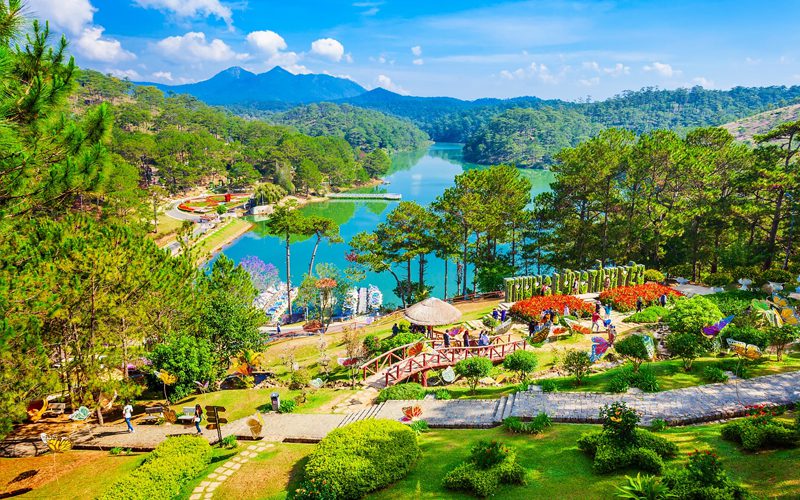
Da Lat
The city is compact and walkable around the central lake (Xuan Huong Lake) and the market area. The Hang Nga Guesthouse (also called the “Crazy House”), designed by Dang Viet Nga, is the city’s most photographed building and is open to visitors who want to walk through its surrealist interior. The French-era Da Lat Railway Station (built 1938) is the oldest preserved station in Vietnam and worth a visit even if you are not taking a train.
2. Thung Lung Tinh Yeu (Valley of Love)
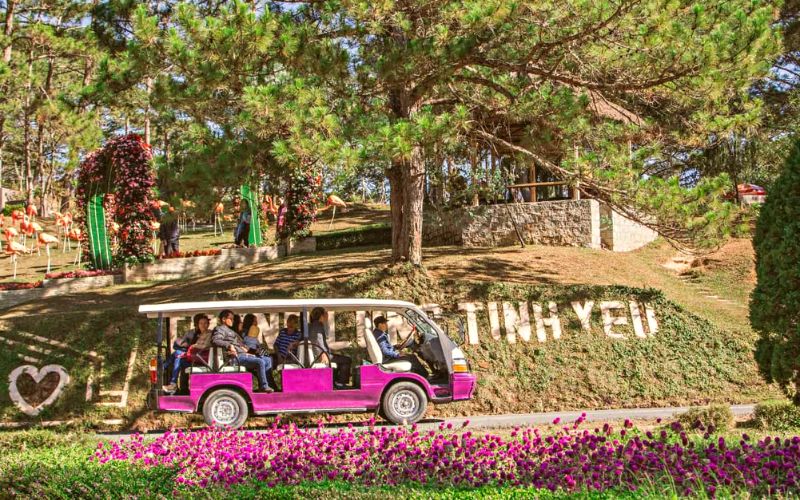
Valley of love
A park northeast of the city centered on a reservoir, popular with Vietnamese couples and families. The scenery is pleasant rather than spectacular, but it gives a good sense of the pine forest landscape that surrounds Da Lat.
3. Datanla Waterfall and Canyoning
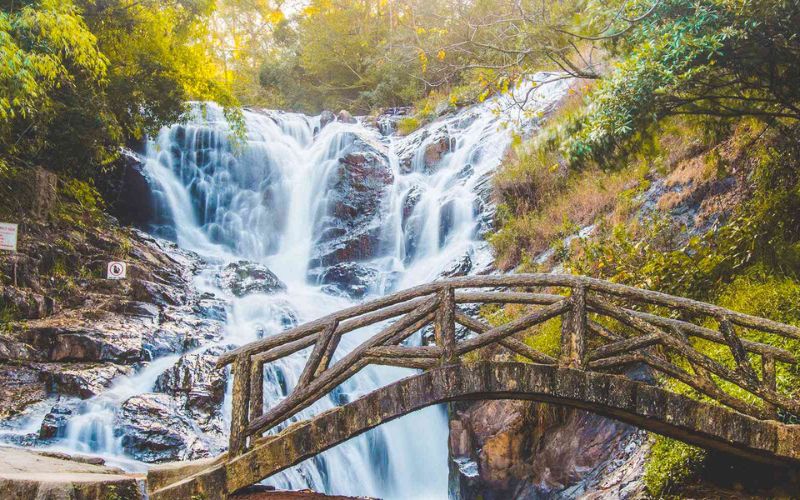
Datanla Waterfall
About 5 kilometers south of the city on the road toward the coast, Datanla Waterfall drops in two main stages through a forested gorge, with an alpine coaster connecting the upper and lower viewing platforms: a distinctly Da Lat combination of natural scenery and amusement infrastructure that Vietnamese domestic visitors particularly enjoy. The waterfall is at its most powerful and visually impressive from August to November, when the rains fill the upper streams.
The bigger draw for international visitors is the canyoning operation: abseiling down the wet rock face alongside the waterfall, river walks through the gorge below, cliff jumps into the plunge pools, and scrambling through rock passages. Full-day canyoning trips cover Datanla and the more demanding Prenn or Pongour sections further out. Da Lat Canyoning and Phat Tire Ventures are the most established operators, with English-speaking guides and proper safety certification. Book a day in advance during peak season (November to January). The minimum age is typically 12 years; the full-day route requires moderate fitness and is genuinely physical.
4. Langbiang Mountain
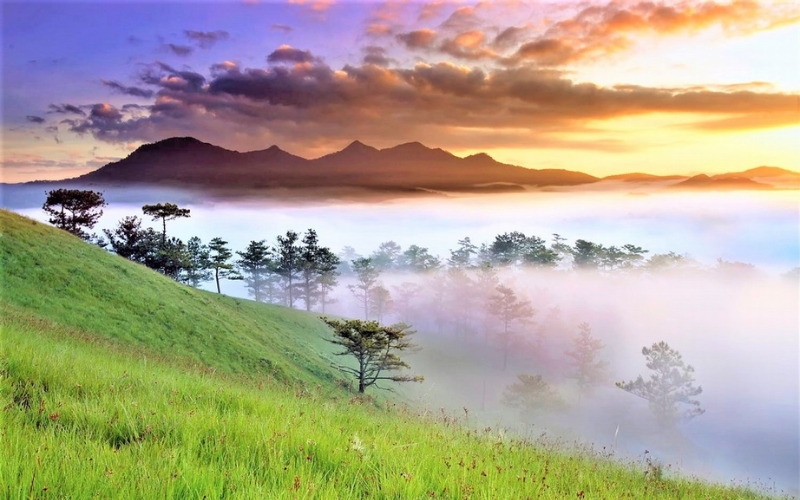
Breathtaking view from the summit of Lang Biang Mountain, Da Lat’s iconic peak
The highest peak in the province at 2,167 meters, Langbiang sits about 12 kilometers north of the city in the Lac Duong area and forms the visual backdrop of Da Lat when seen from the north. A sealed road climbs to the second summit at roughly 1,950 meters, accessible by private car or by the jeep services that operate from the base parking area. From there, a clearly marked 2 to 3 hour trail continues to the true summit, gaining about 200 meters of elevation through mountain scrub and cloud forest. Views on a clear day extend across the entire highland plateau: the Cau Dat tea terraces, the greenhouse patchwork of the flower farms, and on the clearest days the faint outlines of the coastal lowlands toward Nha Trang.
K’Ho ethnic minority guides can be arranged at the base camp; hiring one is not required for the standard route but adds cultural context to the mountain’s significance in K’Ho legend. According to the most widely told version, the peak is named for K’Lang and Ho Bian: a K’Ho warrior and a highland princess whose love story ended tragically when her father refused their union. The mountain has been a site of cultural significance for the K’Ho long before it became a trekking destination.
5. Da Lat Flower Farms
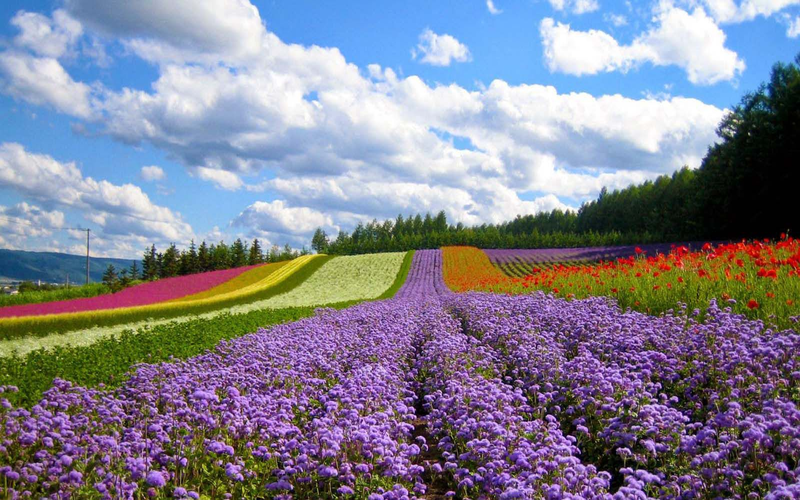
Da Lat Flower Garden
Lam Dong produces roughly 60 to 70% of the cut flowers sold in Vietnam, and the greenhouse-and-open-field flower farms surrounding Da Lat are one of the province’s most visually specific experiences. The main flower-growing areas concentrate around the Trai Mat commune and the villages along the road toward Xuan Truong, a landscape of blue hydrangeas, chrysanthemums, roses, and ranunculus stretching across the hillsides in rows behind low polytunnel frames.
Several farms along the road between Da Lat city and the Cau Dat tea area welcome visitors for a small fee. The most photogenic time is the morning, before the cut-flower trucks arrive for the daily wholesale collection. If your visit coincides with the biennial Da Lat Flower Festival (held in December of even years and July of odd years), the festival grounds at Xuan Huong Lake transform into an installation of living flower displays from farms across the province, a genuinely spectacular event that draws both domestic and international visitors.
For travelers interested in the agricultural mechanics rather than just the aesthetic, several farms in the Trai Mat area allow visitors to walk the growing rows with a farmer guide. The hydrangeas and dahlias peak from November to January; the cherry blossom trees (anh dao) along Tran Hung Dao Street in the city center typically bloom in late January to early February, often coinciding with Tet.
6. Bidoup Nui Ba National Park
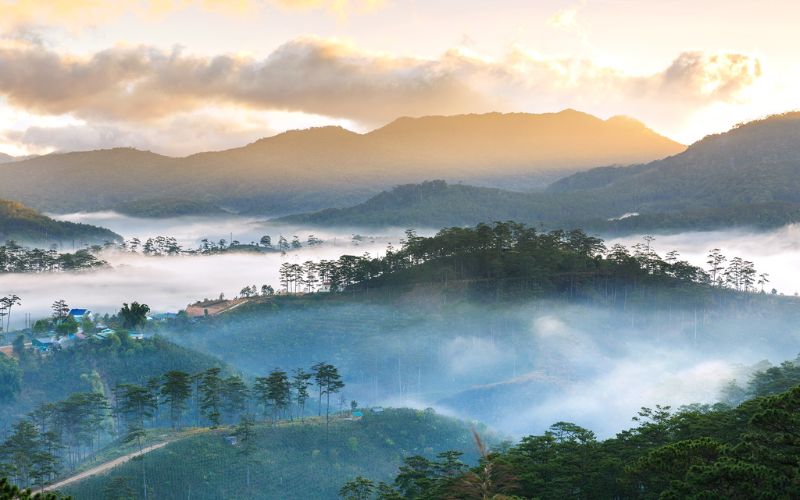
Bidoup Nui Ba National Park
About 50 kilometers north of Da Lat near Lac Duong district, Bidoup Nui Ba is the largest national park in the Central Highlands and one of Vietnam’s most biologically significant protected areas. The park straddles the watershed between the Central Highlands and the coastal lowlands, creating an unusual diversity of ecosystems within a compact area, from lowland dipterocarp forest to montane cloud forest at the higher elevations, home to species found nowhere else in Vietnam.
The park is recognized as one of the four global centers of plant diversity in Southeast Asia, with over 1,400 plant species documented. Birdwatching is the most established visitor activity: the park holds endemic species including the Vietnamese crossbill, the collared laughingthrush, and the Langbian bush warbler. Serious birders come specifically for this list. The trekking trails through the primary forest, ranging from half-day circuits to three-day overnight routes, are well-marked by the park’s ranger stations.
Entry and guided trekking are organized at the park headquarters in Lac Duong town. A private car from Da Lat takes about 1.5 hours. The park is best visited from November to April; the trail surfaces become difficult in the rainy season, and some routes close from June to August.
7. Thac Voi (Elephant Falls)
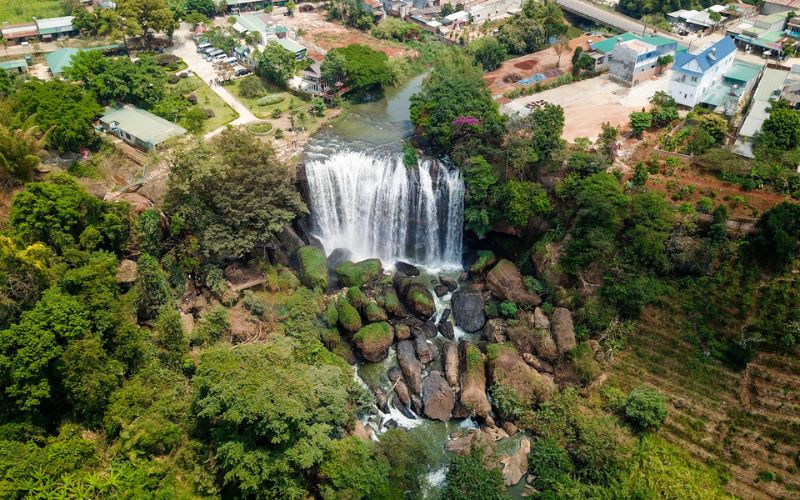
Thac Voi (Elephant Falls)
About 30 kilometers southwest of Da Lat near the town of Nam Ban, Elephant Falls is the most powerful single waterfall in Lam Dong Province, with a drop of roughly 30 meters across a wide cascade into a rock-strewn pool below. The name comes from a large boulder at the base that resembles a seated elephant from certain angles, though most visitors are too occupied with the descent path to look for it immediately.
The descent to the base of the falls involves a path through rock crevices and around the cliff face: steep, sometimes slippery in the wet, and genuinely exhilarating. The last section requires climbing down a fixed ladder directly beside the cascade, with the mist from the waterfall on your face throughout. The pool at the bottom, surrounded by moss-covered boulders and overhanging forest, is worth every step of the descent.
Elephant Falls is most powerful from August to November when the rainy season fills the upper streams. It is accessible year-round, but the scale and atmosphere from August onward are significantly more dramatic than in the dry season. The surrounding area includes several K’Ho ethnic minority villages and a market at Nam Ban town, making it a practical combined half-day excursion from Da Lat.
Da Lat Food
Da Lat’s cool climate produces ingredients unavailable elsewhere in Vietnam, and the food reflects this.
Banh mi Da Lat is distinctively different from the Ho Chi Minh City version: the baguette is made with tapioca flour, giving it a chewier, slightly sweet texture. The fillings include a larger proportion of fresh vegetables (grown locally) and a specific pate style.

Banh mi Da Lat
Banh trang nuong (rice paper cooked over charcoal with egg, spring onions, and dried shrimp) is a street food specific to Da Lat, sold by vendors on folding carts near the central market in the evenings.

Banh trang nuong (grilled rice paper)
Strawberries, artichokes, and avocados are all grown locally and are worth buying at the central market. The tra atiso (artichoke tea) is a Da Lat specialty and widely available.

Tra atiso (artichoke tea)
For a full meal, the restaurants around the Night Market (Cho Da Lat) on Nguyen Thi Minh Khai Street offer local hotpot and grilled meats at good prices.
Estimated Travel Costs in Lam Dong
Da Lat is one of the best value destinations in southern Vietnam. The cool climate, good food scene, and range of outdoor activities are all available at prices well below comparable beach destinations. Mid-range hotels in Da Lat are particularly good value, boutique colonial properties at reasonable rates are a highlight of the city. The main variable cost is getting there; the flight from HCMC is short but adds to the total.
Prices below are estimates for international travelers and may vary by season and booking time.
| Category | Budget | Mid-Range | Luxury |
| Accommodation (per night) |
200,000 – 400,000 VND (~$8-$16) |
600,000 – 1,800,000 VND (~$24-$71) |
2,200,000 – 6,000,000 VND (~$87-$236) |
| Meal per person | 25,000 – 70,000 VND (~$0.98-$2.76) |
90,000 – 250,000 VND (~$3.54-$9.84) |
300,000 – 800,000 VND (~$11.81-$31.50) |
| Motorbike rental (per day) |
100,000 – 150,000 VND (~$3.94-$5.91) |
150,000 – 250,000 VND (~$5.91-$9.84) |
– |
| Canyoning (full day) |
– | 600,000 – 900,000 VND (~$23.62-$35.43) |
1,000,000 – 1,500,000 VND (~$39.37-$59.06) |
| Langbiang Mountain jeep + hike | 150,000 – 200,000 VND (~$5.91-$7.87) |
250,000 – 400,000 VND (~$9.84-$15.75) |
500,000 – 900,000 VND (~$19.69-$35.43) |
| Flower farm / tea farm visit | 50,000 – 100,000 VND (~$1.97-$3.94) |
100,000 – 200,000 VND (~$3.94-$7.87) |
250,000 – 500,000 VND (~$9.84-$19.69) |
| Bidoup Nui Ba park entry + guide | – | 400,000 – 700,000 VND (~$15.75-$27.56) |
800,000 – 1,500,000 VND (~$31.50-$59.06) |
| Grab / taxi (airport to city) |
120,000 – 180,000 VND (~$4.72-$7.09) |
180,000 – 250,000 VND (~$7.09-$9.84) |
300,000 – 600,000 VND (~$11.81-$23.62) |
| Total 5-day trip | 2,000,000 – 4,000,000 VND (~$79-$157) |
6,000,000 – 12,000,000 VND (~$236-$472) |
15,000,000 – 33,000,000 VND (~$591-$1,299) |
| Total 7-day trip | 2,800,000 – 5,600,000 VND (~$110-$220) |
8,400,000 – 16,800,000 VND (~$331-$661) |
21,000,000 – 46,000,000 VND (~$827-$1,811) |
| Total 14-day trip | 5,600,000 – 11,200,000 VND (~$220-$441) |
16,800,000 – 33,600,000 VND (~$661-$1,323) |
42,000,000 – 92,000,000 VND (~$1,654-$3,622) |
Da Lat flower festival periods (December even years, July odd years) and Vietnamese holidays see accommodation prices spike noticeably. Flight costs from HCMC or Hanoi are not included in the above totals. Always recheck costs at time of booking.
Lam Dong Travel Tips
- Da Lat gets cold at night, particularly November through February. Bring layers; a fleece or light jacket is necessary, not optional.
- The province is hilly and some streets are steep. Walking is fine for the center but a motorbike or taxi is needed for most sights outside the immediate city area.
- Motorbike rental is widely available and the highland roads are generally good. Riding in rain or mist requires care.
- Grab works in Da Lat. Outside the area, negotiate motorbike taxi prices in advance.
- The central Da Lat market sells fresh produce at reasonable prices. If you have access to a kitchen, local vegetables, mushrooms, and strawberries are excellent value.
Plan Your Lam Dong Trip with IDC Travel
Da Lat pairs naturally with Nha Trang (3 to 4 hours by car) and Mui Ne (4 hours) on a southern Vietnam circuit. We can arrange private transfers and guide services throughout the province. Explore southern Vietnam tour options or contact our team for a custom itinerary.