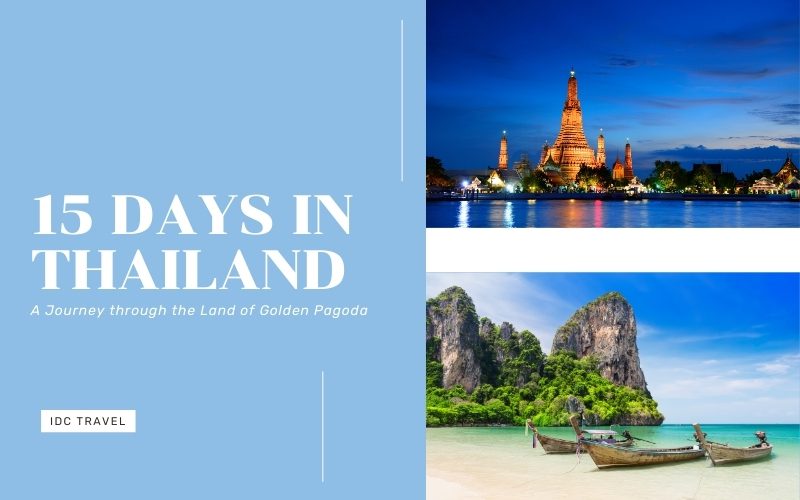
With 15 days in Thailand, you can travel deeply through the cultural North or build a varied journey from rivers and rainforest to tropical islands. Trying to do both routes at once would recreate the rushed one-week problem on a larger map. The cultural route below favors historic cities, communities and overland continuity; the nature-and-island route uses more transfers to reach both the Gulf and Andaman sides. Budget roughly USD 1,050 to 2,980 per person on the ground before international and domestic flights, visa costs, insurance and personal shopping.
Two Routes for 15 Days in Thailand
- Discover Splendors of Thailand in 15 Days
- Cultural Discovery 15 Days Tour in Thailand
- Discover Temples and Nature of Thailand in 15 Days Tour
- Explore Mountain and Ocean in Thailand 15 Days Tour
- Thailand in 15 Days with Natural Exploration and Island Hopping
- Awesome Thailand and Vietnam 15 Days Tour for Adventure Lover
| Route | Main stops | Best for | Main advantage | Honest limitation |
| Northern Cultural Journey | Bangkok, Kanchanaburi, Sukhothai, Lampang, Chiang Rai and Chiang Mai | History lovers, photographers and repeat visitors | Coherent overland story with no compulsory beach flight | No island stay; several road journeys |
| Nature and Island Journey | Bangkok, Kanchanaburi, Hua Hin, Koh Tao, Koh Phangan, Koh Samui, Khao Sok, Khao Lak, Krabi and Phuket | Active couples, wildlife lovers and confident movers | River, rainforest and two different coastlines | Many bases, ferry dependence and little weather margin |
The cultural journey provides more depth and usually feels calmer. The island journey is intentionally ambitious and works only when the traveler values variety over long resort stays. If you want classic Bangkok, Chiang Mai and one beach, use a simpler three-base route instead of borrowing stops from both options.
Route 1: Northern Thailand Through Living Culture
- Route: Bangkok, Kanchanaburi, Sukhothai, Lampang, Chiang Rai and Chiang Mai
- Best for: Travelers who want temples, history, local craft and changing northern landscapes
- Strengths: Strong narrative, mostly overland travel and time beyond Thailand’s headline cities
- Weaknesses: Several driving days; no beach ending; temple fatigue is possible without varied activities
- Best time: November to February for cooler northern conditions, with early booking around holidays
- Should avoid: March and April if heat or seasonal haze would undermine the mountain and outdoor experience
Day 1 | Arrive in Bangkok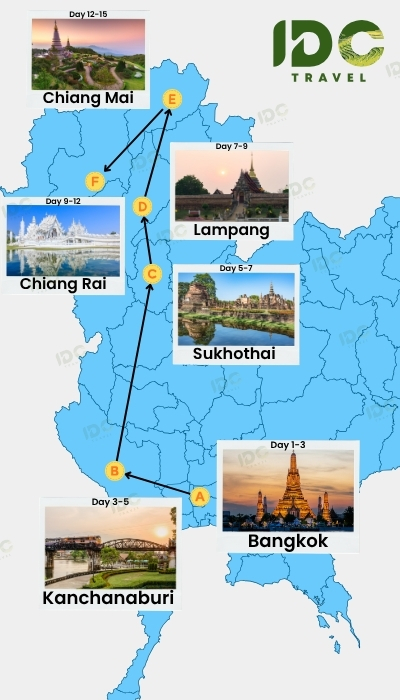
Settle near the river or historic center and recover from the flight. Keep the evening within walking distance of the hotel.
Day 2 | Royal Bangkok and the Chao Phraya
Visit selected palace and temple sites with respectful dress, then use a river or canal journey to understand how the city developed around water.
Day 3 | Bangkok to Kanchanaburi
Travel west and introduce the region through its landscape and carefully interpreted wartime history. Stay overnight instead of returning to Bangkok.
Day 4 | Kanchanaburi Beyond the Main Memorials
Choose a responsible nature excursion, community experience or slower riverside day. The aim is context, not another long list of photo stops.
Day 5 | Kanchanaburi to Sukhothai
This is a substantial overland day. Break the journey sensibly, arrive before dinner and save the historical park for cooler hours.
Day 6 | Sukhothai Historical Park
Explore selected temple zones by bicycle or private transport. A knowledgeable guide can connect the ruins to the development of Thai art and statehood.
Day 7 | Sukhothai to Lampang
Continue north and slow down in Lampang. Explore old neighborhoods, teak architecture or local ceramics rather than treating the city as a sleep stop.
Day 8 | Lampang’s Temples and Local Life
Visit one important Lanna temple and add a market or community activity. Avoid wildlife attractions that cannot demonstrate credible welfare standards.
Day 9 | Lampang to Chiang Rai
Travel through Northern Thailand and arrive with time for a relaxed evening. Keep the next two nights in the same Chiang Rai hotel.
Day 10 | Chiang Rai Art and Architecture
Compare traditional and contemporary northern expression through a carefully chosen temple and art program. Leave space between sites to avoid visual overload.
Day 11 | Communities and Landscapes Near Chiang Rai
Choose a responsible village, tea-growing or countryside experience with transparent local benefit. Do not photograph people without permission.
Day 12 | Chiang Rai to Chiang Mai
Transfer to Chiang Mai and orient yourself around the Old City. A gentle food walk works better than another full temple circuit.
Day 13 | Chiang Mai Heritage and Craft
Visit selected temples, then meet artisans or join a workshop that explains the living skills behind northern design and textiles.
Day 14 | A Personal Day in Chiang Mai
Choose one priority: a cooking class, countryside cycling, a national-park outing or a quiet spa day. Verify animal-welfare practices before booking any elephant experience.
Day 15 | Depart Chiang Mai
Fly home from Chiang Mai where possible, or use a well-protected connection in Bangkok. Avoid a distant morning excursion before departure.
>>> Want the complete northern story arranged as one journey? Review IDC Travel’s live Cultural Discovery 15 Days Tour in Thailand, which links Bangkok, Kanchanaburi, Sukhothai, Lampang, Chiang Rai and Chiang Mai. Ask the team to vary temple days with food, craft or nature according to your interests.
Route 2: Nature and Island Hopping from Bangkok to Phuket
- Route: Bangkok, Kanchanaburi, Prachuap Khiri Khan, Surat Thani, Phang Nga, Krabi and Phuket
- Best for: Active travelers who enjoy ferries, changing landscapes and short stays
- Strengths: Combines river country, Gulf islands, rainforest and the Andaman coast
- Weaknesses: High transfer load; ferries and marine activities depend on conditions; little time to unpack
- Best time: January and February often provide the most useful compromise across the Gulf, rainforest and Andaman side
- Should avoid: A rigid September-to-November plan if Gulf ferries and snorkeling are non-negotiable, or any month if repeated hotel changes cause stress
Day 1 | Arrive in Bangkok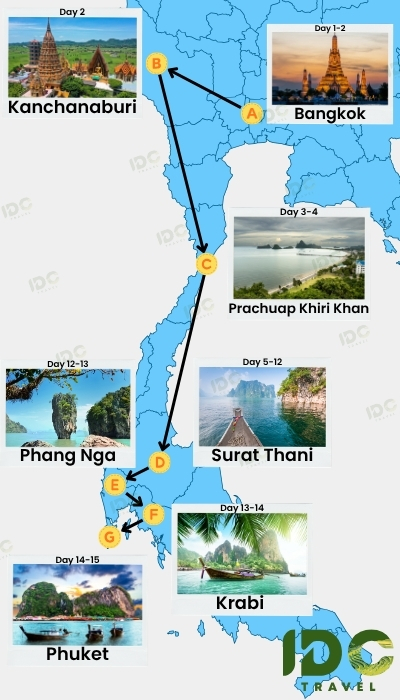
Recover near the river and confirm the first overland transfer. Keep the first night simple.
Day 2 | Bangkok to Kanchanaburi
Travel west for a focused historic and riverside program. Stay locally so the day does not become a round trip.
Day 3 | Markets, Railway Country and Hua Hin
Continue through Ratchaburi or Samut Songkhram, using only markets that match the day and current operation. Reach Hua Hin for the night.
Day 4 | Hua Hin Coast
Choose a slower beach morning, a palace or a nearby nature experience. Prepare for the following island transfer.
Day 5 | Travel to Koh Tao
Combine road and ferry connections with generous buffers. Consider this a travel day and avoid a prepaid dive immediately after arrival.
Day 6 | Koh Tao Marine Day
Snorkel or dive with a licensed operator and follow current marine conditions. Non-divers can choose a protected-bay program and a slower viewpoint walk.
Day 7 | Koh Tao to Koh Phangan
Take the scheduled ferry and settle away from party areas if nightlife is not your purpose. Enjoy one beach rather than circling the island in a single afternoon.
Day 8 | Koh Phangan to Koh Samui
Move to Koh Samui and use the rest of the day for the hotel area. Frequent ferry arrivals make a flexible evening essential.
Day 9 | Koh Samui
Choose either a cultural island circuit, a beach day or a marine park excursion. The weather and sea forecast should decide, not a fixed social-media list.
Day 10 | Koh Samui to Khao Sok
Cross to the mainland and continue to Khao Sok. Arrive before dark where possible and prepare for a guided nature day.
Day 11 | Khao Sok and Cheow Lan Lake
Explore the lake, rainforest or trails according to current park and weather conditions. Caves and boat routes can change for safety.
Day 12 | Khao Sok to Khao Lak
Travel to the Andaman coast and use the afternoon to rest. Khao Lak provides a softer transition after the park.
Day 13 | Khao Lak to Krabi or Ao Nang
Continue south and choose one base. Keep the day light instead of forcing a late island excursion.
Day 14 | Krabi to Phuket
Enjoy a scenic transfer and reach Phuket for the final night. If the group prefers depth, skip Krabi and add the night to Khao Lak or Phuket.
Day 15 | Depart Phuket
Use Phuket as the international exit when suitable flights are available. Build a protected connection if the journey still requires Bangkok.
>>> Looking for this exact river-to-island concept? Explore IDC Travel’s live Thailand in 15 Days with Natural Exploration and Island Hopping. Because this is a complex route, confirm ferry seasons, baggage handling and the backup plan for every marine sector before booking.
Visa, TDAC and Payments Before a Long Thailand Trip
Confirm the correct entry permission
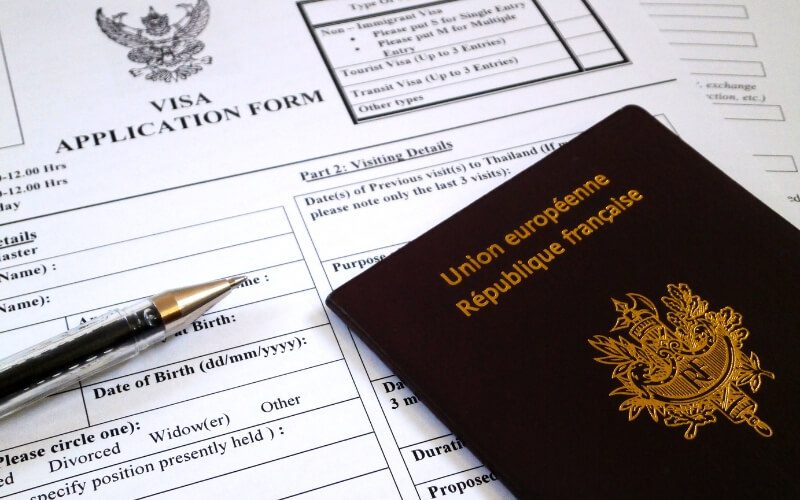
Thailand visa
Visa and visa-exemption rules depend on nationality, passport and intended stay. Check the Ministry of Foreign Affairs’ official Thai e-Visa website rather than copying another traveler’s answer. If a visa is required, allow processing time and understand that submitting documents does not guarantee approval.
Complete the Thailand Digital Arrival Card
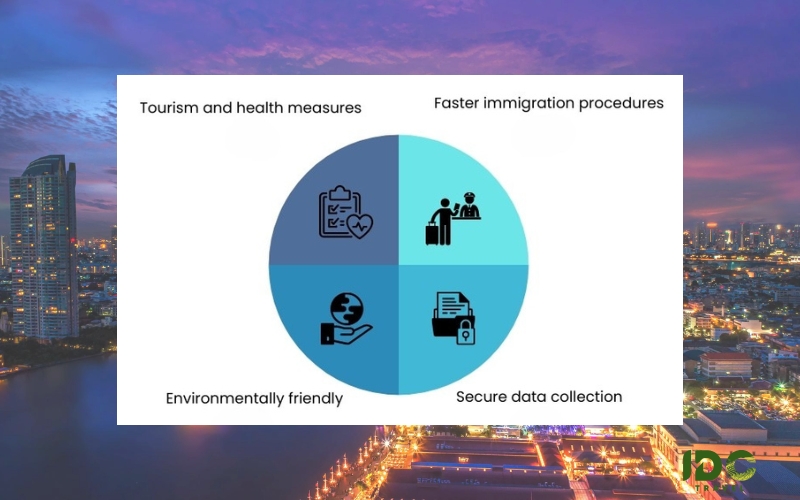
Benefits of TDAC
Thailand Immigration requires non-Thai nationals entering the country to submit the Thailand Digital Arrival Card, or TDAC, online. The official TDAC guide says travelers can submit it within three days before arrival, including the arrival date. Complete it through the official government address; TDAC is separate from a visa.
Plan cash, cards and ATM access
Thailand uses the Thai baht, or THB. Cards work well at established hotels and larger businesses, while markets, small restaurants, ferries and rural stops may be cash-first. Carry more than one payment method and withdraw before nature or island sectors, but do not carry the full two-week budget in cash. Read the ATM screen for local charges and check your own bank’s exchange and foreign-use fees. Read our Thailand Currency Guide for more useful information.
Match the Route to Thailand’s Regional Weather
The Tourism Authority of Thailand separates the Gulf and Andaman coasts because their stronger travel seasons differ. The Andaman side, including Phuket and Krabi, generally has its drier tourism period from November to April. The Gulf side can be attractive in other months but is often wetter later in the year. Northern Thailand is generally cooler from November to February and hotter in March and April.
That is why the cultural route and island route should not share one automatic “best month”. November to February suits the North; January and February are useful compromise months for the cross-coast route. Even then, storms can change ferries and park activities. Review IDC Travel’s Thailand weather guide and recheck conditions close to departure.
Regional Dishes Worth Building into the Journey
- Tom yum goong (spicy shrimp soup): A hot and sour soup fragrant with lemongrass, galangal and kaffir lime.

Tom Yum Goong – Thai tom yum soup with shrimp and herbs.
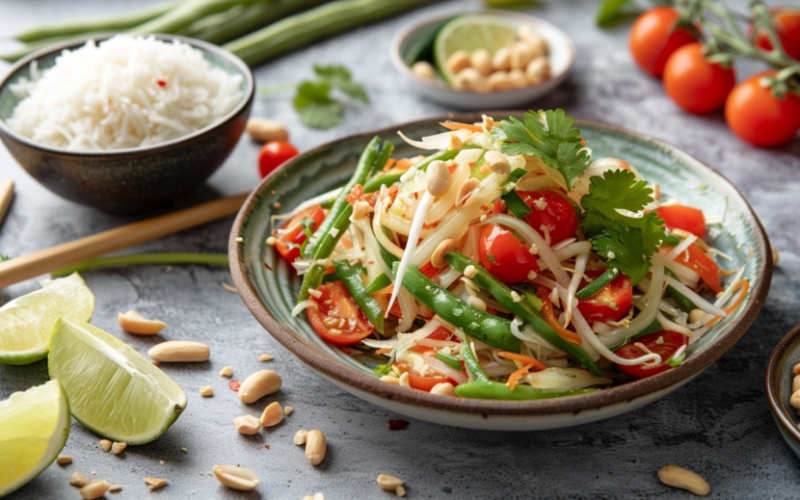
- Som tam (green papaya salad): Shredded papaya pounded with lime, chilies and savory seasoning; heat level and regional style vary.
Som Tam
- Gaeng hung lay (northern pork curry): A slow-cooked Chiang Mai-style curry with ginger, tamarind and warm spices.
Gaeng hung lay
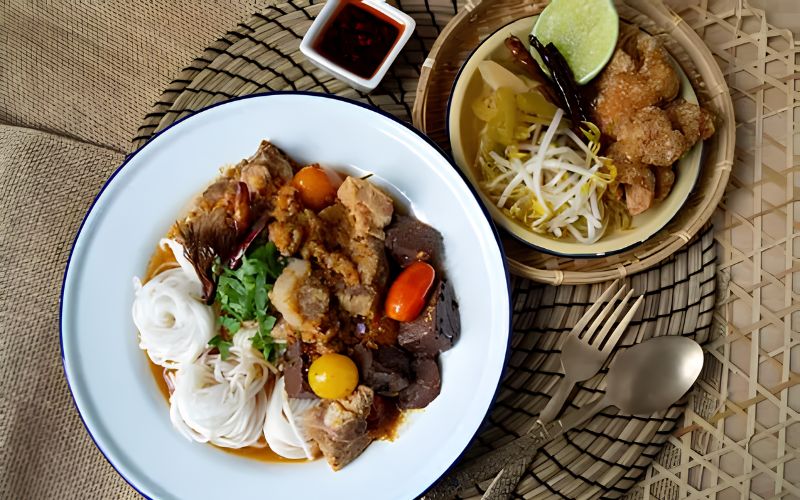
- Khanom jeen nam ngiao (rice noodles with northern tomato broth): Fermented rice noodles served with a pork-and-tomato broth and fresh vegetables.
Khanom Jeen Nam Ngiao (Thai Rice Noodles with Spicy Pork Sauce)
- Massaman curry (mild spiced curry): A rich southern-influenced curry with coconut milk, potatoes and roasted spices.
Massaman Red Curry
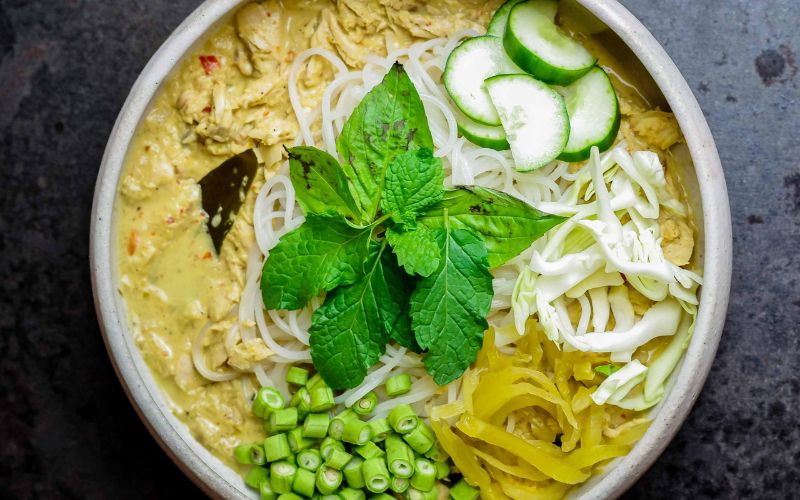
- Khanom jeen nam ya (rice noodles with fish curry): Soft rice noodles with an aromatic fish-based curry and raw herbs.
Khanom jeen nam ya
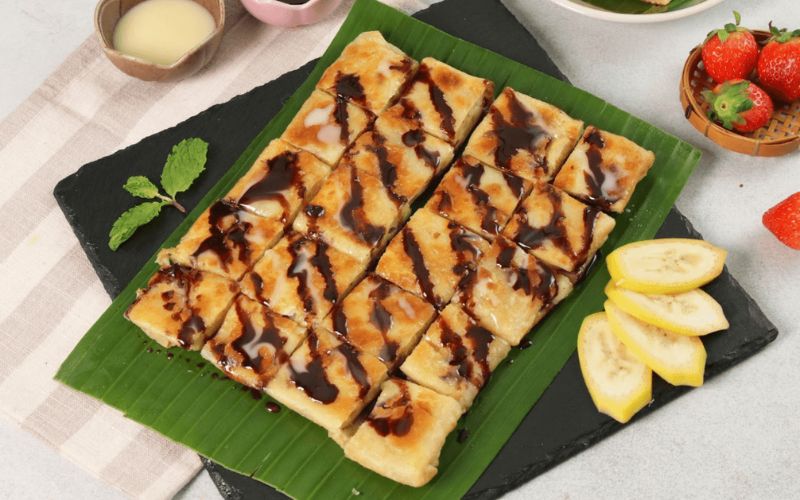
- Roti kluai (banana roti): A crisp griddled flatbread filled with banana and commonly finished with sweet milk.
Roti kluai

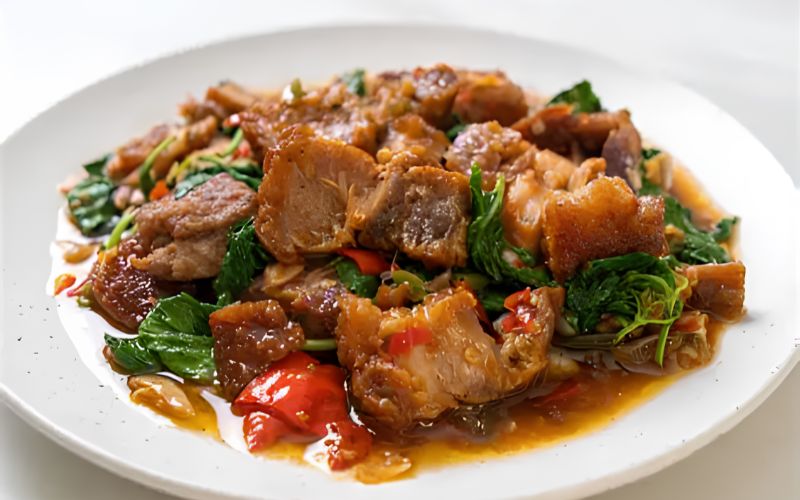

On the island route, ask how seafood is priced before ordering. Travelers with shellfish, peanut or fish allergies should carry a Thai-language allergy card and discuss shared cooking oil and sauces, not only the visible ingredients.
Estimated Budget for 15 Days in Thailand
These planning ranges are per person for 15 days and 14 nights, assuming two people share a room. They exclude international and domestic flights, visas, insurance, personal shopping and premium nightlife.
| Cost category | Budget | Mid-range | Premium |
| Accommodation for 14 nights | USD 350-770 | USD 980-2,100 | USD 2,800-7,000 |
| Meals and drinks | USD 225-450 | USD 525-1,050 | USD 1,200-2,250 |
| Ground transport and ferries | USD 240-760 | USD 700-1,900 | USD 1,900-5,000 |
| Guides and activities | USD 235-1,000 | USD 700-2,200 | USD 1,800-4,800 |
| Estimated ground total | USD 1,050-2,980 | USD 2,905-7,250 | USD 7,700-19,050 |
The island route generally spends more on ferries, private transfers and weather-sensitive activities. The cultural route has longer drives but fewer marine add-ons. Compare a complete guided quote with the same hotel standard and inclusions; a low headline price can exclude entrance fees, baggage, boat transfers or English-speaking guides.
How to Reduce Transfers Without Missing the Best of Thailand
A well-paced 15-day Thailand itinerary is not about visiting the greatest number of places. It is about choosing a route that gives you enough time to enjoy each destination without turning the holiday into a chain of airports, hotel check-ins and rushed departures.
Stay Longer and Remove One Unnecessary Stop
When you want two additional nights at the beach or in the northern mountains, remove one destination instead of extending an already crowded route. Longer stays create space for local experiences, slower mornings and unexpected discoveries. They also reduce the time lost to packing, transfers and checking into new hotels.
Use IDC Travel’s guide to the best places to visit in Thailand to compare destinations and replace similar stops rather than adding more. For example, choose the beach area that best matches your travel season and interests instead of including several coastal destinations with similar experiences.
Avoid Backtracking to Bangkok
If your international flight connections allow it, consider arriving in Bangkok and departing from Chiang Mai or Phuket. A multi-city flight can eliminate an unnecessary return journey and leave more time for the final destination.
Compare the total journey cost before booking. A cheaper round-trip ticket to Bangkok may become less attractive after adding a domestic flight, airport transfers and another hotel night. The best route is the one that saves both time and money across the entire trip.
Prepare for Real Transfer Conditions
Thailand journeys may involve temple stairs, ferry piers, small vehicles and short walks between transport points. Pack light enough to manage your luggage comfortably in these situations, not only according to the airline’s baggage allowance.
Place one flexible day near the experience most vulnerable to weather, such as an island boat trip or an outdoor mountain excursion. If conditions change, you can rearrange the activity without disrupting the rest of your 15-day itinerary.
Spend More Where Support Adds Real Value
A private guide can be worthwhile at historical sites, in destinations with complicated transport or on days when several activities must fit together efficiently. Independent time is often better for beaches, markets, cafés and relaxed neighborhood exploration.
Use IDC Travel’s Thailand trip budget breakdown to decide where expert support improves the experience and where traveling independently gives you more freedom.
Design the Right Two Weeks in Thailand with IDC Travel
Fifteen days is enough for a meaningful journey when the route reflects your real interests. IDC Travel can slow either option, replace a ferry sector, add a beach stay or adapt cultural visits for families and older travelers. Create your tailor-made Thailand holiday to build the trip around your season, flights and preferred rhythm.
Read more: