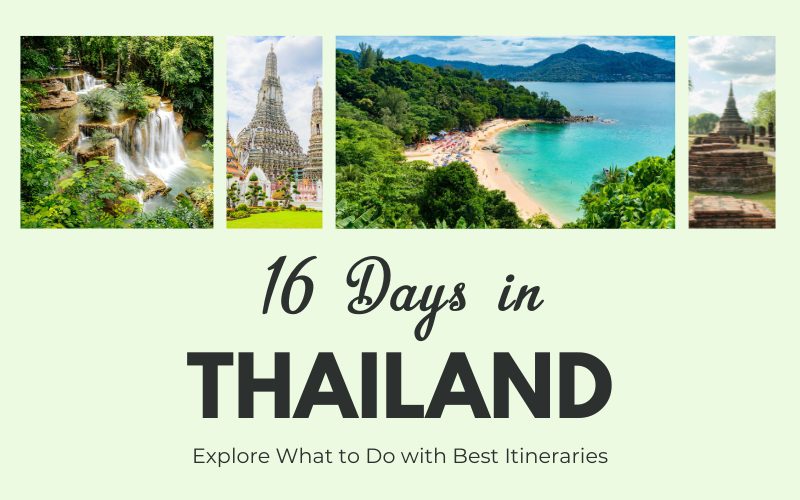
16 days is enough to combine Bangkok, Northern Thailand and an Andaman beach without making every day a race. A balanced plan gives roughly three nights to Bangkok and the historic centre, six to seven nights to Chiang Rai and Chiang Mai, and four to five nights to Phuket or Koh Lanta. The additional day should protect the journey as a weather buffer, slower heritage stop or genuine beach break. Plan approximately USD 1,150-3,250 per person for ground arrangements, excluding international and domestic flights, visa costs, insurance and personal shopping.
Best Ways to Spend 16 Days in Thailand
- Exotic Discoveries through 16 Days in Thailand Tour
- Classic Thailand 16 Days Tour from Bangkok to Phuket
- Explore Every Corner of Thailand in 16 Days Tour
- Discover the Best of Vietnam and Thailand in 16 Days
- Foodie Adventure to Vietnam and Thailand in 16 Days
- Amazing Wonders Of Thailand And Vietnam In 16 Days
| Route | Main stops | Best for | Main advantage | Honest limitation |
| Classic Thailand with Phuket | Bangkok, Kanchanaburi, Ayutthaya, Chiang Rai, Chiang Mai and Phuket | First-time visitors who want culture, nature and a relaxed beach finish | Efficient flights protect four nights near the sea | Two domestic flights and a busy first week |
| Historic Thailand with Koh Lanta | Bangkok, Kanchanaburi, Ayutthaya, Sukhothai, Lampang, Chiang Rai, Chiang Mai and Koh Lanta | History lovers and travelers who prefer an overland story | Shows how the old capitals and Lanna North connect | More road time and a ferry or boat transfer at the end |
Both itineraries cover more than a typical two-week holiday, but neither tries to include every famous island. Choose Phuket for flight choice, tours and resort variety. Choose Koh Lanta for a quieter finale and accept the extra transfer through Krabi. The one-day advantage over a 15-day trip should protect the experience from fatigue or weather disruption.
Itinerary 1: Classic Thailand from Bangkok to Phuket
- Route: Bangkok, Kanchanaburi, Ayutthaya, Chiang Rai, Golden Triangle, Chiang Mai and Phuket
- Best for: First-time travelers, couples and families who want Thailand’s major contrasts in one trip
- Strengths: Clear first-trip highlights, four beach nights and convenient arrival and departure airports
- Weaknesses: Two domestic flights; several guided sightseeing days before the beach; Phuket is busier than smaller islands
- Best time: November to February for the most useful compromise between the North and the Andaman coast
- Plan carefully: March and April bring greater heat and possible haze in Northern Thailand. Songkran in mid-April adds memorable cultural energy, but transport, hotels and popular activities can sell out earlier and may cost more. During the wetter Andaman period, keep the marine day flexible rather than cancelling the entire southern stay.
Day 1 | Arrive in Bangkok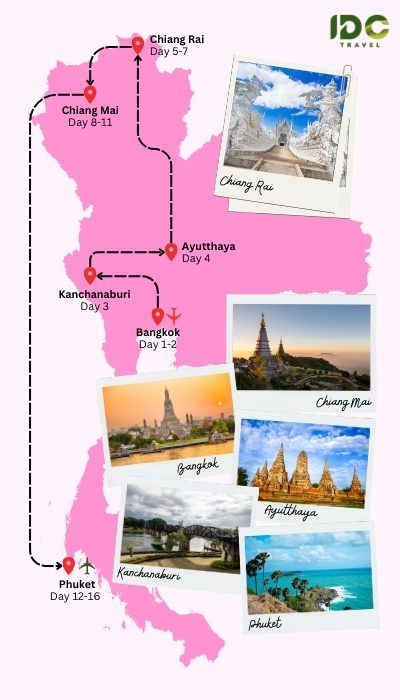
Transfer to the hotel and keep the first evening easy. A riverside walk or nearby dinner is enough after a long-haul flight.
Day 2 | Bangkok Palaces, Temples and River Life
Explore a focused selection such as Wat Pho, Wat Arun and the Grand Palace. Use the Chao Phraya River to reduce road time and add context to the old city.
Day 3 | Bangkok to Kanchanaburi
Travel west via a suitable market stop, then visit the River Kwai area with respectful historical interpretation. Stay overnight instead of returning to Bangkok.
Day 4 | Ayutthaya and Flight to Chiang Rai
Visit selected ruins in Ayutthaya before the flight north. This is a transition day, so avoid adding a late evening program in Chiang Rai.
Day 5 | Chiang Rai Art and Architecture
Compare contemporary landmarks such as Wat Rong Khun and Wat Rong Suea Ten with the quieter pace of the city. Select fewer sites and leave time for a local market.
Day 6 | Tea Country and Mountain Landscapes
Explore Doi Mae Salong or another countryside area with an experienced local guide. Ask permission before photographing people and choose visits with clear community benefit.
Day 7 | Chiang Saen and the Golden Triangle
Follow the Mekong to Chiang Saen and learn about the region’s layered trading history. Treat the border landscape as context, not just a photo stop.
Day 8 | Chiang Rai to Chiang Mai
Transfer south to Chiang Mai and visit Doi Suthep if timing and visibility are good. Keep the evening free around the Old City or night market.
Day 9 | Chiang Mai Nature or Active Day
Choose one substantial activity, such as a forest canopy program, guided cycling or a national-park outing. Check operator safety standards before paying.
Day 10 | Responsible Elephant Experience
Only consider a venue that does not offer riding, shows, forced bathing or constant touching. A transparent observation-focused program is a better fit than a staged encounter.
Day 11 | Chiang Mai Food and Craft
Join a market-led cooking class or meet local artisans. This lighter day balances the preceding activity program and creates room to pack for the South.
Day 12 | Fly from Chiang Mai to Phuket
Use a nonstop flight where schedules allow. Treat the afternoon as recovery time rather than booking a boat trip on the same day.
Day 13 | Andaman Marine Day
Choose a Phuket-area island or snorkeling trip only after checking sea conditions and seasonal operation. Keep a land-based alternative ready.
Day 14 | Phuket at Your Pace
Rest at the beach, explore the old town or book a wellness afternoon. The purpose of this day is to stop the long itinerary from feeling overfilled.
Day 15 | Flexible Phuket Day
Use this as the weather buffer. If Day 13 ran as planned, enjoy another beach, a responsible cultural activity or a slow final dinner.
Day 16 | Depart Phuket
Keep the morning close to the hotel and transfer to the airport with a generous road buffer. Fly home from Phuket if the itinerary and airfare make sense.
>>> Want this complete first-time itinerary arranged for you? See IDC Travel’s live Classic Thailand 16 Days Tour from Bangkok to Phuket. Ask the travel team to adjust the pace, beach hotel, animal-welfare standard and activities to suit your group.
Itinerary 2: Thailand’s Historic Corridor with Koh Lanta
- Route: Bangkok, Kanchanaburi, Ayutthaya, Sukhothai, Lampang, Chiang Rai, Chiang Mai, Krabi and Koh Lanta
- Best for: Travelers who value history, changing landscapes and a quieter island ending
- Strengths: Coherent journey through successive cultural regions, limited backtracking and two slow island days
- Weaknesses: Several overland transfers; only three nights around Koh Lanta; marine access depends on conditions
- Best time: November to February, when the northern leg is generally cooler and the Andaman coast is usually in its stronger travel period
- Plan carefully: March and April can reduce visibility in the North, while wet-season conditions may affect ferries and boat programmes around Koh Lanta. Songkran can still justify an April journey for travellers who value the festival, provided they book early, protect electronics and allow extra transfer time.
Day 1 | Arrive in Bangkok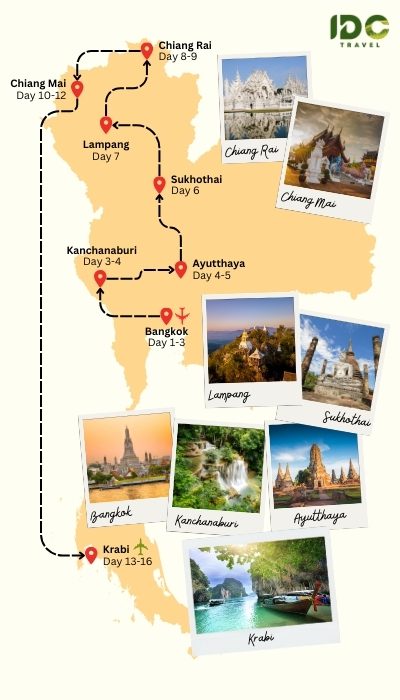
Settle into one neighborhood and recover. Confirm the following day’s meeting point and leave major sightseeing for Day 2.
Day 2 | Old Bangkok and the Khlongs
Pair a small number of royal and temple sites with a canal or river journey. Dress respectfully and plan shade during the hottest hours.
Day 3 | Bangkok to Kanchanaburi
Travel via the Mae Klong or Damnoen Saduak area if it fits the route, then continue to Kanchanaburi for carefully interpreted wartime history.
Day 4 | Erawan and Ayutthaya
Visit Erawan National Park according to current trail and waterfall conditions, then transfer to Ayutthaya. This is a full day, so keep the evening simple.
Day 5 | Ayutthaya to Sukhothai
Explore the core ruins in cooler morning hours, then drive north. A private transfer makes useful rest stops and timing easier.
Day 6 | Sukhothai Historical Park
Cycle or use local transport between selected zones. An informed guide helps distinguish Sukhothai’s artistic legacy from Ayutthaya’s later story.
Day 7 | Sukhothai to Chiang Rai via Lampang
Break the northbound journey in Lampang for a temple, neighborhood or craft stop. Reach Chiang Rai in the evening and avoid adding another attraction.
Day 8 | Chiang Rai Discovery
Visit selected art and temple landmarks, then add a market or relaxed café stop. The day should show both contemporary creativity and local life.
Day 9 | Golden Triangle to Chiang Mai
Travel through Chiang Saen and the Mekong border region before continuing to Chiang Mai. Expect a long but varied day.
Day 10 | Chiang Mai Heritage
Explore the Old City, a market and Doi Suthep without collecting temples. A craft workshop or food experience can create a better balance.
Day 11 | Doi Inthanon
Spend the day in the national park with suitable clothing for changing elevation and weather. Trails and waterfalls should match current conditions and mobility.
Day 12 | Ethical Nature and Local Life
Choose an observation-led elephant program with no riding or performance, or replace it with countryside cycling, cooking or artisan visits.
Day 13 | Fly to Krabi and Continue to Koh Lanta
Fly south and connect by road and boat according to the operating schedule. Do not prepay a sunset cruise on the arrival day.
Day 14 | Koh Lanta Sea or Island Day
Snorkel, dive or explore the island when weather permits. Travelers seeking rest can simply choose one beach and a slow seafood dinner.
Day 15 | Koh Lanta Leisure Day
Keep the final full day unscheduled. It can absorb a weather change or become the genuine pause that makes sixteen days feel different from fifteen.
Day 16 | Depart via Krabi
Allow a generous transfer buffer from Koh Lanta to Krabi Airport. Avoid a tightly timed international connection after a boat-dependent sector.
>>> Prefer a deeper overland journey and quieter island finish? Review IDC Travel’s live Explore Every Corner of Thailand in 16 Days Tour. Ask for a responsible non-riding wildlife policy and confirm the Koh Lanta transfer plan for your month of travel.
Estimated Budget for 16 Days in Thailand
These planning ranges are per person for 16 days and 15 nights, assuming two people share a room. They exclude international and domestic flights, visas, insurance, shopping and premium nightlife.
| Cost category | Budget | Mid-range | Premium |
| Accommodation for 15 nights | USD 375-825 | USD 1,050-2,250 | USD 3,000-7,500 |
| Meals and drinks | USD 240-480 | USD 560-1,120 | USD 1,280-2,400 |
| Ground transport and boats | USD 260-820 | USD 750-2,000 | USD 2,000-5,200 |
| Guides and activities | USD 275-1,125 | USD 800-2,400 | USD 2,000-5,000 |
| Estimated ground total | USD 1,150-3,250 | USD 3,160-7,770 | USD 8,280-20,100 |
- Itinerary 1 adds two domestic flights but can reduce road fatigue.
- Itinerary 2 has one major domestic flight and more private overland transport.
Compare quotes using the same hotel category, guide coverage, baggage, park fees and boat inclusions rather than the headline total alone. IDC Travel’s Thailand trip budget breakdown can help identify the categories most likely to move.
Essential Travel Guide for a 16-Day Thailand Journey
Do You Need a Visa and TDAC?
Entry conditions vary by nationality, passport and length of stay. Check the Ministry of Foreign Affairs’ official Thai e-Visa website for the rule that applies to your passport. An online application remains subject to approval, so do not treat submission as permission to enter.
Non-Thai nationals entering Thailand must also submit the Thailand Digital Arrival Card. The official TDAC guide states that it can be completed within three days before arrival, including the arrival date. TDAC is not a visa and must be submitted again for a later re-entry.
How Much Cash Should You Carry?
Thailand uses the Thai baht, or THB. Cards are convenient in Bangkok, Chiang Mai, Chiang Rai, Phuket and established resorts, while cash remains useful for markets, rural stops, small eateries and some local transfers. Withdraw before the Golden Triangle, national-park excursions or island sectors rather than expecting an ATM at every stop.
Carry two payment methods and keep them separately. Check ATM and foreign-use fees before confirming a transaction, and avoid carrying the entire 16-day budget in cash. IDC Travel’s Thailand currency guide provides more detailed exchange and payment guidance.
Where Can an International Thailand Trip Begin?
Thailand’s major international gateways include Suvarnabhumi Airport (BKK) and Don Mueang International Airport (DMK) in Bangkok, Chiang Mai International Airport (CNX) and Mae Fah Luang–Chiang Rai International Airport (CEI) in the North, Phuket International Airport (HKT) on the Andaman coast and Hat Yai International Airport (HDY) in the Deep South.
For a journey combining Bangkok, Northern Thailand and an Andaman island, Bangkok, Chiang Mai and Phuket are normally the most useful gateways. However, international and domestic routes vary by travel date. Check the whole journey before committing to separate tickets, particularly when baggage must be collected and checked in again.
Which Airports and Transfers Fit These Itineraries?
For the classic Bangkok-to-Phuket itinerary, arrive through BKK or DMK, use a domestic flight to reach Chiang Rai, and fly south from Chiang Mai when a suitable service is available. If a direct Chiang Mai–Phuket flight does not operate on your date, compare a connection through Bangkok before fixing the final northern hotel night. Departing internationally from Phuket can prevent an unnecessary return to Bangkok.
The Koh Lanta itinerary begins in Bangkok and continues overland through Kanchanaburi, Ayutthaya, Sukhothai, Lampang and Northern Thailand. These road sectors are part of the journey, but they need a comfortable vehicle, planned rest stops and realistic departure times. IDC Travel’s Thailand car rental with driver service can keep this section coordinated instead of dividing it among unrelated transfers.
For the southern leg, compare flights from Chiang Mai to Krabi or another suitable gateway based on the current schedule. Reaching Koh Lanta may require a combination of road and ferry transfers. Do not place a separate international flight immediately after this weather-sensitive sector. An early departure may justify spending the final night nearer Krabi Airport.
If the international and domestic tickets do not connect safely, contact IDC Travel before paying for separate reservations. The team can review the airport sequence, baggage rules and final island transfer as one journey.
How Should You Stay Connected Across Thailand?
Buy and activate a Thai SIM or eSIM before leaving Bangkok, Chiang Rai, Chiang Mai or Phuket. Use an official operator counter, confirm that the package covers the full 16-day stay and test calls, data and hotspot functions before an overland sector.
Coverage may weaken in mountain areas, parks and at sea. Save driver contacts, accommodation addresses and tickets offline. Download maps for the Golden Triangle, Doi Inthanon and the island sector, and carry a power bank. A local SIM helps with coordination but should not replace an agreed meeting point.
When Is the Best Time to Visit Thailand for 16 Days?
November to February offers the best overall balance for both 16-day itineraries. Northern Thailand is generally cooler, and Phuket, Krabi and Koh Lanta are usually within the stronger period for Andaman beach and marine activities. This is also peak season, so convenient flights, experienced guides and well-located island hotels may sell out earlier.
Thailand broadly has hot, rainy and cooler seasons, but the regional calendars are not identical. The North and central regions are commonly hottest in March and April, wetter from around May to October and cooler from November to February. The Andaman coast generally offers more dependable beach planning from November to April. Conditions can still vary locally, particularly in national parks and at sea.
- Classic Bangkok-to-Phuket itinerary: November to February is the most comfortable option for the long sightseeing section and beach finish. March and April remain possible, but heat and possible Northern haze can reduce the value of outdoor days.
- Historic corridor and Koh Lanta itinerary: November to February supports the long overland journey and normally gives the island section a better chance of suitable sea conditions. Keep the final ferry and road transfer conservative even during the stronger season.
Songkran in mid-April can be a highlight for travelers who value a major Thai festival. The trade-off is stronger heat, higher demand, crowded transport and possible disruption from water celebrations. Book key services earlier and protect electronics and travel documents.
From May to October, the countryside can be greener and demand lower, but rain may change trails, national-park access, ferries and boat excursions. Keep Day 15 flexible and avoid tying the whole beach stay to one non-refundable marine program.
Review the Tourism Authority of Thailand’s weather information and IDC Travel’s best time to visit Thailand before fixing the northern and island portions.
Thai Dishes to Match with Each Region
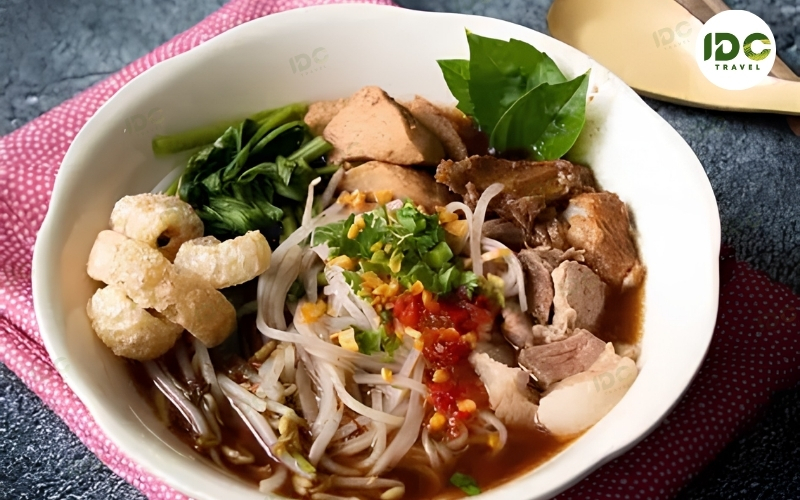
- Kuai tiao ruea (boat noodles): Small bowls of noodles in a deeply seasoned meat broth, closely associated with Bangkok’s canals and market culture.

Kuai tiao ruea (boat noodles)
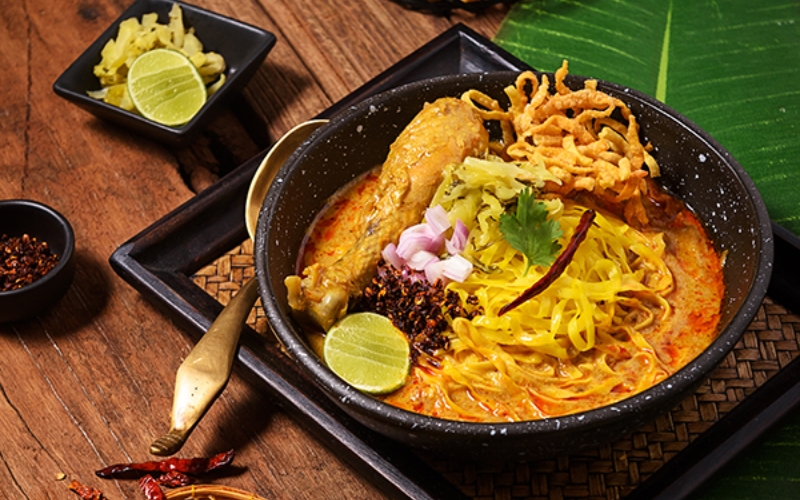
- Khao soi (northern curry noodles): Egg noodles in a coconut curry broth with crisp noodles and pickled vegetables, especially popular in Chiang Mai.
Khao soi (northern curry noodles)
- Sai ua (northern herb sausage): Grilled pork sausage seasoned with herbs and spices, commonly found in northern markets.
Sai oua (northern herb sausage)
- Gaeng hung lay (northern pork curry): A slow-cooked curry with ginger, tamarind and warm spices, with less coconut influence than many central dishes.
Gaeng hung lay
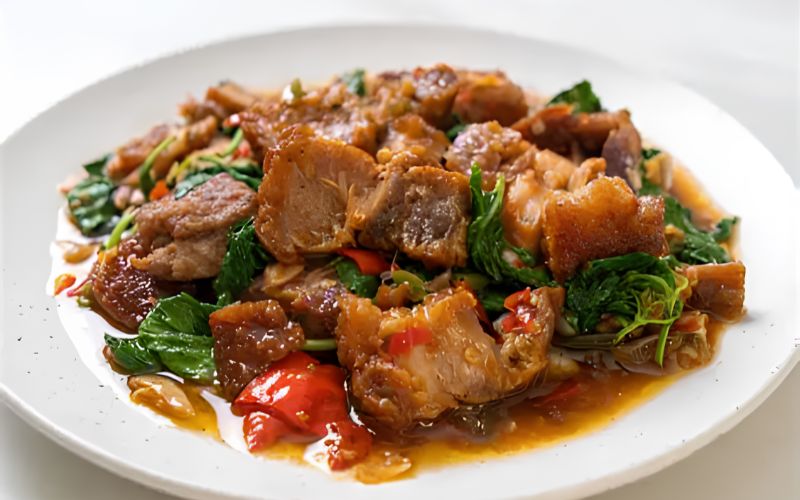
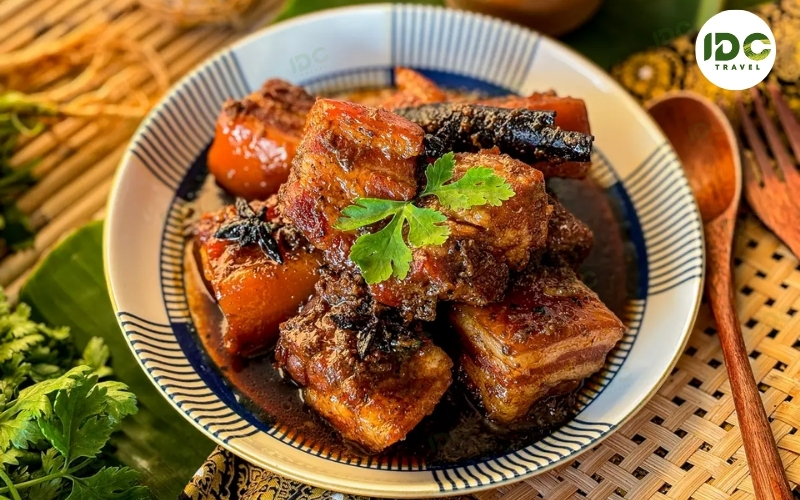
- Moo hong (Phuket-style braised pork): Pork belly slowly braised with pepper, garlic and soy-based seasoning.
Moo hong (Phuket-style braised pork)
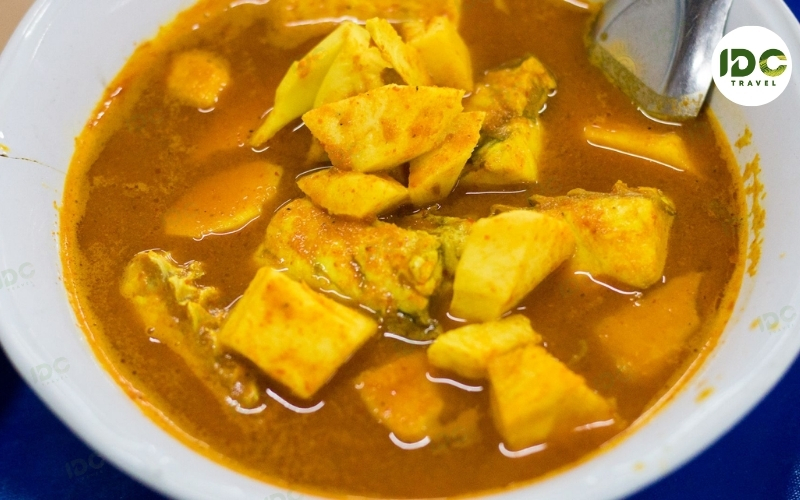
- Gaeng som pla (sour fish curry): A sharp, spicy southern curry that can be much hotter than first-time diners expect.
Gaeng som pla (sour fish curry)
- Khanom la (fine-thread rice flour sweet): A delicate southern snack made from rice flour and sugar.
Khanom la (fine-thread rice flour sweet)


Ask about spice level, shellfish, fish sauce, peanuts and shared cooking oil when allergies matter. A translated allergy card is more reliable than pointing at the visible ingredients.
Make the Sixteenth Day Protect the Journey
The final day of a 16-day Thailand itinerary should protect the international departure rather than become another ambitious sightseeing day. Its value lies in reducing the risk created by ferries, long road transfers, domestic flights and separately booked tickets.
- Keep the previous night close to the departure gateway: For the classic route, finish in Phuket before flying out. For the Koh Lanta route, allow enough time to reach Krabi without depending on a tight same-day connection.
- Use Day 15 as the flexible experience day: Place the final beach, island or marine activity before the departure day. If weather affects an earlier sea excursion, this day can absorb the change without disrupting the international flight.
- Do not connect directly from a ferry to a separate international ticket: Ferry conditions, road traffic and transfer coordination can change. Build a reasonable buffer or stay near the airport when the departure time is early.
- Use open-jaw international flights when practical: Arriving in Bangkok and departing from Phuket, Krabi or Chiang Mai can eliminate unnecessary backtracking. Compare the full route and baggage arrangements before confirming separate tickets.
- Place extra time where it supports the trip’s purpose: Keep it in Phuket or Koh Lanta when beach weather and recovery matter most. Place it in Chiang Mai when food, crafts or a slower northern experience is the priority.
- Use the extra day for substitution, not expansion: If one destination is removed, select a meaningful replacement from IDC Travel’s guide to the best places to visit in Thailand. Avoid adding another region simply because one day appears available.
A protected final day may look less exciting on paper, but it makes the whole journey more reliable, comfortable and easier to enjoy.
Build Your 16-Day Thailand Journey Around Your Travel Style
Sixteen days works best when the itinerary answers one clear preference: classic variety with an easy Phuket exit, or deeper history with a quieter Koh Lanta finish. IDC Travel can adjust either journey for family pace, mobility, dietary needs, beach season and flight schedule. Contact IDC Travel to plan the trip around your real arrival and departure dates.
Read more: