



Whatever you want from your Vietnam, Cambodia, Laos, Myanmar & Thailand tour, our travel advisors are ready to help you with 1:1 advice.
Call our local experts: +84913.000.858
Vietnam preserves an exceptional historical, cultural, and natural heritage, which makes the destination exceptionally attractive for all tourists. It would be too tedious for us to list all the treasures that our country conceals. Discover the wonders of Vietnam with these must-see sites during your stay in the land of the dragon.
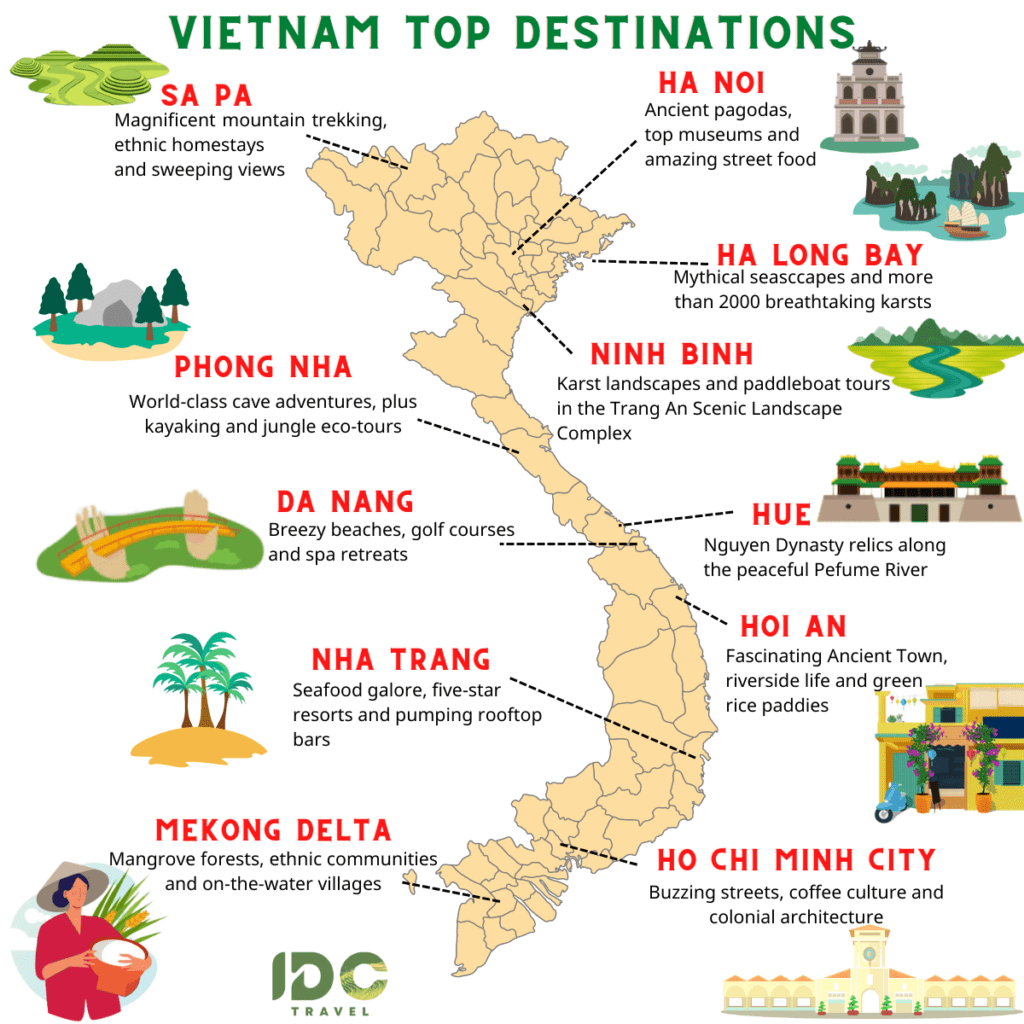
Vietnam’s top destinations
Vietnam’s must-see destinations (Sapa, Hanoi, Halong Bay, Ninh Binh, Hue, Hoi An, etc.) reflect the country’s geographic diversity, long history, and living culture. From mountain highlands in the north to river life in the south, these places consistently rank as essential stops for first-time and repeat travelers.
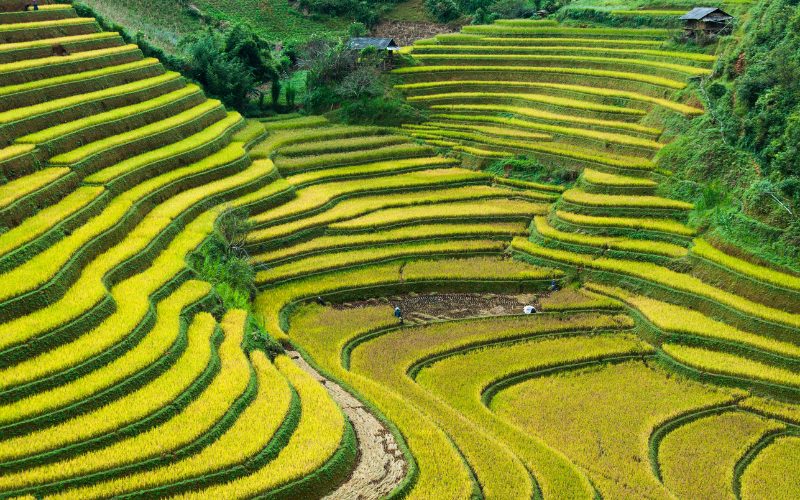
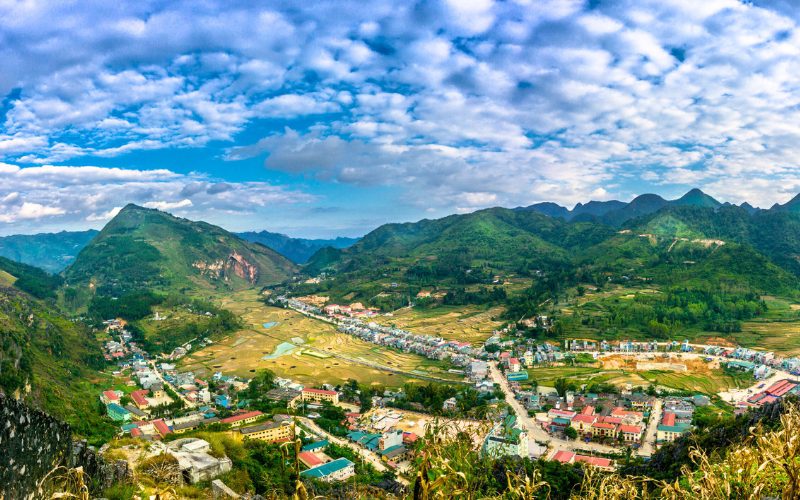
Sapa is Vietnam’s highest mountain region and home to Mount Fansipan, known as the Roof of Indochina. With a cool climate year-round, it was once a French hill station and remains famous for its terraced rice fields, misty valleys, waterfalls, and ethnic minority villages. Visiting Sapa offers both dramatic scenery and deep cultural encounters with local communities.
Hanoi is Vietnam’s political and cultural heart, with over a thousand years of history. The city is known for its well-preserved Old Quarter, lakes, temples, and colonial architecture. Street food is a major highlight, and spending at least two days allows travelers to experience Hanoi’s rhythm, heritage, and culinary scene.
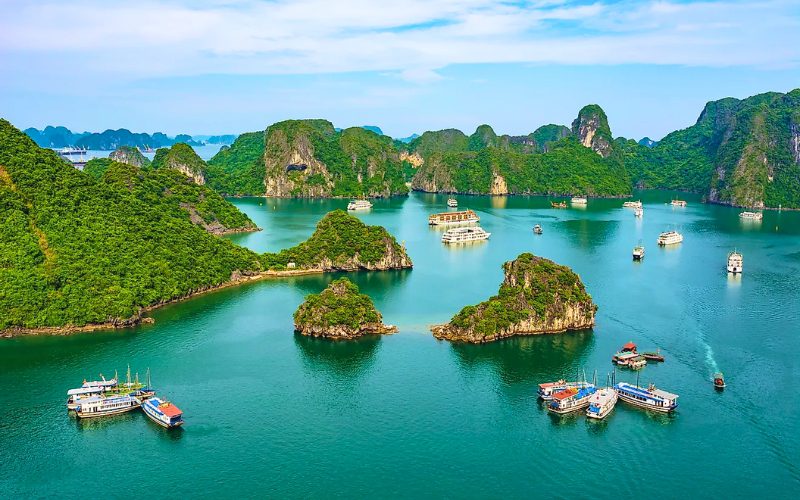
Located in Quang Ninh Province, Halong Bay is a UNESCO World Heritage Site and one of the New Seven Natural Wonders of the World. The bay is famous for thousands of limestone karsts rising from emerald waters. Cruises typically last two to three days, and many travelers now choose Bai Tu Long Bay or Lan Ha Bay for similar scenery with fewer crowds.
Often called “Ha Long Bay on land”, Ninh Binh features limestone mountains, rivers, rice fields, and ancient temples. Easily reached from Hanoi in about two hours, it combines natural beauty with historical sites, making it a key stop on northern Vietnam itineraries.
Hue was the capital of Vietnam’s last feudal dynasty and remains the country’s center of royal heritage. Visitors come to explore the Imperial City, royal tombs, pagodas, and traditional gardens. Hue is also known for its refined cuisine and royal court music, with dishes like bun bo Hue being culinary icons.
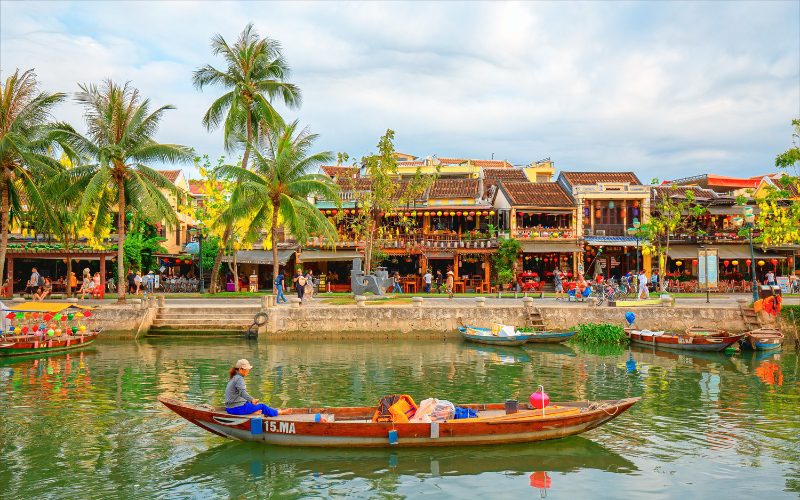
Hoi An is a UNESCO-listed ancient town renowned for its lantern-lit streets, preserved architecture, and multicultural influences. Travelers can explore the old town, cycle through the countryside, relax on nearby beaches, visit craft villages, and enjoy tailor-made shopping. Its blend of heritage, leisure, and cuisine makes it one of Vietnam’s most beloved destinations.
Ho Chi Minh City is Vietnam’s economic hub and contrasts sharply with Hanoi. The skyline is modern and energetic, while traces of colonial history remain. The city is ideal for shopping, nightlife, cafés, and understanding the fast-paced lifestyle of southern Vietnam.
The Mekong is one of the longest rivers in the world that crosses several countries before flowing into the sea from Vietnamese territory.
The Mekong Delta in Vietnam is a special region where almost all human activities depend on the Mekong River. You will find lush orchards, rice fields as far as the eye can see, floating markets that are held very early in the morning, and friendly people.
>>> Read more: Top 10 most popular destinations
We strongly recommend that you take out international travel insurance. By having international coverage, you won’t have to worry about emergencies that can arise anytime, anywhere, before or during your trip, such as having to fly home to join a family member or having to modify or cancel a trip due to a natural disaster.
For most travelers, the ideal length of a Vietnam discovery tour is 10 to 14 days.
This timeframe allows:
Shorter trips of 7 to 8 days usually focus on one or two regions, while longer journeys of 15 days or more allow deeper exploration and slower travel.
>>> Recommend tours:
You can visit Vietnam year-round, but when considering weather patterns by region, discovery tours are the most comfortable.
Experienced tour planners adjust routes seasonally to maintain comfort and safety rather than offering fixed itineraries year-round.
>>> Read more: The best time to visit Vietnam

Vietnam currency is the Vietnamese dong, written as VND or ₫. For most trips, the easiest approach is to pay everyday expenses…

A well-planned Nha Trang itinerary does not need a long list of beaches and islands. Two full days are enough for the…

Vietnam’s golden rice fields turn gold on a rolling schedule that runs from late May all the way through November, so “rice…
