The Vietnam itinerary 5 days is enough to explore its regions well, but not to cover the whole country without spending too much of the trip in airports and vehicles. Choose Northern Vietnam for Hanoi, mountains and limestone scenery; Central Vietnam for imperial heritage and old-town atmosphere; or Southern Vietnam for Saigon’s energy and the waterways of the Mekong Delta. The 3 itineraries below show how to make each choice work without turning the holiday into a race.
Which Region Should You Visit in Vietnam for 5 days?
The best region for a 5-day Vietnam itinerary depends on what you want to experience most. Choose Northern Vietnam for mountain scenery and active days, Central Vietnam for heritage and a compact route, or Southern Vietnam for the contrast between Saigon and the Mekong Delta. Staying within 1 region protects sightseeing time and avoids turning a short holiday into a sequence of airports and long transfers.
| Route | Overnight plan | Best for | Main advantage | Honest limitation |
| Northern Adventure | Hanoi, Ninh Binh and Sapa | First-time visitors who enjoy scenery, culture and active days | Strong landscape variety without a domestic flight | Long road transfers and no overnight Ha Long Bay cruise |
| Central Heritage | Hue, Hoi An and Da Nang | Food lovers, couples, families and travelers who prefer a gentler pace | Compact route with history, crafts and an easy airport finish | No Hanoi, Ha Long Bay or Ho Chi Minh City |
| Saigon and the Mekong Delta | Ho Chi Minh City, My Tho and Can Tho | Travelers who want city energy, local food and river life | Clear city-and-countryside contrast without a domestic flight | Early starts and a substantial road journey between Ho Chi Minh City and Can Tho |
- Choose the North if mountains, walking and dramatic karst scenery matter most.
- Choose Central Vietnam if you prefer heritage, food and shorter transfers.
- Choose the South for Saigon’s urban energy, Mekong waterways and consistently warm weather.
Combining 2 or 3 regions in only 5 days is rarely worthwhile because flights, airport procedures and hotel changes would replace much of the actual travel experience.
Itinerary 1: Northern Adventure from Hanoi
- Route: Hanoi, Ninh Binh, Sapa

- Best for: Active travelers who want city culture, river landscapes and mountain communities
- Strengths: Three contrasting northern environments and no domestic flight
- Weaknesses: Two long road journeys and less time in Hanoi
- Best time: March to May or September to November for a useful balance of walking weather and clearer scenery
- Should avoid: This exact route when severe mountain weather is forecast or when 5 days include late arrival and early departure flights
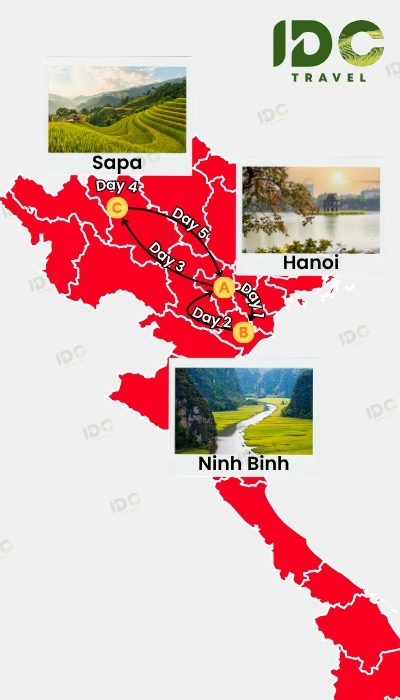
Day 1 | Arrive in Hanoi and taste the Old Quarter
Check into a central hotel and explore Hoan Kiem Lake and the Old Quarter at walking pace. Add a short food tour if your flight arrives early; otherwise, rest for the active days ahead.
Day 2 | Ninh Binh landscapes
Leave early for Trang An or Tam Coc, then choose one historical stop such as Hoa Lu. A viewpoint can be added if fitness, heat and daylight allow. Return to Hanoi or continue according to your transfer plan.
Day 3 | Travel to Sapa and meet the highlands
Use the morning road transfer to Sapa, check in, and spend the afternoon on a short village walk. Ask about trail surface and recent rain before selecting a route.
Day 4 | Trek at the right difficulty
Choose a guided valley walk suited to your knees, footwear and experience. A meaningful day includes time to understand local livelihoods and landscapes, not just photographs at several villages.
Day 5 | Return to Hanoi and depart
Allow a large road buffer. This route works best with an evening flight or an extra Hanoi night after the 5-day program. If your departure is early, return to Hanoi on day four and shorten the trek.
>>> Want the northern itinerary organized with guides and transfers? View IDC Travel’s 5 Days Northern Vietnam Adventure, a live 5-day/4-night journey through Hanoi, Ninh Binh and Sapa. Ask IDC Travel to align the final road transfer with your flight time.
Itinerary 2: Central Heritage from Hue to Da Nang
- Route: Hue, Hai Van Pass and Hoi An (Da Nang)
- Best for: Travelers who enjoy architecture, crafts, local food and compact travel days
- Strengths: A coherent regional story and easy departure through Da Nang
- Weaknesses: Weather varies sharply by season and some heritage days involve prolonged outdoor walking
- Best time: February to May for generally favorable sightseeing conditions and less intense summer heat
- Should avoid: A rigid outdoor schedule during periods of heavy central-region rain or tropical storms
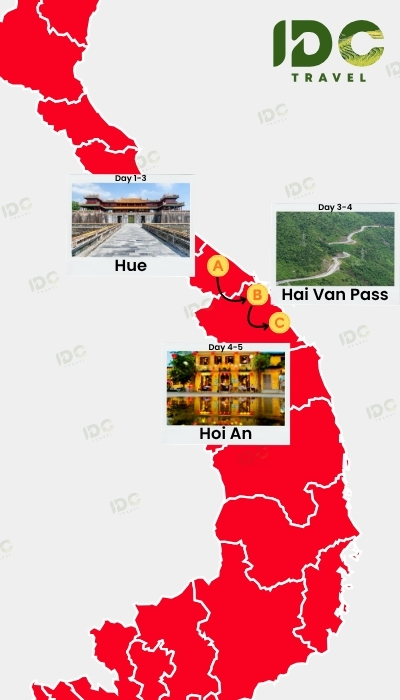
Day 1 | Arrive in Hue
Settle near the center and take an easy Perfume River or market walk. Save the Imperial City for the next morning, when your attention and energy are stronger.
Day 2 | Hue’s imperial heritage
Explore the Imperial City, then choose 1 or 2 royal tombs rather than rushing through all of them. A guided visit helps connect the monuments to Nguyen-dynasty history and design.
Day 3 | Local craft and lagoon life
Use the morning for a traditional craft or garden-house experience. Later, head toward a lagoon or rural area for a slower view of daily life, with the program adjusted to current weather.
Day 4 | Cross Hai Van Pass to Hoi An
Travel south with carefully chosen stops at Lang Co or the Hai Van Pass. Check into Hoi An and explore the old town after the heat eases, when lanterns and riverside streets are most atmospheric.
Day 5 | Hoi An morning and Da Nang departure
Walk or cycle early, visit a market or join a short craft activity, then transfer to Da Nang airport. Do not schedule a distant attraction before an afternoon flight.
>>> Prefer a compact heritage itinerary with fewer transfers? Explore IDC Travel’s Discover Beauty of Central Vietnam in 5 Days, a live 5-day/4-night program through Hue, Hoi An and Da Nang. The pace and experiences can be tailored to your arrival city and weather.
Itinerary 3: Saigon and the Mekong Delta
- Route: Ho Chi Minh City, My Tho, Can Tho
- Best for: Travelers who want urban culture, river life, local markets and a compact introduction to Southern Vietnam
- Strengths: A clear contrast between Saigon and the Mekong Delta, only one overnight stay outside the city and no domestic flight
- Weaknesses: An early start for Cai Rang Floating Market, two substantial road transfers and limited time to explore the Delta in greater depth
- Best time: December to April for generally drier weather and easier road and boat planning
- Should avoid: Treating the Mekong Delta as a rushed day trip when river life is a main priority, or fixing every boat activity in advance during the wetter months
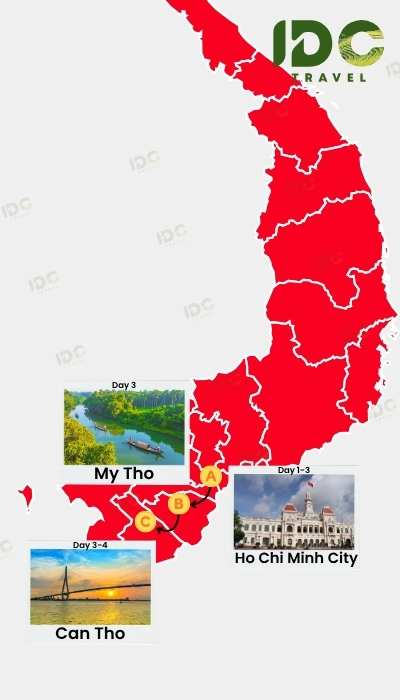
Day 1 | Arrive in Ho Chi Minh City
Arrive at Tan Son Nhat International Airport and transfer to your hotel. Keep the first day light, especially after a long-haul flight. A short walk around Nguyen Hue Walking Street or the Saigon River area is enough for an introduction without committing to a full sightseeing program.
Day 2 | Discover Ho Chi Minh City
Spend the day exploring the city’s historic and cultural landmarks. A balanced route can include the Reunification Palace, the War Remnants Museum, Notre-Dame Cathedral Basilica of Saigon, Saigon Central Post Office and a local market. Choose three or four major stops rather than trying to cross the city repeatedly in traffic.
Day 3 | Travel from Ho Chi Minh City to My Tho and Can Tho
Leave the city for My Tho in the Mekong Delta. A local boat journey can introduce you to canals, orchards and riverside communities before the route continues to Can Tho. Families, small groups and travelers carrying substantial luggage may find an arranged Vietnam car rental with driver more comfortable than coordinating several separate transfers.
Day 4 | Cai Rang Floating Market and Return to Ho Chi Minh City
Start early for Cai Rang Floating Market, when river activity is most visible. Continue with a local orchard, village or canal experience before returning to Ho Chi Minh City. Because this is the route’s longest day, avoid adding a late evening tour after reaching the city.
Day 5 | Departure
Use the final morning for a relaxed breakfast, last-minute shopping or a short neighborhood walk, depending on the flight time. Leave additional time for traffic when traveling to Tan Son Nhat International Airport.
>>> For a ready-made route with Ho Chi Minh City, My Tho, Can Tho and Cai Rang, see IDC Travel’s Saigon and Mekong Delta 5 Days Excursion.
Estimated Cost for 5 Days in Vietnam
These planning ranges are per person for 5 days and 4 nights, assuming 2 people share a room. They exclude international and domestic flights, visa costs, travel insurance and shopping.
| Cost category | Budget | Mid-range | Luxury | Money-saving tip |
| Accommodation for 4 nights | USD 80-180 | USD 240-560 | USD 700-1,800 | Keep one main hotel base and avoid paying for unnecessary late check-outs |
| Meals and drinks | USD 60-130 | USD 150-300 | USD 350-700 | Combine local lunches with selected restaurant dinners rather than upgrading every meal. |
| Ground transport | USD 60-180 | USD 180-420 | USD 500-1,100 | Use a private transfer where it protects time, but avoid adding distant stops simply because a vehicle is available. |
| Guides and activities | USD 50-160 | USD 180-450 | USD 500-1,200 | Prioritize a guide for imperial history, village context or a suitable mountain walk instead of every free city visit. |
| Estimated 5-day total | USD 250-650 | USD 750-1,730 | USD 2,050-4,800 | Compare complete inclusions, not only the headline price of a transfer or activity. |
Prices vary by season, hotel class, group size and the difficulty of the Sapa programme. A cheap mountain tour may exclude a suitable guide, private pickup or weather-related flexibility, while a low transfer quote may be based on a smaller vehicle than the group needs.
Essential Travel Guide for a 5-Day Vietnam Trip
Do You Need a Visa for Vietnam?
Visa requirements depend on nationality, passport and intended entry point. The official Vietnam e-Visa portal currently states that an e-Visa may be valid for up to 90 days with single or multiple entries. It lists fees of USD 25 for single entry and USD 50 for multiple entry. Check eligibility and ensure that the airport or border gate in your itinerary accepts the document before paying.
Enter your name, passport number and intended entry point exactly as shown in your travel documents. IDC Travel’s Vietnam pre-arrival information guide provides a traveller-friendly overview, but the government portal remains the final authority.
How Should You Use Cash, Cards and ATMs?
Vietnam uses the Vietnamese dong, or VND. Cards are widely accepted at established hotels, larger restaurants and shops in Hanoi, Hue, Da Nang and Ho Chi Minh City, but cash remains useful in markets, small cafés, family-run businesses and rural areas.
Withdraw or exchange money before leaving a major city. ATMs are easier to find in Hanoi, Da Nang, Hue and Ho Chi Minh City than in mountain villages or during Mekong Delta excursions. Ninh Binh, Sapa, Hoi An and Can Tho have banking services, but a planned activity may begin before a convenient ATM opens or may take place far from the city center.
Carry smaller notes for local meals, market purchases and short transport. Check the denomination carefully before handing over a 500,000 VND note, because its color can be confused with the 20,000 VND note in poor light. For a complete explanation of notes, ATMs and payment choices, read IDC Travel’s Vietnam Currency Guide.
Which International Airport Should You Fly Into?
Fly into Hanoi for Northern Vietnam, Da Nang or Hue for Central Vietnam, and Ho Chi Minh City for Southern Vietnam. These gateways serve different parts of the country, so booking the right airport is one of the easiest ways to avoid unnecessary domestic flights.
- Northern Vietnam: Noi Bai International Airport (HAN) is the practical gateway for Hanoi, Ninh Binh and Sapa.
- Central Vietnam: Da Nang International Airport (DAD) is the most convenient single gateway for Hoi An and Da Nang. An open-jaw trip can arrive through Phu Bai International Airport (HUI) near Hue and depart from Da Nang.
- Southern Vietnam: Tan Son Nhat International Airport (SGN) is the gateway for Ho Chi Minh City and overland trips into the Mekong Delta.
If international schedules require a connection elsewhere in Vietnam, allow enough time for baggage collection, terminal changes and immigration procedures. Do not plan a long road transfer immediately after a tight international-to-domestic connection.
| Route | Best for | Main destinations | Practical gateway | Travel pace |
| Northern Vietnam | Mountains, historic Hanoi and limestone scenery | Hanoi, Ninh Binh, Sapa | Hanoi (HAN) | Active, with a long mountain transfer |
| Central Vietnam | Imperial history, architecture and food | Hue, Hoi An, Da Nang | Hue (HUI) and/or Da Nang (DAD) | Balanced and relatively compact |
| Southern Vietnam | Urban culture, markets and river life | Ho Chi Minh City, My Tho, Can Tho | Ho Chi Minh City (SGN) | Moderate, with one Delta overnight |
Which Airports Work Best for These 3 Itineraries?
The best airport depends on the chosen region: use Noi Bai International Airport for the northern route, Phu Bai in Hue and Da Nang for Central Vietnam, or Tan Son Nhat International Airport for Saigon and the Mekong Delta.
- Northern Vietnam: Fly into and out of Noi Bai International Airport (HAN). Because the Sapa road transfer is long, this itinerary works best when the arrival is not late at night and the departure flight leaves in the evening or on the following day.
- Central Vietnam: When flight schedules work, arrive through Phu Bai International Airport (HUI) and depart from Da Nang International Airport (DAD). This creates a logical one-way journey from Hue through the Hai Van Pass and Hoi An. If Da Nang offers better international connections, arrive there and transfer to Hue by road.
- Southern Vietnam: Use Tan Son Nhat International Airport (SGN) for both arrival and departure. My Tho and Can Tho are reached by road rather than by domestic flight. Return to Ho Chi Minh City for the final night instead of attempting to travel directly from Can Tho to an international departure.
Hoi An does not have its own airport, and the airport code should always be checked before confirming a transfer. For all 3 routes, allow time for immigration, baggage collection and city traffic rather than treating arrival and departure days as complete sightseeing days.
Should You Buy a Local SIM or eSIM?
A local SIM or Vietnam eSIM is useful for maps, translation, ride-hailing and communication with drivers. Activate it before beginning a long road transfer and download offline maps for Sapa, rural Ninh Binh and the Mekong Delta.
Mobile coverage is usually reliable in the main cities, but signal quality can fall in mountain valleys, on river excursions and inside some heritage buildings. Save hotel addresses, tickets and your driver’s contact details offline instead of depending entirely on a live connection.
When Is the Best Time to Visit Vietnam for 5 Days?
March to May provides the broadest countrywide overlap for a short Vietnam trip, but the best month still depends on the region you choose. Vietnam’s long north-to-south geography creates different weather patterns, which is another reason not to combine distant regions in only 5 days.
- Northern Vietnam: March to May and September to November usually offer the most practical conditions for Hanoi, Ninh Binh and Sapa. Winter can be cool, misty and unexpectedly cold in the mountains, while June to August is generally hotter and wetter. Sapa’s altitude means visibility, rain and trail conditions can change even when Hanoi’s weather appears suitable.
- Central Vietnam: February to May normally gives Hue, the Hai Van Pass and Hoi An a useful balance of drier weather and manageable heat. Conditions become hotter from late spring into summer. Rain and tropical storms are more likely to disrupt outdoor visits and road travel later in the year, particularly from September onward.
- Southern Vietnam: December to April is generally the drier and easier period for Saigon and the Mekong Delta, making road journeys, river activities and early-morning departures more predictable. May to November can still be rewarding, with greener landscapes and fewer dry-season crowds, but short heavy showers and occasional local flooding require more flexible boat and road plans. For Itinerary 3, keep the Mekong activities movable and avoid placing the longest road transfer immediately before the international flight.
For the northern itinerary, check Sapa’s short-range forecast before selecting the trekking difficulty. For the central itinerary, keep the Hai Van Pass and outdoor heritage visits movable if rain is forecast.
Weather varies considerably between Northern, Central and Southern Vietnam. For a more detailed month-by-month and regional comparison, read IDC Travel’s guide to the best time to visit Vietnam before fixing your route.
Must-Try Food When Travel in Vietnam
Food changes noticeably between Vietnam’s regions, so the dishes below help each itinerary retain its own identity.
Northern Vietnam Flavors
Northern Vietnamese cooking generally favors balanced seasoning, clear broths, fresh herbs and restrained sweetness. Hanoi dishes often allow the flavor of grilled meat, noodles or broth to remain distinct rather than relying on heavy sauces.
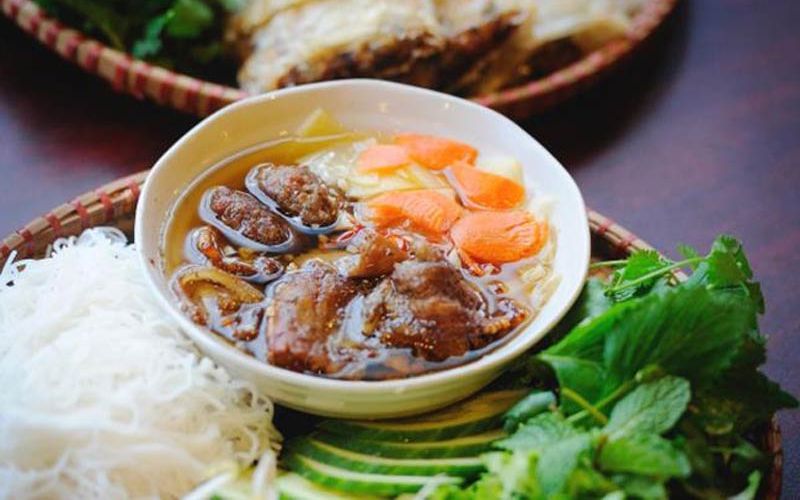
- Bun cha: Grilled pork served with rice noodles, herbs and a savory dipping broth, closely associated with Hanoi.
Bun Cha
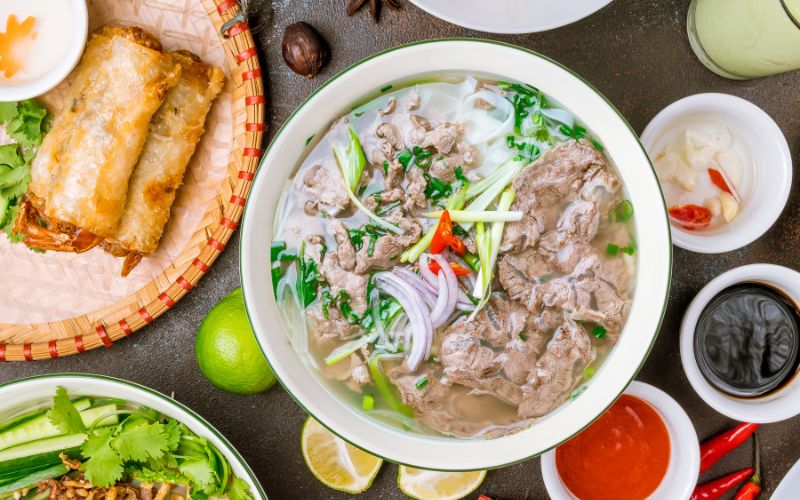
- Pho bo: Rice-noodle soup with beef and aromatic broth, suitable for breakfast or a simple evening meal.
Pho bo (beef pho)
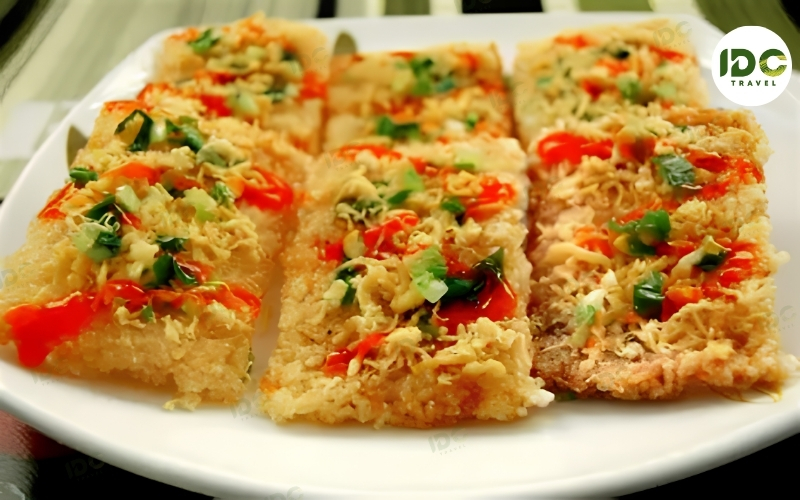
- Com chay Ninh Binh: Crisp rice accompanied by sauce, meat or vegetables, commonly linked with Ninh Binh cuisine.
Com chay Ninh Binh
Central Vietnam Flavors
Central Vietnamese food is often bolder, saltier and spicier than food in the North. Hue also carries a strong imperial culinary influence, while Hoi An and Quang Nam are known for noodles, herbs and dishes closely connected to local trading history.
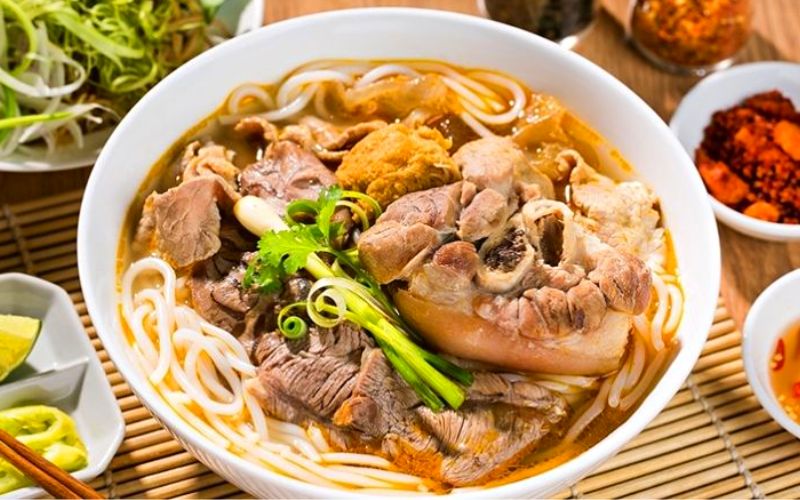
- Bun bo Hue: A fragrant noodle soup with beef, lemongrass and a deeper, spicier broth than many northern noodle soups.
Bun bo Hue (Hue-style beef noodle soup)
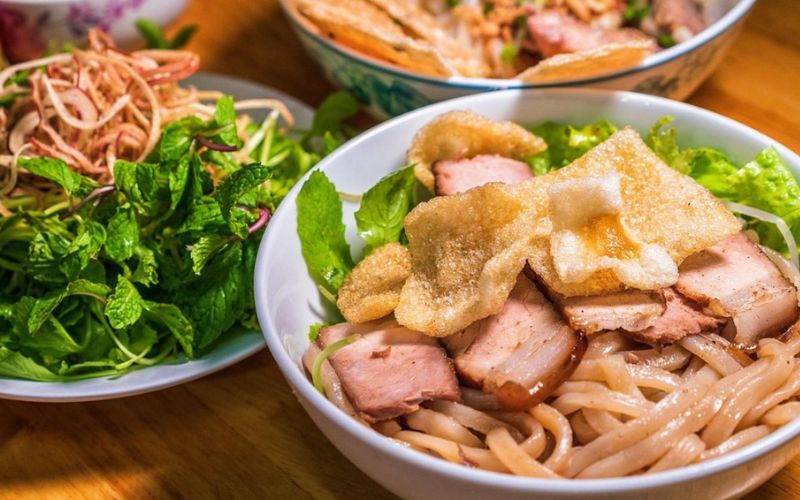
- Cao lau: Hoi An noodles served with pork, greens, herbs and crisp toppings.
Cao lau (Hoi An-style pork noodles)
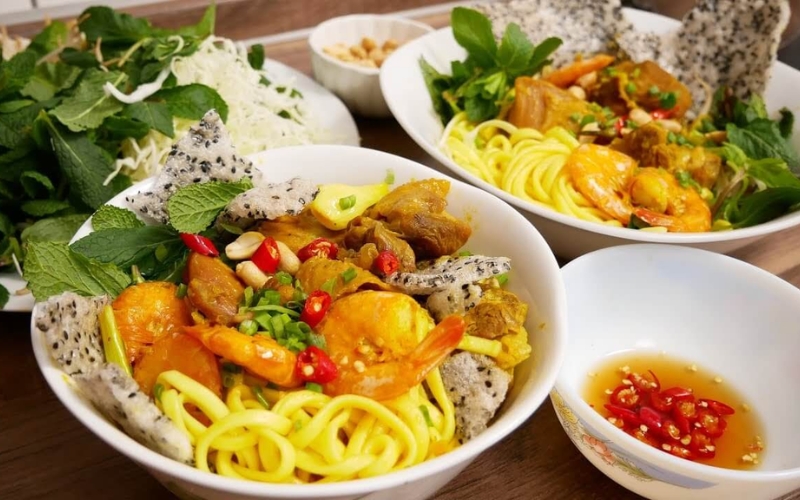
- Mi Quang: Turmeric-colored noodles with a small amount of rich broth, herbs, peanuts and meat or seafood.
Mi Quang
Southern Vietnam Flavors
Southern Vietnamese cooking commonly uses more sweetness, fresh herbs, tropical produce and coconut-based ingredients. Portions can feel generous, while sauces often combine sweet, salty and sour flavors.
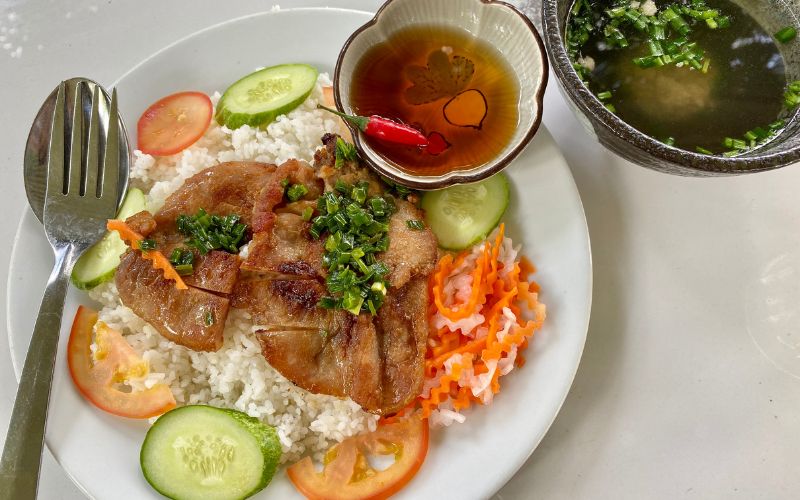
- Com tam: Broken rice commonly served with grilled pork, pickles, egg and fish-sauce dressing in Ho Chi Minh City.
Com tam (broken rice)
- Hu tieu: A southern noodle dish that may be served dry or with broth, with toppings varying by vendor.
Hu Tieu Muc (Squid Noodle Soup)
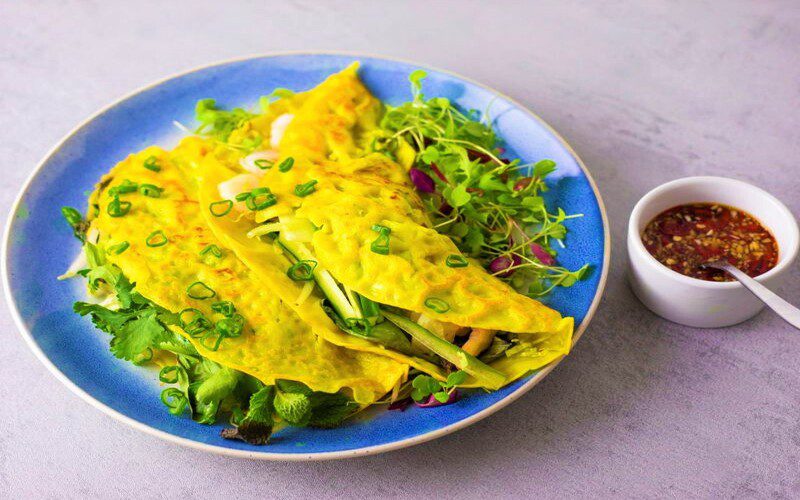
- Banh xeo: A crisp savory pancake filled with ingredients such as pork, shrimp and bean sprouts, eaten with herbs and dipping sauce.
Banh xeo (crispy savory pancake)

Travelers with allergies should ask specifically about fish sauce, shellfish, peanuts, pork stock and shared cooking oil. Showing a translated allergy card is safer than relying only on an English menu. See more in Top 30 Popular Vietnamese Dishes beyond Pho!
Five Planning Mistakes to Avoid A Bad Vietnam Itinerary 5 Days
A 5-day Vietnam itinerary leaves little room for inefficient transfers or unclear priorities. Avoiding the following mistakes will improve the trip more than adding another destination.
- Trying to cross the whole country: 5 days is enough for a strong regional journey, not a complete north-to-south tour. Choose Northern Vietnam, Central Vietnam or a focused southern itinerary so that sightseeing time is not replaced by airports and overnight transfers.
- Counting arrival and departure as full days: Immigration, baggage collection, hotel transfers and flight schedules reduce the time available for activities. Build the itinerary around the hours you can actually use, especially when the first flight arrives late or the final flight departs early.
- Booking every outdoor activity without flexibility: Mountain visibility, coastal weather and boat conditions can change. Keep weather-sensitive activities movable and prepare an indoor, cultural or food-focused alternative for the same area.
- Underestimating transfer fatigue: A road journey may look manageable on a map, but it still requires packing, waiting and settling into another hotel. Avoid scheduling an early excursion immediately after the longest transfer unless the experience genuinely requires it.
- Choosing destinations before choosing priorities: First decide whether the trip should focus on mountains, heritage, food, countryside or coast. Then select the itinerary that supports that interest instead of collecting famous places that do not connect naturally.
The strongest 5-day itinerary usually has an arrival gateway, one regional theme and no more hotel changes than the itinerary truly needs.
Customize your 5-day Vietnam holiday with IDC Travel
A successful 5-day Vietnam itinerary does not depend on visiting the greatest number of places. It depends on choosing one region whose scenery, culture and travel rhythm match your priorities.
Northern Vietnam gives the strongest mountain contrast, Central Vietnam keeps major heritage sites relatively close together, and Southern Vietnam pairs a large city with the waterways of the Mekong Delta. If your dates, flight schedule or mobility needs do not fit these exact versions, IDC Travel can create a personalized Vietnam holiday with suitable hotels, transfers and daily pacing.
Read more: