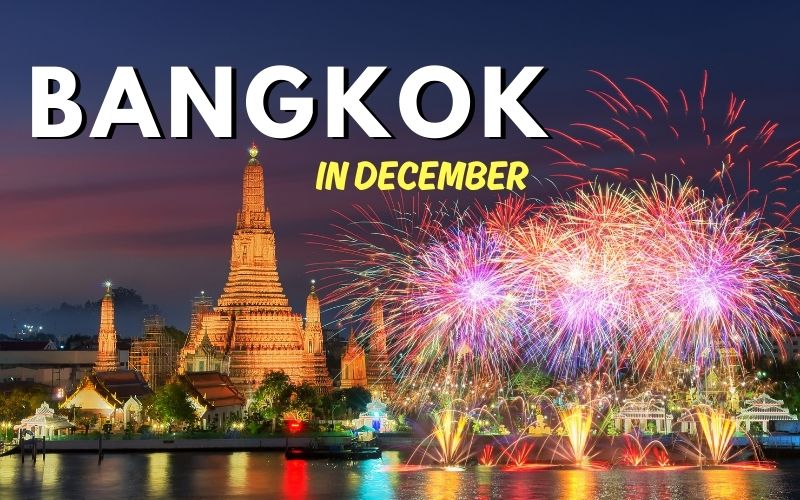
Bangkok is the entry point for most international visitors to Thailand and one of the most consistently underrated capital cities in Southeast Asia. Travelers who give it 24 hours before heading to the beaches or to Chiang Mai are missing the city’s actual texture. Bangkok rewards time.
The Grand Palace and Wat Phra Kaew are the architectural set-pieces, but the deeper experience is in the canal neighborhoods of Thonburi, the Chinatown (Yaowarat) food streets after dark, the temple complex at Wat Arun across the Chao Phraya, and the layered modern city built on top of the historical core.
Bangkok handles over 22 million international visitors annually and absorbs them better than most capital cities. The food, the temples, the markets, the river, and the modern shopping and nightlife districts all coexist within a few kilometers of each other. Choose what you want to do and the city will accommodate it.
Where Is Bangkok Located?
- Status: Capital and largest city of Thailand
- Thai name: Krung Thep Maha Nakhon (commonly Krung Thep)
- Area: 1568,7 km²
- Population: About 11 million (city); 17 million (metropolitan)
- Airports: Suvarnabhumi International Airport (BKK), 30 km east; Don Mueang International Airport (DMK), 25 km north
- Currency: Thai Baht (THB)
- Known for: Grand Palace, Wat Phra Kaew, Wat Arun, Chatuchak Weekend Market, Chinatown food, river boat life, nightlife districts
- Best for: Cultural sightseeing, food, shopping, nightlife, Southeast Asia gateway
Bangkok is the capital and largest city of Thailand, situated in the central part of the country. Known for its bustling markets, ornate temples, and a dynamic nightlife, the city is a melting pot of tradition and modernity in Southeast Asia.
How to Get to Bangkok
By air: Suvarnabhumi (BKK) is Bangkok’s primary international airport, with direct flights from virtually every major city in Asia, Europe, North America, and Australia. The Airport Rail Link connects BKK to central Bangkok (Phaya Thai station) in 30 minutes. Don Mueang (DMK), the older airport, primarily serves budget regional carriers; it is north of the city center.
Within Southeast Asia: Bangkok is the regional hub for connections from Vietnam, Cambodia, Laos, Singapore, Malaysia, Indonesia, the Philippines, and Myanmar, typically 1.5 to 2.5 hour flights from each.
By land from neighboring countries: Crossings to Laos at Nong Khai/Vientiane (Friendship Bridge), to Cambodia at Aranyaprathet-Poipet, and to Malaysia via multiple southern crossings, all connect to Bangkok by overnight train or coach.
Best Time to Visit Bangkok
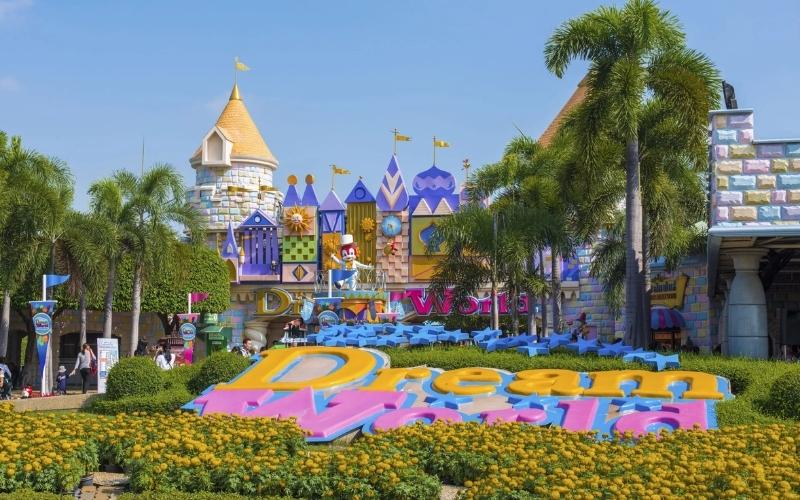
Located just outside Bangkok, Dream World offers a fun, fantasy-themed escape with exciting rides and shows perfect for families and thrill-seekers alike.
November to February is the cool dry season, the optimal time to visit. Temperatures are around 25 to 30°C with low humidity. December and January are peak seasons for international tourism.
March to May is hot (35 to 40°C) and humid. April peaks at 40°C. Songkran (April 13 to 15) is the Thai New Year water festival; Bangkok’s celebrations on Khao San Road and Silom are among the most intense in the country.
June to October is the rainy season. Heavy afternoon thunderstorms are typical; rain rarely lasts all day. The city continues normally during rain.
Top Things to Do in Bangkok
1. The Grand Palace and Wat Phra Kaew
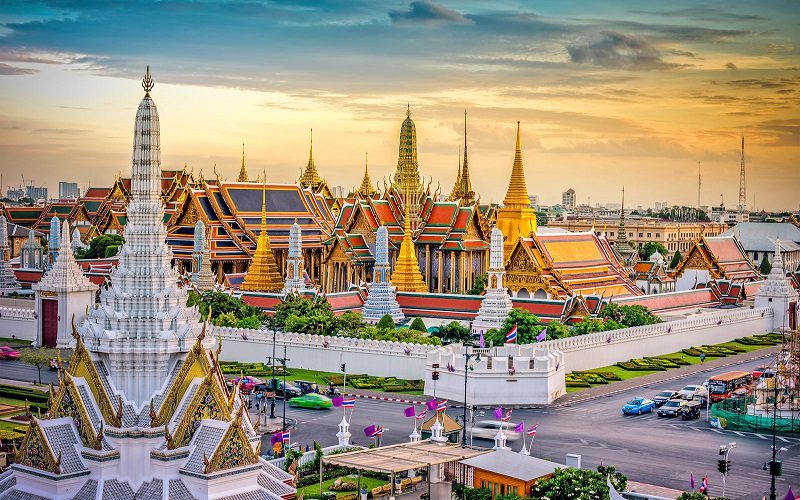
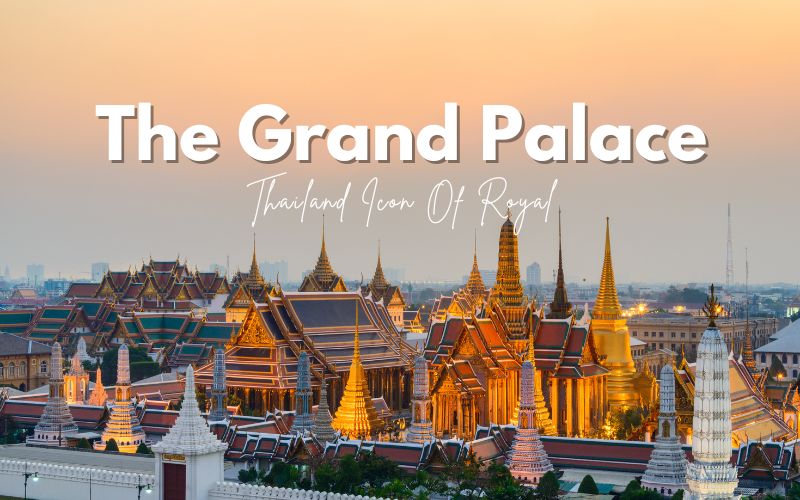
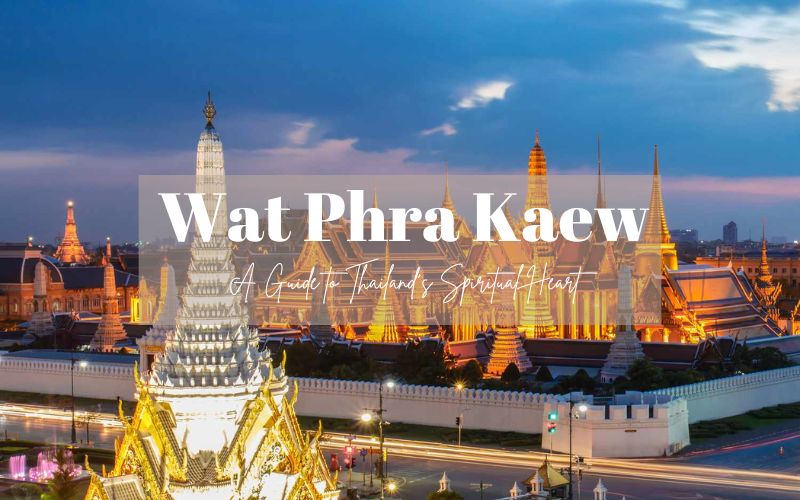
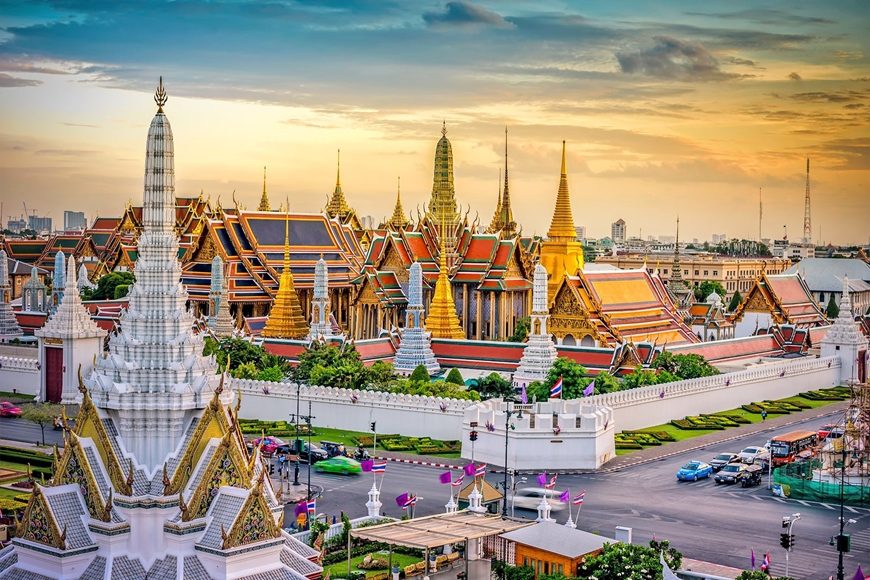
The former royal residence of the Thai monarchy and the temple containing the Emerald Buddha (Wat Phra Kaew) is the most architecturally spectacular site in Bangkok. The complex covers 218,000 square meters and includes the Throne Hall, royal residential buildings, and the Royal Chapel of the Emerald Buddha.
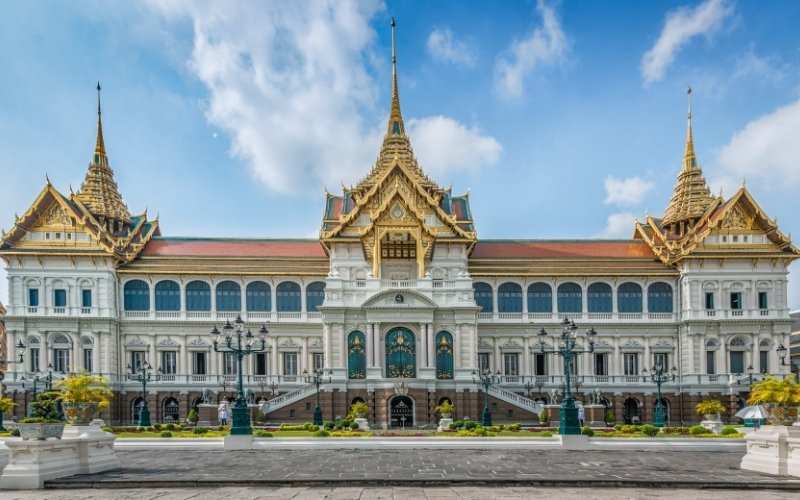
The magnificent Grand Palace in Bangkok – a historic symbol of Thailand’s royal heritage and architectural splendor.
The Emerald Buddha itself, 66 cm tall and carved from a single piece of jade, is the most sacred Buddhist image in Thailand; its seasonal robes (changed three times yearly by the King) reflect the Thai religious calendar.
Dress code is strictly enforced: shoulders covered, knees covered, no sandals or flip-flops. Sarong rental is available at the entrance for visitors who arrive unprepared. Budget 2 to 3 hours.
2. Wat Arun
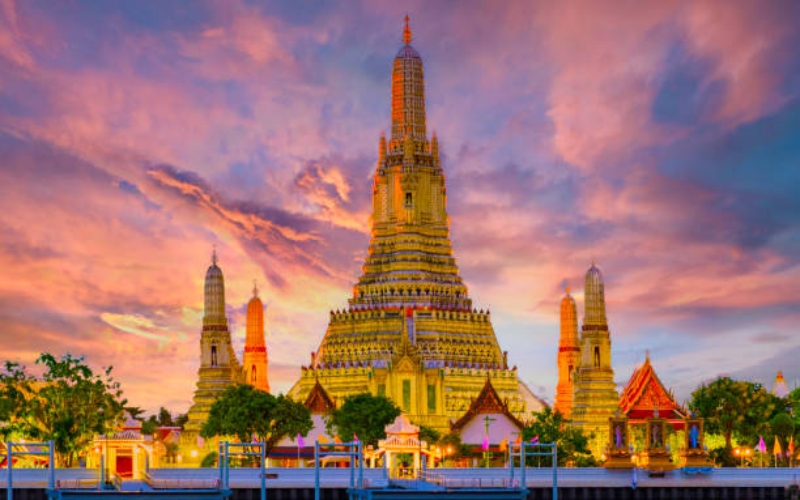
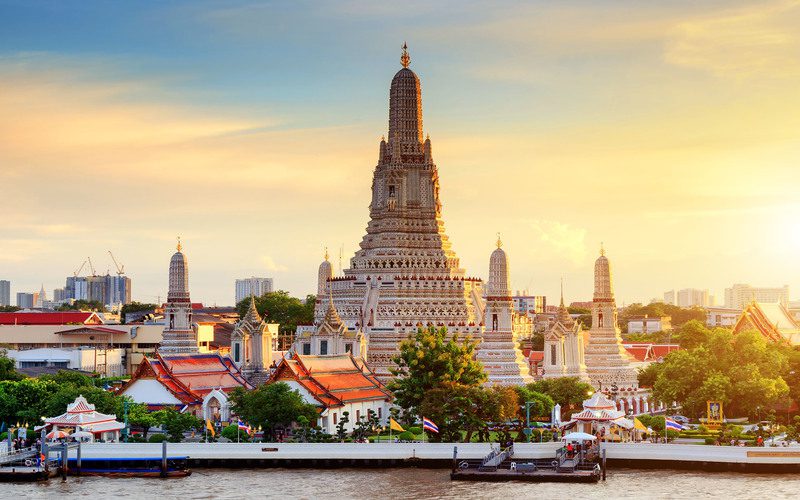
Wat Arun temple at sunset in Bangkok
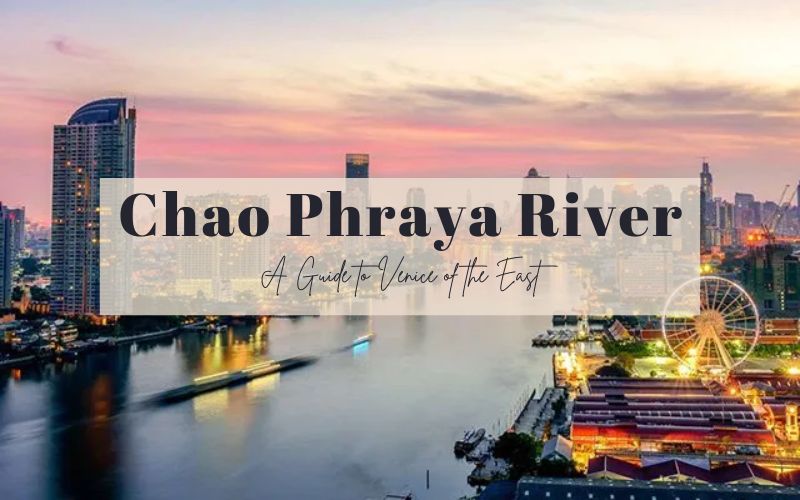
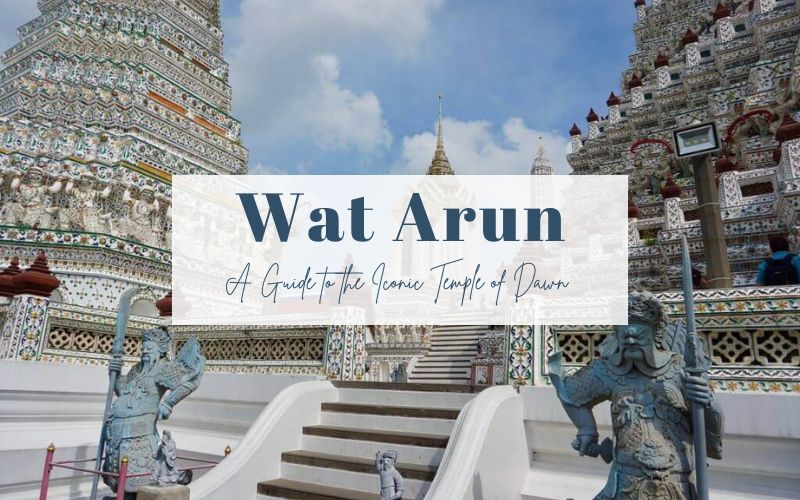
The Temple of Dawn on the west bank of the Chao Phraya River is one of the most photographed structures in Bangkok. The central prang rises 79 meters and is decorated with porcelain and seashell mosaic from Chinese trade ships that used the river, a recycling of broken ceramic into religious architecture that gives the surface a particular shimmer in sunlight. The river crossing from Tha Tien pier near Wat Pho takes 5 minutes and is half the experience.
3. Wat Pho (Reclining Buddha)
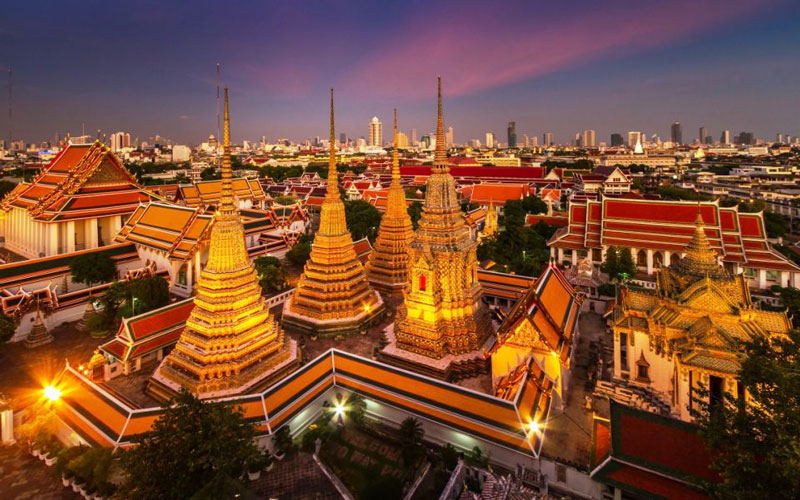
Wat Pho at night
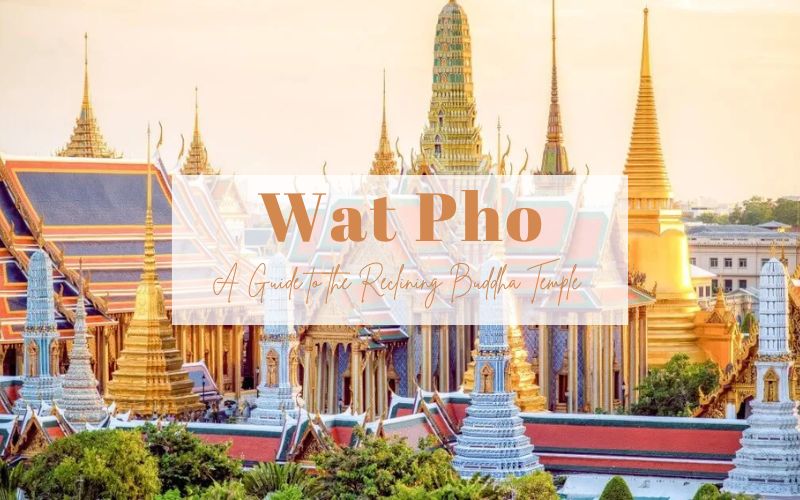
A few minutes walk from the Grand Palace, Wat Pho houses the 46-meter-long gilded Reclining Buddha in a custom-built hall, and is also the home of traditional Thai massage. The Wat Pho Thai Traditional Medicine and Massage School operates on the temple grounds; a one-hour massage from a Wat Pho practitioner is one of the best wellness experiences in Bangkok at modest cost.
4. Chinatown (Yaowarat)
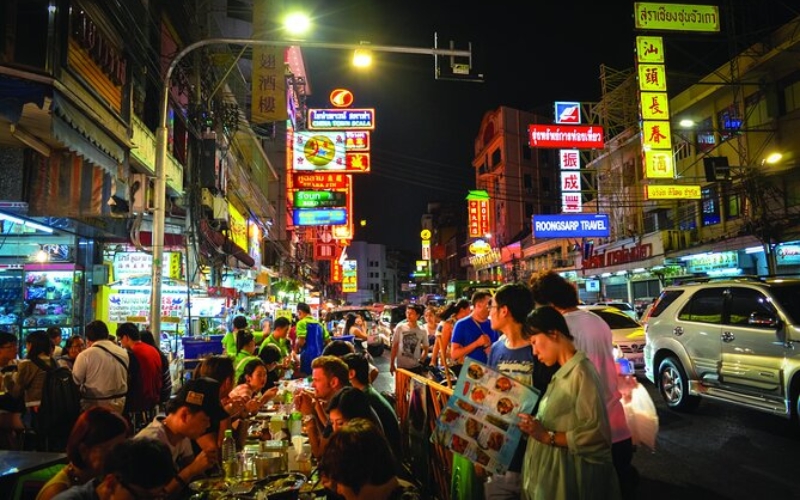
A food stall in Chinatown, Bangkok
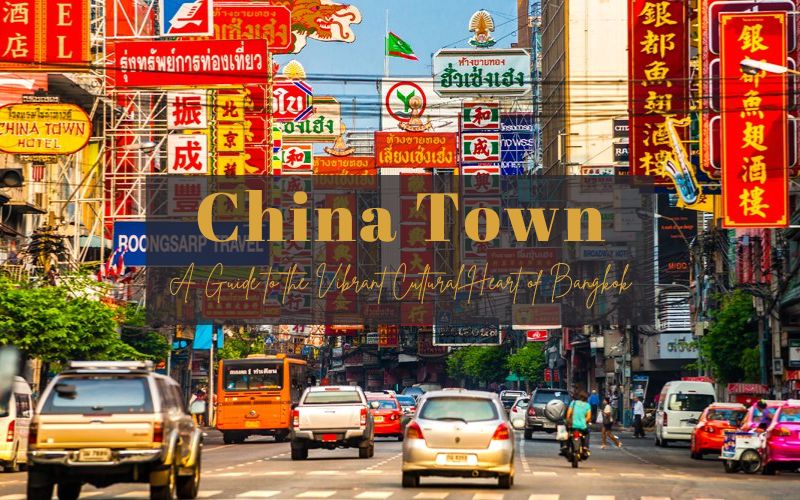
Bangkok’s Chinatown is among the largest in the world and the food scene is one of the city’s defining experiences. After dark (from about 6pm) the streets fill with food vendors selling dim sum, fresh seafood, noodle dishes, roast meats, and Chinese desserts. T&K Seafood (corner of Padungdao and Yaowarat) is the most famous of the street-corner restaurants. The Yaowarat road and the parallel Charoen Krung have most of the action.
5. Chatuchak Weekend Market
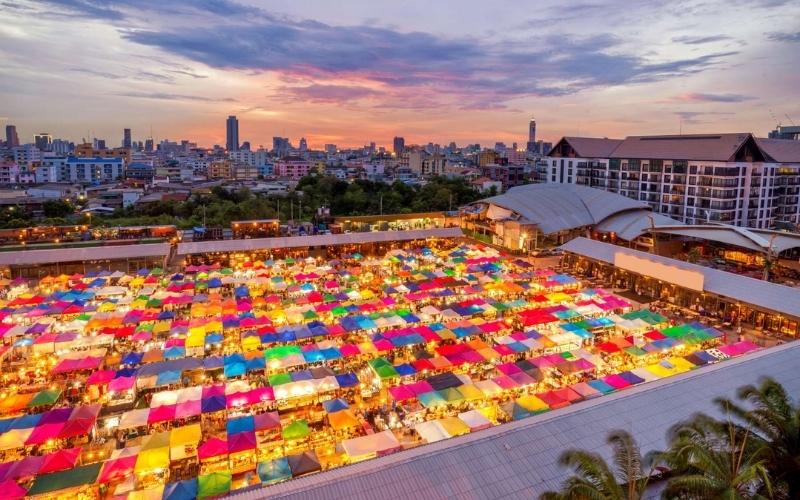
A lively evening at the Bangkok night market, where rows of colorful tents glow under the sunset sky, offering food, crafts, and local culture.
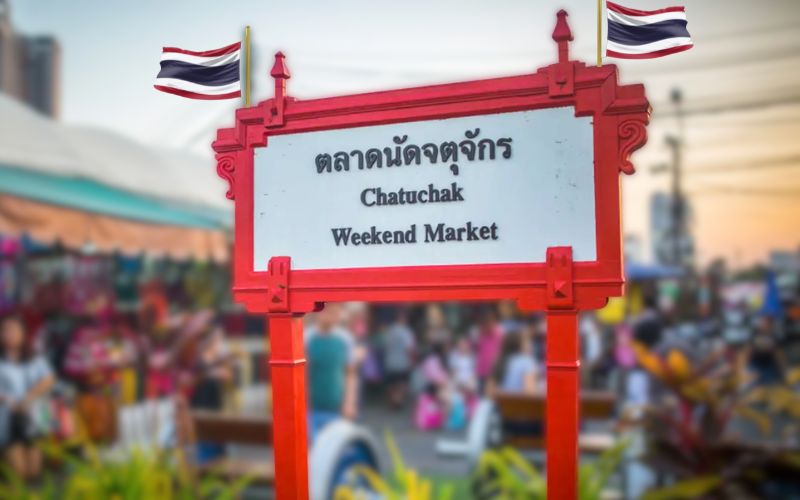
Operating Saturday and Sunday only, Chatuchak Weekend Market has over 15,000 stalls organized into themed sections covering clothing, art, plants, antiques, books, food, and almost everything else. Genuinely overwhelming on first visit; budget 4 to 5 hours and accept that you cannot see everything. The clothing and art sections (zones 2 to 7) are the most concentrated.
6. Khlong (Canal) Boat Tours
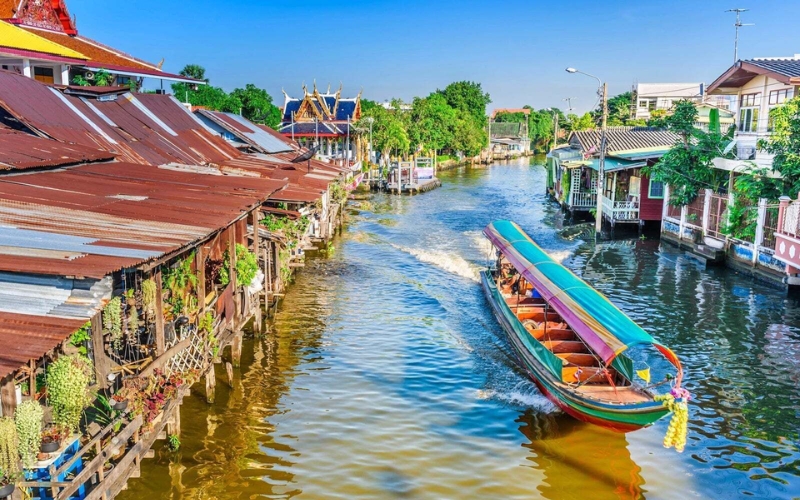
Long-tail boat cruising through a canal in Bangkok
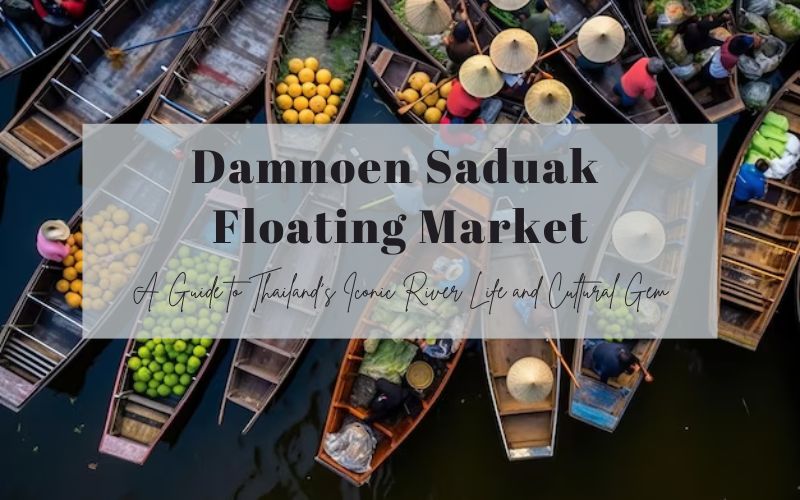
The canal network west of the Chao Phraya River, in the Thonburi district, retains much of the older urban form that the eastern bank has largely replaced. Long-tail boat tours from Tha Chang Pier or other riverside docks take 1.5 to 2 hours and pass through working canal-side neighborhoods, riverside temples, and the floating market at Khlong Lat Mayom (less touristic than the more famous Damnoen Saduak option to the west of the city).
7. Bangkok Skybars
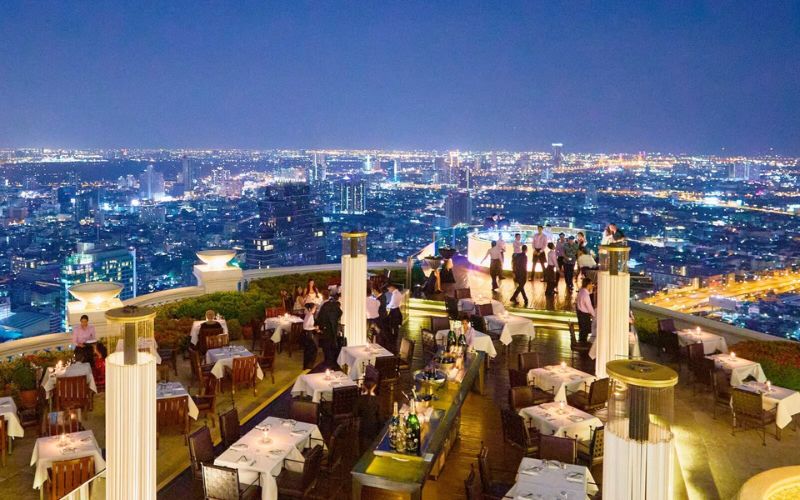
Bangkok Skybar
The rooftop bar scene is internationally known: Sirocco at Lebua at State Tower, Vertigo at the Banyan Tree, are among the most established. The combination of cocktails, an open sky view of the city, and the architectural ambition of the towers themselves is genuinely worth the premium pricing for one evening of a Bangkok stay.
Bangkok Food
The Bangkok food scene operates at every level from street stall to fine dining and rewards experience at all of them.
Pad Thai: The Thai stir-fried noodle dish that Bangkok is internationally identified with. The version at Thip Samai Pad Thai (a 70-year-old institution near the Golden Mount) is widely considered the definitive Bangkok preparation.
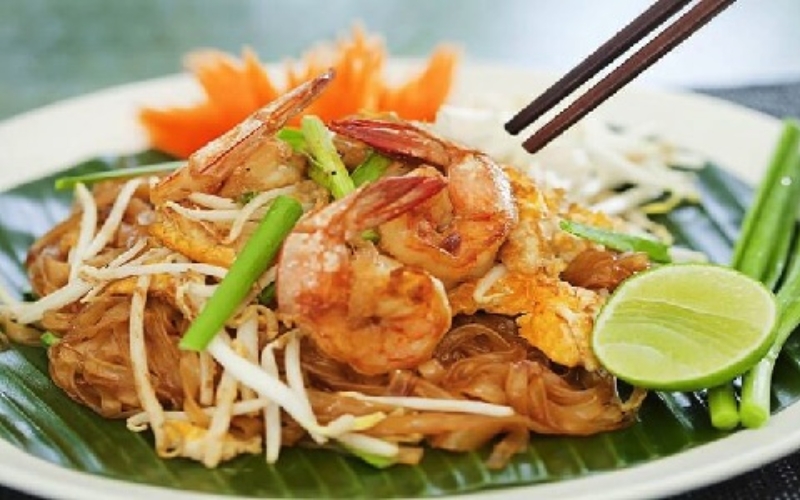
Pad Thai
Tom Yum Goong: The signature spicy and sour shrimp soup. The version at Pe Aor (in the Soi Rangnam area) has built an international reputation.
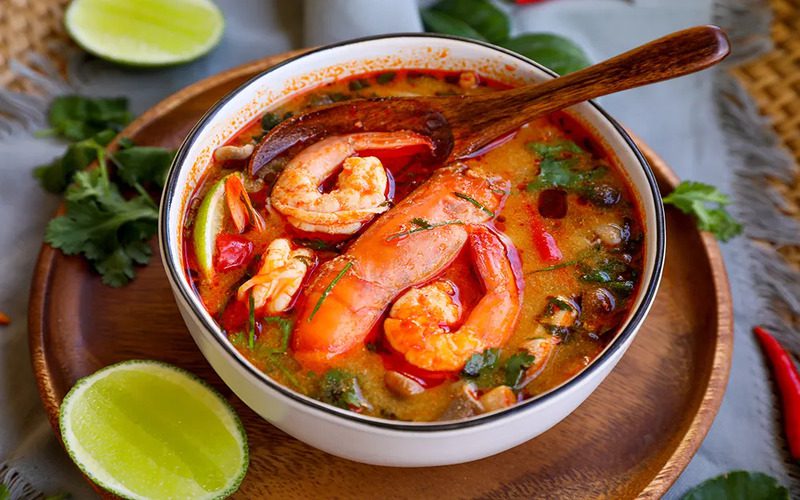
Tom Yum Goong – Thai tom yum soup with shrimp and herbs.
Kuay Tiew Reua (Boat noodles): Pork or beef noodle soup served in small bowls with intensely flavored broth, originally sold from boats on the canals. Victory Monument’s boat noodle alley is the standard destination.
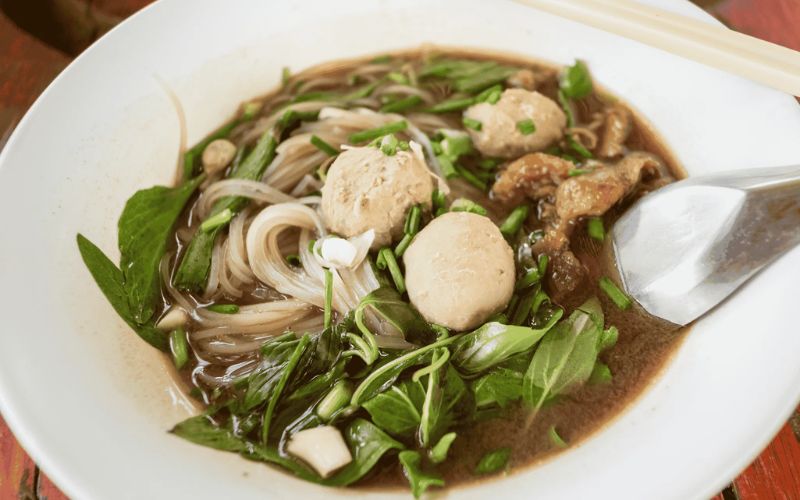
Kuay Tiew Reua (Boat noodles)
Khao Niao Mamuang (Mango sticky rice): Sweet sticky rice with fresh mango and coconut cream. K. Panich on Tanao Road and Mae Varee in Thonglor are the consistent recommendations.
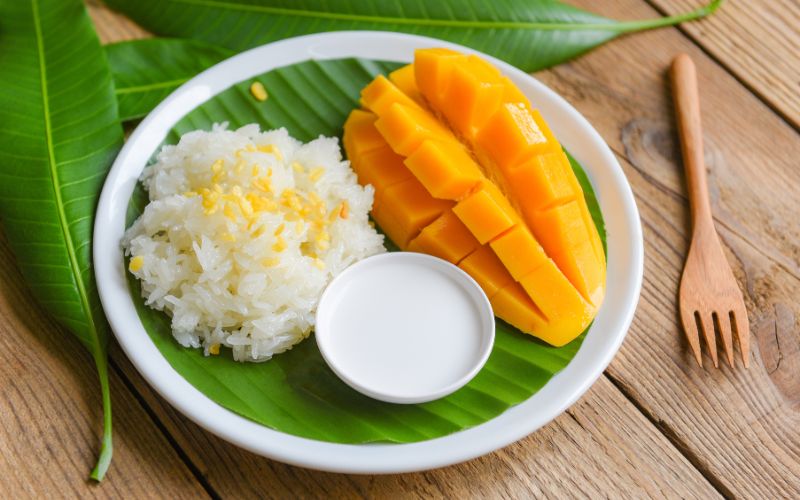
Khao Niao Mamuang (Mango Sticky Rice)
Estimated Travel Costs in Bangkok
Bangkok is one of Asia’s great value capitals for mid-range travelers: excellent food, efficient transport, and a huge range of accommodation options at every price point. The BTS and MRT keep local transport costs very low. Major sights like the Grand Palace are priced for international visitors; street food and local restaurants remain extraordinarily cheap.
Prices below are estimates for international travelers and may vary by season and booking time.
| Category | Budget | Mid-Range | Luxury |
| Accommodation (per night) |
350 – 800 THB (~$10-$23) |
1,200 – 3,500 THB (~$34-$100) |
4,000 – 15,000 THB (~$114-$429) |
| Grand Palace + Wat Phra Kaew entry | 500 THB (~$14.29) |
500 THB (~$14.29) |
500 THB (~$14.29) |
| Wat Pho entry | 200 THB (~$5.71) |
200 THB (~$5.71) |
200 THB (~$5.71) |
| Wat Arun entry | 100 THB (~$2.86) |
100 THB (~$2.86) |
100 THB (~$2.86) |
| Meal per person | 50 – 120 THB (~$1.43-$3.43) |
200 – 700 THB (~$5.71-$20) |
800 – 3,500 THB (~$22.86-$100) |
| BTS / MRT (per trip) |
17 – 59 THB (~$0.49-$1.69) |
17 – 59 THB (~$0.49-$1.69) |
– |
| Grab / taxi (short trip) |
80 – 150 THB (~$2.29-$4.29) |
100 – 200 THB (~$2.86-$5.71) |
200 – 500 THB (~$5.71-$14.29) |
| Airport Rail Link (Suvarnabhumi–city) |
45 THB (~$1.29) |
45 THB (~$1.29) |
45 THB (~$1.29) |
| Rooftop bar / evening out | 300 – 600 THB (~$8.57-$17.14) |
700 – 2,000 THB (~$20-$57.14) |
2,500 – 8,000 THB (~$71.43-$228.57) |
| Chao Phraya Express Boat (per trip) |
15 – 30 THB (~$0.43-$0.86) |
15 – 30 THB (~$0.43-$0.86) |
– |
| Total 5-day trip | 5,250 – 9,800 THB (~$150-$280) |
14,000 – 31,500 THB (~$400-$900) |
35,000 – 98,000 THB (~$1,000-$2,800) |
| Total 7-day trip | 7,350 – 13,720 THB (~$210-$392) |
19,600 – 44,100 THB (~$560-$1,260) |
49,000 – 137,200 THB (~$1,400-$3,920) |
| Total 14-day trip | 14,700 – 27,440 THB (~$420-$784) |
39,200 – 88,200 THB (~$1,120-$2,520) |
98,000 – 274,400 THB (~$2,800-$7,840) |
Grand Palace entry prices are reviewed periodically. Songkran (April 13-15) and New Year period see accommodation prices spike significantly. Always recheck costs at time of booking.
Bangkok Travel Tips
- The BTS Skytrain and MRT subway systems together cover most central tourist areas and are far more efficient than taxis in city traffic. Use them aggressively.
- Grab is reliable in Bangkok and gives transparent pricing for car and motorbike taxi services.
- Beware of tuk-tuk drivers offering tours that include diversions to commission-paying shops. A direct point-to-point tuk-tuk is fine; “tour offers” should be declined.
- The Grand Palace dress code is enforced. Don’t arrive in shorts or a sleeveless top; rental sarongs are available but add time and friction.
- Most public temples close to visitors around 4pm. Plan temple visits for the morning.
Plan Your Bangkok Trip with IDC Travel
Our Thailand tours include Bangkok as the gateway to Thailand circuits combining Chiang Mai, Phuket, Krabi, and Kanchanaburi. Multi-country tours connect Bangkok to Vietnam, Laos, and Cambodia. Contact us.
Discover Top Bangkok Attractions
Top Bangkok Tours
Start planning your tailor-made tour with 1-1 help from our travel advisors.
- Plan your tailor - made trip with a local expert
- Book securely with money-back guarantee
- Travel stress-free with local 24/7 support