If you only have time for one cultural stop during your Bangkok holidays, make it Jim Thompson’s House. It’s not the biggest museum in the city, not the most visited, and certainly not the easiest to explain to someone who hasn’t been, but it’s the one that stays with you. A collection of six traditional Thai houses joined together, filled with Asian antiques, and built by an American silk trader who disappeared into the Malaysian jungle in 1967 without a trace. That’s the kind of story that turns a museum visit into something else entirely.
Whether you’re planning a short city break or a longer Thailand trip, the Jim Thompson house and museum belongs on your itinerary. Here’s everything you need to know before you visit.
Who Was Jim Thompson?
James Harrison Wilson Thompson was born in Delaware in 1906. He trained as an architect, served in the OSS (the wartime predecessor to the CIA) during World War II, and ended up in Bangkok at the war’s end. Most foreigners passed through and moved on. Thompson stayed.
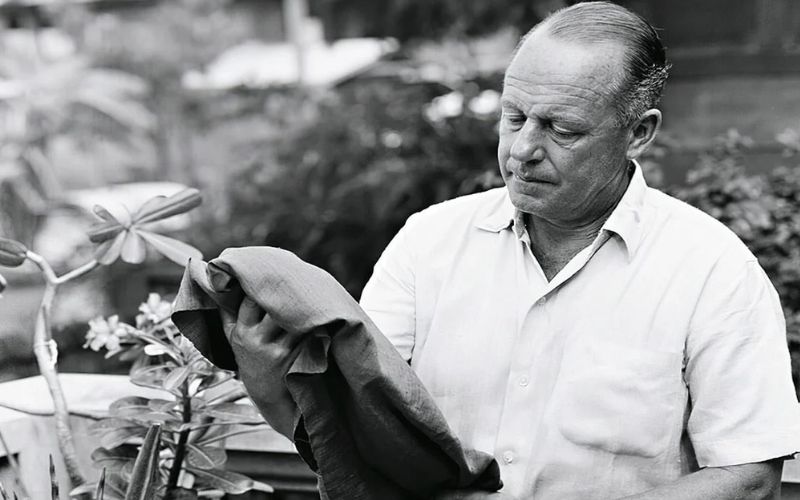
Jim Thompson
He became obsessed with Thai silk, which was then a cottage industry in near-terminal decline. He saw something others didn’t: hand-woven Thai silk, with its irregular texture and intense color, was unlike anything being made elsewhere in the world. Through the 1950s and 60s, he built the Jim Thompson Thai Silk Company into an internationally recognized brand, with clients ranging from Hollywood studios to European fashion houses. The costumes in the original Broadway run of “The King and I” were made from his silk.
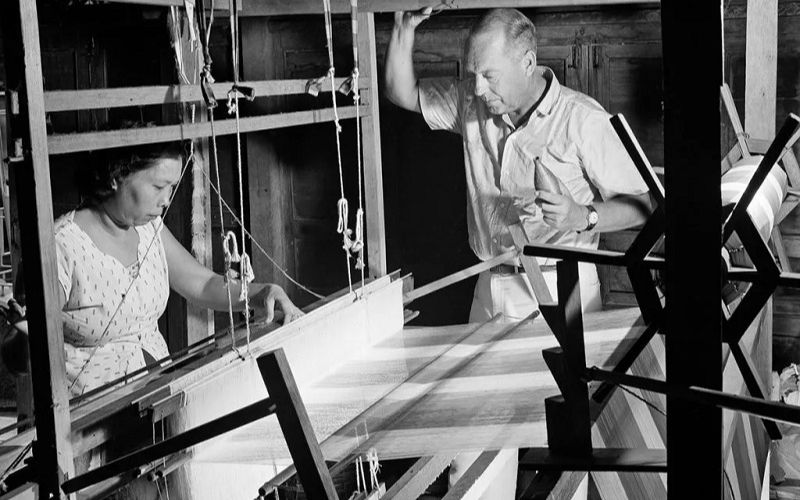
Jim Thompson instructs a Thai rural woman to weave silk
Then, on Easter Sunday in 1967, Thompson went for a walk in the Cameron Highlands of Malaysia and never came back. No body was ever found. No credible explanation has ever emerged. The mystery surrounding his disappearance is genuinely unsolved, and it’s part of why this museum feels unlike any other you’ll visit in Southeast Asia.
What Is Jim Thompson’s House?
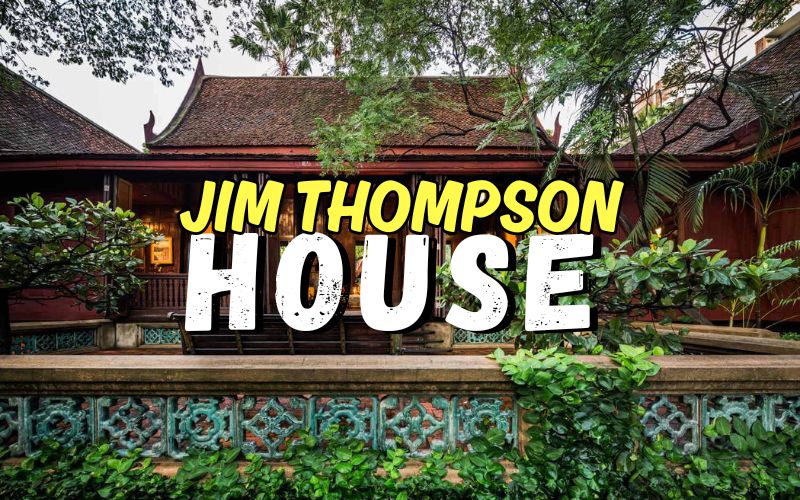
The Jim Thompson house museum is a compound of six Thai houses on the bank of the Khlong Saen Saep canal in Bangkok’s Siam neighborhood. Thompson assembled them between 1958 and 1967, sourcing several from the village across the canal and having them reconstructed on this site. The oldest dates to around 1800.
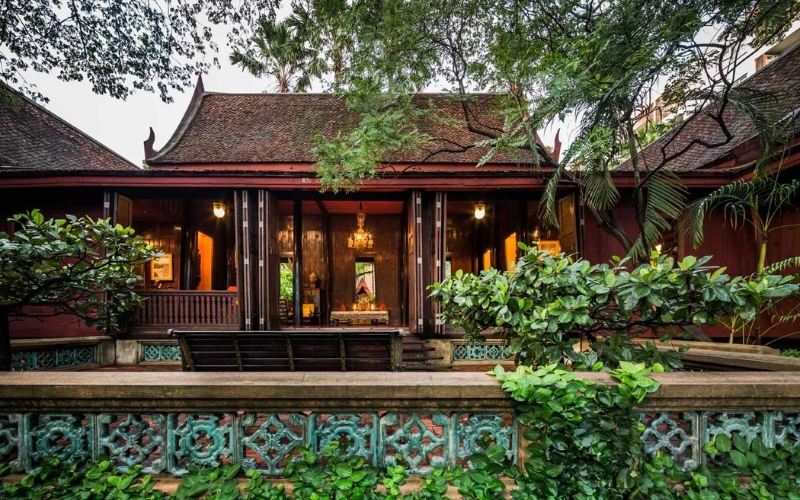
Jim Thompson House
What makes the architecture unusual is that Thompson reversed some of the houses’ interiors, facing exterior walls inward to expose decorative panels that would otherwise never be seen. He also raised the floor level in certain sections and added a staircase that was originally designed to be used from the outside of a building. These weren’t mistakes; they were deliberate choices made by a man who understood space and light.
The six structures together contain:
- One of the most significant private collections of Asian art in Southeast Asia, assembled by Thompson over roughly two decades.
- Antiques from China, Cambodia, Burma, and Thailand spanning several centuries.
- European furniture and objects integrated alongside Asian pieces, reflecting Thompson’s mixed aesthetic.
- His personal library, still in place, with books arranged as he left them.
- The original kitchen, servant quarters, and garden intact.
The gardens are worth noting. Sitting between the canal and the main house, they’re unexpectedly quiet given the neighborhood around them. On a weekday morning, before the tour groups arrive, it’s one of the calmer spots in central Bangkok.
Visiting Jim Thompson’s House: What to Expect
Location of Jim Thompson’s House
The museum is at 6 Soi Kasem San 2, off Rama I Road, a short walk from National Stadium BTS station. Getting there on foot from the station takes about five minutes. The canal-side approach, if you come by water taxi along Khlong Saen Saep, gives you a view of the property that most visitors never see.
Opening hours and entrance fee
The Jim Thompson house museum is open daily from 10:00 AM to 5:00 PM, with the last entry typically one hour before closing.
Entrance fee is 250 baht (~$7.64) for adults, 150 baht (~$4.59) for children between 10-21 years old and free entry for children under 10 years of age coming with an adult.
Guided tours are included in the price and run every 20 to 30 minutes in English, Thai, French, Chinese and Japanese. The guided tour is not optional: independent exploration of the main house is not permitted. This is worth knowing in advance if you’re the type who prefers to wander at your own pace. The guides are generally well-informed, and the tour covers around 45 minutes.
Photography inside the main house is restricted. You can photograph the gardens and exterior freely.
Dress code applies: shoulders and knees should be covered. Sarongs are available to borrow at the entrance if needed.
Jim Thompson Booking
Advance booking is available through the museum’s official website: https://jimthompsonhouse.org/. During peak tourist season (November through February), queue times can be long, and timed entry tickets sell out on busy days. If your travel dates are fixed and Bangkok holidays fall in this window, booking ahead is the sensible move.
The Collection: What Stands Out
The art collection at Jim Thompson’s house is genuinely impressive, though it takes a knowledgeable guide to unlock it. A few pieces are worth knowing about before you arrive.
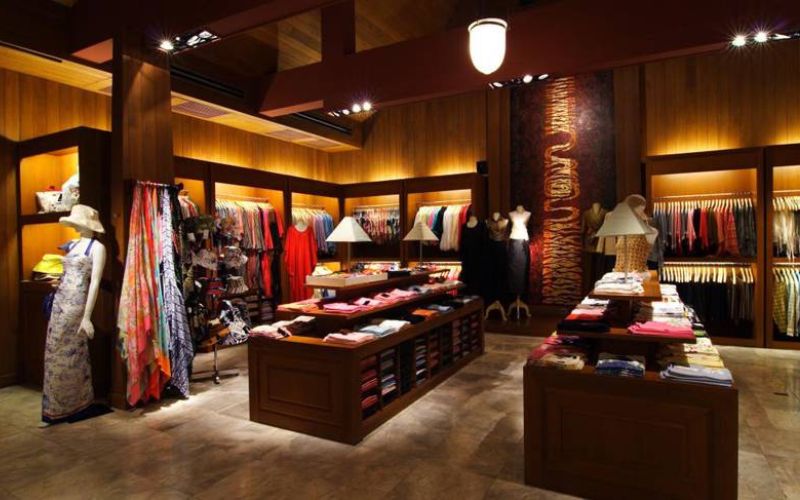
Jim Thompson Main Store in at Jim Thompson House Museum
- The Cambodian Buddha figures in the main salon are among the oldest objects in the house, dating to the Khmer Empire period. Thompson acquired several through antique dealers in Bangkok at a time when such pieces were still in circulation. Today, comparable objects almost never come to market.
- The Chinese blue-and-white porcelain throughout the dining and reception rooms reflects Thompson’s eye for objects that mixed well across cultures. He placed Chinese export ware alongside Thai lacquerware and Burmese wooden figures without any apparent anxiety about period or provenance.
- The Thai silk displayed throughout the house is some of the earliest production from the Jim Thompson Silk Company itself. Seeing it in situ, in the house where Thompson planned his business, gives context that a standalone textile museum can’t replicate.
One room contains Thompson’s personal bedroom, preserved largely as it was. His reading glasses are still on the nightstand. The effect is slightly eerie, not performatively so, just honest.
Jim Thompson’s House Within Bangkok’s Cultural Circuit
Bangkok has no shortage of temples and palaces, but the Jim Thompson museum sits in a different category. It’s smaller and more intimate than the Grand Palace complex, more personal than the National Museum, and easier to absorb in a single visit. For travelers on Bangkok tours that include multiple cultural stops, it works well as a half-morning visit before moving on to lunch in the Siam area or a walk through the nearby Baiyoke neighborhood.
If you’re connecting Bangkok with other parts of the region, the museum also fits naturally into broader Thailand holidays or multi-country itineraries that combine Bangkok with Chiang Mai, the Gulf Coast, or neighboring countries.
For those traveling between Vietnam and Thailand, we offer Vietnam & Thailand combined tours that give you meaningful time in Bangkok without the itinerary pressure of trying to fit it into a stopover.
Is Jim Thompson’s House Worth It?
Honestly, yes. But with a caveat. If you’re expecting a large, dramatic museum experience, you’ll need to recalibrate your expectations. The scale is modest. The mandatory guided format can feel restrictive. And without some background knowledge of Thompson’s story, a few rooms can feel like a well-decorated old house rather than the significant collection it actually is.
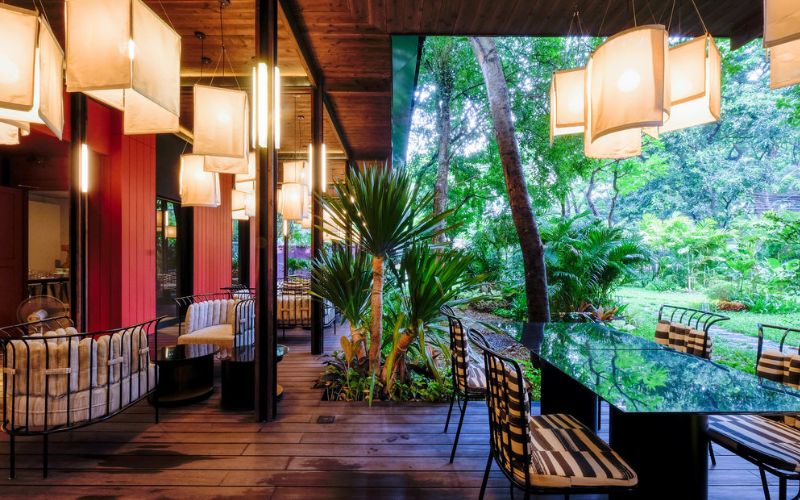
Jim Thompson Restaurant in Bangkok
Read a little about Jim Thompson before you visit. Even 15 minutes of background research will change what you see. The mystery of his disappearance, the context of post-war Southeast Asia, the state of the Thai silk industry in the 1950s, all of it makes the objects in those rooms mean something more than they would in isolation.
For anyone traveling to Thailand with an interest in history, design, or Asia more broadly, this is one of the most rewarding two hours you’ll spend in Bangkok.
Practical Tips for Your Visit
A few things that are genuinely useful to know, not just standard museum advice:
- Go before 11 AM if possible: tour groups from cruise ships and hotel day trips typically arrive mid-morning. The 10 AM opening tour is consistently less crowded.
- Wear comfortable shoes: the wooden floors have raised thresholds between rooms, and the garden paths include uneven stepping stones along the canal edge.
- Check the weather: the garden walk and exterior of the houses are exposed. In the rainy season (May through October), a light rain jacket is useful.
- Allow time for the shop: the Jim Thompson brand still operates, and the museum shop carries silk products, scarves, and homeware that are genuinely good quality. It’s attached to the museum entrance and easy to browse after the tour.
- Eat nearby: the museum has a small café, but the surrounding streets around National Stadium have several good local restaurants within a five-minute walk.
Conclusion: Plan Your Bangkok Visit with IDC Travel
Jim Thompson’s House at a glance
| Location | 6 Soi Kasem San 2, Rama I Road, Bangkok (Siam area) |
| Nearest BTS station | National Stadium, about 5-minute walk |
| Opening hours | Daily, 10:00 AM – 5:00 PM |
| Entrance fee |
|
| Guided tours | Every 20-30 min in English, Thai, French, Chinese & Japanese |
| Tour duration | ~45 minutes (allow 1.5-2 hours total) |
| Photography | Gardens and exterior only, restricted inside the main house |
| Dress code | Shoulders and knees covered (sarongs available at entrance) |
| Best time to visit | 10:00 AM opening, weekday mornings for the fewest crowds moment |
| Peak season | November – February (advance booking recommended) |
| On-site facilities | Café, silk and homeware shop, canal-side garden |
| Official website | https://jimthompsonhouse.org/ |
If you’re building an itinerary that includes Bangkok and want to make sure Jim Thompson’s House fits properly into a wider Thailand or Southeast Asia trip, we specialize in private, tailor-made tours across the region. Our Thailand tour packages are designed around your pace and interests, whether that’s a focused Bangkok city experience, a Thailand family holiday, or a longer journey through multiple countries. Get in touch to start planning now.
Read more