
Savannakhet sits on the Mekong in southern Laos, directly across from Mukdahan in northeastern Thailand and connected to it by the second Thai-Lao Friendship Bridge, opened in 2006.
The city is the second-largest in Laos by population and the most architecturally interesting colonial-era urban center in the country: entire blocks of French colonial shophouses, government buildings, and the iconic Saint Theresa Catholic Church remain intact, many in faded pastel colors that have weathered into a specifically Lao Mekong aesthetic. Few of these buildings have been restored or commercialized for tourism, which gives the streets of central Savannakhet a quality that more polished colonial-era cities (Luang Prabang, Hanoi) have largely lost.
Most travelers move through Savannakhet rather than spending substantial time here, but for those who give the city a night or two, the rewards are specific: walking the colonial quarter at dusk when the streets quiet down and the buildings catch the last light from the Mekong, the morning market where the city wakes up, and the Dinosaur Museum (a genuinely surprising small museum displaying significant paleontological finds from the surrounding region).
Where Is Savannakhet Located?
- Status: Second-largest city in Laos
- Location: Savannakhet Province, southern Laos, on the Mekong River
- Border crossing: Second Thai-Lao Friendship Bridge to Mukdahan, Thailand (opened 2006)
- Population: About 125,000
- Known for: French colonial architecture, Saint Theresa Cathedral, Mekong waterfront, Dinosaur Museum, gateway to Pakse and Si Phan Don
- Best for: Colonial heritage, Mekong stop on southern Laos circuit
Savannakhet (commonly abbreviated to “Savan”) and more officially known as “Kaysone Phomvihane” (district name), is the capital of Savannakhet Province in Southern Laos and is located alongside the Mekong River. With an estimated population of 120,000 it is the second largest city of Laos.
How to Get to Savannakhet
- From Vientiane: About 470 km south on Highway 13, 8 to 9 hours by bus or about 6 hours by car. Overnight VIP buses are the standard option for budget travelers.
- From Pakse: About 230 km north on Highway 13, 5 to 6 hours by bus. A common stop on southern Laos circuits between Vientiane and Pakse.
- From Mukdahan, Thailand: Cross the Second Friendship Bridge, about 5 km from Mukdahan’s center. Shared minivans cross the bridge throughout the day. Lao visa on arrival is available at the bridge for most nationalities.
- By air: Savannakhet Airport (ZVK) receives limited domestic flights from Vientiane and Pakse. International services are minimal.
Best Time to Visit Savannakhet
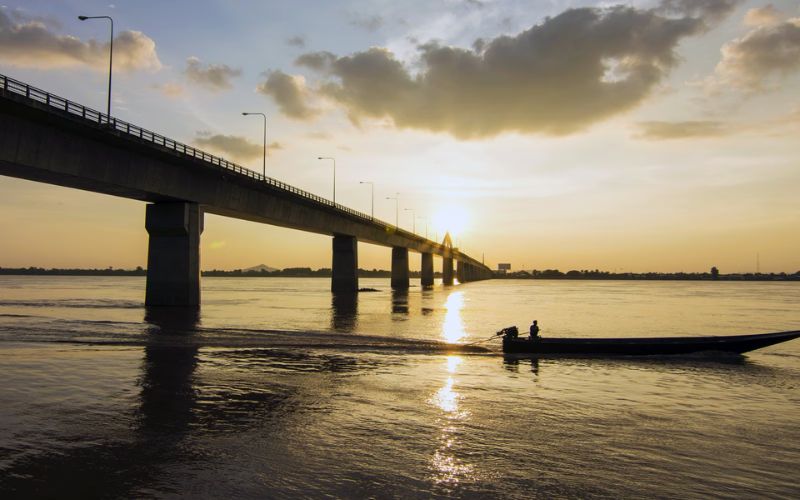
Savannakhet, Laos
November to February is the dry season: pleasant temperatures (20 to 30°C) and clear weather. The most comfortable window for walking the colonial quarter.
March to May is hot, daytime temperatures of 35 to 38°C in April. Early morning walks are advisable.
June to October is the rainy season. The Mekong rises significantly; the city continues normally but afternoon storms are frequent.
Top Things to Do in Savannakhet
1. Walking the French Colonial Quarter
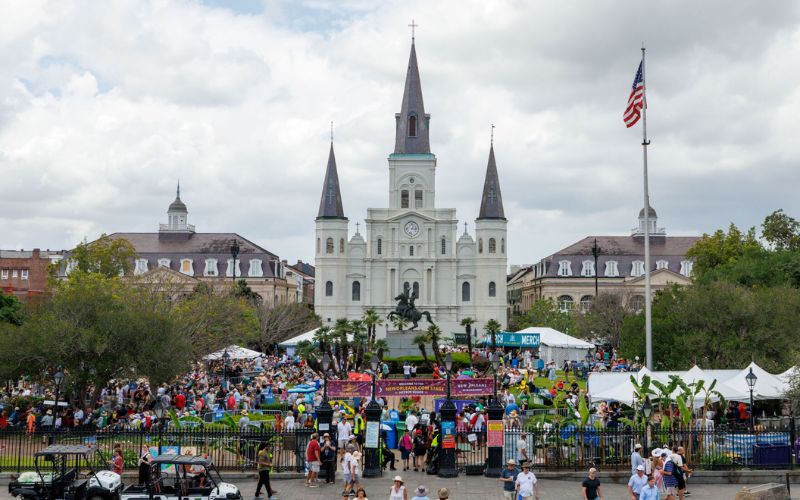
French Colonial Quarter Savannakhet
The streets around the central square (the so-called Catinat Square area) preserve a remarkable concentration of French colonial architecture: two- and three-story shophouses with shuttered windows, peeling pastel paint, and the distinctive arched arcades of the late 19th and early 20th century commercial style. Several blocks of intact streetscape make Savannakhet visually one of the most coherent colonial-era cities in Laos, with the additional benefit of almost no tourist development. A self-guided walking circuit of 90 minutes to 2 hours covers the essential streets.
2. Saint Theresa Cathedral
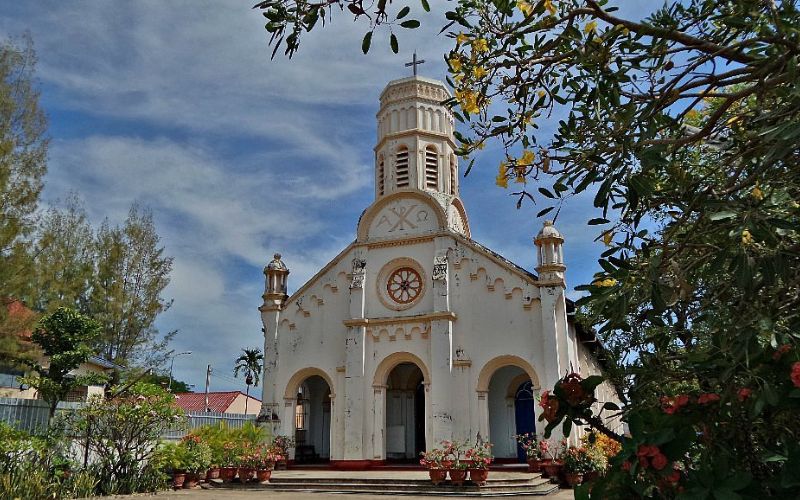
Saint Theresa Cathedral Savannakhet
Built in 1930, the cathedral is one of the largest Catholic churches in Laos and an active place of worship for the city’s Christian minority. The architectural style mixes French Gothic Revival with Lao decorative elements; the painted interior with its blue ceiling has a specific atmospheric quality that visitors consistently note. The cathedral is open to respectful visitors outside of mass times.
3. Savannakhet Provincial Museum (Dinosaur Museum)
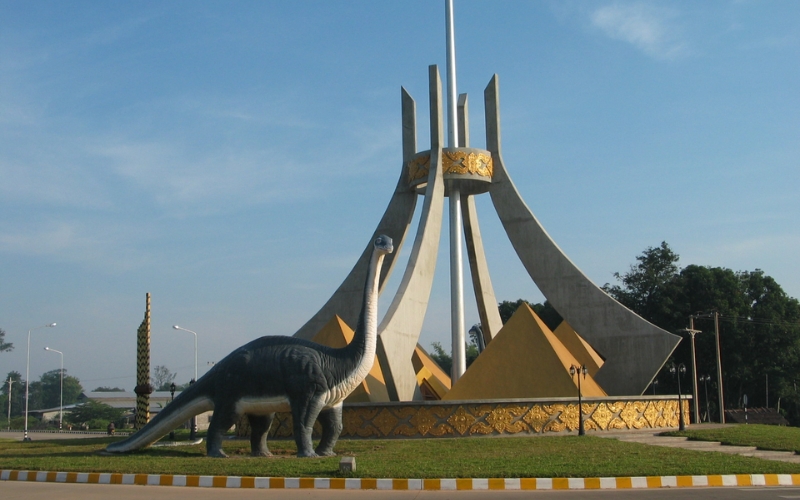
Savannakhet Dinosaur Museum
A small but genuinely surprising museum on Tha He Road that contains significant paleontological finds from southern Laos. Dinosaur fossils discovered in nearby Champasak Province and the Savannakhet area itself form the core of the collection: vertebrae, claws, teeth, and reconstructed bone groupings from species that lived in the region between 100 and 150 million years ago. The museum is modest in size but the specimens are real and the explanatory context is reasonable.
4. Mekong Riverfront
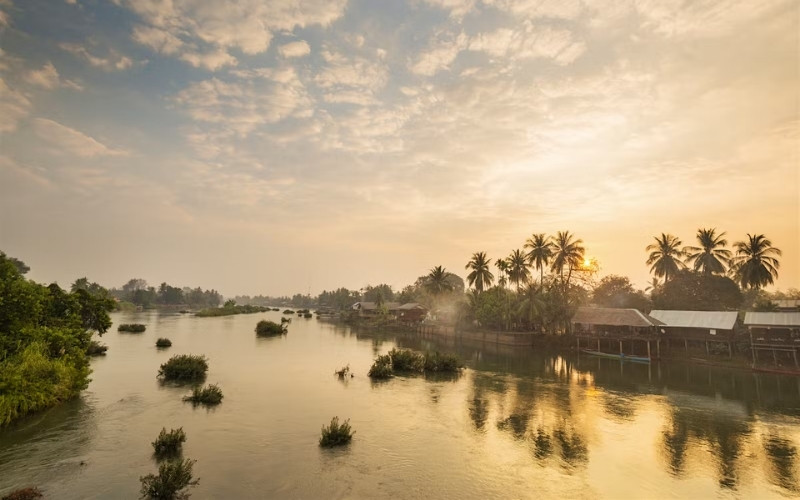
Golden hour on the Mekong River: calm waters, palm silhouettes, and riverside homes bathed in warm evening light.
The waterfront promenade along the Mekong is most pleasant in the evening from around 5pm, when food vendors set up tables along the embankment and the sunset over the river to the Thai bank opposite gives the city its most photogenic moment. A walk along the embankment with a cold Beerlao and a plate of grilled chicken from one of the riverside vendors is the simplest evening pleasure of a Savannakhet stay.
5. Talat Sao (Morning Market)
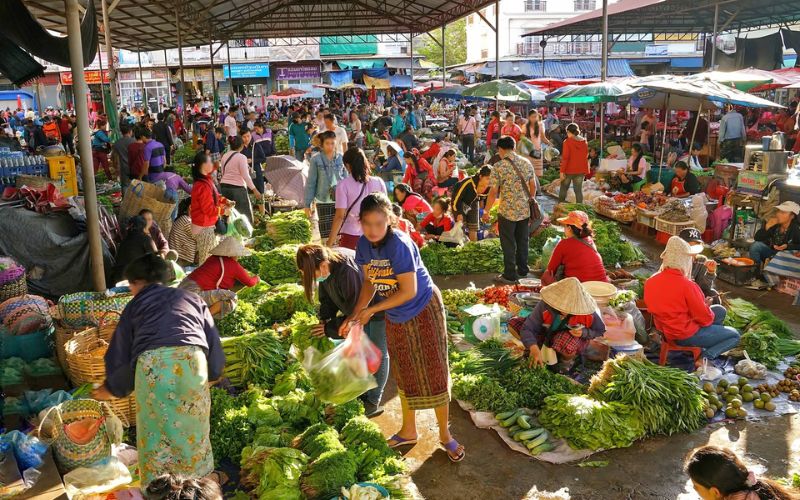
Morning Market Savannakhet
The central market on Latsavongseuk Road operates from early morning (around 5am) and is the most active and authentic urban scene in the city. Fresh produce from the surrounding Mekong farms, river fish from the morning’s catch, dried fish products, Lao silk textiles, and the various traditional Lao herbal medicines compose the typical Lao provincial market experience.
6. That Inhang Stupa
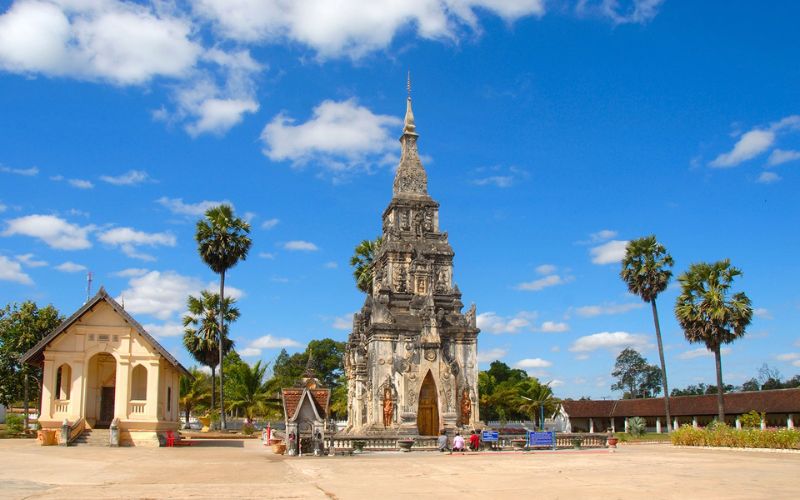
That Inhang Stupa Savannakhet
About 12 km north of Savannakhet city, That Inhang is the most important Buddhist stupa in southern Laos and one of the most sacred sites in the country. The 9-meter-tall stupa, originally built in the 16th century with subsequent restorations, is believed to contain a relic of the Buddha. The annual That Inhang Festival in mid-November draws pilgrims from across southern Laos and is one of the more significant religious events outside Vientiane.
Savannakhet Food
Lao food in Savannakhet reflects the southern lowland tradition: khao niao (sticky rice), tam mak hoong (Lao papaya salad), laap (minced meat salad), and the grilled river fish from the Mekong.
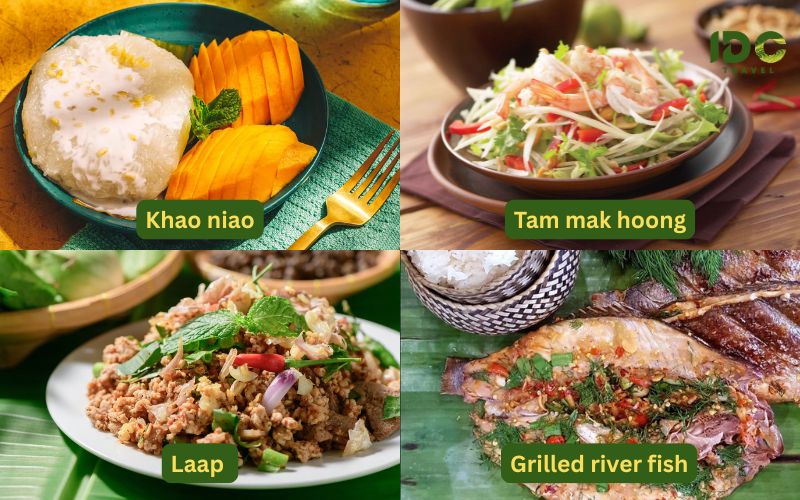
Lao food in Savannakhet
French-influenced cafe culture: The colonial inheritance includes a genuinely good morning cafe scene around the central square: French baguettes, drip coffee with sweetened condensed milk, and pastries. Sit outside in the early morning before the heat builds; this is one of the specific pleasures of Savannakhet.
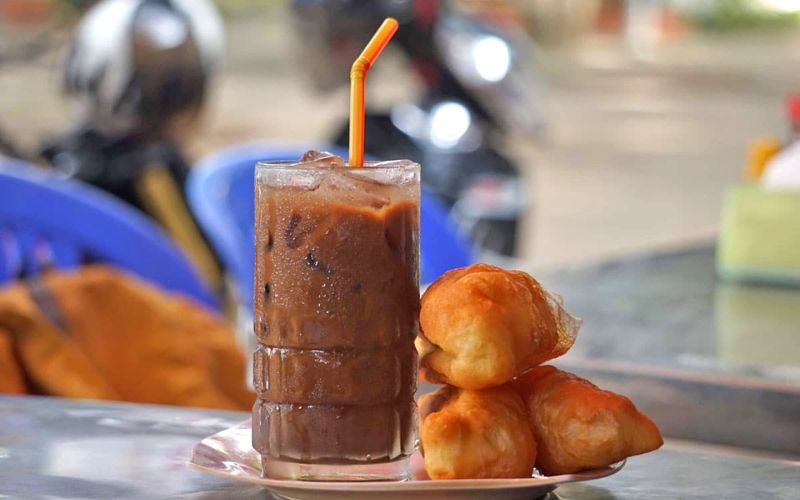
Khmer Coffee
Estimated Travel Costs in Savannakhet
Savannakhet is one of Laos’ most affordable cities for travelers. Accommodation along the colonial waterfront is inexpensive, local food is very cheap, and the main attractions cost almost nothing to visit. Most travelers arrive as an overnight or two-night stop on a longer Laos circuit. Crossing from Mukdahan, Thailand is straightforward and inexpensive.
Prices below are estimates for international travelers and may vary by season and booking time.
| Category | Budget | Mid-Range | Luxury |
| Accommodation (per night) |
84,000 – 168,000 KIP (~$4-$8) |
252,000 – 630,000 KIP (~$12-$30) |
840,000 – 2,100,000 KIP (~$40-$100) |
| Meal per person | 42,000 – 105,000 KIP (~$2-$5) |
105,000 – 315,000 KIP (~$5-$15) |
315,000 – 840,000 KIP (~$15-$40) |
| Colonial quarter walk | Free | Free | Free |
| Dinosaur Museum entry | 10,000 KIP (~$0.48) |
10,000 KIP (~$0.48) |
10,000 KIP (~$0.48) |
| Saint Theresa Cathedral visit | Free | Free | Free |
| That Inhang Stupa entry | 5,000 KIP (~$0.24) |
5,000 KIP (~$0.24) |
5,000 KIP (~$0.24) |
| Tuk-tuk (full day, city circuit) |
84,000 – 168,000 KIP (~$4-$8) |
168,000 – 315,000 KIP (~$8-$15) |
– |
| Bus Vientiane–Savannakhet (one way) |
210,000 – 315,000 KIP (~$10-$15) |
315,000 – 420,000 KIP (~$15-$20) |
– |
| Friendship Bridge crossing (from Thailand) |
10,000 KIP (~$0.48) |
10,000 KIP (~$0.48) |
10,000 KIP (~$0.48) |
| Total 5-day trip | 840,000 – 1,680,000 KIP (~$40-$80) |
2,520,000 – 5,040,000 KIP (~$120-$240) |
5,880,000 – 12,600,000 KIP (~$280-$600) |
| Total 7-day trip | 1,260,000 – 2,520,000 KIP (~$60-$120) |
3,780,000 – 7,560,000 KIP (~$180-$360) |
8,820,000 – 18,900,000 KIP (~$420-$900) |
| Total 14-day trip | 2,520,000 – 5,040,000 KIP (~$120-$240) |
7,560,000 – 15,120,000 KIP (~$360-$720) |
17,640,000 – 37,800,000 KIP (~$840-$1,800) |
Savannakhet has limited ATM availability, withdraw sufficient cash before arriving. That Inhang Festival (November) fills accommodation; book in advance. Always recheck costs at time of booking.
Savannakhet Travel Tips
- The Friendship Bridge to Mukdahan is the most convenient Laos-Thailand land crossing in the central region. Lao visa on arrival is straightforward.
- The colonial quarter is best walked in the early morning (6 to 8am) or late afternoon (4 to 6pm) to avoid midday heat.
- Savannakhet has limited tourist infrastructure compared to Vientiane or Luang Prabang. Most accommodation is modest mid-range hotels; expectations should be calibrated accordingly.
- Carry small Lao kip denominations; Thai Baht is also widely accepted given the proximity to the border.
- The Dinosaur Museum hours are inconsistent; verify opening status with your guesthouse before visiting.
Visit Savannakhet with IDC Travel
We can include Savannakhet as a stop on extended Laos itineraries between Vientiane and Pakse, with particular interest for travelers focused on the French colonial heritage of the Mekong corridor. Contact our team for options.