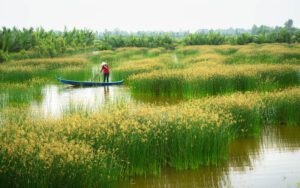

Mekong Delta tours are created for travelers who want to see how southern Vietnam truly lives, works, and eats along its waterways. This vast region in southwest Vietnam is shaped by the final branches of the Mekong River before it empties into the sea, forming fertile plains, fruit orchards, floating markets, and canal villages. If you are planning a Mekong Delta tour from Ho Chi Minh City or as part of a longer southern Vietnam itinerary, this guide explains clearly when to go, where to visit, and what local food to try.
The most favorable time to visit the Mekong Delta is from December to April during the dry season. These months bring lower rainfall, clearer skies, and stable river conditions, making boat excursions to floating markets and rural canals more comfortable. Daytime temperatures are warm, generally between 25°C and 32°C, but humidity is more manageable compared to peak rainy months.
The wet season lasts from May to November, with heavier rainfall typically between August and October. While travel remains possible year-round, certain rural routes may be affected by seasonal flooding. Interestingly, the flood season also transforms the landscape into vibrant green rice fields and expanded waterways, which some photographers and nature lovers appreciate.
>>> Read more: The best time to visit Vietnam
The key destinations in a Mekong Delta itinerary are Can Tho, Ben Tre, My Tho, Vinh Long, Chau Doc, and Tra Su Forest. Each area highlights a different side of delta life, from floating commerce to coconut handicrafts and wetlands rich in birdlife.
Can Tho is the main urban center of the Mekong Delta and the starting point for floating market visits. It combines river culture with city infrastructure, offering riverside promenades, traditional houses, and easy access to early-morning boat tours.
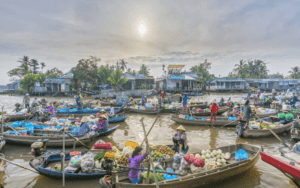
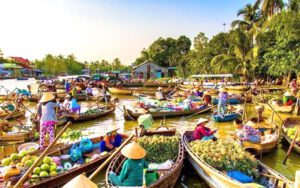
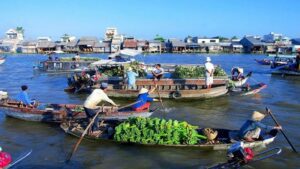
Cai Rang Floating Market is the largest and most active floating market in Vietnam. At sunrise, dozens of boats gather to trade fruit, vegetables, and agricultural goods directly on the river. Goods are displayed on tall poles attached to boats, signaling what each seller offers—a unique system that reflects traditional river commerce.
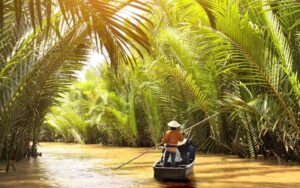
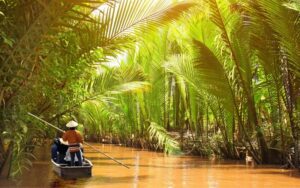
Ben Tre is widely known as Vietnam’s coconut province. Visitors explore shaded canals by small boats, visit family-run coconut candy workshops, and cycle through quiet villages surrounded by palm groves.
My Tho is the most accessible Mekong Delta destination from Ho Chi Minh City. Often included in day tours, it provides boat trips to river islands, fruit orchards, and handicraft villages, making it ideal for travelers with limited time.
Chau Doc is recognized for its cultural diversity and floating villages. Situated near the Cambodian border, the town blends Vietnamese, Khmer, and Cham influences. Floating fish farms and riverside stilt houses define the local landscape.
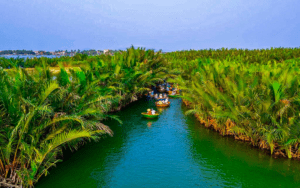
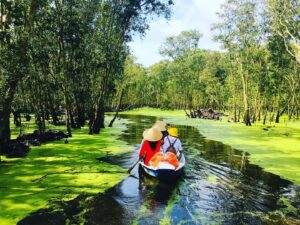
Tra Su Cajuput Forest is the most remarkable ecological site in the Mekong Delta. Visitors glide through flooded forests in small boats, observing migratory birds and dense aquatic vegetation, especially during high-water months.
Vinh Long is famous for orchard visits and homestay experiences. Here, travelers can stay with local families, harvest seasonal fruits, and gain insight into agricultural life in the delta.
Your Vietnam travel cost depends on how you travel and how often you change destinations. For a day of ordinary sightseeing plus…
The rainy season in Vietnam depends on where you are. In the north (Hanoi, Ha Long Bay and Sapa) it runs from…
To plan your first trip to Vietnam, start with 4 decisions: check whether you need a visa (citizens of 24 countries, including…
