Here are the top favorite Vietnam tours, covering the must-see destinations, suitable for tourists traveling to this S-shaped country for the first time.

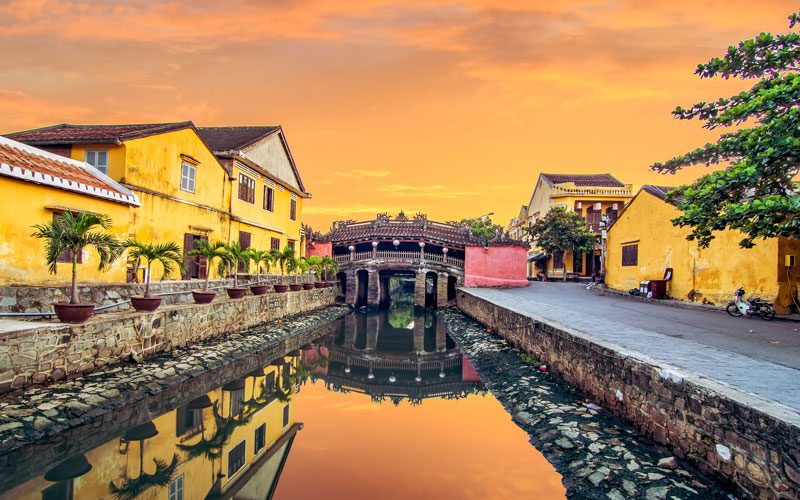
Vietnam is a beautiful country that is getting more and more popular lately. You should check out Vietnam first if you want to start your trip to Indochina, because there are many things Vietnam can offer you. Whatever your preferences are, from enjoying the majestic landscape to trying exotic foods or learning about the culture, Vietnam can satisfy them all.
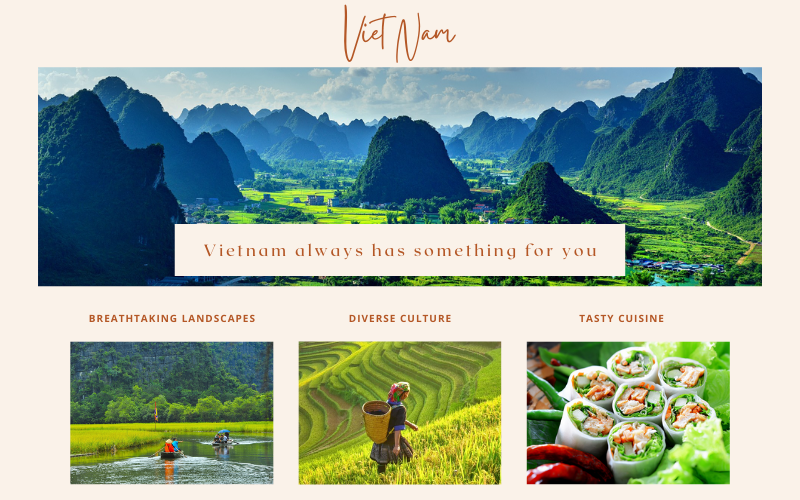
Reasons to visit Vietnam
If you still need more reasons to go to Vietnam, here are some that will convince you to start your trip.
Vietnam remains one of Southeast Asia’s most appealing destinations in 2026 because it delivers what travelers value most: safety, cultural depth, easy logistics, good value, and experiences that feel genuine rather than manufactured.
Vietnam is widely considered a safe country for international visitors. International SOS places Vietnam in the low-risk category in Asia, and most travelers report feeling comfortable whether traveling solo, with a partner, or as a family. Public order is strong, violent crime is rare, and daily travel is generally stress-free.
Entry to Vietnam has become more straightforward recently. Many nationalities benefit from visa exemptions, while others can apply for an e-visa online before departure. Visa-on-arrival options, arranged in advance through licensed agencies, are also available for air travelers, making arrival procedures quick and predictable.
Vietnam’s history spans nearly 4,000 years and is visible throughout the country. From ancient pagodas in Hanoi and imperial relics in Hue to wartime sites like the Cu Chi Tunnels, history is woven into everyday landscapes rather than confined to museums.
Vietnam is home to 9 UNESCO World Heritage Sites, including Ha Long Bay, Trang An, Phong Nha-Ke Bang, Hoi An, Hue, My Son, the Thang Long Imperial Citadel, the Ho Dynasty Citadel, and Cat Ba Island. These sites allow travelers to combine natural scenery with deep cultural and historical exploration in a single trip.
With 54 ethnic groups, Vietnam offers remarkable cultural variety. Each group maintains its traditions, dress, and way of life, especially visible in rural and mountainous regions. Practices such as ancestor worship remain central to Vietnamese society and offer visitors meaningful cultural insight.
Vietnamese cuisine is one of the country’s strongest attractions. Regional differences create constant variety, while street food culture makes excellent meals affordable and accessible. Dishes like pho, banh mi, and bun cha are everyday staples, not tourist inventions.
Vietnam is the world’s second-largest coffee producer, and coffee plays a central role in daily life. Strong brews, iced coffee with condensed milk, and Hanoi’s famous egg coffee offer flavors found nowhere else in the region.
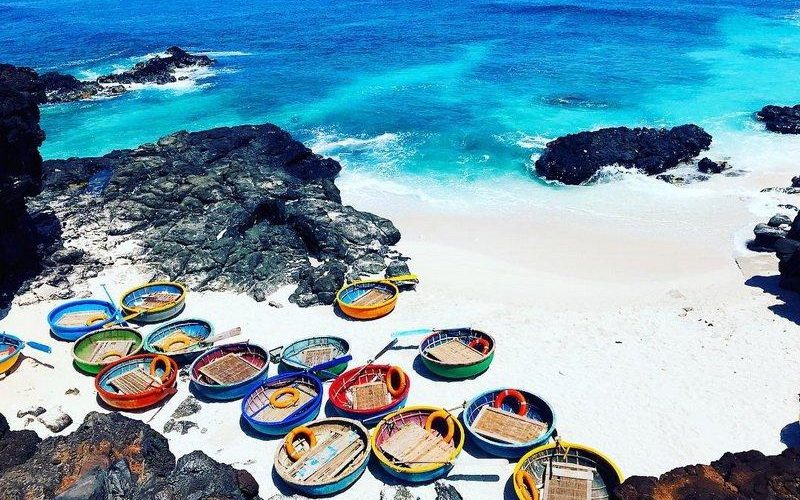
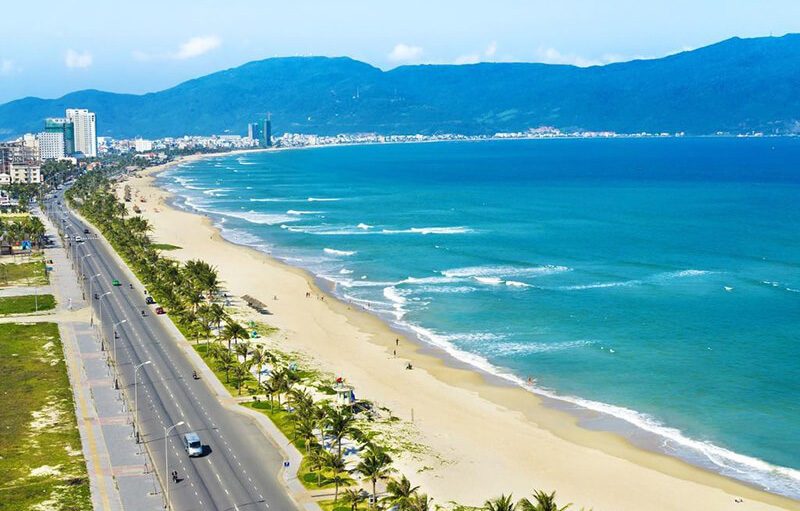
Vietnam’s 3,000-kilometer coastline includes well-known beach destinations such as Da Nang, Nha Trang, and Phu Quoc. These areas combine clean beaches, excellent infrastructure, and a range of accommodations, from simple hotels to high-end resorts.
Travel costs in Vietnam remain low compared to many Western and Asian destinations. Accommodation, food, and transport offer strong value, allowing travelers to enjoy higher levels of comfort or longer stays on the same budget.
Vietnamese hospitality is natural and unforced. Visitors often consider locals approachable, helpful, and genuinely curious. Simple interactions, from asking for directions to sharing a coffee, frequently become highlights of the trip.
For travelers in 2026, Vietnam offers a rare balance: safety, authenticity, affordability, and depth, making it a destination that consistently exceeds expectations.
>>> Read more: Top 10 best reasons to visit Vietnam
Vietnam stands out in Southeast Asia because it offers travelers something rare: meaningful experiences that are easy to access, affordable, and deeply rooted in local life rather than staged for tourists.
Hanoi’s Old Quarter is dense, noisy, and full of character. Its narrow streets still carry centuries-old trade names like Hang Dao or Hang Ma, reflecting the area’s merchant past. Start near Hoan Kiem Lake, explore tube houses, temples, and street stalls, and spend at least half a day tasting local dishes and observing everyday Hanoian life.
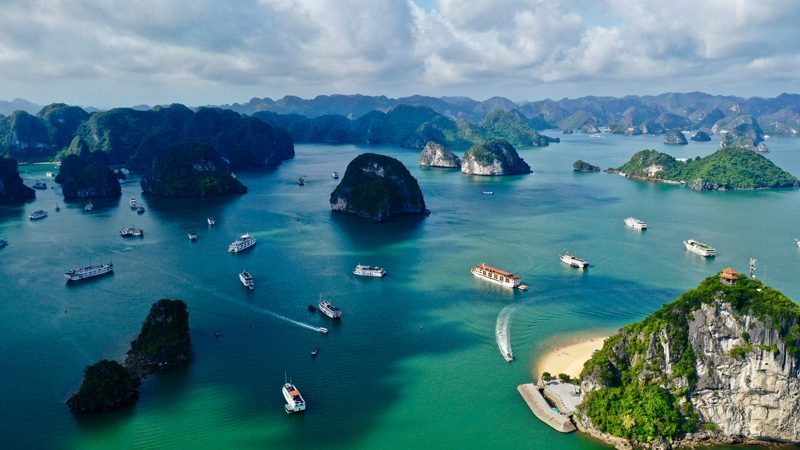
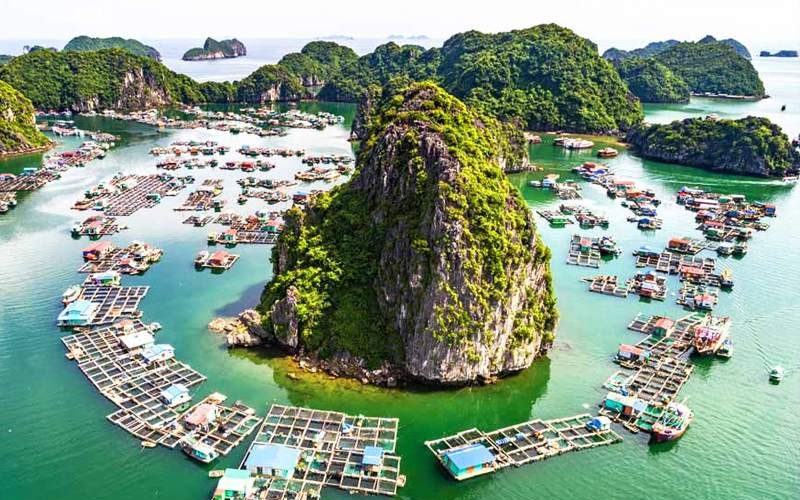
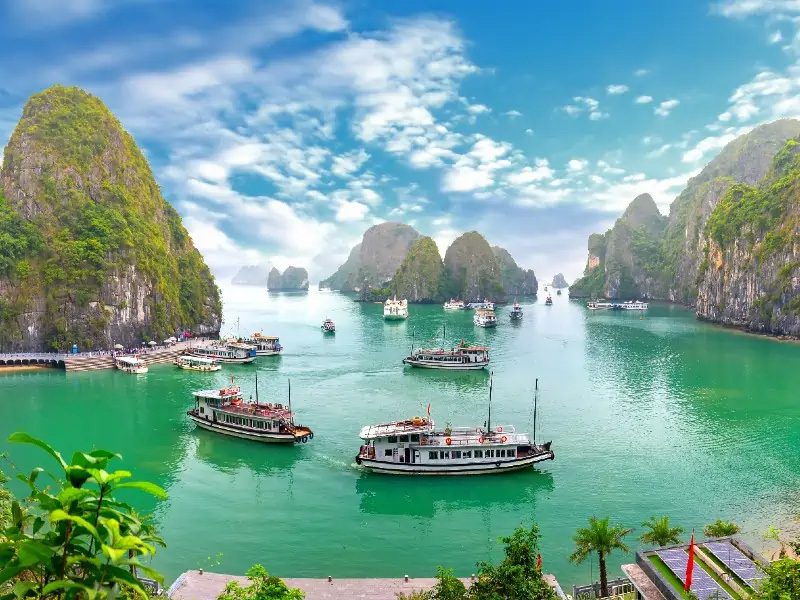
A 2-day, 1-night cruise in Halong Bay is one of Vietnam’s most iconic experiences. Sailing among more than 2,000 limestone karsts, kayaking through quiet coves, visiting caves, and watching sunrise and sunset from the deck makes this UNESCO-listed landscape feel almost unreal.
High in the Hoang Lien Mountains, Sapa is known for its cool climate and ethnic diversity. The traditional love market, rooted in Dao and H’mong culture, reflects old courtship customs. While most rituals now happen out of sight, the stories and atmosphere still offer insight into northern Vietnam’s highland traditions.
Mai Chau Valley in Hoa Binh Province offers a quieter side of Vietnam. Staying in a White Thai stilt house in Lac or Pom Coong village allows you to experience rural life firsthand, wake up to rice paddies, cycle through villages, and browse local textile markets.
Phong Nha-Ke Bang National Park is a UNESCO World Heritage Site and home to Son Doong, the largest natural cave on Earth. Guided expeditions reveal massive caverns, underground rivers, and jungle landscapes. The area also offers trekking, waterfalls, and rich biodiversity beyond caving.
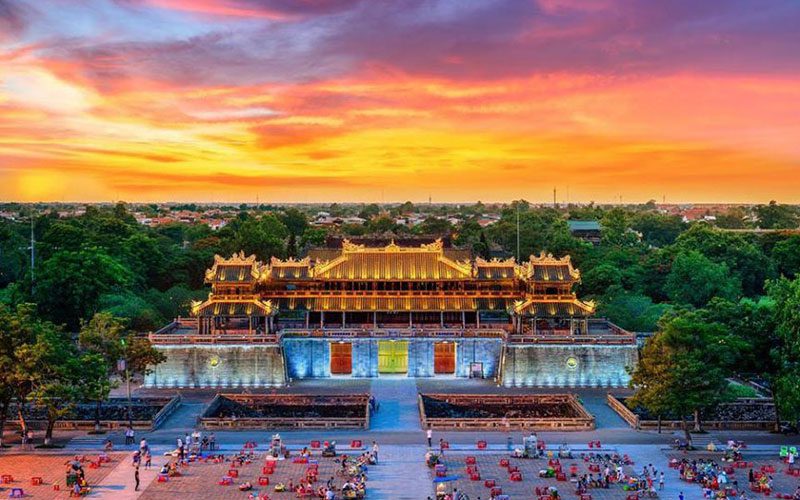
Hue was the capital of the Nguyen Dynasty and remains Vietnam’s historical heart. The Imperial Citadel, royal tombs, and pagodas along the Perfume River showcase feudal architecture and court culture. Sites like Tu Duc’s tomb and Vong Canh Hill add depth beyond the main complex.
Hoi An blends heritage and cuisine effortlessly. A cooking class usually begins at a local market, followed by hands-on lessons preparing classic dishes like spring rolls and Hoi An pancakes. It’s one of the best ways to understand Vietnamese flavors at their source.
Museums in Ho Chi Minh City offer a sobering look at Vietnam’s modern history. The War Remnants Museum, the Ho Chi Minh City Museum, and the Cu Chi Tunnels provide context through photographs, artifacts, and firsthand accounts of wartime life.
Life along the Mekong River moves at a slower pace. Visiting floating markets like Cai Rang or Cai Be, traveling by sampan through palm-lined canals, and cycling through orchards reveal a way of life shaped by water and agriculture.
Street food is central to Vietnamese culture. From banh mi and spring rolls to grilled meats and iced coffee, eating at local stalls or joining a street food tour in Hanoi or Ho Chi Minh City is one of the most direct ways to connect with everyday life.
Together, these experiences reflect Vietnam’s diversity in geography, culture, and history, making the country one of Southeast Asia’s most rewarding destinations for first-time and returning travelers alike.
>>> Read more: Best things to do in Vietnam
Travelers can exchange foreign currency at licensed banks and authorized exchange counters, which are easy to find at international airports, in major cities, and at reputable hotels. Airports are often the most convenient option upon arrival, while banks in city centers usually offer competitive and transparent exchange rates.
Vietnamese regulations allow travelers to bring in foreign currency, but amounts exceeding $5,000 (or equivalent per person) must be declared upon arrival. It is recommended to check exit regulations in your departure country as well.
There is generally no advantage to exchanging VND before coming to Vietnam, as exchange rates abroad are often less favorable. For most travelers, exchanging money after arrival at the airport or a local bank is the safest and most cost-effective approach.
Vietnam has a tropical monsoon climate, but the weather varies clearly by region and season, so travel conditions depend very much on where and when you go.
It is simple to locate a taxi if you need to get around a city. However, renting a car in Vietnam will give you more flexibility for your trip.
A safe and affordable option for late-night travel is the train. To save time on your trip, we can assist you in purchasing tickets for the night train in Vietnam.
Boats are popular on a Halong Bay cruise or a Mekong cruise. Get in touch with us to book a professional cruise with solid crews and safe boats.
Due to the length of the country, flights are necessary to get from one region to another. We will find the best Vietnam flight deals for you, so there is no need to waste time looking for low-cost tickets.
Yes, we strongly advise you to purchase international travel insurance when traveling to Vietnam.
While Vietnam is generally safe and affordable, unexpected situations such as medical emergencies, trip cancellations, flight delays, or lost luggage can still occur. Travel insurance helps cover hospital treatment at international clinics, emergency evacuation, and costs related to disruptions in your itinerary, which can otherwise be expensive for foreign travelers.
Insurance is particularly important if you plan to join activities such as trekking, motorbike travel, boating, or adventure tours, as these may not be fully covered by basic policies. Ensure your policy includes COVID-related medical coverage, emergency evacuation, and repatriation, as these remain standard requirements for many travelers in 2026.
Before departure, check that your insurance is valid for Vietnam, covers the full duration of your stay, and includes the activities you plan to do. Having comprehensive travel insurance provides peace of mind and allows you to enjoy your trip without unnecessary risk.
Our agency specializes in organizing private tours, a personalized travel experience designed specifically for you and your family or friends, offering customized itineraries, private guides, and private transportation, allowing you flexibility in pace and activities tailored to your specific preferences.
