


The best things to do in Vietnam are cruising Ha Long Bay overnight, eating your way through Hanoi’s street food, wandering the lantern-lit streets of Hoi An, exploring the Imperial City of Hue and the caves of Phong Nha, and taking a boat through the Mekong Delta. Vietnam is long and narrow, so the weather changes by region: the north is best from October to April, the central coast from February to August and the south from December to April. This guide covers 20 things to do in Vietnam from north to south, with prices, opening times and tips checked in October 2026.
| # | Experience | Region | Best for | Best time | Time needed | Admission / activity cost |
| 1 | Hanoi Old Quarter and Hoan Kiem Lake | North | First-timers, families | Fri-Sun evenings | Half a day | Free |
| 2 | Hanoi street food | North | Food lovers | Breakfast and lunch | 2-3 hours | About US$2-4 per dish |
| 3 | Water puppet show | North | Families with kids | Late afternoon | 1 hour | From 100,000 VND (US$3.80) |
| 4 | Temple of Literature and Mausoleum | North | History lovers | Morning | 2-3 hours | 70,000 VND (US$2.70) temple |
| 5 | Ha Long Bay overnight cruise | North | Couples, families | Oct-Apr | 2 days | About US$145-395 per person |
| 6 | Ninh Binh boat trip | North | Nature lovers | Late May-June, Sept | 1-2 days | 300,000 VND (US$11.50) Trang An |
| 7 | Sapa trekking | North | Hikers | Sept-Nov | 2-3 days | 850,000 VND (US$32.70) cable car |
| 8 | Ha Giang Loop | North | Adventurous travelers | Oct-Nov | 3-4 days | Permit about 230,000-300,000 VND |
| 9 | Phong Nha caves | Central | Adventure, families | Feb-Aug | 1-2 days | 270,000 VND (US$10.40) Paradise Cave |
| 10 | Hue Imperial City | Central | History lovers | Feb-Aug | 1 day | 200,000 VND (US$7.70) |
| 11 | Hai Van Pass | Central | Road-trippers | Mar-Aug | Half a day | Free road; transport extra |
| 12 | Golden Bridge at Ba Na Hills | Central | Families with kids | Early morning | 1 day | 1,000,000 VND (US$38.50) |
| 13 | Marble Mountains and Dragon Bridge | Central | Families, couples | Sat-Sun 21:00 (bridge) | Half a day | 40,000 VND (US$1.50) Thuy Son |
| 14 | Hoi An Ancient Town | Central | Couples, photographers | Full-moon nights | 1-2 days | 120,000 VND (US$4.60) |
| 15 | Tailoring or a cooking class in Hoi An | Central | Shoppers, food lovers | Any time | Half a day to several days | Cooking class about US$20-35 |
| 16 | My Son Sanctuary | Central | History lovers | Early morning | Half a day | 150,000 VND (US$5.80) |
| 17 | War history in Ho Chi Minh City | South | History lovers | Morning | Half a day | 40,000 VND (US$1.50) per museum |
| 18 | Cu Chi Tunnels | South | History lovers, families | Morning | Half a day | About 85,000-130,000 VND |
| 19 | Mekong Delta floating market | South | Photographers | Dawn, Dec-Apr | 1-2 days | Boat about 200,000-300,000 VND |
| 20 | Phu Quoc and Hon Thom cable car | South | Families, beach lovers | Nov-Apr | 2-4 days | 850,000 VND (US$32.70) |
Admission prices are for foreign adults where applicable, while food, cruises, classes and transport use indicative per-person costs. Figures were checked in October 2026, converted at about 26,000 VND to 1 USD, and may change before travel in 2027.
20 Best Things to Do in Vietnam by Region
This list of things to do in Vietnam runs from Hanoi and the northern mountains through the central coast to Ho Chi Minh City and the far south. The numbers follow geography rather than ranking, so you can pick experiences that sit close together on your itinerary.
Hanoi & Northern Vietnam
The north holds many of the most famous things to do in Vietnam: the capital, the best-known bay and the highest mountains. Most first trips start here, and many of the classic places to visit in Vietnam are within a day’s drive of Hanoi.
1. Walk Hanoi’s Old Quarter and Hoan Kiem Lake (Hanoi) – Street Life and Weekend Walking Streets
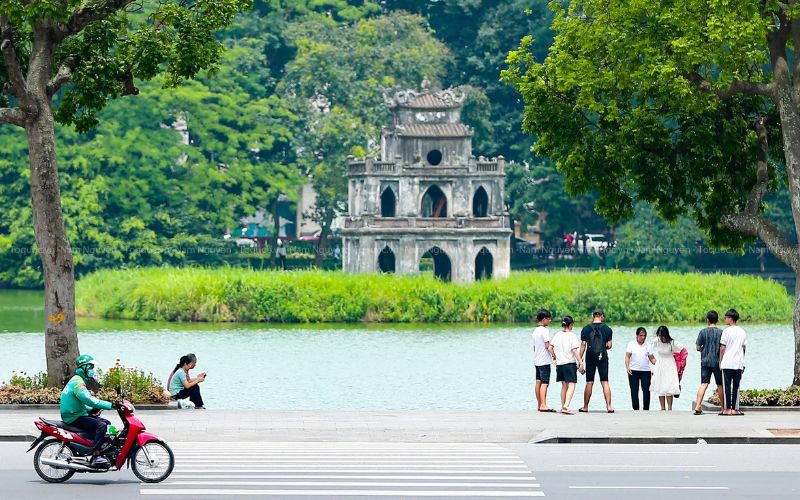
The peaceful early morning atmosphere along the Hoan Kiem Lake promenade, a favorite spot for locals and visitors in Hanoi.
Hanoi’s Old Quarter is a maze of narrow streets once named after the goods sold on them, packed with motorbikes, cafés and food stalls. On weekends, the streets around Hoan Kiem Lake close to traffic and fill with families, street performers and snack sellers, which makes it one of the easiest things to do in Hanoi for first-time visitors.
- Location: central Hanoi, around Hoan Kiem Lake
- Best for: first-time visitors and families
- Best time: Friday to Sunday evenings, when the walking streets open from about 18:00 or 19:00 until midnight; early morning for tai chi and joggers by the lake
- Time needed: half a day
- Cost: free
- Getting there: walk from any Old Quarter hotel
- Tip: Do not plan around Hanoi’s Train Street. Tours there have been banned since March 2025, and train services through the area were cut in 2026, so you may not see a train at all.
>>> For neighbourhoods, sights and costs, see our Hanoi travel guide.
2. Eat Your Way through Hanoi’s Street Food (Hanoi) – Pho, Bun Cha and Michelin-Listed Stalls

The world-famous street food of Hanoi
Hanoi is the home of pho and bun cha and the best place to start with Vietnamese street food, and eating at plastic tables on the pavement is a big part of any visit. The MICHELIN Guide Vietnam 2026 added several Hanoi stalls to its Bib Gourmand list, including Banh Cuon Gia Truyen Thanh Van on Hang Ga and Pho Ha on Hang Hom.
- Location: the Old Quarter and surrounding streets
- Best for: food lovers
- Best time: pho for breakfast, bun cha at lunchtime
- Time needed: 2 to 3 hours for a food walk
- Cost: most street dishes cost about US$2 to US$4
- Getting there: on foot; many of the best stalls are within the Old Quarter
- Tip: Choose stalls that are busy with local diners, and try egg coffee, a Hanoi speciality, between meals.
3. Watch a Water Puppet Show (Hanoi) – A Traditional Art That Kids Love

A traditional water puppet show at Thang Long Theatre
Water puppetry began in the rice paddies of the Red River Delta, with puppeteers hidden behind a screen moving wooden figures across a pool of water to live music. The Thang Long Water Puppet Theatre, beside Hoan Kiem Lake, is one of the best things to do in Vietnam with kids.
- Location: 57B Dinh Tien Hoang Street, by Hoan Kiem Lake
- Best for: families with kids and first-time visitors
- Best time: shows run Monday to Saturday at 16:10, 17:20, 18:30 and 20:00, with extra morning and afternoon shows on Sundays
- Time needed: about 50 minutes for the show
- Cost: 100,000, 150,000 or 200,000 VND (about US$3.80, US$5.80 or US$7.70) depending on the seat, according to recent listings
- Getting there: a short walk from the Old Quarter
- Tip: Book a day ahead in peak season, and sit in the middle rows for the best view of the water stage.
4. Visit the Temple of Literature and Ho Chi Minh Mausoleum (Hanoi) – Confucian Courtyards and Ba Dinh Square

The Ho Chi Minh Mausoleum stands as a solemn monument and the final resting place of Vietnam’s great leader in the heart of Hanoi.
The Temple of Literature, founded in 1070, is home to the Imperial Academy, Vietnam’s first national university, with peaceful courtyards and stone stelae honouring doctoral graduates. A short ride away, the Ho Chi Minh Mausoleum on Ba Dinh Square is the country’s most important political monument.
- Location: Quoc Tu Giam Street (Temple of Literature) and Ba Dinh Square, west of the Old Quarter
- Best for: history lovers and older travellers
- Best time: the Temple of Literature opens daily from 08:00 to 17:00; the mausoleum opens on Tuesday, Wednesday, Thursday, Saturday and Sunday mornings only, from 07:30 (April to October) or 08:00 (November to March)
- Time needed: 2 to 3 hours for both
- Cost: the Temple of Literature costs 70,000 VND (about US$2.70) according to recent 2026 guides, while older sources list 30,000 VND; the mausoleum is free
- Getting there: about 10 minutes by taxi from the Old Quarter
- Tip: The mausoleum is closed for restoration from 4 September to 2 November 2026 and reopens on 3 November. Cover your shoulders and knees, and stay silent inside.
5. Cruise Ha Long Bay Overnight (Quang Ninh) – Limestone Islands from the Deck

Ha Long Bay Cruise
Ha Long Bay’s 1,600 or so limestone islands and islets are Vietnam’s most famous view, part of the UNESCO-listed Ha Long Bay – Cat Ba Archipelago, first inscribed in 1994 and extended in 2023. An overnight Ha Long Bay cruise lets you kayak, visit caves and wake up among the karsts after the day boats have gone.
- Location: Quang Ninh province, departing from Tuan Chau or Ha Long International Cruise Port
- Best for: couples, families and first-time visitors
- Best time: October to April for calmer seas; summer storms can cancel sailings
- Time needed: 2 days and 1 night
- Cost: about US$145 to US$195 per person for a budget cruise, US$200 to US$275 mid-range and US$280 to US$395 for luxury, usually including meals, kayaking and bay fees
- Getting there: about 2.5 to 3.5 hours by road from Hanoi
- Tip: For fewer boats, ask about cruises into Lan Ha Bay, near Cat Ba Island.
>>> Compare cabins, itineraries and prices across our Ha Long Bay cruises.
6. Take a Boat through Ninh Binh (Ninh Binh) – Ha Long Bay on Land

Tam Coc, Ninh Binh
Ninh Binh’s rivers wind through caves and rice fields beneath limestone peaks, earning it the nickname “Ha Long Bay on land”. The Trang An boat trip is part of a UNESCO World Heritage Site, and the climb to Hang Mua gives one of the best views in northern Vietnam.
- Location: Ninh Binh, about 90 to 95 km south of Hanoi
- Best for: nature lovers and photographers
- Best time: late May to early June and September, when the rice turns gold
- Time needed: 1 to 2 days
- Cost: the Trang An boat trip costs 300,000 VND (about US$11.50) per adult since 1 January 2026, and Hang Mua costs 150,000 VND (about US$5.80) since 1 April 2026
- Getting there: about 2 hours from Hanoi by car, limousine van or train
- Tip: Stay a night in Tam Coc to reach the boats before the day-trip crowds.
>>> See prices and tips for every major sight in our guide to things to do in Ninh Binh.
7. Trek the Rice Terraces of Sapa (Lao Cai) – Mountain Villages and Mount Fansipan

Golden rice terraces in Sapa
Sapa sits among terraced valleys and ethnic minority villages in the far north-west. Trekking between villages is the main draw, and a cable car climbs Mount Fansipan, the highest peak in Indochina.
- Location: Sapa, Lao Cai province
- Best for: hikers and nature lovers
- Best time: September to November, when the terraces turn gold and trails are drier; May to August is rainy and muddy
- Time needed: 2 to 3 days
- Cost: the Fansipan cable car costs 850,000 VND (about US$32.70) return per adult, with the town train and summit funicular extra; Cat Cat village costs 150,000 VND (about US$5.80)
- Getting there: about 5.5 to 7 hours from Hanoi by sleeper bus, or by overnight train
- Tip: Trek with a licensed local guide and ask before photographing people.
>>> Our Sapa travel guide covers villages, weather, transport and places to stay.
8. Ride the Ha Giang Loop (Northern Border) – Mountain Passes and Border Villages
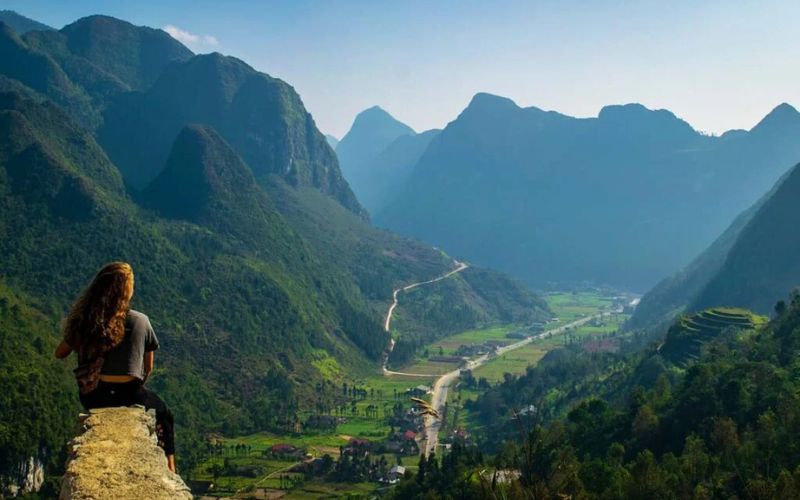
Magnificent landscapes in Ha Giang Loop
The Ha Giang Loop winds through limestone mountains and deep river canyons near the Chinese border, passing Hmong and Dao villages and the famous Ma Pi Leng Pass. Since the 2025 provincial merger, the area is officially part of Tuyen Quang province, although the loop is still known as Ha Giang.
- Location: the border areas of Quan Ba, Yen Minh, Dong Van and Meo Vac
- Best for: adventurous travellers and young travellers
- Best time: October and November, for clear skies and buckwheat flowers
- Time needed: 3 to 4 days is typical
- Cost: the border-area permit for foreigners has cost about 230,000 to 300,000 VND (about US$8.80 to US$11.50)
- Getting there: about 6 to 8 hours from Hanoi by sleeper bus
- Tip: Unless you hold an international driving permit and suitable insurance, ride with an experienced easy rider rather than driving yourself.
Permit rules can change, so ask our Vietnam travel experts to arrange the permit and a reliable driver or easy rider for you.
Central Vietnam
The central coast packs in many of the best things to do in Vietnam, from imperial history and caves to mountain passes and the old town of Hoi An. Note that September to December is the rainy season here, with the highest flood risk in October and November.
9. Explore the Caves of Phong Nha (Quang Tri) – Paradise Cave and Son Doong
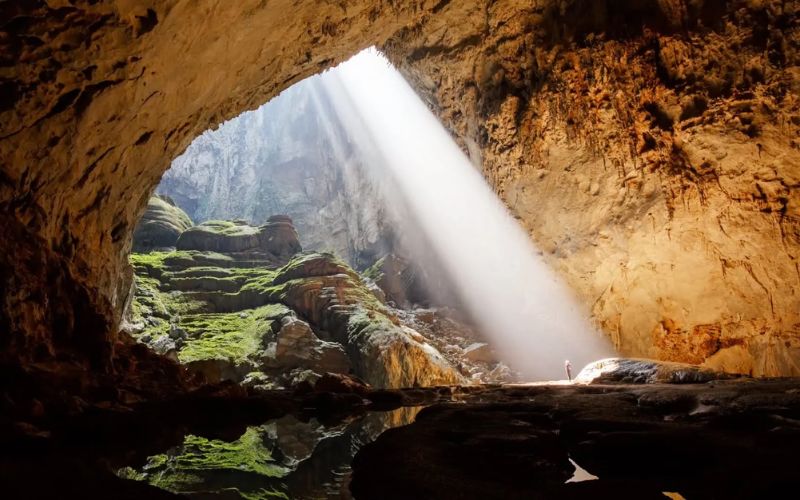
Phong Nha Cave
Phong Nha-Ke Bang National Park, a UNESCO World Heritage Site, protects some of the world’s most spectacular caves. Most visitors walk into Paradise Cave and take a boat into Phong Nha Cave, while Son Doong, the largest known cave passage, can only be visited on a multi-day expedition.
- Location: Phong Nha, about 45 km west of Dong Hoi, now in Quang Tri province
- Best for: adventurous travellers and families
- Best time: February to August; Phong Nha Cave can close during floods from September to November
- Time needed: 1 to 2 days
- Cost: Paradise Cave costs 270,000 VND (about US$10.40), including the electric cart; Phong Nha Cave costs 150,000 VND (about US$5.80) per person plus about 550,000 VND (about US$21) per boat for up to 12 people; Son Doong expeditions cost about US$3,000 and are fully booked for 2026 and 2027
- Getting there: fly to Dong Hoi, then drive about 45 km
- Tip: Paradise Cave involves many steps, so wear shoes with good grip.
10. Step into Hue’s Imperial City (Hue) – The Citadel and Tombs of Vietnam’s Last Dynasty

An overview of Hue Imperial City
Hue was the capital of the Nguyen dynasty from 1802 to 1945, and its Imperial City, a UNESCO World Heritage Site since 1993, still holds palaces, gates and temples within its walls. The royal tombs of Tu Duc, Minh Mang and Khai Dinh lie in the hills outside the city.
- Location: Hue city, on the north bank of the Perfume River
- Best for: history and architecture lovers
- Best time: February to August; open from 06:30 to 17:30 in summer and from 07:00 to 17:00 in winter, with night openings only during festivals
- Time needed: 1 full day for the citadel and 2 tombs
- Cost: the Imperial City costs 200,000 VND (about US$7.70), and each main tomb costs 150,000 VND (about US$5.80); combination tickets start at 420,000 VND (about US$16.20) for 3 sites and save money if you plan to see several
- Getting there: fly to Hue, take the train, or drive from Da Nang over the Hai Van Pass
- Tip: Visit the tombs in the morning and the citadel later in the day, when the light is softer.
>>> Plan your time in the city with our Hue travel guide.
11. Ride the Hai Van Pass (Da Nang to Hue) – Coastal Views from a Mountain Road

Breathtaking view from Hai Van Pass
The Hai Van Pass climbs about 500 metres over the mountains between Da Nang and Hue, with sweeping views of the coast. Most traffic now uses the tunnel below, which leaves the old road quiet for motorbikes, jeeps and cyclists.
- Location: between Da Nang and Hue
- Best for: road-trippers and photographers
- Best time: March to August, in daylight and good visibility
- Time needed: half a day, or a full day between Hue and Hoi An
- Cost: free road; motorbike, jeep or car hire is extra
- Getting there: the pass road is about 20 km long and starts north of central Da Nang
- Tip: The 6.2 km Hai Van Tunnel is closed to motorbikes, and many buses use it, so ask specifically for the pass road.
12. Walk the Golden Bridge at Ba Na Hills (Da Nang) – A Mountain Theme Park in the Clouds

Golden Bridge – Danang
Ba Na Hills is a hilltop resort reached by cable car, home to the Golden Bridge, held up by 2 giant hands, as well as a French-style village and an indoor amusement park. It is one of the most popular things to do in Da Nang, especially for families.
- Location: Ba Na, west of central Da Nang
- Best for: families with kids and photographers
- Best time: arrive when the cable car opens at 08:00 to beat the crowds and the mountain mist
- Time needed: a full day
- Cost: 1,000,000 VND (about US$38.50) for visitors from outside Da Nang, including the cable car, the Golden Bridge, the French Village and Fantasy Park; from 1 January 2026, tickets are valid for up to 3 consecutive days
- Getting there: by taxi, private car or shuttle from Da Nang or Hoi An
- Tip: Bring a light jacket, as it is much cooler at the top than on the coast.
13. Climb the Marble Mountains and See the Dragon Bridge (Da Nang) – Cave Pagodas and a Fire Show
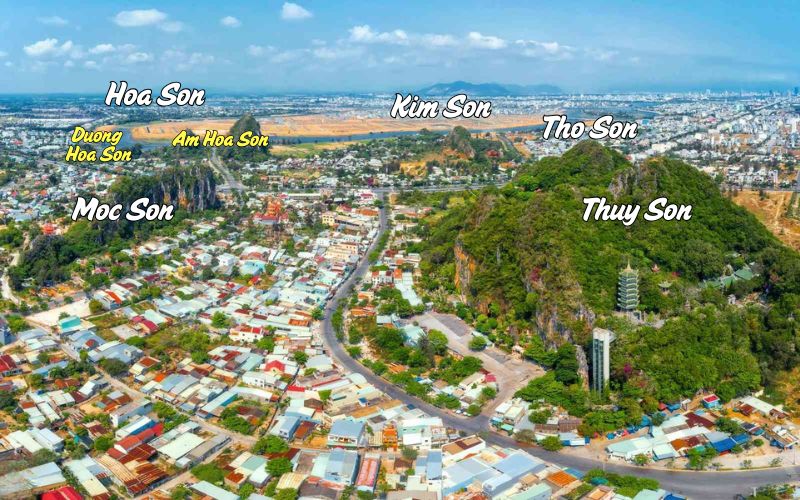
A panoramic view of Marble Mountains
The Marble Mountains are 5 limestone hills between Da Nang and Hoi An, with pagodas and shrines hidden in caves. In the city centre, the 666-metre Dragon Bridge breathes fire and water on weekend evenings.
- Location: Ngu Hanh Son (Marble Mountains) and the Han River, Da Nang
- Best for: families, couples and first-time visitors
- Best time: the Marble Mountains in the morning; the Dragon Bridge show starts at 21:00 on Saturdays, Sundays and major holidays
- Time needed: half a day
- Cost: Thuy Son mountain costs 40,000 VND (about US$1.50), with the lift 15,000 VND one way; the Dragon Bridge show is free
- Getting there: the Marble Mountains are about halfway between Da Nang and Hoi An
- Tip: The bridge closes to traffic just before the show, so find a spot on the riverbank by 20:45.
14. Wander Hoi An Ancient Town (Hoi An) – Lanterns, Merchant Houses and the Japanese Covered Bridge
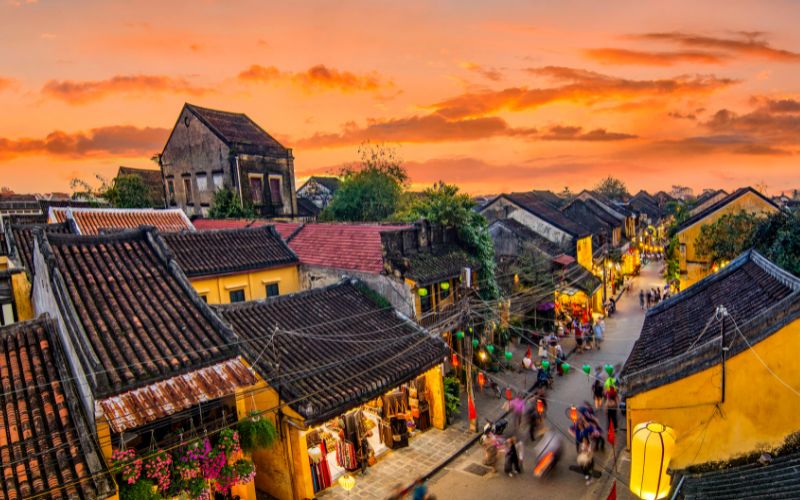
Hoi An Ancient Town, Vietnam
Hoi An’s old trading port, a UNESCO World Heritage Site since 1999, keeps its yellow merchant houses, assembly halls and lantern-lit streets. The Japanese Covered Bridge reopened in 2024 after restoration, and on full-moon nights the town dims its lights and floats lanterns on the Thu Bon River. It is the most atmospheric of all the things to do in Hoi An.
- Location: Hoi An, now part of Da Nang City after the 2025 provincial merger
- Best for: couples, photographers and families
- Best time: early morning or evening; full-moon lantern nights fall on 23 October, 22 November and 22 December 2026
- Time needed: 1 to 2 days
- Cost: 120,000 VND (about US$4.60) for foreign visitors, covering 5 entries to heritage houses, halls and museums, including the Covered Bridge; lantern boat rides cost about 150,000 to 250,000 VND, so agree the price first
- Getting there: about 30 km from Da Nang airport by car
- Tip: The old town floods in heavy rain, especially in October and November, so check the forecast and keep your plans flexible.
>>> For where to stay and what to eat, see our Hoi An travel guide.
15. Get Clothes Tailored or Take a Cooking Class (Hoi An) – Made-to-Measure and Market-to-Table

Cooking class in Hoi An
Hoi An is famous for tailors who can make a dress, shirt or suit in a few days, and for cooking classes that start with a market visit. Both are great things to do in Hoi An on a rainy day.
- Location: tailor shops across the old town; cooking schools in town and in the surrounding villages
- Best for: shoppers, food lovers and couples
- Best time: at the start of your stay, to allow time for fittings
- Time needed: half a day for a class; several days for tailoring with fittings
- Cost: most tailored pieces cost about US$30 to US$70, and suits about US$70 to US$120 or more; cooking classes cost about US$20 to US$35 per person
- Getting there: most shops and schools are within walking distance or offer pick-up
- Tip: Bring a photo of the style you want, and allow at least 2 fittings for a suit.
16. Visit My Son Sanctuary (near Hoi An) – Cham Temple Ruins in the Jungle
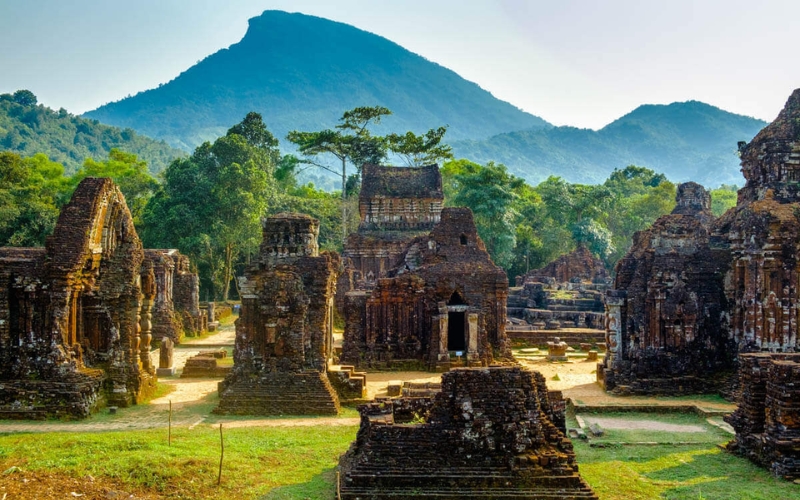
The ancient ruins of My Son Sanctuary
My Son is a valley of brick temple ruins built by the Champa kingdom, a UNESCO World Heritage Site since 1999. The site includes a museum, and traditional Cham dance performances take place during the day.
- Location: Thu Bon commune, about 45 km from Hoi An and 68 km from central Da Nang
- Best for: history lovers and photographers
- Best time: early morning, before the heat and the tour groups
- Time needed: half a day
- Cost: 150,000 VND (about US$5.80) for foreign visitors, including the museum, the electric shuttle and the dance show
- Getting there: about 1 to 1.5 hours each way from Hoi An by car, shuttle or tour
- Tip: Wear a hat and bring water, as there is little shade among the ruins.
Ho Chi Minh City & Southern Vietnam
The south is Vietnam’s busiest and warmest region. Things to do in Vietnam’s south range from the energy of Ho Chi Minh City to the waterways of the Mekong Delta and the beaches of Phu Quoc. The dry season runs from about December to April.
17. Learn about the War in Ho Chi Minh City (HCMC) – War Remnants Museum and Independence Palace

The War Remnants Museum offers a powerful and sobering look at the history of the Vietnam War through its extensive collection of military hardware and poignant exhibits.
The War Remnants Museum and the Independence Palace are the essential stops for understanding the Vietnam War, and among the most important things to do in Ho Chi Minh City. The museum’s photo galleries are hard-hitting, while the palace has been preserved much as it was in 1975.
- Location: central Ho Chi Minh City; the War Remnants Museum is at 28 Vo Van Tan Street
- Best for: history lovers
- Best time: morning; the War Remnants Museum opens daily from 07:30 to 17:30
- Time needed: half a day for both
- Cost: the War Remnants Museum costs 40,000 VND (about US$1.50), with online e-tickets available since February 2026; the Independence Palace costs 40,000 VND, or 65,000 VND (about US$2.50) with the exhibition, according to its official price list
- Getting there: both are walkable from the city centre
- Tip: Notre-Dame Cathedral is still under restoration, with work expected to run beyond 2027, so plan to see it from outside.
18. Crawl through the Cu Chi Tunnels (HCMC) – The Underground Network of the Vietnam War

Inside Cu Chi Tunnel
The Cu Chi Tunnels are part of a huge underground network used during the Vietnam War. Visitors can crawl through short, widened sections, see hidden trapdoors and learn how people lived underground.
- Location: Cu Chi, on the north-western edge of Ho Chi Minh City; the 2 sites are Ben Dinh and Ben Duoc
- Best for: history lovers and families with older children
- Best time: open daily from 07:00 to 17:00; go early to avoid the heat
- Time needed: half a day
- Cost: about 125,000 to 130,000 VND (about US$5) at Ben Dinh and about 85,000 to 90,000 VND (about US$3.40) at Ben Duoc for foreign visitors, depending on the source
- Getting there: about 1.5 to 2 hours by road, or 75 to 90 minutes by speedboat from central Ho Chi Minh City
- Tip: The tunnels are tight and hot, so skip the crawling section if you are claustrophobic.
19. See the Floating Markets of the Mekong Delta (Can Tho) – Life on the River at Dawn
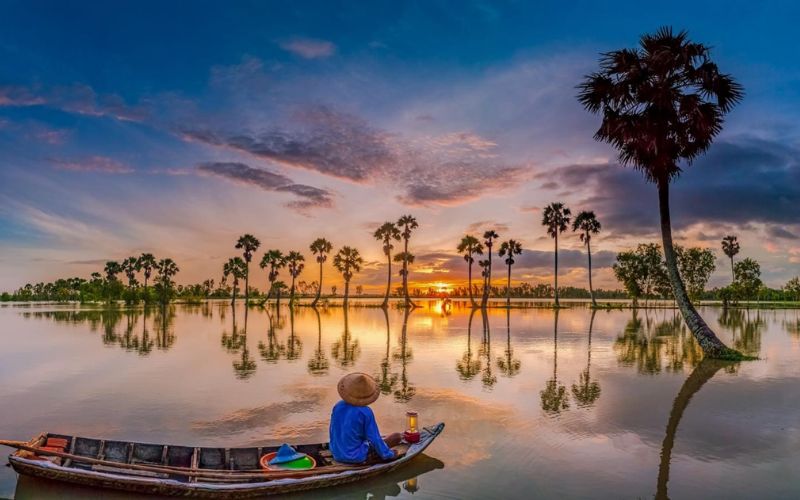
Mekong Delta – Vietnam
In the Mekong Delta, life revolves around rivers and canals. Cai Rang Floating Market near Can Tho is the best known, where wholesalers sell fruit and vegetables from boats at dawn, although it is much smaller than it once was.
- Location: Cai Rang, near Can Tho
- Best for: photographers and culture lovers
- Best time: be on the water by about 05:30 to 06:00, as trading fades by 07:30 to 08:00; December to April has the best weather
- Time needed: 1 to 2 days, including an overnight stay in Can Tho
- Cost: a 2-hour shared boat trip from Ninh Kieu wharf costs about 200,000 to 300,000 VND (about US$7.70 to US$11.50) per person
- Getting there: about 3 to 4 hours by bus or car from Ho Chi Minh City
- Tip: For a more local scene, ask your boat to continue to the smaller Phong Dien market.
>>> Our Mekong travel guide has more on river towns, homestays and when to go.
20. Ride the Hon Thom Cable Car and Relax on Phu Quoc (Phu Quoc) – Island Beaches and Sunsets

Sun World Hon Thom Cable Car
Phu Quoc is Vietnam’s largest island, with white-sand beaches, seafood markets and long sunsets. In the south, a cable car runs across the sea to Hon Thom island, with a water park and beach at the other end.
- Location: Phu Quoc island, off the south-west coast; the cable car leaves from An Thoi
- Best for: families, couples and beach lovers
- Best time: the dry season, from about November to April; the cable car runs from 09:30, with the last return at 17:30
- Time needed: 2 to 4 days on the island
- Cost: the Hon Thom cable car costs 850,000 VND (about US$32.70) per adult, including the Aquatopia water park and a Kiss Bridge ticket
- Getting there: fly from Hanoi or Ho Chi Minh City
- Tip: Phu Quoc has its own 30-day visa exemption for many international arrivals, but the conditions differ from the mainland, so check them before you book.
How Many Things Can You Fit into 7, 10 or 14 Days?
Deciding what to do in Vietnam often comes down to time, as the country is about 1,650 km from north to south. As a rough guide:
- 7 Days: choose one region. Things to do in Vietnam for a week might include Hanoi, Ha Long Bay and Ninh Binh (1 to 6), or Hoi An, Da Nang and Hue (10 to 16).
- 10 days: combine 2 regions, such as the north and the centre, with a domestic flight from Hanoi to Hue or Da Nang.
- 14 days: travel from north to south, adding Ho Chi Minh City and the Mekong Delta (17 to 19).
If you would like the whole country planned for you, our 14-day Vietnam highlights tour runs from Hanoi to Saigon via Ha Long Bay, Hue and Hoi An.
Vietnam Travel Tips for First-Time Visitors
Once you know what to do in Vietnam, these practical points make your trip easier to plan.
Visas and Entry
- Pre-Arrival Information (PAI): if you fly into Ho Chi Minh City, Hanoi, Da Nang or Phu Quoc, you can fill in Vietnam’s free online PAI form within 3 days before landing and get a QR code for faster immigration checks. It does not replace your e-visa or visa exemption, and the rules on whether it is compulsory differ by airport, so our Vietnam PAI guide walks you through each step and shows how to avoid unofficial sites that charge a fee.
- E-visa: most visitors, including those from the US, Canada and Australia, need an e-visa, valid for up to 90 days. It costs US$25 for single entry or US$50 for multiple entry and usually takes about 3 working days. Apply only through the official Vietnam National Electronic Visa system.
- Visa exemption: citizens of the UK, Germany, France, Italy, Spain, Russia, Japan, South Korea, Denmark, Sweden, Norway and Finland can stay up to 45 days without a visa until March 2028. A further 12 European countries, including the Netherlands, Switzerland and Poland, were added from 15 August 2025.
- Phu Quoc: the island has a separate 30-day visa exemption, with its own conditions.
Weather by Region
| Region | Best months | Watch out for |
| North (Hanoi, Ha Long, Sapa) | October to April | Cool, often grey weather from December to February; hot, rainy summers and storms that can cancel cruises |
| Central (Hue, Hoi An, Da Nang) | February to August | Heavy rain from September to December, with the highest flood risk in October and November |
| South (Ho Chi Minh City, Mekong, Phu Quoc) | December to April | Short, heavy afternoon showers in the rainy season from May to November |
For month-by-month advice, read our guide to the best time to visit Vietnam.
Getting Around
- Fly between regions. Domestic flights link Hanoi, Hue, Da Nang, Ho Chi Minh City and Phu Quoc and save days of road travel.
- Use sleeper buses or night trains in the north for Sapa and Ha Giang.
- Use ride-hailing apps in cities, which show the fare before you ride.
Money and New Place Names
- Carry cash in small notes. About 26,000 VND equals US$1, and markets, street food stalls and small sights rarely take cards.
- Expect new province names. Since a 2025 reform, Hoi An and My Son are part of Da Nang City, Phong Nha is in Quang Tri province, Ha Giang is in Tuyen Quang province and Phu Quoc belongs to An Giang, so maps and bookings may show different names from older guides.
Plan Your Vietnam Trip with IDC Travel
From a night among the islands of Ha Long Bay to the lanterns of Hoi An and the floating markets of the Mekong, these 20 things to do in Vietnam show how much variety one country can hold. The key is matching each region to the right season and leaving enough time for travel between them.
If you would like help building these experiences into one smooth journey, plan a tailor-made Vietnam trip with us. Our team in Hanoi can time your trip around the weather in each region and handle the flights, cruises and guides along the way.
Read more:



I visited Ha Long Bay last year and the boat cruise was absolutely magical. Do you think it’s better to do a day trip or stay overnight on a cruise for the full experience?
Dear Sydney,
Thank you for sharing your experience! A day trip is a good option if you’re short on time, as it allows you to see some of the iconic limestone karsts and enjoy a cruise around the bay. However, for the full experience, we always recommend an overnight cruise. Staying on board lets you enjoy the bay at its most peaceful—watching the sunset over the water, waking up to misty limestone cliffs at sunrise, and joining unique activities such as kayaking, cooking classes, or cave explorations.
If you’d like, our team can help you choose from a variety of luxury and boutique cruises tailored to your schedule and preferences. Contact us anytime, and we’ll be delighted to arrange the perfect Ha Long Bay experience for you.
Best regards,
IDC Travel Team
This list makes me even more excited for my upcoming trip to Vietnam! Has anyone tried the street food tour in Hanoi? Worth it?
Dear Cory,
Thank you so much for your comment! As for the street food tour in Hanoi, we highly recommend it! It’s one of the best ways to dive into local culture, explore hidden alleyways, and sample authentic dishes like bun cha, pho, banh mi, and the famous egg coffee, all guided by knowledgeable locals. It’s not just about eating; it’s also a fantastic way to learn about the history behind the food and the stories of the people who make it.
If you’d like, we’d be happy to help you book a trusted and highly rated food tour as part of your itinerary. Let us know your travel dates, and we’ll take care of the rest!
Best regards,
IDC Travel Team