
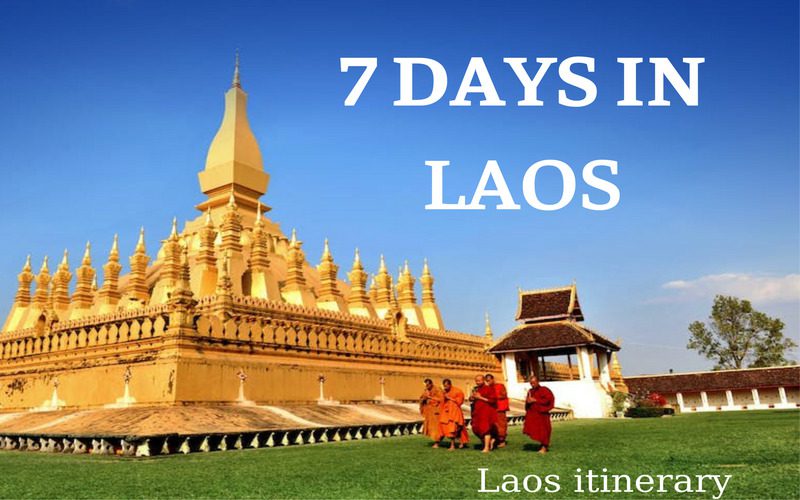
Laos is one of the most rewarding destinations in Southeast Asia for travelers who want culture, scenery, and a slower pace of travel. It is also a country shaped by a difficult modern history. At the same time, Laos offers a very different travel experience from many of its neighbors: quieter towns, deeply rooted Buddhist traditions, river landscapes, mountain scenery, and heritage cities that still feel lived-in rather than overbuilt. If you are looking for a first Laos itinerary that is easy to follow, realistic, and suitable for international travelers, this 7 days in laos itinerary is one of the best choices.
When Is the Best Time to Visit Laos For A 7-Day Trip?
The best time to visit Laos is usually from November to February, when much of the country is drier, cooler, and more comfortable for sightseeing. This is the most popular period for classic routes such as Vientiane, Vang Vieng, and Luang Prabang because the weather is generally pleasant for temple visits, walking tours, waterfalls, and road transfers. Official and travel industry sources consistently describe Laos as having two main seasons: a dry season that broadly runs from about October to April, and a rainy or green season from about
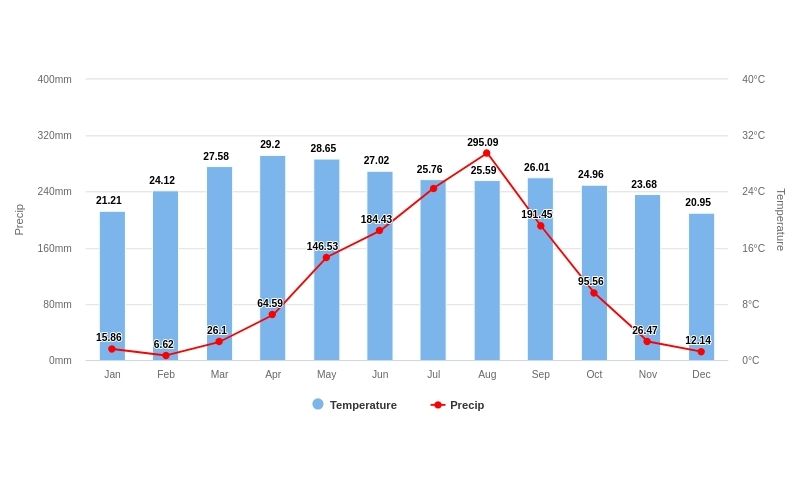
Laos weather graph
This matters because the original article had the seasons reversed. In practical travel terms, November to February is the easiest window for most international visitors, while March and April are hotter, and the rainy season from May onward can bring greener landscapes but also more rain, muddier rural roads, and occasional transport delays depending on the region.
Note: Weather patterns, road conditions, and river levels can vary by year and by region, especially in mountainous northern Laos. If you are planning a fixed-date holiday in this year, please contact us for the most accurate trip planning advice before booking.
What Are the Main Highlights of A 7-Day Trip in Laos?
For most first-time visitors, the highlights of a 7-day Laos itinerary are not only the classic route of Vientiane, Vang Vieng, and Luang Prabang, but also the country’s most famous cultural and historical landmarks. Laos may look quiet on the map, yet it offers a surprising range of experiences: Buddhist temples, colonial heritage, limestone mountains, waterfalls, river towns, archaeological sites, and UNESCO-listed places of real significance. Laos currently has three UNESCO World Heritage properties: the Town of Luang Prabang, Vat Phou and Associated Ancient Settlements within the Champasak Cultural Landscape, and the Megalithic Jar Sites in Xiengkhuang, better known as the Plain of Jars.
Vientiane
Vientiane is the capital of Laos, but it feels far calmer than most capitals in Southeast Asia. It is usually the first stop for international travelers arriving by air, and it gives a useful introduction to the country’s political history, Buddhist culture, and modern identity. The city is best known for landmarks such as Pha That Luang, Patuxai, Wat Si Saket, and the COPE Visitor Centre, all of which help visitors understand Laos beyond surface-level sightseeing.
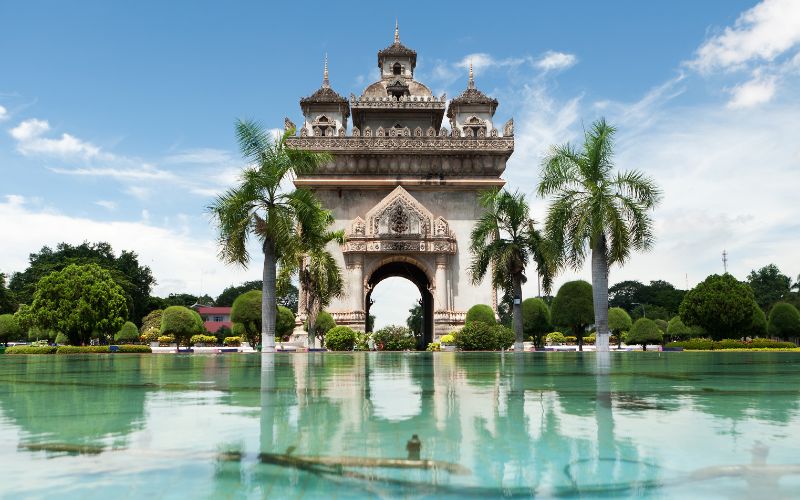
Patuxai, Vientiane
Luang Prabang
Luang Prabang is the cultural heart of Laos and one of the country’s most important destinations. UNESCO recognizes the town for its outstanding cultural, historic, and architectural value, as well as the harmony between its built heritage and natural setting. For many travelers, this is the most memorable stop in Laos because it combines temples, traditional life, old wooden houses, colonial-era architecture, local markets, and riverside scenery in one compact and walkable town.
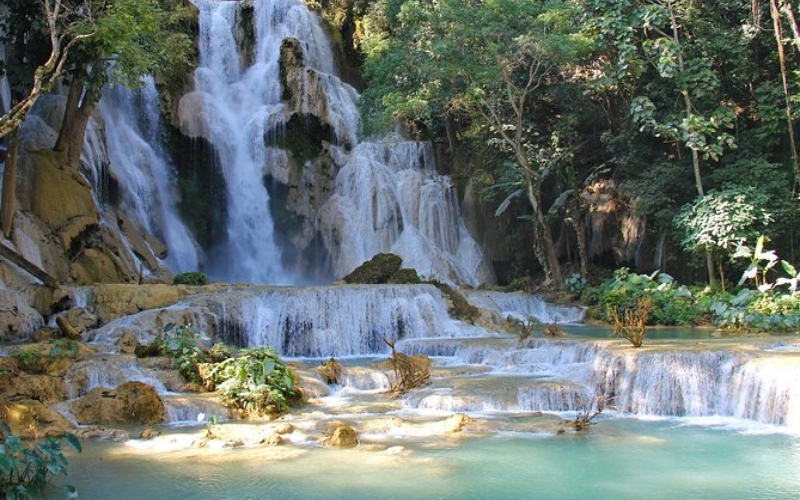
Kuang Si Waterfall, one of the most favorite destinations in Luang Prabang
Vang Vieng
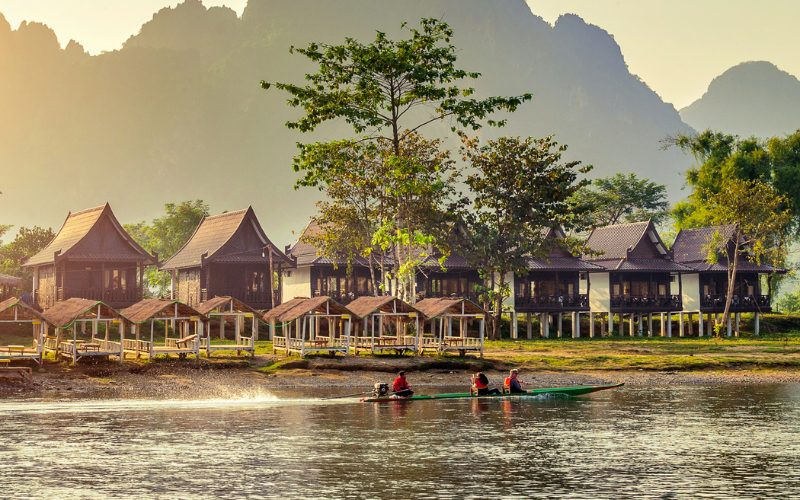
Vang Vieng is famous for its dramatic karst landscape, riverside setting, caves, and outdoor activities. It has changed a lot over the years and is no longer known only as a backpacker stop. Today, it appeals to a wider range of travelers who come for mountain views, kayaking, countryside cycling, cave visits, and a slower stay surrounded by nature. On a 7-day itinerary, Vang Vieng works well as the scenic contrast between the capital and Luang Prabang.
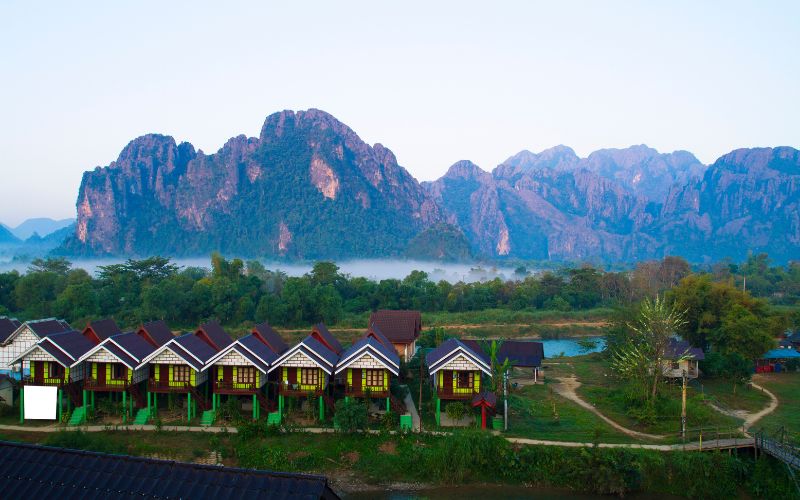
Panoramic view of Vang Vieng
Pha That Luang
Pha That Luang is the national symbol of Laos and one of the country’s most important Buddhist monuments. Located in Vientiane, this gold-colored stupa is closely tied to Lao national identity and religion. It is one of the first places many travelers visit in the capital, and it remains essential for anyone who wants to understand the spiritual and symbolic center of Laos.
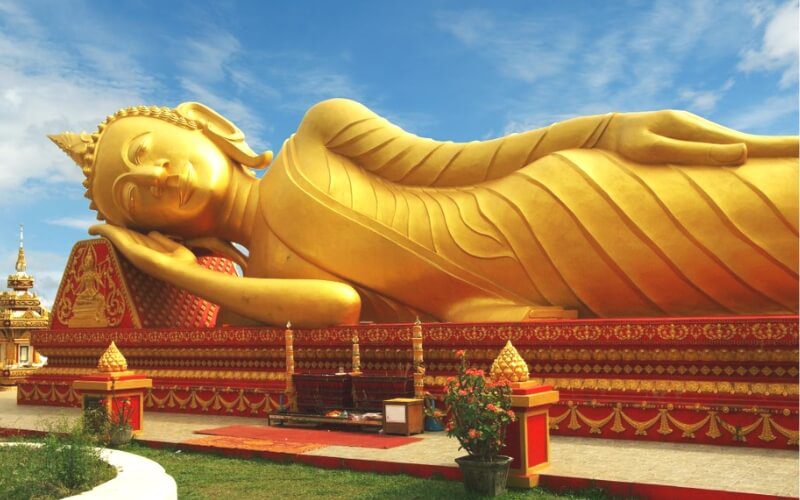
Pha That Luang Stupa
Wat Si Saket
Wat Si Saket is one of the most important historic temples in Vientiane. It is widely known for its age, religious significance, and large collection of Buddha images. For visitors interested in temple architecture and the quieter side of the capital, this is one of the most rewarding places to include in a first Laos trip.
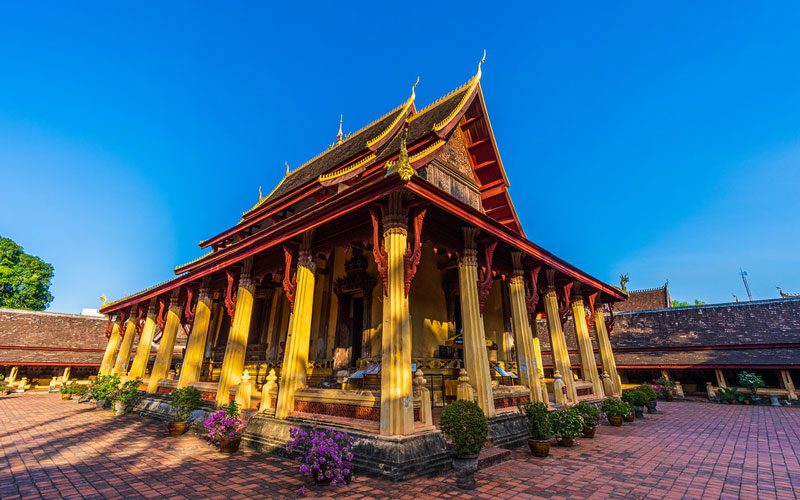
Wat Sisaket
COPE Visitor Centre
The COPE Visitor Centre is one of the most meaningful places to visit in Laos. It explains the continuing human impact of unexploded ordnance and the rehabilitation support provided to survivors. This is not a conventional tourist attraction, but it is one of the most important stops for travelers who want a more honest and informed understanding of Laos today.
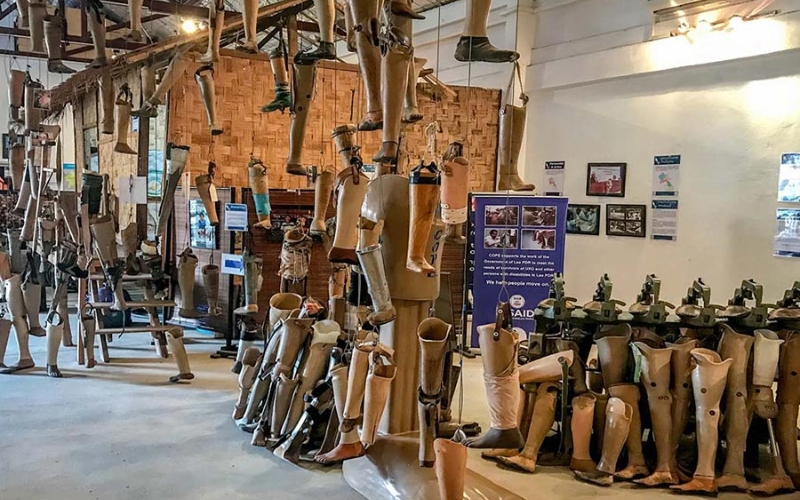
The unique exhibition in COPE Visitors Center
Mount Phousi
Mount Phousi stands in the center of Luang Prabang and is one of the easiest viewpoints to include in a short trip. The hill offers wide views over the old town, the Mekong River, and the Nam Khan River. It is especially popular at sunrise and sunset, and it helps first-time visitors understand the layout and beauty of Luang Prabang in a single visit.
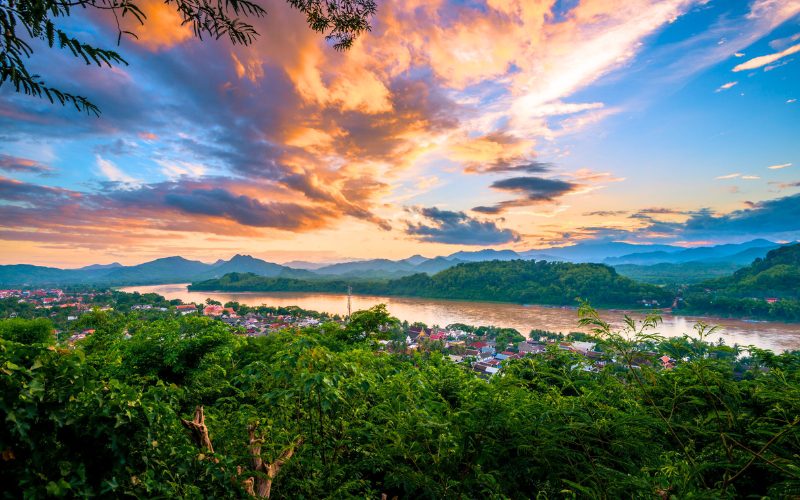
View from Mount Phousi
Royal Palace Museum
The Royal Palace Museum adds important historical context to Luang Prabang. It helps visitors understand the monarchy, the political past of Laos, and the role Luang Prabang once played as a royal center. When combined with the nearby temples and old streets, it makes the city feel more complete than a simple sightseeing stop.
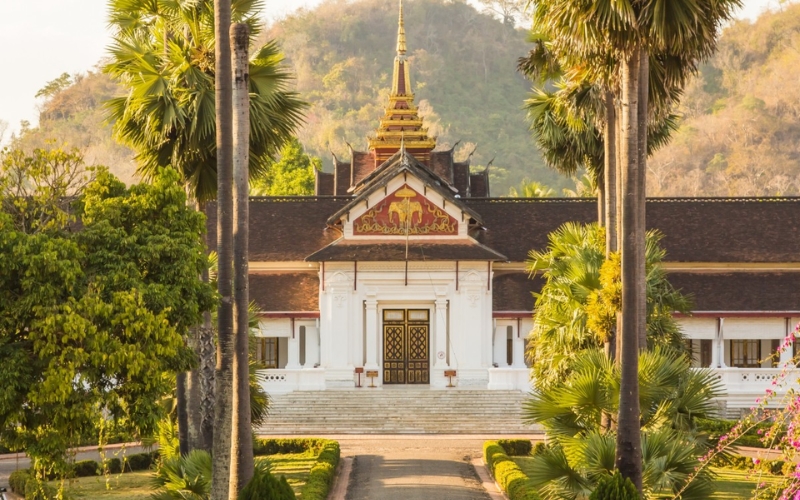
Royal Palace Museum Luang Prabang
Vat Phou
Vat Phou, in Champasak, is one of the most important archaeological and religious sites in Laos. UNESCO describes it as part of a remarkably well-preserved planned cultural landscape more than 1,000 years old. Although it is not part of every standard 7-day first-timer route, it is one of the country’s headline landmarks and deserves mention in any serious Laos travel guide. It is especially relevant for travelers interested in Khmer history, archaeology, and southern Laos.
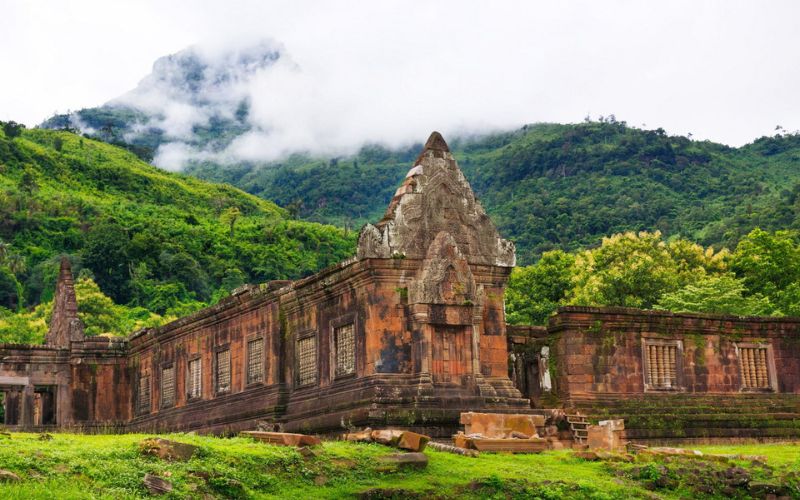
The famous historical site Vat Phou Champasak
Plain of Jars
The Plain of Jars in Xiengkhuang is one of the most unusual heritage sites in Southeast Asia. UNESCO lists it as a megalithic jar site of major archaeological significance, and it is now one of Laos’ three World Heritage properties. It is not always included in a one-week classic route because of travel time, but it is one of the most famous places in the country for travelers who want history beyond temples and cities.
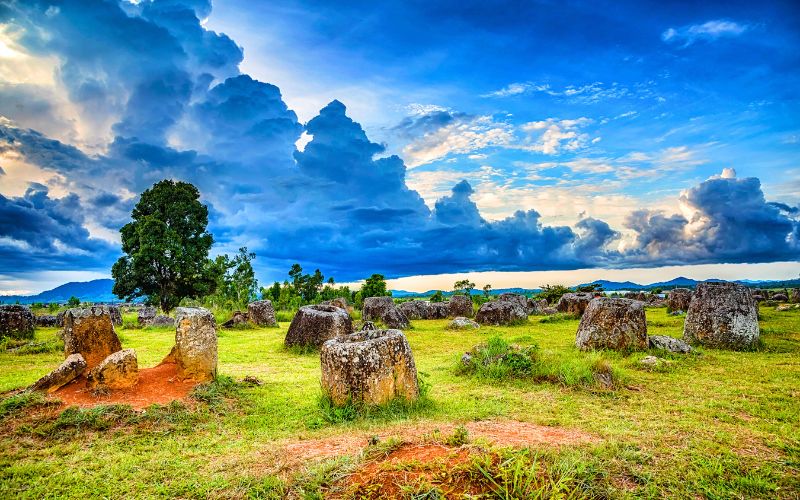
Plain of Jars
Buddha Park
Buddha Park, located outside Vientiane, is one of the capital’s best-known excursion sites. It is popular because it offers something visually different from the city’s major temples: a collection of large religious sculptures inspired by Buddhist and Hindu imagery. For travelers with extra time in Vientiane, it adds variety to the itinerary and works well as a half-day trip.
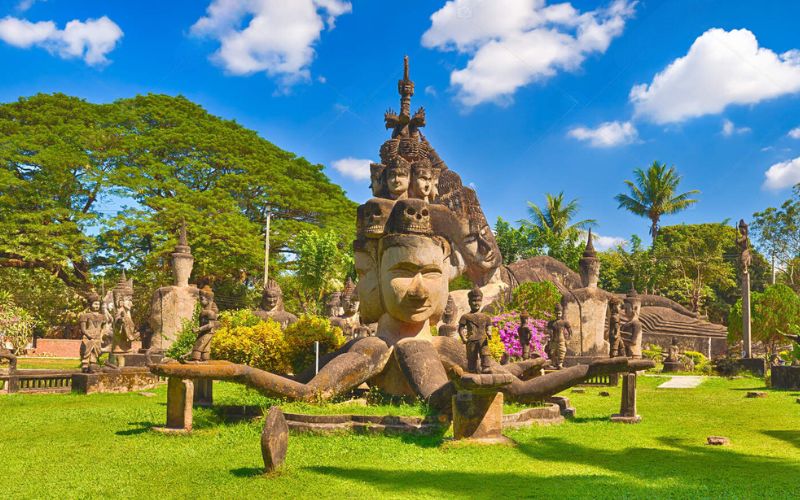
Unique Sculptures at Buddha Park
Suggested Itineraries For 7 Days in Laos
The best 7-day Laos itinerary depends on the kind of trip you want. Some travelers want a classic first journey through the country’s most famous cities. Others prefer a deeper northern Laos experience with remote landscapes and ethnic village encounters. Some may not want a Laos-only route at all, but rather a short combined holiday that pairs Laos with a nearby destination such as Vietnam. These three itinerary styles are among the most practical and appealing options for international travelers.
Itinerary 1: Classic Laos in 7 days for first-time visitors
This is the most balanced option for travelers who want a strong introduction to Laos in one week. It starts in Vientiane, continues to Vang Vieng, and ends in Luang Prabang. This route works especially well for first-time visitors because it combines the capital, mountain scenery, and the country’s best-known heritage city in one smooth journey. The current program includes arrival in Vientiane, a full city tour with Wat Si Saket, Haw Pha Kaeo, COPE, Pha That Luang, Patuxay, and Buddha Park, then an overland transfer to Vang Vieng via Ban Keun, Thalat Market, and Vang Xang before continuing later to Luang Prabang.
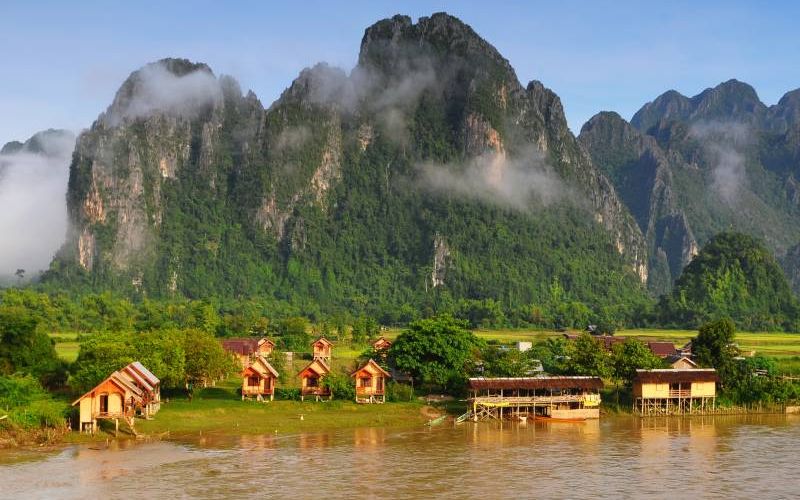
Classic Discovery of Laos in 7 Days
Recommended route
Day 1: Arrive in Vientiane
Day 2: Vientiane city tour
Day 3: Vientiane to Vang Vieng
Day 4: Vang Vieng exploration
Day 5: Vang Vieng to Luang Prabang
Day 6: Luang Prabang highlights and Kuang Si area
Day 7: Departure from Luang Prabang
>>> Watch full detail in here.
Who this itinerary suits best:
This is the best choice for first-time travelers, couples, small groups, and anyone who wants the classic Laos route without going too fast. It gives a very good mix of history, local culture, temples, countryside scenery, and easy sightseeing.
Itinerary 2: Northern Laos in 7 days for travelers who want something deeper
This option is more adventurous and much less conventional. Instead of following the usual Vientiane to Vang Vieng to Luang Prabang route, the current northern program begins in Luang Prabang, then heads toward Muang Khua and ethnic village areas in the north. The itinerary includes overland travel through landscapes near the Nambal River and Muong La, a visit to Pra Xack Kham Temple, and trekking into Akha village areas with an overnight stay in a village house.
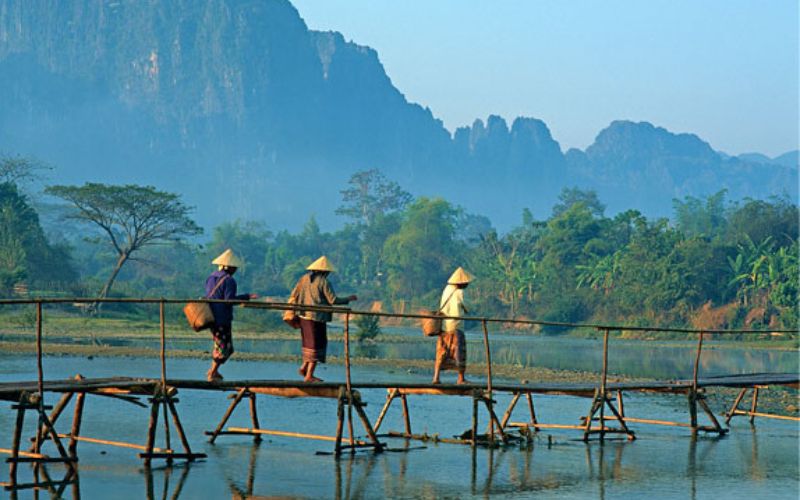
Northern Laos in 7 Days
Recommended route
Day 1: Arrive in Luang Prabang
Day 2: Luang Prabang to Muang Khua via Muong La
Day 3: Trek to Saen Luang and Akha village
Day 4: Continue northern village and trekking experiences
Day 5: Return toward Luang Prabang region
Day 6: Luang Prabang cultural discovery
Day 7: Departure
>>> Check it out Authentic Tour in Northern Laos in 7 Days.
Who this itinerary suits best:
This itinerary is best for repeat visitors, active travelers, photographers, and people who want to see a less touristic side of Laos. It is more about landscape, ethnic culture, and rural life than about checking off the country’s headline attractions.
Note: In remote northern Laos, travel times, road conditions, and village access can change depending on weather and local conditions. If you are interested in this itinerary style, please contact us for the most accurate and up-to-date advice before booking.
Itinerary 3: Vietnam and Laos in 7 days for travelers who want a short multi-country holiday
Some international visitors only have one week in the region and prefer to combine Laos with another nearby destination instead of doing a Laos-only trip. This route begins in Hanoi, includes a Ha Long Bay cruise, then flies to Luang Prabang for the Laos section. In Laos, the itinerary features the Royal Palace Museum, Wat Xieng Thong, Wat Visoun, Wat Aham, the Traditional Arts and Ethnology Center, Mount Phousi, the Luang Prabang night market, Pak Ou Caves, and Kuang Si Waterfalls.
Vietnam and Laos
Recommended route
Day 1: Arrive in Hanoi.
Day 2: Hanoi city tour.
Day 3: Transfer to Ha Long Bay cruise.
Day 4: Ha Long Bay to Hanoi, then fly to Luang Prabang.
Day 5: Luang Prabang city tour.
Day 6: Pak Ou Caves and Kuang Si Waterfalls.
Day 7: Departure from Luang Prabang.
>>> View full itinerary in here.
Who this itinerary suits best:
This is a smart option for travelers who want a short but varied trip with both Vietnam and Laos. It suits first-time visitors to Southeast Asia, honeymooners, and travelers who prefer a compact regional holiday with flights and pre-arranged logistics.
Which 7-day itinerary in Laos is the best one to choose?
If this is your first time in Laos, the classic route of Vientiane, Vang Vieng, and Luang Prabang is usually the best overall choice because it gives you the country’s most recognizable highlights in just one week. If you want something quieter and more distinctive, northern Laos offers a more immersive and adventurous experience. If your priority is to see more than one country in a limited time, the Vietnam and Laos combination is the most efficient option.
How Much Does 7 Days in Laos Cost?
For most travelers, 7 days in Laos is still fairly affordable, but the total cost depends on your hotel standard, transport style, and travel season. In this year, mid-range hotel prices in key stops such as Vientiane, Vang Vieng, and Luang Prabang are higher than many older blog posts suggest, especially in Luang Prabang. Train travel on the main route is usually one of the most practical ways to keep costs under control.
| Travel style | Estimated total | What it usually includes |
| Budget | $280 to $450 | Simple guesthouses, local meals, shared transport. |
| Mid-range | $550 to $900 | Comfortable hotels, train travel, guided visits. |
| Luxury | $950 to $1,500+ | 4-star hotels, private transfers, more flexible services. |
Prices can change depending on season, hotel availability, exchange rates, and your exact route. If you want an exact quotation for your travel dates, please contact us for the latest price.
Useful Tips For Spending 7 Days in Laos
A 7-day trip in Laos is usually smooth and enjoyable if you prepare for a few practical realities before you go. Laos is relaxed, welcoming, and relatively easy to travel through on the classic route, but it is not the kind of destination where everything works exactly like in Thailand, Vietnam, or Singapore. Transport can be slower, smaller towns are less polished, and some services still depend heavily on cash and local conditions. That is part of the country’s charm, but it also means first-time visitors should travel with realistic expectations and good planning.
Keep cash with you and do not rely on cards everywhere
In the main tourist cities, you will find ATMs, hotels, and some restaurants or shops that accept cards, but Laos is still a country where cash matters a lot, especially outside larger tourism businesses. In smaller towns, local markets, tuk-tuks, and simple family-run restaurants, cash is often the easiest and sometimes the only practical option. For a 7-day route through Vientiane, Vang Vieng, and Luang Prabang, it is smart to carry enough local currency for daily expenses while keeping some backup cash for emergencies.
This is especially important if part of your trip includes countryside excursions, small cafés, village stops, or early market visits. A common mistake first-time travelers make is assuming card payment is as widespread as in more developed regional hubs. In Laos, travel feels easier when you keep things simple and always have some cash ready.
>>> Read more: Laos Currency: Kip, Exchange Tips, ATM Fees Explained.
Dress respectfully at temples and religious sites
Laos is a Buddhist country, and respectful dress still matters at temples and heritage sites. When visiting places such as Wat Si Saket, Wat Xieng Thong, or other religious compounds, it is best to wear clothing that covers shoulders and knees. This is not only about rules, but also about basic cultural respect.
If your itinerary includes Luang Prabang, it is worth preparing a little more carefully because the town is one of the country’s most important cultural and spiritual centers. Travelers who dress appropriately are more comfortable, avoid awkward moments, and generally have a better experience at sacred sites.
Learn how to observe alms giving respectfully in Luang Prabang
Watching the morning alms giving in Luang Prabang is one of the most talked-about experiences in Laos, but it should be approached respectfully, not treated as a casual photo stop. The official tourism website for Luang Prabang provides dedicated visitor guidance on respecting the alms giving tradition, which shows how seriously the city takes this practice.
If you want to witness the ceremony, go quietly, dress modestly, keep a respectful distance, and follow local guidance rather than improvising. This is one of those moments where cultural sensitivity matters more than getting the perfect picture.
Build flexibility into road travel
Laos is not a country for overly rushed schedules. Even on a well-designed 7-day itinerary, road transfers can take longer than visitors expect because of mountain roads, weather, traffic conditions, and stopovers along the way. This is one reason why many travelers enjoy Laos more on organized tours or tailor-made programs, where transport and timing are planned carefully.
This matters especially on routes involving Vang Vieng, northern Laos, or rural detours. If you like to travel independently, leave room in your schedule and avoid stacking too many activities on long transfer days.
Choose activities in Vang Vieng with care
Vang Vieng is one of the most scenic places in Laos, but it is also the destination where travelers are most likely to overpack their day with physical activities. Tubing, kayaking, cycling, cave visits, and viewpoints can all be enjoyable, but not every traveler needs to do everything. It is better to choose a few activities that fit your fitness level and travel style than to turn your stay into a race.
This is particularly true in hot months or rainy periods, when trails, roads, or river conditions can feel more demanding. A slower pace usually leads to a better experience in Vang Vieng.
Visit COPE to understand Laos more deeply
If you spend time in Vientiane, try to include the COPE Visitor Centre in your itinerary. COPE explains the continuing impact of unexploded ordnance and disability rehabilitation in Laos, and the organization states that its Visitor Centre was created to raise awareness about disabilities and the work being done to support affected people. It has also become one of the most meaningful places to visit in the capital.
This is not a light sightseeing stop, but it adds real depth to a Laos journey. Many travelers leave with a much clearer understanding of the country’s modern history and why responsible travel matters here.
Never walk into rural land casually or go off marked paths
Because unexploded ordnance remains a real issue in some parts of Laos, travelers should stay cautious in rural areas and avoid wandering into fields, forest edges, or unmarked land without local guidance. For most visitors following normal tourism routes, this is not something that causes day-to-day problems, but it is still important common sense in the countryside. Visiting COPE in Vientiane is often the best way to understand this issue in a clear and responsible way.
Use official tourist information when you need help
If you are visiting Luang Prabang and need practical support, maps, or local visitor information, the official Luang Prabang Tourism website lists a Tourist Information Center in Ban Pakham on Sisavangvong Road, along with contact details and reception hours. This is useful for travelers who prefer updated local guidance after arrival rather than relying only on old blog posts or social media advice.
Conclusion
A 7-day trip in Laos may not show you every corner of the country, but it is enough to experience what makes Laos so memorable: peaceful cities, meaningful history, beautiful natural scenery, and a slower, more thoughtful way of traveling. From the capital of Vientiane to the landscapes of Vang Vieng and the heritage charm of Luang Prabang, one week gives first-time visitors a well-rounded introduction to the country without feeling rushed. If you are planning your first journey to Laos and want an itinerary that matches your travel style, budget, and schedule, our team can help you design a trip that is practical, comfortable, and truly worth your time.
Read more:
Is there anything special at the night market in Luang Prabang?
Hi Eve,
The night market in Luang Prabang is special for its vibrant atmosphere, offering a variety of traditional handicrafts, local cuisine, and souvenirs. You can enjoy exploring the illuminated stalls, tasting Lao street food, and supporting local artisans while shopping for unique gifts and keepsakes. However, remember to make a bargain for a better price.
Thank you so much!
Best regards,
IDC Travel Team.