
Thailand in July can be a very good choice if you want greener scenery, fewer tourists, and better travel value. It is part of the rainy season in much of the country, so you should expect heat, humidity, and regular showers. Still, rain in Thailand often comes in short bursts rather than lasting all day, which means you can still travel comfortably with the right plan. Official tourism information also places July within Thailand’s wet season.
Why Should You Visit Thailand in July?
Thailand in July suits travelers who care about atmosphere, local experiences, and better prices more than perfect weather every day.

The breathtaking, golden splendor of Bangkok’s Old City is truly an architectural marvel!
This month has a few clear advantages:
- Fewer crowds at many major attractions
- Greener landscapes and fuller waterfalls
- Good value on some hotels and travel services
- A calmer, less hectic travel experience
July is especially suitable for city breaks, food trips, temple visits, and nature routes with flexible timing. Thailand’s official tourism channels also highlight rainy-season travel and outdoor experiences during July.
What Is the Weather Like in Thailand in July?
Thailand’ weather in July is generally warm, humid, and rainy, but conditions vary a lot by region.
In simple terms:
- Bangkok and central Thailand often get frequent showers and occasional heavy rain
- Northern Thailand is lush and beautiful, but trekking can be slippery
- The Andaman coast can be rougher for beach travel and boat trips
- Some Gulf destinations may have more manageable weather in certain weeks
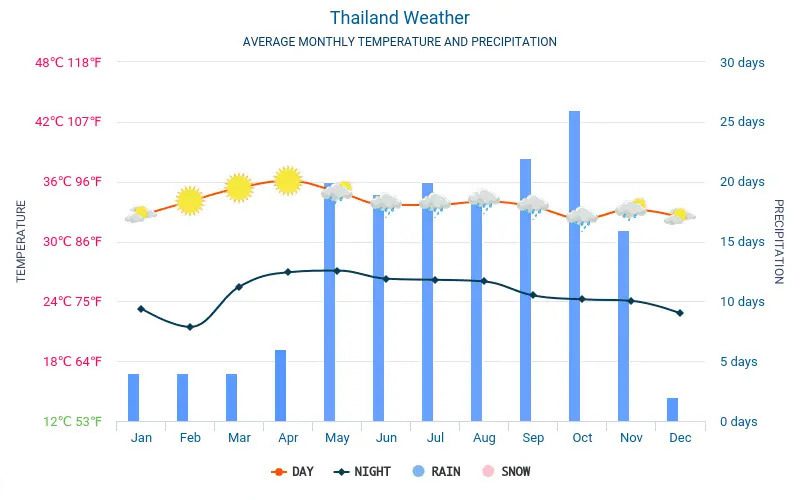
Thailand weather chart
Thailand’s rainy season usually runs across much of the country from around May to October. Recent meteorological reporting also shows that July can bring heavy rain and localized flooding in some areas, while conditions may be lighter in others depending on monsoon patterns.
Travel tip: July is better for flexible itineraries than rigid ones. If your trip includes islands, ferries, or national parks, it is worth checking conditions again close to departure.
Note: weather in July may still change depending on monsoon strength, storm activity, and local safety notices. Please contact us for the most accurate advice before booking.
Where Should You Go in Thailand in July?
If you plan to visit Thailand in July, the best approach is not to ask which places are the most famous, but which places are the most practical in the rainy season. July falls in the wet season across much of the country, but not every destination is affected in the same way. In general, cities, cultural destinations, and some Gulf coast beach areas are easier choices than the Andaman coast, where rain and rougher sea conditions are often more disruptive. Thailand’s official tourism information places July firmly in the rainy season, and meteorological reporting also shows that regional weather patterns can differ significantly from one area to another.
Hua Hin
Hua Hin is one of the easiest beach destinations to recommend in July because it is simple to combine with Bangkok and does not rely heavily on ferries or long boat transfers. That matters a lot in the rainy season. Even when the weather is not perfect, Hua Hin still works well as a short coastal break because the town offers a balanced mix of beach time, cafés, markets, golf, and relaxed sightseeing. It is a good option for travelers who want a seaside atmosphere without the added risk of complicated island logistics in wet weather.
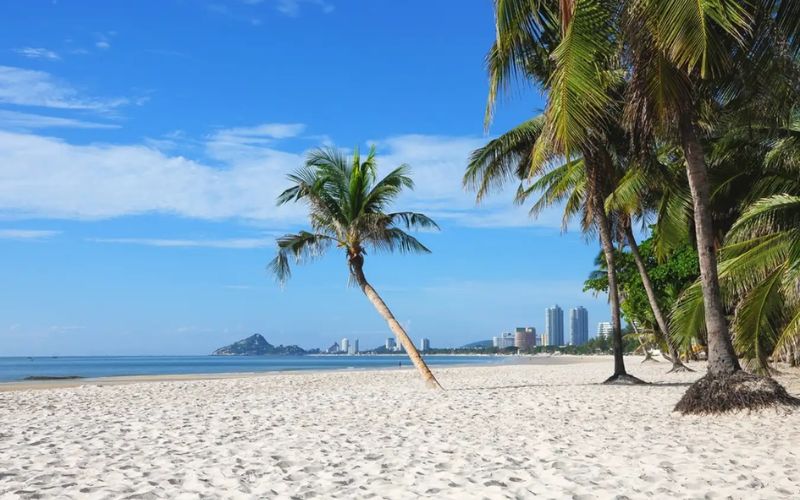
Hua Hin, Thailand
In July, Hua Hin is less about chasing postcard-perfect beach days and more about enjoying a comfortable, flexible holiday. You can spend time at the night markets, visit Khao Takiab, explore Maruekhathaiyawan Palace, or simply slow down in a beachfront resort. For couples, families, and first-time visitors who want an easy route, Hua Hin often feels more manageable than Thailand’s more weather-sensitive island destinations.
Bangkok
Bangkok remains one of the best destinations in Thailand in July because the city is built for year-round travel. Rain may interrupt your plans for an hour or two, but it rarely stops the city from being enjoyable. Bangkok’s transport system, shopping malls, temples, museums, restaurants, and indoor attractions make it a reliable choice when the weather is less predictable. Thailand’s official tourism channels also continue to position July as part of the rainy season rather than a period of complete travel disruption, which is why cities like Bangkok still work very well.
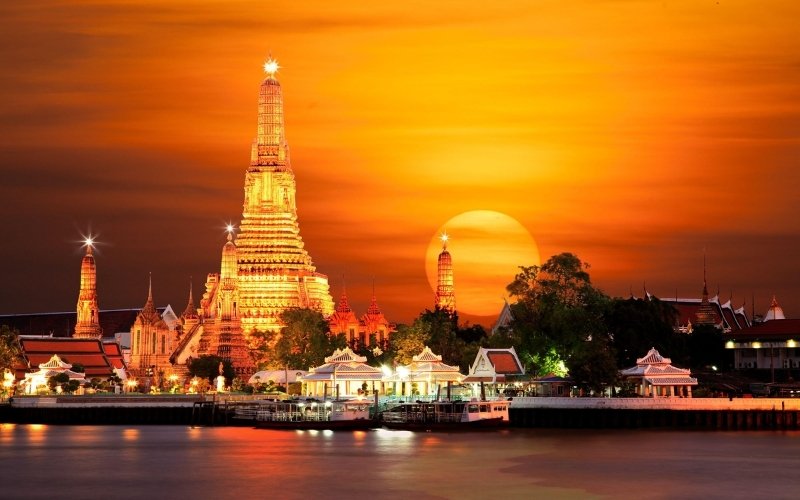
Wat Arun glowing at sunset along the Chao Phraya River in Bangkok.
This is also the kind of destination where rainy-season travel can feel more comfortable than many people expect. You can visit the Grand Palace in the morning, spend the afternoon in a museum or shopping center, then go out again for dinner, rooftop views, or a river cruise when the rain clears. For international travelers who want culture, food, and convenience without worrying too much about changing weather, Bangkok is one of the safest choices in July.
Kanchanaburi
Kanchanaburi is a strong option in July for travelers who want greener landscapes and dramatic waterfalls. This is the season when nature looks especially alive, and places like Erawan National Park can be very impressive after rain. At the same time, rainy-season travel here needs a little more care. Information on Erawan National Park notes that paths can become slippery during heavy rain, and some areas may close temporarily for safety reasons.
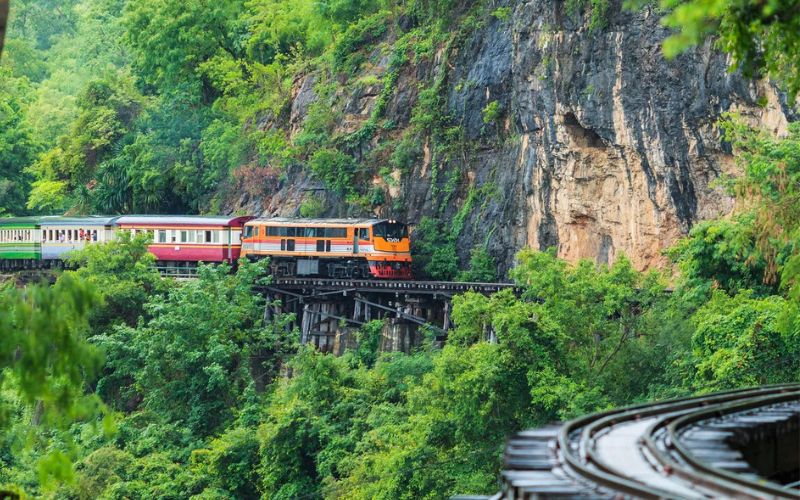
Death Railway in Kanchanaburi
That does not make Kanchanaburi a bad July destination. In fact, it can be one of the most rewarding ones if you travel with realistic expectations. The scenery is richer, the waterfalls are stronger, and the atmosphere feels very different from the hotter, drier months. Alongside nature, Kanchanaburi also offers important historical sites linked to the 2nd World War, so it works well for travelers who want a trip that mixes landscape, history, and a slower pace just outside Bangkok.
Koh Samui
Koh Samui is one of the more sensible island choices for Thailand in July because the Gulf side usually performs better than the Andaman side in this part of the year. That does not mean completely dry weather, but it often means a better chance of usable beach time and fewer disruptions than destinations on the west coast. Recent climate summaries from Thailand confirm that monsoon conditions affect different parts of the country in different ways, while travel specialists consistently place Koh Samui among the more favorable beach options in July.
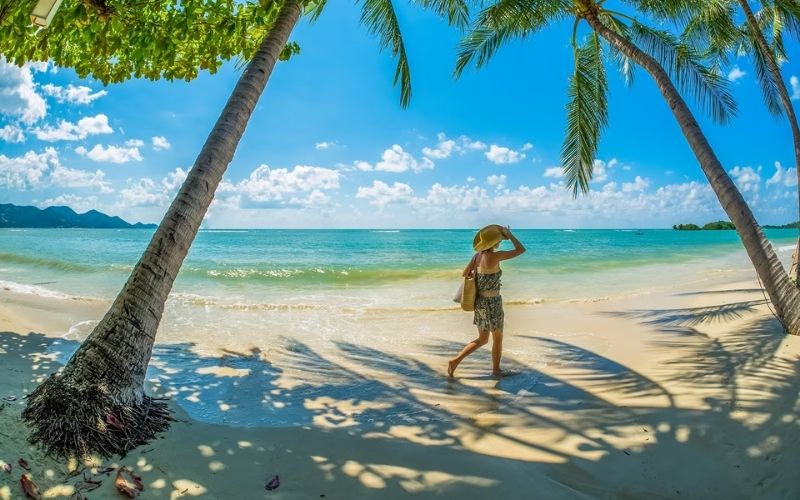
Living the perfect island life under the palm trees of beautiful Koh Samui!
For many travelers, Koh Samui works in July because it offers more than just the beach. Even if the weather shifts during the day, you still have temple visits, cafés, wellness resorts, local markets, cooking classes, and short scenic outings. It is a good destination for couples, families, and travelers looking for a more comfortable island holiday. If beach time is important to your trip, Koh Samui is usually a more practical July choice than Phuket or Krabi.
Chiang Mai
Chiang Mai is worth choosing in July if your trip is more about culture, food, mountain atmosphere, and a slower travel rhythm than about sunny outdoor adventure every day. Northern Thailand is in its rainy period by this time, so you should expect wet days and greener landscapes. Even so, Chiang Mai remains appealing because its main strengths are not limited to dry weather. Temples, cafés, local markets, cooking classes, and cultural experiences still make the city enjoyable in July. Broader Thailand climate guidance also places the north in the rainy season during these months.
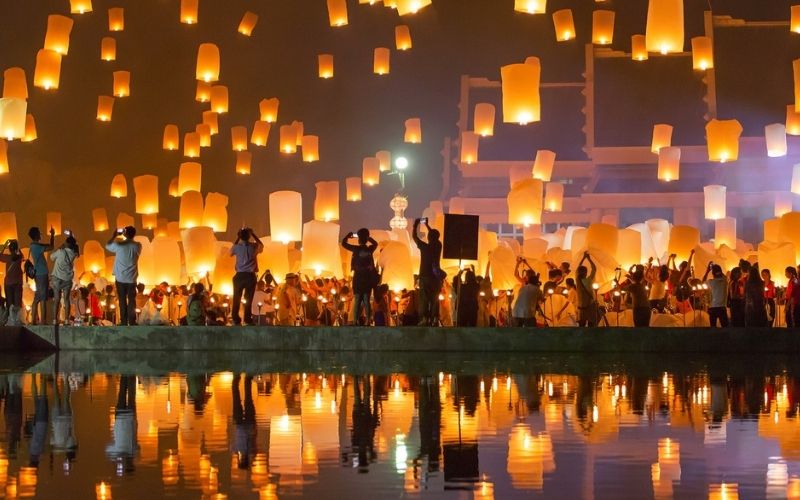
Attending the mesmerizing Yee Peng Lantern Festival in Chiang Mai offers a truly unforgettable cultural experience as thousands of lanterns float into the night sky.
This is also a month when Chiang Mai feels quieter than in peak season. The city can suit travelers who want a calmer experience and do not mind adjusting plans around showers. Mountain views are not guaranteed every day, and trekking needs more caution because trails can be muddy, but the overall atmosphere can feel very rewarding for people who enjoy a softer, greener version of northern Thailand.
What Should You Pack For Thailand in July?
Packing for Thailand in July is quite simple if you prepare for heat, humidity, and sudden rain. This is the rainy season in much of the country, so the goal is not to bring more clothes, but to bring the right clothes. Light fabrics, quick-drying outfits, and comfortable footwear will make a much bigger difference than packing heavy or bulky items. Thailand’s official tourism information also confirms that July falls in the wet season, which is why practical rain protection matters.
A light rain jacket or a small umbrella is very useful because showers often come without much warning. Many travelers also find it helpful to carry a waterproof pouch or dry bag for their phone, passport copy, charger, and other essentials. This is especially important if your trip includes boat rides, island transfers, or long sightseeing days in the city during wet weather.
Shoes also matter more than people expect. In July, pavements can be wet, markets can be slippery, and nature trails can become muddy after rain. It is better to bring shoes or sandals that dry quickly and still feel stable when walking. If your itinerary includes waterfalls, national parks, or uneven ground, avoid footwear that becomes heavy and uncomfortable once wet.
Mosquito protection is another important part of packing for Thailand in July. Warm and humid weather creates better conditions for mosquitoes, and official travel health guidance for Thailand advises travelers to protect themselves from mosquito bites because diseases such as dengue are present in the country. A good repellent, light long-sleeved clothing for evenings, and basic awareness around mosquito-prone areas are all sensible precautions.
It is also worth packing a small health kit with any personal medication, basic stomach relief, and simple first-aid items. During the rainy season, travelers should avoid floodwater and muddy water when possible, especially if they have open cuts or sensitive skin. The CDC’s Thailand travel guidance specifically advises travelers to avoid floodwater and contaminated water because of health risks that can increase after heavy rain.
In short, the best way to pack for Thailand in July is to stay light, practical, and weather-ready. You do not need special equipment, but you do need items that keep you dry, comfortable, and flexible when plans shift with the weather.
Helpful Travel Tips For Visiting Thailand in July
Thailand in July is easier to enjoy when your itinerary stays flexible. Rain is normal at this time of year, but with the right planning, it usually affects only part of the day rather than the whole trip.
- Start your sightseeing early in the morning: this is often the best time for temples, walking tours, markets, and outdoor visits before afternoon showers become more likely.
- Keep your daily plan flexible: in July, it is better to swap activities depending on the weather instead of fixing every hour too tightly.
- Prioritize cities, culture, food, and short excursions: these are usually easier to manage in the rainy season than long outdoor adventure days or boat-heavy island hopping.
- Be careful with ferries, speedboats, and marine tours: sea conditions can change quickly, so always recheck the forecast and local operator updates before departure.
- Leave extra time for road transfers: heavy rain can slow traffic in Bangkok and other busy areas, especially during rush hour or after strong downpours.
- Carry a light rain jacket or compact umbrella every day: showers can come suddenly, even when the morning looks clear.
- Protect your passport, phone, and electronics with a waterproof pouch or dry bag: this is especially useful during boat rides, wet city walks, or long day trips.
- Wear shoes with good grip: streets, steps, and nature trails can become slippery after rain.
- Use mosquito repellent, especially in the evening or near green and humid areas: this is an important rainy-season travel habit in Thailand.
- Avoid walking through floodwater when possible: it is not only inconvenient, but can also create health and safety risks.
- Do not schedule tight same-day flight and ferry connections: in July, delays are possible, so a little buffer time makes the trip much less stressful.
- Check the weather again close to departure for islands, national parks, and mountain routes: these are the parts of a July trip most likely to change due to local conditions.
Conclusion
Thailand in July may not be the classic dry-season holiday, but it can still be a very rewarding time to visit if you plan your trip well. With greener scenery, fewer crowds, and better value in many destinations, this month suits travelers who enjoy a more relaxed and flexible travel experience. The key is to choose the right places, stay realistic about the weather, and leave enough room in your itinerary for small changes along the way.
If you are looking for a July trip that combines culture, food, nature, and beach time in the most practical way, Thailand still has plenty to offer. And if you want help choosing the best route for your travel dates, our team can help you build an itinerary that matches the season, your budget, and your travel style.
Read more: