
Most people planning a Thailand trip automatically filter for November through February. Dry skies, cool mornings, beach weather on demand. It makes sense. But Thailand in summer is a different story and not necessarily a worse one. If you know where to go and what to expect, the wet season opens up a version of Thailand that the peak-season crowd never sees.
This guide covers Thailand summer weather month by month, the best destinations during this period, what to eat, and how to build a Thailand trip that actually works between June and September.
What “Summer” Actually Means in Thailand
Thailand does not follow the four-season model. The country runs on three seasons: cool (November to February), hot (March to May), and wet (June to October). When most international travelers talk about summer in Thailand, they mean roughly June through September, which falls squarely in the wet season.
This matters because the experience varies significantly by region:
- Central Thailand and Bangkok: Afternoon showers that clear quickly. Humidity is high, but mornings are often workable.
- Gulf Coast (Koh Samui, Koh Phangan): Gets its own rain cycle; actually drier in summer than the Andaman side.
- Andaman Coast (Phuket, Krabi, Khao Lak): Heaviest rainfall, with some days seeing sustained rain and rough seas.
- Northern Thailand (Chiang Mai, Chiang Rai): Lush and green, with manageable rain and far fewer tourists.
Understanding this geography is the difference between a frustrating trip and a genuinely good one.
Thailand Summer Weather: Month by Month
Thailand’s wet season runs from June through October, and the honest answer to “should I go?” depends less on the month and more on where you are headed. The country has two separate coastlines with completely different rain cycles and that one detail changes everything.
- The Andaman Sea (Phuket, Krabi, Khao Lak, Koh Lanta) faces southwest monsoon winds from May onward. Rain builds through June and peaks between July and September, with occasional days of heavy, sustained rainfall and rough seas that ground boat tours.
- The Gulf of Thailand (Koh Samui, Koh Phangan, Koh Tao, Hua Hin) runs on a different cycle entirely. Its rainy season peaks later, in October and November. This means the Gulf islands are actually among the better beach destinations in Southeast Asia during the June-August window: warm water, manageable winds, and half the crowd of peak season.
June: A reasonable time to travel, if you pick the right side
Bangkok and the north are still functional and enjoyable in June. Afternoon showers are short, mornings are clear, and the city’s temple circuit, food markets, and cooking schools are unaffected. Humidity is high, around 80-85%, so anyone sensitive to heat should plan outdoor activities before noon.
For beach travel, the Gulf coast is your best option in June. Koh Samui and Koh Tao see their cleaner conditions this month, with water visibility for diving averaging 15-20 meters. If you have been waiting to try scuba diving in Thailand, June on Koh Tao is genuinely one of the better times to do it.
Andaman-side travel in June is a calculated risk. Early June can still offer stretches of clear weather, but you need flexibility in your schedule and a hotel with a good cancellation policy.
July and August: Go north or go Gulf
This is peak wet season on the Andaman coast. Sustained rain, rough seas, and occasional boat cancellations are real possibilities, not just fine-print disclaimers. Phuket and Krabi in August can be perfectly fine for four days and then deliver three consecutive grey days. Some travelers love the moody atmosphere and the empty beaches between rain bursts; others find it frustrating. Know which type you are before booking.
Meanwhile, Chiang Mai and Chiang Rai in July and August are exceptional. The rice fields are fully green, the mountain air is cooler than Bangkok by around 5-7°C, and Doi Inthanon National Park’s waterfalls actually run properly during this period. The temples have perhaps a tenth of the visitors they see in December. Doi Suthep at 7am in light mist, with almost no one else around, is a different experience from the peak-season version.
The Gulf islands hold through July and into August. Koh Phangan without the Full Moon Party crowd, Koh Samui with actual availability at good resorts at good prices.
September: Lowest prices, clearest tradeoffs
September is the wettest month across most of Thailand, and it is worth being straightforward about that. Bangkok sees some localized flooding. The Andaman coast is largely off the table for beach travel. If your primary goal is lying on a white-sand beach in full sun, September is not your month.
But for a certain type of traveler, September works well:
- Budget-focused travelers will find hotel rates at their annual low, sometimes 40–50% below peak-season prices in Chiang Mai and Bangkok.
- Cultural travelers get temples, markets, and cooking classes with almost no wait times and a noticeably more relaxed pace.
- Divers and snorkelers heading to the Gulf islands (Koh Tao in particular) can find good conditions into early September before the Gulf’s own rainy season begins in October.
- Nature travelers visiting Khao Sok National Park find the jungle and Cheow Lan Lake at their most alive: waterfalls running, wildlife active, the landscape genuinely lush in a way the dry season never delivers.
One thing that catches travelers off guard in September: Chiang Mai can still have stretches of clear weather, particularly in the early part of the month. If you are flexible and not locked into a fixed daily beach plan, a northern Thailand loop in September is worth seriously considering.
>>> For a closer look at what September specifically offers, the IDC Travel guide on Thailand in September breaks it down by destination.
>>> Reference: Thailand weather.
Best Places to Visit in Thailand in Summer
Bangkok
Bangkok works year-round. The rain is mostly afternoon-based, and the city’s indoor attractions (museums, markets, rooftop bars, cooking schools) absorb a wet day easily. The city’s street food scene, including the fresh rolls and salads that get loosely called Thai summer rolls in Western restaurants, is available at its most authentic from the markets around Chatuchak and along Yaowarat Road.

Located just outside Bangkok, Dream World offers a fun, fantasy-themed escape with exciting rides and shows perfect for families and thrill-seekers alike.
>>> For a well-structured Bangkok-centered trip, the Thailand classic tours from IDC Travel include flexible itineraries that account for seasonal conditions.
Chiang Mai and Chiang Rai
Northern Thailand in summer is genuinely special. The mountain air is cooler than Bangkok, the trekking routes are quiet, and the landscape looks completely different from the dry season. Doi Inthanon National Park is one of the few places in Thailand where you can feel genuinely cold in the early morning, even in July.
Chiang Rai’s White Temple (Wat Rong Khun) and Blue Temple (Wat Rong Suea Ten) draw far smaller crowds in summer and photograph far better in diffused light than under the harsh midday sun of peak season.

The breathtaking White Temple (Wat Rong Khun) and the magnificent Blue Temple (Wat Rong Suea Ten).
Families with older children tend to do particularly well in the north during summer. The pace is slower, the interactions with local communities are more natural, and there is enough going on culturally to hold a teenager’s attention.
>>> IDC’s Thailand family holidays include northern routes designed specifically around this.
Koh Samui and the Gulf Islands
This is where Thailand’s summer geography works in your favor. While the Andaman coast gets drenched, Koh Samui, Koh Phangan, and Koh Tao sit on the Gulf of Thailand and follow a different weather pattern. June, July, and August are among their better months, with calmer seas and cleaner visibility for diving.
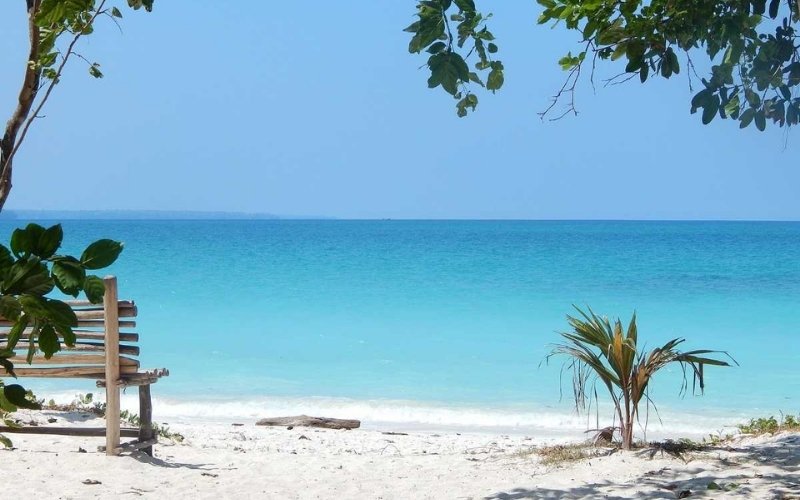
Relaxing view from the white sands of Kalapathar Beach, Havelock Island (Swaraj Dweep). The perfect spot to enjoy the stunning blue gradient of the Andaman Sea.
Koh Tao in particular is a legitimate scuba destination at this time of year. The water is warm, visibility averages 15-20 meters, and the dive sites are nowhere near as crowded as they are in January.
>>> For Gulf island options, IDC’s Thailand beach holidays cover Samui-focused packages that work specifically for the summer months.
Khao Sok National Park
One destination that actively gets better in the wet season. Khao Sok’s limestone karsts, jungle, and lake system are at their most alive between June and September. The Cheow Lan Lake rises, the waterfalls run properly, and the wildlife (including hornbills, gibbons, and a range of reptiles) is far more active than in the dry season.
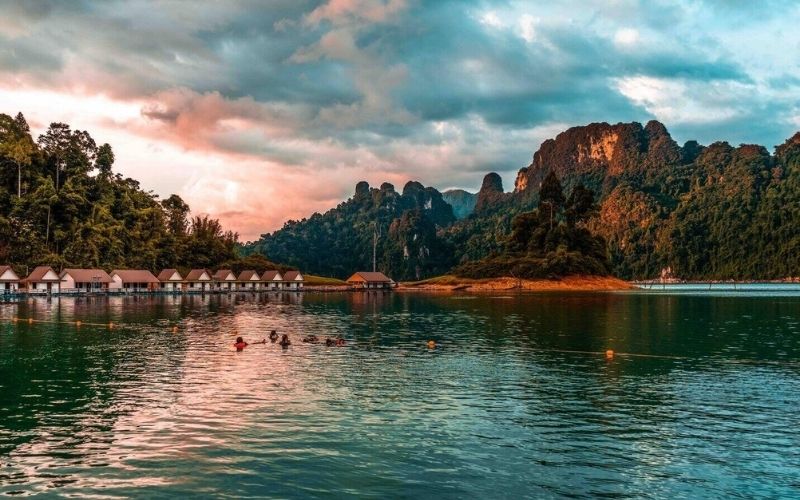
Tranquil beauty of Khao Sok — floating villas on Cheow Lan Lake framed by majestic limestone cliffs and emerald-green waters.
An overnight on a floating bungalow in the middle of the lake, listening to rain on the roof, is the kind of experience that people talk about for years. Not everyone’s thing but genuinely unlike anything else in Southeast Asia.
>>> Read more about Khao Sok National Park.
Food Worth Seeking Out in Summer
Thai food does not have a strict seasonality, but summer brings a few things worth noting. Mangosteen, rambutan, and longan are all in peak season between June and August. The morning markets in Chiang Mai overflow with fresh fruit at this time of year, and it costs almost nothing.
What gets marketed abroad as Thai summer rolls (fresh rice paper rolls with herbs, shrimp, and peanut sauce) are actually eaten year-round in Thailand, but their freshness and variety in the summer market stalls is something else. The version at a Bangkok street stall or a Chiang Mai market bears little resemblance to what gets served in Thai restaurants elsewhere.
>>> See Thai food for more information.
Useful Tips to Visit Thailand You Don’t Want to Miss
One of the most splendid times to explore the “Land of Smiles” is during the summer season. However, to ensure a memorable Thai vacation experience, consider the following tips:
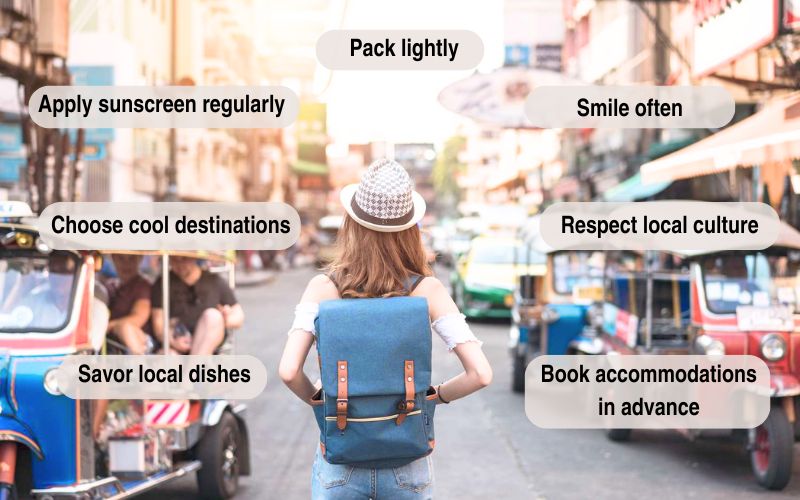
Several Tips To Visit Thailand In Summer
- Pack lightly: Thailand’s summer is hot and humid, so bring breathable clothing for changes as needed. Don’t forget comfortable footwear for easy movement (consider waterproof shoes or at least slip-resistant sandals for the rainy season). Also, carry an umbrella or raincoat to guard against sudden showers.
- Apply sunscreen regularly: With the intense heat and sun during Thailand’s summer, frequent sunscreen application is essential to protect your skin from UV damage.
- Choose cool destinations: Opt for cooler spots like beaches, waterfalls, and floating markets to avoid letting the heat diminish your Thai experience.
- Savor local dishes: Summer is the season for a variety of ingredients in Thai cuisine. Visit traditional food markets or local eateries to experience unique flavors and satisfy your taste buds. Also, try the diverse local fruits, which are often sweeter and juicier in summer, offering plenty of choices.
- Smile often: Thailand is known as the land of smiles, so you’ll frequently encounter the warm smiles of locals welcoming you. Try the “Yim thak thaai” or “polite smile”, which is suitable for acquaintances.
- Respect local culture: Regardless of the time of year, respect Thai cultural beliefs, including reversing the Thai monarchy; avoiding stepping on Thai currency; dressing modestly, covering shoulders and knees at temples; removing shoes when entering homes or temples; and avoiding excessive public displays of affection.
- Book accommodations in advance: Although summer in Thailand offers many hotel promotions and you can book rooms on the spot, prioritize booking. By doing so, you can review hotel information beforehand to meet your criteria, rather than searching for suitable accommodations after arriving in Thailand, which could consume time meant for other planned activities.
Our Thailand tours are tailor-made, which means itineraries can be structured specifically around summer conditions rather than using a generic template.
For travelers considering combining Thailand with neighboring countries, the Vietnam and Thailand tours work well in summer too. Northern Vietnam’s weather in June and July is manageable, and the combination gives you two distinct experiences in one trip.
Conclusion For Your Thailand Trip This Summer
If you are at the point of actually booking, a few things are worth confirming before you commit:
- Which coast your beach destination sits on (Gulf vs. Andaman)
- Whether your preferred activities (diving, trekking, temples, cooking classes) are weather-dependent
- Hotel cancellation policies, which tend to be more flexible in low season anyway
- Whether you want a structured itinerary or need flexibility built in for weather days
The IDC Travel team plans Thailand trips from Hanoi and Bangkok with local expertise on the ground. They can build an itinerary around your travel dates rather than asking you to fit around a fixed schedule. If you want to explore what a summer Thailand trip could look like for your group, you can create your own itinerary here.
Read more: