

Thailand is one of the best places in Asia for seafood lovers. With coastlines on both the Andaman Sea and the Gulf of Thailand, the country offers everything from charcoal-grilled squid at beach markets to elegant seafood dinners in major cities. For many international travelers, Thai seafood is not just about eating well. It is also one of the easiest ways to understand regional ingredients, local habits, and the balance of sweet, sour, salty, and spicy flavors that makes Thai cuisine so memorable. Thailand’s tourism authority also notes that seafood remains one of the country’s major food strengths, especially in coastal destinations such as Phuket and Surat Thani.
In this guide, you will find the Thai seafood dishes worth trying first, the best places to enjoy them, practical travel tips, and a realistic budget for planning your meals. We work with travelers visiting Bangkok, Phuket, Krabi, Hua Hin, and other beach destinations throughout the year, so this article is written to be useful for you, not just attractive on a blog page.
What Makes Thai Seafood So Special?
Thai seafood is special because it combines freshness, regional variety, and strong but balanced seasoning. In one trip, you can move from a hot and sour prawn soup in Bangkok to grilled fish by the sea in Phuket, then try oysters in Surat Thani or seafood rice soup in an old neighborhood restaurant. Phuket’s official gastronomy promotion also highlights seafood as a core part of the island’s culinary identity, from casual beachside dining to more refined restaurants.
Another reason Thai seafood stands out is that it is approachable. You do not need to be an adventurous eater to enjoy it. There are spicy dishes, mild dishes, grilled dishes, soups, salads, and comfort food options. That makes Thailand a great destination for both serious food lovers and first-time visitors who simply want to eat well while traveling.
The Thai Seafood Dishes You Actually Need to Try
Thailand has many seafood dishes, but not all of them give the same kind of experience to a traveler. Some are ideal for a first meal in the country, some are better when you already understand Thai flavors, and some depend heavily on the freshness of the ingredients and the skill of the kitchen. Instead of simply giving you a list, this section explains what each dish tastes like, why it matters, and when it is worth ordering.
Tom Yum Goong
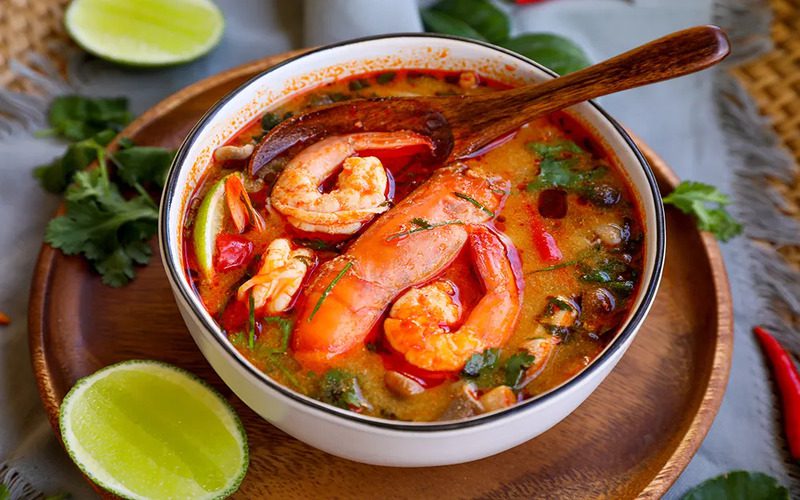
Tom Yum Goong – Thai tom yum soup with shrimp and herbs.
Tom Yum Goong (also spelled Tomyum Kung) is the most widely recognized Thai seafood soup, and it deserves that reputation. A well-made version combines prawns with lemongrass, galangal, kaffir lime leaves, lime juice, fish sauce, and fresh chili in a hot broth that hits sour, spicy, and fragrant all at once. In 2024, UNESCO inscribed it as part of the Intangible Cultural Heritage of Humanity, describing the layered flavor profile in detail. You can check the UNESCO reference here.
- Where it is a specialty: Bangkok is the easiest city to start. Yaowarat (Chinatown) and Silom have long-running restaurants that do strong versions. In Phuket, the soup often uses local Andaman prawns, which gives it a sweeter base than Bangkok versions.
- Approximate price: 80-200 baht ($2.45 – $6.13) at a local restaurant, 250-500 baht ($7.67 – $15.333) at a mid-range or hotel restaurant.
- Best for: First-time visitors who want to understand Thai flavor in a single bowl. This is the clearest introduction to how Thai cooking balances contrasting tastes.
- Flavor profile: Spicy and sour. Ask for less chili if you are sensitive to heat, the dish still holds up with reduced spice because the aromatics carry it.
Pla Pao
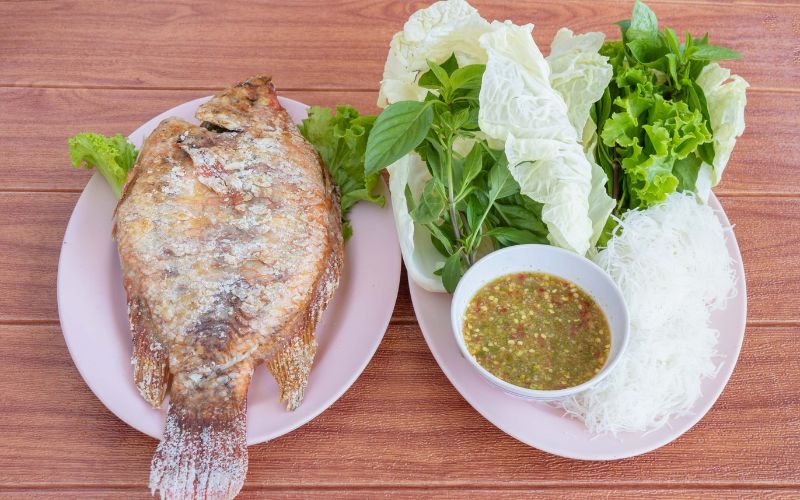
Pla pao with fresh herbs, noodles, and sauce.
Pla Pao is a whole fish, usually tilapia or sea bass, stuffed with lemongrass, coated in salt, and grilled over charcoal until the skin is dry and slightly smoky while the flesh stays moist inside. No heavy sauce. The fish is the point. It is served with fresh herbs, noodles or sticky rice, and a dipping sauce made with chili, lime, and fish sauce.
- Where it is a specialty: This dish is found all over Thailand but is particularly good along the Gulf Coast: Hua Hin, Cha-Am, and the Surat Thani coastline all have roadside grills that do excellent Pla Pao. In Bangkok, look for it in local neighborhoods rather than tourist-facing restaurants.
- Approximate price: 150-350 baht ($4.6 – $10.73) depending on the size of the fish.
- Best for: Travelers who want something fresh and local-feeling after a run of richer curries or fried dishes. Also a good choice for sharing between two people.
- Flavor profile: Mild, smoky, lightly salty. Good for people who prefer clean flavors over spice.
Goong Ob Woonsen
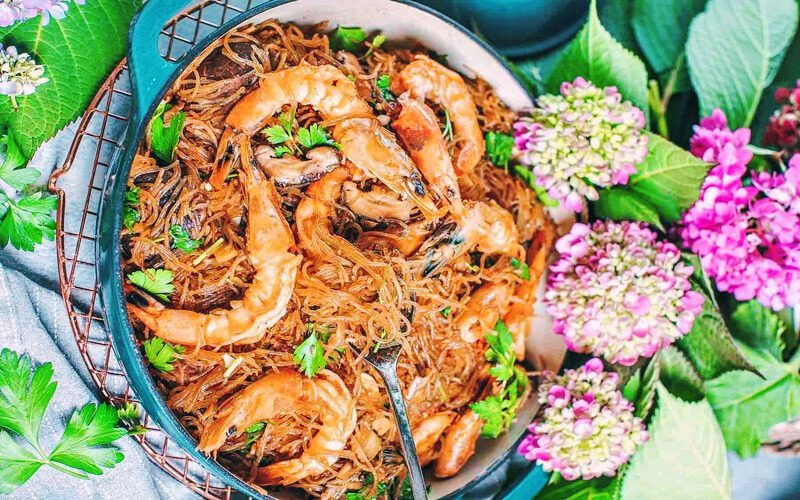
Goong Ob Woonsen – Thai glass noodles with shrimp.
Prawns cooked with glass noodles, garlic, ginger, pepper, and seasoning in a clay pot. The noodles absorb all the prawn juices and aromatics as it cooks, so the result is deeply fragrant without being spicy. A good version has soft but distinct noodles and prawns that are still juicy and sweet.
- Where it is a specialty: Bangkok’s Chinatown and older Thai-Chinese neighborhoods do this particularly well. It also appears in Phuket Town restaurants with a Peranakan influence, where the seasoning sometimes includes a touch more sweetness.
- Approximate price: 200-400 baht ($6.13 – $12.26) at a local restaurant.
- Best for: Travelers who want strong flavor without heat, and anyone eating with someone who cannot handle spice. It is a reliable shared dish for mixed groups.
- Flavor profile: Savory, aromatic, mild. No chili heat. The fragrance comes entirely from ginger, garlic, and pepper.
Hoy Tod
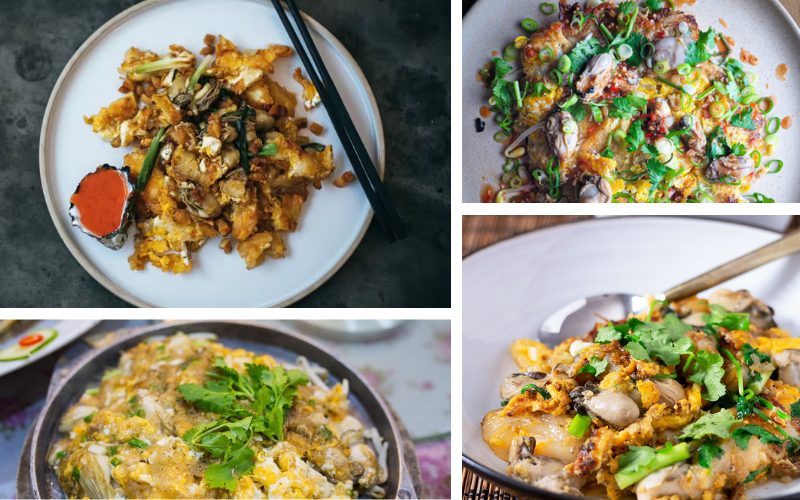
Hoy Tod -Thai oyster omelette in different styles.
An oyster omelette that is crispier and more textured than the name suggests. A strong version has golden, lacy edges, soft egg in the center, and plump oysters that stay juicy inside the batter. It is rich, savory, and best eaten immediately off the pan before the edges soften.
- Where it is a specialty: Bangkok’s Chinatown is the most well-known location, with several long-running stalls along Yaowarat Road. Chiang Mai’s night bazaar and Phuket’s weekend market also have dependable versions. In southern Thailand, fresh oysters from Surat Thani sometimes end up in Hoy Tod sold at local markets.
- Approximate price: 80-180 baht ($2.45 – $5.52) at a street stall or market. More in a sit-down restaurant.
- Best for: Anyone who enjoys oysters and street food. Also good for travelers who want a quick hot meal at a market rather than sitting down for a full dinner.
- Flavor profile: Savory, slightly briny, no significant spice. The dipping sauce that comes with it adds a mild chili note if you want it.
Hor Mok Pla
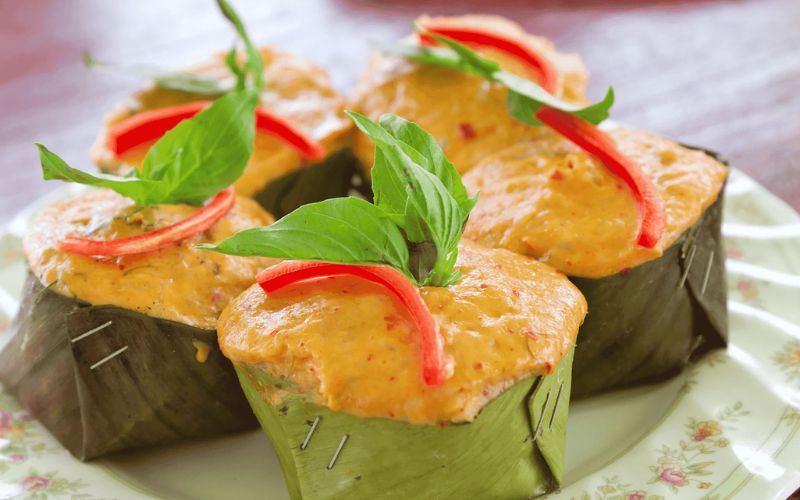
Thai hor mok pla in banana leaf cups
A steamed fish curry custard, usually served in banana leaf cups. Fish is blended with coconut milk, red curry paste, eggs, and herbs, then steamed until it sets into a soft, fragrant mixture that sits somewhere between mousse and custard. Most versions are not particularly spicy. The dominant notes are coconut, lemongrass, and kaffir lime.
- Where it is a specialty: Central Thai restaurants in Bangkok do strong traditional versions. In Chiang Mai, the northern variation (Hor Mok Nuea) uses different spices. In Phuket and Krabi, some restaurants use local fish and adjust the coconut milk ratio for a richer result.
- Approximate price: 100-250 baht ($3.07 – $7.67) per portion.
- Best for: Travelers who want to go beyond the obvious tourist dishes, or anyone who enjoys coconut-based Thai flavors but finds curries too heavy. Good for those who prefer something lighter and more delicate.
- Flavor profile: Rich, fragrant, gently spiced. Not hot. Good for people who like mild, complex flavors more than chili heat.
Yen Ta Fo
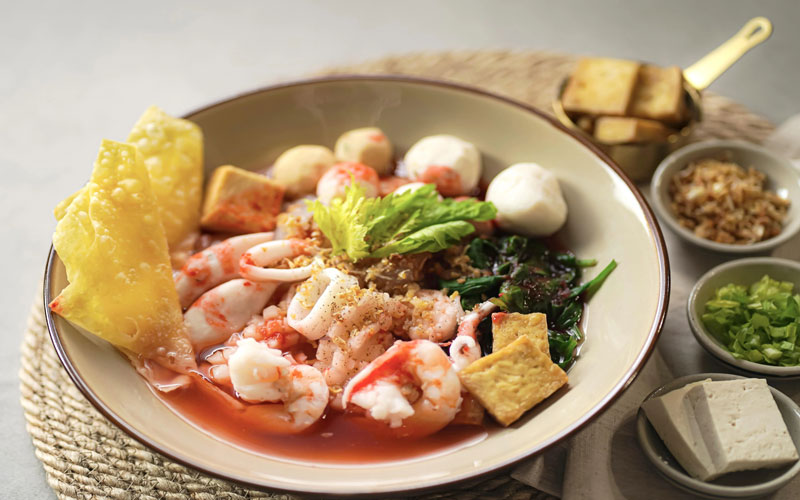
Thai pink noodle soup with mixed seafood.
A noodle soup with a pink broth, colored and flavored by fermented red bean curd. The seafood version includes fish balls, squid, and other toppings in a broth that balances sweet, sour, and savory. It looks unusual and does not appear on most tourist shortlists, which is part of why it is worth trying.
- Where it is a specialty: This is a Bangkok dish through and through. You find the best versions in local noodle shops in neighborhoods like Bang Rak, Thonburi, and along the old shophouse streets near Tha Phra Chan. It is less common outside Bangkok.
- Approximate price: 60-120 baht ($1.84 – $3.68) at a local noodle shop.
- Best for: Travelers who want to eat like a local at lunch. Good for anyone curious about Thai food beyond the standard menu, or those who want a lighter midday meal.
- Flavor profile: Sweet-sour-savory, mild spice. Accessible for people who are cautious about heat.
Tod Mun Pla
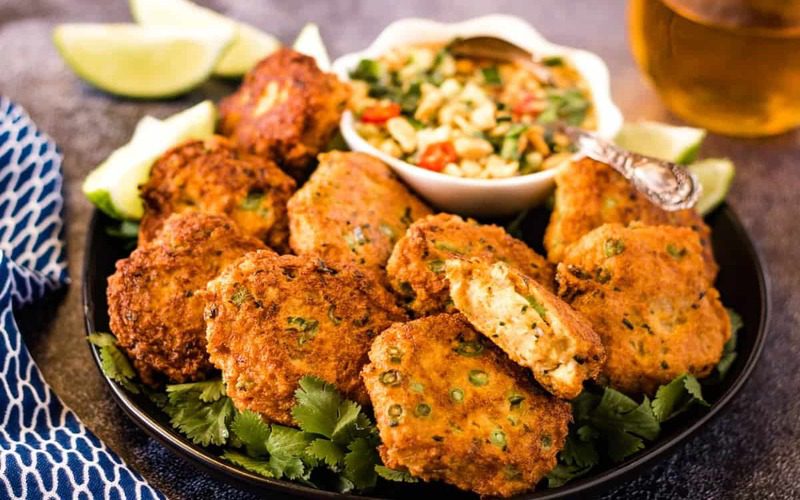
Tod Mun Pla – Thai fish cakes with cucumber relish.
Fish cakes are made from fish paste mixed with red curry paste, kaffir lime leaves, and long beans, then fried until the outside is lightly crisp and the inside is springy. Served with a sweet chili cucumber relish. Easy to like, easy to share, and one of the most reliable starters in Thai seafood cooking.
- Where it is a specialty: Available all over Thailand, but especially common in Bangkok restaurants and along coastal areas where fresh fish paste is easy to source. In Hua Hin and Phuket, some vendors make them with local catch, which improves the flavor noticeably.
- Approximate price: 80-150 baht ($2.45 – $4.6) for a plate of four to six cakes.
- Best for: Families, first-time visitors, and anyone who wants an easy shared snack before a larger meal. A safe choice for mixed groups with varying spice tolerance.
- Flavor profile: Mildly spiced, savory, slightly chewy. The relish adds sweetness. Not hot.
Khao Tom Pla
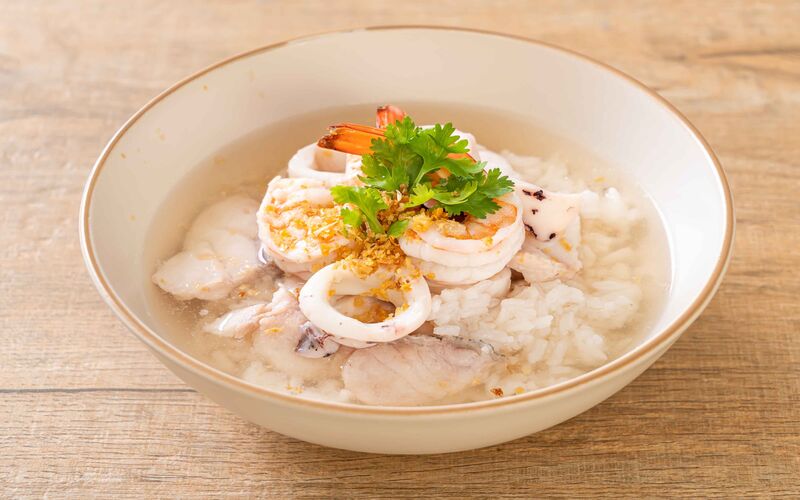
Khao Tom Pla – Thai seafood rice porridge with shrimp and squid.
A seafood rice soup with fish or mixed seafood in a clear broth, soft rice, ginger, and simple seasonings. It is a breakfast and comfort food dish, not a dinner showpiece. Many travelers skip it because it sounds plain. That is a mistake, especially if you have been eating rich or spicy food for several days.
- Where it is a specialty: Old neighborhood restaurants in Bangkok, particularly in the Talat Noi area and along the river, are good places to find it. In Surat Thani and coastal towns, morning markets often sell it as an early breakfast dish.
- Approximate price: 60-120 baht ($1.84 – $3.68) at a local shop.
- Best for: Travelers who want to understand everyday Thai food, not just the dishes on tourism lists. Also genuinely useful after late arrivals, stomach sensitivity, or a stretch of heavy eating.
- Flavor profile: Mild, clean, lightly savory. No heat. Good for people who prefer subtle food or need a break from spice.
Pla Neung Manao
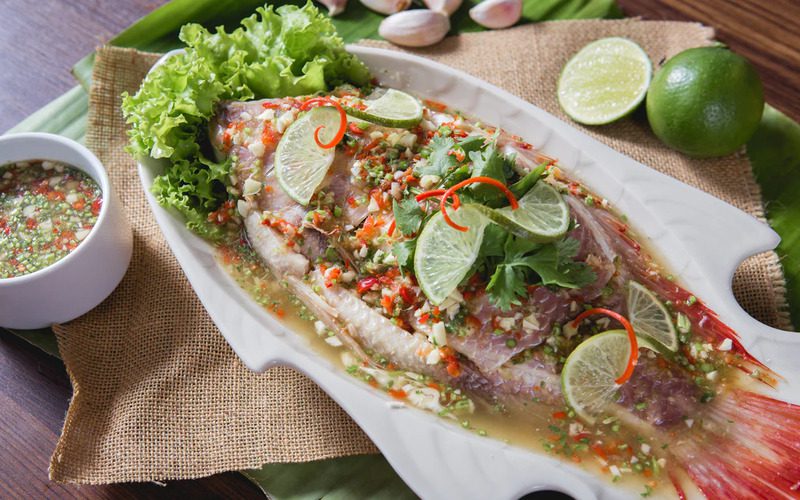
Pla Neung Manao – Thai steamed fish with lime, chili, and herbs.
Steamed sea bass topped with a sauce of lime juice, garlic, fish sauce, and fresh chili. The fish should be tender and fresh, while the sauce sits bright and sharp on top. When the ingredients are good, it tastes more alive than almost any other seafood preparation.
- Where it is a specialty: Best in coastal destinations where fish moves quickly from sea to kitchen. Krabi, Koh Lanta, Koh Samui, and smaller fishing villages along the Andaman and Gulf coasts all produce strong versions. In Bangkok, look for restaurants that list the fish’s origin, which suggests they take sourcing seriously.
- Approximate price: 200-450 baht ($6.13 – $13.8) depending on the size of the fish and the location.
- Best for: Travelers who prioritize freshness and prefer clean, citrus-forward flavors over coconut-based dishes. Good for anyone who finds Thai food too rich and wants something lighter.
- Flavor profile: Sharp, citrusy, moderately spicy. The heat from fresh chili is direct but manageable. Very good for people who like bright, acidic food.
Pla Muek Yang
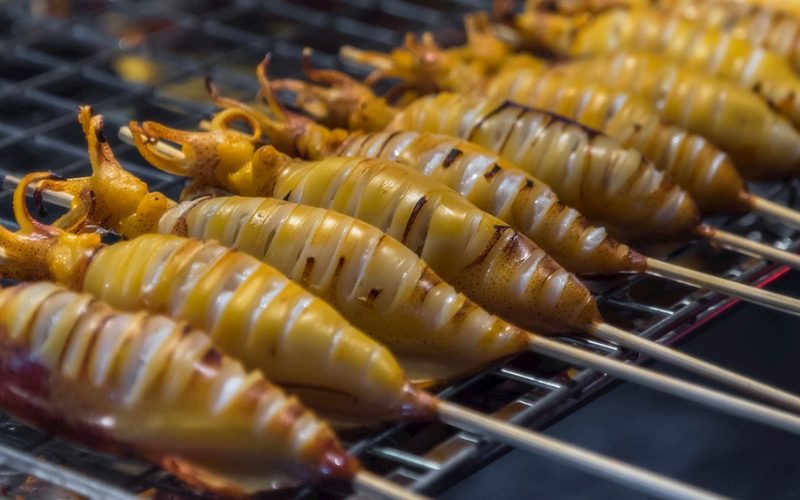
Pla Muek Yang – Grilled squid skewers on a barbecue rack.
Grilled squid cooked over open flame at beach markets, roadside stalls, and casual seafood restaurants. Good grilled squid has light char on the outside and stays tender inside. Poorly cooked squid turns rubbery fast, so turnover matters. Order from a busy stall.
- Where it is a specialty: Southern Thailand is the best region for this. Hua Hin’s night market has a long row of squid vendors. In Phuket, Rawai Beach and Chalong Market have stalls that grill constantly through the evening. In Krabi, beachside restaurants on Ao Nang and Railay often serve it as part of a shared seafood platter.
- Approximate price: 100-250 baht ($3.07 – $7.67) depending on size and location.
- Best for: Travelers who want a quick, satisfying seafood snack while walking a market or watching the sunset. Works well as part of a larger shared spread.
- Flavor profile: Smoky, savory, lightly sweet from the squid itself. The dipping sauce adds chili heat, but you can skip it. Suits most palates.
Yum Talay
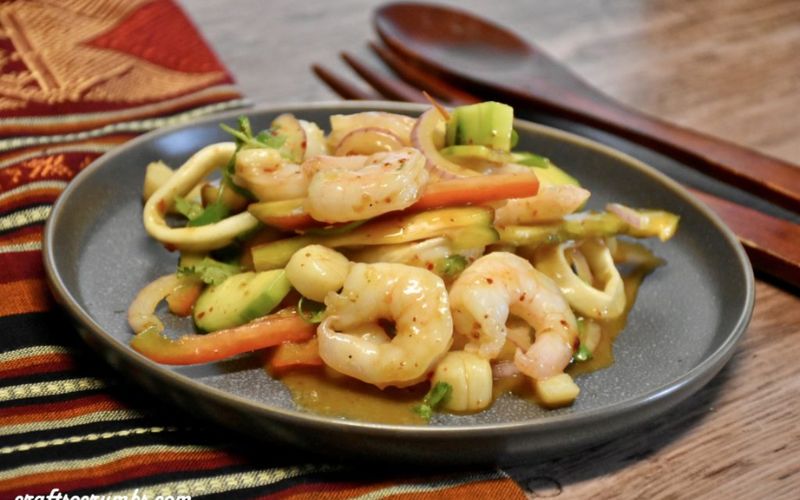
Thai yum talay seafood salad with shrimp and squid.
The classic Thai seafood salad. Shrimp, squid, mussels, herbs, shallots, tomatoes, lime juice, fish sauce, and chili tossed together. No cream, no mayo. It is bright, spicy, and salty all at once, and it works especially well in hot weather as part of a shared meal with rice or grilled fish.
- Where it is a specialty: Found widely, but beachside restaurants in Phuket, Krabi, and Koh Samui tend to make it with the freshest shellfish. In Bangkok, seafood restaurants along Sukhumvit and in the Bang Na area do strong versions.
- Approximate price: 180-400 baht ($5.52 – $12.26).
- Best for: Travelers who enjoy bold, punchy food and want something that feels genuinely Thai rather than adapted for tourist palates. Good for sharing.
- Flavor profile: Spicy, sour, salty. Ask for mild if you are sensitive to chili. The dish still holds its character without full heat, but it needs at least some to work properly.
IDC Help You to Choose Your First Thai Seafood
Not every traveler eats the same way. Here is a quick reference based on your preferences:
- Order Tom Yum Goong if you want the classic introduction.
- Choose Pla Pao or Pla Neung Manao if freshness is your top priority.
- Try Goong Ob Woonsen if you want something flavorful but not too spicy.
- Pick Hoy Tod or Tod Mun Pla if you want a street food style experience.
- Go for Hor Mok Pla or Khao Tom Pla if you want something more local and less obvious.
- Add Yum Talay if you enjoy lively, spicy seafood dishes.
That approach helps you do more than just check dishes off a list. It helps you actually understand how broad Thai seafood can be.
Where to Eat Thai Seafood: City by City
The best destination depends on the kind of trip you want:
- Bangkok is the easiest place to start because it brings together seafood from across the country and offers everything from Chinatown street food to famous long-running restaurants. Michelin’s Bangkok listings continue to include names such as Jay Fai, Somboon Seafood, and Krua Apsorn, which shows how deeply seafood is woven into the city’s food scene.
- Phuket is one of the best places for travelers who want beaches and serious food at the same time. Official tourism promotions continue to frame Phuket as a gastronomy destination, with seafood playing a central role.
- Krabi is excellent for relaxed coastal dining.
- Hua Hin works well for couples and families who want an easy seaside resort with dependable seafood options.
- Surat Thani is especially worth noting if you love oysters, as official tourism information highlights the province’s oyster farming and reputation for large, fresh oysters.
Thai Seafood on Any Budget: What to Expect
Seafood in Thailand can suit many budgets, from market snacks to premium restaurant dinners. Prices depend on destination, season, and what you order. Fish cakes, soups, and simple grilled squid are affordable. Live crab, large river prawns, lobster, and premium shellfish can raise the bill quickly, especially in beach resorts and upscale restaurants.
| Type of meal | Typical price per person | What to expect |
| Street food snack | 60 to 150 baht ($1.83-4.56) | Fish cakes, grilled squid, oyster omelette, small noodle bowls |
| Casual local seafood meal | 150 to 400 baht ($4.56-12.17) | Tom Yum Goong, stir-fried seafood, grilled fish, rice |
| Mid-range seafood restaurant | 400 to 900 baht ($12.17-27.38) | Better setting, larger portions, more variety |
| Premium seafood restaurant | 900 to 2,000+ baht ($27.38-60.84+) | Signature crab, big prawns, live seafood, upscale service |
Estimated daily food budget
| Travel style | Budget | Mid-range | Luxury |
| Suggested seafood budget per day | 300 to 700 baht ($9.13-45.63) | 700 to 1,500 baht ($21.29-45.63) | 1,500 to 3,000+ baht ($45.63-91.26) |
Note: Prices may change depending on season, fuel costs, seafood supply, restaurant location, and market conditions. Resort islands and high-demand holiday periods are usually more expensive.
Useful Travel Tips Seafood Lovers Should Keep in Mind
These are the practical habits that make a real difference during a seafood trip in Thailand:
- Choose busy restaurants or stalls with fast turnover, especially for oysters, crab, and lightly cooked seafood.
- Ask what is fresh that day instead of ordering the same dish everywhere.
- If you do not handle spice well, ask for less chili when ordering soups, sauces, or a Thai seafood salad.
- Use lunch for markets and casual local shops, and save dinner for beachside or sit-down seafood restaurants.
- In large cities, shortlist neighborhoods first rather than searching only for a generic Thai seafood restaurant.
- If you are checking apps for Thai food delivery for convenience, but seafood is usually better eaten fresh at the restaurant.
- Carry some cash for markets and smaller local shops.
- If you have allergies, explain them clearly and simply before ordering.
Our Conclusion of Thailand Seafood
Thai seafood is one of the best reasons to travel through Thailand slowly and eat locally. From Tom Yum Goong and grilled fish to fish custard, seafood rice soup, grilled squid, and spicy seafood salad, the variety is wide enough for both first-time visitors and dedicated food lovers. Bangkok is the easiest city to begin with, Phuket is one of the strongest coastal food destinations, and places like Hua Hin and Surat Thani add more local depth to the experience.
If you want more than a standard beach holiday, we can help you build a Thailand itinerary that combines great food, trusted local experiences, and the right balance of city life, coast, and culture. Contact us for a customized trip or explore our Thailand tours to start planning your seafood journey with confidence.
Read more:




This guide just made me super hungry! I’m planning a trip to Phuket—are there any seafood spots by the beach you’d recommend for a sunset dinner?
We’re so glad to hear that! If you’re heading to Phuket, you’re in for a treat. There are some amazing seafood spots right by the beach. For a sunset dinner, we highly recommend Laem Sai Seafood near Ao Por or Kan Eang Pier in Chalong, both serve fresh seafood with stunning views. Rawai Seafood Market is also a fun spot where you can pick your seafood and have it cooked on the spot! Let us know if you’d like help planning your food stops—we’d be happy to help!
Best regards,
IDC Travel Team