
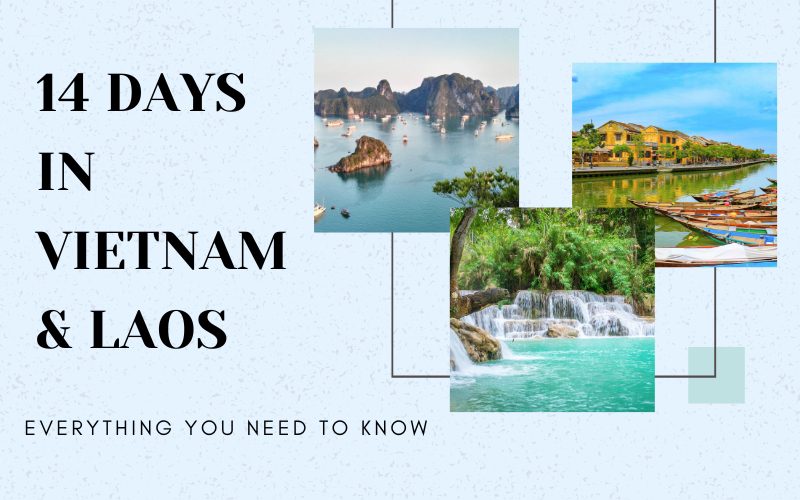
Winding rivers, spires of enchanting temples, bustling street markets, and the aromas of Pho and Sticky rice in the air: Laos and Vietnam are more than just destinations, they are experiences waiting to be lived. Between the tranquil landscapes and the dynamic rhythm of the cities of these two Southeast Asia jewels, a journey of 14 days in Vietnam and Laos promises a mix of adventure, serenity, and cultural immersion.
Join us to discover essential information about this adventure and answer questions that any intrepid traveler is likely to ask, to ensure that you do more than just visit, but truly live the experience of Vietnam and Laos in 14 days.
Why Spending 14 Days in Vietnam and Laos?
Spending 14 days in Vietnam and Laos is ideal because it gives you enough time to experience the cultural richness, natural variety, and different travel rhythms of both countries without feeling rushed. In two weeks, you can balance major highlights with slower, more meaningful moments, from the lively streets and historic landmarks of Vietnam to the peaceful riverside towns and relaxed atmosphere of Laos.
This duration also makes the journey more rewarding logistically, as it allows travelers to move between destinations at a comfortable pace while still enjoying a good mix of heritage, landscapes, local life, and cuisine. For many travelers, 14 days is the right amount of time to create a trip that feels complete, diverse, and cost-effective.
Here’s what makes it a choice itinerary:
- Balanced Exploration: 14 days is the ideal duration to immerse in the unique ambiance of both countries without being overwhelmed.
- Cultural and Natural Harmony: Engage in the rich tapestry of local traditions while discovering varied landscapes, from serene riverbanks to majestic mountains.
- Historical Perspectives: Uncover the deep history of these nations, understanding the significant events of their past and their influence on contemporary life.
- Cost-effective Adventure: Two weeks ensure a memorable journey at a very advantageous price, combining luxury experiences with moderate travel costs.
Where to Explore in Vietnam and Laos in 14 Days
In 14 days, you can explore some of the most rewarding parts of Vietnam and Laos, but the trip works best when you choose a few standout regions instead of trying to see everything. Both countries have a lot to offer, from old capitals and temple towns to mountains, coastlines, river landscapes, and slow local life. With two weeks, you have enough time to combine famous highlights with a few quieter places, which makes the journey feel much more satisfying and less rushed.
1. Explore Vietnam
Stretching from the north to the south, Vietnam is a land of remarkable cultural diversity, where 54 ethnic groups and a wide range of beliefs create a vibrant tapestry waiting to be discovered.
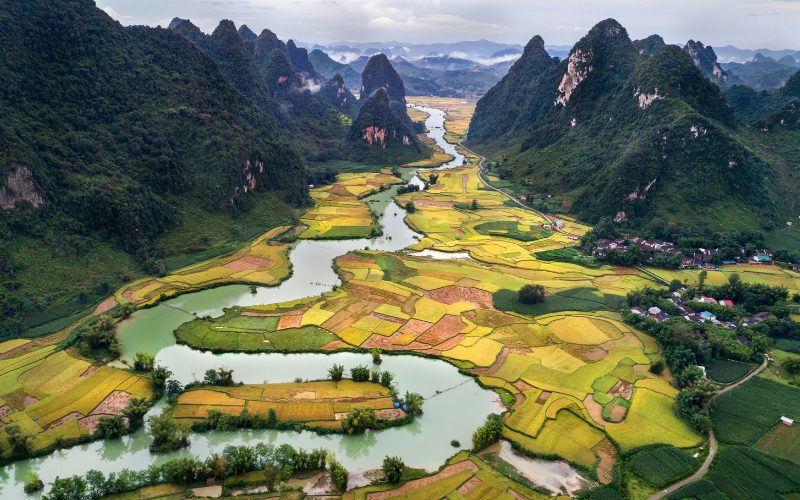
The Quay Son River winding through Cao Bang’s karst landscape.
- Northern Vietnam is often the first choice for travelers who want a strong mix of culture and scenery. Hanoi sets the tone with its old streets, lakes, temples, and food culture, while nearby destinations add very different layers to the trip. Sapa brings mountain views and terraced rice fields, while Halong Bay offers one of the country’s most iconic landscapes.
- Central Vietnam feels more relaxed and heritage-focused. Hue is the place to understand Vietnam’s imperial history, with its citadel, royal tombs, and old-world atmosphere. Hoi An, on the other hand, is known for its preserved old town, lantern-lit evenings, and riverside charm. Da Nang adds beaches, modern comforts, and an easy base for exploring the region.
- Southern Vietnam is more energetic and fast-moving. Ho Chi Minh City is the country’s commercial hub, full of traffic, street food, cafés, rooftop bars, and reminders of the recent past. If you want to slow down after the city, the Mekong Delta offers a softer side of southern life, with canals, orchards, villages, and daily life shaped by the river.
>>> Recommended tour: Panorama of Vietnam and Laos 14 Days Tour
2. Explore Laos
Laos is an ideal destination for those who love peaceful beauty, pristine nature, and the slow pace of life typical of Southeast Asia. From ancient temples in Luang Prabang to the gentle Mekong River and lush green mountains, this country offers a relaxing yet captivating journey for chilling travelers.
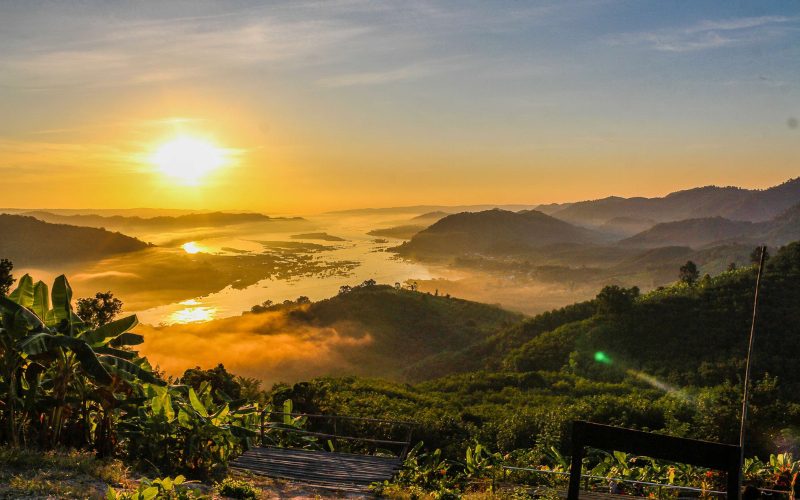
Sunrise over the Mekong River in northern Laos.
- Northern Laos is the most appealing part of the country for many first-time visitors. Luang Prabang is the clear highlight, with its temples, morning alms-giving tradition, colonial architecture, and peaceful setting between rivers and hills. It is a place where you do not need to rush. Just walking through the streets, visiting markets, and spending time by the Mekong already feels like part of the experience.
- Central Laos is best known for Vang Vieng, a town surrounded by limestone mountains and rivers. It has long been popular for outdoor activities, but it also works well for travelers who simply want beautiful scenery and a laid-back stop between bigger cultural destinations. The landscape here is one of the most memorable in Laos.
- Southern Laos suits travelers who prefer something less touristy and more rural. Pakse is the usual gateway, especially for trips to the Bolaven Plateau, where waterfalls, coffee farms, and cooler highland landscapes create a very different atmosphere from the rest of the country. Farther south, the 4,000 Islands area is all about slowing down, enjoying the Mekong, and spending time in one of the calmest corners of Southeast Asia.
>>> Recommended tour: 14 Days Northern Laos Adventure Tour, Best Price Guaranteed
Suggested Itineraries For 14 Days in Vietnam And Laos
Itinerary 1: Panorama of Vietnam and Laos in 14 Days
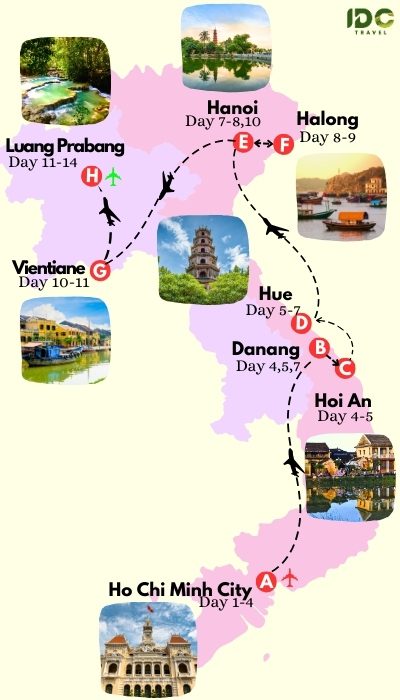
Day 1 – Ho Chi Minh City Arrival and Welcome Dinner: Arrival in Saigon, exploration, and welcome dinner.
Day 2 – Saigon’s Historical Exploration: Visit the Cu Chi Tunnels and exploration of Saigon’s highlights, including China Town, Notre-Dame Cathedral, and the Presidential Palace.
Day 3 – Mekong Delta Adventure: Excursion to My Tho in the Mekong Delta with a boat tour and visits to local farms. Stop at Long An for the Cao Dai Temple.
Day 4 – Journey from Saigon to Hoi An: Morning in Saigon, then flight to Da Nang and transfer to Hoi An. Exploration of China Beach, Ngu Hanh Son Stone Village, and Hoi An Ancient Town, a UNESCO-listed site.
Day 5 – From Hoi An to Hue: Discovery of Hoi An’s historical sites. Departure for Hue via Danang with a stop at the Cham Museum and panoramic views at Hai Van Pass.
Day 6 – Hue’s Imperial and Cultural Sites: Exploration of Hue’s historical sites with a river cruise to Thien Mu Pagoda and visits to the tombs of Emperors Minh Mang and Tu Duc, the Imperial City, and Dong Ba Market.
Day 7 – Fly to Hanoi: Flight to Hanoi. Visit Hanoi’s attractions, including the Ho Chi Minh Mausoleum, One Pillar Pagoda, Temple of Literature, and the Old Quarter. Finish the day with a water puppet show.
Day 8 – Ha Long Bay Cruise Experience: Transfer to Ha Long Bay for a cruise, exploration of the Sung Sot Cave and swimming at Ti Top Island.
Day 9 – Ha Long Bay to Hanoi: Exploration of Ha Long Bay. Return to Hanoi in the evening.
Day 10 – Head to Vientiane: Morning in Hanoi, then flight to Vientiane. Visit Vat Sisakhet, Ho Prakeo, and the Great Stupa That Luang.
Day 11 – Discovering Luang Prabang: Flight to Luang Prabang. Exploration of the city and its monasteries.
Day 12 – Luang Prabang’s Cultural and Historical Sites: Discovery of Luang Prabang’s attractions, including Mount Phousy, Wat Xieng Thong, and the Museum of the Former Royal Palace.
Day 13 – Natural Wonders of Luang Prabang: Visit the Pak Ou Caves and Kuang Si Falls.
Day 14 – Farewell to Luang Prabang: Free time in Luang Prabang before departure.
>>> Check here for the detailed tour program.
Itinerary 2: Adventures to Northern Vietnam and Laos in 2 Weeks
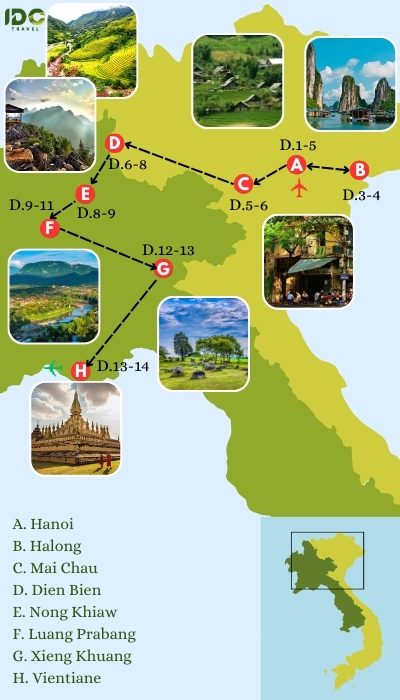
Day 1 – Arrival in Hanoi: Local dinner experience
Day 2 – Hanoi City Tour: Exploring Hanoi: Ho Chi Minh Complex, One Pillar Pagoda, Temple of Literature, Quan Thanh Temple, West Lake, and choice between Vietnam History Museum and Vietnam Museum of Ethnology, followed by a traditional water puppet show.
Day 3 – Transfer to Ha Long Bay: Journey to Ha Long Bay for a 2-day cruise. Evening activities include sunset watching, a Vietnamese cooking class, and entertainment.
Day 4 – Ha Long Bay and Return to Hanoi: Morning Tai Chi and island exploration by boat in Ha Long Bay. Return to Hanoi.
Day 5 – Journey to Mai Chau: Travel to Mai Chau. Visit the Muong tribe and Thung Khe Pass. Afternoon trekking in Thai ethnic villages. Evening cultural show with dance and music.
Day 6 – Travel to Moc Chau and Dien Bien Phu: Head to Moc Chau for a tour of Vietnamese tea gardens. Continue to Dien Bien Phu.
Day 7 – Exploring Dien Bien Phu: Discover Dien Bien Phu’s historical sites: local Thai tribes market, campaign command post, Dien Bien Phu Museum, and A1 Hill.
Day 8 – Transfer to Laos via Tay Trang: Travel to the Tay Trang border for entry into Laos. Journey to Muang Khua and then to Nong Khiaw.
Day 9 – Cycling Excursion and Transfer to Luang Prabang: Bike tour exploring villages. Transfer to Luang Prabang. Visit Pak Ou Caves and Ban Xang Hai, known for whisky and wine production.
Day 10 – Luang Prabang Exploration: Participate in monks’ alms-giving ritual. Explore the Royal Palace Museum and Wat XiengThong in Luang Prabang. Trek to Ban Ouay, a Hmong mountain tribe. Visit the Butterfly Park and Kuang Si Falls. Sunset at Mount Phousi.
Day 11 – Transfer to Phonsavan: Travel to Phonsavan with scenic views along the way.
Day 12 – Phonsavan Exploration: Visit Phonsavan’s central market, MAG exhibition, Plain of Jars, Muang Khoun, and nearby Hmong and Tai Dam villages.
Day 13 – Flight to Vientiane: City tour in Vientiane: Wat Si Saket, Haw Pha Kaew, Pha That Luang, and Patuxai (Victory Gate).
Day 14 – Free Time in Vientiane and Departure: Leisure time in Vientiane followed by a transfer to Wattay International Airport for departure.
>>> Let’s check out our Explore the Northern Regions of Vietnam and Laos in 14 Days for the comprehensive itinerary.
Itinerary 3: Combined Trip in 2 Weeks to Vietnam – Laos – Cambodia
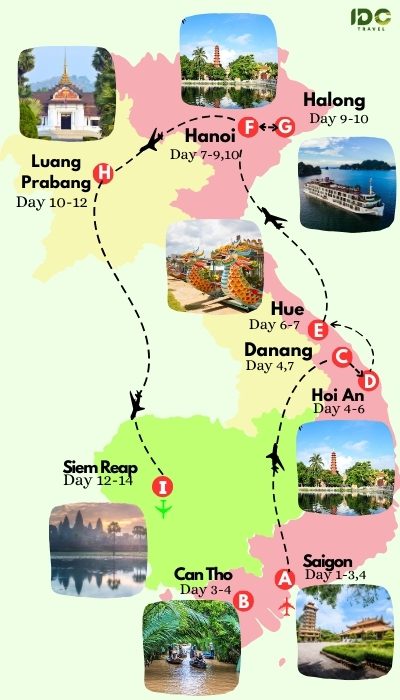
Day 1 – Arrival in Ho Chi Minh City: Arrive in Saigon, and transfer from the airport to the hotel for rest.
Day 2 – Ho Chi Minh City Tour: Explore Saigon including the Presidential Palace, War Remnants Museum, and Cu Chi Tunnels.
Day 3 – My Tho Excursion: Boat tour in My Tho, explore Turtle Island, and visit local plantations.
Day 4 – Phong Dien Floating Market and Flight to Hoi An: Explore Phong Dien Floating Market, visit a rice noodle village, and fly to Hoi An via Danang.
Day 5 – Hoi An City Visit: Tour Hoi An including Chua Ong Pagoda, Tam Ky House, Japanese Covered Bridge, and Cua Dai Beach.
Day 6 – Departure to Hue: Travel to Hue with stops at Lang Co and Cua Dai beaches. Boat trip on the Perfume River, visit Thien Mu Pagoda and royal tombs.
Day 7 – Hue Citadel Exploration and Flight to Hanoi: Explore Hue Citadel, the Imperial City, and fly to Hanoi.
Day 8 – Hanoi City Tour: Visit Hanoi’s highlights including Ho Chi Minh Mausoleum, One Pillar Pagoda, Old Quarter, and Ethnology Museum.
Day 9 – Transfer to Ha Long Bay: Embark on a cruise in Halong Bay to explore karst formations, Luon and Trong caves.
Day 10 – Ha Long Bay Exploration and Flight to Luang Prabang: Continue exploring Halong Bay, including Sung Sot Cave and Ti Top Beach. Fly to Luang Prabang.
Day 11 – Luang Prabang Monk’s Alms and Temples: Participate in local monks’ alms-giving, visit Luang Prabang temples, and climb Phousi Hill for panoramic views.
Day 12 – Khouang Si Waterfall and Flight to Siem Reap: Immersive Experience at Khouang Si Waterfall and Transition to the Wonders of Siem Reap
Day 13 – Angkor Temples Discovery: Explore Angkor temples, including Angkor Thom, Bayon, and Angkor Wat.
Day 14 – Free Time in Siem Reap and Departure: Leisure time in Siem Reap followed by a transfer to the airport for departure.
>>> Want to find out more about this tour, let’s check here. Or, refer to our well-planned Vietnam – Laos tours for more itineraries of your preference.
Cuisine Highlights to Savor During 2 Weeks in Vietnam and Laos
Vietnamese Specialties
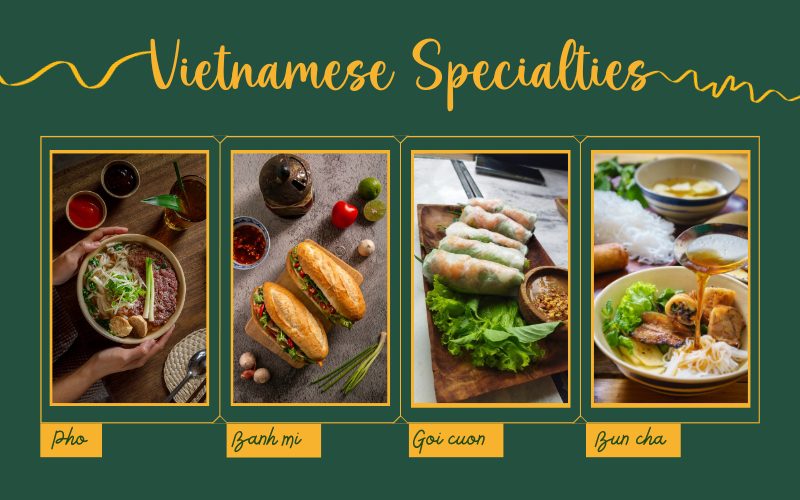
Popular Vietnamese dishes: pho, banh mi, goi cuon, and bun cha.
- Pho: Fragrant noodle soup with beef or chicken, enhanced with herbs and spices.
- Banh Mi: A Vietnamese sandwich that is a delicious fusion of meats, vegetables, and condiments in a crispy baguette.
- Goi Cuon: Fresh spring rolls filled with shrimp, herbs, pork, rice vermicelli, and other ingredients, served with a spicy dipping sauce.
- Bun Cha: Grilled pork (often shredded) over vermicelli noodles, usually topped with nuts, fresh herbs, and fried shallots.
Vietnamese cuisine offers several savory dishes other than the abovementioned food.
>>> If you fancy exploring more of the diverse cuisine in this S-shaped country, why not check out 30 Popular Vietnamese Dishes beyond Pho?
Laotian Specialties
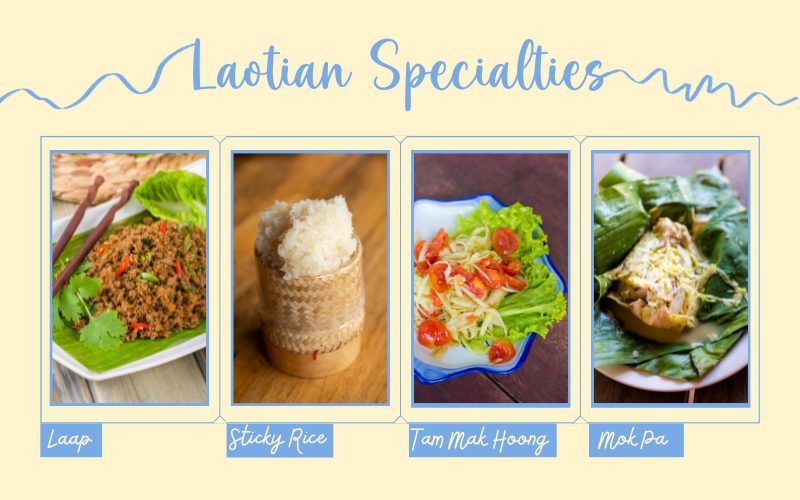
Traditional Laotian dishes: laap, sticky rice, tam mak hoong, and mok pa.
- Laap (or Larb): Spicy meat salad is considered the national dish, made with minced meat flavored with lime juice, chili, and fresh herbs.
- Sticky Rice (Khao Niew): A staple of Laotian cuisine, often served in small baskets and eaten with hands. It is usually accompanied by other dishes.
- Tam Mak Hoong: Spicy green papaya salad with chilies, garlic, lime, fish sauce, and palm sugar.
- Mok Pa: Steamed fish in banana leaves with herbs and spices, giving it a unique flavor and aroma.
Perfect Time for 14 Days in Vietnam and Laos
Determining the ideal time to spend 2 weeks in Vietnam and Laos can significantly enhance your travel experience. Both countries, with their tropical climate, have distinct seasons that influence various activities.
For Beach Holidays
- Vietnam: The coastline is best visited from February to August. This period is the sunniest, especially in the central regions, ensuring sunbathing enthusiasts golden sands and clear blue skies.
- Laos: Although landlocked, looking for a waterside retreat? The serene shores of the Mekong are best during the dry season, between November and March.
For Nature Adventures
- Vietnam: The period from October to early December is most favorable, particularly in the northern mountainous regions. Temperatures are moderate, and the landscape is lush after the monsoons.
- Laos: Trekking enthusiasts should plan their hikes between October and February. During these months, trails are less muddy, and the weather is cooler.
For Cultural Immersion
Cultural festivals and events in Vietnam are spread throughout the year. To experience traditional celebrations, consider visiting during the Lunar New Year (usually late January or early February) or the Mid-Autumn Festival (around September).
For Budget-Friendly Travel
The off-peak months, between May and September, are usually less crowded with tourists. Although you might encounter occasional showers, you will benefit from lower accommodation rates and fewer crowds at popular sites.
Final Decision
As the journey through 14 Days in Vietnam and Laos comes to a close, it’s clear that these two countries offer a tapestry of experiences rich in culture, history, and natural beauty. This guide has aimed to provide a comprehensive overview, but remember, the true essence of travel lies in the unexpected discoveries and personal connections you make along the way. So, why hesitate? Plan your trip today and explore the magnificence yourself! If there is any difficulty, feel free to contact IDC Travel for the best assistance.
Read more:


Is it more convenient to travel from Vietnam to Laos or vice versa?
Hi Daniel,
The convenience of traveling between Vietnam and Laos largely depends on your starting point, intended destinations, and the availability of transport options. However, generally, both routes – from Vietnam to Laos and from Laos to Vietnam – are quite comparable in terms of convenience.
You can consider the flight connectivity from major cities like Hanoi, Ho Chi Minh City and Da Nang with direct flights to Vientiane or Luang Prabang in Laos. If you travel by car, consider the key border crossings like Lao Bao (Vietnam) – Dansavanh (Laos) and Cau Treo (Vietnam) – Nam Phao (Laos).
Best regards,
IDC Travel Team.