
If you’ve ever wondered why experienced travelers keep returning to Ho Chi Minh City year after year, the festivals have a lot to do with it. The city’s calendar is dense with celebrations: some centuries old, some refreshingly modern and each one pulls back a different layer of what makes this place tick. Whether you’re planning your first visit or building an itinerary around the best time to experience local culture, knowing which festivals in Ho Chi Minh City to target can completely change your trip.
This guide covers nine festivals worth planning your trip around, with honest notes on what each one actually looks and feels like on the ground.
Why Ho Chi Minh City’s Festival Calendar Matters for Travelers
Ho Chi Minh City’s festival calendar matters for travelers because it offers access to Vietnamese culture that landmarks alone cannot provide. Festivals are free, they are open to everyone, and they place visitors inside traditions that have been observed for generations rather than beside them. The War Remnants Museum and Ben Thanh Market are worth visiting, but they are fixed points. A festival transforms the city itself: during Tet, the Saigon River is lit by fireworks watched by hundreds of thousands of people; during Vu Lan, entire neighborhoods are filled with incense smoke and the sound of ceremonial chanting well past midnight.
The practical upside: festivals are free. They’re also the best possible context for understanding Vietnamese culture, food, and family life. The things most travelers say they came for but struggle to access through conventional sightseeing alone.
1. Vietnamese Lunar New Year (Tet Nguyen Dan)
- When: Late January to mid-February (date shifts annually with the lunar calendar)
- Where: nationwide
Tet is the biggest event on the Vietnamese calendar, and Ho Chi Minh City experiences it differently from anywhere else in the country. The city empties as millions of residents travel home to their home provinces, which is either a drawback or an advantage, depending on what you’re after. Those who stay get a quieter city, decorated streets, and some of the most dramatic fireworks displays in Southeast Asia.
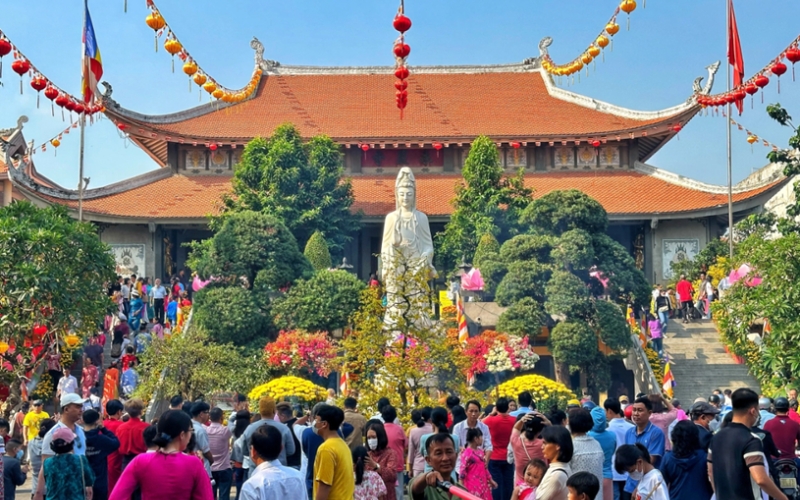
People visit Vinh Nghiem Pagoda to pray at Lunar New Year
The days leading up to Tet are the real show. Nguyen Hue Flower Street transforms into a kilometer-long outdoor exhibition, with elaborate floral sculptures and themed installations that draw enormous crowds nightly. Markets overflow with kumquat trees, peach blossoms, and red-and-gold decorations. Street food vendors sell banh chung (sticky rice cake) and mut (candied fruit) on virtually every corner.
What to expect:
- Most restaurants and shops close for 3-5 days around the actual New Year date.
- Book accommodation well in advance, the city fills up despite the population exodus.
- The fireworks on New Year’s Eve (viewed from the Saigon Riverfront or rooftop bars) are genuinely spectacular.
- Temple visits on the first morning of Tet, particularly at Jade Emperor Pagoda, give access to traditions most tourists never see.
>>> If you’re building a broader Vietnam itinerary around this period, our southern Vietnam tours can be timed to include Tet celebrations while keeping logistics manageable.
2. Nguyen Hue Flower Street Festival (Le hoi Duong hoa Nguyen Hue)
- When: Around Tet (typically late January to early February)
- Where: Nguyen Hue Boulevard, Sai Gon Ward (Ben Nghe Ward, prior to the merger in July 2025)
This one deserves its own entry because it genuinely surprises people. Nguyen Hue Boulevard is already one of the city’s most photographed avenues, gets closed to traffic and redesigned each year around a different theme. In recent years, themes have ranged from traditional Vietnamese village life to futuristic cityscapes.
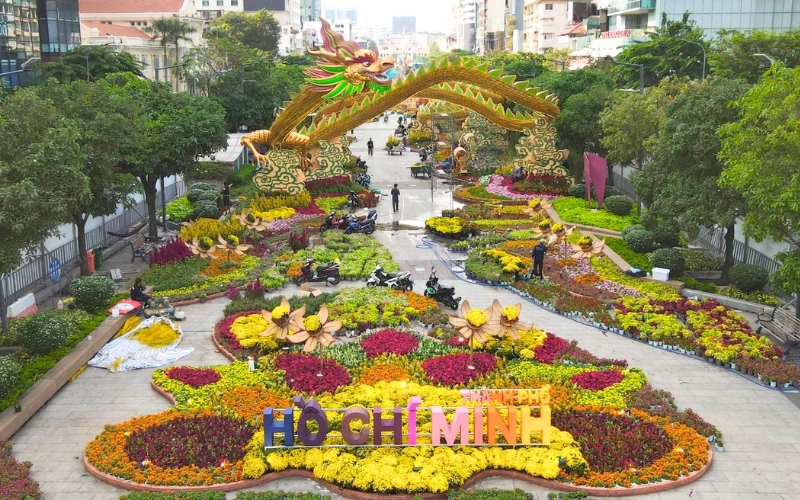
Nguyen Hue Flower Street, a symbol of Saigon at Tet
The installations are more ambitious than most visitors expect. Tens of thousands of flowers sourced from Da Lat, combined with lighting, sculpture, and live performance stages, make this feel closer to a design festival than a street market. It runs from the last few days before Tet through the first few days after, which gives you a window of about a week to catch it.
It’s crowded in the evenings. That’s both the challenge and the point, the crowds themselves are part of the experience, families dressed in traditional ao dai, children carrying lanterns, elderly couples walking slowly past displays.
>>> Reference: Nguyen Hue Flower Street Festival
3. Hung Kings’ Commemoration Day (Gio To Hung Vuong)
- When: 10th day of the 3rd lunar month (typically April)
- Where: 207/2 Vo Nguyen Giap Street, Long Binh Ward (Thu Duc City, prior to the merger in July 2025)
This is a national public holiday in Vietnam, and Ho Chi Minh City marks it with temple visits, dragon dances, and ceremonial offerings. The Hung Kings are considered the founding fathers of the Vietnamese nation, and the reverence for them is genuine. This isn’t a performance for tourists, it’s a real cultural observance.
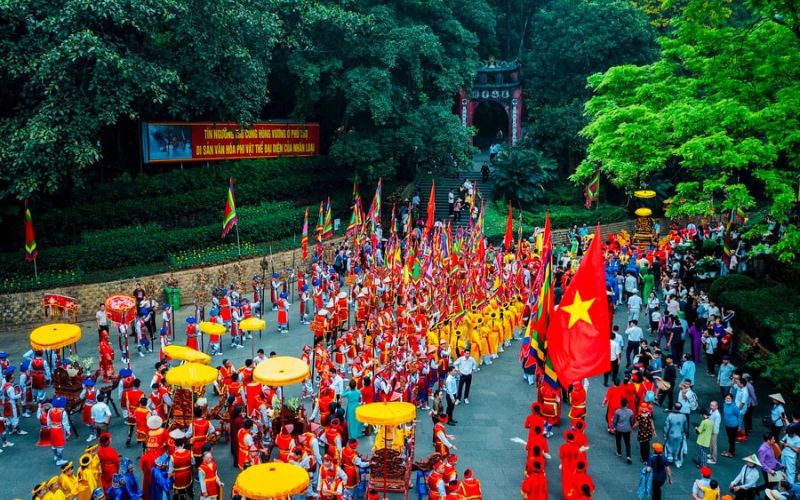
Hung Kings Temple Festival
In Ho Chi Minh City, the Den Hung Temple in Long Binh Ward is the main focal point. Local schools, community organizations, and temples across the city hold smaller ceremonies. If you happen to be in town during this period, joining the quiet processions at a neighborhood pagoda is more interesting than the larger organized events.
For travelers with limited time, this falls at a good point in the year. April sits in the dry season window for southern Vietnam, making it one of the best times to visit Ho Chi Minh City from a weather perspective.
>>> Reference: Hung Kings Commemoration Day
4. Reunification Day (Ngay Giai phong Mien Nam, or Ngay Chien thang, or Ngay Thong nhat)
- When: April 30
- Where: nationwide
April 30 marks the end of the Vietnam War, what Vietnamese call Liberation Day or Reunification Day. The anniversary is taken seriously here, particularly in Ho Chi Minh City, where the final events of 1975 unfolded. The day involves official ceremonies, military parades, and large public gatherings around Reunification Palace and the city center.
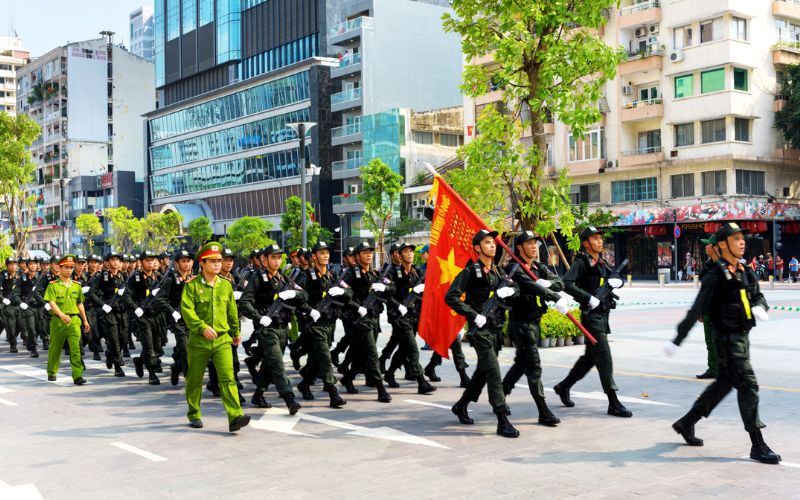
Reunification Day parade in Ho Chi Minh City.
For international travelers, this date lands in a particularly good travel window, coinciding with Labor Day on May 1. The back-to-back public holidays create a four-day period when the city is lively but not overwhelmed. Street performances, cultural events at major parks, and the ceremonial flag-raising at Reunification Palace are all worth seeing.
It’s worth noting that Reunification Palace itself is one of the most unexpectedly moving places to visit in Vietnam, the building has been preserved almost exactly as it was on April 30, 1975, including the original radio equipment and the underground command bunkers. Plan to spend at least two hours there if you’re in town for this date.
>>> Reference: Reunification Day
5. The Hungry Ghost Festival (Vu Lan Bao Hieu)
- When: 15th day of the 7th lunar month (typically August)
- Where: temples, shrines, and other religious establishments
This is probably the festival that surprises Western visitors most. Rooted in Buddhist and Taoist traditions, Vu Lan is a month-long observance during which the gates of the afterlife are believed to open. It involves burning votive offerings (paper money, paper houses, paper phones, anything the departed might need), visiting pagodas, and performing rituals to honor ancestors.
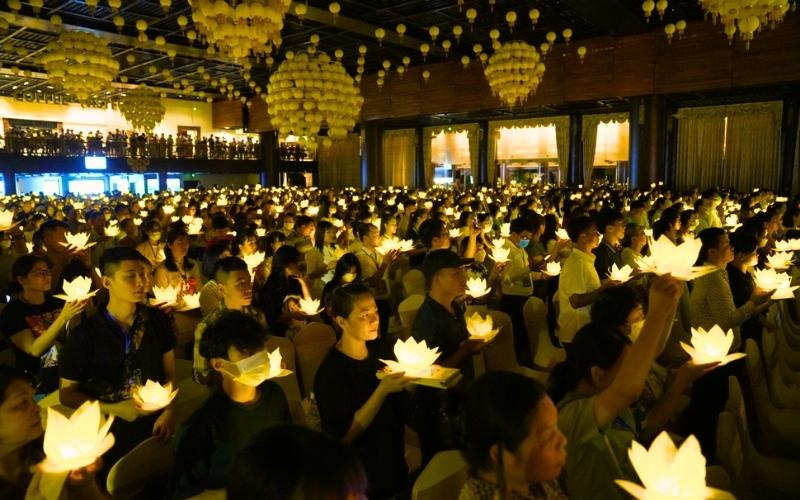
The Hungry Ghost Festival (Vu Lan Festival)
In Ho Chi Minh City’s large Chinese-Vietnamese community in Cho Lon Ward (District 5), the observances are particularly elaborate. Pagodas like Thien Hau Temple host night-long ceremonies with incense, chanting, and processions. The smell of burning paper drifts through the streets for weeks.
The festival also has a quieter dimension: Vu Lan is specifically a day to honor mothers. Children wear a red flower if their mother is living, a white flower if she has passed. On temple grounds, this simple distinction carries real weight.
>>> Reference: The Hungry Ghost Festival
6. Mid-Autumn Festival (Tet Trung Thu)
- When: 15th day of the 8th lunar month (typically September or October)
- Where: nationwide
The Mid-Autumn Festival is primarily a children’s festival, and Ho Chi Minh City’s version is charming in a way that doesn’t get enough attention in travel writing. Luong Nhu Hoc Street in Cho Lon Ward (District 5, prior to the merger in July 2025), known locally as the “Lantern Street”, is the place to be. Shops selling handmade lanterns line both sides of the road, and on the festival evening itself, children parade through with lit lanterns while vendors sell mooncakes, dragon fruit, and star fruit.
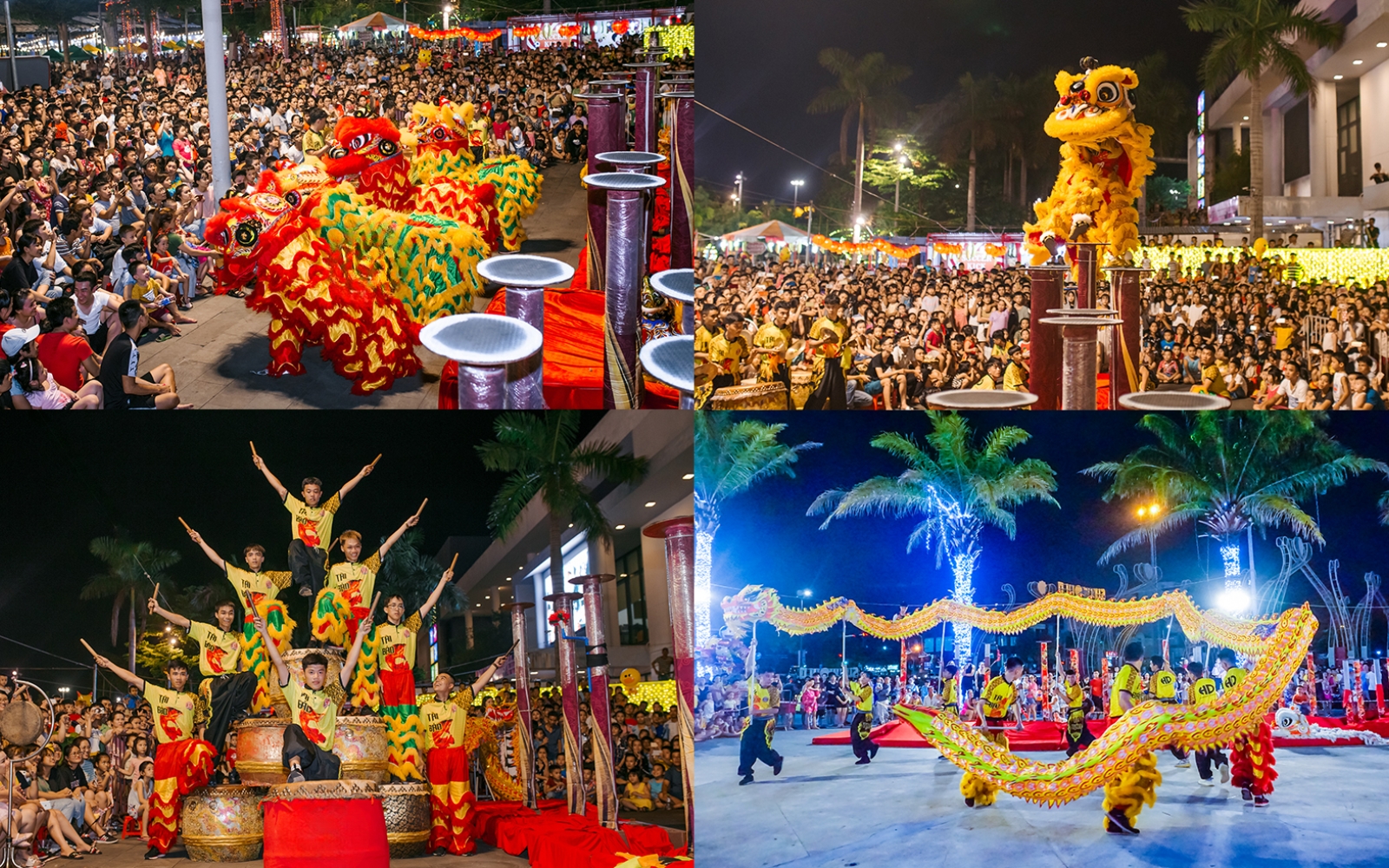
Lion dance performances during Mid-autumn Festival in Vietnam
The mooncake situation is genuinely worth paying attention to. Bakeries and specialty shops start selling them weeks in advance, and there’s real competition over whose mooncakes are best. Traditional versions are filled with lotus seed paste and salted egg yolk; modern versions range from durian to matcha to tiramisu. If you’re visiting in this window, buying a box to share is one of the better food experiences in the city.
Families with children will find this one of the best things to do in Ho Chi Minh City in September. It’s low-key, colorful, and genuinely joyful.
>>> Read our Mid-Autumn Festival guide if you want to know more about this festival.
7. Southern Fruit Festival (Le Hoi Trai Cay Nam Bo)
- When: June 1 to August 31
- Where: Suoi Tien Cultural Tourism Area, 120 Hanoi Highway, Tang Nhon Phu Ward (Thu Duc City, prior to the merger in July 2025)
The Southern Fruit Festival was first established as an official city event in 2004, when the Ho Chi Minh City People’s Committee designated it as an annual cultural and tourism fixture at Suoi Tien Cultural Tourism Area. Over more than two decades, it has grown into one of the city’s most attended summer events, drawing around one million visitors each year and earning recognition as a signature event on the Ho Chi Minh City tourism calendar.
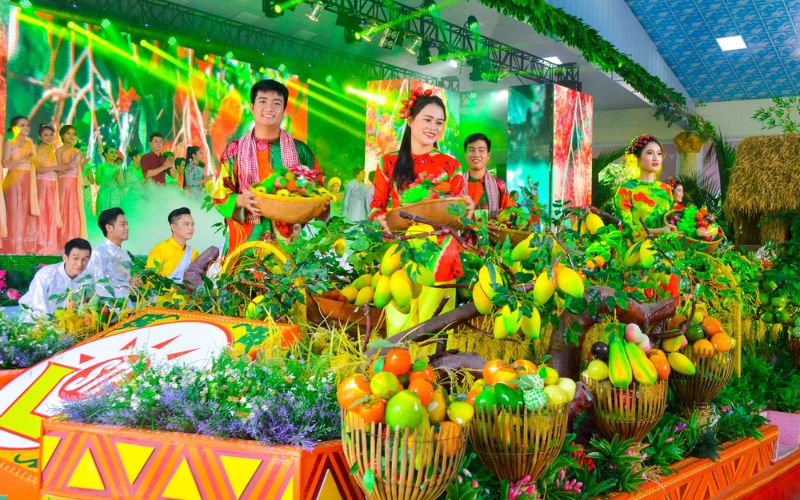
Southern Fruit Festival – Le Hoi Trai Cay Nam Bo performance in Ho Chi Minh City.
The festival was conceived as a way to honor Vietnamese farmers, promote the diversity of southern agricultural products, and preserve traditional crafts such as fruit carving, which has gained international recognition and been submitted for inclusion in the National Intangible Cultural Heritage list.
The 22nd edition is expected to open on June 1, 2026, following the established annual format. Based on the trajectory of recent editions, visitors can expect the specialty fruit market, the fruit carving competition, agricultural exhibitions, parade performances, and access to the Suoi Tien Farm where tropical fruit can be picked and tasted directly. The festival runs through the end of August, which means it is accessible to travelers visiting Ho Chi Minh City at any point during the summer months.
What to expect:
- The specialty fruit market is the main draw, with hundreds of fresh tropical varieties available at accessible prices.
- The fruit carving competition showcases a traditional southern craft and is worth attending as a standalone cultural experience.
- Suoi Tien Farm offers the opportunity to pick fruit directly, with over 30 varieties cultivated to organic and VietGAP standards.
- The festival coincides with the summer school holiday period, which makes it well attended by local families and a lively environment for international visitors.
>>> References:
- The 21st Southern Fruit Festival – A Vibrant Celebration of Southern Vietnam’s Cultural and Agricultural Heritage
- Southern Vietnam Fruit Festival 2025: A special destination in Ho Chi Minh City this summer.
- Suoi Tien Farm Festival 2025 – Suoi Tien Theme Park
8. Christmas – New Year’s Eve Celebrations (Giang Sinh – Giao Thua)
- When: December 24-25 and December 31
- Where: nationwide
Ho Chi Minh City has a large Catholic population, a legacy of French colonial history, and Christmas here is a genuine community event, not just a commercial occasion. The area around Notre-Dame Cathedral in No. 1 Cong Xa Paris Street, Sai Gon Ward (District 1, prior to the merger in July 2025) fills on Christmas Eve with families, street food stalls, and a crowd that has dressed up for the occasion. The cathedral itself is closed for entry but the surrounding streets become an outdoor gathering that lasts until well past midnight.
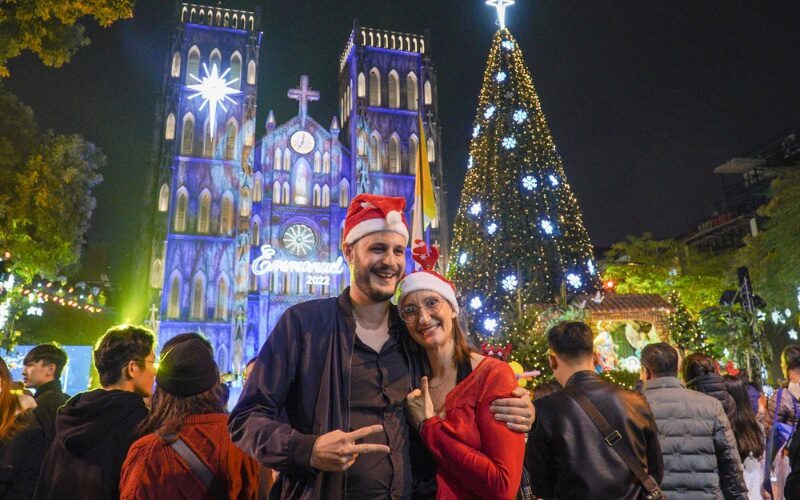
Celebrate Christmas Eve at a church
New Year’s Eve is on a different scale entirely. The Saigon Riverfront and Nguyen Hue Boulevard host concerts, countdown events, and fireworks synchronized to music. The crowds are dense by 10 PM, so positioning yourself early or booking a riverside restaurant or rooftop bar well in advance, makes a significant difference.
December is also one of the most comfortable months to visit southern Vietnam, with low humidity and no rain. For travelers combining Ho Chi Minh City with the Mekong Delta or day trips outside the city, December conditions are near-ideal.
>>> Our Mekong Delta tours are particularly rewarding at this time of year.
9. The Lantern Festival (Tet Nguyen Tieu)
- When: 15th day of the 1st lunar month (two weeks after Tet, typically February)
- Where: Nguyen Hue Boulevard, Sai Gon Ward
Less talked about than Tet itself but genuinely worth catching if your dates align, Tet Nguyen Tieu is the official close of the lunar New Year season. In Ho Chi Minh City’s Cho Lon, it’s one of the most visually arresting events of the year. Thien Hau Pagoda and the surrounding streets in Cho Lon Ward are lit with hundreds of red lanterns, and worshippers carry offerings, burn incense, and participate in lion dances that continue late into the night.
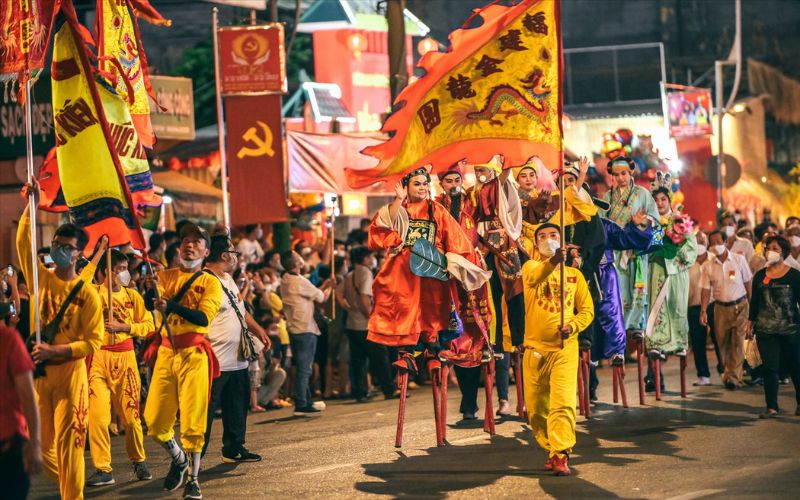
Tet Nguyen Tieu street parade in Ho Chi Minh City.
The Cho Lon neighborhood is where Ho Chi Minh City’s Vietnamese-Chinese community has been concentrated for generations, and Tet Nguyen Tieu is more authentically observed here than almost anywhere else in Vietnam. The streets are narrow, the pagodas are old, and the observances feel lived-in rather than staged. If you’re already in town for Tet and can extend your stay by two weeks, this is a strong reason to do so.
>>> Reference: The Lantern Festival
Best Useful Tips For Enjoying Festivals in Ho Chi Minh City
Festivals in Ho Chi Minh City are vibrant, lively, and full of cultural significance. To make the most of these celebrations, consider the following tips:
- Prepare for your trip: find out information about festivals in advance, such as location and time, as many festivals follow the lunar calendar, so the dates may vary each year. Don’t forget to book services such as accommodation and flights in advance to avoid being sold out and overpriced.
- Dress appropriately: when attending cultural festivals or visiting temples, wear formal clothes that cover your knees and shoulders. For outdoor events, wear light and breathable clothes and comfortable shoes, as you may be walking and standing a lot during the festival.
- Festivals attract a lot of people, so arrive early to enjoy the more peaceful atmosphere, take photos, and have a comfortable place to watch the performances and parades.
- Participate in festival activities to gain more insight into the culture and people, such as carrying lanterns, making traditional dishes, etc.
- Keep valuables and personal documents safe to avoid pickpockets in crowded places. You can wear a small crossbody bag in front for better visibility.
- You can take photos during festivals, but be observant so as not to disturb the rituals and ask politely when taking photos of local people.
Conclusion to Make Decision for Your Vietnam Festival Trip
Timing is the main variable. A few things worth knowing before you book:
- January to February covers Tet, Nguyen Hue Flower Street, and (if dates align) Tet Nguyen Tieu, the richest window for traditional festivals.
- April combines Hung Kings’ Day, Reunification Day, and Southern Fruit Festival. These are good for travelers who want cultural depth without peak-season crowds.
- August to October covers Vu Lan and Mid-Autumn, lower-profile but genuinely rewarding, with better prices on flights and hotels.
- December is the most comfortable weather-wise and combines Christmas, New Year’s Eve, and easy access to day trips.
For travelers combining Ho Chi Minh City with other Vietnamese destinations, Ho Chi Minh City day trips to the Cu Chi Tunnels, Mekong Delta, or Tay Ninh can be scheduled around festival dates without disrupting either.
If you want a guided experience that works around the festival calendar, IDC Travel’s private southern Vietnam tours can be tailored to specific dates, something worth considering if you’re traveling from far and want to make the timing count.
Festivals in Ho Chi Minh City are not just celebrations but also a living expression of the city’s rich cultural heritage and dynamic modernity, making your experience in Ho Chi Minh City truly unforgettable. Contact us today to start planning your adventure to this bustling city.
Read more:
This post is amazing! I’m thinking of visiting Ho Chi Minh City in early February — will I catch Tet holiday events then, or is that too early?
If your trip is in early February 2026 (say the first week or two), you probably won’t catch the full Tet holiday events (since those are mid-February), but you will catch the beginnings of the celebration and the festive buildup. If you can shift your trip to mid-February or overlap with the week of February 16-20, you’d be right in the midst of the holiday.
If I travel to Ho Chi Minh City in October, can I still catch the Mid-Autumn Festival? I’d love to see the lantern displays and maybe try some mooncakes. Are there specific neighborhoods or areas where the festivities are most vibrant?
Dear Charlotte,
Thank you for your question! While the Mid-Autumn Festival typically falls in September, the exact date varies each year depending on the lunar calendar. In 2025, it will be celebrated on October 5th, so it might be just on your October visit.
For the best chance to experience the festival, we recommend visiting neighborhoods like Chinatown (Cho Lon) in District 5 and Luong Nhu Hoc Lantern Street, which are famous for their vibrant lantern displays and festive atmosphere. You might also check out shopping malls or cultural centers, as they sometimes extend the celebrations with displays or themed activities. And you can enjoy authentic mooncakes at local bakeries like Nhu Lan Bakery or Dong Khanh Bakery, which are popular for their high-quality traditional and modern flavors.
If you’d like, we can help you plan a customized itinerary to explore the cultural highlights of Ho Chi Minh City during your visit. Let us know how we can assist you further!
Best regards,
IDC Travel Team
Is it true that restaurants will close during the Tet holiday? Should I visit Ho Chi Minh City during this time because I want to try Vietnamese cuisine and experience traditional customs?
While some restaurants and businesses may close during the Tet holiday, particularly on the first day of Tet, it’s not entirely that all of them will be closed. In Ho Chi Minh City, many restaurants, especially those catering to tourists or located in popular areas like District 1, still open and even offer special Tet menus featuring traditional Vietnamese dishes. So, you can come to Ho Chi Minh City during the Tet holiday without worrying about this.
For cultural exploration, you can visit pagodas, watch lion dances, explore the beautifully decorated Nguyen Hue Flower Street, and do other activities we mentioned in the article above. If you need any further information, please contact us; we are willing to help you at any time!
Warm regards,
IDC Travel Team.