Khao Yai National Park is one of Thailand’s best first jungle escapes near Bangkok, with rainforest scenery, waterfalls, and genuine wildlife watching opportunities. It fits travelers who want a real national park experience in 1 to 3 days, depending on how slow you want to go and whether you want early morning nature time. For quick planning, the official park website lists opening hours as 06.00 to 18.00, and Thailand’s Tourism Authority lists entrance fees for foreign visitors as 400 baht/adult and 200 baht/child. Before you commit to a route, check the park’s official updates for any temporary closures of trails or viewpoints, especially in wetter periods when conditions change.
Best Time to Visit Khao Yai National Park
The best time to visit Khao Yai depends on whether you care more about powerful waterfalls or comfortable hiking, because the park’s trails and visibility change noticeably by season. Khao Yai officially has three main seasons, and the park notes it stays pleasantly cool overall thanks to its forest canopy and mountain terrain, even when nearby lowlands feel hotter.
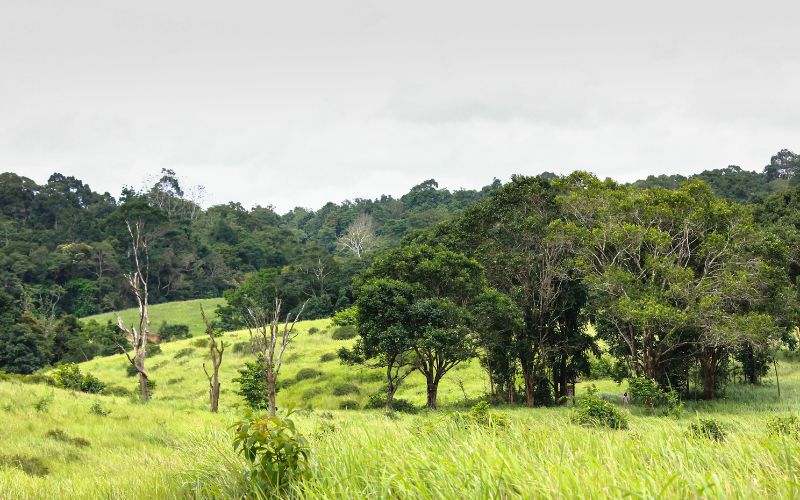
Khao Yai’s open grasslands and thick jungle create a diverse ecosystem where wildlife can be spotted in its natural habitat.
Cool season (October to February)
Cool season is the most comfortable period for walking and scenic stops, especially if you want clear skies and drier paths. The park specifically says nights and higher areas can feel quite cold in this season, and in December and January temperatures can fall to below 10°C, so a light jacket actually makes sense for early mornings or evenings.
What you can expect in practice: trail surfaces are generally more stable than in the rainy season, viewpoints tend to have better visibility, and the overall pace feels easier if you are visiting with family or doing beginner friendly walks.
Hot season (March to May)
Hot season runs from March till May, and the park notes that while the weather is hot and humid in many places, Khao Yai’s tall mountains are cooler. This is the season where early starts matter most, because the park also reports its average maximum is around 26 to 27°C during May.
What you can expect in practice: plan your main outdoor time in the morning, keep afternoons flexible, and use shaded forest walks and waterfall stops to break up the heat.
Rainy season (June to September)
Rainy season runs from June until September, and this is when Khao Yai looks its greenest and waterfalls flow strongly, which the park highlights as a key reason people love visiting in this period. The trade off is simple: trails can be slippery, visibility can change fast, and you may need backup options if a trail or viewpoint is temporarily closed for safety.
What you can expect in practice: if your main goal is dramatic waterfalls and lush scenery, rainy season is the strongest match. If your main goal is easy hiking and stable viewpoints, cool season is usually the better fit.
Practical rule to choose your dates: pick the rainy season for the strongest waterfalls and the most vivid green landscapes, and pick the cool season for the easiest walking conditions and clearer skies. If you visit in hot season, simply plan earlier days and keep your afternoons lighter.
>>> If you want the timing and daily pacing handled for you, 13 Days Thailand Tour might be suitable.
Where Is Khao Yai National Park?
Khao Yai National Park is located in Nakhon Ratchasima province, northeast Thailand and is one of the country’s most visited national parks because it combines rainforest ecosystems, iconic waterfalls, and real wildlife watching in a protected area. It also sits within the UNESCO listed Dong Phayayen Khao Yai Forest Complex, which reflects the broader conservation value of this landscape.
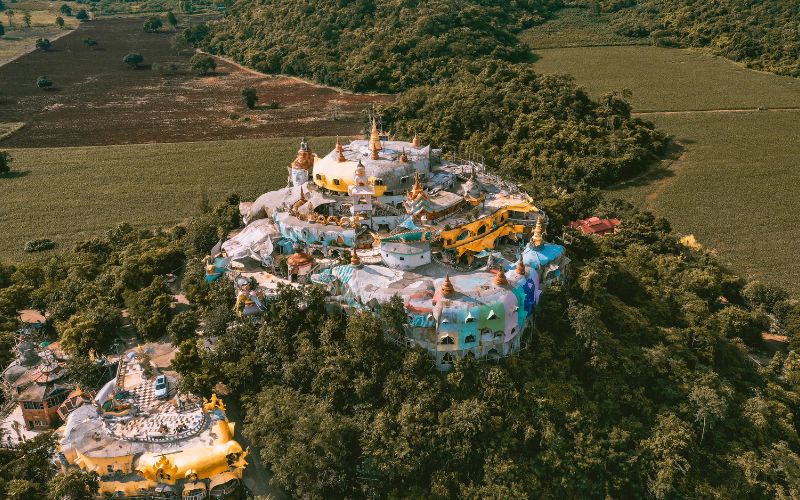
Wat Simalai Songtham offers panoramic countryside views and unique architecture near Khao Yai.
Where is it exactly
Khao Yai lies on the edge of Thailand’s central and northeastern regions, and most travelers approach it through the Pak Chong side.
For trip planning, these are the two key entry points you will see referenced most often by the park:
- Northern Entrance at Pak Chong
- Southern Entrance at Noen Hom
Why Khao Yai is worth visiting
Khao Yai works so well for first timers because it balances three things that usually do not come together in one place.
- Nature that feels genuinely wild: you get dense forest scenery and waterfall areas that feel like a real national park, not a landscaped garden.
- Activities that fit different energy levels: you can combine an easy walk near the Visitor Center with a waterfall stop and a viewpoint in one day, instead of committing to long hikes only.
- Access that stays practical for short trips: the park is widely approached via Pak Chong, and the official getting there guidance supports this route for many visitors coming in from Bangkok and nearby areas.
Who will enjoy it most
Khao Yai is a strong match if you are:
- A first time visitor who wants a real forest experience near Bangkok.
- A family that prefers easy nature time with clear logistics.
- A traveler who enjoys photography and wants waterfalls, forest light, and viewpoints in the same trip.
Top Things to Do in Khao Yai National Park
If it’s your first time in Khao Yai, the smartest approach is to focus on three essentials: one signature waterfall, one short nature trail near the Visitor Center, and one viewpoint or observation spot. This works because the park is large and the official trip idea is built around a realistic route that mixes waterfalls, trails, and observation areas in the same day.
Waterfalls You Shouldn’t Miss: Haew Suwat and Haew Narok
Haew Suwat and Haew Narok are the two waterfalls most travelers prioritise because they are repeatedly positioned as core highlights in the park’s own suggested program. In the official Trip Idea, Haew Narok Waterfall is listed as a key stop, and Haew Suwat is directly tied to an official nature trail route from the Visitor Center.
How they feel different, in plain terms
- Haew Narok Waterfall: best when you want a dramatic, big scale waterfall stop that feels like a main event.
- Haew Suwat Waterfall: easier to combine with central park stops because there is an official trail connection from the Visitor Center.
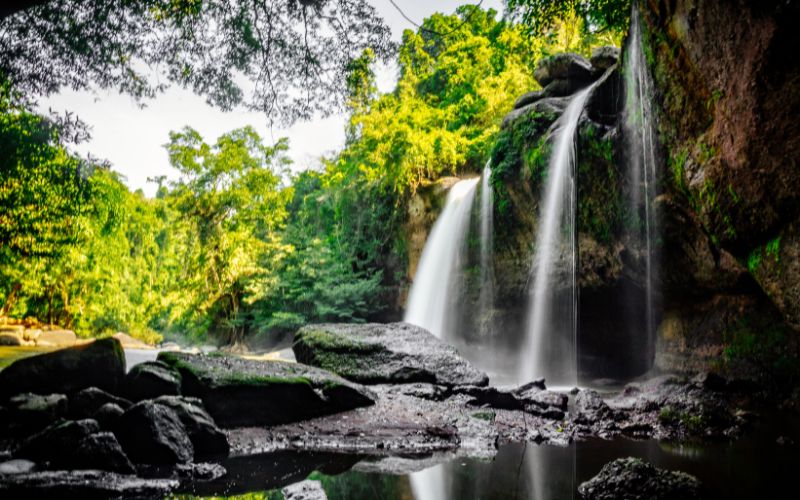
Waterfalls like Haew Suwat and Haew Narok are among the most impressive natural highlights inside Khao Yai National Park.
Safety basics that matter at waterfalls: waterfall paths can get slippery, especially after rain, so the safest plan is to stay on marked routes, take your time on steps, and follow any on site warnings. The park also advises visitors to check weather and trail conditions before trekking, which is especially relevant around waterfall routes.
Easy Nature Trails Near the Visitor Center (Good for Beginners)
The easiest way to experience Khao Yai without overcommitting is to walk one of the official nature trails around the Visitor Center. The park explains that you should contact the Visitor Center to register and request permission for your chosen trail, and it also notes that some trails cannot be trekked alone and guide services are available for safety.
Beginner friendly way to choose a trail
- Choose a trail that fits your time and energy for the day
- Avoid long trails if it has rained recently and the ground is still wet
- Check with the Visitor Center on the day for trail availability and safety guidance
What to do before you start
- Register and request permission at the Visitor Center
- Follow the specific instructions given for the trail you are allowed to trek
- Use a guide where required or where conditions make it the safer option
Wildlife Spotting: What You Can Realistically Expect
You can expect wildlife in Khao Yai, but you should not assume a guaranteed elephant sighting because wildlife movement changes daily. The Tourism Authority of Thailand highlights Khao Yai’s wildlife and notes species visitors may encounter, including elephants.
What improves your chances without chasing animals
- Spend time at official observation areas instead of rushing between many stops
- Plan at least one early morning or late afternoon nature window
- Keep your schedule flexible so you can stay longer when the forest is active
Safety rules that protect you and the animals
- Keep distance and do not feed wildlife
- Follow park instructions and signs
- Stay calm if animals appear near roads or stops and avoid creating a crowd
Viewpoints and Observation Spots: Pha Diao Dai, Nong Phak Chi, Sai Sorn Reservoir
The most practical viewpoint and observation stops for first timers are Pha Diao Dai, Nong Phak Chi Observation Tower, and Sai Sorn Reservoir because they appear directly in the park’s suggested Trip Idea route. Together, they give you wide forest views, a dedicated scanning point, and an easy scenic stop you can pair with other highlights.
How to use these spots well
- Use the viewpoint for wide landscape photos and a quick forest overview
- Use the observation tower for slower watching rather than quick snapshots
- Use the reservoir as a flexible stop, especially later in the day
>>> If you want all these highlights arranged in the right order with pacing that fits the park’s real distances, let’s book 8 Days Bangkok & Khao Yai Ultimate Experience.
How to Get to Khao Yai from Bangkok
The most convenient way to visit Khao Yai is by private car or a tour with transportation, because attractions inside the park are spread out and public transport within the park is very limited. In practice, this is why many travelers base themselves in Pak Chong and then enter the park early with flexible timing. The park also publishes clear “Getting here” guidance that routes most visitors through the Pak Chong area before reaching the park entrance and Visitor Center.
Getting to Khao Yai from Bangkok: realistic options
Option 1: Private car or hired driver
This is the simplest option if you want to reach the park early, control your stops, and avoid logistics stress. It is also the easiest way to combine waterfall stops, viewpoints, and observation spots without rushing.
Option 2: Day tour from Bangkok
A day tour works well if you prefer not to drive and you want the day structured for you. This is especially useful for first-time visitors who want a clean, efficient route and a set return time.
Option 3: Public transport to Pak Chong, then transfer to the park
This can work, but you should plan it as a two step journey: get to Pak Chong first, then arrange onward transport to the entrance or Visitor Center. The park’s official page includes public transport directions and the local bus option to the park area, which helps with the first part, but it does not solve the bigger challenge of moving between sights once you are inside.
Stay Inside the Park or Stay at Pak Chong?
The best place to stay depends on your priority is stay near Pak Chong and the Khao Yai area for convenience and food options, or stay inside or right next to the park if you want the earliest starts and a stronger “forest” feeling. In real life, most first time visitors choose Pak Chong or the Khao Yai area because it keeps logistics simple, then they enter the park early for the highlights.
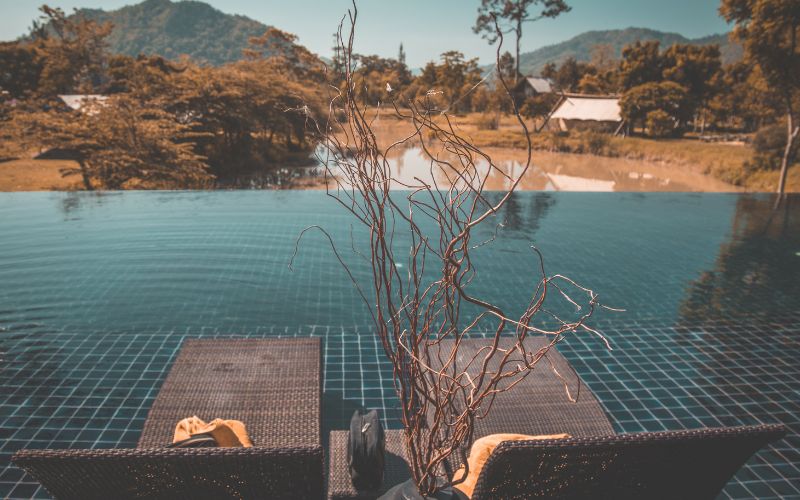
Staying inside Khao Yai allows you to wake up surrounded by forest, with easy access to early morning wildlife experiences.
- Time and flexibility at the park gate: staying closer to the park helps you start earlier and use the cooler morning hours for trails or wildlife observation. Staying in Pak Chong or the Khao Yai area still works well, but you need to plan your departure time so you do not waste the first part of the day on the road.
- Food and evening convenience: Pak Chong and the Khao Yai area generally give you more choice for dinner, cafés, and supplies, which matters if you are doing a two day or three day trip. Inside park areas can feel quieter and more limited after dark, so it is better for travelers who are happy with a simple evening and an early night.
- Nature immersion and atmosphere: if you want to hear the forest and feel far from the city, staying as close to the park as possible usually delivers that mood better. If your priority is comfort, variety, and flexible dining, Pak Chong and the Khao Yai area usually feel easier.
- Budget and value: outside the park you typically have a wider range of price options, which is useful for families or groups. Staying closer to the park can be great value when it helps you save time and get more nature hours, especially if you are planning sunrise or early trail time.
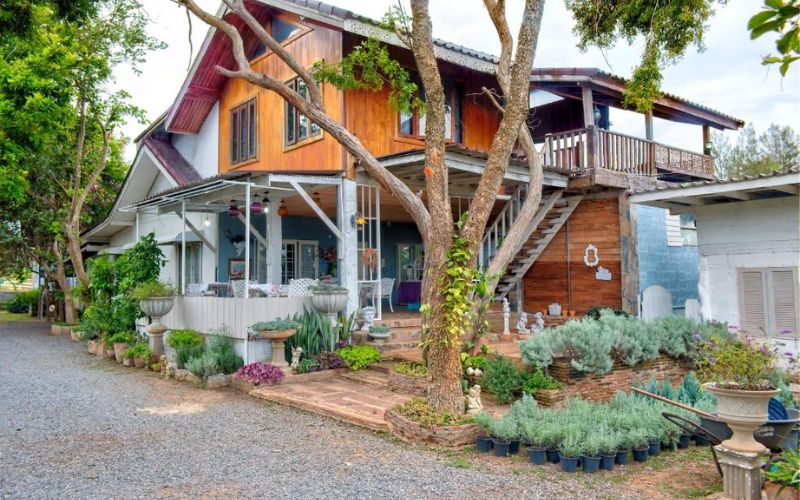
Pak Chong offers cozy guesthouses and boutique stays, making it a convenient base for visiting Khao Yai National Park.
Which base fits your trip length
- If you have 1 day: base in Pak Chong or the Khao Yai area for an easy night before, then enter the park early.
- If you have 2 days: Pak Chong or the Khao Yai area is usually the most practical choice because you get comfort at night and still have two mornings for the park.
- If you have 3 days: consider one or two nights closer to the park if your main goal is slower pacing, early wildlife hours, and more time on trails without feeling rushed.
Safety, Rules, and Responsible Travel
Khao Yai is real wilderness, so safety matters more than your checklist: follow park staff guidance, stay on marked routes, and treat wildlife with distance and respect. The park publishes official visitor safety and regulation guidance, and it also lists 24 hour emergency numbers and Visitor Center contact details you should save before you enter.
1. Park hours and why they matter
The park lists opening hours as 06.00 to 18.00, so your plan should include buffer time to exit without rushing. When you rush the last hour, you are more likely to make risky decisions on wet steps, dark roads, or near wildlife.
2. Trail safety: what the park expects you to do
Before you start any nature trail, you should follow the park’s hiking rules and confirm conditions on the day, because trail access can change with weather and safety requirements. In general, stay on the signed route, do not wander off trail for photos, and follow any closures or staff instructions immediately.
3. Wildlife safety: the rules are simple for a reason
If you encounter wildlife, keep your distance and never feed animals, because feeding changes behavior and creates safety risks for future visitors. If animals appear near the road, stay calm, avoid crowding the area, and do not try to force your way through.
If you want a clear elephant specific rule set, Thailand’s official national portal advises drivers to stop at least 30 meters away, avoid honking or making loud noises, and avoid using camera flash because it can startle elephants.
4. Check closures and official notices before you go
Trails and viewpoints can close temporarily for safety or nature recovery, so your best habit is checking the park’s official updates shortly before your visit and adjusting your route accordingly.
5. Save these official emergency contacts
The park lists these contacts on its official pages:
- Visitor Center phone 086 092 6529
- Emergency call 24 hours HQ 086 092 6527
These numbers are worth saving, especially if you plan to hike or stay inside the park are
Costs and Tips to Visit Khao Yai
The core costs for visiting Khao Yai National Park are the entrance fee and your transport, while tours or a private driver are optional upgrades that mainly buy you convenience and time. The park’s official website and Thailand’s Tourism Authority both publish the same baseline visitor info for opening hours and foreign visitor entrance fees, which is the safest data to rely on when planning.
Cost table (prices can change)
| Cost item | Typical cost | What it includes | Notes for planning |
| Park entrance fee (foreigner adult) | 400 THB (~$13) | Entry ticket | Fee is published by the park and TAT |
| Park entrance fee (foreigner child) | 200 THB (~$7) | Entry ticket | Fee is published by the park and TAT |
| Park opening hours | 06.00 to 18.00 | Gate hours | Shape your day around early entry and a relaxed exit |
| Transport Bangkok to Khao Yai | Varies | Getting to the park base | Cost depends on private car, hired driver, or tour |
| Transport inside the park | Varies | Moving between major stops | Distances are large, so plan vehicle logistics first |
Note: even official fees and rules can be updated, so please contact to us before planning your trip.
Planning tips that save money without cutting the experience
- Share transport if you can: if you are traveling as a couple, family, or small group, the biggest cost lever is usually transport. Sharing a vehicle or choosing a small group tour often improves value more than trying to squeeze in extra stops.
- Keep the route tight, not ambitious: a compact route reduces fuel, driver hours, and stress. It also increases your real time on trails, at waterfalls, and at observation points.
- Start early, because time is money here: since the park gate hours are 06.00 to 18.00, an early start gives you more nature time and less need to rush or add costly last minute fixes.
Khao Yai is best when it feels like a real escape, not a checklist, so the simplest way to enjoy it is to pick fewer highlights and give yourself time to slow down. When you enter early, follow trail rules, and keep one flexible block for weather or closures, the park becomes calmer and more rewarding, even on a short trip. Keep your plan anchored to the official hours and updates so you are never forced to rush at the end of the day. If you want a version of this itinerary tailored to your exact days and travel style, contact us now!
Read more: