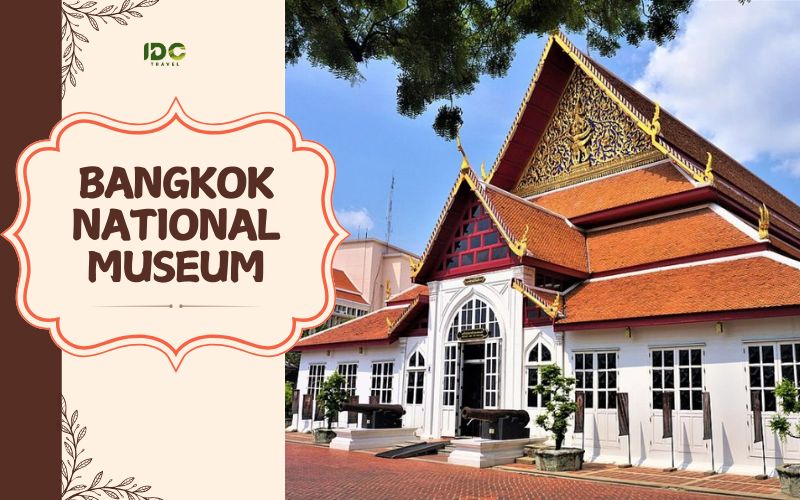
If you’re spending time in Bangkok and want to understand the country you’re traveling through, the Bangkok National Museum is worth a morning of your trip. It holds the largest collection of Thai art and historical artifacts in the country, from royal regalia to centuries-old Buddha images, and it covers a sweep of history that most other museums in Bangkok simply don’t attempt.
This guide covers everything you need before you go: what’s inside, how to get there, how much it costs, and how to get the most out of your visit.
What Is the Bangkok National Museum?
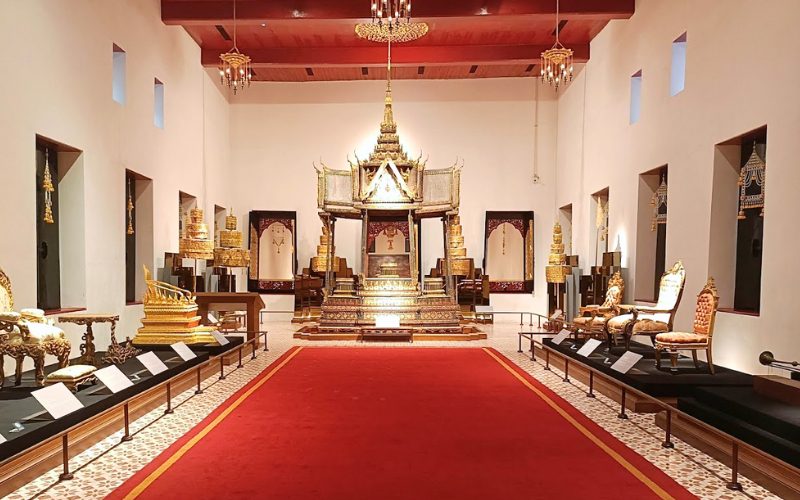
Bangkok National Museum
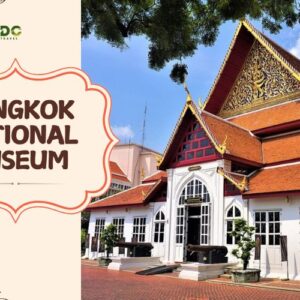
The Bangkok National Museum (officially the Thai National Museum Bangkok) sits in the Phra Nakhon district, just north of the Grand Palace on Na Phra That Road. It was founded in 1874 by King Rama V, originally as a personal museum within the palace grounds. In 1926 the collection moved to Wang Na, a former palace that now forms the main museum complex.
The compound covers about 10 hectares and contains multiple buildings, each dedicated to different periods and themes in Thai history. The collection runs from prehistoric tools to the artworks of the Rattanakosin era. In terms of scope and depth, it has no real competition among Bangkok museums in Thailand.
Where Is Bangkok National Museum?
The museum is located at 4 Na Phra That Road, Phra Nakhon, Bangkok 10200. It sits in the oldest part of the city, on the western edge of Sanam Luang, the large ceremonial ground directly north of the Grand Palace.
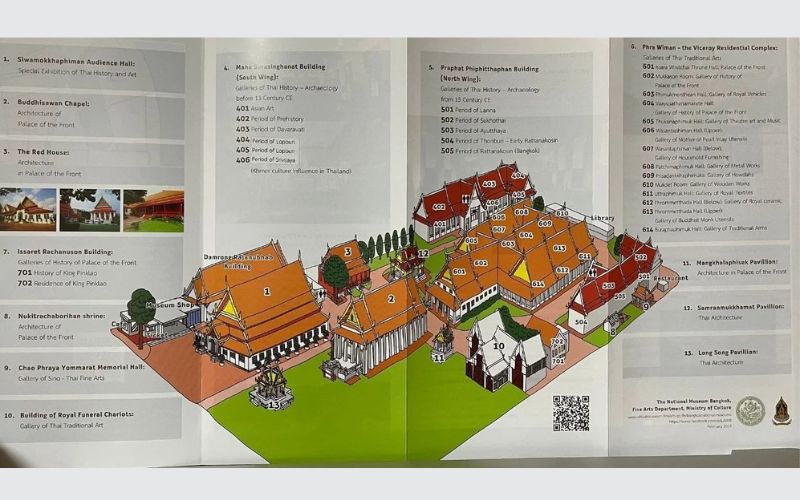
Bangkok National Museum Map
The surrounding area is Bangkok’s most historically concentrated. Wat Phra Kaew, Wat Pho, the Chao Phraya riverfront, and the Bangkok National Gallery are all within easy walking distance. If you’re arriving by boat, Maharaj Pier (N9) on the Chao Phraya Express Boat route is the closest landing point, about a 15-minute walk away. Taxis and tuk-tuks can drop you directly at the main entrance on Na Phra That Road.
There is no BTS Skytrain or MRT subway station nearby, so most visitors arrive by river, road, or on foot from the Grand Palace complex.
Practical Visitor Information to Visit Bangkok National Museum
The Bangkok National Museum’s Opening Hours and Admission
The Bangkok National Museum is open Wednesday through Sunday, 9:00 AM to 4:00 PM. It is closed on Mondays, Tuesdays, and public holidays.
Admission fees:
- Foreign adults: 200 THB (~$6.25)
- Thai nationals: 30 THB (~$0.94)
- Children under 12 (with ID): free
The 200 THB (~$6.25) entry fee is among the more reasonable you’ll pay for a full-day cultural site in Bangkok. For comparison, many private galleries in the city charge two to three times that.
How to Get To the Bangkok National Museum
The museum is in the old city area, about a 10-minute walk from Sanam Luang. There is no BTS Skytrain station close by, so your options are:
- Chao Phraya Express Boat: disembark at Maharaj Pier (N9) and walk north about 15 minutes along the river road.
- Taxi or tuk-tuk: straightforward from anywhere in central Bangkok; expect 80 to 150 THB (~$2.50 to $4.70) from the Sukhumvit area depending on traffic.
- Public bus: buses 3, 9, 30, and 53 pass nearby, though traffic around the Grand Palace area can be slow during peak hours.
If you’re combining the museum with the Grand Palace or Wat Pho on the same day, the proximity makes the logistics easy. Most visitors do exactly that.
Guided Tours
The National Museum Volunteers offer free guided tours in English, French, German and Japanese every Wednesday and Thursday morning, starting at 9:30 AM. These tours run for about two hours and focus on the major collections. The volunteers are retired professionals and academics, and the commentary goes considerably deeper than what the wall labels provide. If your visit falls on one of those days, joining a tour is worth planning around.
>>> Join us and you just need to enjoy a worry-free experience to Thailand!
What You’ll Find Inside the Bangkok National Museum
The Bangkok National Museum is not a single building but a compound of more than a dozen structures spread across the former Wang Na palace grounds. Each major building covers a different period, material type, or theme. Walking through the galleries in sequence covers roughly 5,000 years of Thai and Southeast Asian history. What follows is a closer look at what each section actually contains.
1. The Main Exhibition Buildings
The permanent history galleries occupy several interconnected buildings organized by historical period. The sequence runs from the prehistoric era through to the early Bangkok period, and the quality of the objects improves significantly as you move into the later rooms.
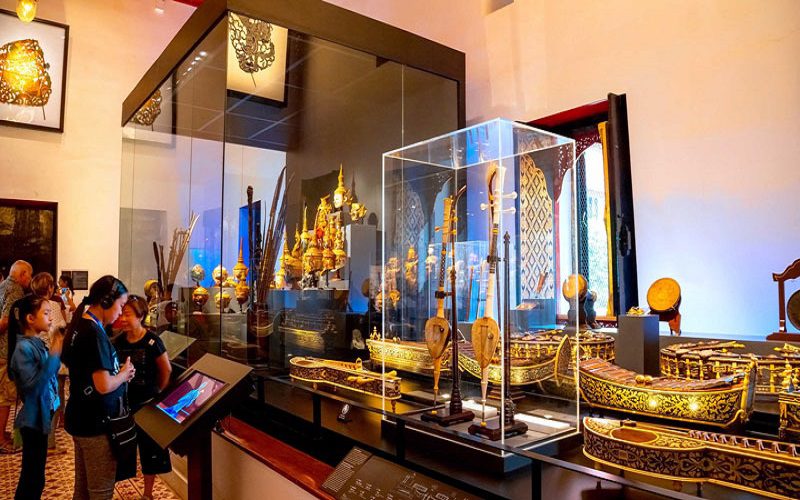
The National Museum of Bangkok
The prehistoric and early history section opens with stone tools, bronze weapons, and pottery shards recovered from sites across mainland Southeast Asia. Most visitors walk through this section quickly, which is fair enough, though the bronze drums from the Dong Son culture (roughly 700 BCE to 200 CE) are worth pausing at. These were traded across an enormous area and show connections between early Thai settlements and cultures as far away as southern China and Indonesia.
The Dvaravati period galleries (roughly 6th to 11th centuries CE) are where the collection starts to become genuinely impressive. The Dvaravati were a Mon Buddhist culture that occupied what is now central Thailand, and their stone sculpture is distinctive: flatter faces, heavier figures, and a particular approach to the Buddha’s robe folds that you don’t see in later Thai styles. The Dharmachakra (Wheel of the Law) carvings here are among the finest surviving examples, originally placed atop tall poles at temple sites.
The Khmer and Lopburi art rooms document the period when Khmer cultural and political influence extended into central Thailand, roughly between the 9th and 13th centuries. The sandstone sculptures here, many of Hindu deities, are sometimes as good as pieces you’d see in major Cambodian collections. A few were recovered from the same temple circuits that fed Angkor. If you plan to visit Cambodia on the same trip, looking at these pieces first gives useful context.
The Sukhothai and Ayutthaya galleries are likely where you’ll spend the most time. Sukhothai (13th to 15th centuries) produced a distinctively graceful style of Buddha image, with flame-shaped finials, arched eyebrows, and a particular elongation of the fingers that became the template for Thai Buddhist art for centuries afterward. The Ayutthaya kingdom (14th to 18th centuries) added influences from Khmer court culture, resulting in more elaborate crowns, bejeweled figures, and increasingly complex iconography. The weapons, royal furniture, and lacquerware from this period are also here and show a court culture of considerable material sophistication before Ayutthaya’s destruction by the Burmese in 1767.
The Rattanakosin galleries (Bangkok era, from 1782 to the early 20th century) cover the reigns of Rama I through Rama VI and are probably the most accessible section for visitors without a background in Thai history. The objects are more recent and the context easier to follow: royal portraits, ceremonial regalia, early photographs, and European-influenced decorative arts from the period when Thailand was modernizing while carefully maintaining its independence from colonial powers. The contrast between the elaborate traditional regalia and the Western-style furniture and formal dress in this section tells a story on its own.
2. Buddhaisawan Chapel
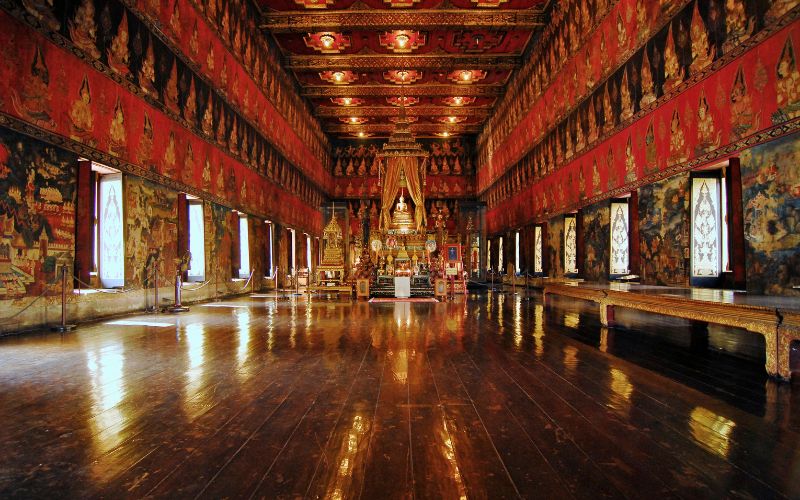
Buddhaisawan Chapel
This is the building most visitors remember. Built in 1795, it houses the Phra Phuttha Sihing, one of Thailand’s most revered Buddha images. The exact origins of this image are contested, with different traditions tracing it to Sri Lanka or northern Thailand, but it has been in Bangkok since Rama I brought it here from Chiang Mai after consolidating his rule.
The interior walls are covered in original murals depicting scenes from the life of the Buddha and the Jataka tales (stories of the Buddha’s previous lives). These murals have survived more or less intact for over 200 years, which is unusual for Thailand’s humid climate, and the painting quality is high enough that scholars still study them as primary documents of early Bangkok artistic style.
People come to pay respects throughout the day, and the atmosphere is noticeably quieter and more contemplative than the main galleries. Dress modestly before entering (shoulders and knees covered), and follow the posted photography rules.
3. The Royal Funeral Chariots Hall
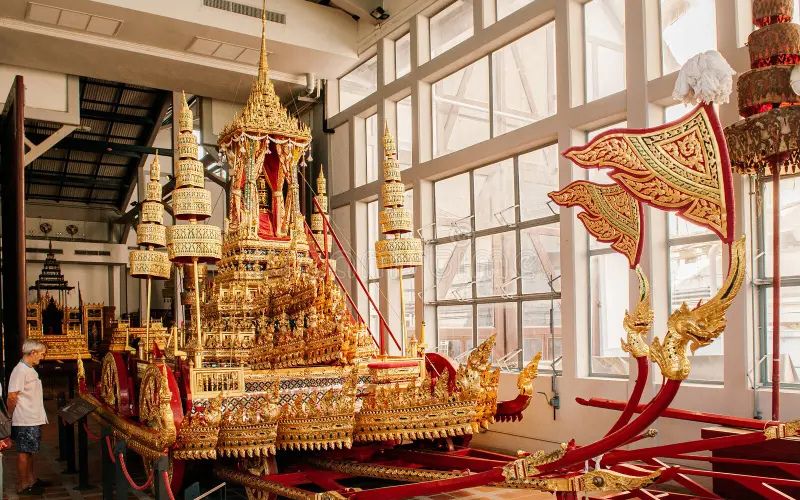
Golden Royal Carriage and Funeral Ornaments in Bangkok National Museum
A separate hall at the edge of the compound displays the royal funeral chariots used in Thai state cremation ceremonies. These are not vehicles in any ordinary sense. They are enormous gilded wooden structures, some over 11 meters tall and weighing several tons, elaborately carved with mythological figures and pulled by teams of up to 250 men during royal funerals.
The largest, the Vejayant Rajarot, was built in 1785 under Rama I and has been used in almost every royal funeral since. The most recent use was during the state cremation of King Bhumibol Adulyadej (Rama IX) in October 2017, when the procession was watched by hundreds of thousands of people along the route. If you watched that ceremony and wondered where the chariots go when they’re not in use, this is where they live. The hall itself is large, and the scale of the structures only becomes clear when you’re standing next to them.
4. The Red House (Tamnak Daeng)
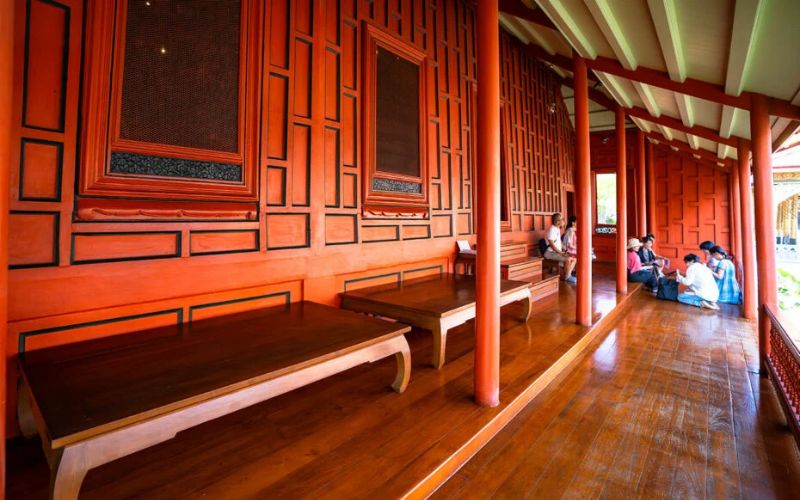
The traditional Thai architecture and tranquil veranda of the Red House at the Bangkok National Museum.
The Tamnak Daeng is a traditional Thai teak house relocated here from the Grand Palace grounds in the 19th century. It was originally built for Princess Sri Sudarak, a consort of King Rama I, and predates the museum itself. The structure is built in the traditional central Thai residential style, elevated on posts, with steeply pitched roofs and intricately carved wooden screens and gables.
Inside, it has been preserved with period furniture, textiles, and household objects that give a realistic picture of elite domestic life in early Bangkok. It’s easy to walk past if you don’t know it’s there, tucked behind larger buildings toward the rear of the compound. Most visitors who find it say it’s one of the more atmospheric places in the entire complex.
5. The Decorative Arts and Ethnology Galleries
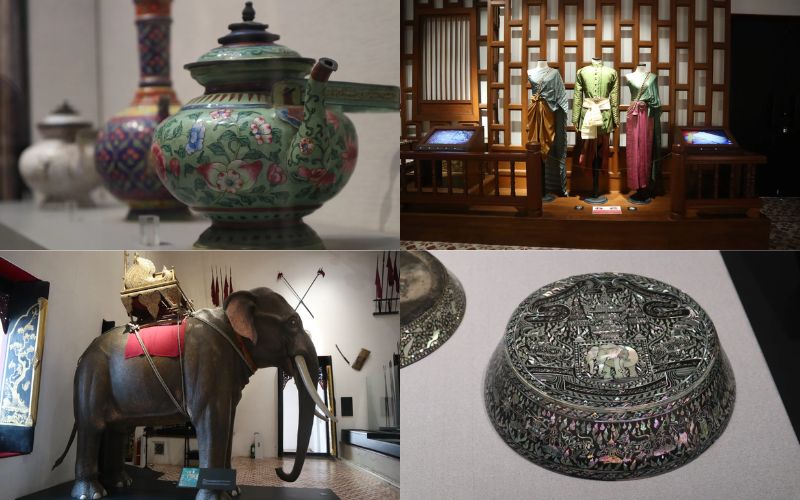
Exquisite traditional Thai crafts and historical artifacts on display in the Decorative Arts and Ethnology Galleries.
Two additional buildings hold collections that don’t fit neatly into the chronological sequence. The decorative arts gallery covers Thai craftsmanship in lacquerware, mother-of-pearl inlay, nielloware (silver with black engraved designs), and carved ivory. The ethnology gallery documents the material culture of Thailand’s ethnic minority groups, including the hill tribes of the north and the Muslim communities of the south, with textiles, tools, musical instruments, and ceremonial objects.
These galleries are less visited than the main buildings, partly because they lack the dramatic centerpieces of the Buddhaisawan Chapel or the chariot hall. That makes them worth visiting. You’ll have the rooms largely to yourself, and the craftsmanship on display, particularly in the lacquerware and the northern Thai textile collection, is exceptional.
Helpful Tips for Making the Most of Your Thailand Travel
The museum is large enough that trying to see everything in one go leaves you tired and underinformed. A few things that help:
- Arrive early: By midday the Grand Palace area fills up significantly, and parking near the museum gets difficult. Arriving at 9:00 AM when it opens means you have the galleries mostly to yourself for the first hour.
- Prioritize the Buddhaisawan Chapel and the Ayutthaya galleries if your time is short. These two sections have the pieces that most visitors find most compelling.
- Bring water and wear comfortable shoes: The complex involves a lot of walking across outdoor courtyards in what can be significant heat. There’s a small cafe on site, but the selection is limited.
- Photography is permitted in most areas, but flash photography is restricted near fragile textiles and murals. Inside the Buddhaisawan Chapel, read the posted rules before taking out your camera.
- Allow at least 2.5 to 3 hours for a thorough visit: Visitors who want the highlights only can get through the essentials in about 90 minutes.
Combining the Museum with Other Bangkok Attractions
The Bangkok National Museum sits in the city’s cultural core. Within a short walk or a brief ride, you can reach:
- Wat Phra Kaew and the Grand Palace: the most visited site in Thailand, about 10 minutes on foot
- Wat Pho: home of the famous Reclining Buddha, roughly 15 minutes on foot through the palace district
- The Bangkok National Gallery: located immediately adjacent to the museum grounds, focusing on Thai fine art from the 19th century to the present
Spending a full day in this part of Bangkok, moving between these sites, is one of the better ways to understand how religious, royal, and artistic life in Thailand developed together over several centuries. Most organized Bangkok tours include at least one stop in this district.
Conclusion: Visiting Bangkok National Museum
| Detail | Information |
| Official name | Thai National Museum Bangkok (Phiphitthaphanthasathan Haeng Chat Phra Nakhon, in Thai: พิพิธภัณฑสถานแห่งชาติ พระนคร) |
| Address | 4 Na Phra That Road, Phra Nakhon, Bangkok 10200 |
| Website | https://www.finearts.go.th/museumbangkok/ |
| Tel. | 02-224 1402 / 02-224 1333 |
| education.nmb@gmail.com | |
| Opening hours | Wednesday to Sunday, 9:00 AM to 4:00 PM |
| Closed | Monday, Tuesday, and public holidays |
| Entrance fee |
|
| Recommended visit duration | 2.5 to 3 hours |
| Nearest pier | Maharaj Pier (N9), Chao Phraya Express Boat |
| Guided tours | Free English tours every Wednesday and Thursday, 9:30 AM |
| Best combined with | Grand Palace, Wat Pho, Bangkok National Gallery |
| Best for | History, Buddhist art, and Southeast Asian archaeology |
| Multi-country pairing options | Thailand and Cambodia Tours, Vietnam and Thailand |
For travelers who want to go deeper into Thai history and culture than the typical Bangkok highlights allow, the National Museum works well as either an introduction or a capstone to a broader itinerary.
If you’re spending a week or more in Thailand, combining Bangkok’s cultural sites with Chiang Mai, Ayutthaya, or the southern coasts gives a much fuller picture of the country. Thailand tours are built for exactly that kind of itinerary, private, tailor-made, and paced to suit what you actually want to see rather than what fills a bus schedule.
For travelers combining Thailand with neighboring countries, Vietnam and Thailand tours or Thailand and Cambodia tours are worth considering, particularly if your interest runs toward the deeper historical and artistic connections between these cultures. The Khmer-period collection at the Bangkok National Museum, for example, makes a lot more sense if you’ve already stood at Angkor Wat.
Read more: