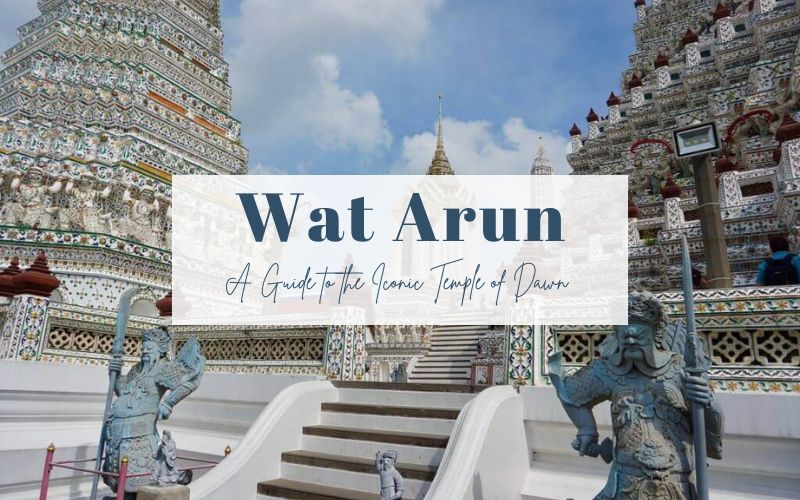
Few temples in Southeast Asia stop people in their tracks the way Wat Arun does. You can be riding a river ferry mid-conversation, glance left, and suddenly forget what you were saying. That tower, white porcelain catching the morning light, rising 82 meters above the Chao Phraya River, does something to people. It’s been doing it for centuries.
This guide covers everything you need to visit Wat Arun Temple with confidence: opening hours, entrance fees, how to get there by boat, the best viewing points, dress code, and how to fit it into a broader Bangkok itinerary.
What Is Wat Arun?
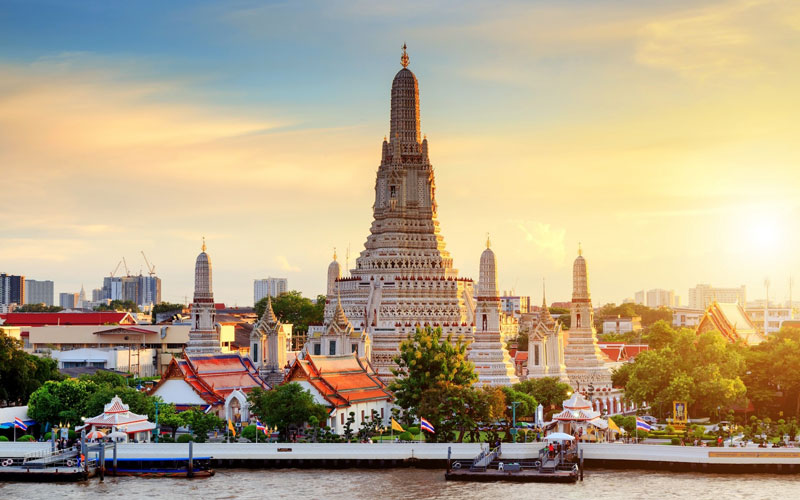
The charming Wat Arun
Wat Arun, formally known as Wat Arun Ratchawararam, translates roughly as the Temple of Dawn. The name comes from Aruna, the Hindu god of dawn, and the temple earns it every morning when the rising sun hits the porcelain-covered central tower from across the river.
The site itself dates to the Ayutthaya Kingdom (1351-1767), making it one of Bangkok’s oldest religious landmarks. King Taksin established the royal palace here in 1768, and the famous Emerald Buddha was kept at Wat Arun before being moved to Wat Phra Kaew in 1785. The towering central spire you see today was constructed and expanded under Kings Rama II and Rama III in the early 19th century, with the prang reaching its current form around 1851.
What makes the architecture unusual for Thailand is the strong Khmer influence. The central prang represents Mount Meru, the cosmic mountain at the center of the universe in both Buddhist and Hindu cosmology. Four smaller satellite prangs surround it, and the entire exterior is covered in fragments of Chinese porcelain and seashells, reportedly recycled from Chinese trading ships that used the river as ballast-dumping ground. Up close, you can see the detail in the ceramic tiles: flowers, mythological creatures, mosaic patterns. From across the river, it reads as a shimmering white spire. Both versions are worth your time.
When to Visit Wat Arun
November to February is the most comfortable time to visit. Temperatures sit between 25°C (77°F) and 30°C (86°F), humidity is lower, and the dry season makes outdoor sightseeing more pleasant. This is also peak tourist season in Bangkok, so expect more visitors at the temple.
March to May is hot. Bangkok in April can exceed 38°C (100°F), and the sun exposure on the open temple grounds is significant. Early morning visits become more important during this period.
May to October is the rainy season. Showers tend to be short and followed by sunshine, and the crowds thin out noticeably. Visiting during a light rain is actually a good experience; the porcelain on the prang takes on a different quality when wet.
If your Thailand trip extends beyond Bangkok, Thailand tour packages that include Bangkok as part of a wider itinerary typically place the capital at the beginning or end, which works well for visiting the riverside temples before heading north to Chiang Mai or south to the islands.
Where Does Wat Arun Take Place?
Wat Arun is on the west bank of the Chao Phraya River, in the Bangkok Yai district of Bangkok.
- Address: 158 Thanon Wang Doem, Wat Arun, Bangkok Yai, Bangkok 10600, Thailand.
It sits directly across the river from Tha Tien Pier, putting it within a short ferry ride of Wat Pho and the Grand Palace on the east bank. The temple is roughly 5 km from the Silom and Sathorn business districts, and about 25 km from Suvarnabhumi Airport (around 45 to 60 minutes by taxi, depending on traffic).
There is no dedicated parking at the temple. Most visitors arrive by river ferry, which is also the most practical option given the temple’s riverside position.
Wat Arun Entrance Fee and Opening Hours
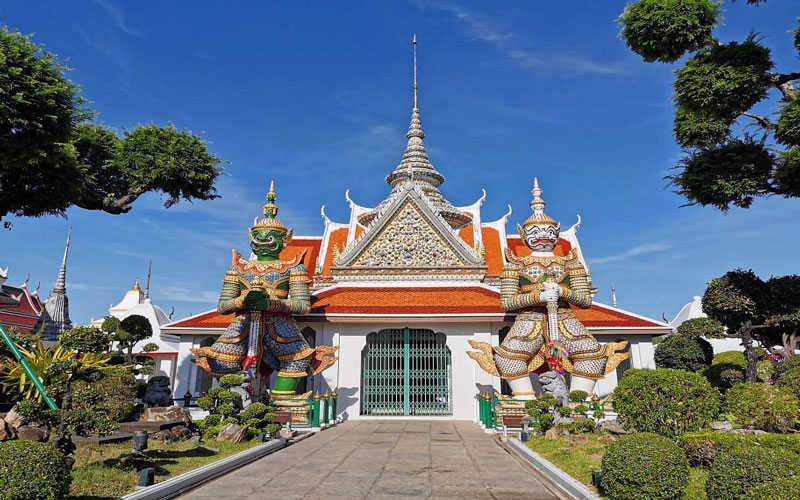
The entrance to the Ubosot
Wat Arun opening hours: 8:00 AM to 6:00 PM daily, with the last entrance at 5:30 PM.
Wat Arun entrance fee: 200 THB (~$5.50 USD) for foreign visitors. Free for small children. The temple grounds and outer areas are free to enter; the 200 THB (~$5.50 USD) fee covers access to the main prang and inner structures. Some visitors report receiving a complimentary bottle of water with entry.
There’s no need to book tickets in advance. Pay at the main entrance gate when you arrive.
Recommended visit duration: Allow one to two hours. An hour gets you around the main prang, the ordination hall, and the riverside promenade. Two hours gives you time to climb the steep steps of the central tower, explore the smaller shrines, and enjoy the views without rushing.
What to See Inside Wat Arun
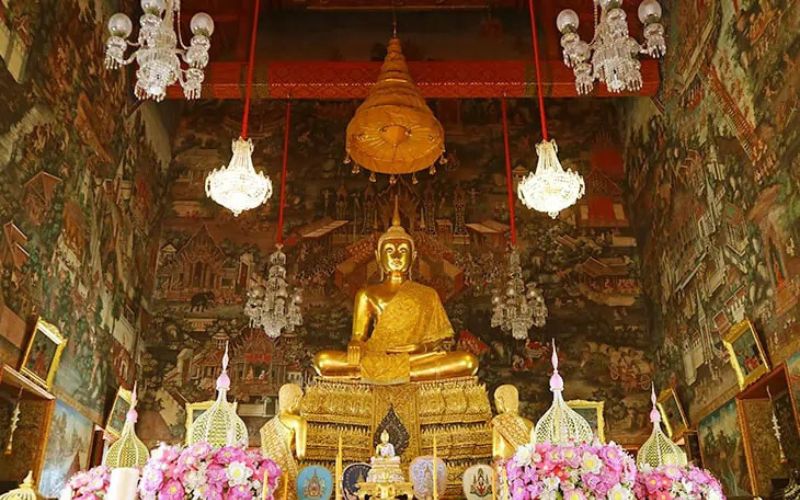
The serene golden Buddha statue and detailed wall murals inside the Wat Arun Ordination Hall.
The central prang gets most of the attention, but the rest of the complex is worth exploring:
- The Ordination Hall (Ubosot): Houses a Niramitr Buddha image designed by King Rama II, flanked by two large guardian figures at the entrance. The interior murals depict scenes from the life of the Buddha and were added during the reign of Rama III. The detail is exceptional and rarely feels crowded.
- The smaller satellite prangs: Four corner towers surround the central prang, each decorated with ceramic and figures from Hindu and Buddhist mythology. These get overlooked by visitors moving straight toward the central tower.
- The riverside terrace: The flat promenade along the river running in front of the temple is one of the calmer spots in the complex and frames the opposite bank, with Wat Pho, the Grand Palace rooftops, and a stretch of the Chao Phraya in a way that puts Bangkok’s riverside history in context.
Best Wat Arun Viewing Points
Here’s the honest answer most guides skip: the best photos of Wat Arun are taken from across the river, not from inside the temple.
The temple sits on the west bank of the Chao Phraya. If you want a full, unobstructed view of the prang against the sky, especially at golden hour, head to the east bank. A few good options:
- Tha Tien waterfront (the riverside promenade near Pier N8): free, accessible, and lines up nicely with the temple directly across.
- Rooftop bars along Maharat Road, including the terrace at Sala Arun hotel, which has become popular specifically for sunset shots of the temple.
- From a river ferry or long-tail boat midway across: you get the full tower in frame with the river in the foreground.
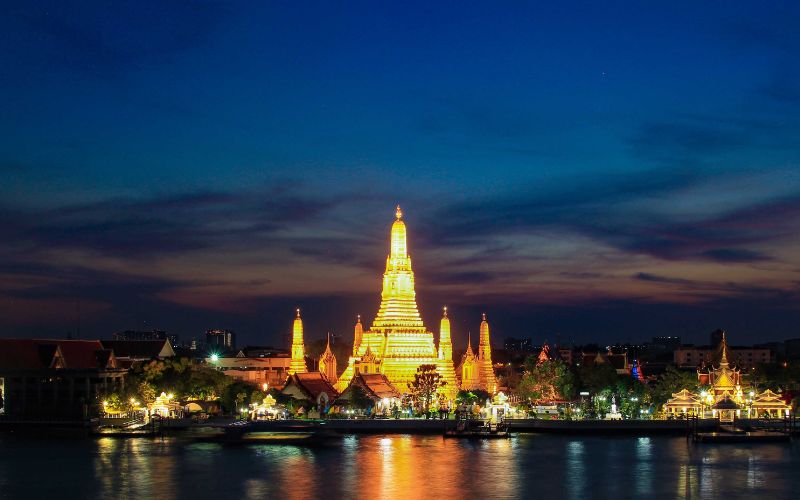
The stunning golden glow of Wat Arun at night.
For photography inside the temple:
- The archway entrance with the two large guardian statues makes a strong framing shot.
- The corridors lined with seated Buddha images are quieter and less photographed than the main prang.
- Looking back from the top terrace of the central tower gives you a wide view of the Chao Phraya, the Grand Palace complex, and Wat Pho on the opposite bank.
Best time of day: Early morning (8:00-9:00 AM) for softer light and fewer crowds. Late afternoon from around 4:30-5:30 PM for warm golden light on the porcelain. If you want the famous illuminated view after sunset, cross back to the east bank around 7:00 PM when the temple lights up.
Climbing the Central Prang
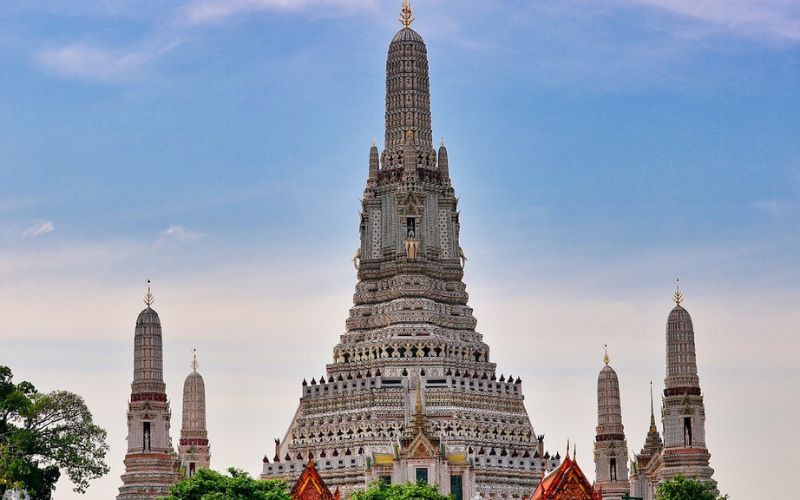
Phra Prang in Wat Arun
This is where Wat Arun earns its reputation as a physically demanding temple. The steps on the central tower are genuinely steep, and some sections approach a near-vertical angle. There are rope handrails on the way down, which you will use. This isn’t a warning to put you off; it’s worth doing. The view from the upper terrace of the Chao Phraya winding through Bangkok is one of the better vantage points in the city.
From our experience, we would like to give you some advices might be useful to you:
- Wear flat, closed-toe shoes or sandals with grip. High heels, flip flops, and smooth-soled dress shoes will cause problems on the descent.
- The climb takes around 10-15 minutes up and down at a comfortable pace.
- The terrace at the top is narrow, so if you arrive during peak hours (late morning), there may be a wait.
How to Get to Wat Arun by Boat
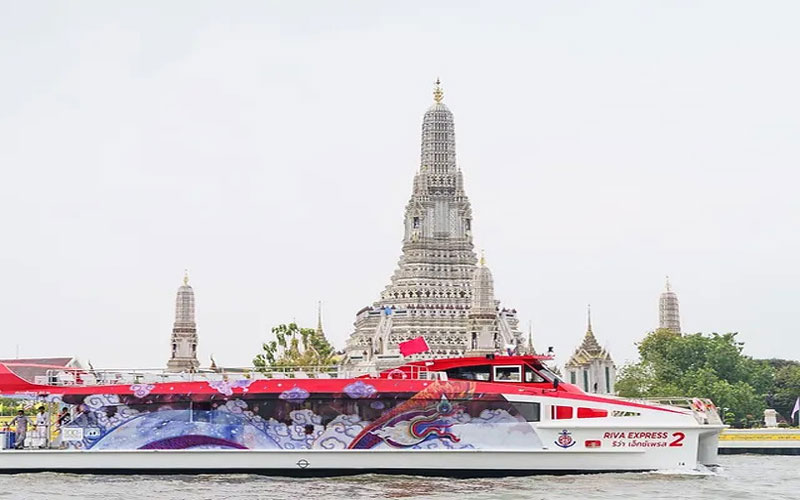
Chao Phraya Express Boat
Getting to Wat Arun by boat is not just practical, it’s genuinely the best way to arrive, because the temple looks its most impressive from the river.
1. From Sathorn Pier (BTS Saphan Taksin): Take the Chao Phraya Express Boat to Tha Tien Pier (Pier N8). From there, a cross-river ferry runs every few minutes to Wat Arun Pier directly opposite, costing just 3-5 THB (~$0.08-0.14 USD). The whole journey takes about 30-40 minutes from the BTS station.
2. From Pier N13 (Banglamphu/Tha Phra Arthit): A river express ticket to Tha Tien Pier costs around 15 THB (~$0.41 USD), followed by the same cross-river ferry.
Practical notes for the boat journey:
- The cross-river ferry runs frequently throughout the day.
- Tha Tien Pier is also the departure point for Wat Pho, making it easy to visit both temples in sequence.
- Long-tail boat charters are available if you want a private river tour, though the regular express boat is cheaper and perfectly adequate.
The ferry crossing itself takes about two minutes, but don’t rush it. That two-minute view of Wat Arun growing larger as you approach the west bank is something most visitors remember clearly.
Combining Wat Arun with Nearby Temples
Wat Arun sits directly across the river from two of Bangkok’s other major temples, which makes combining all three into a single day very manageable.
From Tha Tien Pier (where you catch the ferry to Wat Arun), you are a short walk from:
- Wat Pho (Temple of the Reclining Buddha): home to a 46-meter gold-covered reclining Buddha, and one of Bangkok’s oldest temple complexes
- The Grand Palace and Wat Phra Kaew: the former royal residence and the Temple of the Emerald Buddha, about 10 minutes’ walk north from Tha Tien
A practical sequence for a full day: arrive at Wat Pho when it opens at 8:00 AM, cross to Wat Arun mid-morning when the light is good, then return to the Grand Palace in the afternoon. The boat ride back and forth between the banks adds a pleasant river element to what would otherwise be a walking day.
If you prefer having a guide who knows the history behind what you’re looking at, a Bangkok tour that covers the riverside temple cluster will give you context that’s difficult to piece together independently. These tours typically run the Chao Phraya by long-tail boat and include entry to Wat Pho and the Grand Palace in addition to Wat Arun.
>>> Want to explore Bangkok’s temple circuit with a local expert? Browse our Bangkok and Thailand tours or contact the IDC Travel team to build a custom itinerary around your travel dates.
Dress Code and Practical Tips
Wat Arun is an active Buddhist temple, not just a tourist attraction.
Modest dress is required:
- Shoulders must be covered.
- Knees must be covered.
- If you arrive underdressed, sarongs are available to rent at the entrance for 20 THB (~$0.55 USD), with a 100 THB (~$2.75 USD) refundable deposit.
Other practical notes:
- Bring cash in Thai Baht for the entrance fee and the ferry; card payments are not available at the pier.
- The temple can get crowded from mid-morning onward; arriving at or just after 8:00 AM means noticeably smaller crowds.
- Shoes must be removed before entering the ordination hall.
- Photography is permitted throughout the temple grounds.
Conclusion: Wat Arun as Part of a Thailand Trip
| Detail | Information |
| Full name | Wat Arun Ratchawararam Ratchawaramahawihan (a.k.a. Temple of Dawn) |
| Address | 158 Thanon Wang Doem, Bangkok Yai, Bangkok 10600, Thailand |
| Opening hours | 8:00 AM to 6:00 PM daily (last entry 5:30 PM) |
| Entrance fee | 200 THB (~$5.50 USD) for foreigners; outer grounds free |
| Best time to visit | Early morning (8:00-9:00 AM) or late afternoon (4:30-5:30 PM) |
| Best season | November to February |
| How to get there | Chao Phraya Express Boat to Tha Tien Pier (N8), then cross-river ferry (3-5 THB / ~$0.08-0.14 USD) |
| Recommended duration | 1 to 2 hours |
| Dress code | Shoulders and knees covered; sarongs available at entrance for 20 THB (~$0.55 USD) |
| Nearby temples | Wat Pho (5 min walk), Grand Palace and Wat Phra Kaew (10 min walk) |
| Best viewing point | East bank of the Chao Phraya River, opposite the temple |
Bangkok is almost always a starting point for travel in Thailand, and the riverside temple district, covering Wat Arun, Wat Pho, and the Grand Palace, forms the historical core of the city that most itineraries include on day one or two.
For travelers combining Bangkok with other destinations, Vietnam and Thailand tours that route through Bangkok typically schedule the temple circuit on a dedicated day. Wat Arun features consistently in these itineraries alongside Wat Traimit (Temple of the Golden Buddha) and Wat Pho.
If you are planning a first trip to Thailand, the Bangkok temple circuit rewards at least half a day. Wat Arun alone justifies the cross-river ferry ride, but most people who come for the tower end up staying longer than expected.
Planning a trip to Thailand and want help putting it all together? The IDC Travel team specializes in customized Thailand itineraries built around your schedule, interests, and budget. Get in touch with us to start planning your trip.
>>> Refer to WAT ARUN THE TEMPLE OF DAWN BANGKOK.
Read more: