Every Bangkok first-timer gets the same advice: go to Chatuchak. And honestly, it’s good advice. The Chatuchak Weekend Market is one of those places that sounds like hype until you’re standing inside it, genuinely unsure which direction to walk first. Over 15,000 stalls. 35 acres. Weekends only. If you’re planning a trip to Bangkok, this market belongs on your itinerary but going in without a plan is how you leave with three coconut ice creams and nothing else.
This guide covers the practical stuff: when to go, how to get there, what to buy, what things cost, and how to navigate without losing three hours to the wrong section.
What Is the Chatuchak Weekend Market?
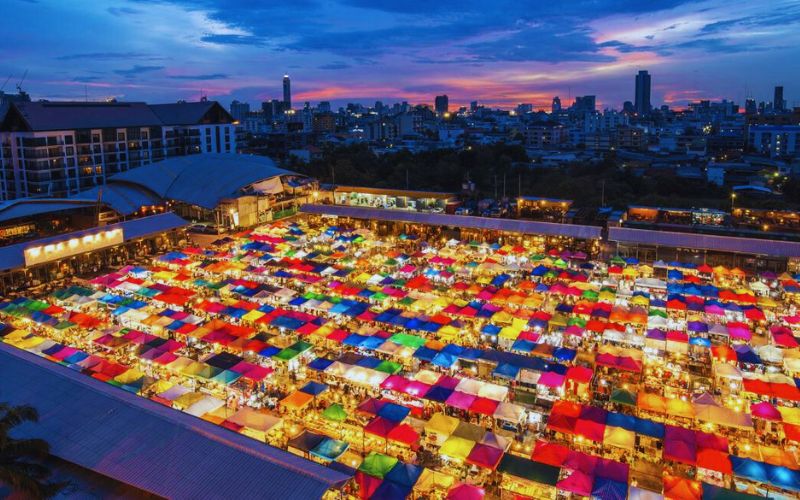
Panoramic view of Chatuchak Weekend Market
The Chatuchak market (locals and tuk-tuk drivers often call it “JJ Market”, short for “Jatujak”) is the largest weekend market in Thailand and one of the largest open-air markets in the world. It opened in its current location in northern Bangkok in 1942 as a way to support local vendors, and has grown steadily ever since.
Spanning over 35 acres with more than 15,000 stalls, the market is divided into 27 sections, each dedicated to specific categories of goods. On a busy weekend, it attracts over 200,000 visitors. That number is worth keeping in mind when you plan your visit. Two hundred thousand people in a market with narrow lanes means timing matters a lot.
>>> Planning to visit Bangkok as part of a longer trip? Our Thailand tours include Chatuchak alongside Bangkok’s temples and other city highlights, with English-speaking guides who know which sections are worth your time.
When Does the Chatuchak Weekend Market Take Place?
The market doesn’t follow a simple daily schedule, and showing up on the wrong day means a very different experience than expected.
The main Chatuchak Weekend Market (all 27 sections, clothing, antiques, food, art, everything) is open on Saturdays and Sundays only, from 9 AM to 6 PM. That’s when the full market runs.
Friday evenings have a smaller night market from 6 PM to midnight, which is quieter and cooler but covers fewer sections. Wednesday and Thursday, only the plant nursery section is open (7 AM to 6 PM), useful if you’re specifically after orchids or succulents, but not if you’re after souvenirs or clothes.
A few things worth knowing:
- Saturday mornings are generally slightly less crowded than Sundays, though the difference narrows by midday.
- By noon on any weekend, the market is packed and the heat becomes a real factor, midday temperatures regularly exceed 35°C (95°F).
- Many stalls start winding down after 5 PM, so arriving late in the afternoon means fewer vendors open.
- Some indoor sections and stalls in JJ Mall (the adjacent shopping complex) keep longer hours, but the outdoor market experience is strictly a weekend thing.
>>> If your Bangkok trip only covers weekdays, the market won’t be fully open. It’s worth factoring the weekend schedule into your Bangkok itinerary early not as an afterthought.
Where Does the Chatuchak Weekend Market Take Place?
The market is about 25-30 minutes from Sukhumvit or Siam, and around 20 minutes from Khao San Road. It sits in the Chatuchak district in northern Bangkok, adjacent to the large Chatuchak Park.
How to Get There
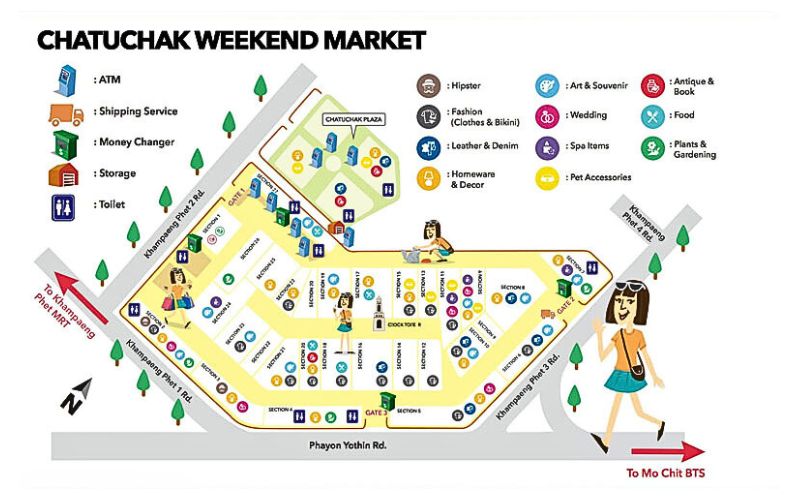
Chatuchak Weekend Market Map
Public transit is the fastest option, especially on weekend mornings when traffic around the market gets heavy. Two stations drop you directly at the entrances:
- BTS Skytrain (Mo Chit station, Exit 1): A 5-minute walk to the main entrance.
- MRT Subway (Chatuchak Park station, Exit 1): A 2-minute walk to Entrance 2.
- MRT Subway (Kamphaeng Phet station, Exit 2): Direct access to the plant and flower sections.
Taking a Grab car works, but expect delays during peak hours. GrabBike is faster and cheaper if you’re traveling light, the scooter cuts through traffic that would hold a car for 20 minutes. Bus routes 3, 77, 134, 136, and 138, among others, stop near the market, which is the cheapest option but slower.
Once you arrive, grab a free map from the information kiosk near Gate 2 before walking in. Take a photo of it on your phone. You will need it.
What to Buy: A Section-by-Section Guide
This is the part that trips most people up. The market has 27 numbered sections, and without knowing roughly where things are, you can spend an hour walking in circles and never find the clothing zone or stumble into the pet section when you were looking for antiques. Here’s a section-by-section breakdown of what’s actually where and what to look for.
Clothing and Fashion (Sections 2-6, 12-14, 19-21)
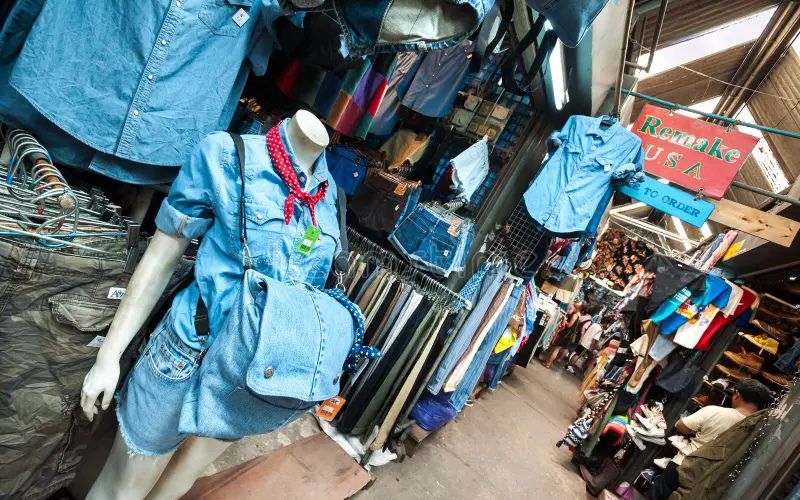
Vintage Clothing Section
This is the largest category in the market and where most visitors spend the most time. The sections stretch across a wide central area and carry everything from casual streetwear and vintage tees to traditional Thai garments, handmade silk scarves, embroidered bags, and bohemian-style dresses popular with travelers.
Prices here are genuinely low. A Thai silk scarf runs 150-400 THB (~$4.69-12.52) depending on quality. Basic printed tees start around 100-150 THB (~$3.13-4.69). Leather bags, handmade wallets, and woven accessories typically fall in the 200-600 THB (~$6.26-18.77) range, and that’s before bargaining. The clothing sections get crowded fast on Sunday afternoons, the narrow lanes between booths make it hard to move. Saturday morning before 11 AM is the best window for comfortable browsing and negotiation.
What to look for specifically: handmade rather than mass-produced items. The sections that run closer to the outer edges of the market tend to have more independent vendors and less generic tourist merchandise than the busy central lanes.
Antiques, Collectibles, and Art (Sections 1, 7-9, 25-26)
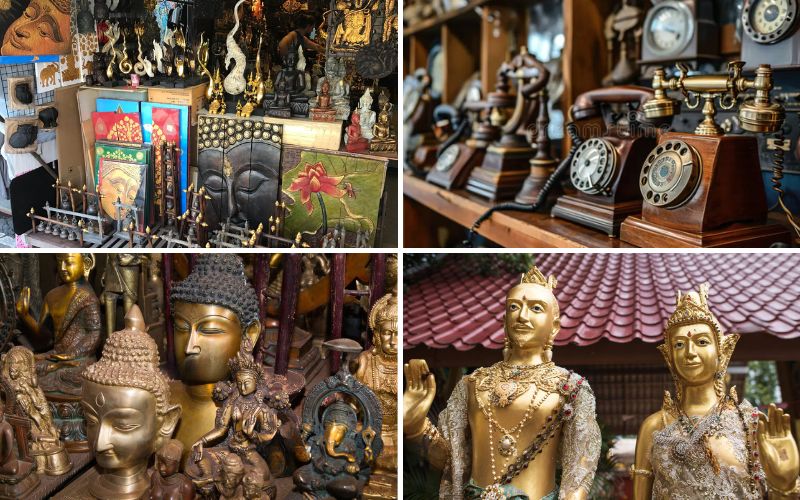
Antiques and Collectibles
Section 7 is the place for original art: paintings, prints, and contemporary Thai artwork sold by the artists themselves. It’s one of the quieter sections and worth the walk even if you’re not planning to buy. Sections 1, 25, and 26 carry antiques and collectibles: old coins, vintage ceramics, teak wood carvings, Buddha figurines, brass items, and retro decorative pieces.
The quality here varies more than in other sections. Some vendors carry genuine antiques; others sell reproductions. Spend time looking at the craftsmanship and construction before committing to anything expensive. A teak wood carving can range from 300 THB (~$9.39) for a small decorative piece to several thousand for larger works. These sections are negotiable, vendors in the antiques area tend to have more flexibility on price than clothing stalls.
One thing to watch: items labeled as antiques aren’t always what they’re claimed to be. If you’re buying something specifically for its age or authenticity, ask questions and trust your eye over the price tag.
Home Décor and Furniture (Sections 8-9)
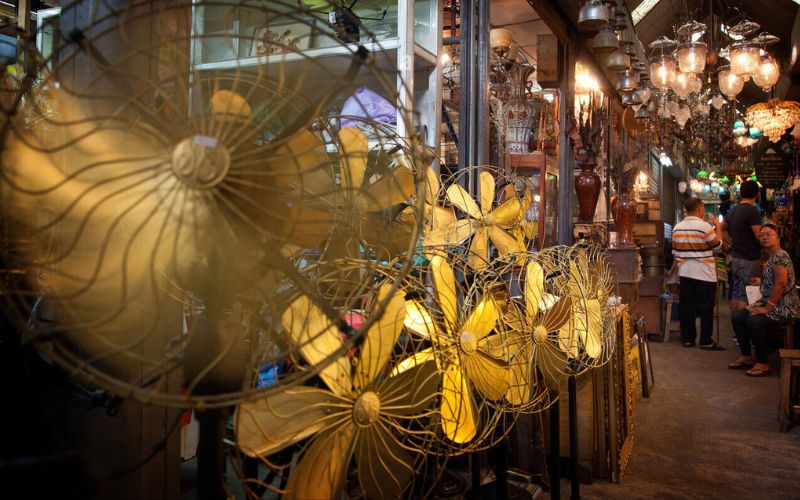
Home Decor Section
Overlapping with the antiques area, these sections carry handmade wooden furniture, rattan baskets, ceramic tableware, woven textiles, lanterns, and decorative items for the home. Not everything here is compact enough to take on a flight, but smaller items like hand-painted ceramics, lacquerware boxes, and decorative tiles travel well. Prices range from 100 THB (~$3.13) for small decorative pieces to several thousand for furniture.
If you’re buying anything large, the MIXT Chatuchak shopping complex next to the market has a FastShip service on the first floor for cargo shipping, useful if you overbuy.
Handicrafts and Souvenirs (Sections 10-11, 22-24)
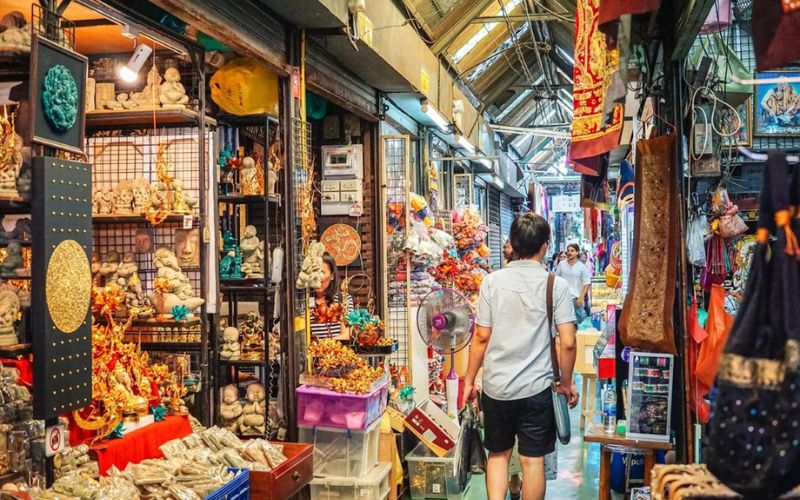
Art and Handicrafts Section
This is where you find most of what people mean when they say “Thai souvenirs”: hand-painted fans, silk pouches, wooden elephants, hill tribe embroidery, lacquerware, and gifts in the 50-300 THB (~$1.56-9.39) range. The handicraft sections also carry items made by ethnic minority artisans from northern Thailand: hill tribe textiles, silver jewelry, and beaded accessories that are harder to find elsewhere in Bangkok.
The quality varies by vendor. Look for stalls where artisans are actively working: weaving, painting, carving, rather than selling pre-packaged tourist items. Those vendors generally have better products and are more interesting to talk to.
Travelers doing broader Thailand travel that includes Chiang Mai will find similar hill tribe crafts there too, but Chatuchak’s handicraft section pulls stock from across the country into one place, convenient if Bangkok is your only stop.
Books, Music, and Vintage Media (Section 27)
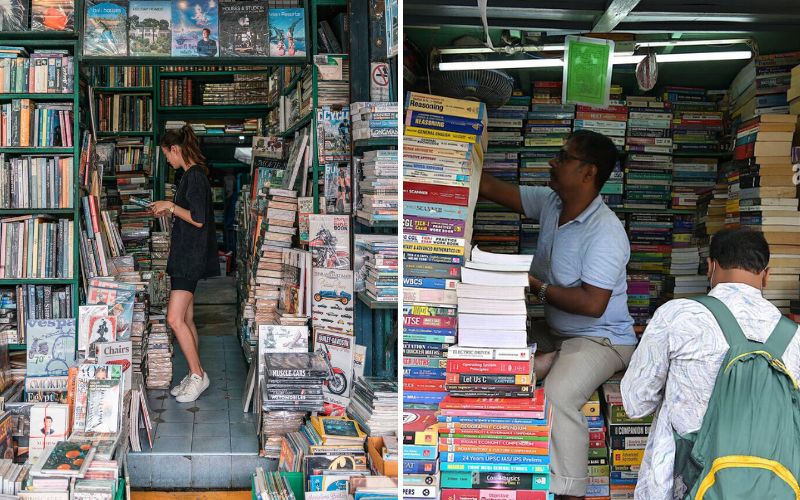
Local Books and Souvenirs
A small but dedicated section carries secondhand books, Thai music on CD and vinyl, vintage posters, and old magazines. Not everyone’s priority, but worth a browse if you’re a collector. Secondhand paperbacks run 50-150 THB (~$1.56-4.69); vinyl records start around 100-200 THB (~$3.13-6.26).
Plants and Garden (Sections 23-24)
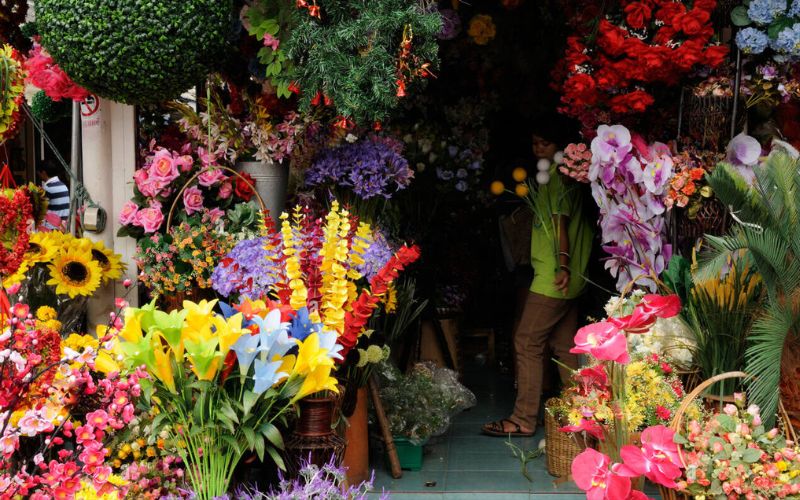
Plant and Gardening Section
The plant section is one of the more unexpected highlights of the market. Exotic orchids, tropical succulents, bonsai, and a wide range of potted plants fill this section, with vendors who clearly know their stock. Thai orchids here cost a fraction of what they’d cost at home, around 50-200 THB (~$1.56-6.26) per plant depending on variety and size.
Before buying, check your home country’s customs regulations on importing live plants. Most countries have restrictions on soil and live root material. Cut orchids in sealed packaging are generally easier to travel with than potted plants.
Street Food and Restaurants
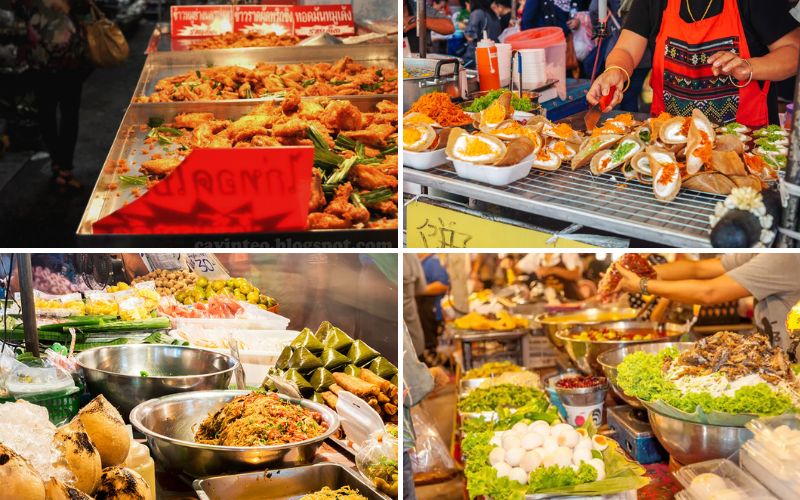
Thai Street Food
Food at the Chatuchak market is not an afterthought. It’s one of the main reasons to go. The market has a large dedicated food area as well as stalls and small restaurants scattered throughout every section.
The basics are everywhere:
- Grilled pork skewers (moo ping) for 10-15 THB (~$0.31-0.47) each
- Pad Thai for 60-100 THB (~$1.88-3.13)
- Thai iced tea for 20-35 THB (~$0.63-1.10)
- Coconut ice cream served straight from the shell for 40-60 THB (~$1.25-1.88)
For something more specific, the mango and sticky rice stall in section 5 serves theirs in a waffle bowl with ice cream for around 90 THB (~$2.82), one of the better versions of the dish you’ll find in Bangkok. Section 8 has Viva 8, a daytime bar that’s been running for years, with “paella” for 160 THB (~$5.01) and a resident DJ. Section 12 has a halal khao gaeng (rice and curry) stall popular with Muslim visitors, with “nasi padang” starting at 50 THB (~$1.56).
The food area gets crowded at lunchtime. Eating early, before 11:30 AM, means shorter queues and food that’s been freshly prepared.
Estimated Costs at Chatuchak Weekend Market
One of the reasons the market stays popular is that it’s genuinely affordable, even by Bangkok standards. Here’s a rough cost guide to set expectations before you go:
| Category | Price Range (THB) | Approx. USD |
| Entry | Free | Free |
| Thai silk scarf | 150 – 400 | $4 – $11 |
| Printed T-shirt | 100 – 200 | $3 – $6 |
| Leather bag / wallet | 200 – 600 | $6 – $17 |
| Antiques / wood carvings | 300 – 3,000+ | $9 – $85+ |
| Handicraft souvenir | 50 – 300 | $1.50 – $9 |
| Thai orchid (potted) | 50 – 200 | $1.50 – $6 |
| Pad Thai | 60 – 100 | $2 – $3 |
| Mango sticky rice | 70 – 100 | $2 – $3 |
| Coconut ice cream | 40 – 60 | $1 – $2 |
| Thai iced tea | 20 – 35 | $0.60 – $1 |
| Thai massage (in-market) | 200 – 350 / hour | $6 – $10 |
| MRT / BTS fare | ~40 (adult) | ~$1 |
Cash is essential. Most stalls don’t take cards. There are ATMs scattered through the market, but lines build up on busy weekend mornings and transaction fees apply. Bring enough cash before you arrive, a budget of 1,500-3,000 THB (~$46.93-93.87) covers a comfortable half-day of shopping and eating without rushing.
Bargaining is part of the culture, but prices are already low. Starting slightly below the asking price is reasonable. Save your negotiating energy for antiques and larger purchases where vendors have more margin to work with.
Getting the Most Out of Your Bangkok Market Day
The Chatuchak Weekend Market Bangkok Thailand experience works best as part of a fuller Bangkok day. The market sits near Or Tor Kor Market: a covered fresh food market popular with locals for high-quality produce, prepared foods, and tropical fruit. It’s a 5-minute walk from Chatuchak and worth a stop if you finish before noon.
Bangkok also has other markets worth knowing about for travelers who want to explore beyond Chatuchak:
- Damnoen Saduak Floating Market (about 100 km from Bangkok): the most photographed of the floating markets, where vendors sell from wooden boats on the canal. It’s a full half-day trip from the city. Read our guide of Damnoen Saduak Floating Market for more detail.
- Amphawa Floating Market (Samut Songkhram): smaller, opens in the afternoons, and sits beside a temple. More local in feel.
- Taling Chan Weekend Floating Market: still largely local-focused, good food, less tourist infrastructure than Damnoen Saduak.
Practical Tips for First-Time Visitors
- Go early: 9 AM Saturday is the sweet spot. Vendors are fresh, the heat is manageable, and the lanes are actually walkable. By 11:30 AM the market is a different place.
- Get a map at Gate 2 before you walk in: Take a photo of it. The sections are color-coded and numbered, but the inner lanes all start to look the same after 30 minutes.
- Photograph the soi numbers: If you find a stall you want to come back to, take a photo of the lane (soi) number immediately. Finding it again in a 15,000-stall market without that reference is luck, not navigation.
- Wear the right clothes: Light, breathable fabrics and comfortable walking shoes. Bangkok’s heat is serious, and the covered sections of the market have little airflow. Bring a water bottle and drink more than you think you need.
- Set a meeting point if you’re going with others: The market separates groups fast. Agree on a landmark, the clock tower near the center is a good reference, before splitting up.
- Take a massage break: Several Thai massage spots operate inside the market grounds. A one-hour massage for 200-350 THB (~$6.26-10.95) mid-visit is a practical way to recover before the second half of shopping.
- Ship it if you overbuy: FastShip on the first floor of MIXT Chatuchak offers affordable cargo shipping for oversized purchases. Useful if you commit to a piece of furniture.
Conclusion of Chatuchak Market for Your Thailand Trip
Chatuchak Weekend Market: Quick Reference
| Full name | Chatuchak Weekend Market (JJ Market / Jatujak Market) |
| Location | Chatuchak district, northern Bangkok |
| Main market hours | Saturday & Sunday, 9 AM – 6 PM |
| Friday night market | Friday, 6 PM – midnight |
| Plant section | Wednesday & Thursday, 7 AM – 6 PM |
| Number of stalls | 15,000+ |
| Number of sections | 27 |
| Total area | 35 acres |
| Average visitors per weekend | 200,000+ |
| Entry fee | Free |
| Nearest BTS station | Mo Chit (Exit 1) |
| Nearest MRT stations | Chatuchak Park (Exit 1), Kamphaeng Phet (Exit 2) |
| Recommended visit duration | 3-4 hours minimum |
| Best time to arrive | 9 AM Saturday or Sunday |
| Cash needed | Yes, most stalls are cash only |
First visit to the Chatuchak market? The scale is genuinely disorienting. The heat is real. You will get turned around at least once. You’ll probably buy something you didn’t plan to buy and miss something you specifically came for.
That’s not a reason to skip it. The market has real character: tourists and locals shopping side by side, vendors who’ve had the same stall for decades next to young designers selling their first collection. The food is good and cheap. The prices, even before bargaining, are fair.
You should go early, bring water and cash, and get a map before you walk in. Give yourself at least three hours. If you want to make it part of a structured Bangkok or Thailand itinerary, our Bangkok tours build Chatuchak into full-day city experiences with local guides who know the market well. Contact us to customize the perfect plan for your trip to Thailand.
>>> Refer to Chatuchak Market: Home of the World’s Largest Weekend Market.
Read more: