


July is arguably the best month to be at a Vietnam beach. In Da Nang in July, the sea is warm, the skies are mostly clear, and the tail end of the Da Nang International Fireworks Festival is still running into the first week.
This guide gives you honest, practical information on what to expect from the weather, where to go, what it costs, and whether July is actually worth your time to start planning to visit Da Nang in Vietnam.
Overview of Da Nang
Da Nang sits on the central coast of Vietnam, roughly halfway between Hanoi in the north and Ho Chi Minh City in the south. The city is sandwiched between the Truong Son mountain range to the west and the East Sea (South China Sea) to the east.
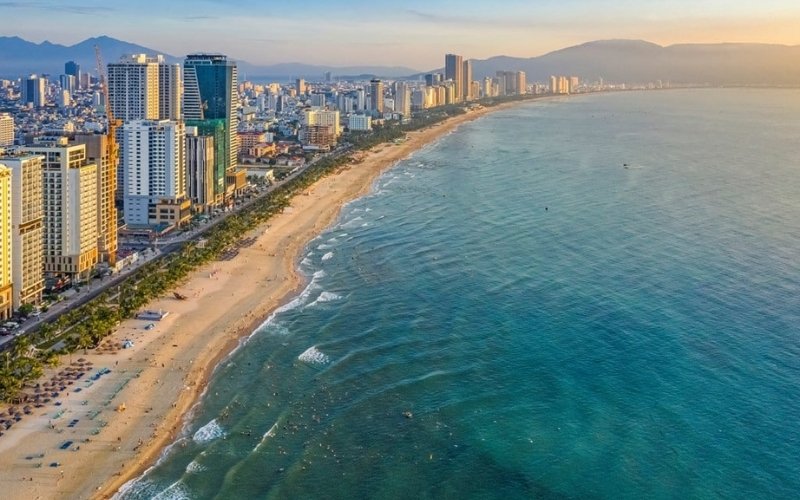
Golden sands, gentle waves, and a vibrant seaside skyline — a perfect day by the coast.
Da Nang also sits between two UNESCO World Heritage Sites: Hoi An Ancient Town is 30 km south (about 40 minutes by car), and Hue’s Imperial Citadel is 100 km north (about 2 hours by car). That location makes Da Nang the natural base for anyone planning to cover Central Vietnam in one trip.
Da Nang Weather in July: What to Expect
July is Da Nang’s hottest month. Here are the key numbers:
- Average high temperature: 34 to 35°C (93 to 95°F)
- Average low temperature: 26 to 27°C (79 to 81°F)
- Humidity: around 75 to 80%
- Rainfall: approximately 50 to 70 mm for the whole month
- Rainy days: 7 to 12 days, mostly brief afternoon showers
- Sea temperature: 29 to 30°C (84 to 86°F)
- Daily sunshine hours: 7 to 9 hours
July is the last month of Da Nang’s dry season, which runs from January through July. Rainfall in July is actually lower than in June, and the showers that do arrive tend to be short, typically 20 to 45 minutes in the late afternoon. The sky usually clears before sunset.
The bigger challenge is the heat. Between 11 AM and 3 PM, the combination of direct sun and humidity makes the outdoor temperature feel closer to 38 to 40°C (100 to 104°F). This isn’t unmanageable, but it does require some planning. Travelers who schedule beach time for early morning and sightseeing for late afternoon consistently enjoy July more than those who fight the midday sun.
Starting in August, Da Nang transitions into its rainy season. So July captures the last stretch of reliable dry weather before conditions change, which is one reason it draws so many visitors.
Things to Do in Da Nang in July
1. The Beaches
This is why most people come. Da Nang’s coastline stretches over 30 km, and July is when it earns its reputation as one of Vietnam’s best beach destinations. Sea temperature hovers around 29 to 30°C (84 to 86°F), waves are generally gentle near the shore, and the water is clear.
My Khe Beach runs about 9 km along the city’s eastern edge. It’s the most accessible beach, with lifeguards on duty, beach chair rentals (50,000 to 100,000 VND, ~$1.9 to $3.8, per set), and water sports operators along the main stretch. Jet skiing starts around 200,000 VND (~$7.7) for 15 minutes; parasailing runs 350,000 to 500,000 VND (~$13.5 to $19.3). On weekends, the popular central sections get packed, but walk north past the fishing pier and the crowd drops off quickly.
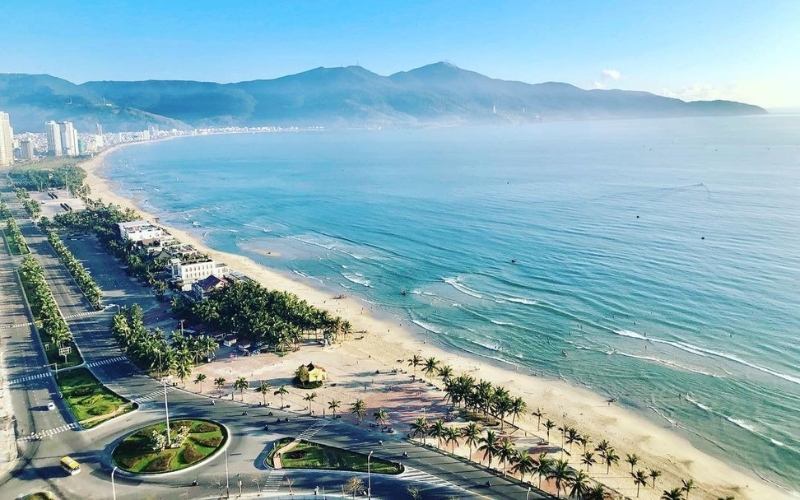
My Khe beach, one of the most beautiful beaches in the world
Non Nuoc Beach, about 8 km south of the city center near the Marble Mountains, draws a different crowd. It’s less commercial, the sand is softer, and several resort hotels line it, though there are public access points between them. I’ve found this one better for a quieter morning swim.
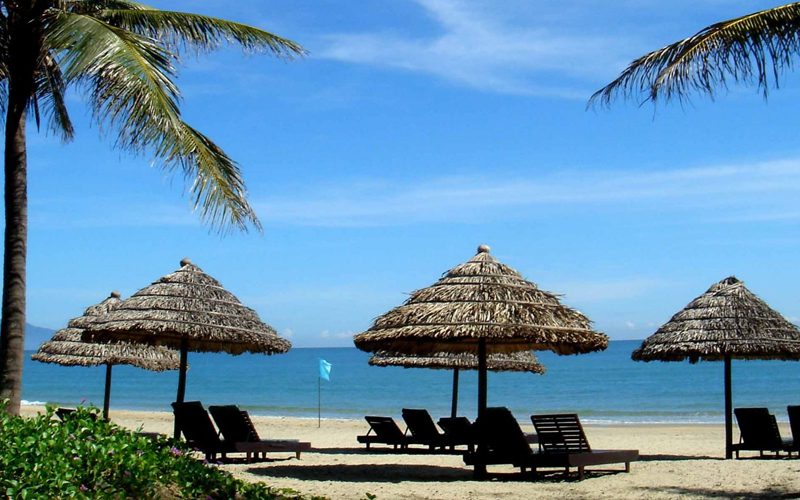
Non Nuoc Beach
My An Beach, tucked between My Khe and Non Nuoc, sits in front of a stretch of mid-range and boutique hotels. It gets less foot traffic than My Khe and is a good middle ground if you want a manageable crowd without going too far out of town.
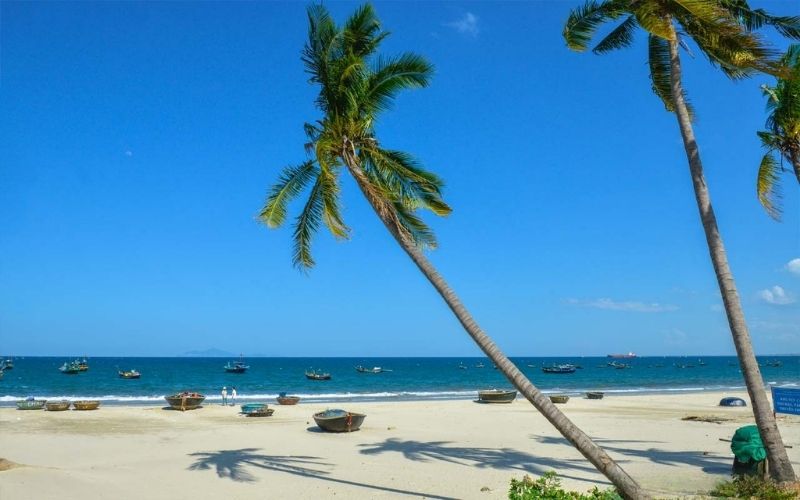
Bac My An Beach
Go to the beach before 9 AM or after 4 PM. Midday sun on white sand is brutal, and the sand itself gets hot enough to burn bare feet by 11 AM.
2. Ba Na Hills and the Golden Bridge
Ba Na Hills sits about 25 km west of central Da Nang, at 1,487 meters above sea level. The temperature up top runs 8 to 10°C cooler than the city below, which in July means a very welcome 24 to 26°C (75 to 79°F) while downtown bakes. It’s genuinely one of the more useful escapes from July’s heat.
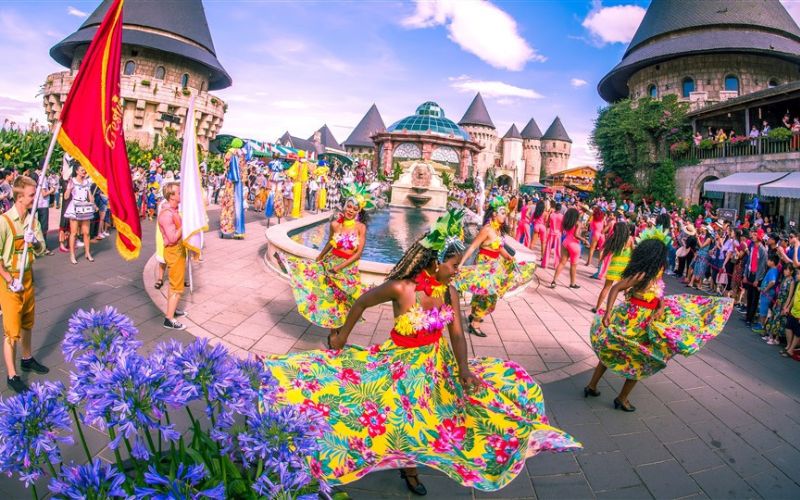
Lively festivals in Ba Na hills
The Golden Bridge, the one held by two giant stone hands, is the main draw. Arrive when the park opens at 7:30 AM to get photos without crowds. By 9:30 AM, groups begin to fill the bridge and the wait for a clear shot gets long. Beyond the bridge, the French Village, Linh Ung Pagoda, and Fantasy Park are all included in the ticket price.
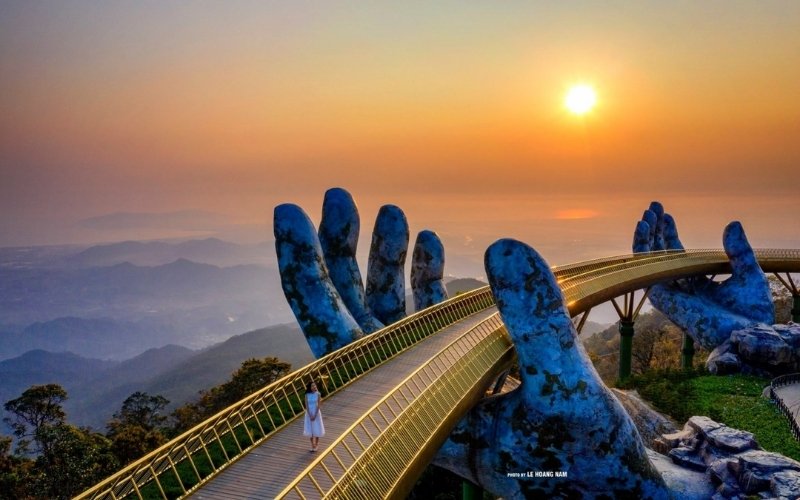
The breathtaking Golden Bridge in Ba Na Hills, Da Nang — where sunrise meets the sky above the clouds.
Ticket price for Ba Na Hills runs around 900,000 VND (~$34.6) for adults, which covers the cable car (one of the longest single-wire systems in the world at 5.8 km) and all attractions.
On a clear July morning, the views from the cable car over forested mountains and down to the coast are genuinely hard to forget.
>>> The 2-day Ba Na Hills tour from Da Nang typically includes transport and a guide, which saves time on logistics.
3. Marble Mountains (Ngu Hanh Son)
Five marble and limestone hills rise about 8 km south of downtown. The biggest, Thuy Son (Water Mountain), has a network of Buddhist caves, pagodas, and viewpoints that are worth a 2 to 3 hour visit. The climb involves about 150 steps to reach the cave systems.
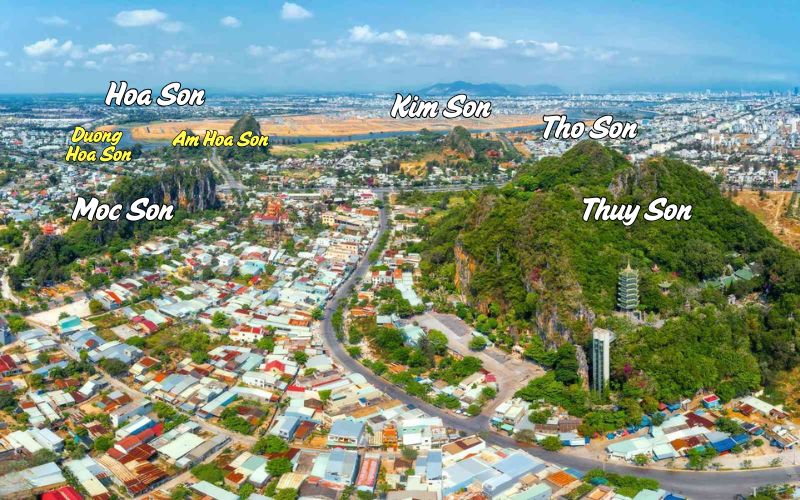
A panoramic view of Marble Mountains
In July, go at 8 AM before the stone steps start radiating heat. The caves inside stay cooler and are pleasant to walk through, with shafts of light cutting through openings in the rock. The entrance fee is 40,000 VND (~$1.5) per person, with an optional elevator for 20,000 VND (~$0.8) if you’d rather skip the main stairs.
The stone carving village at the base of the mountains is a genuine cottage industry. Artisans work outside their shops carving everything from small Buddha figures to full-size statues, and the craft has been active here for generations. Worth a slow walk-through even if you’re not buying.
4. Son Tra Peninsula (Monkey Mountain)
Son Tra Peninsula extends northeast from the city into the sea, protected as a nature reserve. The 67-meter-tall Lady Buddha at Linh Ung Pagoda draws many visitors, but the real appeal is the forest road that winds up to the summit with views over Da Nang’s bay on one side and the open sea on the other.
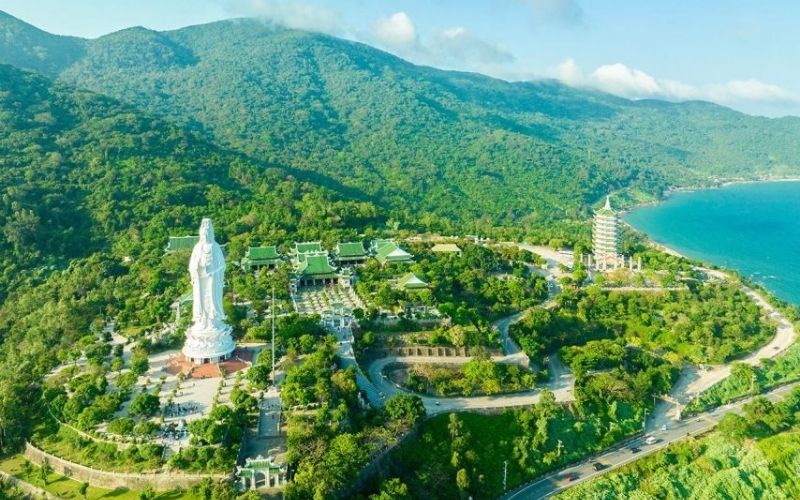
Son Tra Peninsula and Lady Buddha in Da Nang.
The red-shanked douc langur lives in the forest here. These primates are striking to see in person, with their gray-and-white body and rust-colored legs. Early morning, around 6 to 7 AM, is when they’re most active near the road. Sightings are genuinely common if you time it right.
No entrance fee for the peninsula. You’ll need a motorbike (rental around 150,000 VND, ~$5.8, per day) or a private car from Da Nang to get up the mountain road properly.
5. Da Nang International Fireworks Festival (DIFF) – Final Nights
The DIFF typically runs from late May through the second week of July. In 2026, the final competition nights fall in the first two weekends of July. If your trip overlaps with these dates, the fireworks are absolutely worth planning around.
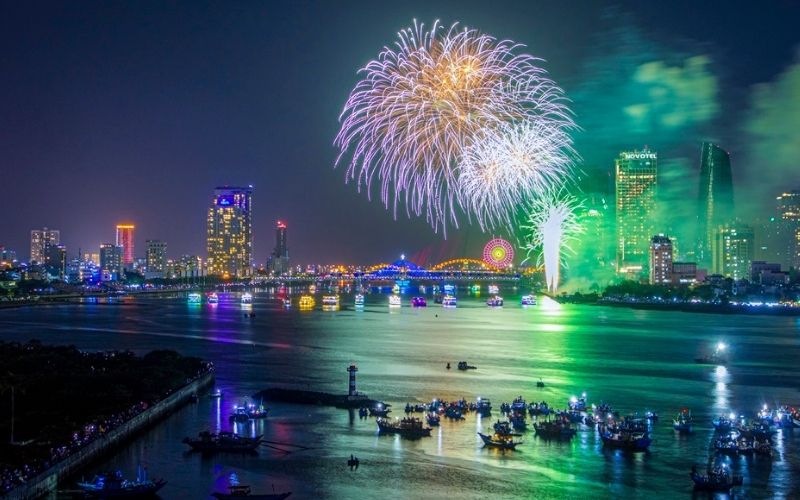
Fantastic fireworks at DIFF
Even on non-competition nights in early July, the riverfront atmosphere along Bach Dang Street carries over from June’s festival energy, with food stalls and street performers staying active.
6. Cham Islands (Cu Lao Cham)
The Cham Islands, about 15 km offshore from Hoi An, are accessible as a day trip from Da Nang by speedboat (roughly 45 to 60 minutes). July is one of the best months to go because sea conditions are calmer than August and visibility for snorkeling is good, typically 5 to 10 meters.
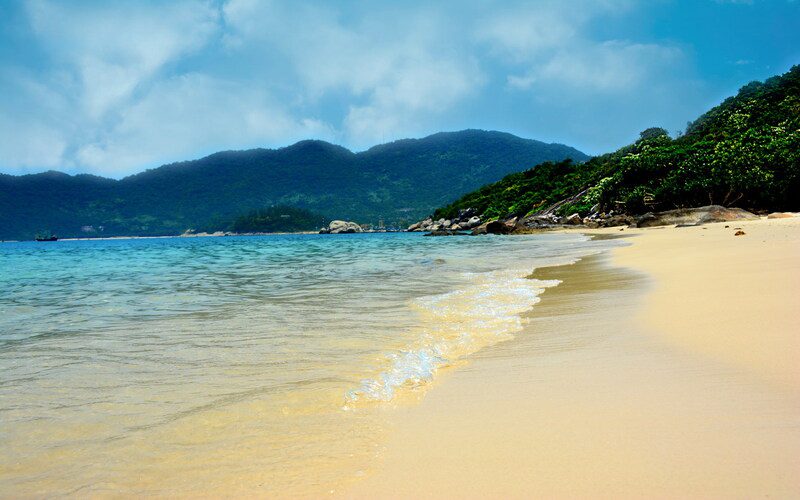
The beauty of Cu Lao Cham
The island group is a UNESCO World Biosphere Reserve. Day trips combine snorkeling around the reefs, a walk through the main village on Hon Lao island, lunch with fresh seafood, and a return by late afternoon.
Note that the Cham Islands close to visitors between September and March due to rough sea conditions, so July is actually one of the last reliable months to make this trip.
7. Han River bridges at night
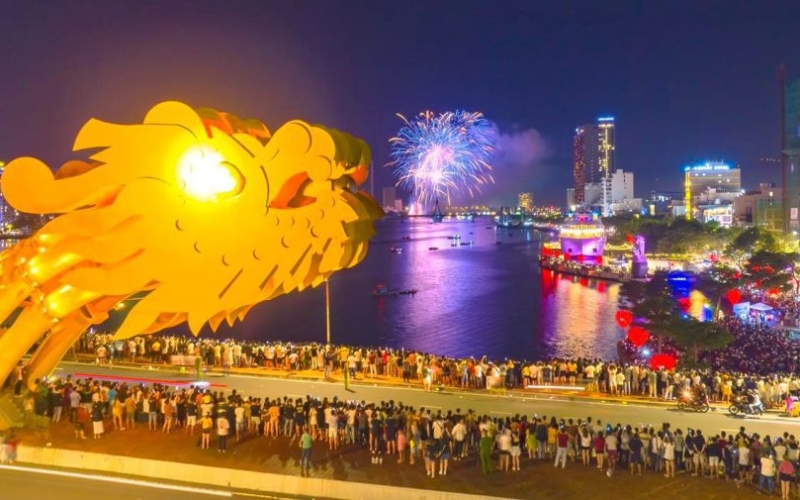
The crowds gather along the Dragon Bridge to watch fireworks
The Dragon Bridge breathes real fire and sprays water at 9 PM every Saturday and Sunday. It’s free to watch, and the surrounding area along Bach Dang Street fills with families, street food, and motorbikes. All the major bridges light up in rotating colors after dark, and the temperature at night in July drops to something manageable, usually around 27 to 29°C (81 to 84°F).
8. Da Nang Museum of Cham Sculpture
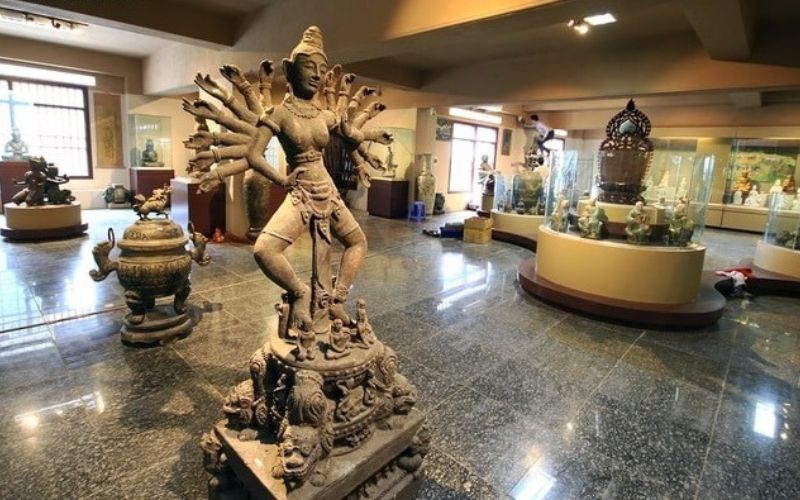
Cham Museum in Danang
If you need a break from the heat during midday hours, the Da Nang Museum of Cham Sculpture is one of the best places to spend 90 minutes. It holds the world’s largest collection of Cham art, with over 300 original sculptures and artifacts dating from the 4th to 13th centuries.
9. Day Trips to Hoi An and Hue
Da Nang’s central location makes both Hoi An and Hue realistic day trips.
Hoi An is 30 km south, about 40 minutes by car. The Ancient Town’s best quality in July is the evening: lanterns come on at dusk, the riverside fills with visitors, and the 15th of each lunar month brings the Lantern Festival when the town turns off electric lights and drifts on candlelight. Many travelers book Da Nang to Hoi An day tours that cover the Japanese Covered Bridge, merchant houses, tailors, and cooking class options.

Hoi An at night
Hue is 100 km north, 2 hours by car or 2.5 hours by train. The Imperial Citadel and royal tombs are the main draw. Tours from Da Nang typically take the coastal route over Hai Van Pass, one of the most scenic mountain roads in Vietnam, which adds time but is genuinely worth it. For more detail on what to see, check the exploring Vietnam journey in 16 days for itineraries that combine both cities.
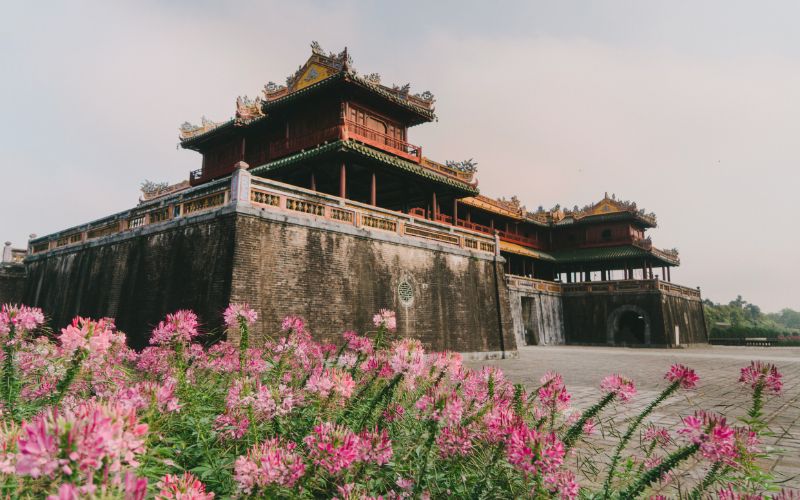
Discover Enchanting of Hue
Is It Worth Going to Vietnam in July?
Yes, if your itinerary is anchored to the central coast. Da Nang, Hoi An, and Hue all benefit from July’s dry-season weather. The north (Hanoi, Sapa, Ha Long Bay) is in its rainy season by July, with afternoon thunderstorms that can disrupt outdoor plans. The south (Ho Chi Minh City, Mekong Delta) also sees heavy rains. The central coast is genuinely the weather sweet spot for July in Vietnam.
The honest trade-off: July is the domestic peak season. Vietnamese school summer holidays run through August, and families from across the country travel to Da Nang’s beaches. Hotel prices are 20 to 40% higher than the shoulder months of March to April. Weekends at My Khe Beach get crowded, and popular restaurants book up fast.
For broader Vietnam travel planning in July, see the guide to visiting Vietnam in July.
Traveling to Da Nang This July: Budget and Costs
July is the peak season, but Da Nang remains affordable by regional standards.
- Mid-range hotel (3 to 4-star beachfront): 900,000 to 1,800,000 VND (~$34.6 to $69.2) per night
- Budget guesthouse: 300,000 to 600,000 VND (~$11.5 to $23.1) per night
- Street food meal: 30,000 to 70,000 VND (~$1.2 to $2.7) per dish
- Restaurant meal (mid-range): 150,000 to 350,000 VND (~$5.8 to $13.5)
- Grab car across town: 50,000 to 120,000 VND (~$1.9 to $4.6)
- Ba Na Hills ticket (adult): 900,000 VND (~$34.6)
- Cham Islands day trip: 700,000 to 1,200,000 VND (~$26.9 to $46.2)
- DIFF grandstand ticket (early July only): 1,500,000 to 4,000,000 VND (~$57.7 to $153.8)
- Motorbike rental per day: 150,000 to 200,000 VND (~$5.8 to $7.7)
Midweek stays (Tuesday to Thursday) run 15 to 25% cheaper than weekends. Book accommodation at least 4 to 6 weeks ahead, and 6 to 8 weeks if you’re traveling over a DIFF weekend in early July.
What to Pack for Da Nang in July
July’s heat and humidity require some preparation.
- Clothing: Light cotton or linen only. Moisture-wicking fabrics are better than polyester in high humidity. Light colors reflect heat better than dark ones. A lightweight long-sleeve layer is useful for temple visits and air-conditioned restaurants.
- Sun protection: SPF 50+ sunscreen is a necessity, not an option. Reapply after swimming. A wide-brim hat or cap for outdoor sightseeing. Sunglasses with UV protection.
- Footwear: Sandals for the beach, comfortable walking shoes for temples and the Marble Mountains. Flip-flops for quick beach access.
- Rain gear: A compact rain jacket or travel umbrella for afternoon showers. Waterproof bag covers for camera equipment.
- Other: Insect repellent for Son Tra Peninsula, a reusable water bottle (hydration is critical in July heat), and a portable fan if you run hot.
Conclusion: Da Nang in July at a Glance
| Category | Details |
| Average temperature | 26 to 35°C (79 to 95°F) |
| Rainfall | 50 to 70 mm, mostly short afternoon showers |
| Humidity | 75 to 80% |
| Sea temperature | 29 to 30°C (84 to 86°F) |
| Sunshine hours | 7 to 9 hours per day |
| Season | End of dry season (transitions to rainy in August) |
| Main event | DIFF 2026 final weekends (early July), DANAFF (late June to early July) |
| Crowd level | High, domestic peak summer season |
| Best for | Beach holidays, Cham Islands, Ba Na Hills, day trips to Hoi An and Hue |
| Pack | Light cotton clothing, SPF 50+ sunscreen, hat, rain jacket, insect repellent |
| Getting there | Direct flights from major Asian hubs into DAD airport, 3 km from city center |
| Visa | E-visa available for most nationalities (45 days), or visa-free for select countries |
Da Nang in July delivers what most beach travelers are actually looking for: reliable sunshine, warm sea, and enough things to do that you won’t run out of options after two days. The heat is real and the crowds are real, but neither is unmanageable. The Cham Islands are at their best, Ba Na Hills gives you a cool escape when the city gets too hot, and the evening Han River atmosphere runs strong through the month.
If you want to put together a full Vietnam tour built around Da Nang in July, or combine a central Vietnam itinerary with Hoi An and Hue, IDC Travel can build a tailor-made plan around your dates. Contact us to start planning your trip.
Read more:




I am a solo traveler. Is it safe to go on a night picnic at Hai Van Pass alone?
Dear Elise,
Thank you for reaching us! We not recommend you to go night picnic at Hai Van Pass alone due to wildlife, weather changes, or unexpected mechanical issues. For safety, we think you should consider going with a local guide, a group tour, or visiting during daylight hours when the views are best and help is more accessible if needed.
If you need further assistance, please contact us.
Best regards,
IDC Travel Team.
Hai Van Pass is beautiful, but I wouldn’t recommend going alone for a night picnic there. The road can be dark and lonely at night – the better way to go is during the day for the views, or if you want to experience the night vibe, join up with a local friend or group for safety.