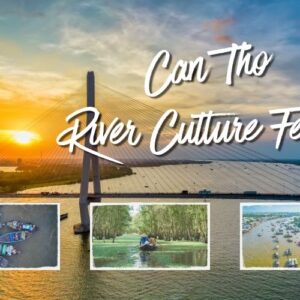

Every year, as December winds down and the Mekong Delta slides into its dry season, Can Tho transforms. The riverfront fills up, the boats come out, and the city puts on one of the most genuinely immersive Can Tho River Culture Festival experiences in southern Vietnam. If you’re planning a Vietnam trip around New Year and haven’t considered this yet, you probably should.
This guide covers what the festival actually is, what happens and when, how to get there, and how to make the most of your time on the water. No fluff, just what you need.
What Is the Can Tho River Culture Festival?
The Can Tho River Culture Festival is a city-level annual event, designed to introduce and promote the unique cultural beauty of the Mekong Delta to domestic and international tourists. It launched for the first time in December 2025, making it one of the newest large-scale festivals in southern Vietnam and one that has quickly drawn serious attention.
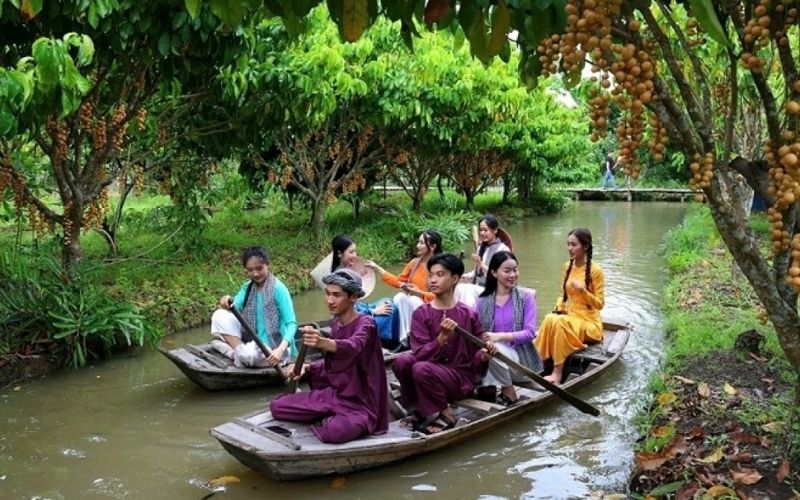
Locals paddling through fruit orchards during the Can Tho River Culture Festival.
The festival’s theme: “Can Tho – The Colors of the River,” reflects the city’s aim to present a comprehensive picture of riverine culture, where rivers and waterways are not only landscapes but also living spaces, intimately connected to the people for generations.
It’s not a heritage museum piece. It’s active: boat parades, water sports, food markets, drone light shows, and live music along the Hau River. The inaugural edition alone drew an estimated 500,000 visitors across the six-day program. That tells you the scale.
When and Where Does the Can Tho River Culture Festival Take Place?
- Dates: from December 27th to January 1st each year (six days, five nights).
- Locations: Hau River Park in Cai Khe Ward and Ninh Kieu Wharf Park in Ninh Kieu Ward, with events spread across surrounding riverside areas.
The timing is deliberate. This period falls at the beginning of the dry season in the Mekong Delta, which means lower rainfall, cooler evenings, and ideal conditions for outdoor events along the Hau River. Evenings in late December run around 23-26°C (73,4-78,8°F) are comfortable enough for long nights on the riverfront.
The decoration of models and miniature landscape clusters begins from December 20th, ahead of the official opening, creating early check-in spaces for visitors along the stretch from Hau River Park to Ninh Kieu Wharf. If you’re arriving a few days early, it’s worth a walk even before the main program starts.
>>> Come join us for an interesting trip to explore the culture of Vietnam’s riverine region.
Is the Festival Free?
Yes, the festival is free of charge for entry and participation in art programs, exhibitions, and public activities. Visitors only pay for shopping, dining at the stalls, or when using river tour services.
Budget roughly 200,000-400,000 VND/person (~$7.59-15.18) for food if you plan to eat your way through the market.
What Happens at the Can Tho River Culture Festival?
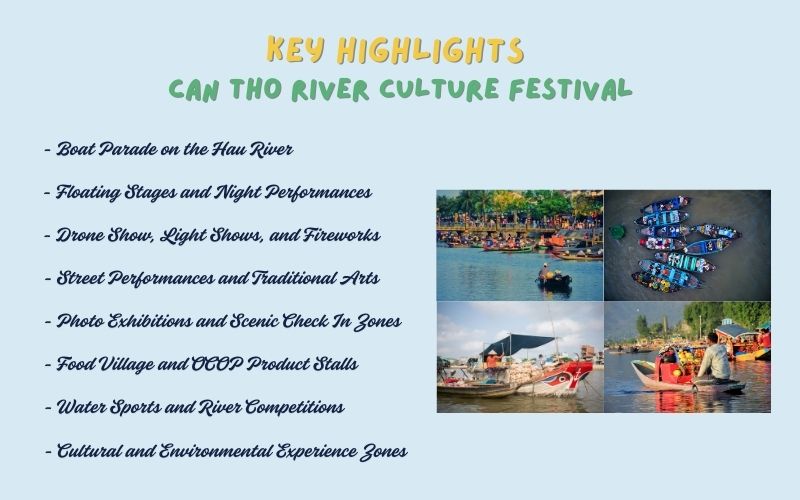
Experience the vibrant traditions of the Mekong Delta by exploring the key activities at the Can Tho River Culture Festival.
Opening Night
The opening ceremony features “colorful riverine” parades along the city center roads and on the Hau River, including a boat parade, traditional folk music performances on boats, and street performances.
The opening art program recreates the livelihoods of the people and the waterways of Can Tho, the rustic rhythm of life on the docks and boats that has existed for generations, where trade, cuisine, and tourism blend together in a single rhythm. The opening night runs approximately 110 minutes, starting at 8 PM. Crowds begin gathering along Khai Luong Canal from 6:30 PM onward, so if you want a good vantage point, get there early.
Nightly Art Programs and Light Shows
From December 28-30th, nightly art programs take place at 7:30 PM at Hau River Park in Cai Khe Ward, featuring drone light art that combines modern and traditional music to depict the culture and heritage of Can Tho, accompanied by a low-altitude fireworks show.
Hundreds of drones coordinated into moving images above the river is the kind of spectacle that photographs well but genuinely lands better in person. It’s worth attending at least one of these evenings.
Water Sports on the Hau River
This is something most festivals in Vietnam don’t offer. The program includes:
- Motorboat racing on the Hau River.
- Sailing races (December 28th).
- Stand-up paddleboard (SUP) racing at Cai Khe Canal (December 29th).
- Flyboard demonstrations along the waterfront.
The flyboard performance during the opening night was described as a spectacular sight for the audience. Even as a spectator event, watching fly-boarders launch off the river in the evening light is worth the crowd.
The Floating Market Reconstruction
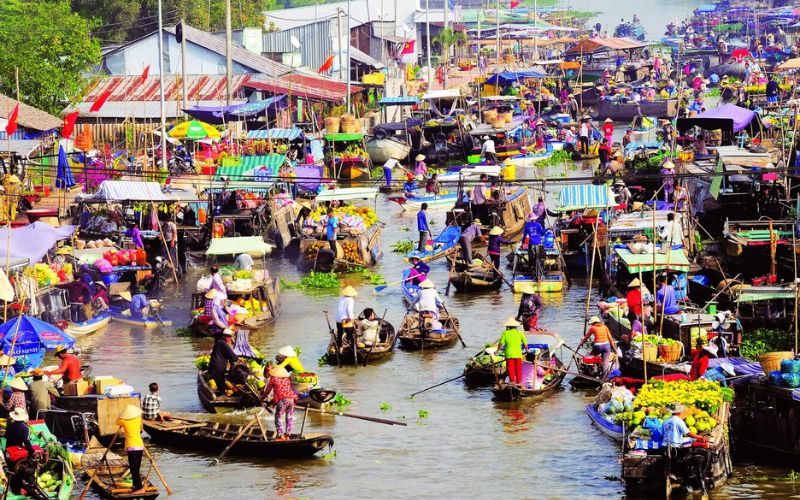
The organizers recreate the space and lives of river merchants, cuisine, and folk beliefs through models, miniatures, and live art programs, highlighting the culture of Can Tho’s floating markets.
If you’ve visited the real Cai Rang Floating Market at 5 AM and came away wanting more context, this is genuinely useful. The reconstruction slows things down and explains what you’re looking at, which the actual market doesn’t.
Food and OCOP Market
A large-scale culinary exhibition gathers over 150 stalls at Hau River Park, open from December 27th to January 1st. The space introduces traditional dishes, regional specialties, high-quality OCOP products, and tourism materials about Can Tho City.
On December 27-28th, a culinary showcase program features businesses, restaurants, and hotels demonstrating the preparation of signature dishes, helping visitors understand the sophistication of Southern culinary culture.
Can Tho’s food is worth the trip on its own. “Banh mi Tay Do”, “hu tieu Nam Vang”, and fresh water snails cooked a dozen ways all show up here. Don’t eat before you arrive.
Photo Exhibition
The photo exhibition “Life on the River – The Mekong Delta Past and Present” runs throughout the festival at Ben Ninh Kieu Park. It’s free to walk through and gives solid historical context for everything else happening around you. Worth 20-30 minutes between activities.
Can Tho River Tour: Getting on the Water
The festival makes a natural starting point for a longer time on the water. The Hau River has a very different character depending on how you experience it: watching from the bank versus being on a boat looking back at the illuminated city is not the same thing at all.
Tourists boarding a wooden boat for a canal tour in Can Tho.
Several Mekong Delta tours from Can Tho run during the festival period, including early morning floats through the canal system and longer day trips out toward the delta islands. During December, tourism operators often run discounted river tours as part of the city’s waterway promotion program, so it’s worth asking when you book.
If you want to see the Cai Rang Floating Market properly, not the festival reconstruction, but the real thing, you need to be on the water by 5:30 AM. It winds down by 8 AM. That’s not a metaphor; the vendors genuinely pack up and leave.
>>> Discover our most popular Can Tho tour among tourists.
Getting to Can Tho
Can Tho has its own international airport (VCA) with direct connections from Hanoi, Danang, and Ho Chi Minh City. From Ho Chi Minh City, the drive takes around 3.5 hours on Highway 1 or around 2.5 hours via the Trung Luong expressway.
If you’re building a broader southern Vietnam tour, Can Tho fits well as a 2-3 night stop between Ho Chi Minh City and the coast. The festival period adds natural structure to a longer itinerary.
For travelers already exploring Vietnam’s festivals and cultural calendar, the late-December timing lines up with Tet preparation season across the south, which adds another layer of activity in local markets and temples throughout the city.
Can Tho River Culture Festival Tips
A few things that make the difference between a good visit and a frustrating one:
- Arrive before 6:30 PM on opening night: Ninh Kieu Wharf and the pedestrian bridge fill up fast. By 7 PM you may be watching the drone show from far back.
- Book accommodation 6-8 weeks ahead: The festival period increases visitors significantly, especially around major attractions and riverfront areas, so booking early is strongly recommended.
- Evenings are the main event: The most ideal time to attend is after 5 PM. The weather is cooler and the main spectacles happen after dark: boat parade, drone show, and fireworks.
- Wear light layers: December evenings are comfortable but riverside wind picks up after 9 PM.
- Don’t skip the food market on day one: The culinary showcase on December 27-28 is the most structured way to try regional dishes with some explanation. Later in the week, the stalls get busier and less navigable.
- Combine with New Year: The closing ceremony takes place at 7 PM on January 1 at Hau River Park. Staying through New Year’s Eve means you get both the festival program and the city’s own countdown celebrations, which happen on the same riverfront.
Conclusion of Can Tho River Culture Festival
Here’s a quick-reference summary of the festival before you book:
| Detail | Information |
| Name | Can Tho River Culture Festival (Le hoi Van hoa Song nuoc Can Tho) |
| Dates | December 27th – January 1st (annually) |
| Duration | 6 days, 5 nights |
| Main Venues | Hau River Park (Cai Khe Ward), Ninh Kieu Wharf Park (Ninh Kieu Ward) |
| Opening Ceremony | December 27th, 8:00 PM at Khai Luong Canal |
| Closing Ceremony | January 1st, 7:00 PM at Hau River Park |
| Nightly Shows | December 28-30th, 7:30 PM (drone lights + fireworks) |
| Entry Fee | Free for all public programs and exhibitions |
| Best Time to Arrive | After 5:00 PM; before 6:30 PM on opening night |
| Expected Visitors | ~500,000 (based on 2025 inaugural edition) |
| Weather | Dry season; evenings 23-26°C (73,4-78,8°F) |
If you’re putting together a trip around the Can Tho River Culture Festival, our specialists can help build a full itinerary that includes the festival, a Can Tho river tour, and onward travel through the Mekong Delta or back to Ho Chi Minh City. Browse Mekong Delta tours to see current options, or get in touch for a custom itinerary.
Read more: