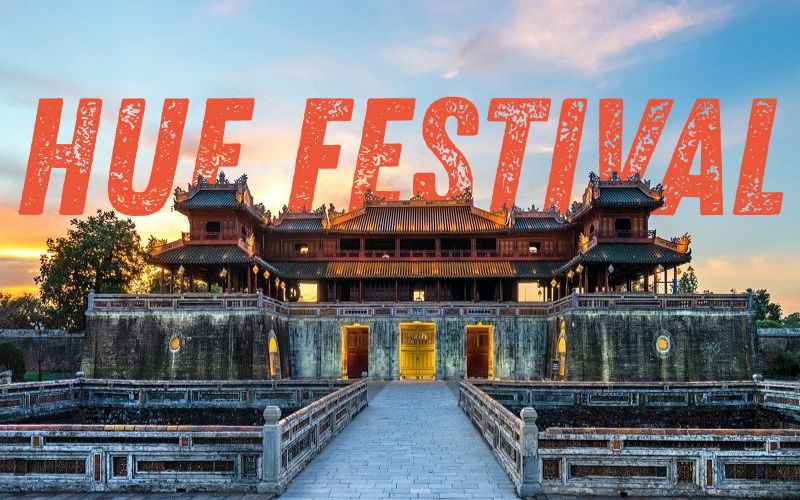
Vietnam’s most important cultural event is the Hue Festival, which takes place in the old city of Hue, where imperial heritage is not kept behind glass but lived, performed, and enjoyed in real time. This event is unique because it brings together royal traditions, modern art, and cultural exchange between countries in the city that used to be the capital of the Nguyen Dynasty. We’ll talk about what makes Hue Festival special, how Hue Festival 2026 is put together, what tourists can expect besides performances, and how to plan a meaningful trip that includes food, culture, and learning about the area.
Please note that specific schedules, performance lineups, and seasonal programs for Hue Festival 2026 are subject to official confirmation and updates by local authorities. We recommend checking closer to your travel date for the most accurate information.
What Is Hue Festival 2026?
Hue Festival 2026 is a big arts and culture event that takes place in Hue. Its goal is to both protect imperial heritage and show it through modern and international art. Instead of short-term events, this version is the first step toward a festival model that runs all year and combines culture, tourism, and community life.
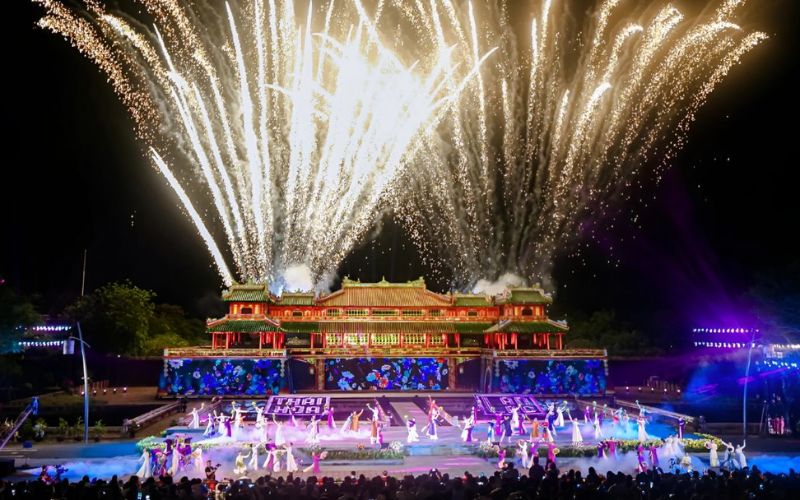
Music, performance, and fireworks turn the former imperial capital into a celebration of culture and light.
Organized in Hue, the former imperial capital of the Nguyen Dynasty, Hue Festival 2026 aims to protect and promote royal court heritage while encouraging creative dialogue with modern performing arts. The festival is not a religious celebration, but a comprehensive cultural tourism event that includes heritage reenactments, artistic performances, exhibitions, and community based programs.
Hue Festival 2026 is officially organized by the local authorities of Thua Thien Hue in coordination with Vietnam’s Ministry of Culture, Sports and Tourism. Its core objective is to position Hue as a living heritage city, where history is experienced through real spaces, rituals, and performances rather than static displays.
For visitors, this means Hue Festival 2026 is not limited to a single week or a single type of event. Instead, it offers multiple entry points throughout the year, allowing travelers to explore Hue’s imperial identity in a way that aligns with their travel pace, interests, and season of visit.
>>> To experience Hue Festival 2026 with historical context and smooth logistics, consider an 8-Day Vietnam Heritage tour that combines festival events with guided visits to the Imperial City and surrounding heritage sites.
Key Activities and Highlights of Hue Festival
1. Spring: Imperial Roots and New Beginnings
- When: January – March
- Where: Imperial Citadel (Ngo Mon Gate), citywide temples and pagodas, Perfume River
The theme for spring is Tradition and Resurgence, which sounds vague until you see what it actually refers to. The opening event of the festival year is the Ban Soc Ceremony at Ngo Mon Gate, a re-enactment of the royal ritual through which the imperial court once distributed the new lunar calendar to the people. It hasn’t been performed regularly for generations. Watching it staged at Ngo Mon, with the full ceremonial detail, is one of those experiences that’s hard to get elsewhere in Vietnam.
Spring also brings Tet Nguyen Dan, the Lunar New Year. In most Vietnamese cities, Tet means family gatherings and firecrackers. In Hue, there’s an additional layer: royal ritual performances and cultural shows that set the city’s celebrations apart from what you’d find in Hanoi or Saigon.
One thing regular visitors mention about spring in Hue: the mornings. The mist over the Perfume River in January and February creates a quality of light that photographers in particular tend to come back for specifically. The Imperial City at dawn during this period is genuinely different from any other time of year.
Spring is best for: History-focused travelers, photographers, and those who want a quieter experience with deep cultural content.
2. Summer: The Main Event
- When: April – June (peak: June 13-18, 2026)
- Where: Imperial Citadel (Great Enclosure), citywide community stages, Hue city streets
Summer is when the city reaches its highest pitch, and the centerpiece of the entire 2026 programm is the International Arts Festival Week from June 13th to June 18th. This is the headline event of the year, and for good reason. Domestic and international performing troupes take over community stages and heritage venues across the city. The scale of the performances, inside the Great Enclosure of the Imperial Citadel, along the riverfront, at outdoor stages in the city centre, makes this week feel genuinely different from a standard arts festival.
The formal opening is Imperial Night of Mystery (Hoang cung Huyen da) on April 25th, a grand ceremony held within the walls of the Great Enclosure.
Within the festival week itself, a few specific events stand out:
- The Colours of Culture (Sac Mau Van Hoa) street parades on June 14th and 16th fill the city’s avenues with music and costumed dance groups
- The Ao Dai Festival showcases Vietnam’s national costume in performances and public displays throughout June
- International performance troupes bring theatre, music, and dance traditions from across Asia and beyond
A practical note: the peak festival week draws an estimated 250,000 to 300,000 visitors. Accommodation in Hue itself fills up quickly and prices rise. Booking early and considering stays in nearby areas like Lang Co, about an hour from the city, is worth thinking through in advance.
Summer is best for: First-time visitors, those who want the full international festival experience, and anyone drawn to performance arts.
3. Autumn: Lanterns, Lotus, and the Perfume River
- When: July – September
- Where: Perfume River, Hue Nam Temple, citywide streets and neighbourhood pagodas
Autumn brings a change of mood. The large-scale performances give way to something gentler, and the city’s connection to nature becomes more apparent.
July opens with the Lotus Festival (Le hoi Sen), celebrating one of Vietnam’s most culturally significant flowers. Alongside it, the Bonsai and Orchid Exhibition runs as a separate event worth attending if you have any interest in traditional Vietnamese horticulture, the arrangements on display reflect a craft tradition with deep roots in Hue’s garden house culture.
August brings the Hue Nam Temple Festival, a sacred ceremony honouring the Mother Goddess that draws both worshippers and curious visitors into the rituals and colour of Vietnamese folk religion.
September is the Mid-Autumn Lantern Festival, and in Hue it’s something else entirely. The city is lit by lanterns along the riverbanks and through the old streets, Dragon Dance performances move through neighbourhoods, and the Traditional Boat Race on the Perfume River turns the water into a spectacle. This is the event that locals most often describe when asked what Hue does that other cities can’t replicate.
Autumn is also what locals call “Tea Season.” The cooler temperatures from late September make sitting in one of Hue’s historic garden houses with a pot of tea feel less like a tourist activity and more like the obvious thing to do.
Autumn is best for: Families, slow travelers, photographers, and those drawn to atmospheric rather than high-energy events.
4. Winter: Music, Food, and the Countdown
- When: October – December (New Year countdown: December 31)
- Where: Citywide concert venues, street food corridors, Perfume River riverfront
Winter in Hue has a different character: quieter, more reflective, and genuinely good for eating. The International Music Festival during this period bridges contemporary and traditional sounds, and the concerts tend to feel more intimate than the summer performances.
The food angle deserves a proper mention here. Cool weather in Hue is an invitation to eat well.
- Bun Bo Hue: the city’s fiery lemongrass-and-beef noodle soup, hits differently on a cool December evening than it does in the heat of June.
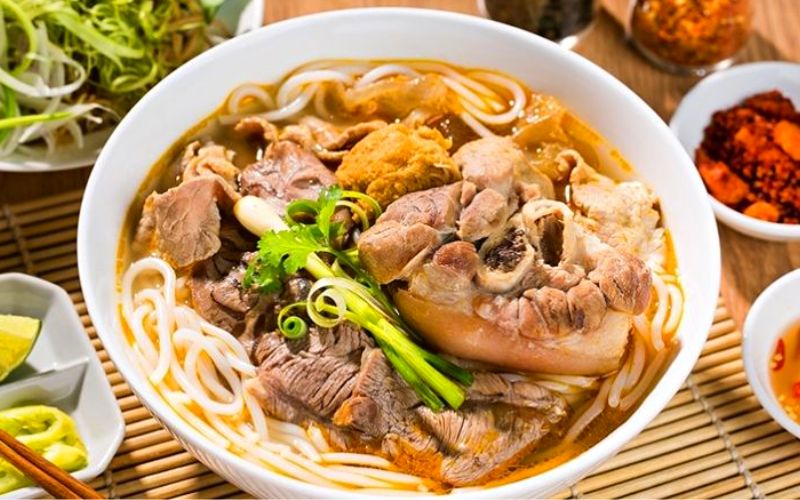
Bun bo Hue (rice noodle soup with beef)
- Banh Beo, Banh Nam, and Banh Bot Loc: these small steamed rice cakes are great because they are light, easy to share, and come from royal cuisine customs.
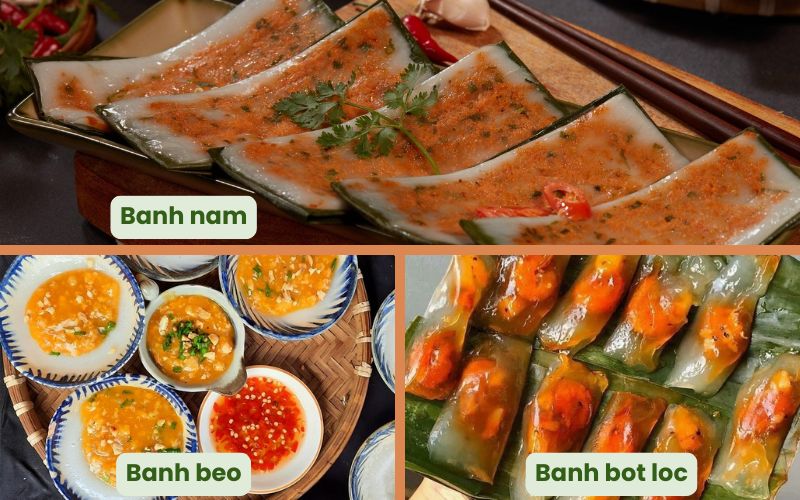
Delicate, flavorful, and beautifully presented, Hue cuisine is a celebration of balance and tradition.
- Che Hue: the range of sweet dessert soups sold by street vendors across the city, is best explored slowly in this season.
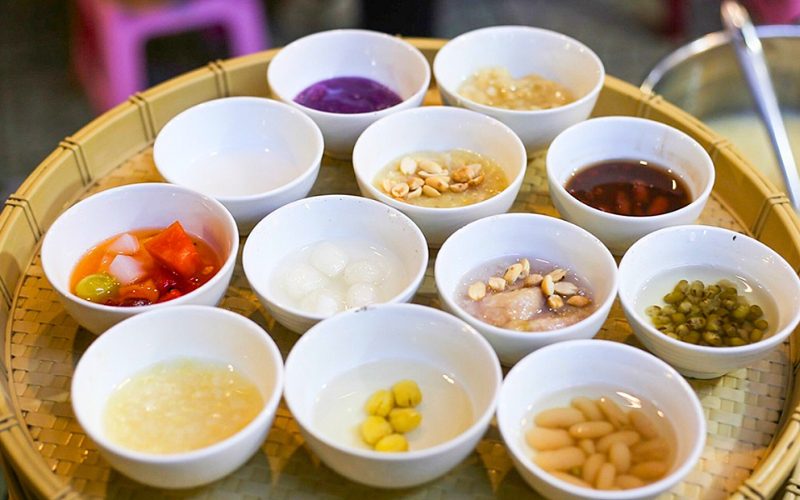
Che Hue
Both are worth treating as destinations in themselves rather than afterthoughts.
The season closes on December 31st with the Grand Countdown to 2027, a public New Year’s Eve celebration with lights, performances, and the full riverfront crowd. It’s a good ending to a very full year of events.
Winter is best for: Music lovers, food-focused travelers, and those who prefer smaller crowds and a slower pace.
>>> If you want to combine Hue Festival events with curated food experiences, our Hue tour in 4 Days include guided tastings of local specialties alongside key cultural highlights.
Practical Travel Tips for Visiting Hue During the Festival
You need to plan ahead if you want to visit Hue during the Hue Festival, since the festival happens in all four seasons instead of just one busy time. Picking the right place to stay, knowing how to get around, and carefully planning your transportation will help festival-goers enjoy themselves without any extra stress.
- Book your lodging early during busy festival times: especially during the summer and during big holiday events, there aren’t many hotels in Hue during busy times like the International Arts Festival Week in June, the Lunar New Year parties, and the Countdown events at the end of the year. It is best to book your lodging at least four to six weeks ahead of time during these times, especially if you want to stay in the city center.
- Your stay matter more than the price: if you go to Hue in the summer, hotels with pools, soundproof rooms, and air conditioning will make you more comfortable because there are more events in the evenings and it’s warmer. In the fall and winter, it’s quieter and more romantic to stay in a small hotel, a resort by the river, or a traditional Hue garden house.
- Should stay near the Perfume River or the Imperial City: these central locations make it easier to get to the main venues, cut down on the need for taxis in the nights when it’s busy, and let people fully enjoy the festival atmosphere at night.
- Know which events are free and which require tickets: there are a lot of free events at Hue Festival 2026, like street festivals, community acts, and art shows. Royal court performances, special art shows, and events held inside the Imperial City, on the other hand, generally need their own tickets.
- Book ahead of time for royal and evening shows: royal court music performances, night shows, and events at heritage sites often have limited seats and sell out quickly. To avoid being disappointed at the last minute, international visitors should buy their tickets through hotels, local travel companies, or organized festival tour packages.
- Go around on foot or by bike: especially in the evenings, the areas around the Imperial City, the Truong Tien Bridge, and the Huong River are great for walking or biking. This lets people enjoy the festival atmosphere and see how people live in the area between acts.
- Try to avoid busy times: in general, the busiest time near big event sites is from 6:30 pm to 8:00 pm. It can be a lot easier to move around if you get there earlier or wait until after peak hours.
The Hue Festival in 2026 is a one-of-a-kind chance to live and experience Vietnam’s royal history. Because the events happen all through the year, tourists can learn about Hue over more than one trip and at their own pace. If you want to go to Hue during the festival, please contact us so that we can make you a personalized Hue Festival tour that fits the right season, key events, and real local experiences.
Read more: