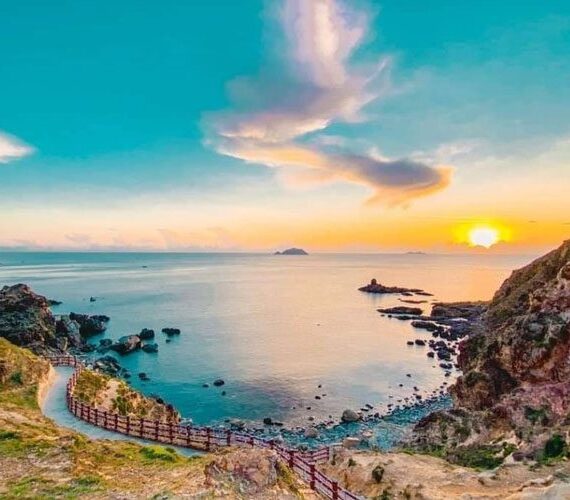

In Vietnam, Phong Nha-Ke Bang is the place where “going to a cave” stops being a quick stop for tourists and becomes a real highlight of the trip. This national park, which is on the UNESCO list, is known for its huge limestone landscape, underground rivers, and cave systems that keep surprising both scientists and tourists. If this is your first time here, the problem isn’t finding a cave. It’s all about picking the right one. Some caves are easy and beautiful, some take half a day to explore, and some are serious trips that need a fully supported team, fitness checks, and safety briefings.
What Is Phong Nha-Ke Bang National Park?
- Discover Beauty of Central Vietnam in 5 Days
- Journey through Wonders of Central Vietnam in 6 Days
- Discover the Central Vietnam Highlands in 7 Days
- Discover the Magnificent Nature of Central Vietnam for 10 Days
- Central Vietnam in 14 Days: From Ancient Cities to Hidden Caves
- Family Trip to Vietnam in 18 Days
Phong Nha-Ke Bang National Park is a protected area in central Vietnam, near the border with Laos and in Quang Tri Province (it was Quang Binh Province before the merger on July 1, 2025). Because of its unique limestone karst landscape, ancient cave systems, and high biodiversity value, it is known around the world as a UNESCO World Natural Heritage Site.
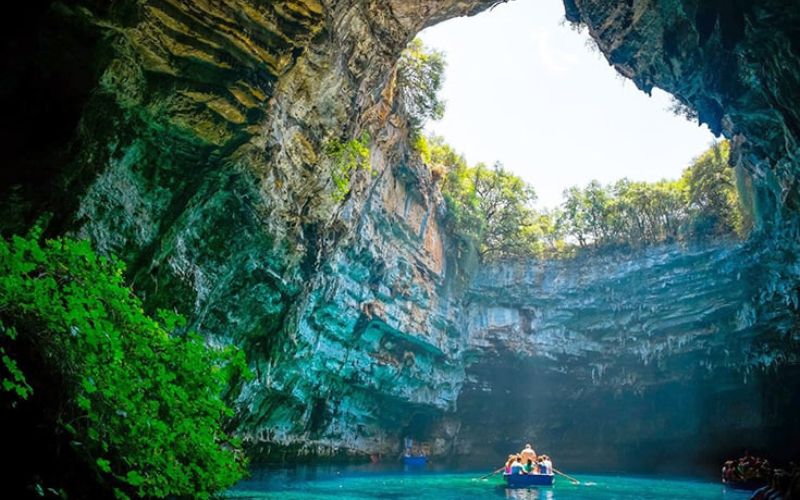
The fabulous Phong Nha-Ke Bang National Park
The park is made up of a lot of tropical forest and mountains that have been growing for hundreds of millions of years. There is one of the largest cave networks in the world under this landscape. It has underground rivers, huge chambers, and unusual geological formations. Scientists are still exploring and mapping new parts of Phong Nha-Ke Bang, which is why it is often called one of the most important cave research areas in the world.
Phong Nha-Ke Bang is not only important for science, but it is also a living landscape. The park is important to local communities because it supports sustainable tourism, guiding, conservation work, and small-scale services. Travelers can still see the caves today because of this balance between protecting them and letting people visit them responsibly.
Phong Nha-Ke Bang has more to offer visitors than just caves. It is one of the most unique nature spots in Southeast Asia because it has jungles, rivers, rural villages, and underground worlds all in one place.
Why Is Phong Nha-Ke Bang a World-Class Cave Destination?
Phong Nha-Ke Bang was first added to the list of UNESCO World Natural Heritage sites because of its amazing geology and karst landscape. Later, it was added to the list because of its biodiversity. The limestone system here makes a rare combination of dramatic cave chambers and rivers underground and thick forest ecosystems above ground.
Phong Nha is also special because it has a lot of different things. In the morning, you can take a calm boat ride to a water cave, and in the afternoon, you can hike to a dry cave. If you stay longer, you can go on multi-day jungle and cave trips that are run with strict safety and conservation rules.
How does Phong Nha Ke Bang compare to other famous cave destinations in Asia?
Many lists of caves don’t say why Phong Nha feels different on the ground. A simple comparison helps people who are going for the first time understand what they are choosing.
| Destination | Best known for | Typical visitor experience | Difference |
| Phong Nha-Ke Bang, Vietnam | Vast karst system with major caves and biodiversity values | Mix of easy caves and regulated expeditions | Unusual range from boat caves to multi-day treks in one compact region |
| Gunung Mulu, Malaysia | Enormous cave passages and long mapped systems | Guided park trekking and cave visits | Deer Cave and Clearwater Cave System are globally significant, with very large passages and extensive mapped length |
| Puerto Princesa Underground River, Philippines | An underground river that flows directly into the sea | Short guided boat trip into the cave | The river’s sea connection and tidal influence are the signature feature |
| Kong Lor Cave, Laos | A long river cave crossed by boat | Boat ride through a long tunnel cave | A roughly 7.5 km river passage experience through a single dramatic tunnel |
From a local point of view, caves in Phong Nha-Ke Bang aren’t just for tourists. They shape jobs in conservation, guiding careers and the lives of people in the park’s community. That’s why it’s so important to have good operators and follow the rules at the park.
Top Caves to Visit in Phong Nha-Ke Bang National Park
Phong Nha-Ke Bang National Park has several famous caves, such as Phong Nha, Paradise, Dark, and others. But the best one for you will depend on how much time you have, how fit you are, and what kind of experience you want. Some caves are easy to get to and focus on the scenery, while others require physical activity or exploration over several days. If you only choose based on how popular a cave is, you might end up tired or disappointed because each cave offers a very different experience. To really enjoy Phong Nha-Ke Bang, you need to know about these differences.
1. Phong Nha Cave: the classic first-time experience
Best for: first-time visitors, families, travelers who want a gentle experience with strong scenery
You can take a boat to Phong Nha Cave, making it easy to get to and memorable even if you don’t want to hike. People usually only explore a small part of the cave, not the whole surveyed passages. The cave is famous for its underground river system.
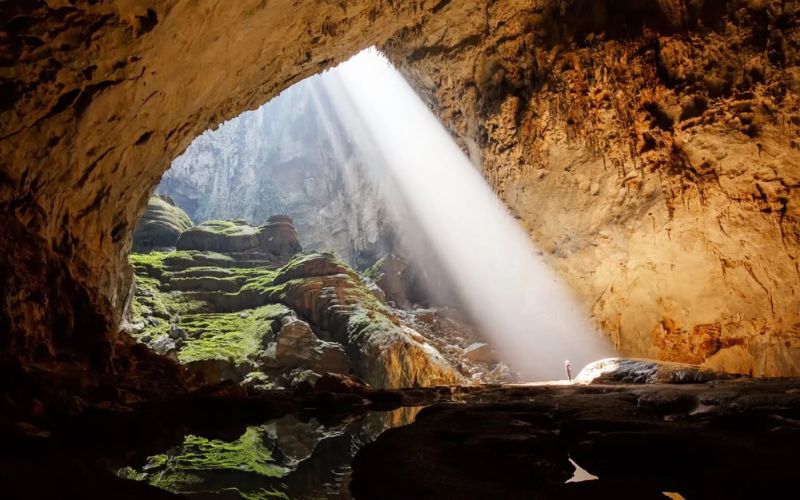
Phong Nha Cave
What makes it special: you can really feel the change from the bright river to the dark cave. The boat entrance makes the visit different from a regular “walk into a cave” visit.
Realistic expectations: if you go during the rainy season, the water levels may rise and the cave may close for safety. Don’t make plans around this without checking the weather first, because it happens a lot.
2. Paradise Cave: the fascinating factor with manageable effort
Best for: photographers, travelers who want dramatic formations without expedition level difficulty
People often suggest Paradise Cave because it has a grand, cathedral-like feel while still being easy for visitors to get around. The public area is for people who want to explore on their own, and there is a well-lit boardwalk through the main area.
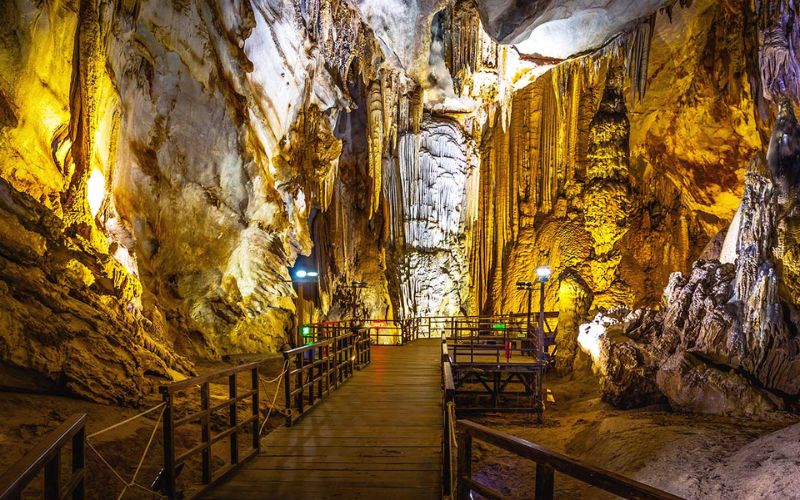
Paradise Cave walkway
What makes it special: it quickly adds size and beauty. You don’t need to be an expert to get a good idea of Phong Nha’s limestone world.
Realistic expectations: this is one of the most popular caves, so the time you go matters. Getting there earlier in the day usually means a more peaceful time, especially during busy travel months.
3. Dark Cave: active, playful, not a quiet cave
Best for: energetic travelers, groups of friends, people who want a half day adventure feel
People often call Dark Cave an “adventure playground”. The cave is just one part of the experience, which includes ziplining and exploring the water.
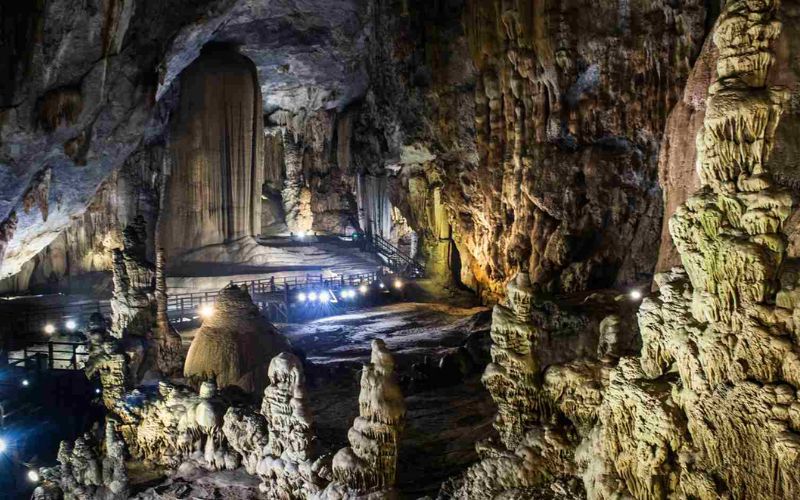
Inside Dark Cave, Phong Nha-Ke Bang
What makes it special: it feels like both a social and a physical activity. Dark Cave can be more fun than a cave just for sightseeing if you like to do things instead of just look.
Realistic expectations: if you want a quiet cave where you can think and take your time photographing formations, this isn’t the right choice. It’s more about having fun and moving around.
4. Hang Va and Hang Tien: for travelers who want to go deeper
Best for: fit travelers who want a serious nature experience without committing to the most extreme expedition
Hang Va is known for its unusual cave features and its structured expedition format, which includes trekking, rope sections, and an overnight camp. Hang Tien tours usually last more than one day and take you to places that are farther away. They are more like deep exploration trips than quick day trips.
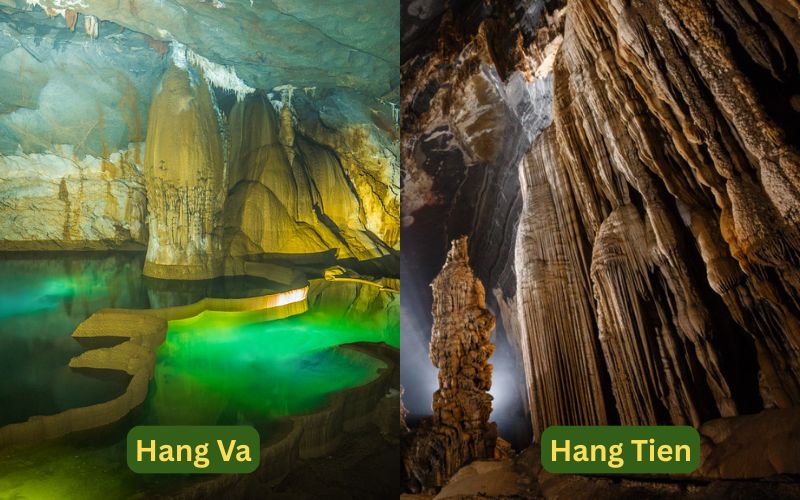
Hang Va and Hang Tien Cave
What makes them special: you enter a travel memory that doesn’t feel like a typical tourist spot. The overnight part, the logistics, and the jungle setting all add to the sense of adventure and place.
Realistic expectations: these caves aren’t just “show up and walk in”. You should be ready to hike and pay close attention to what your guide says. There is a reason why operators post safety and difficulty requirements.
5. Son Doong Cave: the peak experience, not for everyone
Best for: experienced adventure travelers with time, budget, and strong motivation
Son Doong is often advertised as the largest natural cave in the world by volume, and people visit it through a structured expedition model.
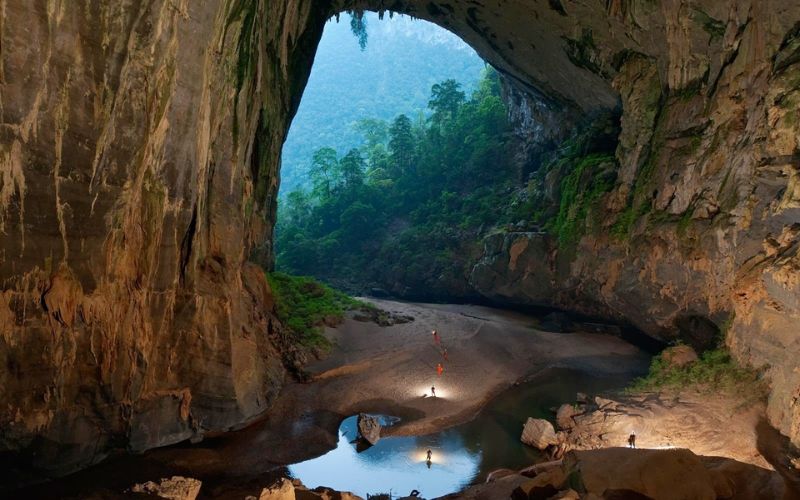
Son Doong Cave
What makes it special: this is a real expedition with big cave formations, underground rivers, and dramatic beams of light coming through dolines. It isn’t a tour of the day. For the right traveler, it’s a once-in-a-lifetime style trip.
Realistic expectations: if you’re only going to be in Phong Nha for a short time, Son Doong isn’t the best choice. It makes more sense as the main reason for your trip, not just an extra.
>>> If you would like to explore Phong Nha-Ke Bang without worrying about logistics, safety, or choosing the wrong cave, a well-designed tour like Central Vietnam 14 Days tour can make all the difference. Traveling with us allows you to focus on the experience itself, while ensuring your time, energy, and expectations are matched with the right cave adventure.
How to Choose the Right Cave for Your Trip
Finding the right cave in Phong Nha-Ke Bang isn’t just about finding the most well-known one; it’s also about making sure the experience fits your travel plans. There are many different types of caves to visit, from short, beautiful ones to long, difficult ones. If you choose the wrong one, your exciting plan could turn into a long, tiring day. When making the right choice, three things matter: time, fitness, and season. These tips will help you choose a cave experience that is fun, realistic, and a good fit for your trip.
Choose based on your time in Phong Nha
- If you have 1 to 2 days, pick one easy highlight and one activity experience. A common pairing is Paradise Cave for the big scenery, plus either Phong Nha Cave for the river entry feel or Dark Cave for a more active afternoon. Paradise Cave is easy to visit without a guide, which helps if you are moving fast.
- If you have 3 to 4 days, use the extra time to go beyond the “greatest hits.” Keep one day for a deeper trek or a short expedition style tour, depending on your fitness. This is where Hang Va or Hang Tien style experiences start making sense.
Why you shouldn’t cram too many caves: many travelers don’t realize how hard caves can be on the body and mind. You are going up and down steps, getting used to the humidity, the changing temperatures, and spending a lot of time in low light. Two great caves can feel more full than four rushed ones.
Choose based on fitness and outdoor experience
- If you are new to trekking, start with Phong Nha Cave and Paradise Cave. They make a strong first impression without putting too much stress on your body.
- If you have outdoor experience and solid fitness, think about taking a Hang Va or Hang Tien tour if you are fit and have experience outside.
- If you are traveling with children or older family members, make sure to plan the easiest logistics and the shortest walking distances. Boat and boardwalk style caves are usually the easiest to get into.
Choose based on season and weather
The best time to visit Phong Nha-Ke Bang is during the dry season, from March to August, when weather conditions are more stable and most caves are accessible. During these months, rainfall is lower, river levels are generally safe for boat access, and both water caves and dry caves operate regularly. This is also the period when first-time visitors have the fewest disruptions to their plans.
- From September to November, Phong Nha enters the rainy season. Heavy rainfall can cause rivers to rise quickly, which often leads to temporary closures of water caves such as Phong Nha Cave for safety reasons. Flooding in low-lying areas is possible, and outdoor activities may be limited depending on weather conditions. While dry caves like Paradise Cave may remain open, schedules can change at short notice.
- Between December and February, rainfall decreases, but temperatures are cooler and weather can be unpredictable, with occasional rain and cloudy days. Some travelers enjoy this period for fewer crowds, but it is not ideal for water-based cave experiences.
A common misunderstanding is assuming that caves are always open because they are underground. In Phong Nha-Ke Bang, cave access depends heavily on river levels and weather upstream. This is why checking local conditions shortly before your visit is essential, especially if your itinerary includes water caves or boat-based activities.
>>> Read more: The best time to visit Vietnam
Common misunderstanding: some people think that caves are always open because they are underground. In Phong Nha, the water levels can actually block doors or make it dangerous for boats to get in at certain times.
>>> Recommend tours for you:
- Classic Tour in Vietnam in 7 Days
- 8-Day Vietnam Heritage: Ho Chi Minh to Ha Noi Discovery
- Wonderful and Authentic Vietnam in 13 Days Tour
Suggested Itineraries in Phong Nha-Ke Bang
One day plan for limited time
- Morning: Paradise Cave for big scenery on a manageable route
- Afternoon: Phong Nha Cave boat experience if conditions are safe and open
Two to three days plan for a balanced experience
- Day 1: Paradise Cave plus local village riding or riverside time
- Day 2: Dark Cave for an active half-day experience
- Day 3: Keep flexible for weather and consider an extra cave or a countryside day
Add a slow morning cycling past rice fields and river villages, then use afternoons for caves. This pacing is often what makes Phong Nha-Ke Bang feel personal rather than rushed.
>>> Cave exploration in Phong Nha-Ke Bang is most rewarding when it is planned carefully. Our Vietnam tour in 11 days are operated with licensed guides, strict safety standards, and a strong focus on conservation, so you can explore responsibly and with confidence. Contact us to find a tour that balances adventure, comfort, and authenticity.
Essential Tips for Visiting Caves in Phong Nha-Ke Bang
It’s not hard to visit caves in Phong Nha-Ke Bang, but going in without being ready can put your safety and your overall experience at risk. The conditions inside caves are very different from those outside, with slippery ground, low light, and sudden changes in temperature and humidity. Making simple decisions about what to wear, when to go, and how to act in the cave can have a big impact. The tips below are all about what travelers really need to know in order to explore safely, comfortably, and with realistic expectations.
- Wear the right gear: choose closed toe shoes with good grip. Limestone paths and wet surfaces can be slippery, especially after rain. Bring light layers. Caves can feel cooler than outside, especially in long public sections like Paradise Cave.
- Respect the environment: do not touch formations. Oils from hands can damage delicate cave structures over time. Stay on marked paths in public caves and follow guide rules in expedition tours.
- Know what not to do: do not assume a cave is open without checking, especially for water cave trips during rainy periods. Do not overbook your days. Give yourself recovery time if you are doing a trek or activity in a cave.
It’s not difficult to visit caves in Phong Nha-Ke Bang, but going in without being ready can put your safety and your overall experience at risk. The conditions inside caves are very different from those outside, with slippery ground, low light, and sudden changes in temperature and humidity. Making simple decisions about what to wear, when to go, and how to act in the cave can have a big impact. The tips are all about what travelers really need to know in order to explore safely, comfortably, and with realistic expectations. If you want to know more, don’t hesitate to contact us, we’re always ready to provide you with the best service.
Read more: