
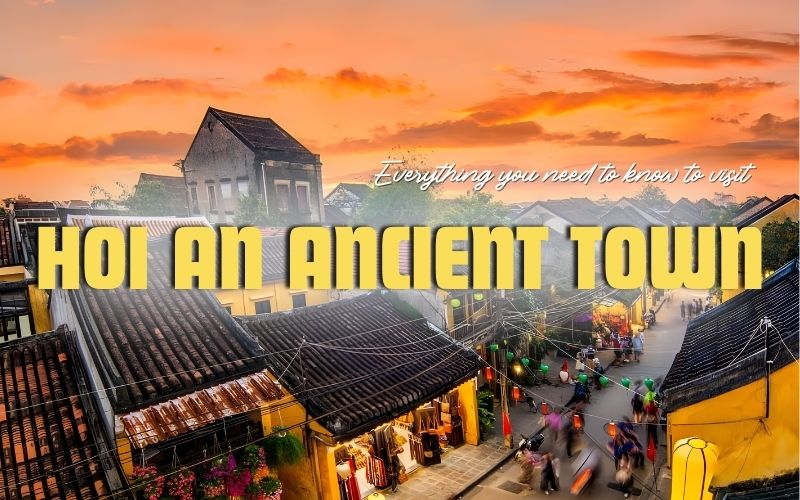
Hoi An Ancient Town is special because it is not a heritage site frozen in the past but a living town where history continues to shape everyday life. Ancient houses are still homes and shops, temples remain active places of worship, and the streets follow rhythms that have existed for centuries. Rather than being preserved as a museum, Hoi An has retained its cultural identity through continuous use, making it one of the rare places in Asia where visitors can experience heritage as something lived, not displayed. Let’s explore it with us!
Where Is Hoi An Ancient Town?
Hoi An Ancient Town is located in central Vietnam, within Da Nang City. Before the administrative adjustment, it belonged to Quang Nam Province, and it still sits geographically between Da Nang to the north and the lower Thu Bon River basin to the south.
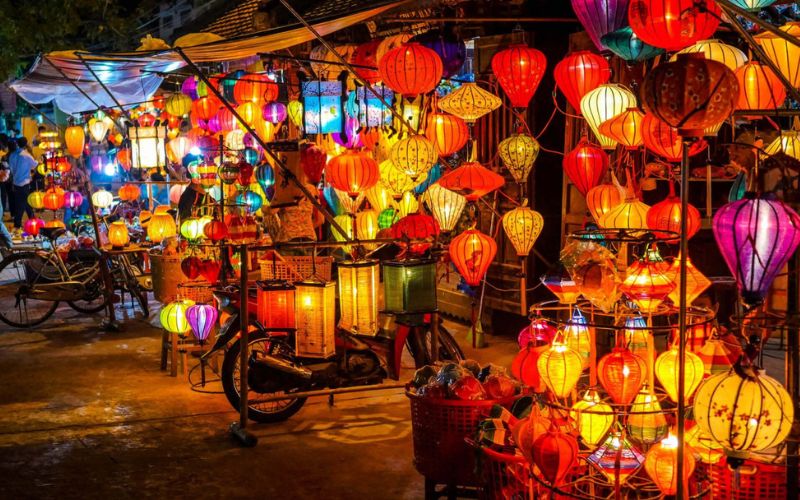
Hoi An Night Market
Hoi An’s location played a decisive role in its historical importance. Positioned near the river mouth and close to the East Sea, the town developed naturally into a major trading port from the 15th to 19th centuries, welcoming merchants from Japan, China, and Europe. This strategic setting allowed goods, cultures, and ideas to flow easily inland and overseas, shaping Hoi An into a multicultural commercial center whose urban layout has remained largely intact.
When Is the Best Time to Visit Hoi An Ancient Town?
The best time to visit Hoi An Ancient Town is from February to April, when the weather is dry, temperatures are moderate, and humidity is lower than in summer. During these months, walking through the old town is comfortable, and river activities and countryside excursions are at their best.
From September to November, Hoi An experiences its rainy season, with a real risk of flooding due to its low elevation near the river. While the town remains atmospheric, heavy rain can disrupt travel plans. The summer months from May to August are hot and humid, but this period works well for travelers who want to combine cultural visits with nearby beach time at An Bang or Cua Dai.
>>> Read more: The best time to visit Vietnam
Is Hoi An Worth Visiting Compared to Other Ancient Towns in Asia?
Yes. Hoi An Ancient Town is worth visiting even when compared with Asia’s most famous historic towns because it offers a rare mix of authenticity, accessibility, and everyday life. While other ancient towns are impressive in scale or monumentality, Hoi An stands out for how easily visitors can experience history without feeling overwhelmed.
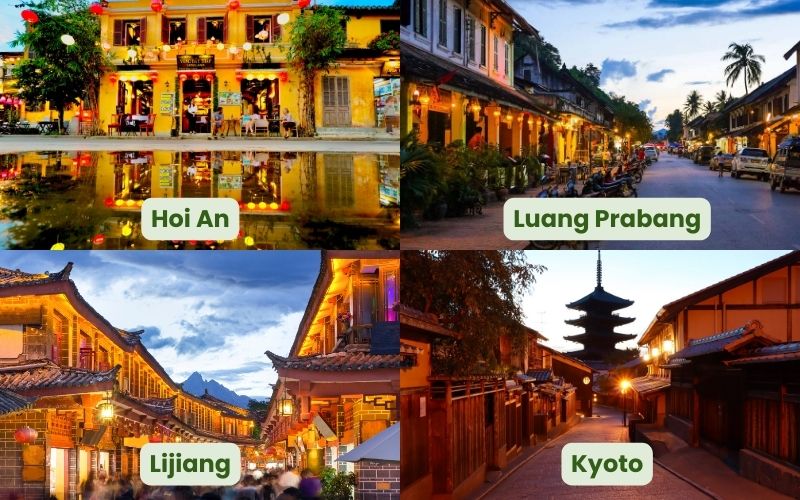
From Hoi An to Kyoto, these historic towns invite you to experience culture through quiet streets and warm evening lights.
Compared to other well known heritage towns, Hoi An’s strengths are clear:
| Ancient Town | Key Characteristics | Main Limitations |
| Hoi An, Vietnam | Compact old town, multicultural trading port heritage, easy to walk, close to beaches | Smaller in scale, fewer monumental landmarks |
| Luang Prabang, Laos | Strong spiritual atmosphere, Buddhist heritage, riverside setting | Spread out, slower transport, fewer nearby beaches |
| Lijiang, China | Dramatic Naxi architecture, mountain scenery, UNESCO old town | High altitude, heavy domestic tourism, less walkable |
| Kyoto, Japan | Monumental temples, refined traditions, imperial heritage | Large scale, crowded, requires careful planning |
Hoi An’s main advantage lies in its human scale. The old town is compact and easy to explore on foot, making it ideal for first time visitors, families, and travelers with limited time. Its proximity to beaches and countryside adds variety without long travel, something few ancient towns in Asia can offer in such a short distance.
What Makes Hoi An Ancient Town Special?
Hoi An Ancient Town is special because it preserves history not as a static display, but as a continuous way of life shaped by trade, belief, and community. Its value lies in the rare combination of physical preservation and living culture, where architecture, rituals, food, and daily routines still follow patterns established centuries ago. This section explains clearly and factually why Hoi An stands apart from other historic towns in Asia.
1. A Perfectly Preserved Trading Port from the 15th to 19th Century
Hoi An was one of Southeast Asia’s most important international trading ports between the 15th and 19th centuries, historically known as Faifo. Its river access allowed merchant ships from Japan, China, Portugal, and the Netherlands to dock and trade goods such as silk, ceramics, spices, and tea.
What makes Hoi An exceptional is that its urban fabric survived major wars and large scale modern redevelopment. The original street grid, shophouses, assembly halls, and waterfront areas remain largely intact. Rather than being reconstructed later, Hoi An reflects an organic result of cultural exchange through commerce, making it a genuine historical landscape rather than a recreated one.
>>> Hoi An’s trading past is best understood on foot, where old shophouses and riverfront streets reveal how commerce shaped the town. Our half day tour are designed to highlight these layers without overwhelming you with dates or trivia.
2. UNESCO World Heritage Recognition
In 1999, UNESCO recognized Hoi An Ancient Town as a World Heritage Site for its outstanding preservation of a traditional Asian trading port. The designation highlights two key values. First, the town maintains an exceptionally well-preserved example of a historic urban ensemble. Second, it reflects the fusion of indigenous and foreign influences developed through centuries of peaceful trade.
Importantly, UNESCO protection in Hoi An focuses on safeguarding living heritage. Residents continue to inhabit historic buildings, operate family businesses, and practice traditional customs, ensuring that preservation supports community life rather than replacing it.
>>> Travel responsibly with our UNESCO heritage tours in Vietnam.
3. Lantern Nights: Why Hoi An Looks Different After Sunset
Hoi An looks different after sunset because of its lantern tradition, most visible during monthly full moon nights. On these evenings, electric lights are reduced and the old town is illuminated by silk lanterns, echoing practices that date back to earlier centuries.
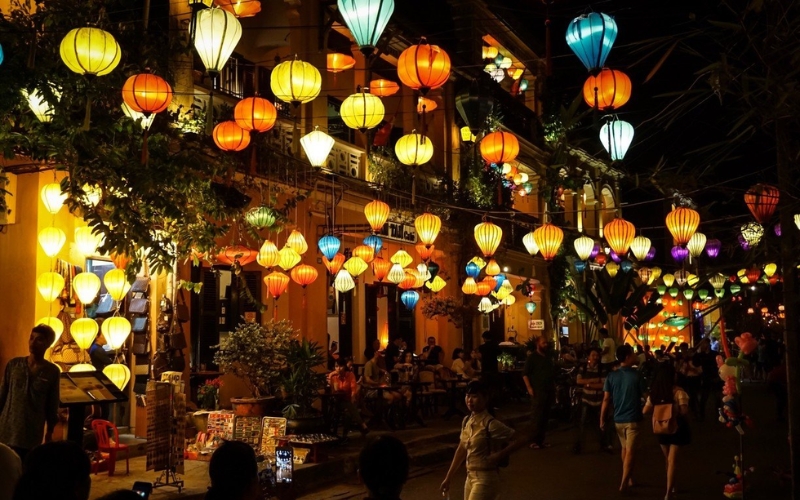
A peaceful evening scene during the Hoi An Lantern Festival
This tradition is rooted in cultural beliefs about harmony, remembrance, and respect for ancestors. Unlike staged light shows, lantern nights remain tied to local customs and spiritual meaning. Visitors experience an atmosphere shaped by tradition rather than performance, which reinforces Hoi An’s identity as a living town rather than a tourist spectacle.
>>> Read more: Ultimate Guide to the Hoi An Lantern Festival 2026: Dates, Highlights and Unforgettable Tips
4. A Car Free Old Town Designed for Slow Travel
Hoi An Ancient Town restricts vehicle access during large parts of the day, creating an environment designed for walking and slow movement. Streets are experienced on foot, by bicycle, or by small boats along the Hoai River.
This human scale makes Hoi An particularly suitable for families, couples, and older travelers. The absence of traffic noise and congestion allows visitors to observe daily life closely, from local markets to evening rituals, reinforcing the town’s calm and accessible character.
5. Architecture You Can Still Live Inside
Hoi An’s architecture remains functional rather than ceremonial. Many of its historic buildings are still lived in and used for business, which explains why the town feels authentic rather than staged.
Traditional Tube Houses and Wooden Structures
Hoi An’s traditional tube houses feature narrow facades and deep interiors, a design adapted for both commerce and climate. Yin yang tiled roofs, wooden frames, and interior courtyards help regulate temperature and manage seasonal flooding. Families continue to live, cook, and trade within these houses, preserving intangible traditions alongside physical structures.
The Japanese Covered Bridge: Symbol of Hoi An
Built in the early 17th century by Japanese merchants, the Japanese Covered Bridge symbolizes Hoi An’s multicultural trading past. Beyond its architectural uniqueness, the bridge reflects spiritual beliefs and community connections between foreign merchants and local residents. It remains a functional crossing and cultural symbol rather than a monument isolated from daily life.
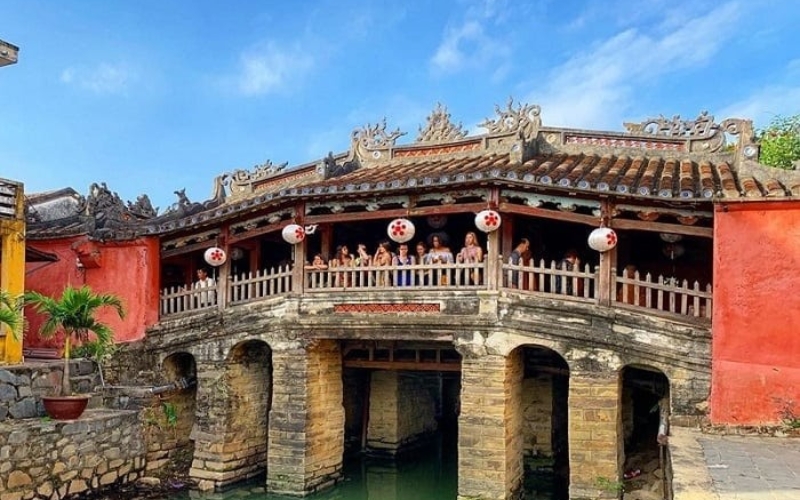
Japanese Covered Bridge, the timeless symbol of Hoi An
6. Hoi An Cuisine: Food That Exists Only Here
Hoi An’s food is tied to the city’s past, geography, and long-standing family traditions. Many foods from the area depend on certain water sources, herbs that grow in the area, and family recipes for how to make them, so they can’t be made properly outside of town. In Hoi An, food isn’t just about taste; it’s also about place and tradition.
Cao Lau
Cao lau is the food that makes Hoi An unique, and you can only find it here. The noodles are typically made with water that comes from old wells in the area and is treated with alkaline ash from plants in the area. When you mix noodles with pork slices, fresh herbs, and crunchy rice crackers, you get a meal that tastes and feels like nothing else. Both the materials and the traditional method used to make it make it one of a kind.
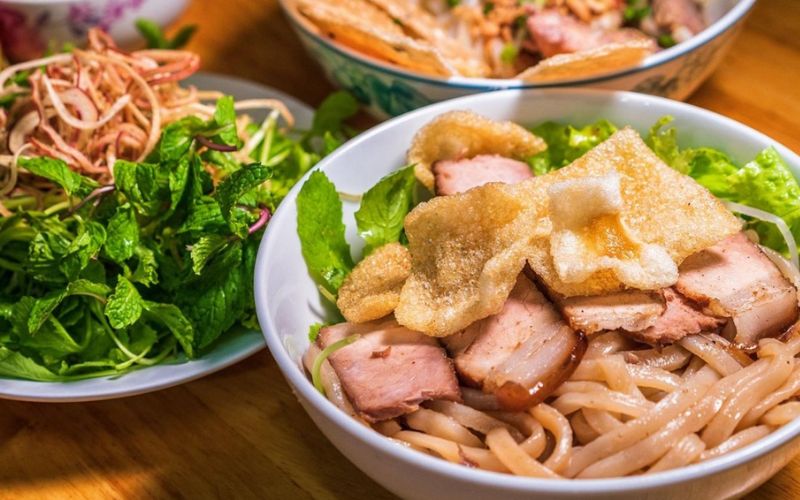
Cao Lau
Banh Bao and Banh Vac (White Rose Dumplings)
Banh bao and banh vac, which are also called “white rose dumplings,” are made from finely ground rice dough that is cooked until it turns clear and then shaped by hand. The filling is generally shrimp or pork that has been lightly seasoned to keep its natural flavor. These dumplings were first made in family homes and were usually saved for big events and community get-togethers. People like them because they have a fine texture, look beautiful, and have a strong connection to local history.
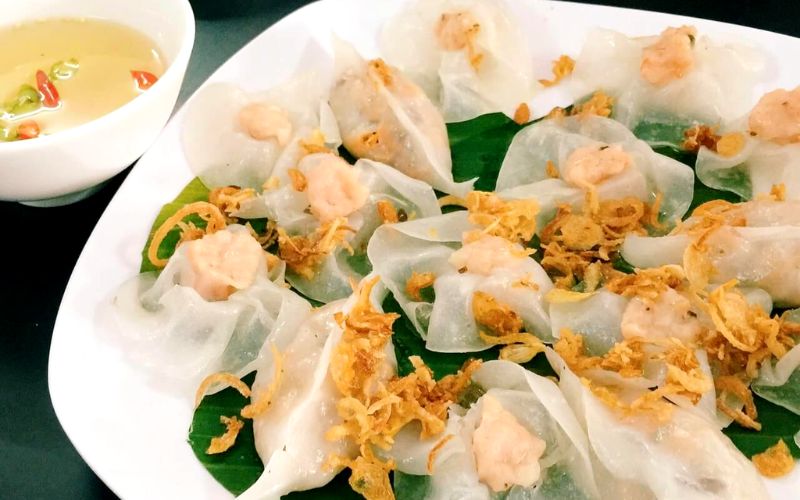
Banh Bao – Banh Vac
Other Local Specialties Popular in Hoi An

From bold noodles to comforting chicken rice and sweet desserts, every dish reflects the town’s everyday life and traditions.
Besides its most well-known meals, Hoi An has a number of other specialties that people in the old town love for being simple and authentic.
| Dish | Main Ingredients | Why It Is Popular |
| Mi Quang (Quang noodle) | Turmeric noodles, pork or shrimp, peanuts, fresh herbs | Light yet flavorful, well suited to the central Vietnam climate and daily meals |
| Com ga Hoi An (Hoi An chicken rice) | Rice cooked in chicken broth, shredded chicken, herbs | Balanced taste, aromatic rice, and comforting flavors loved by both locals and visitors |
| Banh mi Hoi An | Crispy baguette, pork, herbs, pickles, house made sauces | Known for its rich fillings and local sauce recipes, often considered among Vietnam’s best |
| Che Hoi An (Hoi An sweet soup) | Beans, sticky rice, coconut milk, seasonal ingredients | Refreshing desserts that reflect local produce and everyday eating habits |
People like these meals because they use simple, easy-to-find ingredients and are made with care instead of a lot of complicated steps. Together, they show how Hoi An cuisine puts an emphasis on using local ingredients, being useful, and sharing tastes. This strengthens the connection between food and community life in the old town.
>>> Read more: Top 30 Popular Vietnamese Dishes beyond Pho.
7. Life Beyond the Old Town: Villages, Rivers, and Rice Fields
Traditional rural life still goes on nearby, which adds to Hoi An’s draw outside of its historic center. Visitors can see how the town fits into the larger culture landscape because it is close by.
Traditional Craft Villages Near Hoi An
Traditional crafts that used to help the business port are still done in places like Tra Que Vegetable Village, Thanh Ha Pottery Village, and Kim Bong Carpentry Village. These groups still use methods and live in ways that are very connected to Hoi An’s past.
Beaches and Countryside Within Minutes
Visitors can quickly get to An Bang Beach, Cua Dai Beach, the rice fields in Cam Thanh, and the rivers with coconut palms from the old town. The fact that town, river, farms, and sea are all so close to each other is a big part of Hoi An’s geography and culture.
>>> You want to know more than these? Let’s explore more top things to do in Hoi An!
Useful Tips to Travel Hoi An Ancient Town for First-Time Visitors
For first-time visitors, Hoi An is easy to explore and rewarding even with limited time. A short stay can cover the essentials, but understanding a few practical details will help you experience the old town more smoothly and respectfully.
How Much Time Do You Need in Hoi An?
Most first-time travelers need one to two full days to experience Hoi An Ancient Town at a comfortable pace. One day is enough to explore the old town, key landmarks, and evening lantern scenes. Two days allow time for nearby villages, beaches, or countryside without rushing.
Old Town Entrance Ticket Explained
To enter key heritage buildings within Hoi An Ancient Town, visitors are required to purchase an old town ticket. The ticket allows access to a limited number of historic houses, temples, assembly halls, and museums. The system helps fund conservation and supports local maintenance rather than functioning as a general admission fee.
Dress Code and Cultural Etiquette
When visiting temples, pagodas, and assembly halls, modest clothing is expected. Shoulders and knees should be covered, especially in religious spaces. Comfortable walking shoes are recommended, as most of the old town is explored on foot and streets can be uneven.
Where to Stay: Inside the Old Town or Nearby?
Staying inside the old town offers early morning and late evening access when the streets are quieter. However, accommodation options are limited and can be more expensive. Staying just outside the old town provides better value, more space, and easy access by foot or bicycle, while still remaining close to major attractions.
Getting Around the Old Town
Hoi An is best explored on foot or by bicycle. Motorized vehicles are restricted during certain hours, which contributes to the calm atmosphere. Short boat rides on the Hoai River offer a different perspective but should be considered an atmospheric experience rather than transportation.
Best Time of Day to Explore
Early morning and late afternoon are the most comfortable times to walk the old town, especially during warmer months. Midday heat can be intense, while evenings offer a lively but still relaxed atmosphere, particularly around the river and lantern lit streets.
Hoi An Ancient Town is more than a place to visit because it continues to function as a living community rather than a preserved backdrop for tourism. Behind the lanterns, old houses, and historic streets are families who have lived there for generations, maintaining traditions not as performances but as part of everyday life. If you are planning a journey to central Vietnam and want to experience Hoi An in a thoughtful, well paced way, our local team can help design an itinerary that respects the town’s rhythm while matching your travel style. Don’t hesitate for contacting us!
Read more: