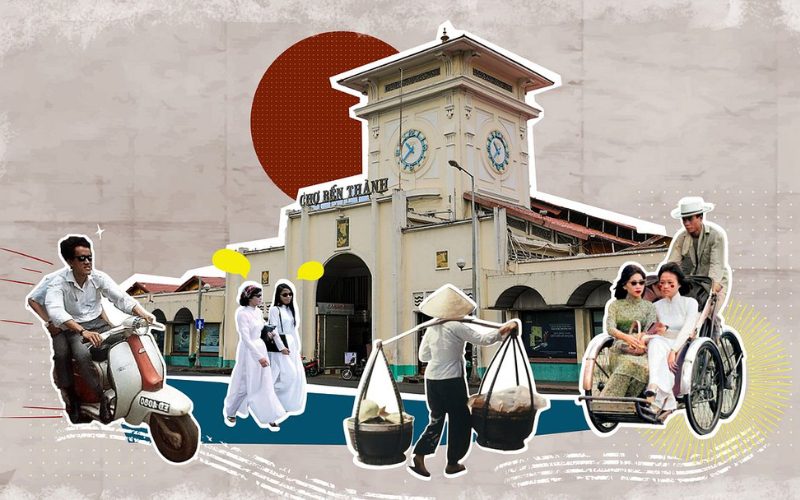
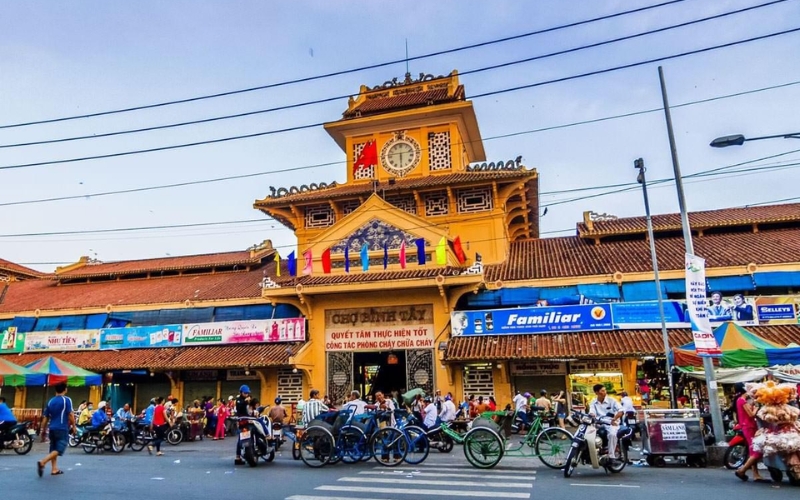
Few places in Vietnam can match the raw energy of Ben Thanh Market. From the moment you round the corner and spot that yellow clock tower rising above the centre rooftops, you understand why Cho Ben Thanh Saigon has remained the heartbeat of Ho Chi Minh City for over a century. Whether you are here for the food, the souvenirs, or simply the spectacle of it all, Ben Thanh Market delivers an experience that no shopping mall can replicate.
This guide covers everything you need to know: the market’s history, where it sits, what to buy, what to eat, and how to navigate it without getting overwhelmed or overcharged.
What Is Ben Thanh Market?
Ben Thanh Market (Vietnamese: Cho Ben Thanh) is the largest enclosed market in Ho Chi Minh City and one of the city’s oldest surviving structures.
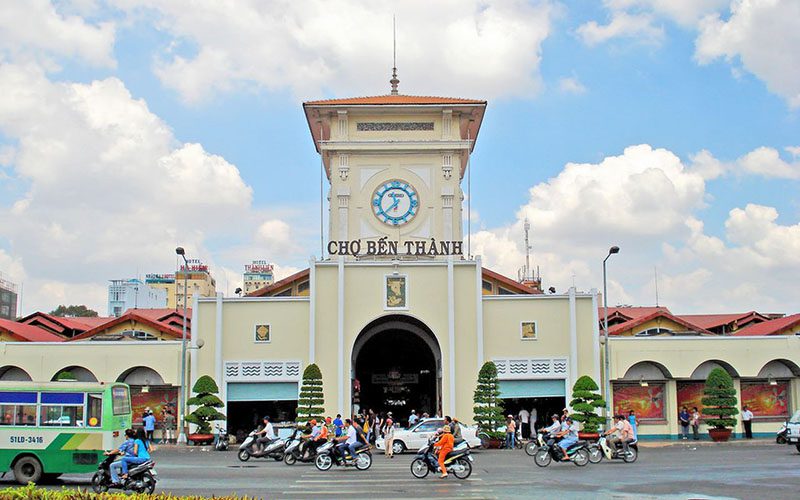
Ben Thanh Market
It covers roughly 13,000 square meters in the center of Ben Thanh Ward, housing nearly 1,500 booths run by more than 6,000 small vendors selling everything from fresh produce and Vietnamese spices to lacquerware, clothing, and street food.
The market’s name comes from two Vietnamese words: “Ben”, meaning harbor, and “Thanh”, meaning citadel. It is a reference to the old Gia Dinh Citadel and the Saigon River port that originally sat nearby, long before the city looked anything like it does today.
More than just a place to shop, Ben Thanh Market in Ho Chi Minh City is where locals do their morning grocery run and where travelers get their first real taste of Vietnamese market culture. Arrive early enough and you will find the same woman at the same pho stall she has run for twenty years. That kind of continuity is part of what makes this place worth your time.
Where Is Ben Thanh Market?
Ben Thanh Market sits at the intersection of four major streets in Ben Thanh Ward: Le Loi, Ham Nghi, Le Lai, and Tran Hung Dao.
- Address (main gate): Le Loi Street, Ben Thanh Ward, Ho Chi Minh City.
The market is roughly 500 meters from the Saigon Opera House, about 1 kilometer from the Reunification Palace, and within easy walking distance of Notre Dame Cathedral and the Central Post Office. If you are staying anywhere in the core of Saigon, you can probably walk there in under ten minutes.
Getting to Ben Thanh Market:
- By Metro: Metro Line 1, which opened on 22 December 2024, has Ben Thanh Station directly in front of the market’s main entrance. This is now by far the easiest way to arrive.
- By bus: City buses 03, 04, 19, 20, 93, and 152 stop near the market. Bus 152 runs from Tan Son Nhat International Airport and costs about 15,000 VND (~$0.57).
- By Grab or taxi: Type “Ben Thanh Market” into Grab and you will be dropped right at the clock tower. From Tan Son Nhat Airport, expect around 30 minutes depending on traffic.
- On foot: If you are staying near Pham Ngu Lao or Bui Vien, it is a pleasant 10 to 15 minute walk.
Ben Thanh Market Opening Hours
The market runs year-round on a split schedule:
| Session | Hours |
| Day Market | 6:00 AM to 6:00 PM |
| Night Market | 6:00 PM to 10:00 PM |
The best time to visit depends on what you are after. Early morning, between 6:00 and 9:00 AM, is when the fresh produce section is at its most active and the crowds are manageable. The market is at its busiest between 10:00 AM and 3:00 PM, which is also the hottest part of the day. Temperatures inside can reach 32 to 35°C (90 to 95°F) with no air conditioning, so dress accordingly and bring water.
The night market transforms the surrounding streets outside the main building. Vendors set up tables along the exterior roads, and the focus shifts almost entirely to food and drinks. It is a more relaxed atmosphere and worth experiencing separately from the daytime market.
Inside the Market: Layout and Gates
Ben Thanh Market has 4 main gates and 12 side gates, each with its own location and characteristics in terms of goods sold:
Main Gates
1. South Gate (Le Loi Street): This is the main gate, notable for its three-faced clock tower, a familiar symbol of Saigon. This area mainly sells fabrics, dried food, and specialties. The entrance attracts many tourists and visitors. The South Gate faces the Ben Thanh metro station.
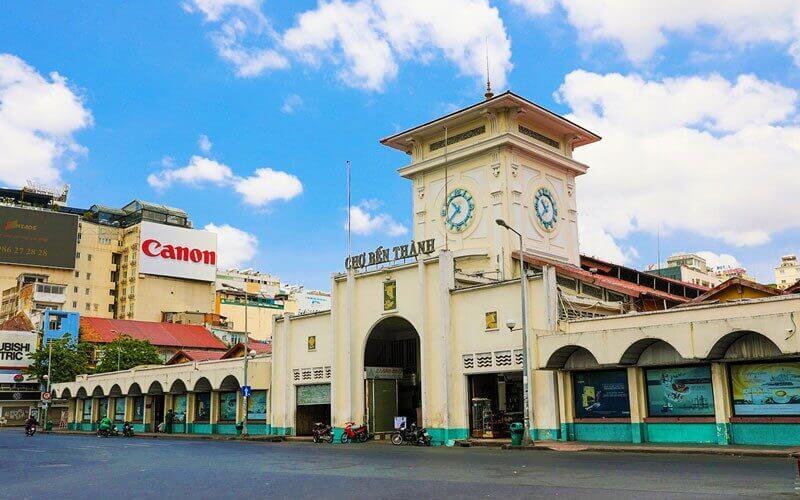
Ben Thanh Market
2. East Gate (Phan Boi Chau Street): This area is a paradise for those who love cosmetics, body care, hair care, and skincare products. This is a bustling gate, suitable for tourists who want to buy beauty products.
3. West Gate (Phan Chu Trinh Street): At this gate, you will find shoes, handicrafts, and souvenirs. This is an ideal choice if you want to buy gifts or souvenirs with a strong Vietnamese cultural flavor.
4. North Gate (Le Thanh Tong Street): The North Gate specializes in selling fresh flowers and tropical fruits, suitable for those who want to buy fresh produce or enjoy the atmosphere of a traditional market.
Side Gates
Ben Thanh Market also has 12 side gates, opening onto major roads surrounding the market, making it easier to move around and access shopping areas. Each side gate usually offers similar or supplementary goods to the main gates.
The interior is a rectangle of narrow aisles. Navigation is not immediately obvious, and getting slightly lost on your first visit is nearly inevitable. That is not a problem. Wander, and you will eventually find everything.
What Makes Ben Thanh Market Worth Visiting
The Food Court
This is the real draw for many visitors. Ben Thanh Market has over 50 food stalls concentrated toward the center of the building, and the competition between vendors keeps quality reasonably high. The aromas hit you before you even find the food section.
Dishes worth trying:
- Pho bo (beef noodle soup): A bowl brewed from broth simmered for hours. Prices range from 30,000 to 120,000 VND ($1.15 to $4.60).
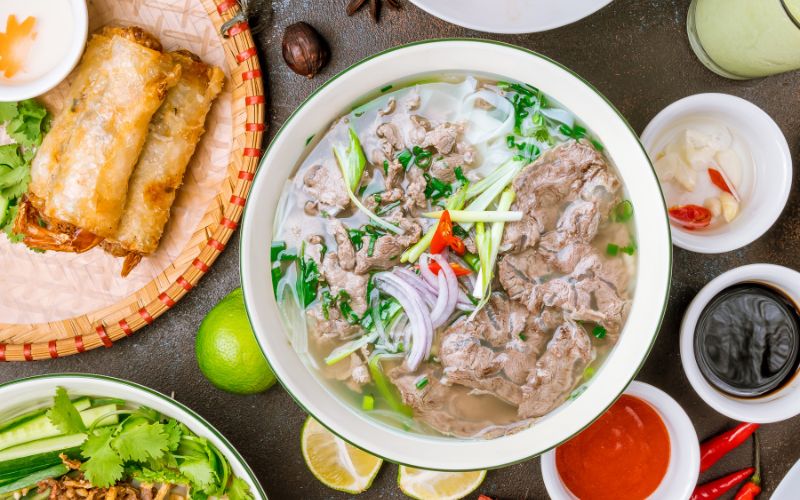
Pho bo (beef noodle soup)
- Banh mi: Vietnamese baguette sandwiches with pork, pate, pickled vegetables, and fresh herbs. Expect to pay 30,000 to 60,000 VND ($1.15 to $2.30).
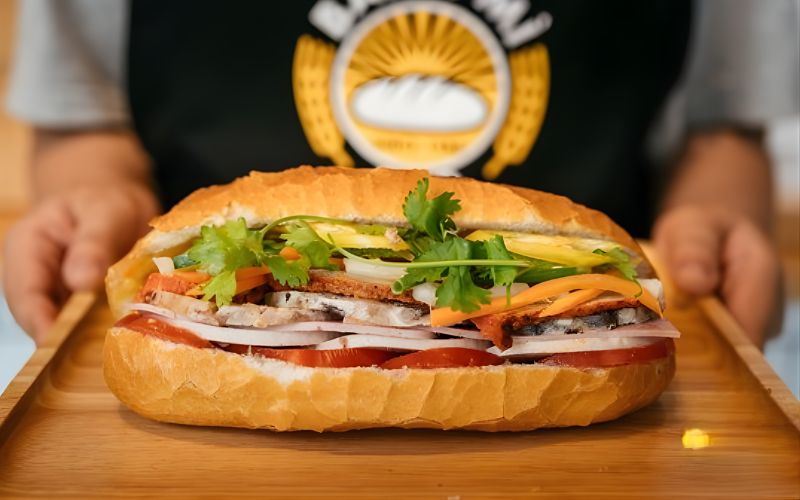
Banh mi is proof that Vietnam turns simple street food into something unforgettable.
- Bun rieu: A tomato and crab paste noodle soup that tends to be slightly sweeter in Saigon than in other regions. Shrimp paste and tamarind sauce are offered on the side.
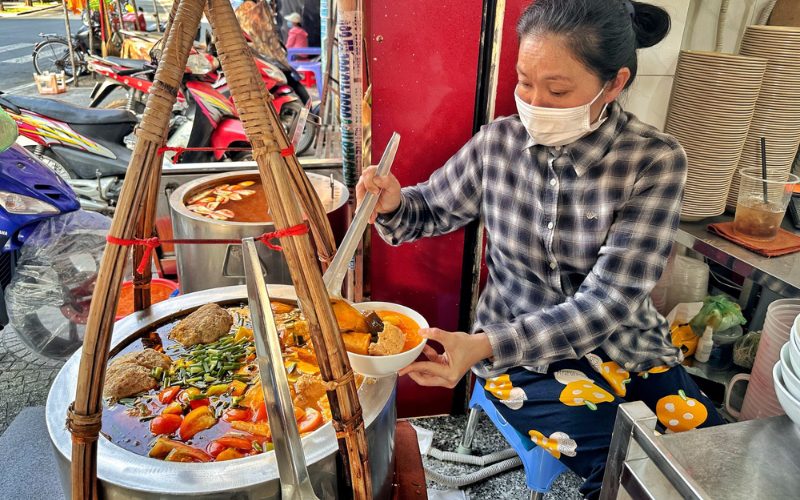
Bun Rieu Ganh at Ben Thanh Market
- Ca phe sua da (Vietnamese iced coffee): Dark roast drip coffee over ice with sweetened condensed milk. Around 25,000 to 50,000 VND ($0.95 to $1.90). Hard to find a better version at this price anywhere in the city.
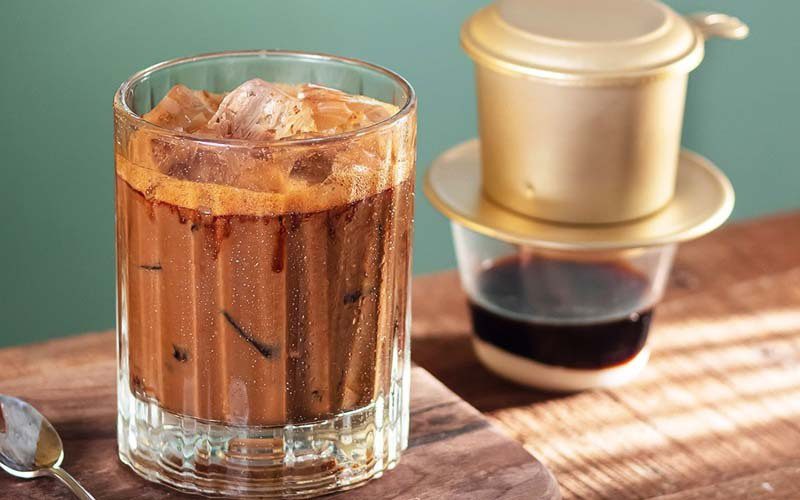
Vietnamese Iced Coffee
- Banh can: Small rice flour pancakes cooked in terracotta molds, crispy on the outside and soft inside. A central Vietnamese specialty you can actually find here.
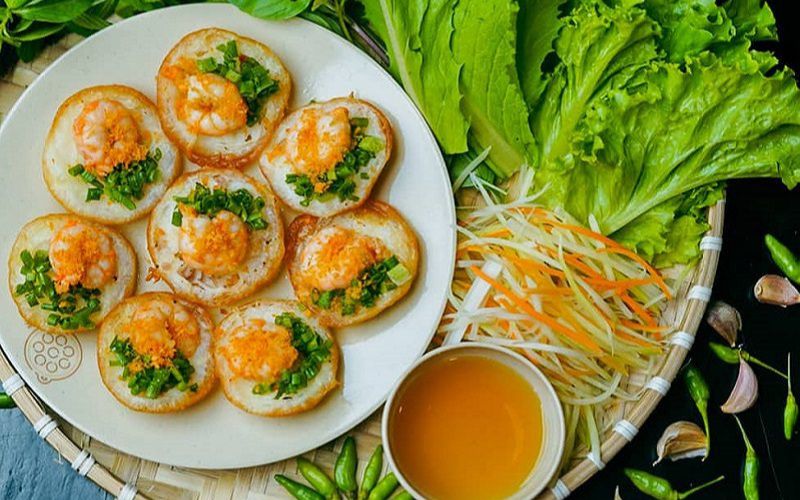
Banh Can & Cham pancakes
One practical note: food stall prices at Ben Thanh are higher than what you would pay at a street stall a few blocks away. You are paying partly for the experience and the convenience. That said, the food is genuinely good, and eating at the market is part of the visit.
Shopping and What to Buy
The market covers a lot of ground, but some categories are better here than others.
Worth buying at Ben Thanh Market:
- Lacquerware and wooden crafts: Trays, bowls, chopstick sets, and decorative items made from lacquered wood. These travel well and are consistently good quality relative to price.
- Silk scarves and ao dai fabric: The textile stalls have a wide selection. If you are having an ao dai made elsewhere, buying the fabric here can save money.
- Vietnamese spices and dried goods: Dried shrimp, star anise, peppercorns, cinnamon sticks, and various spice blends. The north gate area has the best selection.
- Conical hats (non la): The flat-bottomed Vietnamese straw hats are lightweight and easy to pack. A decent one costs around 50,000 to 80,000 VND ($1.90 to $3.00).
- Hand-embroidered items: Tablecloths, cushion covers, and wall hangings with traditional Vietnamese motifs. Quality varies, so check the stitching.
What to skip:
Mass-produced souvenirs with “Vietnam” printed on them are available everywhere and are notably cheaper here than at shops on Bui Vien or Dong Khoi Street. Electronics are generally not worth buying at the market.
The Architecture and the Clock Tower
The building’s yellow ochre facade with its central clock tower has appeared in travel photographs since the early 20th century. It is genuinely handsome in a practical, colonial way. The clock tower has three faces and has become so associated with the city that it functions as an unofficial emblem of Ho Chi Minh City alongside the Bitexco Financial Tower and Notre Dame Cathedral.
Photographs of the clock tower are best taken in the early morning before the street in front fills with motorbikes and tour buses.
Ben Thanh Night Market: A Completely Different Experience
When the clock tower reads 6:00 PM and the metal shutters come down on the indoor stalls, the Ben Thanh Night Market starts up on the streets directly surrounding the building. It occupies a different space, draws partly different vendors, and has a noticeably different energy than what you encounter during the day. The two are worth treating as separate visits rather than a single extended one.
Hours and Location
The Ben Thanh Night Market runs daily from 6:00 PM to around 10:00 PM, with stalls on weekends occasionally staying open until midnight. There is no entrance fee. The main concentration of vendors spreads across four streets that frame the market building.
The best window to visit is between 7:00 PM and 9:00 PM. All stalls are open, the food is freshly cooked, and the crowd is active but not yet at its most compressed. Arriving before 7:00 PM means some vendors are still setting up.
What to Eat at the Ben Thanh Night Market
Food is the main reason to come here. Prices are lower than inside the daytime market, dishes are cooked to order in front of you, and the open-air setting makes the whole experience feel less transactional than the indoor food court.
A few dishes that regulars tend to return for:
- Banh trang nuong (grilled rice paper): Thin rice paper toasted over charcoal and topped with egg, dried shrimp, scallion oil, and chili. Around 20,000 to 40,000 VND (~$0.76 to $1.53). One of the night market’s most distinctive snacks and easy to share.
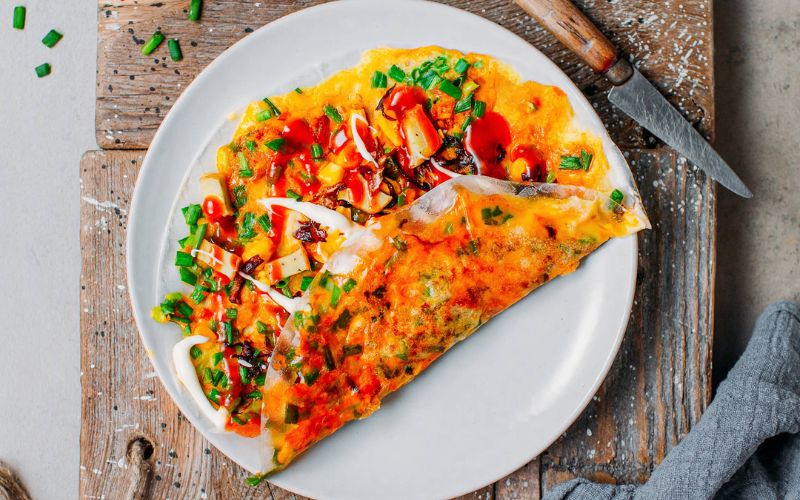
Banh trang nuong (grilled rice paper)
- Com tam (broken rice): A Saigon staple available at several stalls. Grilled pork chop, shredded pork skin, a fried egg, and a small bowl of broth. Typically 50,000 to 80,000 VND (~$1.90 to $3.00).
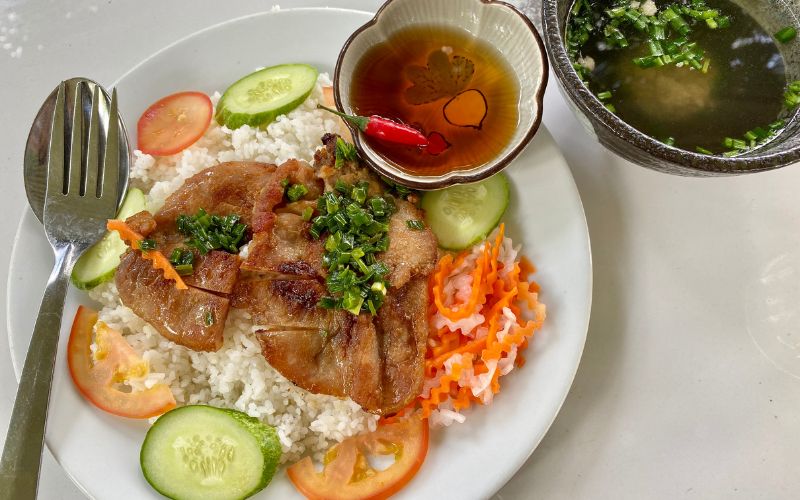
A simple plate of com tam, grilled pork, fragrant rice, and fresh sides.
- Che (Vietnamese sweet soup): Dessert stalls serving che ba mau (three-color dessert with beans, jelly, and coconut milk) and other cold sweet soups are scattered throughout. A cup runs about 15,000 to 30,000 VND (~$0.57 to $1.15).
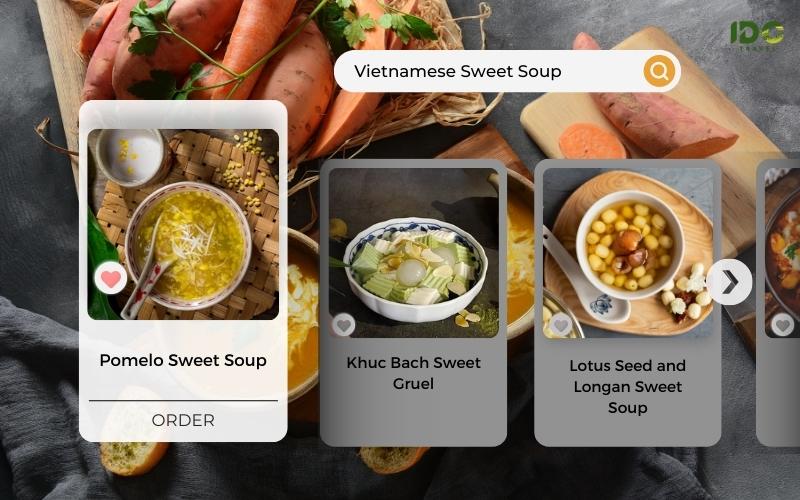
Vietnamese sweet soup
- Grilled seafood: On weekends in particular, vendors set up small charcoal grills along the outer edges of the stall area. Prawns, squid, and clams are sold by weight, typically 100,000 to 200,000 VND (~$3.80 to $7.60) per portion depending on the item.
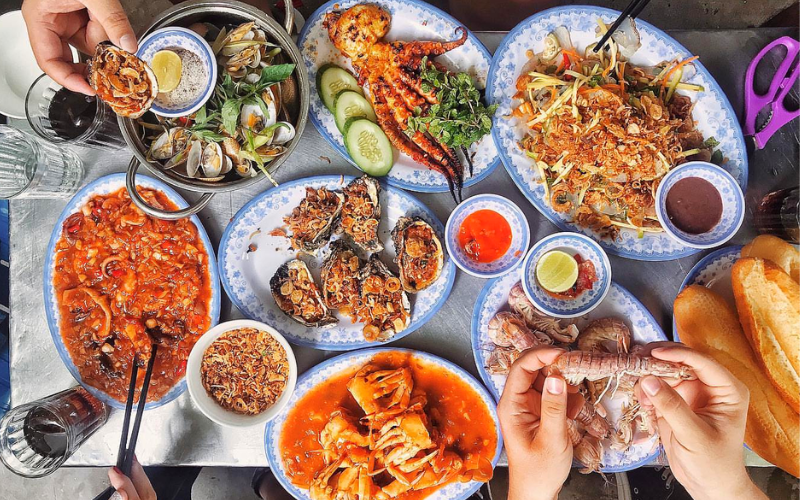
Da Nang fresh seafood
- Fresh fruit juices and sugarcane juice: Available at stalls throughout the night market, usually 20,000 to 35,000 VND (~$0.76 to $1.34).
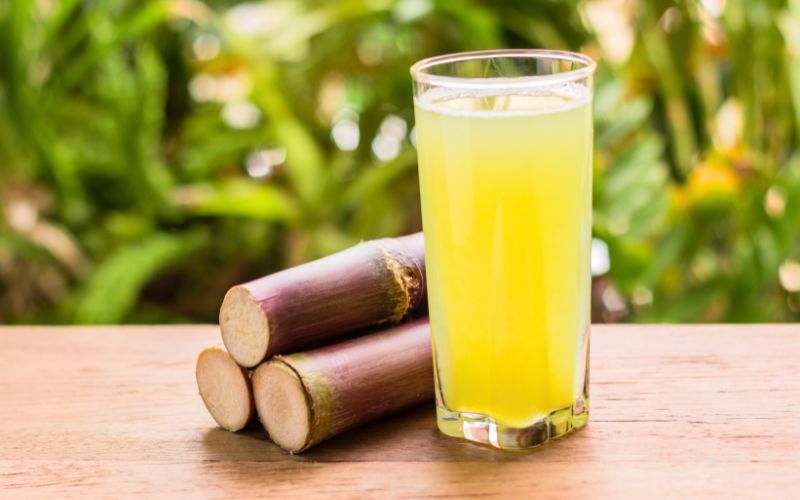
Sugarcane Juice
Most stalls have menus with basic English labels or photographs, and pointing at what you want works perfectly well if language is a barrier.
Shopping at the Night Market
Shopping is secondary to food here, but the vendor mix includes lacquerware, embroidered bags, clothing, and printed T-shirts aimed primarily at tourists. Prices are roughly on par with daytime souvenir stalls inside the market. The bargaining dynamic is similar: start at about half the asking price and expect to meet somewhere in the middle. Vendors are generally more relaxed in the evening and less likely to be aggressively persistent than their daytime counterparts.
One difference worth noting: night market vendors are entirely separate businesses from the indoor stallholders. They rent street space from the city for evening trade, and the product range reflects a more casual, impulse-buy approach than the structured interior shops.
Practical Notes
Cash is the only reliable payment method. Most vendors do not accept cards or QR payments, and bringing small denomination bills (20,000 and 50,000 VND notes) keeps transactions straightforward. The surrounding streets are well lit and reasonably safe, but keep bags zipped and worn in front, as the crowds create the same pickpocket risk as any busy outdoor night market anywhere in Southeast Asia.
Getting there in the evening is easy via Metro Line 1 to Ben Thanh Station, a short walk up from the exit directly in front of the clock tower. Grab drops off and picks up along Le Loi Street without difficulty, though traffic around the Ben Thanh roundabout is heavier between 7:00 and 9:00 PM.
A Brief History of Ben Thanh Market
The market’s roots go back to the early 17th century, when informal clusters of street vendors gathered near the Saigon River to trade. When French colonial forces took control of Gia Dinh in 1859, they formalized the market and gave it structure. The original building, a wooden structure with a thatched roof, burned down in 1870 and was rebuilt as “Les Halles Centrales”.
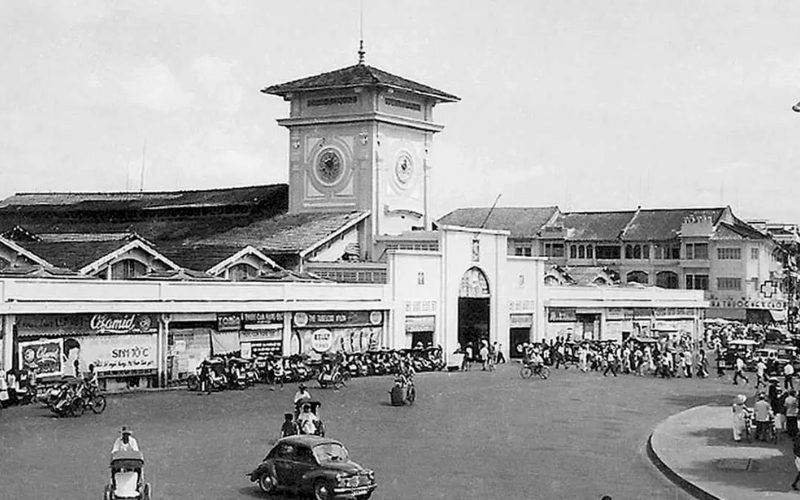
Ben Thanh Market in 1920s
In 1912, the French authorities relocated the market to its current site, which sat adjacent to the old My Tho railway station, now the Saigon bus terminal. Construction used fireproof metal frames, and the building was inaugurated in 1914. The name Ben Thanh Market replaced “Les Halles Centrales” once French influence faded, and the name has stuck ever since.
A major renovation in 1985 updated the interior without altering the market’s characteristic French Indochinese facade. The building was constructed on land reclaimed from a drained pond called Bo Ret, which partly explains why the market floor sits slightly below street level and experiences flooding during heavy rains.
Bargaining at Ben Thanh Market
Bargaining is expected at nearly every stall in the market. Vendors price goods with negotiation in mind, and most will start at two to three times their acceptable floor price for tourists. A few things worth knowing:
- Start at roughly half the asking price and work toward a middle point. This applies to clothing, crafts, and souvenirs, not food.
- Being the first customer of the day carries some significance in Vietnamese market culture. Some vendors consider the first sale a good omen and may offer a better deal than usual.
- Walking away sometimes works. If a vendor calls you back, they have room to move. If they do not, the price they gave was probably already close to fair.
- Do not touch items unnecessarily. Picking up goods and putting them back without serious interest can frustrate vendors.
- Bring small bills. Most vendors prefer cash, and having exact change or small denominations speeds things up considerabl
What to See Nearby
Ben Thanh Market sits at the center of a cluster of Saigon attractions that can be covered in a half-day walk:
- Nguyen Hue Street is about 500 meters north of the market. It is a pedestrian boulevard lined with coffee shops, bookstores, and French colonial buildings. The Ho Chi Minh City Hall anchors one end. On weekend evenings, it hosts street performances and is notably livelier than during the day.
- Saigon Central Post Office is a 10 to 15 minute walk. The building was designed by Gustave Eiffel’s firm in the late 19th century and remains one of the best-preserved examples of French colonial architecture in Southeast Asia. Still functioning as a working post office.
- Notre Dame Cathedral sits adjacent to the Central Post Office. Construction finished in 1880 using materials imported from France, including the red brick facade. Note that the interior has been closed for ongoing restoration work.
- Independence Palace is about 1 kilometer from the market, a manageable walk in the cooler morning hours. The building where the Vietnam War effectively ended on April 30, 1975 is open to visitors daily and remains largely unchanged from that period.
- War Remnants Museum is a 10 to 15 minute walk or short taxi ride. Open daily from 7:30 AM. One of the most visited museums in Vietnam, it houses photographs, military equipment, and documentation from the American War period. Not an easy visit, but a worthwhile one.
Practical Tips for Visiting Ben Thanh Market
Before you go:
- Visit on weekday mornings to avoid the peak weekend crowds.
- Wear light, breathable clothing. The interior gets very warm between 10:00 AM and 3:00 PM.
- Carry small denomination cash (5,000, 10,000, and 20,000 VND notes). Some stalls accept credit cards, but expect a 2 to 3% surcharge.
Inside the market:
- Wear your bag on your front. Pickpocketing happens, particularly in crowded aisles.
- Compare prices across multiple stalls before committing. Many vendors sell identical items and price checking takes only a few minutes.
- If a vendor is overly aggressive, walk away calmly. Softer vendors are usually a few stalls over.
Food safety:
The food stalls inside the market are generally safe. High turnover means food is fresh. Stick to stalls with visible cooking activity and avoid anything that looks like it has been sitting out.
Weather:
Ho Chi Minh City has a tropical monsoon climate. Temperatures stay between 25°C and 35°C (77°F and 95°F) year-round, but the rainy season from May to November brings afternoon downpours. The market’s central location makes it a logical first stop or refuge on a wet afternoon.
Markets in Ho Chi Minh City: How Ben Thanh Compares
Ben Thanh Market is the most tourist-facing of the major markets in Ho Chi Minh City. If you want a more local shopping experience, two alternatives in Binh Tay Ward are worth knowing:
Binh Tay Market is a wholesale market that sees far fewer foreign visitors. Prices are lower, the goods are more varied, and the atmosphere is considerably more chaotic. The building itself, a Chinese-style structure from the 1920s, is architecturally interesting in its own right.
Binh Tay Market, one of the oldest markets in Saigon
An Dong Market is a multi-floor indoor market known primarily for textiles, fabric, and wholesale clothing. Worth visiting if you are buying in volume or looking for specific fabrics.
Ben Thanh remains the most practical first market for visitors to Ho Chi Minh City, not because it is the cheapest or most local, but because it is conveniently located and gives a broad overview of what Vietnamese market shopping looks and feels like.
Plan Your Ho Chi Minh City Visit with IDC Travel
Ben Thanh Market is one stop on what can be a genuinely full day in Ho Chi Minh City. If you want to make the most of your time in Saigon without the logistical headache of arranging transport, entrance tickets, and route planning on your own, IDC Travel’s Ho Chi Minh City tours cover the market alongside other key sites in an organized, private format.
For visitors with more time, IDC Travel offers Southern Vietnam tours and Vietnam travel packages that extend the Saigon experience to the Mekong Delta, Cu Chi Tunnels, and beyond. Our team is based locally and operates private itineraries, which is worth considering if you prefer a more flexible schedule than group tours typically allow.
Conclusion: Ben Thanh Market at a Glance
| Detail | Information |
| Full name | Cho Ben Thanh (Ben Thanh Market) |
| Location | All gates in Ben Thanh Ward, Ho Chi Minh City, Vietnam
|
| Website | https://www.ben-thanh-market.com/ |
| Day market hours | 6:00 AM to 6:00 PM |
| Night market hours | 6:00 PM to 10:00 PM |
| Entrance fee | Free |
| Market size | 13,056 sq meters, approximately 1,500 stalls |
| Best time to visit | Early morning (6:00 AM to 9:00 AM) on weekdays |
| Nearest metro station | Ben Thanh Station, Metro Line 1 |
| Average temperature | 25°C to 35°C (77°F to 95°F) year-round |
| Currency accepted | Vietnamese Dong (VND); some stalls accept USD |
| Budget for souvenirs | 50,000 to 500,000 VND (~$1.90 to ~$19.00) per item |
| Budget for a meal | 30,000 to 120,000 VND (~$1.15 to ~$4.60) |
Ben Thanh Market is not a hidden gem. It is busy, a little chaotic, and unambiguously tourist-facing in parts. But it is also genuinely worth your time, particularly the food court and the fresh market sections that most visitors skip. Go early, go with small bills, and do not be in a rush. Contact us now to plan your trip to Ho Chi Minh City together!
Read more: