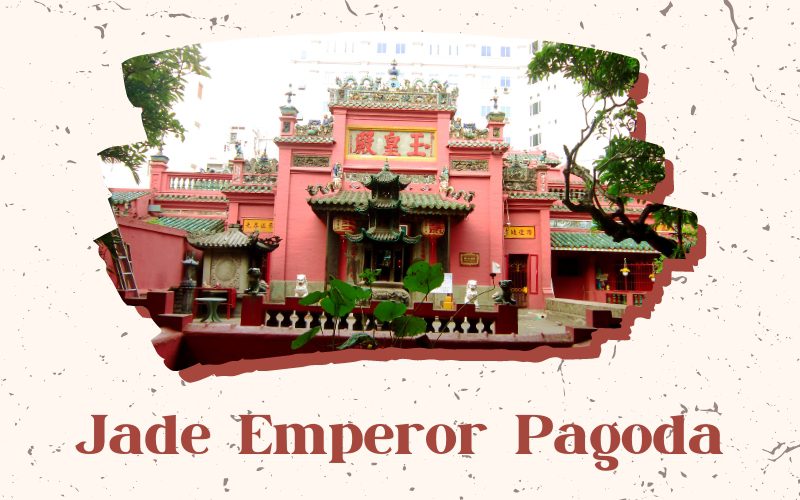
Tucked between glass-faced office towers in the middle of Ho Chi Minh City, the Jade Emperor Pagoda is easy to miss if you don’t know where to look. One moment you’re navigating Saigon’s signature traffic chaos, and the next you’re stepping through a pink-framed gate into a courtyard wrapped in the heavy, sweet scent of burning incense. The contrast is so sharp it almost feels theatrical.
This guide covers everything you need to plan a visit: the history, the architecture, the rituals, the practical details, and why this particular Taoist pagoda in Vietnam has held its ground for well over a century while everything around it changed.
What Is the Jade Emperor Pagoda?
The Jade Emperor Pagoda (Vietnamese: Chua Ngoc Hoang, also known as Phuoc Hai Tu or “Sea of Blessings Temple”) is a Taoist-Buddhist temple in Tan Dinh Ward, Ho Chi Minh City.
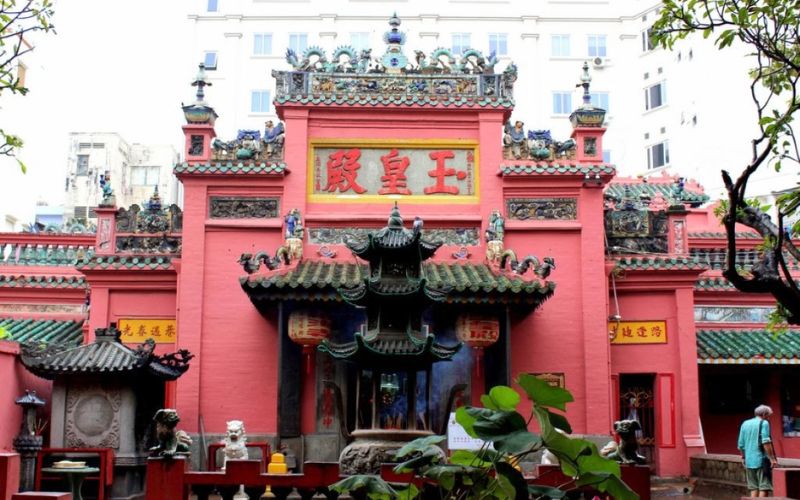
Jade Emperor Pagoda
It was built in 1909 by a Cantonese migrant named Luu Minh, who wanted a space to worship the Jade Emperor, the supreme deity of heaven in Chinese religious tradition.
The Jade Emperor, known locally as “Ngoc Hoang”, is believed to govern all realms: heaven, earth, and sea. He controls human fate, surrounded by a hierarchy of gods and divine assistants. For Vietnamese and Chinese communities, praying to the Jade Emperor is not just a religious act. It’s a practical one: people come here with real concerns, real hopes, and in some cases, a real red thread tied to their wrist.
In 1982, the renowned Buddhist monk Thich Vinh Khuong took over management of the temple, formally bringing it under the Vietnam Buddhist Association. It was officially renamed Phuoc Hai Tu in 1984, though locals and visitors still call it by its original name. The pagoda received national recognition as an Artistic and Architectural Heritage Site in 1994, and in May 2016, former U.S. President Barack Obama visited during his state trip to Vietnam, drawing considerable international attention to the site.
Where Is Jade Emperor Pagoda?
- Address: 73 Mai Thi Luu Street, Tan Dinh Ward, Ho Chi Minh City, Vietnam.
The pagoda sits on the northern edge of Tan Dinh Ward, a 10-minute taxi ride from the Reunification Palace. A trip from the palace typically costs around 50,000 VND (~$2.00) by taxi. For riders comfortable with Saigon traffic, Grab motorbikes are cheaper and often faster. Public buses 150, 18, 45, 93, and 10 all stop in the area within walking distance.
The surrounding neighborhood is quieter than the main tourist corridor along Dong Khoi Street, with tree-lined residential streets and a handful of small cafes nearby. The shift in pace is noticeable, and most visitors find it pleasant.
Weather and the Best Time to Visit
Ho Chi Minh City has two distinct seasons. The dry season runs from November to April, with temperatures around 27°C to 32°C (81°F to 90°F) and low humidity. This is generally the most comfortable period for sightseeing.
The wet season runs from May to October, with afternoon rain showers that can be heavy but typically short. Temperatures during the wet season stay around 28°C to 35°C (82°F to 95°F), and the city can feel considerably more humid. The pagoda’s shaded courtyard and covered halls make it a viable visit year-round regardless of season. On rainy afternoons, the incense smoke and dim interior lighting give the space an atmosphere that, honestly, suits it well.
November through March is considered the best overall time for a Vietnam trip that includes Ho Chi Minh City.
Opening Hours and Entrance Fee
The Jade Emperor Pagoda opening hours are 7:00 AM to 6:00 PM daily. On the 1st and 15th days of the lunar month, hours extend from 5:00 AM to 7:00 PM, when the temple is busiest with local worshippers.
Jade Emperor Pagoda entrance fee is free. There is no ticket to buy. Visitors are welcome to leave a donation in the boxes near the altar, and many choose to purchase incense sticks from vendors just outside the gate (typically 5,000 to 10,000 VND, approximately $0.20 to $0.38) to participate in the ritual offerings.
For a quieter visit with fewer people, weekday mornings before 9:00 AM are the best window. The period around Tet (Vietnamese Lunar New Year) and the 9th day of the Lunar New Year, which celebrates the Jade Emperor’s birthday, sees very high attendance.
The Spiritual Highlights: What Visitors Actually Experience Here
The pagoda has a reputation that extends well beyond general sightseeing. People come here for specific reasons, and those reasons reveal a lot about how the space functions for the community.
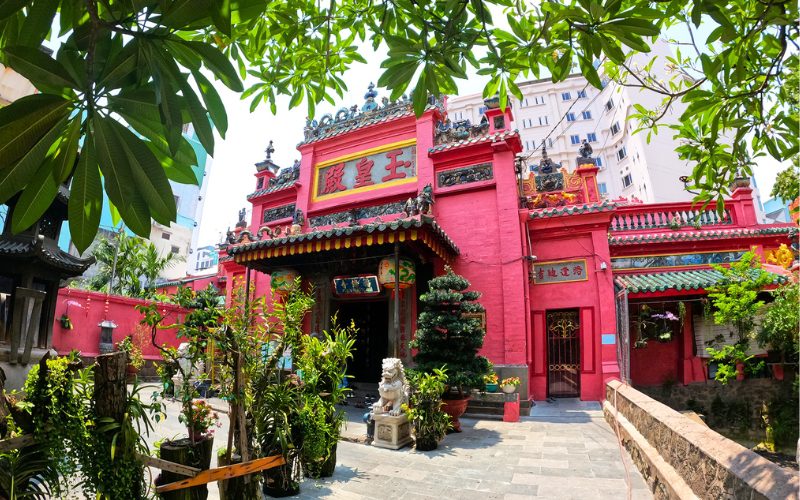
A View of Jade Emperor Pagoda
The Fertility Ritual
The Jade Emperor Pagoda is perhaps best known across Vietnam for prayers related to fertility and children. Couples who have had difficulty conceiving make their way to Kim Hoa Thanh Mau, the goddess who oversees fertility, surrounded by 12 midwife statues. The ritual involves tying a red thread to the wrist: on the right statue for a son, on the left for a daughter.
The practice is taken seriously. Locals share stories of answered prayers here, and the belief is embedded enough that the temple draws couples from outside the city.
The Love and Harmony Prayers
Many visitors perform incense offerings and prayers for love, family harmony, and personal well-being. The ritual is simple: light incense sticks, bow toward the relevant deity, and state your intention. The atmosphere during these moments is genuinely peaceful, the kind of calm that comes from a space used for contemplative purposes over a long period of time.
Anecdotally, the pagoda has a reputation as a place where lonely people sometimes find their future partners, which has given it a secondary identity among younger Vietnamese visitors as something of a spiritual matchmaking spot.
The City God and Fortune
In a separate room, a seated effigy of the City God wears a hat inscribed with Chinese characters that translate roughly as “at one glance, money is given”. Lines of worshippers form here regularly. The intersection of spirituality and practical desire for financial security is something the pagoda handles openly, without any contradiction.
The Turtle Pond
The turtles in the pond outside are more than decoration. Releasing a turtle into the pond is considered an act that brings good luck, particularly for couples. Turtles can be purchased from vendors near the entrance, and a small queue often forms near the pond on weekends and during lunar calendar observances.
A Brief History of Jade Emperor Pagoda
Construction of the pagoda began in the early 1900s under Luu Minh, a Chinese immigrant from Guangdong who combined Buddhist, Taoist, and Confucian beliefs. According to some historical accounts, the building served an additional purpose during its early years as a quiet gathering point for those with ambitions of political resistance against the Qing dynasty.
The pagoda underwent restoration four times: in 1943, 1958, 1985, and 1986. Each round of work maintained the original architectural character while reinforcing the structure. By the time it received national heritage status in 1994, the pagoda had survived French colonial administration, two major wars, and the urban redevelopment that reshaped much of Tan Dinh Ward.
Obama’s 2016 visit brought the site to a global audience. Photos of him walking through the courtyard were widely shared, and tourism numbers increased noticeably in the years that followed.
Architecture: What the Building Actually Looks Like
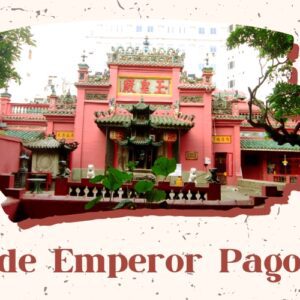
The Jade Emperor Pagoda stands out from most Vietnamese religious sites in one obvious way: the color. Most Vietnamese pagodas use ochre yellow or gold tones. This one is pink, trimmed in red, with large Chinese characters at the entrance gate. The effect is striking against the surrounding greenery.
The main entrance is about 6 meters wide and 4.5 meters high, with a single-roof gate rather than the multi-tiered triple-gate typical of Vietnamese temples. Two pink concrete pillars frame the main opening, and a separate smaller entrance is marked by red stone doors with Chinese inscriptions.
The total area is around 2,300 square meters. Between the gate and the main building, a courtyard holds several notable features:
- A fish pond planted with lotus flowers
- A large turtle pond (the turtles are a symbol of longevity)
- An incense burner where offerings are lit
- A Dharmapala shrine
- A row of mature oak trees providing shade year-round
The shade matters. Ho Chi Minh City sits at a latitude that keeps temperatures between 27°C and 35°C (81°F to 95°F) for most of the year. The courtyard is one of the cooler spots in the neighborhood.
Inside, the temple is divided into three main halls. The Front Hall houses the Earth God and the Door God. The Middle Hall holds the Medicine Buddha, the Great General of the Azure Dragon, and the Great General of the White Tiger. The Main Hall is where the Jade Emperor himself presides, draped in robes and surrounded by dense incense smoke, flanked by the Four Big Diamonds (Tu Dai Kim Cuong), his guardians.
The statues throughout the pagoda are made from reinforced papier-mache, a traditional technique that allows for intricate detail. The woodcarvings on beams and panels are exceptionally fine. Lonelyplanet describes the main hall’s woodwork as “exquisite,” though the incense smoke often partially obscures it.
To the left of the main hall sits the Hall of Ten Hells, a series of carved wooden panels depicting what awaits those who lived badly. The imagery is vivid and, for some visitors, unsettling. For others it is the most interesting part of the temple, an illustration of the moral architecture behind Taoist belief.
On the second floor, a terrace on the right side offers a view of the roof’s tile details and a bit of fresh air, reached by a set of narrow wooden stairs that creak underfoot.
Practical Tips for Visiting Jade Emperor Pagoda
- Dress code: Cover shoulders and knees. The pagoda is an active place of worship, not a museum. Visitors who arrive underdressed may be offered cloth wraps near the entrance.
- Photography: Photographs are allowed in the courtyard and on the exterior. Photography inside the main halls is more restricted, and flash should always be avoided. Always ask permission before photographing monks or anyone in prayer.
- Donations and offerings: The entrance is free, but the pagoda relies on donations. If you light incense or participate in any ritual, leaving a small donation (10,000 to 50,000 VND, approximately $0.38 to $1.90) is appropriate and appreciated.
- Footwear: Remove shoes when entering the main prayer halls. Follow the cues of the local worshippers.
- Noise: Keep voices low. The space is used for active prayer throughout the day.
- Best timing: Early weekday mornings for quiet. The 9th day of the Lunar New Year for atmosphere (and crowds). Avoid peak midday hours on weekends if you prefer not to share the space with tour groups. Contact us to plan your trip to Vietnam.
What to See Nearby Jade Emperor Pagoda
The pagoda sits within reasonable distance of several other significant sites in the northern part of the Saigon’s centre:
- Tan Dinh Church: A bubblegum-pink Catholic church about 10 minutes on foot, one of the most photographed buildings in Saigon. The combination of a pink pagoda and a pink church in close proximity is a particular quirk of this neighborhood.
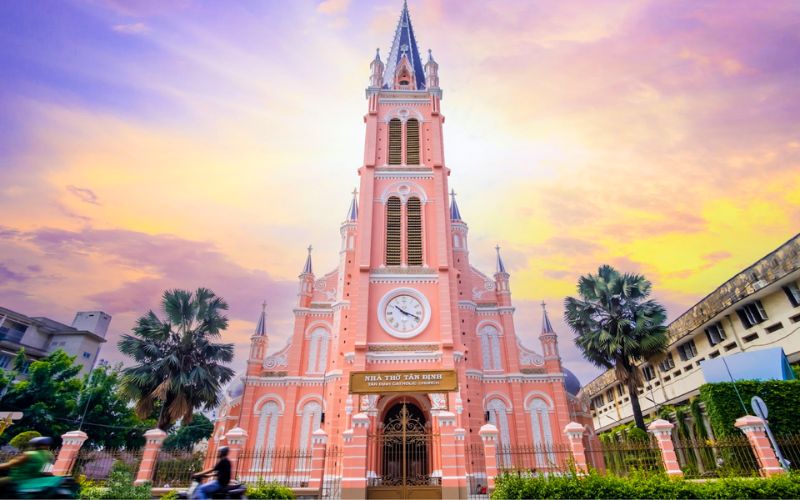
Tan Dinh Church
- Ho Chi Minh City Botanical Garden: The city’s historic gardens, established in 1864 during French colonial administration, are a short walk away. A good spot to decompress after the intensity of the pagoda.
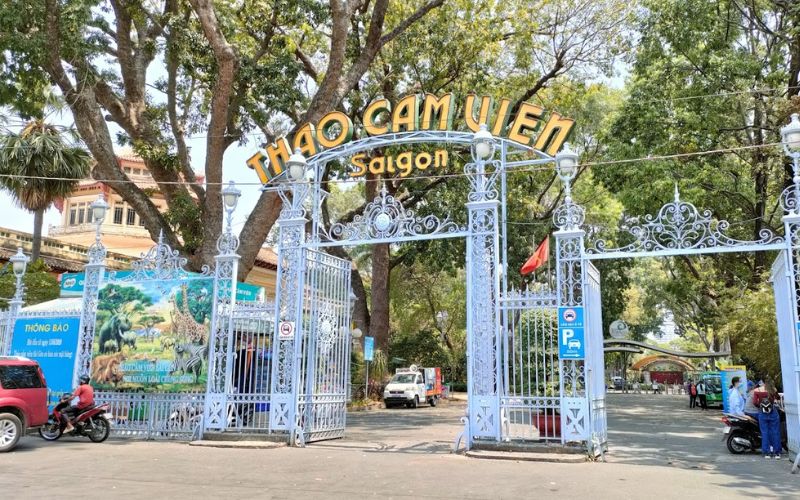
The iconic red-roofed gates of the Saigon Zoo, a welcoming entrance to over 160 years of history.
- War Remnants Museum and Reunification Palace: Both are about 15 to 20 minutes by taxi from the pagoda and are usually included in a full-day city itinerary.
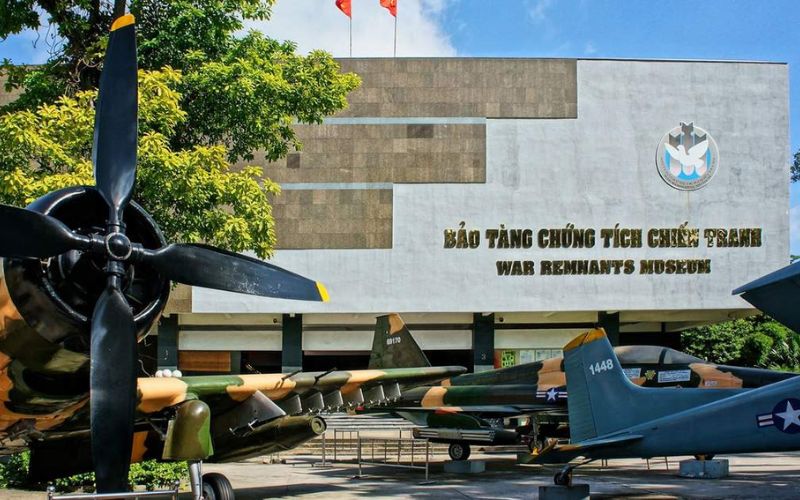
While the outdoor display of military planes and tanks is fascinating for all ages, the interior exhibits of the War Remnants Museum contain powerful and graphic content that may require parental guidance for children.
Getting the Most Out of Your Ho Chi Minh City Visit
The Jade Emperor Pagoda works well as a 45-minute to 90-minute stop within a broader Saigon day tour. Most Ho Chi Minh City tours cover the city’s main historical landmarks: the Reunification Palace, War Remnants Museum, Notre Dame Cathedral, and Central Post Office, and the pagoda fits naturally into the northern section of that circuit.
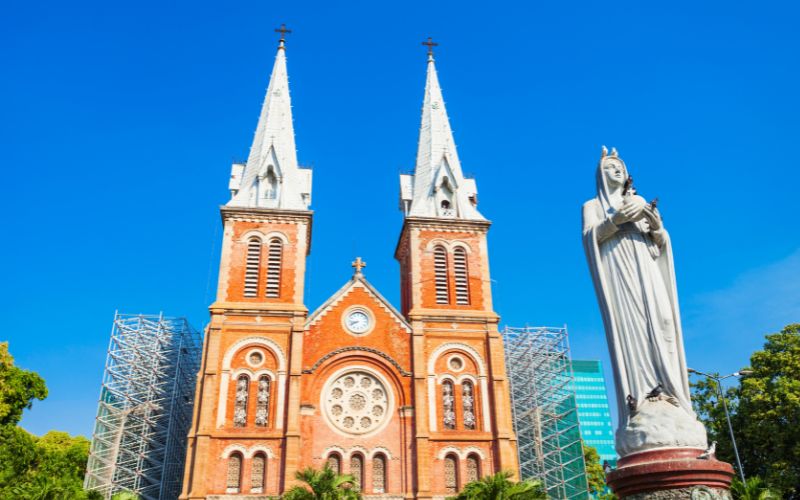
The red-brick towers of the Notre Dame Cathedral stand as a timeless landmark in the heart of Ho Chi Minh City.
For travelers who want a more complete picture of southern Vietnam, the pagoda pairs well with a day trip to the Cu Chi Tunnels or a longer excursion to the Mekong Delta. IDC Travel’s South Vietnam tours combine urban Saigon with the waterways and floating markets of the delta, giving context to both the city’s energy and the countryside’s pace.
Visitors who want to see more of the country can explore Vietnam tours that run from Ho Chi Minh City north through Hoi An, Hue, and Hanoi. The spiritual dimension of sites like the Jade Emperor Pagoda tends to make more sense after seeing how consistently religion, community, and daily life are woven together across the country.
Conclusion: Quick Overview of Jade Emperor Pagoda
Before you go, here is a summary of the key information for your visit:
| Detail | Information |
| Full name | Jade Emperor Pagoda (Chua Ngoc Hoang / Phuoc Hai Tu) |
| Address | 73 Mai Thi Luu, Tan Dinh Ward, Ho Chi Minh City, Vietnam |
| Opening hours | 7:00 AM to 6:00 PM daily (extended hours on the 1st and 15th of the lunar month) |
| Entrance fee | Free (donations welcome) |
| Built | 1909 |
| Heritage status | National Artistic and Architectural Heritage Site (1994) |
| Primary deity | The Jade Emperor (Ngoc Hoang) |
| Religious tradition | Taoist-Buddhist |
| Best time to visit | Early weekday mornings; dry season (November to April) |
| Typical taxi fare from city center | 50,000 VND (~$2.00) |
| Dress code | Shoulders and knees covered |
| Photography inside | Limited; no flash; ask permission |
The Jade Emperor Pagoda is not the largest temple in Vietnam, nor the most elaborate. What makes it worth a visit is the way it functions as a living space: people light incense here not because a tourist brochure told them to, but because they believe it works. That sincerity gives the place a quality that is hard to manufacture and easy to notice.
If you are planning a trip to Ho Chi Minh City and want guidance on building an itinerary that goes beyond the obvious stops, IDC Travel’s team of local advisors can help design a Vietnam holiday that fits your pace, interests, and travel style.
>>> Refer to Chua Ngoc Hoang – Wikipedia.
Read more: