August is not the easiest month to visit Hanoi, but it is one of the most rewarding if you know what to expect. Hanoi in August sits deep in the rainy season: hot, humid, and occasionally very wet. But the city does not slow down. Markets stay busy, street food carts stay open, and the cultural calendar fills up with festivals and traditions that most tourists never see.
This guide covers everything you need to plan a trip to Hanoi this August, from weather and temperature to the best things to do, what to eat, and how much to budget.
Overview of Hanoi
Hanoi is the capital of Vietnam, located in the northern part of the country along the banks of the Red River (Song Hong). The city is about 1,760 km north of Ho Chi Minh City and approximately 170 km west of Ha Long Bay.
Geographically, Hanoi sits in a river delta basin, surrounded by low hills to the north and west. This geography has a direct effect on the August weather: the basin traps heat and humidity, making summers feel hotter than the actual thermometer reading. The city center is flat, which means heavy rainfall often leads to street flooding in lower-lying neighborhoods.
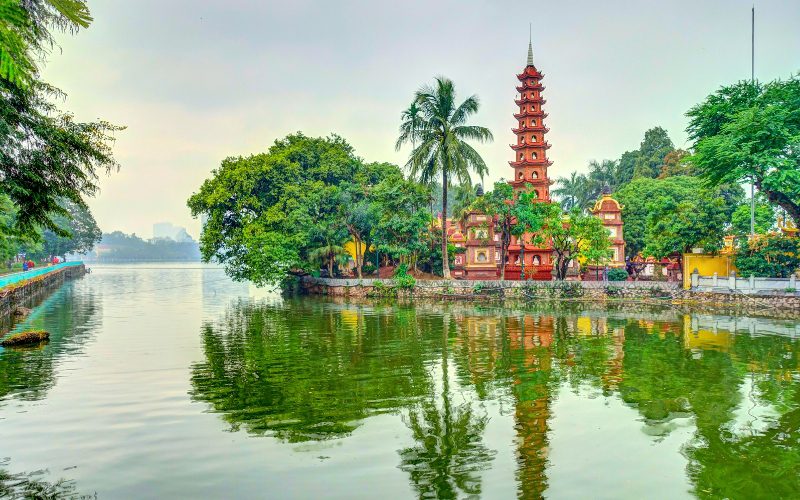
Hanoi city, capital of Vietnam
Hanoi serves as the gateway to northern Vietnam. From here, you can reach Ha Long Bay by road in about 3.5 hours, Sapa in around 5 to 6 hours (or 8 hours by overnight train), Ninh Binh in 2 hours, and Ha Giang in roughly 5 hours. This makes the capital an excellent base for exploring the entire northern region, including on day trips and overnight excursions.
What Is Hanoi’s August Weather Like?
- Averages temperature: 28°C to 33°C (82°F to 91°F)
August is the hottest and wettest month in Hanoi. There is no softer way to put it. The combination of heat and humidity makes it feel considerably warmer. On some afternoons the heat index pushes toward 38°C to 40°C (100°F to 104°F).
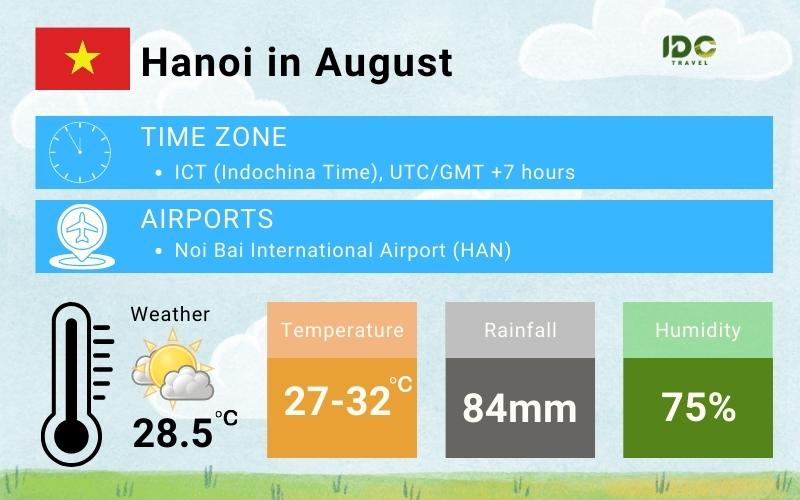
Hanoi Weather in August
Rain is frequent. August weather in Hanoi typically brings 15 to 20 rainy days in the month, with total rainfall averaging around 280 to 320 mm. Most rain arrives in the afternoon or evening, usually in short but heavy bursts lasting 30 minutes to two hours. Morning hours tend to be drier. A typical August day in Hanoi: sunny and hot until around 2 or 3 pm, then a downpour, then cooler, cleaner air by evening.
Here is a quick overview of what to expect:
- Average high temperature: 33°C (91°F)
- Average low temperature: 27°C to 28°C (81°F to 82°F)
- Humidity: 80% to 88%
- Rainfall: 280 to 320 mm for the month
- Average rainy days: 15 to 20 days
- Daylight hours: approximately 12 to 13 hours per day
The good news is that rain rarely ruins an entire day. Most downpours clear within an hour or two, and the city returns to sunshine. The local habit is simple: find a covered cafe, order a glass of iced Vietnamese coffee, wait it out. A ca phe sua da (Vietnamese iced milk coffee) at a street cafe costs about 20,000 to 30,000 VND (~$0.76 to $1.15).
Flooding is worth mentioning. After heavy rain, some streets around Hoan Kiem Lake and in lower parts of the Old Quarter can flood 10 to 20 cm deep. It drains within an hour or two, but it does mean waterproof sandals are more practical than regular shoes on bad-weather days.
Is It Worth Going to Vietnam in August?
Yes, but with realistic expectations. Hanoi and northern Vietnam are in the middle of the rainy season. Central Vietnam (Da Nang, Hoi An, Hue) is hot and dry in August, making it the best-weather region of the country for that month. Southern Vietnam (Ho Chi Minh City, Mekong Delta) is also rainy in August but manageable.
For Hanoi specifically, August has several things going for it:
- Lower accommodation prices compared to the October to March dry season peak
- Lush green landscapes in surrounding areas like Ninh Binh, Ha Long Bay, and the northern highlands
- Fewer international tourists, meaning less crowded temples, better access to local neighborhoods, and faster restaurant service
- Meaningful festivals, including National Day preparations and local celebrations
- Daily life at full speed, with markets, food stalls, and street culture all active
The travelers who struggle in August are those expecting European summer conditions. The travelers who enjoy it come prepared, keep flexible schedules, and treat the afternoon rain as a natural mid-day break rather than a disaster.
If you are looking at a broader Vietnam tour that combines Hanoi with the beaches of Da Nang or Hoi An, August actually works well as a split itinerary: spend the first few days in Hanoi and northern Vietnam, then fly south to the dry central coast for beaches.
Top Things to Do in Hanoi in August
Despite the heat and rain, things to do in Hanoi in August are genuinely plentiful. The city rewards early risers and curious explorers. Here is where to focus your time.
1. The Old Quarter (Hoan Kiem Ward)
The 36-street Old Quarter is the core of Hanoi’s street life. Each street historically specialized in a single trade, a system dating back centuries. Hang Gai sells silk and lacquerware, Hang Bac has silver jewelry and old coffee shops, Hang Ma is covered in paper goods and lanterns. In August, the streets are lively and green, with rain puddles reflecting neon signs in the evenings.
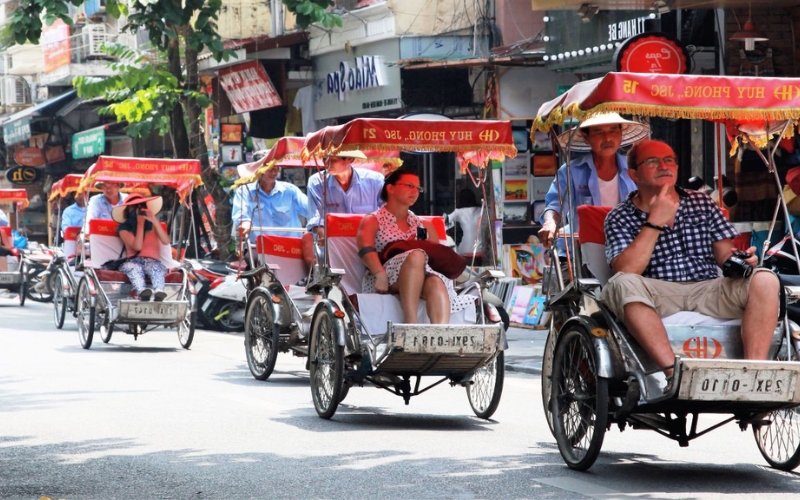
Cyclo ride through Hanoi’s Old Quarter
Walking the Old Quarter on a hot August afternoon is admittedly demanding. The smart move is to do it early in the morning (between 6 and 9 am) when the air is cooler and the streets belong to locals going about their day, not tourists. By 8 am you will have seen the morning market, watched locals doing Tai Chi around Hoan Kiem Lake, and eaten a bowl of pho for 40,000 to 60,000 VND (~$1.53 to $2.29) at a street stall that has been open since 5 am.
2. Hoan Kiem Lake and Ngoc Son Temple
The Hoan Kiem Lake at the center of Hanoi is the city’s informal living room. In August it looks its best: the water is high from the rains, the willows are dense and green, and the red Huc Bridge connecting the shore to Ngoc Son Temple is framed by lush foliage.
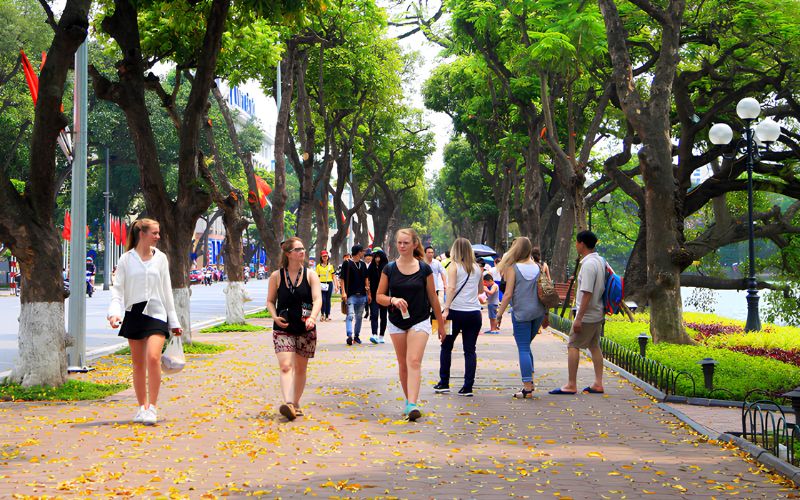
Strolling through the vibrant atmosphere of the Hoan Kiem Lake walking street under a canopy of lush green trees.
Ngoc Son Temple (Jade Mountain Temple) sits on a small island in the middle of the lake. Entry costs 30,000 VND (~$1.15). The temple holds a preserved specimen of the giant soft-shell turtle, a species once believed to inhabit the lake and central to the founding legend of Hanoi. It is a quick visit (30 minutes) but worth doing.
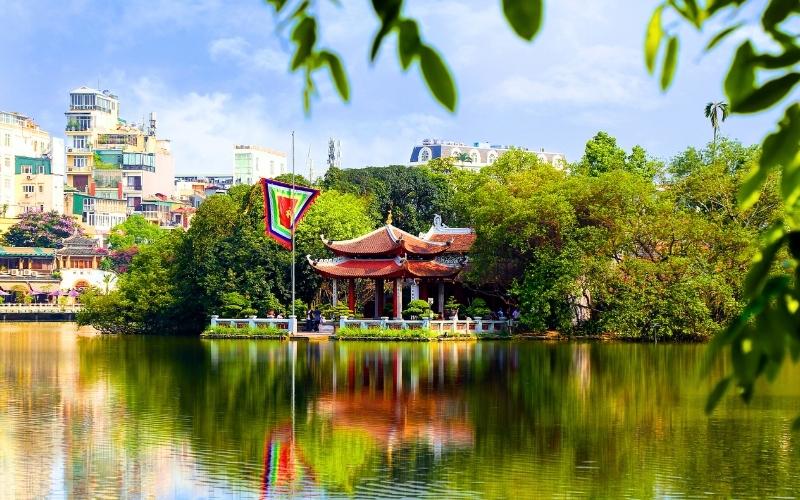
A View of Ngoc Son Temple
3. Hoa Lo Prison Museum
One of Hanoi’s most historically significant sites, the old French colonial prison known informally as the “Hanoi Hilton” by American prisoners during the Vietnam War. The Hoa Lo Prison is indoors and air-conditioned, making it a practical afternoon option when August rain drives visitors off the streets. Entry is 30,000 VND (~$1.15).
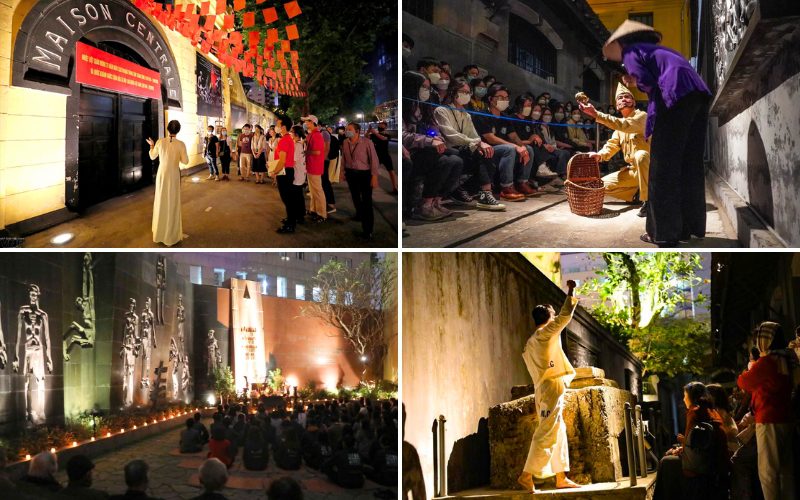
A night in Hoa Lo Prison Museum
4. Vietnam Museum of Ethnology
If you plan to visit any of northern Vietnam’s minority communities in Sapa or Ha Giang, this museum is excellent preparation. Vietnam Museum of Ethnology has detailed exhibitions on all 54 of Vietnam’s recognized ethnic groups, with outdoor reconstructed traditional houses from different regions. The outdoor exhibits are less enjoyable in heavy rain, but the indoor galleries cover an easy two hours. Entry is 40,000 VND (~$1.53).
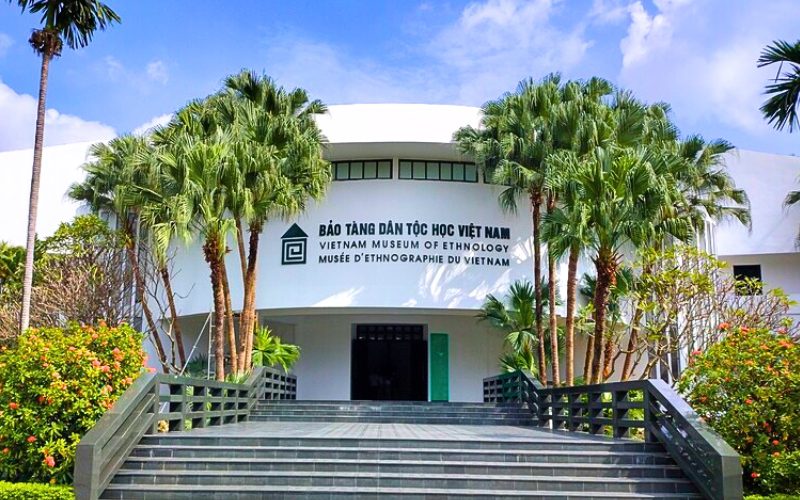
Vietnam Museum of Ethnology
5. Temple of Literature (Van Mieu)
Temple of Literature, Vietnam’s first university, founded in 1070 and dedicated to Confucius. The courtyard complex is peaceful in the morning and actively used by Vietnamese university students who come to pray for academic success. In August the gardens are green and the stone steles carrying the names of royal examination graduates are weathered beautifully. Entry is 30,000 VND (~$1.15).
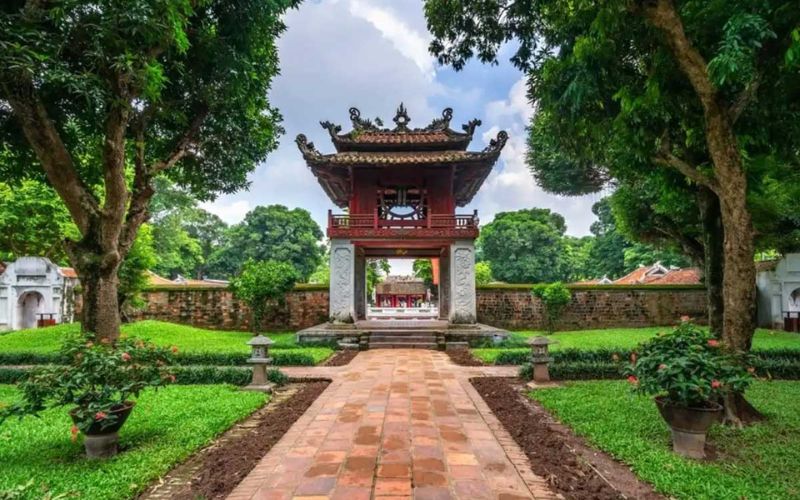
As the symbol of Hanoi, the Khue Van Pavilion represents the brilliance of knowledge and the enduring value of Vietnamese literature and education.
6. Day Trip to Ha Long Bay
August is still a solid month for a Halong Bay Cruise, provided you choose your timing carefully. The bay in August has warm water (around 28°C / 82°F), lush green island vegetation, and a dramatic atmospheric quality when low clouds sit over the karst peaks. Rain showers on the bay are often brief and pass quickly.
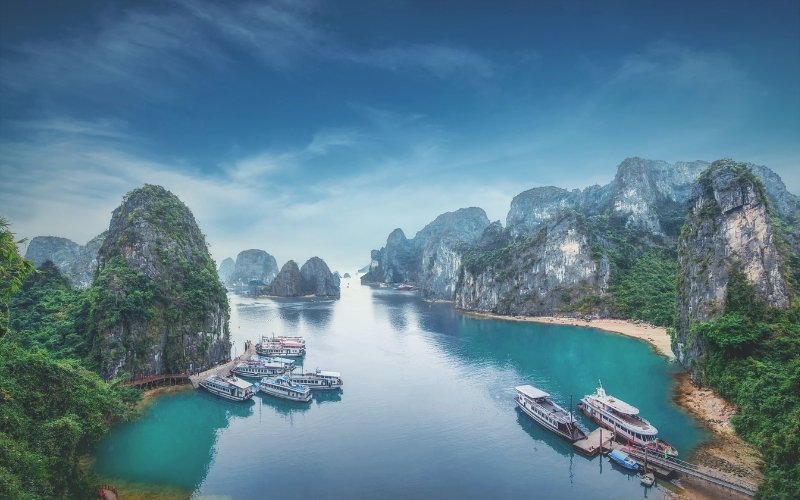
Majestic Ha Long Bay – where emerald waters meet towering limestone cliffs, offering one of Vietnam’s most breathtaking natural wonders.
Typhoons are a low but real risk in August. Reputable cruise operators monitor conditions closely and will reschedule departures if a tropical storm is forecast. Book with a company that has a clear weather-policy and offers credit or rescheduling rather than blanket cancellations.
A two-day, one-night cruise on a mid-range boat starts around 3,500,000 VND (~$134) per person. Premium boats with private balconies and kayaking start from 6,000,000 VND (~$229) upward.
>>> Halong Bay Cruise are bookable from Hanoi with hotel pickup included.
7. Day Trip to Ninh Binh
August is actually a good month for Ninh Binh. The rice fields around Tam Coc are either freshly planted or in an early growth stage, meaning the valley looks intensely green. The boat rides through the Ngo Dong River system, threading between limestone cliffs, are more atmospheric with the mist that August weather produces.

Scenic view of rice fields and karst mountains in Tam Coc, Ninh Binh
Ninh Binh is about 95 km south of Hanoi, roughly a two-hour drive. It is a comfortable day trip or a one-night stopover. Boat rides at Tam Coc cost around 150,000 VND (~$5.73) per person.
>>> Ninh Binh tours from Hanoi typically include transport and a guide.
8. Street Food Exploration
Hanoi’s food culture is at its most active in August. The long rainy season evenings push more people onto covered sidewalks, and the cooler post-rain temperature (it genuinely drops 3 to 4 degrees after a downpour) makes eating outside feel comfortable.
Must-try dishes and rough street prices:
- Pho bo (beef noodle soup): 50,000 to 80,000 VND (~$1.91 to $3.05) at a proper pho shop
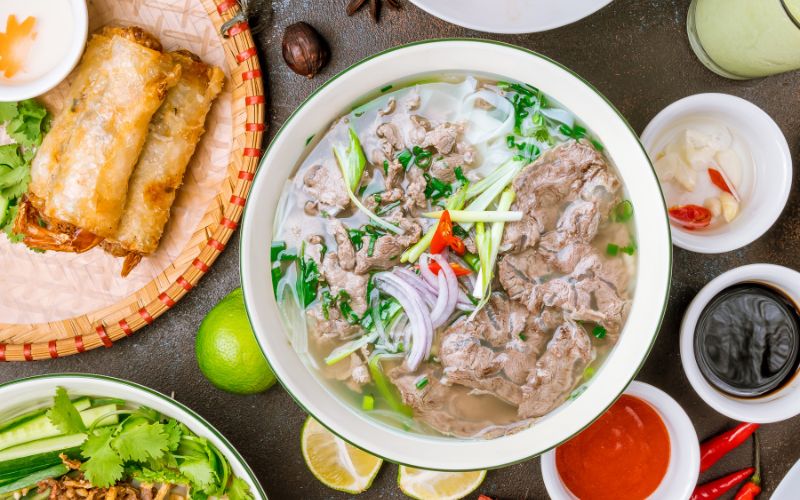
Pho bo (beef pho)
- Bun cha (grilled pork with cold noodles): 50,000 to 70,000 VND (~$1.91 to $2.67)
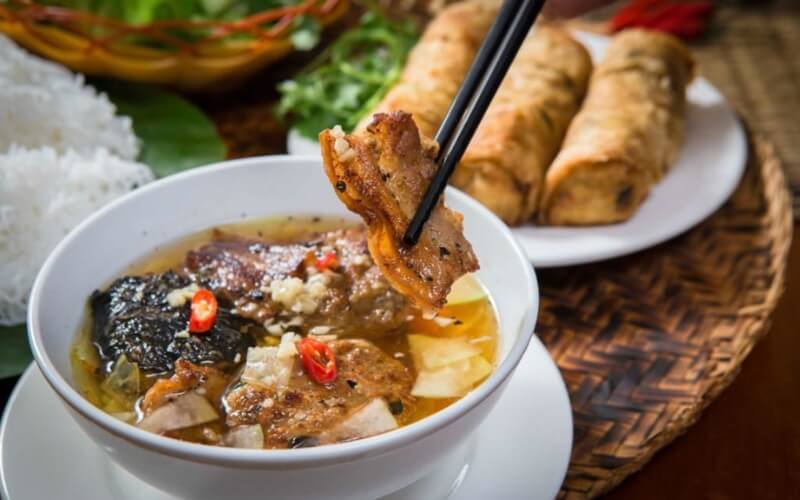
Bun Cha
- Banh mi (Vietnamese baguette sandwich): 20,000 to 35,000 VND (~$0.76 to $1.34)

Crispy on the outside, packed with flavor inside. Banh mi is proof that Vietnam turns simple street food into something unforgettable.
- Ca phe trung (egg coffee): 45,000 to 60,000 VND (~$1.72 to $2.29) at Giang Cafe on Nguyen Huu Huan Street, the original location

Egg coffee
The area around Dong Xuan Market, Hang Be Market, and the surrounding streets of the Old Quarter has the highest density of food options. Ta Hien Street (nicknamed “Beer Street”) stays active until midnight even in August rain.
August Festivals and Events in Hanoi
Ghost Festival (Trung Nguyen)
One of the most culturally specific events of the Vietnamese calendar, the Ghost Festival falls on the 15th day of the seventh lunar month. In 2026, this is around mid-August. Vietnamese families believe the gates of the underworld open during this month, and spirits of ancestors wander among the living.
Restaurants and food stalls often offer special vegetarian menus during this period, a tradition tied to the spiritual significance of the month.
National Day Preparations (September 2 lead-up)
Vietnam’s National Day is September 2, commemorating Ho Chi Minh’s Declaration of Independence in 1945. In late August, Hanoi began decorating. Red banners with gold stars line major streets, government buildings put up lights, and Ba Dinh Square (where the declaration was read) sees increased activity. If your trip extends into early September, the square holds public ceremonies.
Mid-Autumn Festival (Tet Trung Thu)
The Mid-Autumn Festival, also called the Children’s Festival, falls on the 15th day of the eighth lunar month. In 2026, this lands in late September, but by late August the preparations are already visible in Hanoi’s Old Quarter. Hang Ma Street fills with moon cakes, lanterns, and traditional masks from mid-August onward. The shops turn the street into a corridor of red, gold, and orange. It is one of the most photogenic stretches of Hanoi at this time of year, regardless of whether the festival itself has started.
Practical Tips for Traveling to Hanoi in August
- Schedule mornings tightly, afternoons loosely. The coolest, driest hours are 6 to 10 am. Use them for outdoor sights, markets, and walking. Plan your afternoons around museums, covered markets, cafes, and indoor activities.
- Dress for heat and humidity. Lightweight cotton or linen clothing, loose-fitting. Dark colors show sweat more. A change of shirt is not excessive for a full day out. Avoid synthetic fabrics that trap heat against skin.
- Carry a compact umbrella or a thin poncho. Not a full rain jacket. The heat makes wearing a rain jacket unbearable, but a small poncho folds into a bag pocket and protects you from the sudden downpours.
- Use ride-hailing apps. Grab (the regional version of Uber) is reliable, reasonably priced, and means you are never stuck in rain trying to negotiate with a motorbike taxi. A cross-city Grab ride in Hanoi rarely exceeds 80,000 to 120,000 VND (~$3.06 to $4.58).
- Book accommodation with air conditioning. This is not optional in August. Ceiling fans in guesthouses are fine for shoulder season travel; they are not sufficient when humidity is 85%.
- Check the typhoon forecast if visiting in August. The northwest Pacific typhoon season runs from June through November. Hanoi sits inland and rarely takes direct hits, but typhoons affecting the coast can cause heavy rain and wind in the capital. Check the Joint Typhoon Warning Center or regional weather services if you have outdoor or coastal activities planned.
- Carry cash in small denominations. Street food, local markets, and small temples do not accept cards. 50,000 VND (~$1.91) and 100,000 VND (~$3.82) notes are the most useful.
How Much Does It Cost to Travel to Hanoi in August?
August falls in the shoulder-to-low season for international visitors to Hanoi, which means prices are generally lower than the October through March dry season peak. Domestic Vietnamese travel increases because of school summer holidays, but this mainly affects resort destinations like Da Nang and Phu Quoc rather than Hanoi.
Rough daily budgets:
- Budget traveler: 700,000 to 1,200,000 VND (~$27 to $46) per day, covering a hostel dorm, street food, public transport, and temple entry fees
- Mid-range: 1,800,000 to 3,500,000 VND (~$69 to $134) per day, including a 3-star guesthouse or boutique hotel, restaurant meals, and guided tours
- Comfort: 4,000,000 VND+ (~$153+) per day for 4-star and above accommodation, private tours, and nicer restaurants
A typical evening meal at a decent local restaurant, with two dishes and a beer, runs about 200,000 to 400,000 VND (~$7.64 to $15.29). A full-day Hanoi tour including transport, guide, and main site entries costs from around 700,000 to 1,500,000 VND (~$27 to $57) per person, depending on the itinerary.
What to Pack for Hanoi in August
A well-packed bag for August in Hanoi keeps you cool, dry, and functional:
- Clothing: Lightweight, breathable shirts (3 to 4 changes is sensible), one pair of long trousers for temple visits, comfortable walking shoes and waterproof sandals
- Rain gear: Compact foldable umbrella or thin poncho (a proper rain jacket is too hot)
- Sun protection: SPF 50+ sunscreen, UV-blocking sunglasses, a wide-brimmed hat or cap
- Health: Oral rehydration salts (heat and humidity cause salt loss faster than you realize), insect repellent for any trips outside the city center, hand sanitizer
- Practical: Small quick-dry towel, portable power bank (humidity and heat drain phones faster), a reusable water bottle you can refill at your hotel
Conclusion: Is Hanoi in August Worth It?
Here is a quick overview of what to expect when traveling to Hanoi in August:
| Detail | Information |
| Average temperature |
|
| Humidity | 80% to 88% |
| Rainfall | 280 to 320 mm per month |
| Average rainy days | 15 to 20 days |
| Best time for sightseeing | Early morning, 6 to 10 am |
| Best activities | Hanoi Old Quarter, food tours, Hoan Kiem Lake, Hoa Lo Prison, Halong Bay Cruise |
| Notable festivals | Ghost Festival (Trung Nguyen), National Day preparations (Sep 2), Mid-Autumn Festival prep (Hang Ma Street) |
| Budget per day (mid-range) | 1,800,000 to 3,500,000 VND (~$69 to $134) |
| Crowd level | Low to moderate (international tourists); moderate (domestic) |
| Typhoon risk | Low for Hanoi city; check forecast if doing coastal day trips |
Hanoi in August rewards travelers who go in with open eyes. The weather is not ideal, but it is very manageable with the right preparation and the right mindset. The city is genuinely alive: the Old Quarter is busy, the food is excellent, and the combination of fewer tourists and lower prices makes it one of the most value-rich times to visit.
If you want someone to handle the planning, our Hanoi city tours and broader northern Vietnam tours are built by a team that knows the city across all seasons. Whether you want a structured tour or a loose itinerary with private transport and a local guide, there are good options across different budgets and travel styles. Contact us for more information!
Read more: