Vietnam gets hot in summer. Really hot. Temperatures in Ho Chi Minh City regularly hit 35°C (95°F) by April, and even Hanoi turns oppressively humid by June. Locals deal with it the way they always have – through food. Cold broths, icy desserts, herb-loaded salads, and drinks built to cool you down from the inside out.
This guide covers the best summer dishes in Vietnam that actually make sense in the heat. They span all three culinary regions: the bold, fermented flavors of the North, the complex spice balance of Central Vietnam, and the sweet-sour freshness of the South. And because what you eat in Hanoi and what you eat in Saigon can feel like two different cuisines entirely. Don’t miss this summer in Vietnam! Plan your trip now!
Vietnam’s Three Culinary Regions: A Quick Introduction
Understanding Vietnamese cuisine starts with geography. The country runs 1,650 km from north to south, and the food shifts significantly along the way.
- Northern Vietnam (Hanoi and surroundings) favors subtler seasoning. Dishes here use less sugar and rely on quality broth, pickled vegetables, and fresh herbs. Pho originated here. So did bun cha.
- Central Vietnam (Hue, Da Nang, Hoi An) is where the food gets fiery. This region has the most complex and spicy cooking in the country, a legacy of imperial court cuisine mixed with centuries of sea trade. Expect bold fermented sauces, shrimp paste, and more chili than you probably expect.
- Southern Vietnam (Ho Chi Minh City, Mekong Delta) leans sweeter and fresher. Coconut milk, palm sugar, and tropical fruit turn up in everything from soups to desserts. Street food culture here is intense: sidewalk stools, plastic bowls, and vendors who have been selling the same dish for 30 years.
Each region produces dishes that suit the local climate and lifestyle. In summer, all three regions have something worth eating. Here are 20 of the best.
Top 15 Must-Try Summer Dishes in Vietnam
Main dishes
1. Bun bo Hue (Hue spicy beef noodle soup)
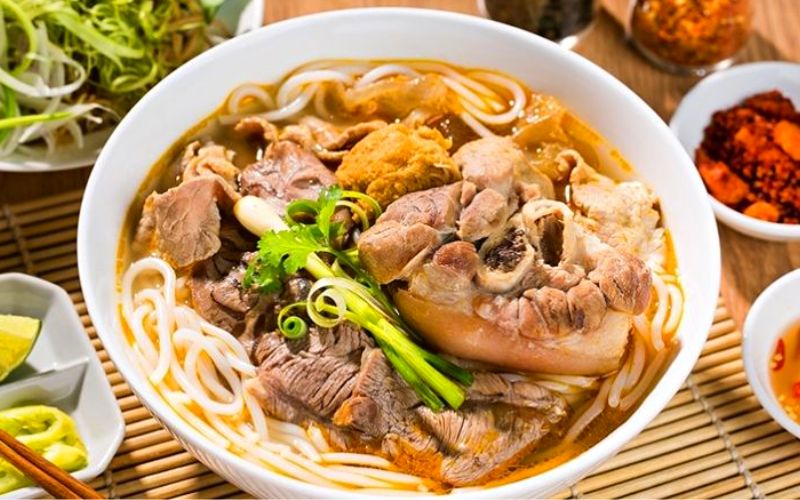
Bun Bo Hue (Hue spicy beef noodle soup)
“Bun bo Hue” is the spicy noodle soup Central Vietnam is most proud of, and with good reason. The broth is built on lemongrass, shrimp paste, and fermented fish sauce, then layered with sliced beef, pork knuckle, and cubes of congealed pig’s blood. The result is deep, savory, and genuinely spicy in a way that “pho” never is.
- Local tip: This dish contains “mam ruoc” (fermented shrimp paste), which has a strong, pungent smell. First-timers sometimes find it jarring. The spice level is real, ask for “it cay” (less spicy) if you’re not sure. Blood cubes are standard and can be declined.
- Price: 30,000 to 60,000 VND (~$1.14-$2.28)
- Where to find it: Hue city is the place to eat this properly. Any morning market or street stall before 10am will serve it. In Da Nang, several restaurants near the Han Market do solid versions. Available across Vietnam but noticeably different outside Central Vietnam.
2. Bun cha (Grilled pork and noodles)
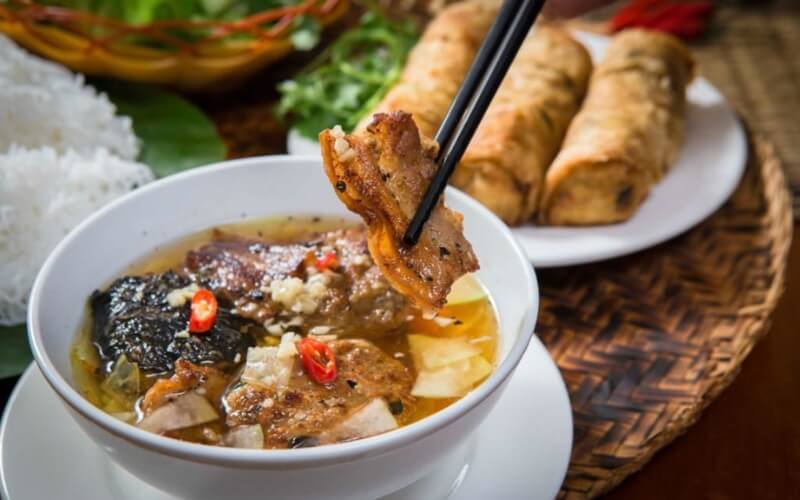
Bun Cha (Grilled pork and noodles)
“Bun cha” is Hanoi’s lunch. Grilled pork patties and sliced pork belly sit in a light, sweet-sour dipping broth alongside a plate of cold vermicelli noodles and a pile of fresh herbs. You build each bite yourself. It’s interactive, fresh, and does not get heavy despite being a meat dish.
- Local tip: Served at room temperature, which is intentional. Don’t expect a hot broth. The herbs are part of the dish, not decoration – use them. Some stalls add “nem ran” (fried spring rolls) as a side; worth ordering.
- Price: 25,000 to 45,000 VND (~$0.95-$1.71)
- Where to find it: Hanoi’s Old Quarter and Hoan Kiem Ward have the highest concentration of Bun Cha spots. Most are open from 11am to 2pm only. The dish largely disappears after midday because vendors sell out.
3. Goi cuon (Fresh spring rolls)
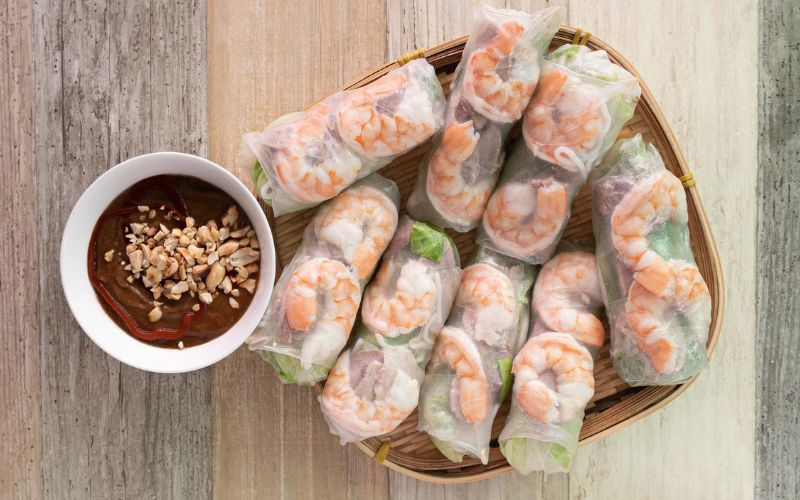
Goi cuon (Fresh spring rolls)
“Goi cuon” are rice paper rolls filled with cooked shrimp, pork slices, vermicelli, lettuce, and herbs, served with a peanut dipping sauce or a lighter “nuoc cham”. They’re cold, light, and the kind of thing you eat four of before you realize how many you’ve had.
- Local tip: These are the fresh version, not fried. If you’re served fried rolls, those are “cha gio” (or “nem ran” in the North). Both are good, but only “goi cuon” is right for a hot day. Peanut dipping sauce is the southern style; “nuoc cham” is more common in the North.
- Price: around 15,000-25,000 VND (~$0.57-$0.95) per roll at street level.
- Where to find it: Throughout Vietnam, but the South does these best. Ho Chi Minh City’s Ben Thanh Market area and Sai Gon street stalls are reliable starting points.
4. Cao lau (Hoi An noodles)
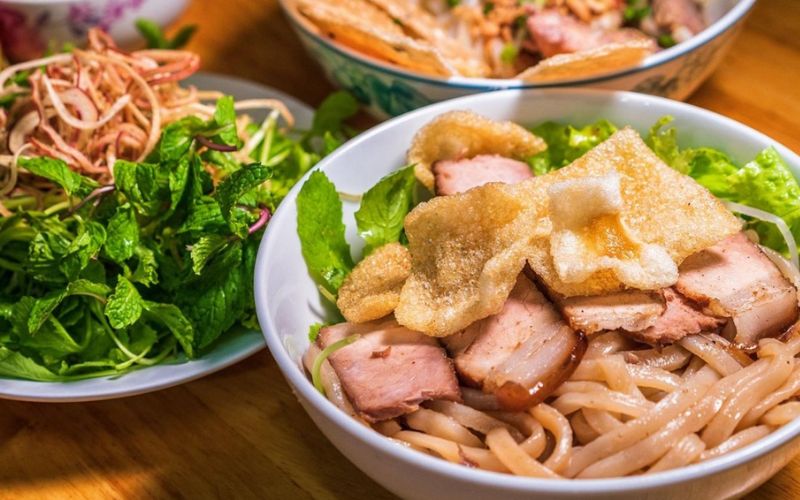
Cao Lau (Hoi An noodles)
“Cao lau” uses thick noodles made with local water from Hoi An’s ancient Cham wells, which is why you can’t really replicate this dish anywhere else. It comes topped with sliced char siu pork, bean sprouts, herbs, and crispy rice crackers. The broth is minimal; this is closer to a dry noodle dish than a soup.
- Local tip: Authentically a Hoi An dish, versions outside the town are pale imitations. The noodles have a slightly chewy, almost smoky texture from the water and ash used in preparation. No real heat, good for spice-sensitive travelers.
- Price: about 40,000-60,000 VND (~$1.52-$2.28).
- Where to find it: Hoi An Ancient Town, specifically the covered market (Cho Hoi An) and the cluster of local restaurants along Tran Phu and Le Loi streets.
5. Banh mi (Vietnamese sandwich)
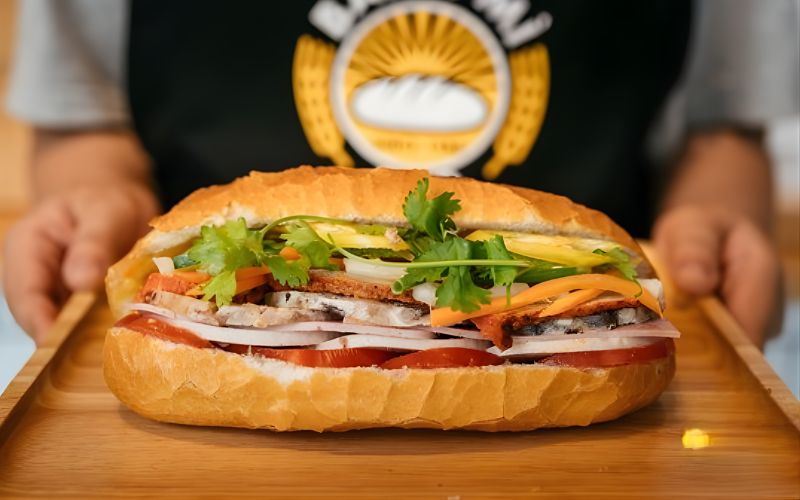
Banh mi (Vietnamese sandwich)
“Banh mi” is a short French baguette stuffed with pate, Vietnamese cold cuts, pickled daikon and carrot, cucumber, coriander, and chili. The bread is lighter and crispier than a French baguette, which makes it work in the heat. A good one takes about three minutes to eat and costs less than a coffee.
- Local tip: Quality varies enormously. “Banh mi” Phuong in Hoi An has a strong reputation. Tell vendors “khong cay” (means no spicy) if you want no chili.
- Price: 15,000 to 60,000 VND (~$0.57-$2.28)
- Where to find it: Everywhere. Hoi An, Ho Chi Minh City, and Hanoi all have streets with multiple “banh mi” carts running from 6am onward. This is a breakfast and lunch item; fewer vendors in the evening.
6. Bun thit nuong (Grilled pork vermicelli)
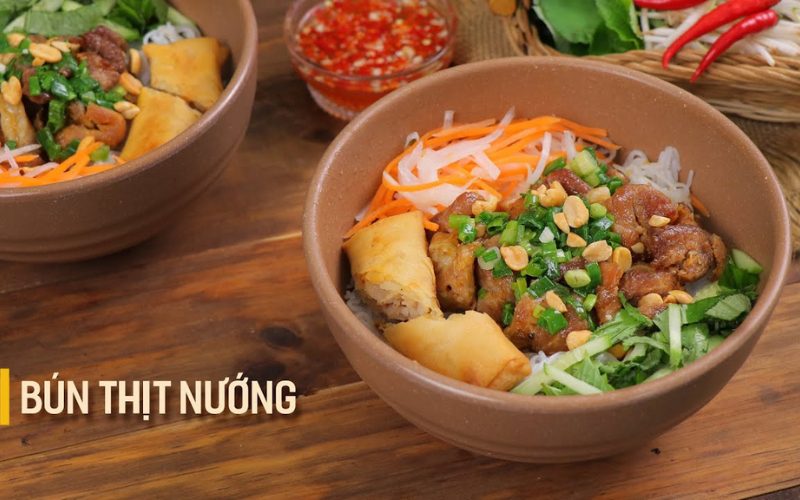
Bun thit nuong (Grilled pork vermicelli)
Cold vermicelli noodles topped with grilled pork, crushed peanuts, fried shallots, pickled vegetables, and a poured-over sweet fish sauce. It’s a southern dish, assembled to order, eaten at room temperature. Very good for a hot midday meal.
- Local tip: The “nuoc cham” (fish sauce) poured over the top is what ties it together, don’t skip it. Some versions add “cha gio” (spring roll) on top, which adds a nice crunch. Cheaper than most tourist-area meals in local markets.
- Price: around 35,000-50,000 VND (~$1.33-$1.90)
- Where to find it: Ho Chi Minh City, Mekong Delta towns, and Can Tho. Rarely seen in the North in its authentic form.
7. Goi ga (Chicken salad)
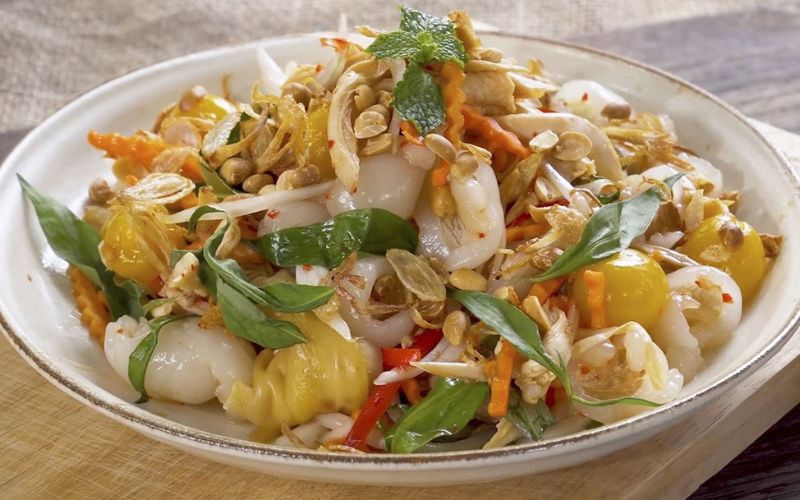
Goi ga (Chicken salad)
“Goi ga” is a shredded chicken salad dressed with lime juice, fish sauce, chili, sugar, and topped with “rau ram” (Vietnamese coriander), fried shallots, and crushed peanuts. It’s sharp, herbaceous, and as close to a cooling dish as Vietnamese cuisine gets.
- Local tip: “Rau ram” has a distinctive flavor: more peppery and medicinal than regular coriander. Some people love it immediately; others need time. The salad can be quite sour, which is the point. Pairs well with a cold “bia hoi” (draft beer).
- Price: 35,000 to 120,000 VND (~$1.33-$4.55)
- Where to find it: Throughout Vietnam. Often served as a starter or light meal. Coastal towns like Nha Trang and Phu Quoc serve particularly good versions using local free-range chicken.
8. Banh xeo (Sizzling crepes)
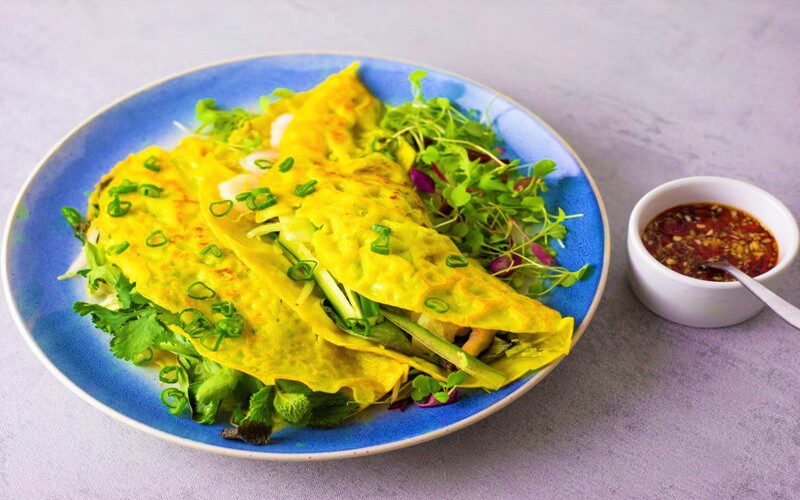
Banh Xeo (Sizzling crepes)
The name means “sizzling cake”, named after the sound the batter makes when it hits the hot pan. It’s a crispy turmeric-yellow crepe filled with pork, shrimp, and bean sprouts, eaten by wrapping pieces in lettuce leaves with mint and dipping in “nuoc cham”.
- Local tip: Eat it fast. “Banh xeo” goes from crispy to soggy within minutes. The wrapping-in-lettuce method is not optional, it’s the right way to eat it and helps balance the richness of the crepe. Central Vietnamese versions tend to be smaller and spicier than southern ones.
- Price: 60,000-120,000 VND (~$2.28-$4.56)
- Where to find it: Ho Chi Minh City’s Banh Xeo 46A on Dinh Cong Trang Street is famous for a reason. In Hue and Da Nang, look for smaller, thicker versions at local markets. Street stalls price these for a full pan.
9. Com tam (Broken rice)
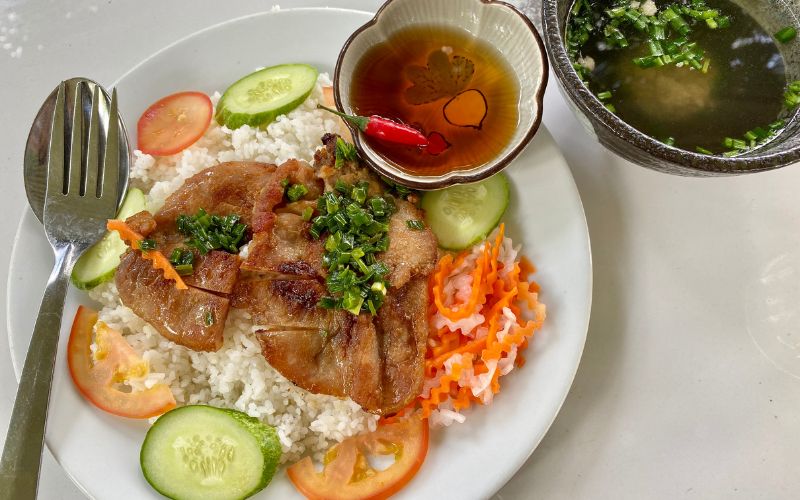
Com tam (Broken rice)
“Com tam” uses broken rice grains, a byproduct of milling, topped with grilled pork chop, a fried egg, steamed shredded pork skin, and served with a bowl of light broth and “nuoc cham” on the side. It’s a filling, satisfying meal that does not feel heavy despite its size.
- Local tip: A southern staple, almost exclusively from Ho Chi Minh City and surrounding provinces. The broken rice has a slightly softer texture than regular steamed rice. Best eaten for breakfast or lunch. The “suon nuong” (pork chop) is often the best part.
- Price: 40,000-70,000 VND (~$1.52-$2.66)
- Where to find it: Every area in Ho Chi Minh City has Com Tam stalls. Street versions are often better than restaurant versions.
10. Banh cuon (Steamed rice rolls)
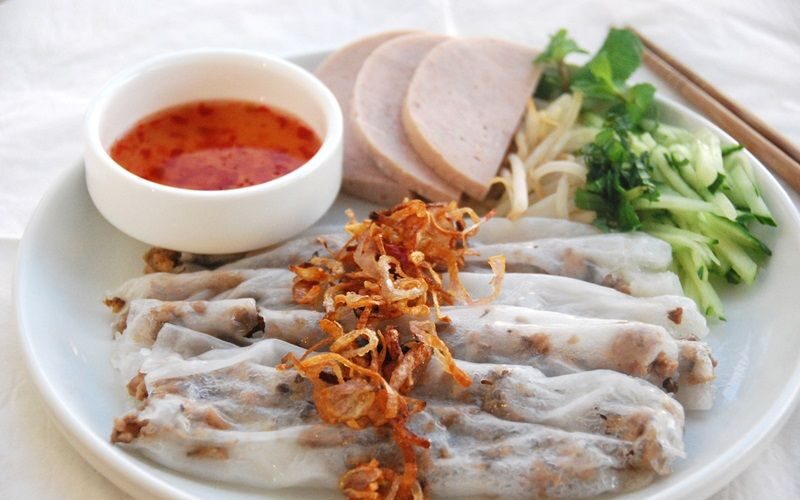
Banh cuon (Steamed rice rolls)
“Banh cuon” are delicate, thin rice flour sheets steamed and filled with seasoned minced pork and wood ear mushrooms, then served with fried shallots, fresh herbs, “cha lua” (Vietnamese pork sausage), and dipping fish sauce. They’re light enough to eat a dozen without issue.
- Local tip: Made fresh to order, you can often watch the preparation at the stall. The rice sheets tear easily; handle them gently. A northern specialty, so Central and Southern versions vary. Best eaten in the morning when the sheets are freshest.
- Price: Around 30,000-50,000 VND (~$1.14-$1.90)
- Where to find it: Hanoi’s Old Quarter, specifically around Dong Xuan Market and Hang Ga Street. Also widely available in Ninh Binh and Ha Long City.
Soups
11. Pho bo (Beef pho)
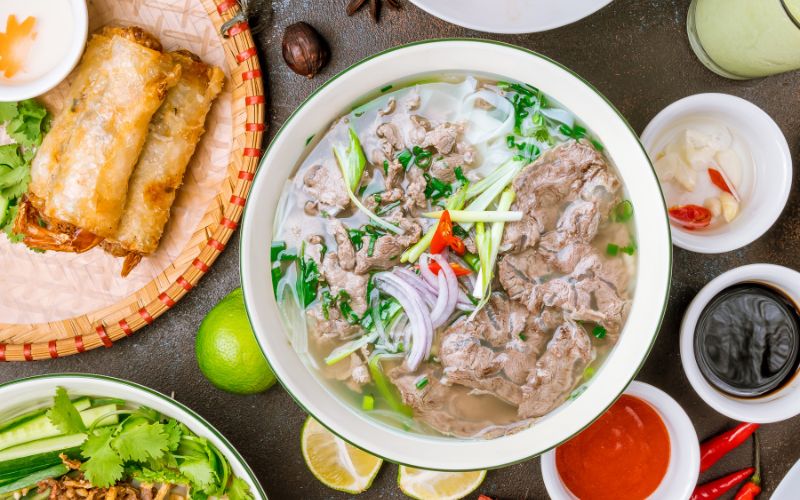
Pho bo (beef pho)
“Pho” needs no long introduction. The broth is simmered for hours with charred ginger and onion, star anise, cinnamon, cloves, and bones. The result, when done properly, is clear, clean, and complex without being heavy. In summer, Hanoi locals eat it for breakfast with the doors wide open to catch whatever breeze exists.
- Local tip: Northern “pho” (Hanoi) uses wider noodles and a more subtle broth; southern “pho” (Saigon-style) comes with a sweeter broth and a plate of bean sprouts, basil, and lime on the side. Both are worth trying. “Tai” means rare beef, “chin” means well done.
- Price: 35,000 to 100,000 VND (~$1.33-$3.79)
- Where to find it: Everywhere, but quality varies significantly. In Hanoi, Pho Thin on Dinh Tien Hoang Street and the stalls around Quan Thanh Temple are reliable. In Ho Chi Minh City, Pho Hoa Pasteur has been running since the 1960s.
12. Bun rieu cua (Crab and tomato noodle soup)
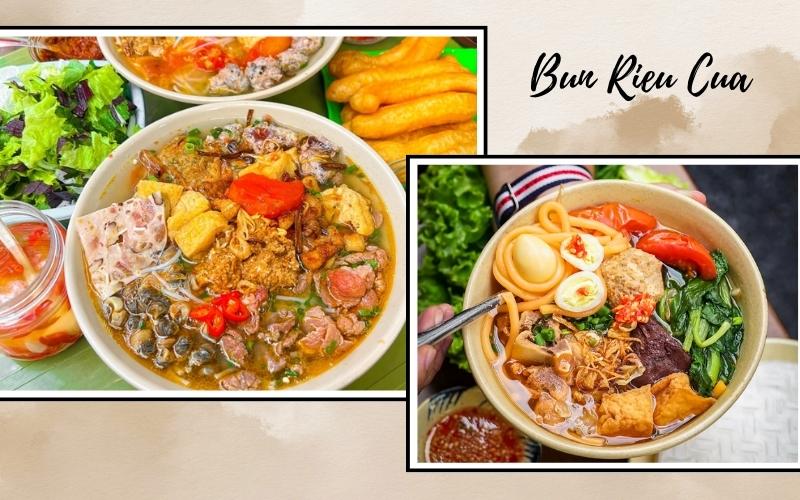
Bun rieu cua (Crab and tomato noodle soup)
“Bun rieu cua” is a bright, tomato-red broth built on crab paste and fermented shrimp, topped with crispy tofu, pork ribs, congealed blood, and freshwater crab meat. It sounds like a lot. It tastes sharp, sour, and surprisingly refreshing for a hot-broth soup.
- Local tip: The sourness comes from tomatoes and tamarind. This is one of the more acidic Vietnamese soups, which actually helps on a hot day. The “rieu cua” (crab paste) is made from pounded freshwater crab and can smell strongly. Skip the blood if you prefer.
- Price: Around 40,000-60,000 VND (~$1.52-$2.28) per bowl.
- Where to find it: Hanoi and northern towns serve the most traditional versions. Ho Chi Minh City has numerous “bun rieu” stalls in local markets.
13. Canh chua (Sweet and sour soup)
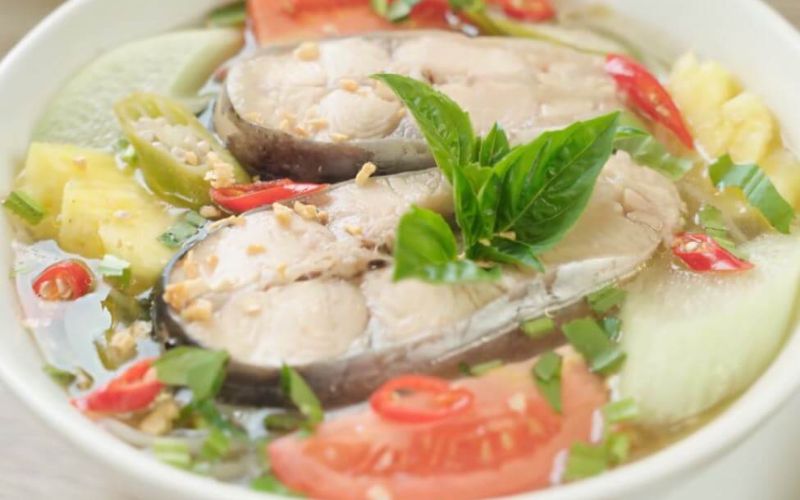
Canh chua (Sweet and sour soup)
“Canh chua” is the Mekong Delta’s answer to a hot afternoon. The broth is built on tamarind and tomatoes, cooked with pineapple, “bac ha” (taro stem), okra, and either catfish or shrimp. It’s sour, slightly sweet, and comes with a pile of fresh herbs that go in at the table.
- Local tip: The taro stem absorbs the broth and becomes almost creamy inside. Catfish is the traditional protein; shrimp is more common in tourist-facing restaurants. Pairs naturally with steamed white rice. Rarely spicy unless chili is added at the table.
- Price: 40,000 to 120,000 VND (~$1.52-$4.55)
- Where to find it: Can Tho, My Tho, and Mekong Delta towns are the place for authentic versions. Available across the South, less common in the North.
Desserts and Sweet Snacks
14. Che (Sweet soup dessert)
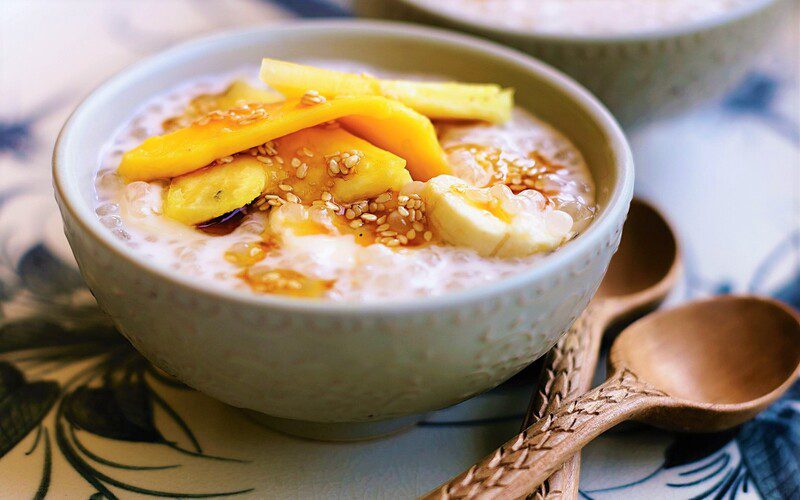
Che (Sweet soup dessert)
“Che” is a broad category covering dozens of sweet soup desserts served hot or cold. In summer, you want the cold versions: “Che Ba Mau” (three-color dessert with mung bean, red kidney beans, and pandan jelly over crushed ice), “Che Bap” (sweet corn in coconut milk), or “Che Troi Nuoc” (glutinous rice balls in ginger syrup on ice).
- Local tip: Textures in Che can be unfamiliar: chewy balls, soft beans, slippery jelly. Try before judging. “Ba Mau” is the easiest starting point. Sugar levels are high; ask for “it duong” (less sugar) if you prefer.
- Price: from 15,000-30,000 VND (~$0.57-$1.14).
- Where to find it: Street dessert stalls throughout Ho Chi Minh City, especially in Cho Lon (Chinatown) and around Ben Thanh Market. Hanoi’s Hang Giay and Hang Bong streets have dedicated Che vendors. Everywhere in the evenings.
15. Banh trang nuong (Grilled rice paper)
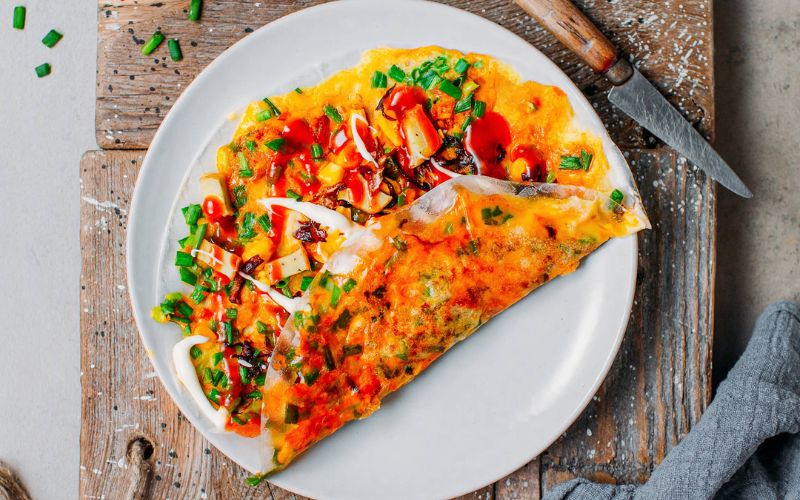
Banh trang nuong (grilled rice paper)
Called “Vietnamese pizza” by street food vendors, “banh trang nuong” is a rice paper sheet grilled over charcoal and topped with a quail egg, dried shrimp, spring onion, cheese (in modern versions), and chili sauce.
- Local tip: Best eaten immediately from the grill. Vendors in tourist areas have started adding processed cheese and sausage; the traditional version with just egg and shrimp is better. Watch for the heat, the paper stays hot longer than it looks.
- Price: Usually 10,000-20,000 VND (~$0.38-$0.76) per sheet.
- Where to find it: Da Lat’s night market is the most famous location for “banh trang nuong”, but it’s also all over Hoi An’s evening streets and Ho Chi Minh City.
16. Kem bo (Avocado ice cream)
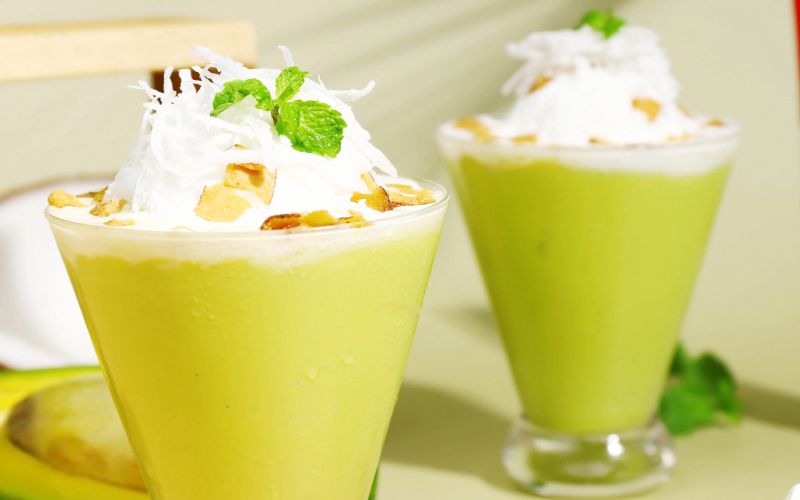
Kem bo (Avocado ice cream)
“Kem bo” is a ripe avocado blended with condensed milk, served either as a thick smoothie or scooped over crushed ice. It’s dense, creamy, and sweet in a way that makes no sense until you try it. A common roadside item in the South where avocados grow.
- Local tip: Vietnamese avocado desserts lean much sweeter than Western preparations. If you expect a savory avocado taste, this will surprise you. Try it as a drink (Vietnamese: sinh to bo) over ice for a lighter version.
- Price: Around 25,000-40,000 VND (~$0.95-$1.52) for a full glass.
- Where to find it: Ho Chi Minh City’s fruit smoothie stalls, particularly in Pham Ngu Lao and Cho Lon area. Coastal towns like Nha Trang and Da Lat also have avocado ice cream shops in the market areas.
Quick Tips for Eating Well in Vietnam
A few things that make navigating Vietnam street food significantly easier:
- Eat where locals eat. A plastic-stool stall with a long queue at 7am is almost always better than an air-conditioned tourist restaurant nearby. Turnover means fresh ingredients.
- Go early. Many Vietnamese dishes, especially soups and noodles, are sold from morning until they run out. By 11am, the best stuff is often gone.
- Know the table manners basics. In Vietnam, you typically pour drinks for others before yourself. Chopsticks should never stand upright in a bowl of rice. Sharing dishes is normal and expected at most meals.
- Drink sealed or freshly pressed. Bottled water, sealed sodas, and freshly pressed juices like “nuoc mia” are safe. Ice in local restaurants generally comes from sealed bags and is fine; ice from buckets in low-end stalls warrants more caution.
- Budget realistically. Vietnam food is cheap by any measure. A full street-food meal rarely exceeds 80,000-100,000 VND (~$3.04-$3.80). Budget travelers can eat very well for under 200,000 VND (~$7.60) per day including drinks.
Conclusion: An Overview of the 15+ Best Summer Dishes in Vietnam
The food is one of the best reasons to visit Vietnam in summer, despite the heat. These 16 dishes cover the full range of what Vietnam cuisine does well in warm weather: cooling broths, fresh herbs, iced drinks, and desserts designed to make 35°C (95°F) feel manageable.
If you’re planning a Vietnam trip and want to eat as well as possible, the advice is simple: move through all three regions.
- Northern Vietnam tours gives you “pho”, “bun cha”, “egg coffee”, and “banh cuon”.
- Central Vietnam tours give you “bun bo Hue”, “cao lau”, “banh mi Hoi An”, and “banh xeo”.
- Southern Vietnam tours cover “com tam”, “goi cuon”, “canh chua”, and the full range of fruit drinks and desserts.
You don’t have to plan it yourself. Contact us and we build private, tailor-made Vietnam holidays around what you actually want to do and eat, not a fixed itinerary everyone else is on.
>>> Refer to Vietnamese cuisine – Wikipedia.
Read more: