


Vietnam’s summer runs long and loud. From April through September, the country shifts into a warmer, wetter gear, and how that plays out depends almost entirely on where you are. The north bakes under tropical heat, the central coast enjoys some of its clearest beach days, and the south gets daily downpours that are as predictable as the clock. If you understand Vietnam summer weather by region, you can plan around the rain rather than against it, and end up with a trip that works better than a dry-season visit.
This guide covers everything: temperatures, regional weather patterns month by month, the best Vietnam beaches in summer, where to go, when to go, and how to get there. Plan a trip to Vietnam this summer!
What Does Summer in Vietnam Like?
Vietnam does not follow a single national summer. The country stretches over 1,650 kilometers from north to south, crossing multiple climate zones. The summer months in Vietnam are broadly April through September, but what that means varies dramatically:

Summer in Vietnam
- Northern Vietnam experiences a genuine four-season cycle. Summer (May to September) brings heat, high humidity, and afternoon thunderstorms.
- Central Vietnam is caught between two monsoon systems. The central coast actually has its driest, sunniest stretch from April through August, while the mountainous interior gets heavy rain.
- Southern Vietnam has only two seasons: wet and dry. The wet season, which is effectively the south’s summer, runs from May through November.
Vietnam Summer Temperature: What to Expect
Across all regions, summer in Vietnam is warm. The question is how warm, and how wet.
- In the north, Hanoi summer temperatures sit around 33 to 37°C (91 to 98°F) in June and July, with humidity that makes it feel several degrees hotter. Expect heat, afternoon rain, and busy streets.
- In the central region, Da Nang and Hoi An offer 28 to 33°C (82 to 91°F) from May through August, with relatively low rainfall. This is the most pleasant coastal weather in the country during this period.
- In the south, Ho Chi Minh City runs at 27 to 35°C (81 to 95°F) throughout the wet season. Rain comes hard in the afternoon, usually for an hour or two, then clears.
As a rule: the further south you go, the more predictable the rain pattern. Northern rain is more erratic and can last for days. Southern rain arrives like clockwork after noon.
Vietnam Summer Weather by Region
Vietnam does not have a single summer. Three distinct climate zones run through the country, and each one behaves differently from April through September. Understanding which region you are visiting, and when within that window, matters more than any general rule about Vietnam weather.
Northern Vietnam Summer Weather
The north has a proper summer, and it arrives with heat. April starts mild, with Hanoi sitting around 26 to 30°C (79 to 86°F) and humidity at tolerable levels. By June, that changes. June through August are the hottest and wettest months in the north, with Hanoi regularly hitting 33 to 37°C (91 to 98°F) and humidity pushing above 85%. September cools things back down to 28 to 32°C (82 to 90°F), and the rains ease off enough to make it a solid shoulder month.
Afternoon thunderstorms are the defining weather pattern across the entire northern summer. They arrive fast, run hard for an hour or two, then pass. The formula for navigating northern summer is consistent: get moving early, plan for rest or indoor time in the early afternoon, and carry a light rain jacket.
Lowland areas (Hanoi, Ninh Binh): April and May offer the most comfortable sightseeing conditions, with 5 to 14 rainy days per month and manageable heat. On the upside, Ninh Binh’s rice paddies are at their greenest from June through August, and the late September harvest turns the landscape golden.

Beautiful View of Ninh Binh
Coastal areas (Halong Bay): Temperatures range from 22 to 33°C (72 to 91°F) across the summer. April and May are the most reliable months for cruises, with mostly clear skies and calm seas. June through August bring moderate to heavy rainfall and occasional limited visibility, though operators run trips throughout. September sees conditions improve noticeably. Always check operator cancellation policies before booking summer cruises.

Majestic Ha Long Bay, where emerald waters meet towering limestone cliffs.
Mountainous areas (Sapa, Ha Giang): The mountains stay cooler throughout summer, ranging from 15 to 25°C (59 to 77°F) depending on the month. April and May are accessible and green. June through August are wetter, with frequent mist, and flash flood risk on mountain roads is real. Ha Giang’s Dong Van Karst Plateau reaches its most dramatic emerald green in August. Sapa’s rice terraces peak in August before the golden harvest begins in late September. Travel with experienced local guides during the wetter months.
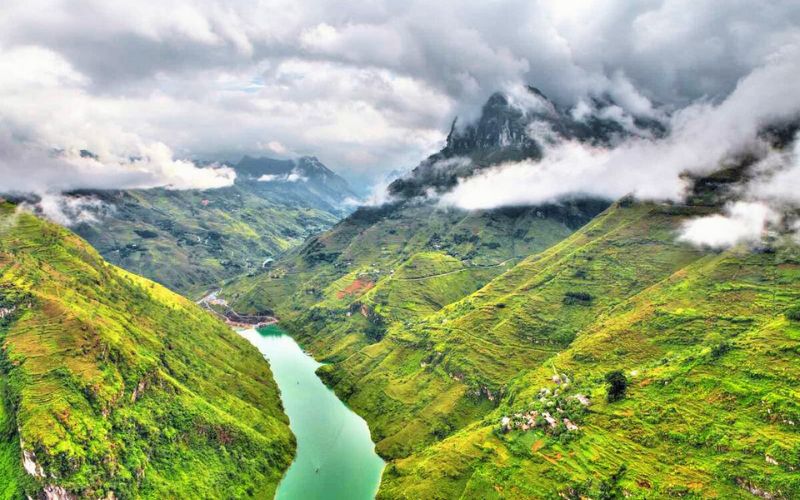
Ma Pi Leng, Ha Giang
Central Vietnam Summer Weather
Central Vietnam is the summer standout. From April through August, the central coast sits inside a natural weather pocket created by the Truong Son mountain range, which blocks the southwest monsoon from reaching Da Nang and Hoi An. The result is a long stretch of dry, warm, beach-ready weather while the rest of the country deals with heavier rain.
Temperatures along the coast run from 26 to 33°C (79 to 91°F) across the summer. The sea sits around 26 to 28°C (79 to 82°F) from May onward, warm enough for comfortable swimming the whole season. April and May are the sweet spot: dry, not yet at peak heat, and less crowded than the school holiday rush of June and July. August remains good on the coast, though afternoon showers become more frequent. September marks the edge of the window, as the northeast monsoon begins to build.
Coastal areas (Da Nang, Hoi An): This is the most consistently good stretch of beach weather in Vietnam during summer. Rainfall is low to moderate from April through August, with most days offering clear mornings and calm seas. Hoi An’s Ancient Town is walkable and lantern-lit in the evenings year-round, but summer evenings when the canal water is calm are particularly good. September starts fine but rainfall picks up in the second half of the month.

Hoi An at night
Lowland cities (Hue): Hue runs slightly hotter and occasionally wetter than the coast. Temperatures sit at 26 to 34°C (79 to 93°F) across summer, peaking in June and July. April and May are the most comfortable months for exploring the Imperial Citadel and royal tombs. June through August are hot but manageable with morning starts. September begins Hue’s transition into its rainiest season, which peaks in October and November.
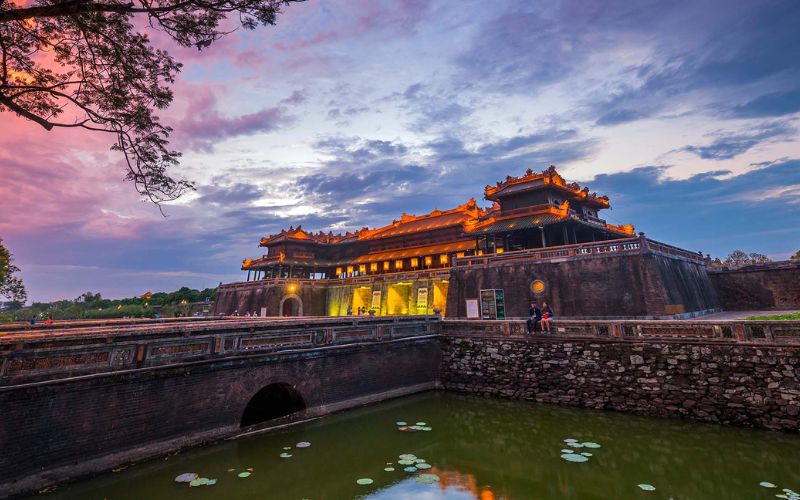
Hue Travel Guide
Mountainous areas (Lam Dong): Lam Dong sits at 1,500 meters and maintains a cool climate throughout summer, ranging from 16 to 23°C (61 to 73°F). Afternoon showers are reliable from May onward, but mornings are usually clear and the town is pleasant regardless of rain. Lam Dong works as a cool counterpoint to the coastal heat any time from April through September.
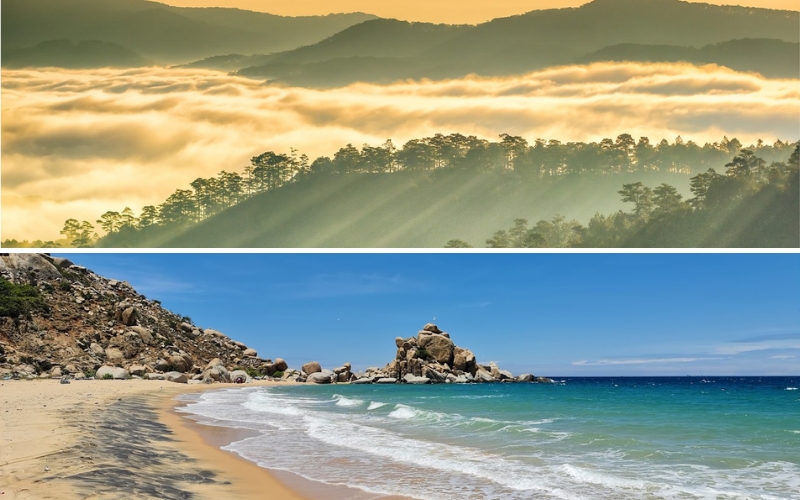
Lam Dong has two main climates: cool and mild in the highlands, hot and dry in the coasts
Southern Vietnam Summer Weather
The south runs on two seasons: dry and wet. Summer in the south is the wet season, running from May through November, with peak rainfall in July and August. That said, “wet season” in Ho Chi Minh City does not mean the city stops. It means predictable afternoon downpours, usually between 2pm and 5pm, that arrive, flood a few streets, and clear within an hour or two. Mornings are almost always sunny and functional.
Temperatures across the south stay warm and consistent throughout summer, ranging from 26 to 35°C (79 to 95°F). April is the tail end of the dry season and the hottest month of the year, sometimes hitting 36°C (97°F) before the rains arrive. Once the monsoon kicks in from May, temperatures moderate slightly and the humidity climbs.
Lowland cities (Ho Chi Minh City): April is hot and dry, good for city sightseeing. From May onward, the afternoon rain pattern sets in. Mornings remain the most reliable window for outdoor plans throughout the summer. The city’s restaurant scene, street food, museums, and covered markets function completely regardless of the weather. Rainfall peaks at 250 to 300 mm in August, the heaviest month, before beginning to ease in September.

The Ho Chi Minh Statue
Delta and lowland areas (Mekong Delta): April is a clean, easy month for boat tours through the delta’s waterway network. As the wet season builds from May onward, river levels rise steadily, which actually opens up access to deeper channels and makes floating market tours more immersive. The Mekong Delta is, counterintuitively, more interesting to visit in the wet season than the dry one, as long as you plan around morning departures. September sees the highest water levels and the most unusual boat access of the year.
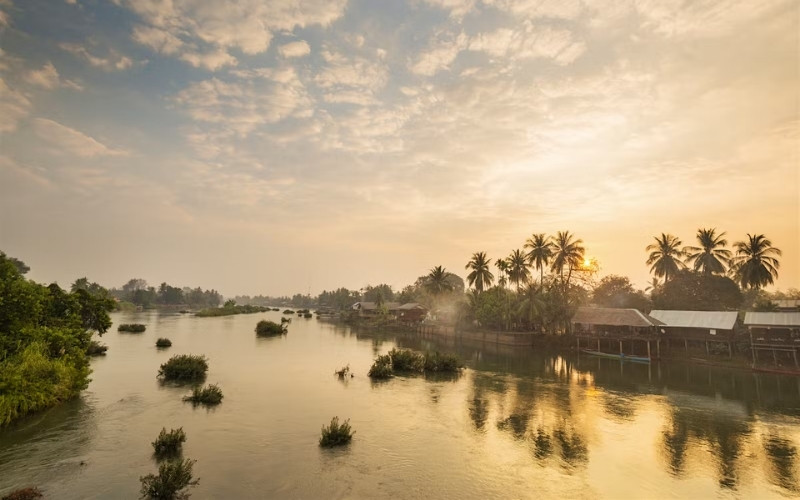
Golden hour on the Mekong River — calm waters, palm silhouettes, and riverside homes bathed in warm evening light.
Coastal islands (Phu Quoc): April is one of the best months for Phu Quoc, with clear seas and minimal rain before the southwest monsoon arrives. From May onward, the western coast gets progressively rougher, and by July and August, some western beaches are not swimmable. The eastern beaches, including Bai Sao, stay calmer throughout the wet season. Rainy-season resort discounts are significant from May through October, and the island is noticeably quieter than the December-to-March peak. September sees conditions on the east coast remain reasonable, with some improvement toward the end of the month.
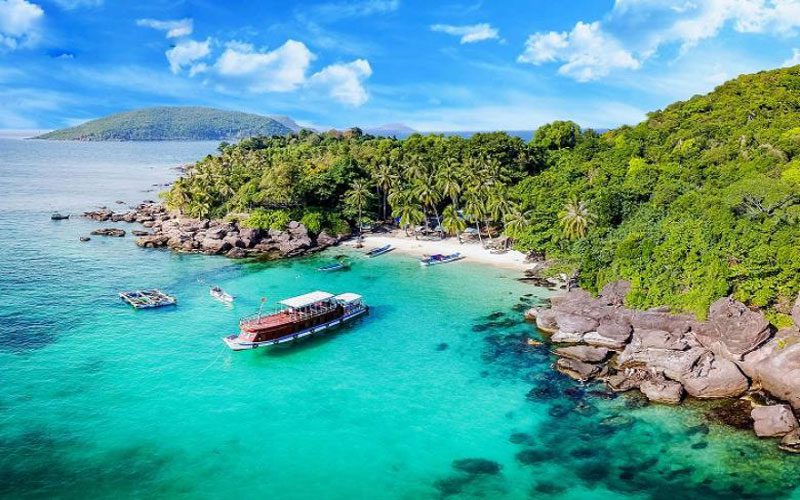
Phu Quoc is a perfect option for relaxing after a long trip
Best Time to Travel to Vietnam: A Practical View
The honest answer is that there is no single best time to visit Vietnam for the whole country. Every season has a trade-off.
If you want to cover the full length of Vietnam, February through April is the closest thing to a nationally reliable window: the north is cool and post-monsoon, the central coast is dry, and the south is in its dry season.
For summer specifically, the central coast from April through August offers the most consistently good beach weather of any region.
The so-called worst time to visit Vietnam depends on your destination:
- For the north: July and August, when heat and rain are at their peak.
- For the central coast: October through December, when the northeast monsoon brings heavy and prolonged rain to Da Nang and Hoi An.
- For Phu Quoc: May through October, when the western coast gets rough and many resorts cut rates.
What is the cheapest month to go to Vietnam? Generally, the wet season months for each region coincide with lower hotel rates and flight prices. June, July, and August bring lower prices in the south. For the central coast, October through November is the low-price window, though weather is challenging.
Where to Go in Vietnam in Summer
Northern Vietnam
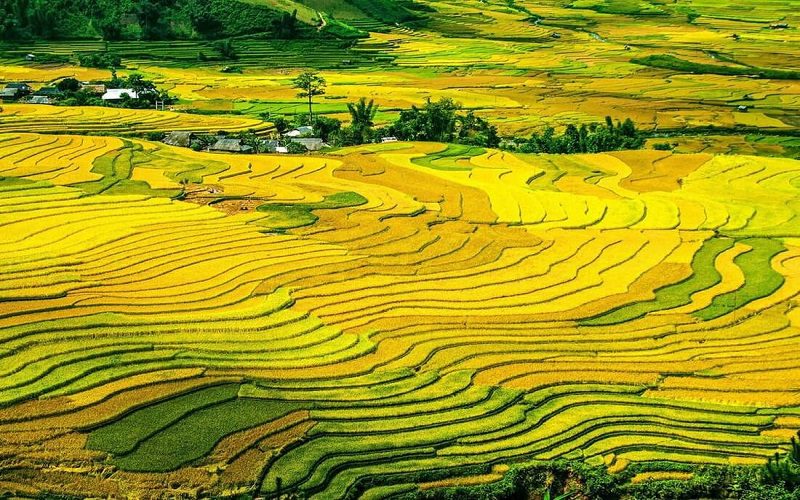
The golden rice fields of northern Vietnam
Summer in the north is defined by heat and green. Sapa’s rice terraces reach their peak color in August. Ninh Binh’s flooded paddies look their best from June through September. Ha Giang’s Dong Van Karst Plateau is dramatic and damp but strikingly beautiful.
>>> Northern Vietnam tours work well for travelers who can handle the heat and are willing to plan morning-heavy itineraries. The key is knowing when to move fast and when to slow down.
Central Vietnam

Central Vietnam From Ancient Cities to Hidden Caves
The central coast is the summer winner. Da Nang, Hoi An, and Hue benefit from a dry weather window that makes them genuinely ideal from April through August. The beaches at My Khe and An Bang in Da Nang are among the best in the country. Hoi An’s Ancient Town, with its lantern-lit streets and canal reflections, is worth visiting at any time of year.
>>> Central Vietnam tours covering Da Nang, Hoi An, and Hue are among the most consistent summer itineraries available. The weather cooperates, the food is excellent, and the distances between sites are manageable.
Southern Vietnam
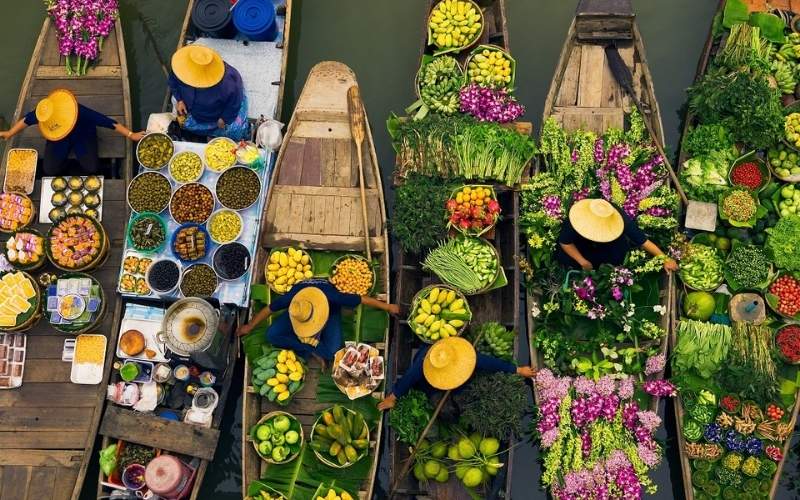
The floating markets of Vietnam – a lively blend of colors, culture, and daily life on the water.
The south during summer is wet but functional. Ho Chi Minh City does not shut down for rain. The Cu Chi Tunnels, the War Remnants Museum, Ben Thanh Market, and the Mekong Delta are all accessible regardless of monsoon season.
>>> Southern Vietnam tours during summer make the most of morning windows and rainy-afternoon indoor or restaurant time. The Mekong Delta in particular becomes more interesting as water levels rise.
Vietnam Beaches in Summer
The central coast has the best Vietnam beach conditions during summer:
- My Khe Beach, Da Nang: Long, wide, and clean. Good surf conditions in some months. Backed by good food and accommodation options.
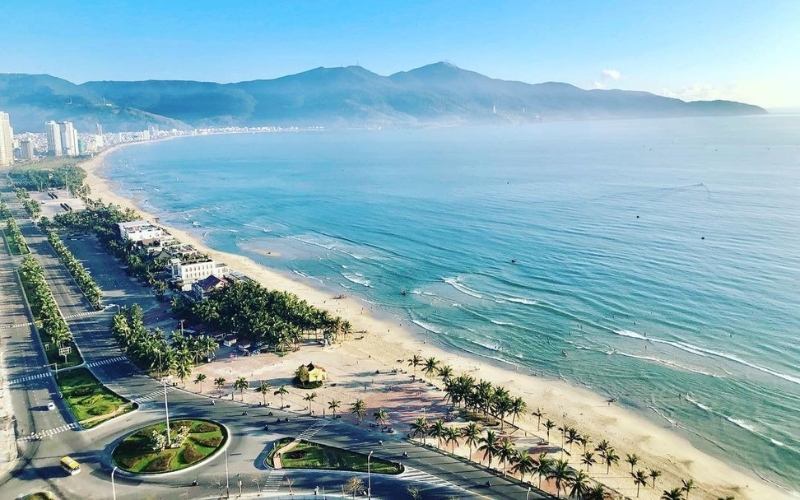
My Khe beach, one of the most beautiful beaches in the world
- An Bang Beach, Hoi An: Quieter than My Khe. Good restaurants along the shore.

An Bang Beach, Hoi An
- Lang Co Beach, Hue: A long, undeveloped beach between Da Nang and Hue. Often overlooked.
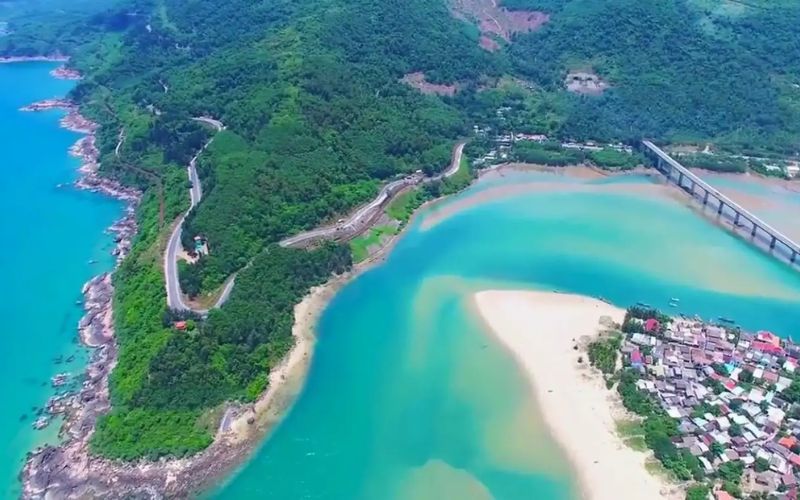
Lang Co Beach, Hue, Vietnam
>>> Vietnam beach holidays centered on the central coast are the most reliable choice for summer travel.
How to Get to Vietnam
Vietnam’s three main international airports are Noi Bai International Airport (Hanoi), Da Nang International Airport (Da Nang), and Tan Son Nhat International Airport (Ho Chi Minh City).
Most international travelers fly into Hanoi or Ho Chi Minh City, depending on which end of the country they want to start from. Da Nang has direct connections from several Asian hubs and is worth considering if central Vietnam is the main focus.
Domestic flights between Hanoi, Da Nang, and Ho Chi Minh City are frequent, affordable, and fast. Vietnam Airlines, VietJet, and Bamboo Airways all serve these routes. Budget airline prices can be as low as 400,000 VND (~$15.50) booked in advance, though 800,000 to 1,500,000 VND (~$31 to $58) is more typical on popular routes.
The train is a slower but more scenic option between cities. The Reunification Express connects Hanoi and Ho Chi Minh City over 30 hours, with stops at Hue and Da Nang.
>>> For tailored itineraries that handle logistics from the moment you land, Vietnam tours include airport transfers, accommodation, and local guides across all regions.
Conclusion: Is Summer in Vietnam Worth It?
| Factor | North | Central | South |
| Best summer months | May, Sep | Apr to Aug |
|
| Summer temperature | 30 to 37°C (86 to 98°F) | 27 to 33°C (81 to 91°F) | 27 to 35°C (81 to 95°F) |
| Rain pattern | Afternoon storms, can last days | Low to moderate (Apr to Aug) | Predictable afternoon downpours |
| Beach conditions | Limited (north has no good beaches) | Excellent (central coast) | Phu Quoc eastern coast only |
| Best for | Mountain scenery, rice terraces | Beach, culture, history | City, Mekong Delta, food |
| Budget advantage | Moderate | Low to moderate discounts | Better hotel rates in wet season |
Summer in Vietnam is absolutely worth it, with the right expectations. The central coast from April to August is the clearest call. Hanoi and the north are manageable with morning-focused planning. The south is functional and lively year-round, rain or no rain.
The key is matching your destination to the season rather than trying to fight the weather. Vietnam in summer is not a compromise. For the right places, it is the right time.
Explore Vietnam holidays with IDC Travel, a Hanoi-based tour operator offering private, tailor-made itineraries across Northern, Central, and Southern Vietnam. Whether you are after beach days in Hoi An, mountain roads in Ha Giang, or floating market mornings in the Mekong Delta, we can help put together a trip that works with the season.
Read more:




I’m planning to visit Vietnam this June and just read your blog, super helpful! I’m curious, since summer can be quite hot and humid, are there any specific regions or destinations you’d recommend for a more comfortable (yet still authentic) experience during that time?
Hi Isabella, thank you for reaching us! June is an exciting time to explore Vietnam. While it’s true that summer can be hot and humid, especially in the North and Central regions, there are still some wonderful spots to enjoy. I’d suggest heading to the Central Highlands (like Da Lat), where the weather is cooler and more temperate. It’s a perfect escape from the heat, with beautiful landscapes and a laid-back vibe. If you’re into beaches, Da Nang and Hoi An are still great, just try to explore early in the day or around sunset. Stay hydrated, take it slow, and you’ll have an amazing time!