

Vietnam and Thailand in 19 days gives you room for 2 full regions in each country, as long as you fix your entry and exit cities first and change country only once. Around 8-10 nights in Vietnam and 9-10 nights in Thailand lets you combine Hanoi, Ha Long Bay and the heritage towns of central Vietnam with Bangkok and either Chiang Mai, Kanchanaburi or a mainland beach. This guide sets out how to divide the nights, 2 sample itineraries based on IDC Travel tours, realistic costs, the new Thai visa-free limit, the best months and what to eat along the way.
Vietnam and Thailand in 19 Days: How Many Nights in Each Country?
- 19 Days in Vietnam and Thailand: A Tale of Splendid Discovery
- Best of Thailand and Vietnam in 19 Days: A Journey to Remember
- Hightlights of Vietnam and Thailand in 19 Days: From Halong Bay to Pattaya Beach
- Legends of Vietnam, Cambodia, and Thailand in 19 Days
- Authentic Vietnam 19 Days Experience
- Discover Northern Thailand in 19 Days: Culture, Nature, and Adventure
Give Vietnam 8-10 nights and Thailand 9-10 nights, then tilt the balance towards the country that holds your “extra”: a Thai beach, northern Thailand or a longer look at southern Vietnam. Divided that way, the 18 nights cover 3-4 bases in each country without a hotel change every day.
| Trip focus | Vietnam | Thailand | What fits in |
| Northern and central Vietnam, Chiang Mai and a mainland beach | 8 nights | 10 nights | Hanoi, Ha Long Bay, Hue, Hoi An, Chiang Mai, Bangkok and Hua Hin (Itinerary 1) |
| Vietnam from south to north, then western Thailand and the coast | 9 nights | 9 nights | Ho Chi Minh City, the Mekong Delta, Hoi An, Hue, Hanoi, Bangkok, Kanchanaburi and Pattaya (Itinerary 2) |
| Vietnam highlights plus a Thai island | 9-10 nights | 8-9 nights | Hanoi, central Vietnam and Ho Chi Minh City, then Bangkok and Phuket, Krabi or Koh Samui, with 1 extra flight |
Three decisions make the rest of the plan easier:
- Book an open-jaw ticket: fly into Hanoi or Ho Chi Minh City and out of Bangkok (or the reverse), so the international flights carry you across the region instead of back to where you started.
- Change country once: the Hanoi to Bangkok flight, or a Da Nang flight into Thailand, takes most of a day once airport transfers and immigration are counted. Going back and forth wastes a second day.
- Check the Thai visa-free limit: since 15 September 2026, eligible travellers can stay in Thailand without a visa for up to 30 days instead of 60. That still covers the 9-10 Thai nights in this guide, but confirm your passport category before booking.
Both sample itineraries below come from live IDC Travel tours and divide the nights differently. Itinerary 1 favours culture and a quiet beach, with more time in Thailand; Itinerary 2 travels the length of Vietnam before heading west of Bangkok to the River Kwai.
| Itinerary 1: Hanoi, Hoi An, Chiang Mai and Hua Hin | Itinerary 2: Mekong Delta, Ha Long Bay, Kanchanaburi and Pattaya | |
| Vietnam stops | Hanoi, Ha Long Bay, Hue and Hoi An | Ho Chi Minh City, the Mekong Delta, Hoi An, Hue, Hanoi and Ha Long Bay |
| Thailand stops | Chiang Mai, Bangkok and Hua Hin | Bangkok, Kanchanaburi and Pattaya |
| Nights split | 8 in Vietnam, 10 in Thailand | 9 in Vietnam, 9 in Thailand |
| Best for | Temples, mountain scenery and a calm mainland coast | War history, river landscapes and a lively beach town |
| Country change | Da Nang to Chiang Mai flight | Hanoi to Bangkok flight |
| Main logistics challenge | The Da Nang to Chiang Mai sector may need a connection | Long road days around Kanchanaburi and Pattaya |
| Pick this itinerary if… | Northern Thailand and a slower finish matter most | Southern Vietnam and the River Kwai matter most |
Whichever version you choose, give the 19-day itinerary a purpose. Use the spare nights to make the beach a genuine stay, to sleep on the River Kwai rather than visit it in a day, or to keep a buffer before the international flight home. Adding a further city usually costs more energy than it returns.
Itinerary 1: Hanoi, Hoi An, Chiang Mai and Hua Hin
- Route: Hanoi – Ha Long Bay – Hue – Hoi An – Chiang Mai – Bangkok – Hua Hin
- Best for: Travellers who want northern and central Vietnam’s heritage, Chiang Mai’s temples and hills, and a quiet mainland beach at the end without island transfers.
- Strengths: This Southeast Asia itinerary links 2 of the region’s strongest cultural areas, adds an overnight cruise and still leaves 4 nights in Hua Hin. Bangkok sits between the mountains and the coast, so the Thai section moves in a natural line from north to south.
- Weaknesses: Ho Chi Minh City and the Mekong Delta are left out. The Da Nang to Chiang Mai flight may connect through Bangkok, which makes Day 9 a long travel day, and Hua Hin is a relaxed town beach rather than an island.
- Best time: January to February gives the most reliable overlap. Central Vietnam is drying out, Chiang Mai is cool and clear and Hua Hin is at its sunniest; Hanoi can feel cool and grey.
- Should avoid: September to November if you cannot give up Hue and Hoi An, because central Vietnam’s flood season can disrupt road travel and sightseeing. Late February to April brings smoke haze to Chiang Mai during the regional burning season, so travellers with breathing problems should check air quality before committing.
- Pace note: Treat Day 9 as a pure transfer day and keep Days 16 and 18 in Hua Hin free of fixed bookings. Those 2 open days absorb flight delays and weather changes better than any extra excursion.
Day 1 | Arrive in Hanoi – Explore the French Quarter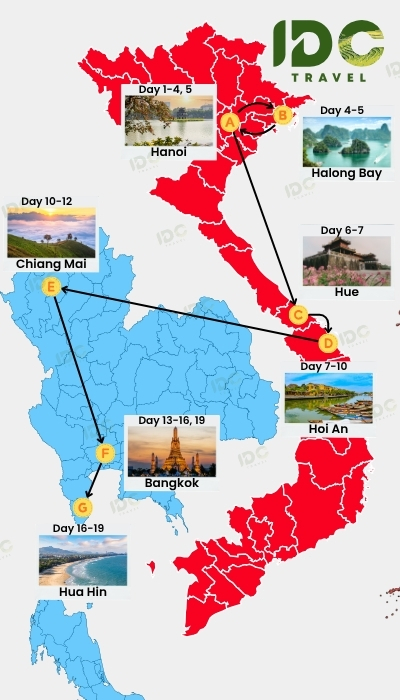
Arrive in Hanoi and transfer to your hotel. Spend the remaining time exploring the French Quarter, where colonial architecture meets busy city streets. If time allows, visit the Hanoi Opera House, St. Joseph’s Cathedral or a local café.
Day 2 | Hanoi City Tour by Vintage Jeep
Explore Hanoi’s West Lake area aboard a vintage Jeep, passing residential neighbourhoods and visiting a local pagoda. Continue to Huu Tiep Lake to see the remains of a B-52 bomber, then discover the flower shops and bonsai gardens along Hoang Hoa Tham Street.
Day 3 | Free Day in Hanoi
Enjoy a free day exploring Hanoi at your own pace. Wander through the Old Quarter, browse traditional markets, sample Vietnamese street food or visit a museum. Alternatively, relax at a café or escape the busy streets in a quiet garden.
Day 4 | Hanoi to Ha Long Bay – Overnight Cruise
Leave Hanoi in the morning and transfer to Tuan Chau Island to board your Ha Long Bay cruise. Enjoy lunch while sailing among limestone formations, with activities such as kayaking, cave visits or beach stops depending on the cruise programme. Spend the night on board.
Day 5 | Ha Long Bay to Hue
Start the morning with Tai Chi on the sundeck or relax while the cruise returns through Ha Long Bay. After breakfast or brunch, disembark and transfer back to Hanoi for your flight to Hue, where you will stay overnight.
Day 6 | Hue City Tour
Begin with a boat trip along the Perfume River to Thien Mu Pagoda. Visit a private museum displaying ancient artifacts recovered from the river, then explore Hue’s Imperial Citadel to learn about the Nguyen Dynasty and Vietnam’s imperial history.
Day 7 | Hue to Hoi An via Hai Van Pass
Travel south from Hue along the scenic coastal route, crossing Hai Van Pass for views of the mountains and sea. Stop at Lang Co Fishing Village to discover local coastal life before continuing to Hoi An for the night.
Day 8 | Hoi An City Tour
Explore Hoi An’s UNESCO-listed Old Town, visiting historic merchant houses, traditional temples, local markets and the Japanese Covered Bridge. Sample local green leaf cakes before ending the tour at a distinctive Tea House staffed by people with hearing impairments.
Day 9 | Free Day in Hoi An
Spend the day enjoying Hoi An at your own pace. You could cycle through the countryside, join a Vietnamese cooking class, browse art galleries or relax at a spa. In the evening, consider a riverside boat ride and dinner overlooking the Thu Bon River.
Day 10 | Hoi An to Chiang Mai via Da Nang
Transfer from Hoi An to Da Nang Airport for your flight to Chiang Mai in northern Thailand. After arrival, settle into your accommodation and enjoy the city’s relaxed atmosphere, historic streets and local cuisine at your own pace.
Day 11 | Chiang Mai Elephant Sanctuary Experience
Travel to Elephant Discovery Camp in Mae Wang district for a guided encounter with Asian elephants. Learn about their daily routines, prepare food and participate in supervised activities involving mud and water. Enjoy lunch at the camp before returning to Chiang Mai.
Day 12 | Chiang Mai – Doi Suthep and Wat Umong
Begin early at Wat Phra That Doi Suthep to observe the monks’ morning alms collection and explore the hilltop temple. Continue to Wat Umong, known for its ancient tunnels, and receive a monk’s blessing before enjoying Chiang Mai’s signature khao soi.
Day 13 | Fly from Chiang Mai to Bangkok
Transfer to the airport for your flight to Bangkok, Thailand’s lively capital. After checking into your hotel, enjoy the remaining time exploring nearby streets, discovering local food or relaxing before the following day’s sightseeing programme.
Day 14 | Bangkok City Tour
Discover Bangkok using local transport, beginning with the BTS or MRT and a visit to Jim Thompson House. Ride a canal boat, explore a traditional alms-bowl workshop in Soi Ban Batra, then continue by tuk-tuk to Wat Pho and the Grand Palace.
Day 15 | Thai Cooking Class at Blue Elephant
Join a cooking class at Blue Elephant in Bangkok, beginning with a guided morning market visit to discover fresh Thai ingredients. Return to the cooking school for a chef-led demonstration and hands-on preparation of traditional dishes, followed by a meal you have prepared yourself.
Day 16 | Bangkok to Hua Hin
Leave Bangkok for the coastal town of Hua Hin and settle into your hotel. Enjoy the relaxed seaside atmosphere, with free time to explore the night market, admire Hua Hin Railway Station or visit Khao Takiab Temple for panoramic coastal views.
Day 17 | Sam Roi Yot National Park
Travel south from Hua Hin to Sam Roi Yot National Park, stopping at a pineapple plantation and Bang Pu fishing village. Take a boat along the coast, then walk to Phraya Nakhon Cave to see its royal pavilion. Enjoy lunch and beach time before returning to Hua Hin.
Day 18 | Free Day in Hua Hin
Enjoy a leisurely day in Hua Hin, whether relaxing on the beach, exploring the night market or treating yourself to a spa experience. Optional activities include water sports, a boat excursion or a visit to Hua Hin Hills Vineyard.
Day 19 | Return to Bangkok and Depart
After breakfast, leave Hua Hin and travel back to Bangkok for your international departure flight. Allow sufficient time for the road transfer and airport procedures before concluding your 19-day journey through Vietnam and Thailand.
>>> See the full itinerary: 19 Days in Vietnam and Thailand: A Trip of Splendor. This Vietnam and Thailand tour can change the beach stay, the flight sequence and the hotel level around your dates.
Itinerary 2: Mekong Delta, Ha Long Bay, Kanchanaburi and Pattaya
- Route: Ho Chi Minh City – Mekong Delta – Hoi An – Hue – Hanoi – Ha Long Bay – Bangkok – Kanchanaburi – Pattaya
- Best for: Travellers who want war history, river landscapes and an overland section in Thailand before an easy beach finish.
- Strengths: Vietnam is covered in one direction, from the Mekong Delta to Ha Long Bay. Kanchanaburi gets 4 nights, 3 of them on a floating raft hotel on the River Kwai, instead of a rushed day trip from Bangkok. Pattaya is reached by road, which saves a domestic flight at the end.
- Weaknesses: The Vietnam section moves quickly, with 2 flights in the first 7 days. Northern Thailand is not included, and Pattaya is busier and more developed than an island resort.
- Best time: December to February suits the whole itinerary best, with dry weather in southern Vietnam and central Thailand. Ha Long Bay can be cool and misty in these months.
- Should avoid: September to November if central Vietnam matters, because Hue and Hoi An face their heaviest rain then. Mid-April is also tricky, as Songkran crowds fill Pattaya and the heat in Kanchanaburi often passes 35°C (95°F).
- Pace note: Day 3 combines the Cu Chi Tunnels with a flight, so keep that evening empty. Days 14 and 18 are deliberately slow and should stay that way.
Day 1 | Arrive in Ho Chi Minh City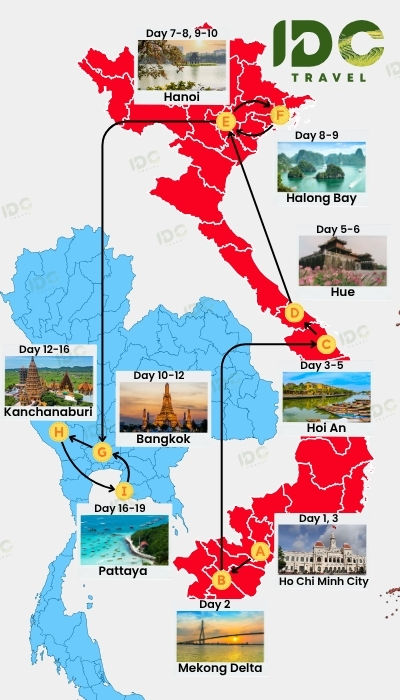
Arrive at Tan Son Nhat Airport and transfer to your hotel. Spend the remaining time relaxing or consider a Vespa ride past landmarks such as the Saigon Opera House, Notre Dame Cathedral and Ben Thanh Market. Overnight in Ho Chi Minh City.
Day 2 | Mekong Delta Tour – Cai Be and Vinh Long
Travel to Cai Be to explore its floating market by motorboat, then visit fruit orchards and traditional family businesses. Continue through the waterways of Vinh Long to Binh Hoa Phuoc village for a riverside lunch accompanied by Southern folk music before returning to Ho Chi Minh City.
Day 3 | Cu Chi Tunnels and Flight to Da Nang – Hoi An
Explore the historic Cu Chi Tunnels, discovering the underground passageways, living quarters and wartime facilities used during the Vietnam War. After the visit, transfer to the airport for your flight to Da Nang, followed by a road transfer to Hoi An.
Day 4 | Free Day in Hoi An
Spend the day exploring Hoi An Ancient Town at your own pace, wandering through lantern-lined streets, sampling Quang Nam cuisine or visiting local tailor shops. Alternatively, consider an excursion to My Son Sanctuary or the Bay Mau Coconut Forest for a different perspective on the region.
Day 5 | Hoi An to Hue
Leave Hoi An after breakfast and travel north to Hue, Vietnam’s former imperial capital. After checking into your hotel, enjoy free time to discover the city’s peaceful atmosphere, traditional architecture and local cuisine before spending the night in Hue.
Day 6 | Hue City Tour and Perfume River Cruise
Begin at the Imperial Citadel to discover the architectural legacy of the Nguyen Dynasty. Continue to royal tombs such as Tu Duc or Khai Dinh and visit Thien Mu Pagoda. In the evening, enjoy a cruise along the Perfume River with traditional music and local specialties.
Day 7 | Fly to Hanoi and Hanoi City Tour
Fly from Hue to Hanoi and settle into your hotel before exploring landmarks such as the Imperial Citadel of Thang Long, the Temple of Literature and Ho Chi Minh’s Mausoleum. In the evening, wander through the Old Quarter and sample local dishes like pho or bun cha.
Day 8 | Hanoi to Ha Long Bay – Overnight Cruise
Travel from Hanoi to Ha Long Bay and board your overnight cruise around midday. Enjoy lunch while sailing past towering limestone formations, then visit Sung Sot Cave and Ti Top Beach. Spend the evening relaxing on board, surrounded by the bay’s spectacular scenery.
Day 9 | Ha Long Bay to Hanoi
Enjoy breakfast on board before cruising through the scenic waters of Bai Tu Long Bay, passing islands such as Dau Nguoi, Turtle and Duck. After exploring the bay’s limestone landscapes, return to the port and transfer back to Hanoi for the night.
Day 10 | Fly from Hanoi to Bangkok
Enjoy some free time in Hanoi before transferring to Noi Bai Airport for your flight to Bangkok. Upon arrival, check into your hotel and spend the remaining day relaxing or exploring the nearby streets, local restaurants and lively evening atmosphere.
Day 11 | Free Day to Explore Bangkok
Discover Bangkok at your own pace, with options including the Grand Palace, Wat Phra Kaew, Wat Pho and Wat Arun. Consider an afternoon cruise along the Chao Phraya River before spending the evening exploring local markets, shopping districts or Chinatown’s street-food scene.
Day 12 | Bangkok to Kanchanaburi – Death Railway
Travel west from Bangkok to Kanchanaburi, a region known for its natural scenery and World War II history. In the afternoon, explore the historic Death Railway and the famous Bridge over the River Kwai, learning about the railway’s construction and significance.
Day 13 | Hellfire Pass Memorial, Lawa Cave and River Kwai
Visit Hellfire Pass Memorial to learn about the prisoners and labourers who suffered during the construction of the Death Railway. After lunch, take a boat along the River Kwai to explore Lawa Cave, then check into The Float House River Kwai for a peaceful riverside stay.
Day 14 | Leisure Day at The Float House River Kwai
Enjoy a relaxing day at The Float House River Kwai, surrounded by tropical forest and river scenery. Choose from activities such as boating, visiting a traditional Mon village, enjoying a Thai massage, hiking, cycling or birdwatching. Return to the floating resort for dinner and overnight accommodation.
Day 15 | Sai Yok National Park and Erawan Waterfalls
Explore the natural landscapes of Sai Yok National Park and Yai Naresuan Valley, with opportunities for hiking through forests and along rivers. Continue to the beautiful Erawan Waterfalls, known for their seven cascading tiers and emerald pools, before returning to The Float House River Kwai for dinner.
Day 16 | Kanchanaburi to Pattaya
After breakfast, check out of your floating accommodation and transfer to Pattaya, one of Thailand’s best-known coastal destinations. Spend the remainder of the day at leisure, relaxing at your hotel or enjoying the seaside atmosphere after the journey.
Day 17 | Pattaya City Tour
Explore Pattaya’s cultural attractions, including the giant Buddha image at Khao Chi Chan and the hilltop Wat Phra Yai Temple. Consider visiting Underwater World to discover marine life, then experience the lively atmosphere of Pattaya Walking Street, known for its restaurants, entertainment and nightlife.
Day 18 | Pattaya Beaches Exploration
Spend the day discovering Pattaya’s beaches and coastal scenery, from lively Pattaya Beach to the more relaxed Jomtien Beach. Enjoy swimming or optional water sports, or consider a boat excursion to Koh Larn Island. Naklua Bay offers another quieter coastal escape.
Day 19 | Pattaya to Bangkok and Departure
After breakfast, leave Pattaya and transfer to Bangkok International Airport for your departure flight. Allow sufficient time for the road journey and airport procedures before bringing your 19-day adventure through Vietnam and Thailand to an end.
>>> See the full itinerary: Highlights of Vietnam and Thailand in 19 Days. This Vietnam and Thailand tour can swap Pattaya for a quieter beach, shorten Kanchanaburi or add time in Hanoi.
These 2 plans are examples rather than the only way to use 19 days. IDC Travel regularly reshapes a Vietnam and Thailand itinerary for different interests: it can replace Hua Hin with Phuket or Krabi, add Sapa or Ho Chi Minh City, lengthen Chiang Mai, reverse the direction of travel or slow everything down for families and older travellers. When you are weighing several options, IDC Travel’s travel consultants can compare them with you before anything is confirmed.
How Much Does a 19-Day Vietnam and Thailand Trip Cost?
Travelling through Vietnam and Thailand in 19 days costs about $1,300 – $2,140 per person at 3-star level, $2,500 – $4,490 with 4-star boutique hotels and $5,830 – $11,450 for 5-star travel, based on 2 people sharing a room. The figures cover land services and regional flights inside the trip and are planning estimates, not package quotations.
(Estimated calculated per person, double occupancy, land services + regional flights)
| Travel Style | Vietnam (about 9 Days) | Thailand (about 10 Days) | Regional Flights
|
Total Estimated Cost (USD) |
| 3★ Standard / Comfort | $420 – $710 | $580 – $980 | $300 – $450 | $1,300 – $2,140 USD |
| 4★ Boutique (Recommended) | $900 – $1,670 | $1,250 – $2,320 | $350 – $500 | $2,500 – $4,490 USD |
| 5★ Luxury / Heritage | $2,250 – $4,500 | $3,130 – $6,250 | $450 – $700 | $5,830 – $11,450 USD |
Notes on using these ranges:
- Thailand costs more per day: hotels, guided days and entrance fees in Bangkok and Chiang Mai usually sit above Vietnamese levels, so a Thai-heavy Vietnam and Thailand itinerary drifts towards the upper end.
- Flights inside the trip: both itineraries use 3 flights. Itinerary 1 flies Hanoi to Hue, Da Nang to Chiang Mai and Chiang Mai to Bangkok; Itinerary 2 flies Ho Chi Minh City to Da Nang, Hue to Hanoi and Hanoi to Bangkok.
- Single rooms: travelling alone raises the per-person figure, since one guest carries the full price of each room.
- Peak periods: Christmas and New Year, Tet in Vietnam and Songkran in Thailand push prices to the top of each band and fill flights early.
- Not included: international flights to and from the region, visas, insurance, tips, drinks and personal shopping.
How to Save Money on a Vietnam and Thailand Trip
Use public transport for Bangkok sightseeing: the BTS Skytrain, MRT and Chao Phraya river boats reach most central sights faster than a car in traffic, so a private vehicle is better saved for the airport and out-of-town days.
- Spend on guides where background matters: Hue, Ayutthaya, Kanchanaburi and the Cu Chi Tunnels are richer with a licensed guide, while beach days and Chiang Mai evenings need none. Paying for guides only where they add context can cut the guiding bill noticeably.
- Buy the regional flight as one booking: if the Da Nang to Chiang Mai journey needs a connection, a single ticket protects you when the first flight runs late. Two separate tickets look cheaper until a missed connection forces a new fare.
- Choose a beach you can reach by road: Hua Hin and Pattaya avoid another flight and its baggage fees. An island adds atmosphere but also a flight or ferry and usually higher hotel rates.
- Work around Tet and Songkran: Vietnam’s official Tet holiday runs 4-10 February 2027 and Songkran falls on 13-15 April 2027. Travelling a week either side often gives better room rates and easier train and flight bookings.
- Pay locally and keep cash simple: pay in dong or baht and refuse the option to be charged in your home currency. Withdrawing larger amounts less often limits the fixed fee that many ATMs charge foreign cards.
- Read what a package already covers: an overnight Ha Long Bay cruise normally includes meals, and guided days usually include entrance tickets, so check before paying for them again.
Visa, Money and Travel Tips for Vietnam and Thailand in 19 Days
Visiting Vietnam and Thailand in 19 days means 2 entry systems, 2 currencies and several flights, so prepare each country on its own terms: confirm permission to enter, then complete that country’s arrival form. The Thailand Digital Arrival Card applies to Thailand only, and Vietnamese Pre-Arrival Information applies to Vietnam only.
Vietnam Visa and Currency
- Entry permission: Visa-free access depends on nationality and length of stay. Travellers who need an electronic visa should use the official Vietnam e-visa portal, where e-visas are granted for a stay of up to 90 days, valid for one entry or several. Make sure the approved dates and entry airport match your itinerary.
- Pre-Arrival Information: Check whether the current PAI process applies at your arrival airport. It does not replace a visa; IDC Travel’s Vietnam Pre-Arrival Information guide walks through the steps.
- Currency and cards: Vietnam uses the dong (VND). Cards work at established hotels and larger restaurants, while markets, street food and rural services still need cash.
- ATMs: Use machines attached to a bank or in a secure area, read the fee screen before confirming and keep a second card away from your main wallet.
For banknotes, exchange options and common mistakes, see IDC Travel’s Vietnam Currency Guide.
Thailand Visa, TDAC and Currency
- Visa or exemption: From 15 September 2026, Thailand cut its visa-free stay from 60 days to 30 days for eligible nationalities, and a few nationalities receive 15 days. Check your passport on the official Thailand e-Visa website rather than assuming the Vietnamese rule applies.
- Thailand Digital Arrival Card: All non-Thai nationals must complete the Thailand Digital Arrival Card online before entry, within the 3 days before arrival. It is free and it is not a visa.
- Currency and cards: Thailand uses the baht (THB). Cards are accepted at most hotels and malls, but street food, markets, songthaew rides and many temples are cash-only. Get baht after arrival rather than carrying Vietnamese dong across the border.
- ATMs: Thai ATMs commonly add a fixed fee for foreign cards, so check the fee and exchange-rate screen and avoid accepting conversion into your home currency.
IDC Travel’s TDAC guide explains who must submit the form and when, and the Thailand currency exchange guide covers baht, ATMs and exchange counters in more detail.
SIM Cards, eSIMs and Power Bank Rules
Like any Southeast Asia itinerary of this length, both versions mix 3 or more flights with rural stretches such as Ha Long Bay, the Mekong Delta, the hills around Chiang Mai or the River Kwai, so prepare data, documents and hand luggage before leaving each big city.
- Mobile networks: In Vietnam, Viettel, VinaPhone and MobiFone are the main networks, with Viettel generally regarded as the strongest in remote areas. In Thailand, AIS and True dominate, and AIS is widely considered the stronger choice in mountain areas.
- SIM or eSIM: Both countries register physical SIM cards against your passport, which airport counters handle in a few minutes. An eSIM skips that step but usually costs more per gigabyte.
- Offline backups: Save maps, hotel addresses, flight and cruise confirmations, guide contacts, visa approvals and your TDAC confirmation before heading into areas with weak signal.
- Power banks: Both countries now apply strict cabin rules. Vietnam has required power banks to travel in carry-on bags since 1 July 2026, and Thailand introduced similar rules in June 2026: no more than 2 per passenger, 100 Wh or less without airline approval, and no charging or use during the flight.
- Flight-day essentials: Carry your passport for every flight, including domestic ones, and pack medicine, a spare bank card, a little local cash and one set of clothes in your cabin bag in case the hold luggage arrives late.
How to Avoid Travel Fatigue on a 19-Day Trip
A trip through Vietnam and Thailand in 19 days rarely goes wrong because of one hard day; it goes wrong when early starts, hotel changes and transfers pile up without a break. These habits keep the whole itinerary enjoyable.
- Plan a slow day every 4-5 days: on a 19-day itinerary, fix one unscheduled day after each cluster of transfers and protect it from optional tours.
- Follow 2 early starts with a late morning: avoid booking timed tickets on the same afternoon as a flight, a cruise return or a long road transfer.
- Travel light on overnight legs: use a small bag for the cruise or the river hotel so the main suitcase stays packed.
- Do laundry during 2-night stays: schedule it before the country change rather than on the last beach day.
- Keep dinner close after travel days: choose restaurants within walking distance of the hotel on any day with a flight or long drive.
- Protect the final departure: sleep near the airport if the flight home leaves early, and allow extra time from Hua Hin or Pattaya for Bangkok traffic.
A useful warning sign: if the next 4 days hold 3 early starts, 2 hotel changes and no free half-day, drop one excursion. Every additional day in a long trip should either reduce risk or restore energy.
Best Time to Visit Vietnam and Thailand
November to February is the best time to visit Vietnam and Thailand together, offering generally pleasant temperatures and dry weather across much of both countries. Northern Thailand is cooler, while southern Vietnam and Thailand’s coastal destinations enjoy favourable conditions. However, central Vietnam may still experience rain in November and early December. March and April offer a wider travel window, although temperatures gradually rise, especially in Thailand, making early mornings and late afternoons better for outdoor activities. Tet (Lunar New Year, usually in January or February) and Songkran (mid-April) can also affect travel costs, transport availability and opening hours.
| When | Overall | Strongest regions | Weather catches | Holidays and festivals |
| November to December | Good | Thailand turns cool and dry; southern Vietnam dries out | Hue and Hoi An can still flood into early December; Hanoi turns cool | Loy Krathong and Chiang Mai’s Yi Peng lantern festival (usually November); Christmas and New Year peak |
| January to February | Best overall | Dry across most of both countries; Chiang Mai and Hua Hin at their best | Hanoi and Ha Long Bay can be grey and chilly | Tet holiday in Vietnam from 4 to 10 February 2027; Lunar New Year celebrations in Bangkok’s Chinatown |
| March to April | Good but hot | Central Vietnam beaches and Hanoi are warm and pleasant | Bangkok and Kanchanaburi often exceed 35°C (95°F); smoke haze in northern Thailand | Songkran on 13-15 April 2027; Reunification Day and Labour Day in Vietnam (30 April and 1 May) |
| May to August | Mixed | Hoi An and the central Vietnamese coast stay mostly dry | Rainy season in Bangkok, Hanoi and southern Vietnam; summer storms can affect Ha Long Bay cruises | Domestic summer holidays fill Vietnamese beach resorts |
| September to October | Weakest | Northern Vietnam clears from October | Bangkok’s wettest weeks and the start of central Vietnam’s flood season | Fewer major festivals; quieter prices |
For region-by-region detail, compare IDC Travel’s guides to the best time to visit Vietnam and the best time to visit Thailand.
How the season changes each type of activity:
- Temples and city sightseeing: November to February is the most comfortable period in Bangkok, Hue and Ayutthaya. From March, plan the main visits for early morning and rest at midday.
- Ha Long Bay cruise: boats run most of the year, but storms between June and September can cancel or shorten a sailing, so keep a spare day afterwards.
- Northern Thai hills: November to February brings clear views over Chiang Mai and Doi Inthanon. From late February to April, haze can hide the scenery and affect people with breathing conditions.
- Beaches: Hua Hin and Pattaya are most reliable from November to April. If you add an island, the Andaman side (Phuket, Krabi) peaks from November to April, while Koh Samui is often better from February to August.
- Rivers and national parks: the Mekong Delta and the River Kwai are pleasant in the dry months for boat trips and cycling, while waterfalls such as those in Sai Yok run fuller after the rains.
Tet and Songkran: Tet is Vietnam’s most important holiday, and in the week of 4-10 February 2027 seats and rooms sell out quickly while many small family businesses shut for several days. Songkran, Thailand’s New Year on 13-15 April 2027, brings city-wide water fights, busy roads and closed offices. Both can be memorable to experience, as long as transport and hotels are booked well ahead, so check the dates before settling on the best time to visit Vietnam and Thailand for your group.
What to Eat in Vietnam and Thailand
Let each stop shaping what you order instead of collecting one list of famous dishes. Vietnamese food shifts from the delicate broths of the north to the spicier cooking of Hue and the sweeter, herb-heavy dishes of the south, while Thai food moves from the curry noodles and herb sausages of Chiang Mai to Bangkok’s street noodles and the seafood of the Gulf coast.
Must-Try Vietnamese Dishes
Northern dishes tend to rely on clear stock and fresh herbs, central Vietnam turns up the chilli and lemongrass, and the south adds sugar, coconut and generous plates of greens.
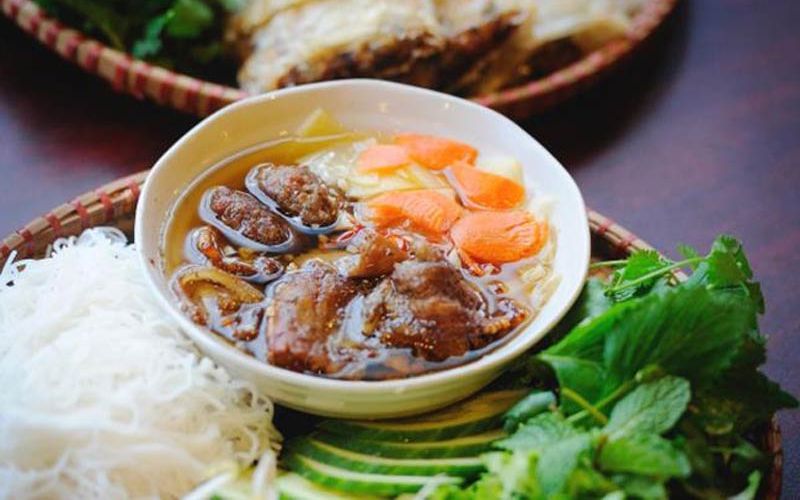
- Bun cha (grilled pork with rice noodles): Charcoal-grilled pork in a light dipping broth with noodles and herbs, the classic Hanoi lunch on both itineraries.

Bun cha (grilled pork with rice noodles)
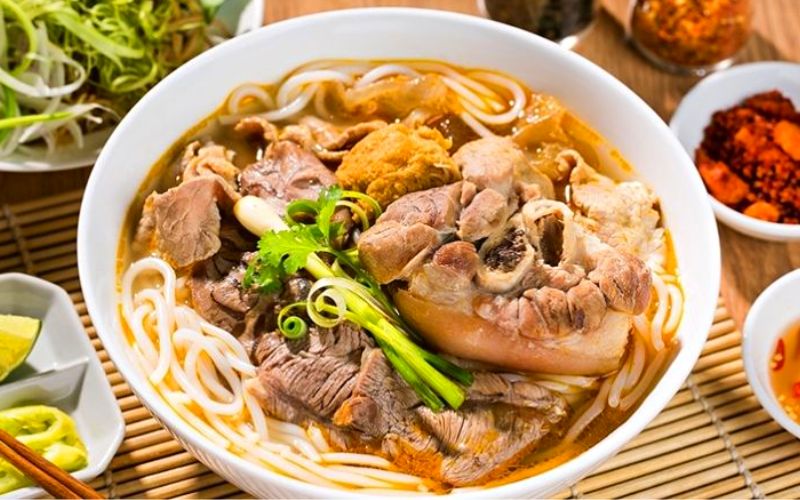
- Bun bo Hue (Hue-style beef noodle soup): A lemongrass and chilli broth with beef and round rice noodles, best eaten in Hue itself.
Bun bo Hue (Hue-style beef noodle soup)
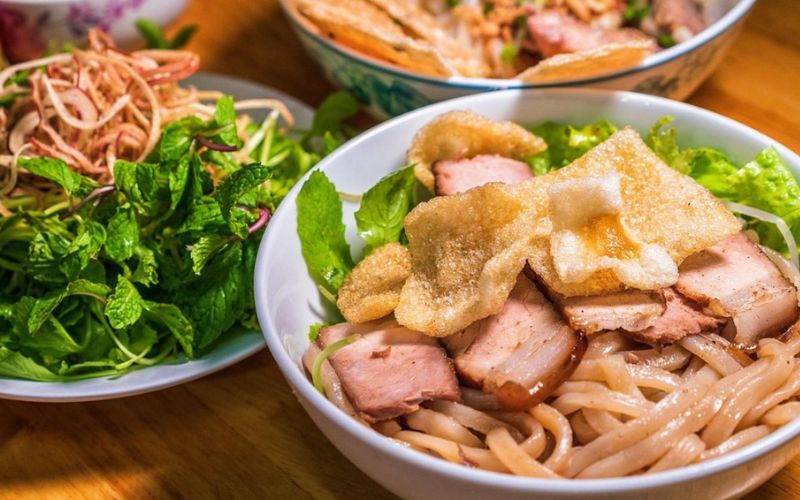
- Cao lau (Hoi An-style pork noodles): Chewy noodles with pork, greens and crisp toppings, closely tied to Hoi An.
Cao lau (Hoi An-style pork noodles)
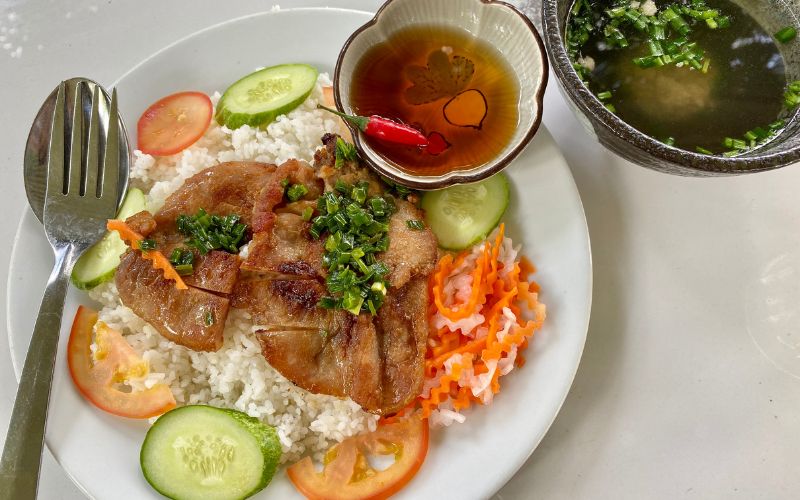
- Com tam (broken rice with grilled pork): A Ho Chi Minh City staple served with pickles, egg and a fish-sauce dressing, ideal on the first day of Itinerary 2.
Com tam (broken rice with grilled pork)
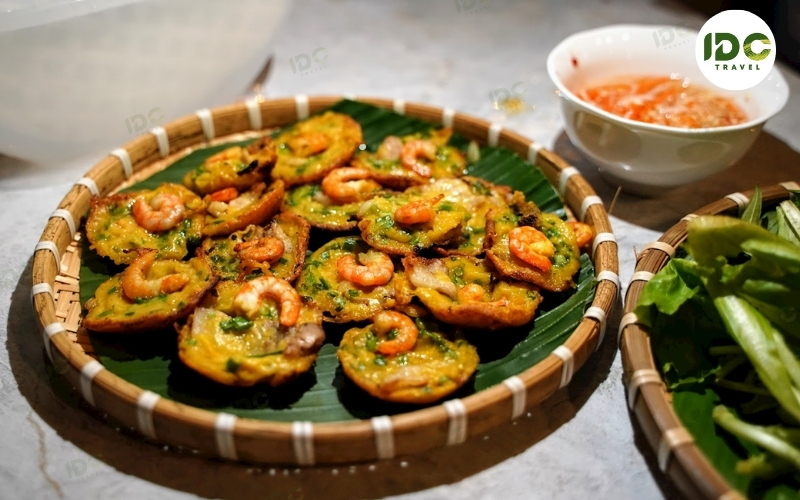
- Banh khot (small savoury rice pancakes): Crisp southern bites topped with shrimp and wrapped in herbs, a good fit for the Mekong Delta day.
Banh khot (small savory rice pancakes)
IDC Travel’s Top 30 Popular Vietnamese Dishes lists more specialities region by region.
Must-Try Thai Dishes
Northern Thai cooking leans on dried chillies, herbs and sticky rice, central Thai food balances sweet, sour, salty and spicy flavours, and the Gulf coast is the place for fresh fish and shellfish.
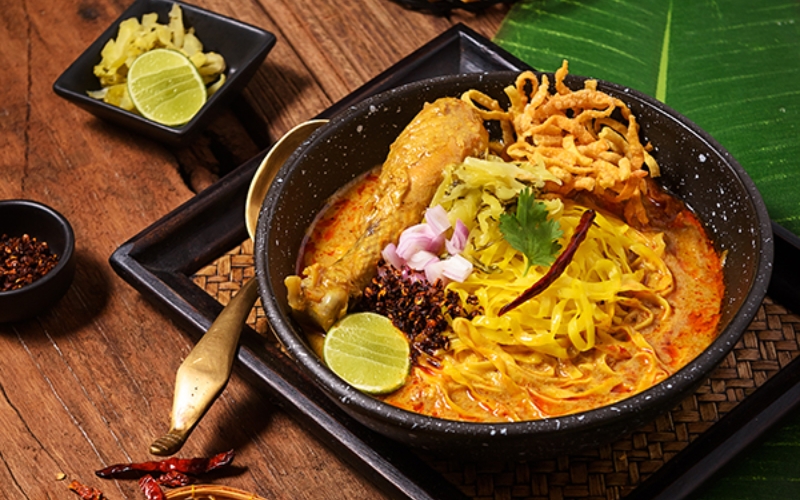
- Khao soi (northern Thai curry noodles): Egg noodles in a coconut curry broth topped with crispy noodles, the signature dish of Chiang Mai on Itinerary 1.
Khao soi (northern Thai curry noodles)
- Sai ua (northern Thai herb sausage): A grilled pork sausage seasoned with lemongrass, kaffir lime and curry paste, sold at Chiang Mai markets.
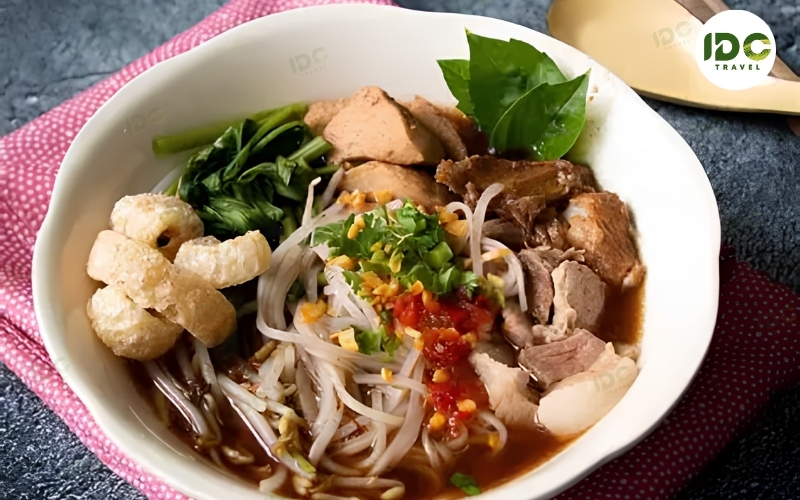
- Kuai tiao ruea (boat noodles): Small bowls of rich, spiced noodle soup that are a Bangkok favourite on both itineraries.
Kuai tiao ruea (boat noodles)
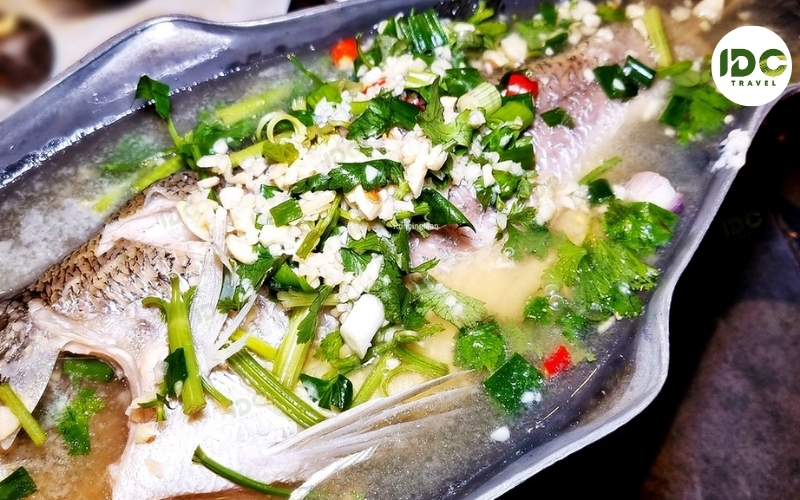
- Pla kapong nueng manao (steamed sea bass with lime and chilli): A bright, sour seafood dish that suits dinners in Hua Hin or Pattaya.
Pla kapong nueng manao (steamed sea bass with lime and chilli)
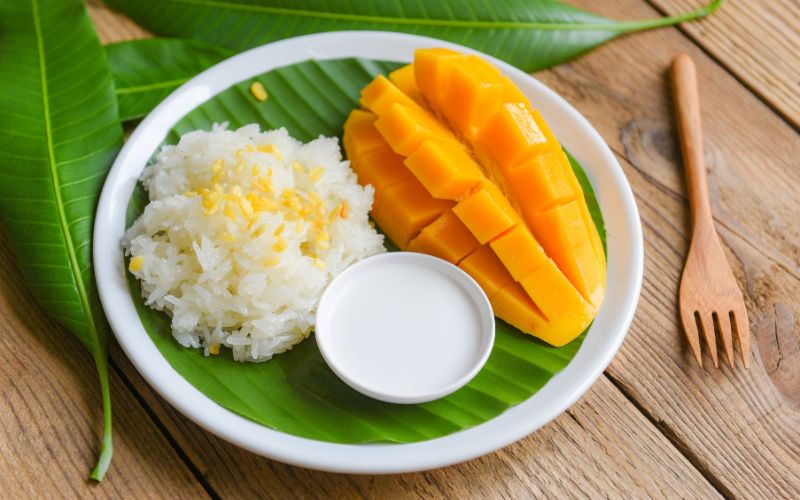
- Khao niao mamuang (mango sticky rice): Sweet sticky rice with ripe mango and coconut cream, at its best in the mango season from March to May.
Khao Niao Mamuang (Mango Sticky Rice)
For a wider tasting list, see IDC Travel’s Thai Cuisine: 15 Best Dishes to Savor in Thailand.
Travellers with allergies should carry a written note in both Vietnamese and Thai. Fish sauce, shrimp paste, peanuts and shellfish appear in many dishes in both countries, and “vegetarian” food can still contain fish-based seasoning.
Book a Private Vietnam and Thailand Tour with IDC Travel
Vietnam and Thailand in 19 days is most satisfying when each country has a clear theme: heritage towns and a quiet beach, a north-to-south journey through Vietnam, or a Thai island at the end. The 2 sample itineraries show what that looks like on the ground; a personal plan simply begins with your month of travel, your budget and the pace you enjoy.
Once you know which side of each choice suits you, plan your own version with IDC Travel, and its planners will arrange the flights, guides and rest days around it.
Read more:


Wow, this Vietnam & Thailand 19-day itinerary looks absolutely incredible! I love how the itinerary blends iconic landmarks with off-the-beaten-path experiences. It’s definitely inspiring me to plan my next big adventure. Vietnam and Thailand have been on my bucket list for so long, and this sounds like the ultimate way to experience both!
Thank you so much for your wonderful feedback! Vietnam and Thailand are both incredible destinations, and we’d love to help make your bucket list adventure a reality. If you need any tips or want to customize the itinerary to match your travel style, feel free to reach out.
Best regards,
IDC Travel Team