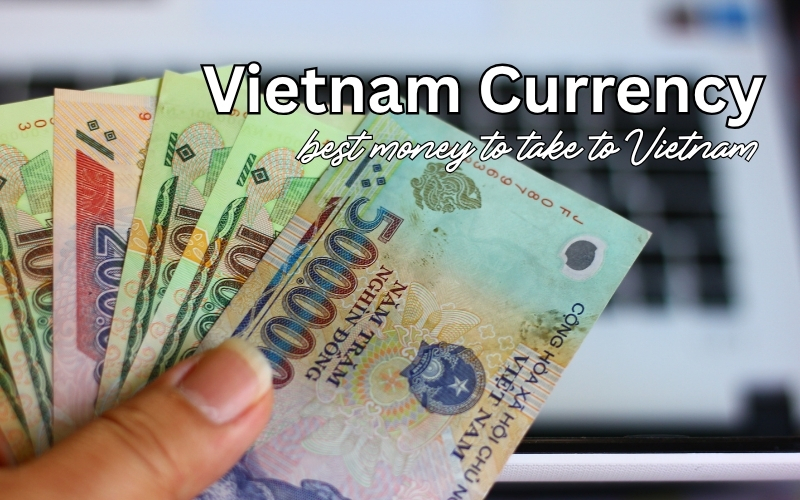
Vietnam currency is the Vietnamese dong, written as VND or ₫. For most trips, the easiest approach is to pay everyday expenses in VND, carry a moderate amount of cash and keep an international card as a second payment method. This guide explains the notes you will use, where to exchange or withdraw money, how to avoid poor conversion choices and what cash must be declared at the border.
Vietnam Currency at a Glance
| Question | Quick answer |
| What is the official currency of Vietnam? | The Vietnamese dong, coded VND and symbolised by ₫. |
| What is the largest current banknote? | 500,000 VND. |
| Are coins commonly used? | No. Visitors normally handle banknotes. |
| Should tourists use VND or USD? | Use VND for normal purchases. Do not plan your trip around paying in US dollars. |
| Is cash or card better? | Use both. Cash covers small and rural payments, while cards are useful at established businesses. |
| Should I memorise an exchange rate? | No. Check the live rate and fees when you exchange, withdraw or pay. |
The number of zeros can make prices look intimidating at first, but the system becomes simple after a few purchases. Locals often shorten 50,000 VND to “50k” or 200,000 VND to “200k”. The letter “k” means thousand, not a different currency.
How to Recognise and Use Vietnamese Dong Notes
Vietnamese banknotes include small paper notes and larger polymer notes. Travelers mainly use notes from 1,000 VND to 500,000 VND, while coins are not part of normal day-to-day payment. Understanding the denominations before your first purchase makes prices easier to read and reduces mistakes at busy counters.
Vietnamese Dong Denominations
The State Bank of Vietnam lists official denominations from 200 VND to 500,000 VND. In practice, visitors are far more likely to receive and spend notes from 1,000 VND upward.
| Denomination | Material | Practical Travel Use | Pro-Tip for Tourists |
| 1,000 & 2,000 VND | Paper | Small change, temple donations | Rarely handed back as change |
| 5,000 VND | Paper | Street parking, small snacks | Keep a few in pocket for quick tips |
| 10,000 & 20,000 VND | Polymer | Coffee, water bottles, short tuk-tuk/Grab | Warning: 20k looks like 500k |
| 50,000 & 100,000 VND | Polymer | Everyday meals, entry tickets, taxi fares | The most versatile notes to carry |
| 200,000 & 500,000 VND | Polymer | Hotel bills, fine dining, high-value payments | Break large notes at supermarkets |
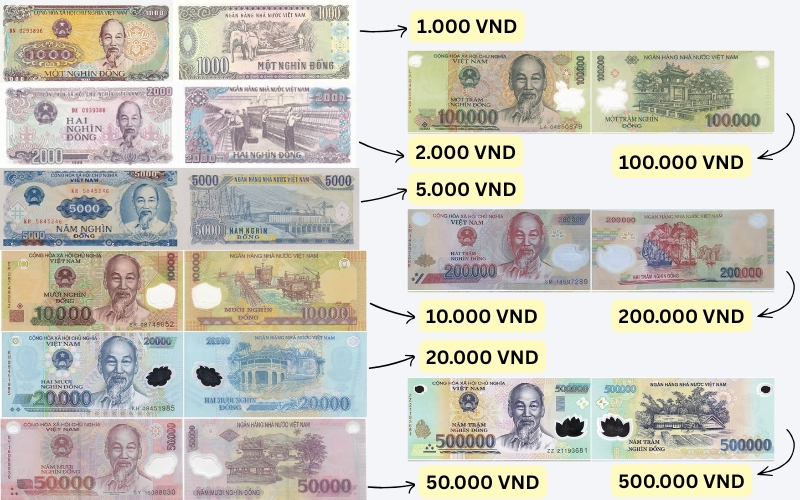
Vietnamese dong denominations, from the small 1,000 VND note to the highest 500,000 VND bill.
The number of zeros can make prices look intimidating at first. Locals often shorten 50,000 VND to “50k” and 200,000 VND to “200k”. The letter “k” means thousand, not a different currency.
How to Avoid Mixing Up Banknotes
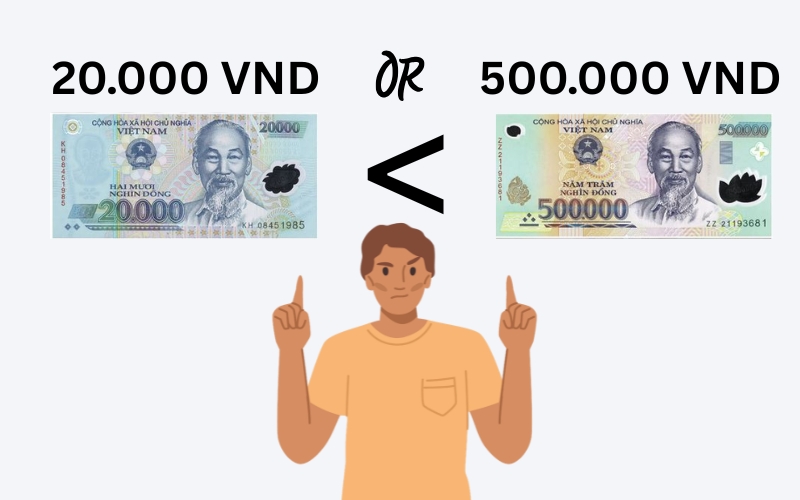
A common mix-up for first-time visitors: the 20,000 VND and 500,000 VND notes share similar colors, so it pays to check the numbers closely before paying.
The 20,000 VND and 500,000 VND notes both have blue tones, but their values are very different. Read the printed denomination instead of choosing a note by colour. Keep high-value notes in a separate part of your wallet and count your change before leaving.
Arrange your notes from low to high value so you can identify them quickly in a dark taxi or crowded market. If a spoken price is unclear, repeat the full amount or show the intended note before paying while keeping the rest of your cash out of sight.
ATMs may dispense high-value notes. Break these at a hotel, supermarket or established restaurant when possible. Before visiting a market or rural area, prepare a mix of 20,000, 50,000 and 100,000 VND notes for small purchases.
Cash, Cards and QR Payments in Vietnam
The best payment plan combines cash and cards. It should still work if a card is declined, an ATM is unavailable or a small vendor accepts only cash. QR payment can be useful for some visitors, but it is not a dependable replacement for the other two methods.
What Is the Best Currency to Take to Vietnam?
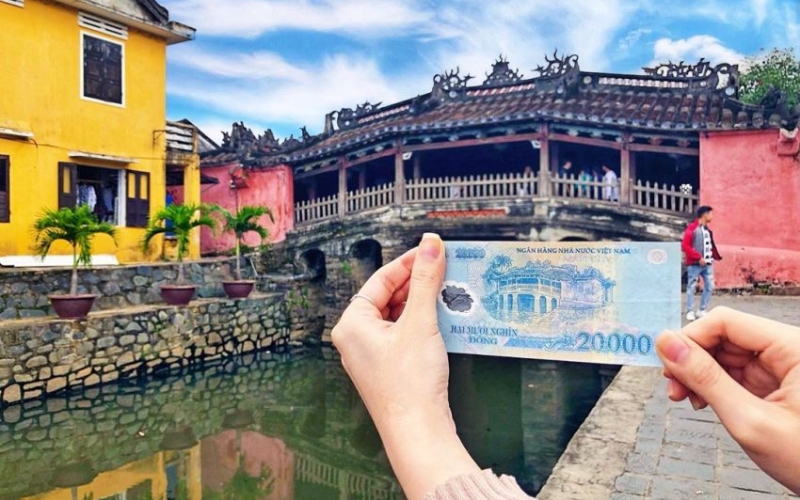
20.000 VND
For spending, the best currency is VND. You do not need to buy your entire holiday budget in dong before flying. Bring an international debit or credit card, a backup card kept separately and a modest amount of cash that an authorised bank or exchange counter can convert if needed.
Do not assume US dollars are the best currency to carry. If your home currency is readily exchangeable, changing it to USD first and then to VND may mean paying two conversion spreads. Compare the full cost and ask your bank whether it charges foreign transaction or cash-withdrawal fees.
Visitors should not rely on US dollars for everyday payments. Vietnam’s foreign-exchange rules generally restrict transactions and price quotation in foreign currency except in permitted cases. A tourism business may show a USD reference for international customers, but this does not mean that every shop, restaurant or driver will accept USD banknotes. Pay in VND when cash is requested, or use a card when the business accepts it.
Where Each Payment Method Works Best
| Payment method | Best used for | What to check |
| VND cash | Markets, street food, local shops, tips and rural services | Carry small notes and only the amount needed for the day. |
| International card | Established hotels, tour operators, larger restaurants and shopping centres | Confirm acceptance, surcharges, amount and currency before paying. |
| QR payment | Businesses that support an app already available to you | Compatibility depends on your bank or payment provider. Do not rely on QR alone. |
Cash is especially useful during rural excursions where mobile signal, card terminals or nearby ATMs cannot be assumed. Keep reserve cash in secure accommodation storage when available instead of carrying your entire travel fund.
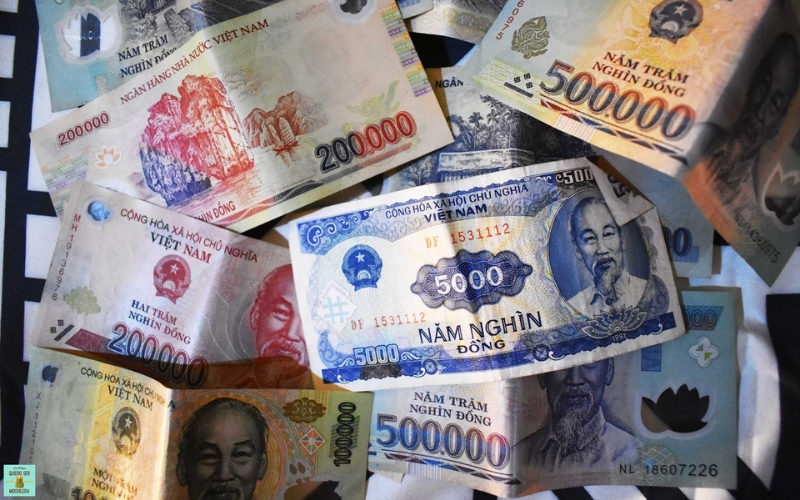
A mix of Vietnamese dong banknotes, cash remains widely used across Vietnam, especially in markets and smaller towns.
For card payments, bring two cards from different accounts or networks if possible and store them separately. Keep your bank’s international contact details somewhere other than the cards themselves. Payment notifications can help you notice an unfamiliar charge quickly.
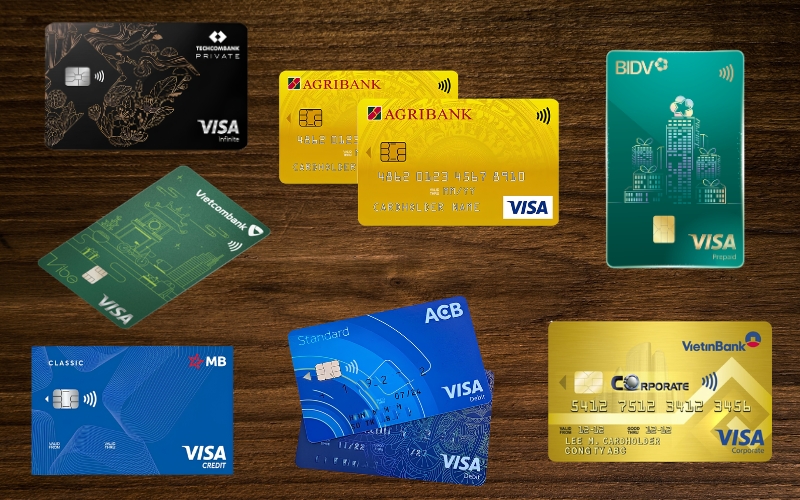
Visa cards from major Vietnamese banks are widely accepted, making it easy for travelers to pay by card in cities and larger towns.
QR signs are common, but many local systems depend on a compatible banking app or account. Some international apps support selected cross-border arrangements, but availability varies by provider. Use QR only when your own app confirms that it works in Vietnam.
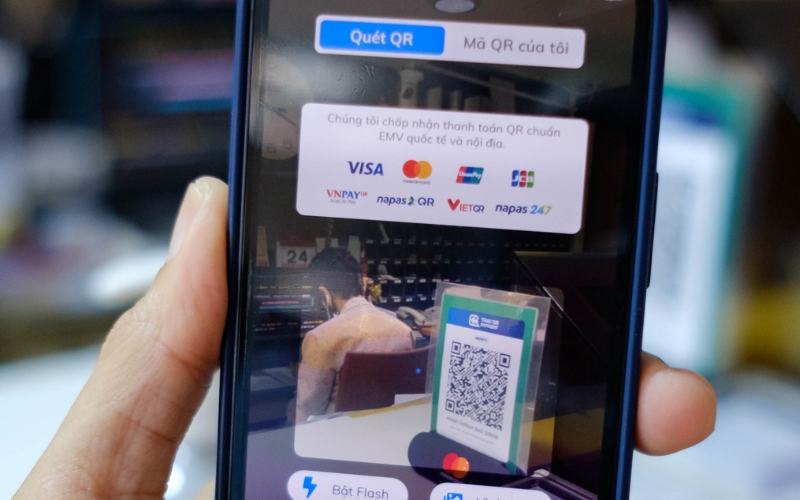
QR code payments are increasingly common in Vietnam, supporting international cards through VNPay, VietQR, and Napas.
Where to Exchange or Withdraw Vietnamese Dong
Travelers can obtain VND at airport currency desks, banks, authorised exchange counters and ATMs. The right option depends on whether you value immediate convenience, want to exchange foreign banknotes or prefer to withdraw directly from an account.
Airport Counters, Banks and Authorised Exchange Services
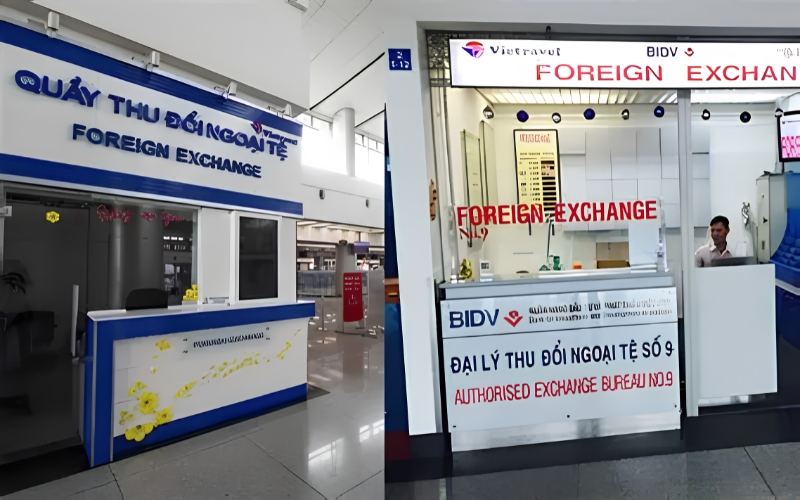
Authorised foreign exchange counters at the airport and banks offer a safe, transparent way to exchange currency in Vietnam.
Airport currency counters are convenient for obtaining starter cash for transport, food and immediate expenses. Their rates may be less competitive than those offered in the city, so exchange only a modest amount on arrival unless you have already compared the final VND amount.
For a larger exchange, start by checking selected branches of established banks such as Vietcombank, BIDV, VietinBank, Agribank or Eximbank. Vietcombank, for example, publishes separate cash-buying and transfer rates on its official exchange-rate page. Not every branch handles every foreign currency or banknote, so confirm the accepted currency, opening hours and required documents before travelling across the city. A passport may be requested.
Licensed gold and jewellery shops can also exchange foreign banknotes. Travellers commonly look around Ha Trung Street in Hanoi or the Ben Thanh Market area in Ho Chi Minh City, where established exchange businesses are concentrated. However, being located in a well-known exchange area does not prove that every shop is authorised. Use only a counter that clearly displays its licence, explains the applied rate and provides a receipt.
Before completing any exchange:
- Compare the final amount of VND you will receive, not only the advertised rate.
- Ask whether commission or another service charge is included.
- Count the banknotes at the counter before leaving.
- Keep the receipt, particularly if you may exchange unused VND before departure.
- Avoid street exchangers or individuals offering an unusually generous rate without documentation.
Vietnam’s retail exchange rates change throughout the day and can differ between banks, exchange agents, card providers and airport desks. An evergreen guide should therefore show travellers how to compare rates rather than publish a fixed USD/VND conversion that may soon become outdated. Vietnam’s banking regulations require foreign-exchange agents to operate under authorised financial institutions, which is why checking the licence and receipt matters.
ATMs, Fees and Dynamic Currency Conversion
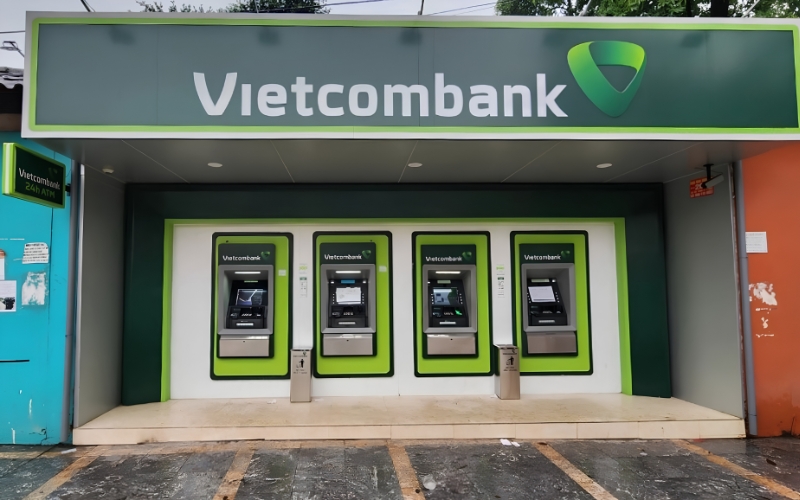
Vietcombank ATMs are widely available across Vietnam, though it’s worth checking withdrawal fees and declining dynamic currency conversion when prompted.
ATMs displaying Visa, Mastercard, Cirrus or Plus logos are common in major Vietnamese cities and airports. However, the withdrawal limit, operator fee and accepted card network can differ between machines, while your own bank may add a separate cash-withdrawal or foreign-transaction fee.
Foreign cardholders looking for a larger single withdrawal can start by comparing ATMs operated by VPBank, TPBank and Eximbank. These banks are commonly considered when travellers want to avoid making many small withdrawals, but no bank should be described as permanently offering the “best” limit. The amount available depends on the specific ATM, card network, issuing bank and current policy. Always treat the information shown on the ATM screen as the final reference.
Use these steps to make a safer withdrawal:
- Choose an ATM attached to a bank branch or located inside a secure, well-lit building.
- Check the maximum withdrawal amount and operator fee before confirming.
- Make one sensible withdrawal instead of several very small transactions, but do not carry more cash than you can secure.
- Cover the keypad and collect your card, cash and receipt before stepping away.
- If no cash appears or the machine retains your card, contact both the ATM operator and your card issuer immediately.
An ATM may offer to convert the withdrawal into your home currency. This is called dynamic currency conversion, or DCC. The screen should disclose the exchange rate and additional markup or fees before you accept it.
In most cases, choose to complete the withdrawal in VND and let your card network or issuing bank perform the conversion. This helps you avoid accepting an ATM conversion without comparing its cost. Review your own card’s terms if it includes a special exchange-rate arrangement.
How Much Cash Should You Carry in Vietnam?
There is no single daily amount that suits every visitor. A prepaid private tour, a city day in Hanoi and a self-guided rural trip have different cash needs. Review the next day’s transport, meals, entrance tickets and shopping plans instead of copying a fixed figure.
- Daily wallet: Carry enough small and medium notes for expected purchases, plus a modest buffer for an unplanned stop.
- Reserve cash: Keep a separate emergency amount securely and do not display it during normal payments.
- Cards: Store your main card and backup card separately, with payment alerts enabled when available.
Carry more VND before a countryside transfer, remote trek or early departure when a reliable ATM may be difficult to find. Carry less when most services are prepaid or the businesses on your route have confirmed card acceptance.
Vietnam Cash Declaration Rules at the Border
Travelers entering or leaving Vietnam through an international border gate by passport must declare cash to customs when carrying more than either threshold:
- USD 5,000 or the equivalent in another foreign currency.
- 15,000,000 VND.
The wording “more than” matters. These thresholds come from Circular 15/2011/TT-NHNN in Vietnam’s official legal database. Rules and procedures can change, so anyone carrying a large amount should check the current official text or ask Vietnamese customs before departure.
Cash intended for deposit into a foreign-currency payment account can involve an additional declaration requirement even at or below the foreign-currency threshold. If that situation applies to you, confirm the required documents with your bank and customs in advance.
Smart Money Checklist for Your Vietnam Trip
This checklist brings the most important money habits together without forcing each short tip into a separate section.
- Before your flight: Check foreign transaction and withdrawal fees, confirm whether your bank needs a travel notification, save its emergency number and pack a backup card separately.
- On arrival: Obtain a small amount of VND from an airport counter or secure bank-operated ATM. Organise your notes and prepare smaller denominations before leaving for a remote area.
- Before paying: Confirm the full price, read the banknote denomination and check the amount and currency shown on a card terminal.
- Each evening: Review the next day’s route and refill cash before rural travel. Do not wait until an early departure to discover that the nearest ATM is unavailable.
- For tips: Check whether a service charge already appears on the bill. Tipping is appreciated in tourism and hospitality but is not compulsory in every situation. A direct cash tip is usually clearest for excellent service.
- To avoid poor rates: Do not memorise an old exchange rate, accept unclear DCC or use an unauthorised exchanger. Compare the final VND amount after fees.
- To protect your money: Do not depend on one card, expose all your cash at a counter or carry more than you can secure.
- Before departure: Use remaining small notes for final expenses and check authorised exchange options for a larger balance. Keep enough VND for transport, meals and other departure-day costs.
Plan a Vietnam Trip With Clear Costs
A well-designed itinerary makes money management easier because major services, inclusions and payment timing are clear before you travel. Contact our local travel specialists if you want advice on routes, trip pace and expected on-the-ground payments.
Read more: