
Your Vietnam travel cost depends on how you travel and how often you change destinations. For a day of ordinary sightseeing plus 1 night’s accommodation, allow about $30-60 per person as a backpacker, $70-140 at mid-range level or $200-450+ for luxury travel. Those figures cover a place to sleep, meals and routine local spending. Add international flights, travel between cities and any overnight cruise separately. A private guided tour has a different cost structure: its price may already include domestic flights, hotels, transfers and selected meals, so the useful comparison is the package price plus the expenses you still need to pay.
Prices checked in October 2026, including advertised travel dates in 2027. Planning ranges are in USD unless another currency is shown. Approximate VND conversions use a rounded budgeting assumption of VND26,000 to $1, rather than a guaranteed exchange rate. Confirm prices for your travel dates, especially around public holidays.
Vietnam Travel Cost for 5, 7, 10, 14 and 21 Days
Start with accommodation and everyday spending, then add the transport and experiences your route requires. The allowances below describe independent travel. Mid-range means sharing a comfortable private room, eating in local and casual restaurants, using ride-hailing cars when useful and choosing some guided activities. Luxury allows better hotels, more private transport and more expensive dining; suites, charter boats and fine dining can exceed the range.
| Cost per person | Budget | Mid-range | Luxury |
| Accommodation per night | $10-20 (dorm or basic stay) |
$30-60 | $100-220+ |
| Food and drink per day | $10-18 | $20-40 | $50-100+ |
| Local transport and ordinary sightseeing per day | $10-22 | $20-40 | $50-130+ |
| Everyday spending excluding accommodation | $20-40 | $40-80 | $100-230+ |
| Total daily cost (1 day plus 1 night) | $30-60 | $70-140 | $200-450+ |
These are planning allowances, rather than fixed supplier tariffs. The sightseeing allowance is averaged across inexpensive and more active days. Price an expensive cable-car trip, private excursion or overnight cruise separately if it would exceed that allowance, replacing any meals, transport or accommodation it already covers.
The table below turns those daily allowances into total trip costs per person for the most common trip lengths. A trip of D days is counted with D-1 nights, so 7 days means 6 nights: multiply the everyday spending allowance by the number of days, then add the accommodation allowance for each night you book.
Baseline only: these totals exclude international and domestic flights, airport transfers, intercity buses or trains, overnight cruises, visas, insurance, tips and shopping.
| Trip duration | Backpacker (per person) | Mid-range (per person) | Luxury (per person) |
| 5 days, 4 nights | $140-280 | $320-640 | $900-2,030+ |
| 7 days, 6 nights (1 week) | $200-400 | $460-920 | $1,300-2,930+ |
| 10 days, 9 nights | $290-580 | $670-1,340 | $1,900-4,280+ |
| 14 days, 13 nights (2 weeks) | $410-820 | $950-1,900 | $2,700-6,080+ |
| 21 days, 20 nights (3 weeks) | $620-1,240 | $1,440-2,880 | $4,100-9,230+ |
For a couple sharing throughout, double the mid-range or luxury figure. A solo traveller booking private rooms will usually pay more per person. If a hotel includes breakfast, reduce the meal allowance for that day. If you sleep on a train or cruise, remove that night’s hotel allocation before adding the overnight service.
A 14-day mid-range baseline is therefore $950-1,900 per person for 13 nights and routine spending. Adding 2 domestic flights at a planning allowance of $50-120 each brings it to $1,050-2,140 before airport transfers, an overnight cruise and international travel.
How Much Are Flights to Vietnam?
Return airfare is usually the biggest single cost of a Vietnam trip, and it depends far more on where you fly from than on how you travel once you arrive. The table shows the lowest return Economy fares advertised on airline websites for popular routes, converted to approximate US dollars. Use them to gauge the size of this expense rather than as a quote: fares change with the season, baggage and how far ahead you book.
| Route (return) | Example airline | Economy fare from (approx.) |
| Los Angeles – Ho Chi Minh City | EVA Air | $1,000 |
| New York (JFK) – Ho Chi Minh City | EVA Air | $1,090 |
| London – Ho Chi Minh City | Vietnam Airlines | $800 |
| Sydney – Ho Chi Minh City | Vietnam Airlines | $630 |
| Johannesburg – Ho Chi Minh City | Cathay Pacific | $1,050 |
| Delhi – Hanoi | Vietnam Airlines | $310 |
Compare the final payment total with your selected baggage, connections and change conditions. For a north-to-south itinerary, also compare an open-jaw ticket, arriving in Hanoi and leaving from Ho Chi Minh City, with a return to your first airport. An extra domestic flight and hotel night can cancel out a cheaper international ticket.
Hanoi, Ho Chi Minh City and Da Nang are the main international gateways. In the south, the new Long Thanh International Airport, east of Ho Chi Minh City, is scheduled to start commercial flights on 24 December 2026, so check which airport appears on your ticket before booking transfers or connecting flights.
Vietnam Visa Costs and Paying for Your Trip
An e-visa costs $25 for a single entry or $50 for multiple entries, with validity of up to 90 days. Those are government fees, before any optional agency service or bank conversion charge. The official immigration application guidance lists both amounts. Use the government’s e-visa service and check the website address before entering your passport or payment details.
Some travellers can enter without paying for a visa. For example, the Ministry of Foreign Affairs exemption list confirms 45-day exemptions for eligible UK, French, German, Japanese and South Korean passport holders, among others. Check your passport category, purpose and permitted stay before adding a visa fee to your budget. Our first-trip planning guide helps you organize the wider arrival checklist.

Vietnam Currency
Keep enough VND for small eateries, markets and local transport. Before withdrawing, check the ATM’s displayed charge and transaction limit as well as your card issuer’s fees; limits differ by bank, machine and card. Compare the full cost of paying or withdrawing in VND with any conversion offered on screen. Our Vietnam currency guide explains cash, cards and ATM choices.
For cash carried into Vietnam, the official trade portal states that amounts above USD5,000 in foreign currency, or its equivalent, or above VND15 million must be declared. Separate documentation can apply when taking large amounts out of the country.
Hotel Prices in Vietnam by Accommodation Type
Always check whether a price is per bed, per room or per person. A $60 double room costs $30 per person when 2 adults share, before any taxes or service charges. A dorm price already applies to 1 person and should not be divided again.
| Accommodation type | Typical price per night | What you usually get |
| Hostel dorm bed | $10-20 per bed | A bunk in a shared room with lockers and shared or en-suite bathrooms. City hostels often include breakfast, sit in central streets and have a social atmosphere. |
| 3-4 star hotel | $40-120 per room | A private room and bathroom, air-conditioning, Wi-Fi and usually breakfast. Many 4-star hotels add a pool, spa or rooftop bar. Rates marked ++ need tax and service added. |
| 5-star hotel or resort | $150-450+ per room | Larger rooms or villas, pools, spas, several restaurants and concierge service, often in beachfront settings in Da Nang, Hoi An, Nha Trang or Phu Quoc. Suites and peak dates cost considerably more. |
Room rates rise around Tet (Lunar New Year) and other national holidays, when availability is also tighter. Before comparing 2 offers, check breakfast, transfers, extra beds and cancellation penalties.
How Much Does a Ha Long Bay Cruise Cost?
Treat an overnight cruise as a package. The fare normally covers your cabin, meals on board and activities such as kayaking or a cave visit, and sometimes the shuttle from Hanoi. The price depends mainly on how many nights you stay, the standard of the boat and which part of the bay it sails.
| Cruise length | Typical price per person (mid-range to upscale boats) | Best for |
| 2 days, 1 night | About $180-350 | First-time visitors with limited time: a sunset, a night on the water and morning activities before returning to Hanoi |
| 3 days, 2 nights | About $300-650 | Travellers who want quieter areas, more kayaking and a slower pace |
Budget boats can cost less, and suites on luxury ships considerably more. The route matters as much as the boat:
- Ha Long Bay: the classic route, with the best-known caves and viewpoints. It is also the busiest area, so expect more boats around you.
- Lan Ha Bay: next to Cat Ba Island, known for calmer lagoons, small beaches and good kayaking.
- Bai Tu Long Bay: northeast of Ha Long Bay, with fewer boats and fishing villages, which suits travellers who want a quieter scene.
Confirm the number of nights, meals, excursions, entrance fees and transfers included. Drinks, spa treatments and some activities are often extra. If the cruise replaces a hotel night and includes lunch and dinner, remove those costs from your daily budget. On a package such as our 10-day family tour, the overnight cruise is already included.
Food and Drink Prices in Vietnam

Vietnamese Food
Eating well in Vietnam costs little if you follow the locals, while upscale dining is priced closer to international levels.
| Where you eat | Typical price per person | What to expect |
| Street food stall | $1-3 per dish | Pho, bun cha, banh mi or com tam cooked to order and eaten on low stools. A local coffee adds about $1-2. |
| Casual restaurant | $5-15 per meal | Sit-down menus with several dishes to share, air-conditioning in many places and English menus in tourist areas. |
| Fine dining | From about $30-40 | Set or tasting menus, imported ingredients and wine lists. The most celebrated restaurants and wine pairings can cost far more. |
For daily planning, use $10-18 for mostly local food, $20-40 for a mix of local meals and restaurant dining, or $50-100 for more upscale choices and drinks. Fine dining, imported wine and hotel dining can take you above those allowances. A hotel breakfast or included tour meal should replace that part of your food budget.
When a tour includes only some meals, a practical allowance is $8-15 for each lunch or dinner not included, plus $3-6 per day for drinks. Check menu tax and service-charge wording before ordering, and choose food that is prepared fresh and served hot.
Domestic Transport Costs
Domestic flights and baggage
Flying saves a full day on long routes such as Hanoi to Ho Chi Minh City. Vietnam Airlines and several low-cost carriers link the main cities, and one-way Economy fares including taxes start at roughly $25-35 when booked ahead. Full-service Economy fares usually include checked baggage, while the cheapest “lite” or low-cost fares may cover cabin baggage only, so compare the price with the baggage you actually need.
| One-way route | Economy fare from (approx.) |
| Hanoi – Da Nang | $33 |
| Hanoi – Ho Chi Minh City | $34 |
| Da Nang – Ho Chi Minh City | $26 |
| Ho Chi Minh City – Phu Quoc | $30 |
For advance planning, set aside $50-120 per person per flight for a standard Economy journey with checked baggage. Price airport transfers separately. If flights are included in your tour, confirm the baggage allowance and add only extra services you select.
Buses and trains between destinations

Vietnam train is on the way!
For shorter regional journeys, a bus or shared limousine van avoids airport transfers and is the cheapest way to move between nearby destinations:
- Sleeper bus on longer routes such as Hanoi to Sapa: about $13-18 per person for a single berth or cabin. A double berth or cabin price usually covers the shared space, so check the unit before comparing.
- Limousine van (a minibus with fewer, larger seats) on short routes such as Hanoi to Ninh Binh: about $8-10 per seat. Confirm the pickup point and drop-off address.
- Train: fares depend on the train, seat or berth class and date, so compare current tickets with Vietnam Railways rather than using one nationwide fare. An overnight train can replace a hotel night, but station transfers and meals may still be extra. For Sapa, the train runs to Lao Cai and the last stretch is by road.
For a family or small group, a private car with a driver can cost less per person than separate bus tickets and saves time on day trips. IDC Travel’s car rental with driver covers airport pickups, city days and intercity routes, priced per vehicle. Confirm the route, hours, luggage space, tolls and any parking or overtime charges in your quote.
Airport transfers and local travel
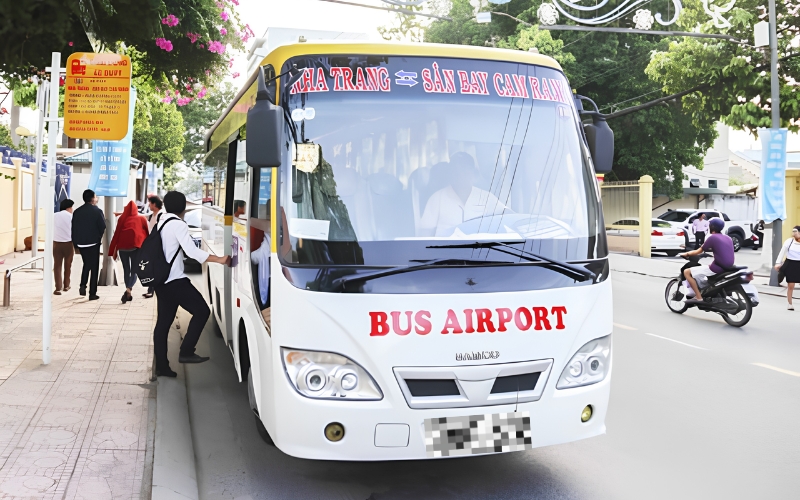
The airport bus connects Cam Ranh Airport to central Nha Trang, a budget-friendly option for getting into the city.
Noi Bai Airport’s transport information lists bus 86 at VND50,000, about $1.90 per passenger. It can be economical for a traveller with manageable luggage, provided its stops and operating times suit the arrival. A private transfer is paid per vehicle, so compare the price across your group.
Grab displays a journey price before confirmation, but traffic, demand, route and airport charges can change the total. Use the current app quote instead of assuming a fixed fare per kilometre. Check the pickup instructions at the airport.
Entrance Fees for Popular Vietnam Sights
Most standard museum visits are modest expenses, while cable cars and boat excursions can change a day’s budget substantially. These published adult fees were available at the checking date. Night tours, combination tickets and optional services can have different prices; confirm the applicable tariff for your visit in 2027.
| Sight and official ticket information | Adult fee in VND | What the price covers |
| Temple of Literature | 70,000 | Standard admission |
| Hoa Lo Prison | 50,000 | Daytime admission |
| Imperial Citadel of Thang Long | 100,000 | Standard admission, not the night tour |
| Trang An | 300,000 | Scenic-area admission and boat trip |
| Fansipan | 850,000 | Return cable car; mountain trains and buffet extra |
| Imperial City in Hue | 200,000 | Imperial City admission |
| Minh Mang, Tu Duc or Khai Dinh tomb, Hue | 150,000 each | 1 tomb, rather than all 3 |
| Hoi An Ancient Town | 80,000 or 120,000 | 3 or 5 heritage sites; valid up to 3 days |
| Ba Na Hills | 1,000,000 | Standard adult ticket for non-local visitors; cable car and Golden Bridge, buffet extra |
| War Remnants Museum | 60,000 | Standard fee effective 1 October 2026 |
| Independence Palace | 40,000 or 80,000 | Palace only, or palace plus exhibition |
Choose a ticket for the experience you want. Hoi An’s published 2026 options distinguish the number of heritage sites, while Ba Na Hills has separate local-resident and visitor tariffs. Check eligibility for any discount. Where your tour already includes an entrance ticket, do not add it again to the package price.
Extra Costs and Ways to Keep Spending Under Control
Allow for the expenses that depend on your personal arrangements. They should sit beside your trip budget rather than disappear inside an average daily figure:
- SIM or eSIM: compare validity, data and calls as well as the purchase price. Viettel’s tourist service requires passport information for registration. Check phone compatibility and whether the quoted amount includes activation.
- Insurance: obtain a quote for your residence, age, trip length and planned activities. Cover for medical treatment, cancellations and weather disruption varies by policy, so use the premium for your selected cover in the final total.
- Taxes and service charges: a room or menu marked ++ needs the applicable charges added. A ticket explicitly advertised as tax-inclusive should not have the same tax added twice.
- Tips and personal spending: tips are discretionary. Keep an amount for guides, drivers or other service you wish to recognize, and budget separately for shopping, spa treatments and laundry.
- Payment charges: IDC’s payment policy lists a 3% bank fee for online Visa or Mastercard payments. Bank-transfer charges are paid by the customer. Choose the payment method after comparing the total cost.
- Holiday supplements: confirm gala dinners, minimum stays and peak-date supplements before booking hotels, cruises or tours.
There is no universally cheapest booking month for every departure city. Compare several dates for your actual trip and make sure any saving survives the cost of baggage, extra nights and connections. Choosing fewer bases often saves more than chasing a small fare reduction while adding another transfer.
Use bus 86 when its route suits your luggage and arrival time, share a private car when the group makes it good value, and compare a sleeper with the hotel night it replaces. In Hoi An, select the 3-site or 5-site ticket according to the places you intend to enter. Keep ordinary meals local if you would rather spend more on a cruise or a guided excursion.
Is a Private Tour Better Value Than Travelling Independently?
A private tour does not make each night or meal cheaper, but it bundles the parts of a trip that are hardest to price and arrange in advance. A multi-region IDC Travel itinerary typically combines:
- hotels for every night, at a 3-, 4- or 5-star level of your choice;
- domestic Economy flights between regions;
- private airport and road transfers;
- English-speaking guides and entrance fees for the scheduled visits;
- the meals listed in the itinerary, plus an overnight Ha Long Bay cruise on many routes.
What stays outside the package: international flights, visa fees, travel insurance, meals and drinks not listed, tips, laundry and personal spending, single-room supplements and any peak-season surcharge.
To compare fairly, take a package quote, add those remaining items and set the total against the independent budget from the tables above. Package prices vary with group size and hotel level, so a couple usually pays more per person than a group of 8. For a south-to-north route with 3 domestic flights, a night on a Mekong boat and a Ha Long Bay cruise already arranged, see the 15-day Wonders of Vietnam itinerary.
Build a Vietnam Trip Budget Around Your Route
The most useful Vietnam travel budget starts with the nights, transfers and experiences you actually want. A slower stay in 1 region may need no domestic flights, while a north-to-south route may justify several. Give the main expenses their own lines, then account for the meals and local spending left outside your bookings. To turn those choices into an itinerary, design your trip with IDC Travel and request a price for your group and travel dates.
Read more:



Could you give me the average local-transport cost between major cities in Vietnam? Thank you!
Local transport costs between major cities in Vietnam can vary quite a bit depending on class of service, but here’s a general idea: for example, a standard inter-city bus between Hanoi and Ho Chi Minh City (roughly 1,700 km) might cost around $41-55 in economy class; a typical Vietnamese domestic flight might cost $35-80 if booked ahead. For train travel on the north–south route (Reunification Express) in seat class you might pay ~$35-45, in soft-sleeper ~$52-76. We’ll update the guide soon to include a dedicated table for these transport costs.
Besides daily expenses, what hidden costs should travelers budget for in Vietnam?
When planning a trip to Vietnam, it’s important to consider a few additional costs beyond daily spending. Visa fees vary depending on nationality and application method. Budget airline flights often charge for checked baggage or even small extras like water. Transportation, such as motorbike rentals, may incur fuel or parking fees. While tipping isn’t mandatory, small gestures for guides, drivers, or hotel staff are appreciated. Allocating around 15–20% extra in your budget for these expenses ensures a smoother, worry-free trip.