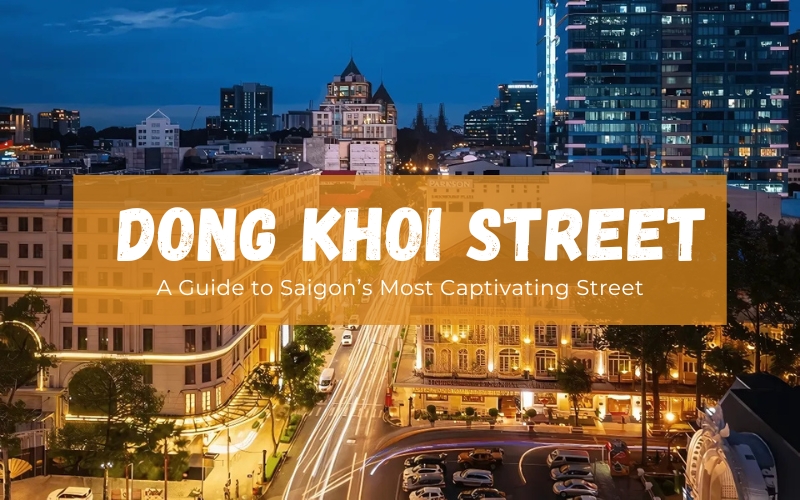
If there is one street in Ho Chi Minh City that captures the full character of the place, it is Dong Khoi Street. Colonial facades next to luxury boutiques, a century-old cathedral at one end and the Saigon River at the other, street vendors squeezed between five-star hotels. It is the kind of place that rewards slow walking and curiosity. This guide covers everything worth knowing before you go: what the street is, where it sits, what to do, where to shop, and how to fit it into a broader Vietnam trip.
What Is Dong Khoi Street?
Dong Khoi Street (Duong Dong Khoi) is a 750-meter commercial and cultural artery running through the heart of Sai Gon Ward, Ho Chi Minh City.
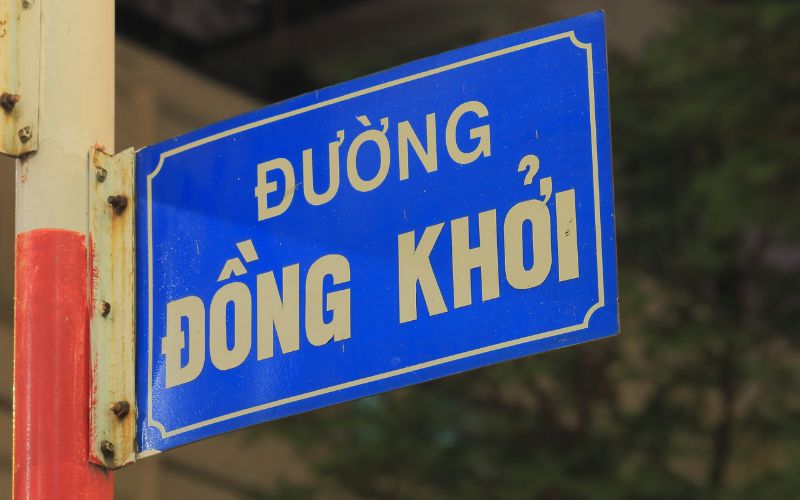
The official sign marking the start of Dong Khoi Street, the most historic and luxurious boulevard in Saigon.
The name translates roughly as “General Uprising,” a reference to the 1960 uprising against the Diem government, though the street is far older than that name. Under French colonial rule it was called Rue Catinat, one of the most fashionable addresses in all of Indochina. During the American War it was renamed Tu Do (Freedom) Street, and it collected another identity along the way: a place where foreign journalists drank, locals bargained, and the two worlds awkwardly coexisted.
The 1986 Doi Moi reforms opened Vietnam’s economy, and Dong Khoi transformed again. International brands arrived, heritage hotels were restored, and the street became the obvious starting point for anyone exploring Dong Khoi Street Saigon for the first time. Today it functions as both a working commercial street and something closer to an open-air showcase of how the city has grown.
Where Is Dong Khoi Street?
Dong Khoi Street runs north to south through Sai Gon Ward, connecting Ngo Duc Ke Street near the Saigon River in the south to Dong Du Street and Lam Son Square in the north, where the Municipal Theatre (Opera House) stands. The Notre Dame Cathedral and the Central Post Office are a short walk west along Dong Khoi, near the top end of the street.
The street sits roughly between two of the city’s main squares: Lam Son Square to the north and Me Linh Square to the south, near the river. For practical navigation, most visitors enter from the Opera House end and walk toward the waterfront, picking up side streets like Mac Thi Buoi and Ly Tu Trong along the way.
Getting there is straightforward. From Tan Son Nhat Airport, a Grab taxi or metered cab takes 25 to 40 minutes depending on traffic, costing around 150,000 to 200,000 VND (~$6 to $8). From the Ben Thanh Market area, it is a 10-minute walk east.
Best Time to Visit Dong Khoi Street
Ho Chi Minh City has two seasons: wet (May to November) and dry (December to April). For Dong Khoi Street specifically, the dry season is more comfortable for walking. December through February is the coolest period, with temperatures around 25 to 28 degrees Celsius, and almost no rain. March and April are hotter.
The wet season brings afternoon downpours that typically last an hour or two. They cool the street down and are not, in practice, a reason to avoid traveling. Just carry a light waterproof layer.
Early morning (before 9am) is genuinely the best time to walk the street if you want to see the architecture without the traffic noise and midday heat. By 10am the street is fully awake and stays busy until late evening.
What Makes Dong Khoi Street Worth Your Time
1. French Colonial Architecture
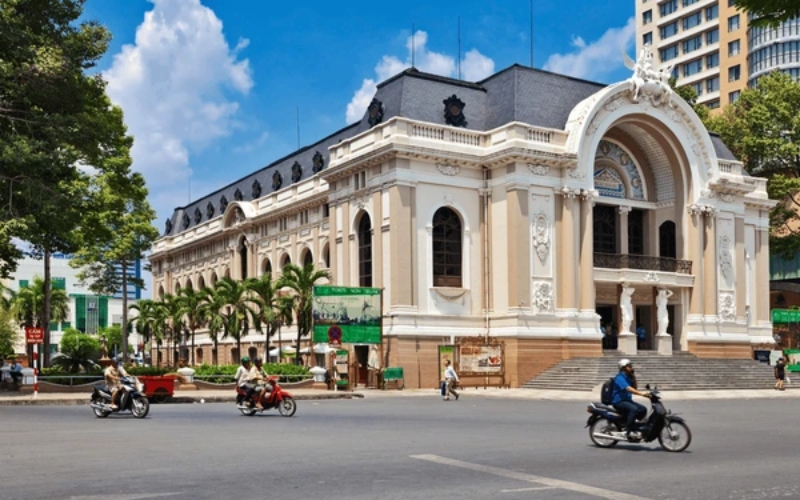
A nostalgic look back at the timeless charm of Dong Khoi Street during a bygone era.
The streetscape along Dong Khoi is where Ho Chi Minh City’s colonial past is most readable. Buildings like the Caravelle Hotel and the Continental Hotel have stood here since the French period, and both have been carefully maintained rather than replaced. The Continental, opened in 1880, is the oldest hotel in Vietnam still in operation. Graham Greene wrote parts of The Quiet American in its terrace bar, and the building has not tried too hard to forget that.
Walking the street during early morning, before the heat arrives and before the motorbike traffic gets heavy, you see the architecture more clearly. The proportions of the shophouses, the wrought-iron balconies, the thick walls designed for a pre-air-conditioning climate. It is a genuinely interesting built environment, and it does not require a guidebook to appreciate.
2. The Opera House (Municipal Theatre)
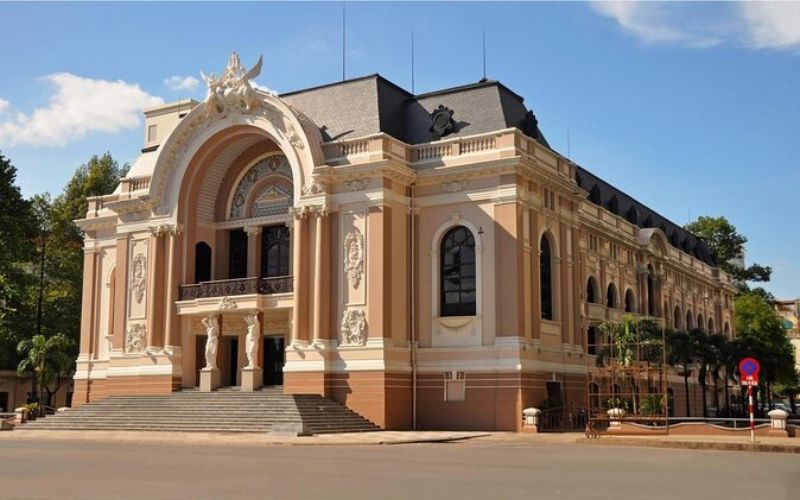
The elegant architectural legacy of the Saigon Opera House captured in a historic moment.
The Saigon Opera House at the north end of Dong Khoi was built by the French in 1897 and has been in continuous use since. Its neo-baroque facade is one of the most photographed spots in the city, particularly at night when it is lit up against the darkness. Performances here range from traditional Vietnamese opera (hat boi) to contemporary dance, and tickets are available for most evenings. A single ticket runs between 200,000 and 800,000 VND (~$8 to $32) depending on the show and seating.
Even if you skip the performance, the building’s exterior and the plaza in front of it are worth arriving at by early evening, when the crowd thins and the light turns orange.
3. Notre Dame Cathedral and the Central Post Office
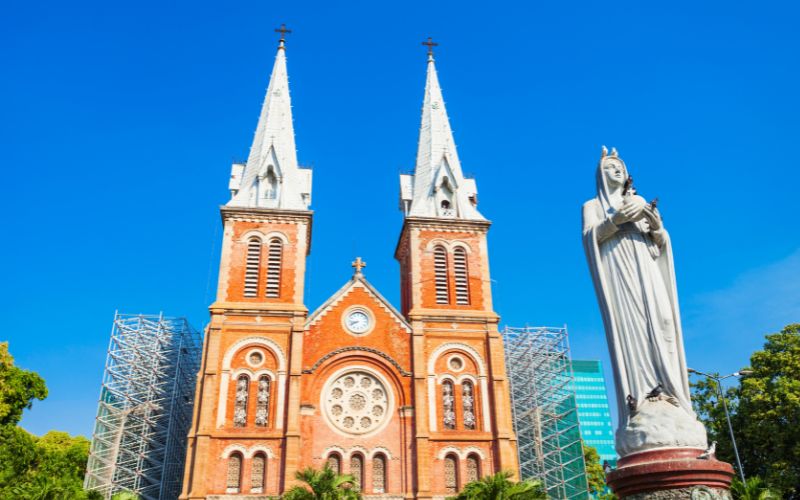
The red-brick towers of the Notre Dame Cathedral stand as a timeless landmark in the heart of Ho Chi Minh City.
Technically a short walk from the street itself, but so closely associated with the Dong Khoi area that most people treat them as part of the same circuit. Notre Dame Cathedral, completed in 1880, was built entirely from materials imported from France, including the red bricks that give it a distinctive warm tone. The cathedral has been under restoration scaffolding in recent years, though the exterior remains visible and the surrounding square is still a good place to sit and watch the city.
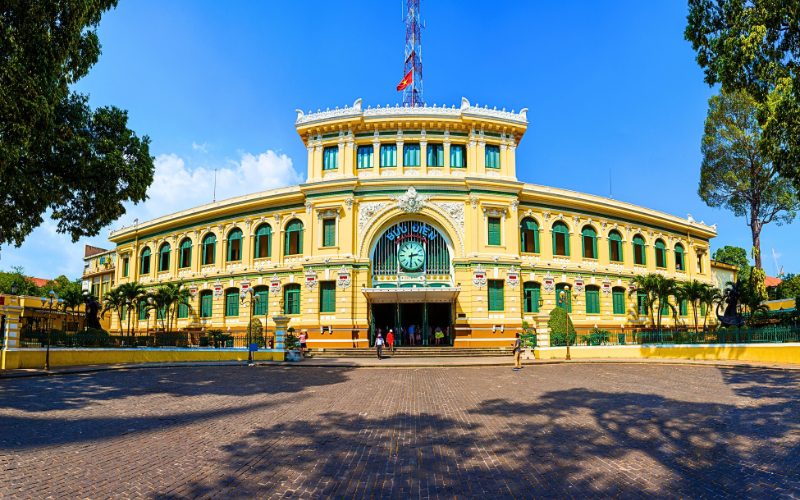
Marveling at the stunning colonial architecture and vibrant yellow facade of the historic Saigon Central Post Office.
The Central Post Office next door is the real draw for most visitors. Designed by Gustave Eiffel’s firm in the 1890s, the interior is a single high-vaulted hall with arched windows and a large portrait of Ho Chi Minh at the far end. It still functions as a working post office, so you can send a postcard home from one of the world’s more architecturally interesting postal counters. Entry is free.
4. Dong Khoi Street Shopping
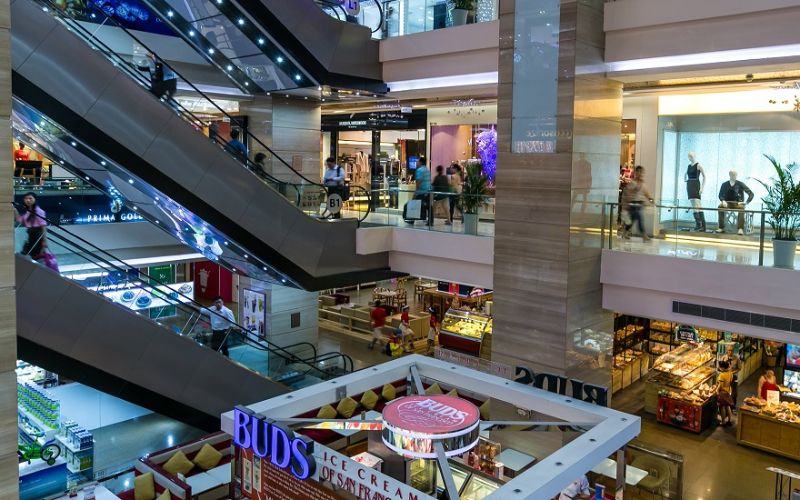
Experience world-class shopping and modern architecture at Vincom Center on Dong Khoi Street.
Dong Khoi street shopping covers a wide range, which is part of what makes it useful for different types of travelers. The street itself and the lanes branching off it have:
- Lacquerware and silk: Shops selling hand-painted lacquerware, silk scarves, and ao dai (traditional Vietnamese dresses) are concentrated between the Opera House and the river. Prices are higher here than at Ben Thanh Market, but the quality is generally consistent. A silk scarf runs around 200,000 to 500,000 VND (~$8 to $20), lacquerware pieces from 300,000 VND (~$12) upward.
- Art galleries: Several serious galleries operate along Dong Khoi and on side streets like Mac Thi Buoi. These are not tourist print shops; they carry original paintings by Vietnamese artists working in oil, watercolor, and traditional media. Worth browsing even without a purchase in mind.
- International luxury brands: Louis Vuitton, Cartier, and similar brands have flagships near Lam Son Square, particularly inside the Vincom Center shopping mall and along the northern stretch of the street.
- Bookshops: Fahasa Bookstore on Dong Khoi carries a reasonable English-language section alongside Vietnamese titles, maps, and travel guides.
- Coffee: The street has several decent cafes. Trung Nguyen Legend Cafe is a reliable local choice with strong Vietnamese-style coffee for around 50,000 to 80,000 VND (~$2 to $3.20).
One practical note: fixed-price shops are common here, so aggressive bargaining is less expected than at the city’s markets. At smaller independent shops, a polite ask about price flexibility usually works better than sustained negotiation.
5. The Waterfront End
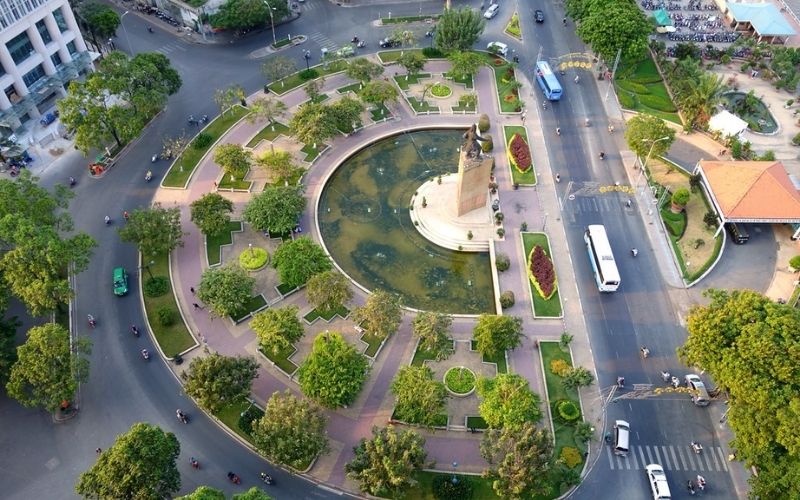
Me Linh Square, where historic charm meets the bustling energy of the waterfront.
Where Dong Khoi meets the Saigon River, the street opens into Me Linh Square and the riverfront promenade. The statue of Tran Hung Dao, the 13th-century general who repelled the Mongol invasions, stands here facing the river. The promenade itself has been developed into a pedestrian zone with benches, food vendors, and views across to Thu Duc. It is busiest on weekend evenings, when families walk along the water and small boats pass by heading north or south.
This end of the street also has several riverfront restaurants and rooftop bars. Prices are higher than the city average, but the views are straightforward compensation.
6. Hotels Worth Noting
Dong Khoi Street Ho Chi Minh has some of the most historically interesting accommodation in Vietnam.
- Hotel Continental Saigon: The oldest hotel in the country (1880). Rooms are not the largest, but the building, the courtyard, and the location are hard to argue with. Rates start around $80 to $130 per night.
- Caravelle Saigon: Another colonial-era property, famous during the American War for housing international journalists and for surviving a bomb attack in 1964. The rooftop Saigon Saigon bar has one of the better views in the city. Rates from around $120 per night.
- Park Hyatt Saigon: A newer property facing the Opera House, considered one of the best-run hotels in the city by most repeat visitors. Noticeably quieter and more consistent in service than many competitors. Rates from $200 per night and up.
7. Food and Drink
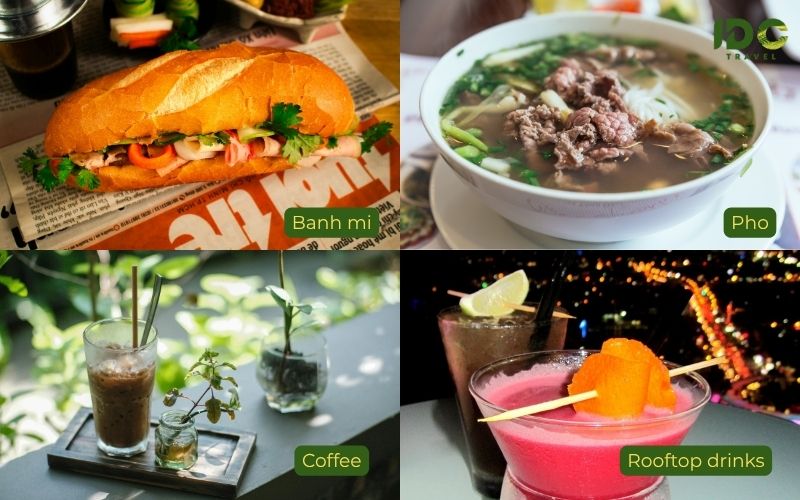
Exploring the diverse culinary scene of Dong Khoi, from traditional street food staples to sophisticated rooftop drinks.
The street and its immediate neighborhood have good options at most price points.
- Banh mi: A few banh mi carts operate near the Opera House end in the morning. Around 30,000 to 50,000 VND (~$1.20 to $2) for a solid sandwich.
- Pho: Pho Quynh on Pham Ngu Lao (a 10-minute walk west) is better value than anything directly on Dong Khoi, but the street has sit-down Vietnamese restaurants that do a serviceable bowl for around 70,000 to 100,000 VND (~$2.80 to $4).
- Fine dining: L’Usine, a combined cafe and concept store on Le Loi near the street’s intersection, has a decent all-day menu popular with both locals and visitors. Budget around 150,000 to 300,000 VND (~$6 to $12) per person.
- Rooftop drinks: The rooftop bar at the Caravelle or the terrace at the Rex Hotel (one block away on Nguyen Hue) are both worth an evening drink. Expect to pay 150,000 to 250,000 VND (~$6 to $10) for a cocktail.
>>> Find your favorite Vietnamese food!
Fitting Dong Khoi Street Into a Broader Vietnam Trip
Dong Khoi is a starting point, not just a destination. Travelers coming to Ho Chi Minh City on Ho Chi Minh City tours typically use Sai Gon Ward as a base and work outward: the War Remnants Museum, Cholon (the Chinese quarter), the Cu Chi Tunnels, and day trips to the Mekong Delta.
For those exploring the south, Southern Vietnam tours tend to combine Saigon with the Mekong Delta and sometimes Phu Quoc Island, usually over 5 to 8 days. A broader Vietnam trip running from Hanoi to Ho Chi Minh City covers the full length of the country, typically in 10 to 14 days.
What Dong Khoi does well is give a concentrated introduction to the city’s personality. An afternoon here, walking from the Opera House to the river and back, covers more of the city’s character than most other single neighborhoods.
Conclusion: Dong Khoi Street at a Glance
| Detail | Information |
| Name | Dong Khoi Street (Vietnamese: Duong Dong Khoi) |
| Location | Sai Gon Ward, Ho Chi Minh City (Saigon) |
| Length | ~750 meters |
| Direction | North (Opera House) to South (Saigon River) |
| Best time to visit | December to February (dry season), early morning |
| Getting there | Grab/taxi from airport: ~150,000 to 200,000 VND (~$6 to $8) |
| Shopping range | Silk scarves from 200,000 VND (~$8), lacquerware from 300,000 VND (~$12) |
| Coffee price | 50,000 to 80,000 VND (~$2 to $3.20) |
| Budget hotel nearby | From ~$50/night in Sai Gon Ward |
| Heritage hotel on street | Continental Saigon from ~$80/night, Caravelle from ~$120/night |
| Key landmarks | Saigon Opera House, Notre Dame Cathedral, Saigon Central Post Office, Saigon River |
| Free entry sites | Central Post Office, Notre Dame Cathedral exterior |
Dong Khoi Street Saigon is not a museum piece and it is not a theme park. It is a working street with history you can actually touch. The Continental Hotel still serves afternoon tea. The post office still sells stamps. The river at the end still moves.
If you are planning a Vietnam travel itinerary and Ho Chi Minh City is part of it, starting at Dong Khoi and working outward is as good a strategy as any.
Read more: