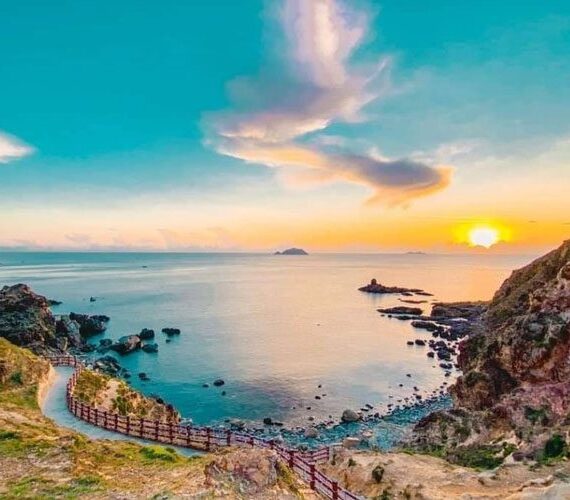

Hanoi in July is not for the faint-hearted, and most travel guides will tell you exactly that before listing every single tourist attraction in the city anyway. July is genuinely Hanoi’s hottest and most humid month, and anyone telling you otherwise is selling you something. The city’s street food scene runs at full intensity. And with smart planning around the heat, July can be one of the most rewarding months to experience Vietnam travel in the north.
This guide covers the real weather numbers, the best things to do, where to eat, useful day trips, what it costs, and how to plan your days to get the most out of it.
Overview of Hanoi
Hanoi is the capital of Vietnam, sitting in the northern part of the country on the western bank of the Red River (Song Hong).
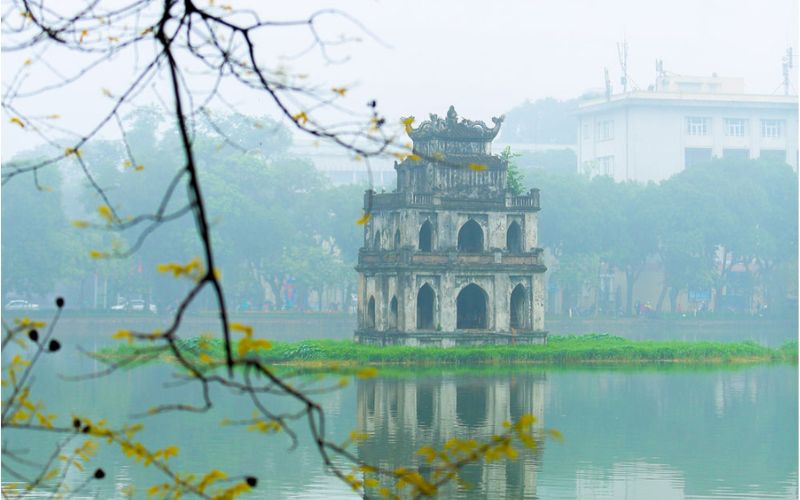
Hoan Kiem Lake in Hanoi
The city is about 1,750 km north of Ho Chi Minh City by road, and roughly 100 km west of Halong Bay. Hanoi is the natural gateway to northern Vietnam, including day trips to Ninh Binh, multiday trips to Sapa and Ha Giang, and overnight cruises on Halong Bay.
The city divides roughly into the historic Old Quarter (Hoan Kiem district), the French Quarter around Hoan Kiem Lake, Ba Dinh district where the main government monuments sit, and the newer districts spreading west and south. Most visitors base themselves in or near the Old Quarter, which puts everything walkable or a short Grab ride away.
Hanoi Weather in July
July is the hottest month of the year in Hanoi. That is not a scare tactic; it is just the number. The average high sits at 33°C to 35°C (91°F to 95°F), and humidity between 80% and 85% pushes the real-feel temperature to 39°C to 42°C (102°F to 108°F) on the worst days. Rain comes frequently but usually in short, sharp afternoon or evening bursts rather than all-day drizzle.
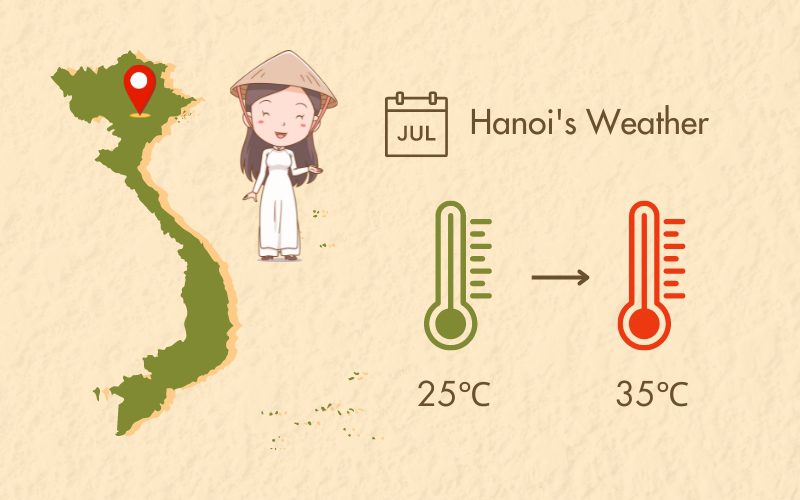
Weather of Hanoi in July
Here are the key figures for Hanoi weather in July:
- Average high temperature: 33°C to 35°C (91°F to 95°F)
- Average low temperature: 27°C to 28°C (81°F to 82°F)
- Humidity: 80% to 85%
- Rainfall: approximately 230mm to 280mm for the month
- Rainy days: 15 to 18 days, mostly short afternoon or evening storms
- Daily sunshine: 5 to 6 hours on average
The rain pattern in July is important to understand. Hanoi does not get long grey drizzly days the way some other monsoon destinations do. What it gets is intense downpours, usually starting in the afternoon between 2pm and 5pm, which drop 20mm to 40mm of rain in an hour or so and then stop. Streets flood briefly, the air freshens up, and within an hour you can walk outside again. If you structure your days around this pattern, the rain is inconvenient but not trip-ending.
The mornings from 6am to 10am are the clearest and most comfortable window of the day. Temperatures at 7am are around 28°C to 29°C (82°F to 84°F) with lower humidity than midday. This is when Hanoi is at its best: locals exercise around Hoan Kiem Lake, pho stalls are at peak service, and the Old Quarter streets have a calm energy before the day heats up.
Things to Do in Hanoi in July
1. The Old Quarter
The Old Quarter (Pho Co) is 36 streets in the heart of Hanoi, each originally named after the guild or trade it housed: Hang Bac (Silver Street), Hang Gai (Silk Street), Hang Ma (Paper Street), and so on. Some still sell what they advertised centuries ago. Others have shifted to tourism goods, clothing, and souvenirs. The street names are worth paying attention to even now.
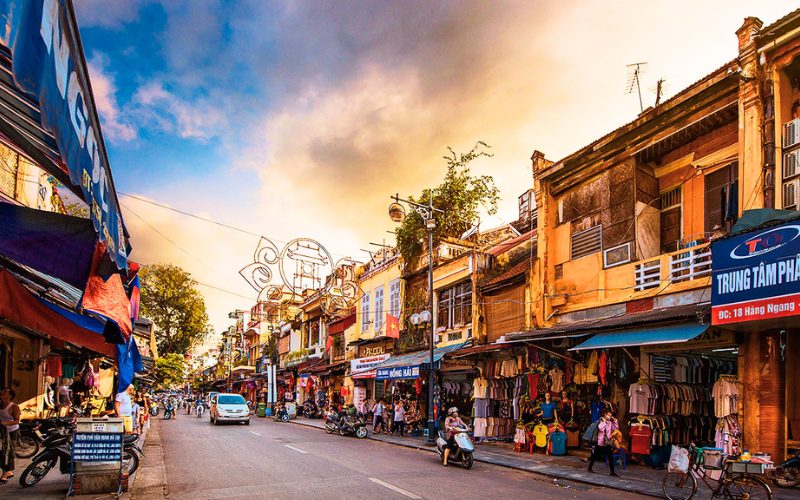
Hanoi’s Old Quarter
Walking the Old Quarter in July means committing to early mornings. Before 9am, the narrow lanes are in partial shade, the air is moving, and the streets belong mostly to locals doing their morning routines. By 11am, the sun is directly overhead, the heat radiates off the stone buildings, and even a ten-minute walk becomes a sweaty undertaking.
The weekend night market on Hang Dao Street runs Friday through Sunday evenings from around 6pm to 11pm. Vendors sell clothing, accessories, handicrafts, and street food under string lights. Temperatures in the evening drop to 30°C to 31°C (86°F to 88°F), which is still warm but genuinely comfortable compared to midday. This is one of the best free experiences in Hanoi in July.
A bowl of “bun cha” (grilled pork and noodles in dipping broth) at a proper street stall on the Old Quarter side streets costs 40,000 to 60,000 VND (~$1.53 to ~$2.30). “Banh mi” from a good vendor runs 20,000 to 35,000 VND (~$0.77 to ~$1.34). These are not tourist prices; these are what locals pay at the same stalls.
>>> Hanoi city tours that include the Old Quarter work best when scheduled for morning departures. A good guide knows which lanes stay shaded longest and where to duck in for “ca phe trung” (egg coffee) when the heat peaks.
2. Hoan Kiem Lake and Ngoc Son Temple
Hoan Kiem Lake sits at the southern edge of the Old Quarter and is probably the most recognizable image of Hanoi. The name translates as “Lake of the Restored Sword,” referencing a 15th-century legend where a king was given a magical sword by a giant tortoise and later returned it to the same lake.
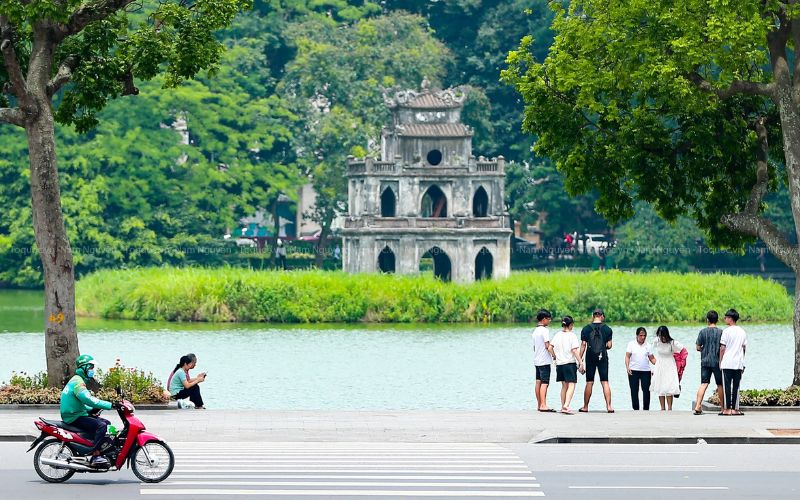
The peaceful early morning atmosphere along the Hoan Kiem Lake promenade, a favorite spot for locals and visitors in Hanoi.
The Turtle Tower (Thap Rua) sits on a small island in the middle of the lake and is visible from most angles around the shore. Ngoc Son Temple, connected to the northern bank by the red Huc Bridge, costs 30,000 VND (~$1.15) to enter. It is worth the few minutes inside for the preserved giant tortoise specimen and the views over the water from the far end.
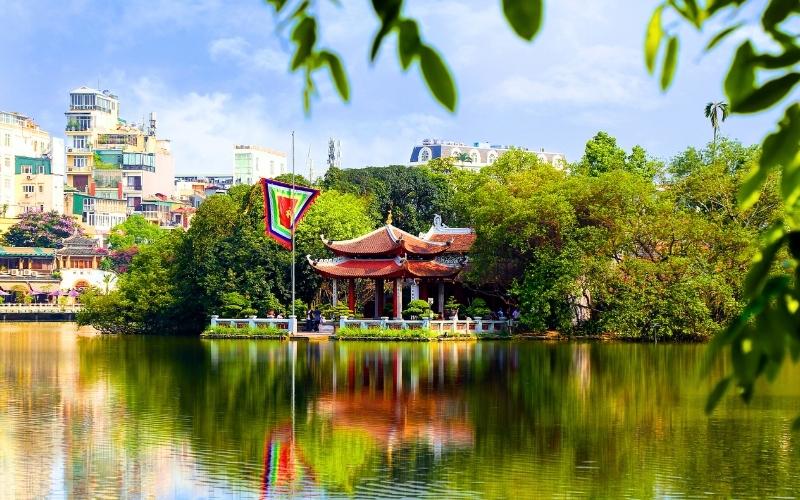
A View of Ngoc Son Temple
The pedestrian zone around Hoan Kiem is closed to vehicles on Friday evenings and all day Saturday and Sunday. During these windows, the lakeside fills with locals: families walking, couples sitting by the water, street performers, food vendors, and children. July evenings here have a neighborhood quality that is very different from the tourist-heavy midday atmosphere. Come at 7pm or 8pm when the lights on the bridge reflect in the lake and the heat has finally broken.
3. Hoan Kiem District Food Trail
Hanoi’s food is the main reason many people tolerate July’s heat, and honestly they are right to. The city has some of the most specific and carefully evolved street dishes in Southeast Asia, most of which are essentially impossible to find well-executed outside Hanoi.
Here is what to eat and roughly what it costs:
- Pho bo (beef noodle soup): Best eaten before 9am at a dedicated pho specialist. Pho Bat Dan on Bat Dan Street has been operating since the 1950s and closes when the broth runs out, usually by mid-morning. A bowl costs 55,000 to 70,000 VND (~$2.11 to ~$2.69).
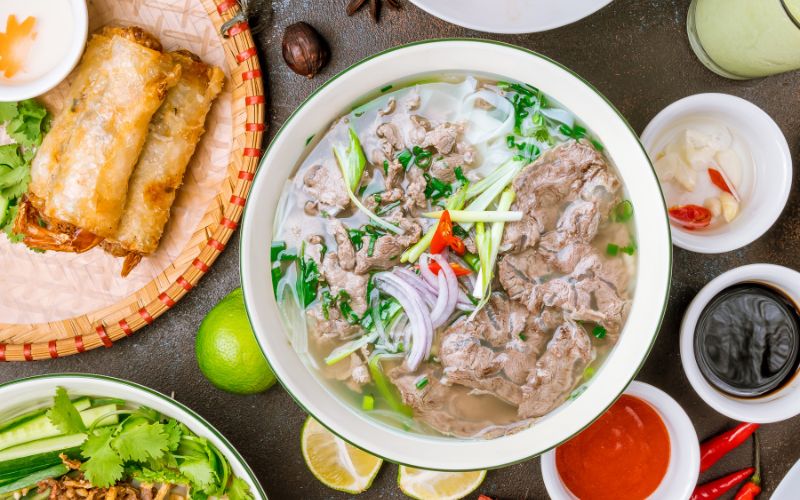
Pho bo (beef pho)
- Bun cha: Grilled pork patties and sliced pork belly served with vermicelli noodles and a sweet-sour dipping broth. Lunch dish, typically served from 11am. The famous Bun Cha Huong Lien on Le Van Huu Street (where a well-known American TV host once ate with a famous politician) costs about 60,000 VND (~$2.30) for a full set.
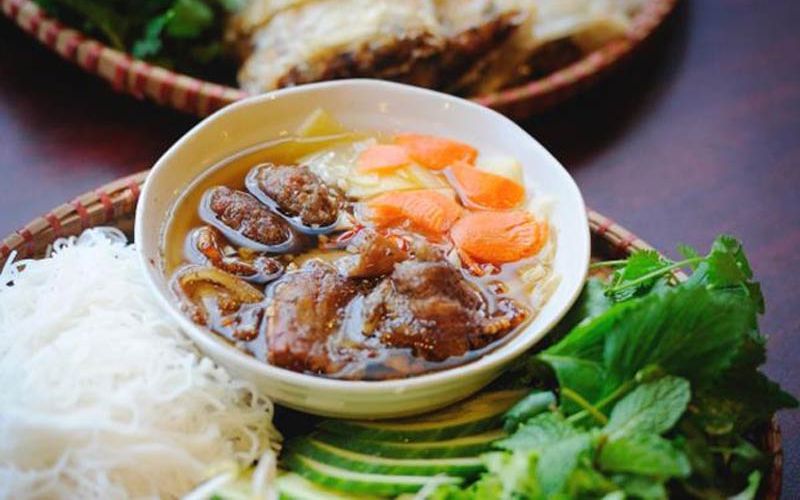
Bun Cha- an iconic food of Hanoi
- Bun thang: A delicate Hanoi broth soup with shredded chicken, egg crepe, and Vietnamese pork roll. Less well known than pho but worth seeking out.
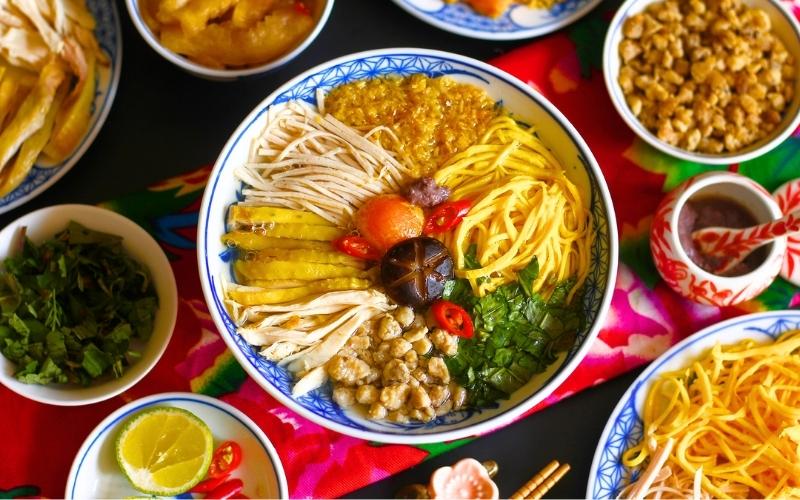
Hanoi Traditional Bun Thang
- Ca phe trung (egg coffee): Giang Cafe on Nguyen Huu Huan Street has been making this since 1946. The original is a thick, sweetened whipped egg yolk poured over espresso. Hot or iced. Costs about 35,000 to 45,000 VND (~$1.34 to ~$1.72). In July heat, most people order the iced version.

Egg coffee
- Banh cuon (steamed rice rolls): Thin sheets of steamed rice filled with minced pork and mushroom, served with chilled dipping sauce. Light, refreshing, and ideal for July breakfasts.

Banh Cuon
>>> The Hanoi city tours that include a food walk cover several of these dishes in sequence, which is genuinely the most efficient way to navigate the food if you only have a day or two.
4. Ho Chi Minh Complex
The Ho Chi Minh Complex on Ba Dinh Square is the most historically weighted site in Hanoi, covering the Ho Chi Minh Mausoleum, the Ho Chi Minh Museum, the One Pillar Pagoda, and the Presidential Palace gardens.
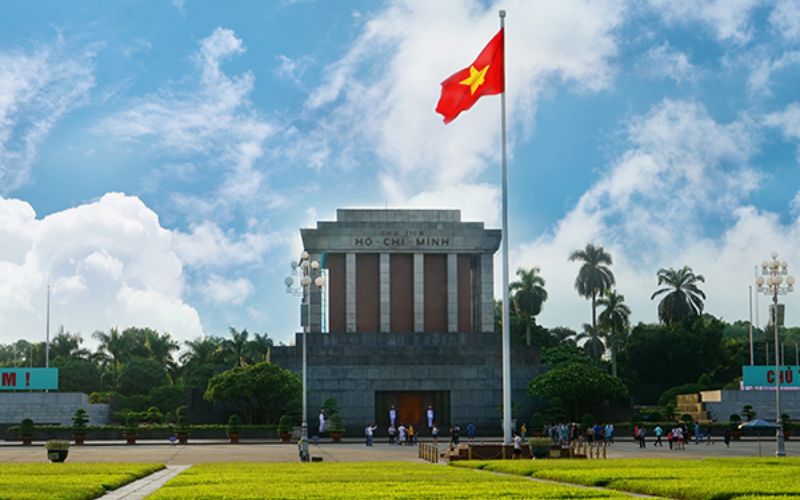
Ho Chi Minh Mausoleum Complex
The Ho Chi Minh Mausoleum itself is open for viewing in the mornings, typically 7:30am to 10:30am Tuesday to Thursday and Saturday to Sunday. Admission is free. You join a slow-moving, respectful queue that passes through the refrigerated chamber where Ho Chi Minh’s preserved body lies in state. The building itself is always cold inside, which in July is a notable physical relief.
The dress code is strict: no shorts, no sleeveless tops, no hats, no photography inside the mausoleum. The dress code applies to both men and women. If you arrive in shorts, you will be turned away.
The Ho Chi Minh Museum (30,000 VND / ~$1.15 to enter) next door is air-conditioned and covers his life and the independence movement through an eclectic mix of artifacts, photographs, and symbolic installations. Plan at least an hour inside.
The One Pillar Pagoda is a few minutes walk from the mausoleum, a small but photogenic lotus-shaped structure built on a single stone column over a pond, originally constructed in 1049.
Go early. Ba Dinh Square has no shade, and by 10am the paving stones in July are hot enough to notice through shoe soles.
5. Temple of Literature (Van Mieu)
Built in 1070 and expanded in 1076 as Vietnam’s first university, the Temple of Literature is one of Hanoi’s best-preserved historic sites. The complex has five courtyards connected by stone gates, with the central Well of Heavenly Clarity reflecting the surrounding walls in water.
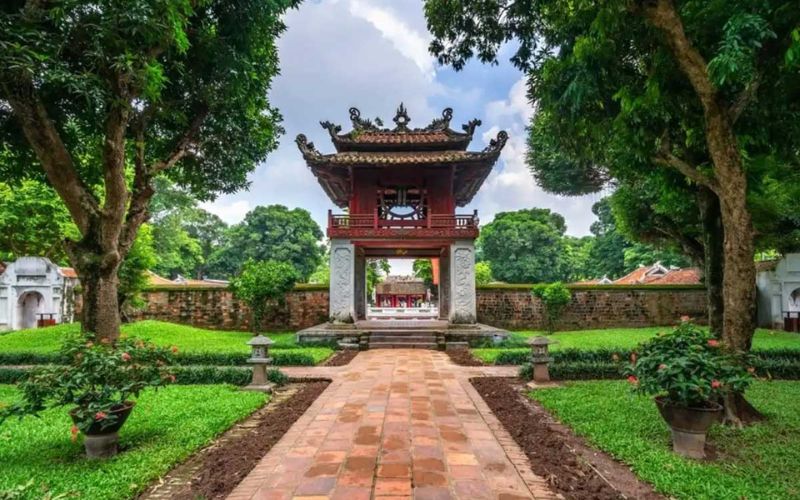
As the symbol of Hanoi, the Khue Van Pavilion represents the brilliance of knowledge and the enduring value of Vietnamese literature and education.
The 82 stone steles in the third courtyard record the names and home villages of graduates from the royal examinations held here between 1442 and 1779. They are genuinely old, and sitting in the shade of the frangipani trees reading the inscriptions is one of the cooler (literally and figuratively) ways to spend 30 minutes in Hanoi in July.
Entry costs 45,000 VND (~$1.72) for adults. Morning visits (opening time is 7:30am) are noticeably more comfortable than midday. There is reasonable shade in the later courtyards, but the walk between gates crosses open stone plazas.
6. Vietnam Museum of Ethnology
Vietnam Museum of Ethnology is the best museum in Hanoi, and if you can only pick one indoor activity for a hot July afternoon, make it this one. The museum documents all 54 of Vietnam’s officially recognized ethnic groups through artifacts, photographs, and reconstructed traditional houses from across the country.
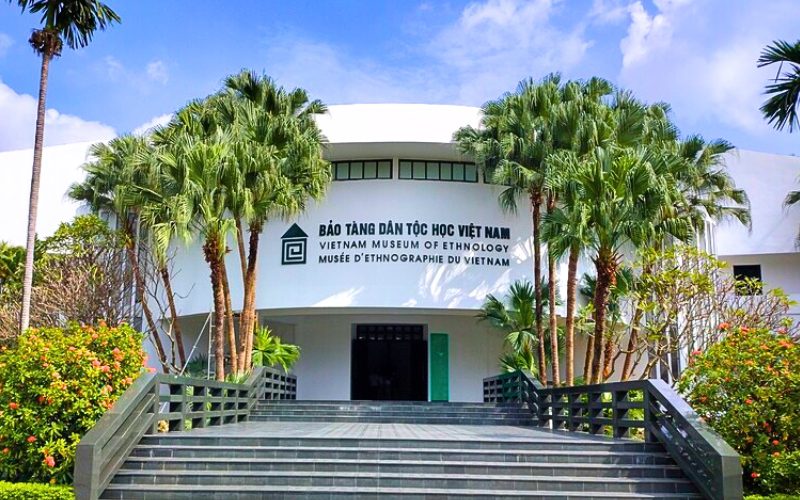
Vietnam Museum of Ethnology
The indoor galleries are air-conditioned throughout. The outdoor section has full-scale replicas of ethnic minority stilt houses, communal halls, and a water puppet theater. In July, the outdoor section is best in the morning before the heat peaks.
Entry: 40,000 VND (~$1.53) for adults, 20,000 VND (~$0.77) for children. Located in Cau Giay district, about 20 minutes by Grab from the Old Quarter. The water puppet shows in the outdoor theater run at set times and cost an additional fee.
7. Hoa Lo Prison Museum
Known during the French colonial period as “Maison Centrale” and later nicknamed “Hanoi Hilton” by American POWs, Hoa Lo Prison Museum covers a dark slice of Hanoi’s history across two periods: Vietnamese prisoners under French colonial rule, and American pilots held here during the Vietnam War.
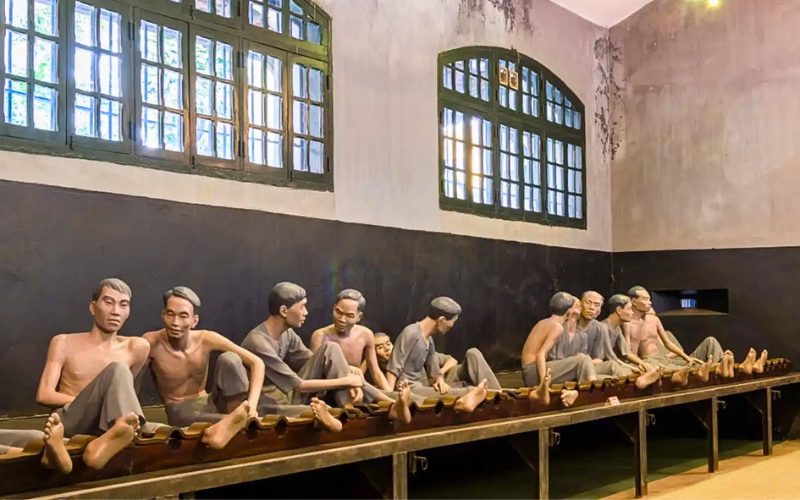
Hoa Lo Prison from the Inside
The exhibits are straightforward and the space is air-conditioned. Entry is 30,000 VND (~$1.15). It is a short walk from Hoan Kiem Lake and easy to combine with a morning in the Old Quarter.
>>> Explore Hanoi’s Historic Hoa Lo Prison Night Tour now!
8. Water Puppet Show
Traditional water puppetry (mua roi nuoc) is one of Hanoi’s most genuinely old art forms, originating in the Red River Delta rice paddies centuries ago. Performances take place in a waist-deep pool, with puppeteers standing behind a screen manipulating the puppets through submerged rods while a live orchestra accompanies the action.

A traditional water puppet show at Thang Long Theatre
The Thang Long Water Puppet Theatre on Dinh Tien Hoang Street runs multiple shows daily. Tickets cost 100,000 to 200,000 VND (~$3.83 to ~$7.67) depending on seat position. Shows run about 50 minutes. The theatre is air-conditioned. Book tickets a day ahead in July as weekend shows sell out.
9. Street Art and the Train Street
Phung Hung Mural Street runs under the elevated train tracks near Hang Bong Street and is lined with large-scale murals painted by Vietnamese and international artists. It is best in early morning light when the murals are sharply lit and the temperature is still manageable. No entry fee.
Train Street is a narrow residential lane (actually two lanes, one on each side of the train tracks) in the Old Quarter where trains pass within arm’s reach of houses and cafes a few times per day. The lane has been periodically opened and closed to tourists in recent years due to safety concerns; check locally for current access rules when you arrive.
Day Trips from Hanoi in July
Hanoi works best as a base. The city itself rewards two or three full days, and the surrounding region justifies several more.
Halong Bay Cruise
Halong Bay is about 170 km east of Hanoi, roughly 3.5 to 4 hours by road. The bay has over 1,600 limestone karsts rising from emerald water, making it one of the most photographed seascapes in Asia. UNESCO listed it as a World Heritage Site in 1994.
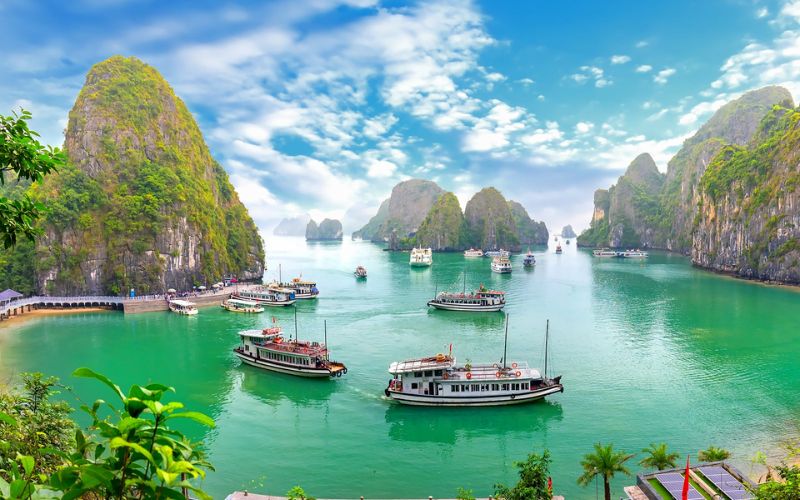
Halong Bay Cruise
July is within the typhoon season for the Gulf of Tonkin, which means occasional short-notice cancellations. This is not a frequent occurrence, but it happens. Choose a cruise operator that offers rescheduling or refunds for weather-related cancellations. Three-day, two-night options exist for travelers who want more time on the water.
>>> The Halong Bay cruises page has a range of options from group boats to private luxury vessels, with pricing across all budgets.
Ninh Binh
Ninh Binh is about 90 km south of Hanoi, an easy 2-hour drive. The area is sometimes called “Halong Bay on land” for its dramatic limestone landscape, though the comparison does neither place justice. Trang An and Tam Coc are the main attractions: long, slow boat trips along narrow rivers through cave tunnels and past limestone cliffs, with local women rowing with their feet.

Ninh Binh’s grotto
July is rainy season in Ninh Binh, but the boat trips run regardless and the weather adds atmosphere. Grey skies and low mist over the karsts look better than flat sunshine in photographs. Bring a poncho; the boatwomen have spare ones to sell or lend.
>>> The Ninh Binh tours from Hanoi combine transport, guide, and the boat trips in one package, which simplifies the logistics considerably.
Sapa
Sapa is about 340 km northwest of Hanoi in the Hoang Lien Son mountain range, roughly 5 hours by overnight sleeper train or 4.5 hours by day bus. At 1,500 to 1,600 meters elevation, it sits well above the summer heat: July temperatures in Sapa town average 18°C to 22°C (64°F to 72°F), a dramatic contrast to Hanoi’s swelter.
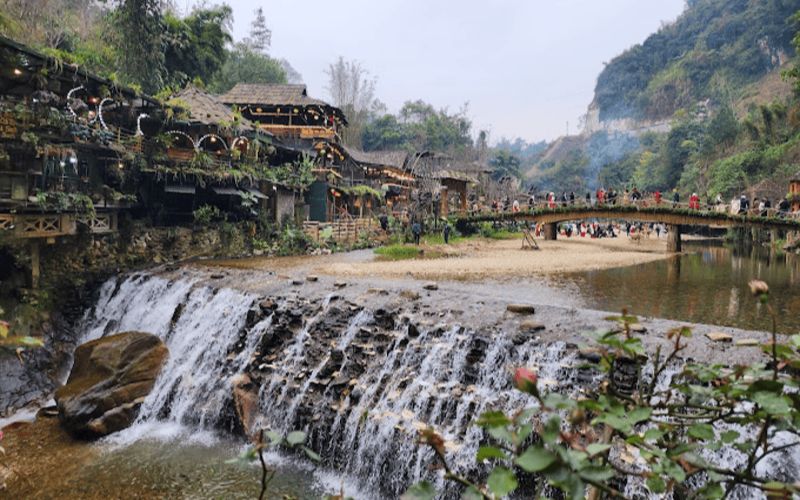
Cat Cat Village in Sapa
July is wet in Sapa. The rice terraces are flooded and newly planted, which makes the landscape intensely green and the paddies mirror-like on calm mornings. Trekking trails are muddy, and cloud cover is common. For hikers, the slippery trails are manageable with proper footwear; for casual walkers, the paths between rice terrace villages can be genuinely difficult after rain.
>>> Sapa tours range from day-trip formats to multiday treks with village homestays. The overnight train is the classic way to arrive, though day buses and private transfers are also available.
Mai Chau
Mai Chau is about 145 km southwest of Hanoi, roughly 3 to 3.5 hours by road. It is a wide, flat valley surrounded by limestone hills, populated mainly by White Thai ethnic minority villages. The pace is slow, the food is good, and the temperature is a few degrees cooler than Hanoi.

Mai Chau
>>> Mai Chau tours from Hanoi are typically one or two days and suit travelers who want a quieter break from city heat without going as far as Sapa.
Festivals and Events in Hanoi in July
Vu Lan Festival (Ghost Month): The seventh lunar month begins in late July 2026, marking the start of Vu Lan Bao Hieu, a Buddhist festival honoring parents and ancestors. At pagodas across Hanoi, you will see elaborate offerings of food, paper money, and incense. The Quan Su Pagoda on Quan Su Street and the Tran Quoc Pagoda on West Lake are worth visiting in the evenings during this period.
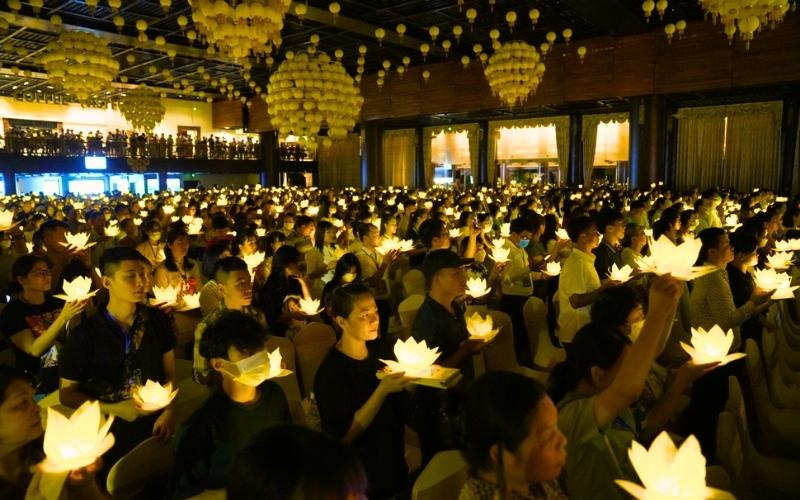
The Hungry Ghost Festival (Vu Lan Festival)
Nghe festival at Dong Da hill: A local district event that varies year to year, celebrating the Battle of Dong Da where the Tay Son emperor repelled Chinese forces in 1789. It’s worth checking the local calendar if you are in Hanoi during July.
Regular events: The weekend pedestrian zone around Hoan Kiem Lake runs every Friday evening through Sunday. The Dragon Bridge in Hanoi’s equivalent, the Long Bien Bridge area, has had weekend evening walking events in some years. Check current schedules on arrival.
What to Pack for Hanoi in July
Packing for Hanoi in July is a balance between managing heat and being prepared for sudden rain.
- Lightweight breathable clothing: cotton or linen for daily wear; avoid synthetic fabrics that trap heat and smell in humidity
- A compact packable rain jacket or a small fold-up umbrella: you will use one almost daily
- Waterproof walking sandals or shoes with grip: wet marble temple floors and rain-slicked Old Quarter stones get slippery
- Sunscreen SPF 50+: the midday sun in July is intense even with cloud cover
- A wide-brimmed hat or a cap: direct sun on Ba Dinh Square or in Ninh Binh will drain you fast
- A reusable water bottle: 33°C to 35°C heat plus 80% humidity means dehydration happens faster than you expect
- Modest dress for temple visits: temples and the mausoleum require covered shoulders and knees
- Insect repellent: useful for evening lake walks and essential for any rural day trips
- A small quick-dry towel: useful for budget accommodation and sweaty days when hotel towels feel damp all day
One practical point: laundry is cheap and fast in Hanoi. Most guesthouses offer same-day service at 20,000 to 40,000 VND (~$0.77 to ~$1.53) per kg. Pack lighter than you think you need and plan to launder every two to three days rather than carrying a week of clothes.
Travel Costs in Hanoi in July
Hanoi does not peak tourist season in July for international visitors, which means hotel prices are generally lower from October to March. Vietnamese domestic travel picks up in July as school holidays begin, but Hanoi attracts fewer domestic beach-seekers than Da Nang or Nha Trang, so the price impact is modest compared to coastal destinations.
Daily budget estimates:
- Budget traveler: 600,000 to 900,000 VND (~$23 to ~$34) per day, covering hostel dorm, street food meals, and local transport by bus or walking
- Mid-range: 1,500,000 to 3,000,000 VND (~$57 to ~$115) per day, covering a 3-star hotel room, restaurant meals, and Grab rides
- Comfort/luxury: 4,000,000 VND+ (~$153+) per day, covering boutique or 4-star hotel, private tours, and higher-end dining
Specific cost reference points:
- Grab car ride across the Old Quarter: 40,000 to 70,000 VND (~$1.53 to ~$2.69)
- Street food meal (full lunch or dinner): 40,000 to 80,000 VND (~$1.53 to ~$3.07)
- Mid-range restaurant meal: 150,000 to 350,000 VND (~$5.75 to ~$13.42)
- Ca phe sua da (Vietnamese iced coffee): 20,000 to 35,000 VND (~$0.77 to ~$1.34)
- Bia hoi (draught beer at a street corner): 6,000 to 10,000 VND (~$0.23 to ~$0.38)
- Night train to Sapa (soft sleeper, 4-berth cabin): 350,000 to 550,000 VND (~$13.42 to ~$21.10)
- Halong Bay cruise (2 days, 1 night, mid-range): 3,500,000 to 4,500,000 VND (~$134 to ~$172) per person
Practical Tips for Traveling Hanoi in July
Shift your schedule. The most effective adaptation to Hanoi’s July heat is simple: start earlier and end later. Be out by 7am for temple visits and market breakfast. Retreat to air-conditioning or shade from 11am to 3pm. Resume outdoor activity from 4pm onward. The evenings are genuinely pleasant.
Use Grab. The Grab app works reliably across Hanoi for both motorbike taxis (GrabBike) and cars (GrabCar). It is significantly cheaper than metered taxis for most journeys and eliminates any risk of price disputes. A GrabBike across the Old Quarter costs 20,000 to 35,000 VND (~$0.77 to ~$1.34). A GrabCar to the Museum of Ethnology costs 60,000 to 90,000 VND (~$2.30 to ~$3.45).
Carry small bills. Street food vendors, temple entrance booths, and small shops often cannot change large notes. Keep a supply of 10,000 VND (~$0.38), 20,000 VND (~$0.77), and 50,000 VND (~$1.92) notes for daily use.
Take rain as a cue to eat. When the afternoon storm hits, duck into the nearest pho or bun cha stall rather than waiting it out on the street. You will eat something good, stay dry, and the street will have cleared by the time you finish. This turns weather into a feature rather than a problem.
Drink constantly. Dehydration in Hanoi’s July heat happens quietly and fast. Carry water at all times. Fresh coconuts from street vendors cost 15,000 to 25,000 VND (~$0.58 to ~$0.96). Cold pressed sugarcane juice (nuoc mia) from roadside pressers is about 10,000 to 15,000 VND (~$0.38 to ~$0.58) and genuinely refreshing.
Book Halong Bay cruises carefully. July falls within typhoon season. The chance of a cancelled cruise is low but not zero. Choose operators with clear weather-related cancellation policies, and if possible leave a buffer day in Hanoi after your intended return date so a postponement does not derail your onward travel.
Get to popular sites early. The Ho Chi Minh Mausoleum stops admissions at 10:30am. Temples like Ngoc Son and Van Mieu are most enjoyable before 9am when they are quieter and cooler. If you arrive at 11am, you will experience both the heat and the tourist crowds simultaneously.
Is It Worth Going to Hanoi in July?
Yes, with realistic expectations. Hanoi in July is not the easiest version of the city. It is hot, it is humid, and it rains most afternoons. But it is also full, alive, and genuinely interesting in ways that the cool-and-dry peak season version of Hanoi is not.
The city’s food scene is at its most active. The evening pedestrian zones around Hoan Kiem feel like a proper neighborhood rather than a tourist attraction. Day trips to Ninh Binh, Sapa, and Halong Bay all remain viable. And the lower international tourist numbers in July mean some of the city’s sites feel more like Hanoi and less like a queue.
If you are planning a broader Vietnam holiday that includes Hanoi in July, pairing it with a day trip to Ninh Binh and an overnight Halong Bay cruise gives you enough variety to balance the city’s heat with water and countryside.
Conclusion: Hanoi in July at a Glance
| Detail | Information |
| Average high temperature | 33°C to 35°C (91°F to 95°F) |
| Average low temperature | 27°C to 28°C (81°F to 82°F) |
| Humidity | 80% to 85% |
| Real-feel temperature (peak day) | Up to 42°C (108°F) |
| Rainfall | 230mm to 280mm, 15 to 18 rainy days |
| Rain pattern | Short afternoon/evening bursts, usually clearing within 1 to 2 hours |
| Best time of day outdoors | 6am to 10am; 4pm to 8pm |
| Recommended day trips | Ninh Binh (2 hrs), Halong Bay (3.5 hrs), Sapa (overnight), Mai Chau (3 hrs) |
| Budget per day (mid-range) | 1,500,000 to 3,000,000 VND (~$57 to ~$115) |
| Notable events | Vu Lan Festival (late July), weekend pedestrian zone around Hoan Kiem |
| Best for | Food, culture, Old Quarter exploration, northern Vietnam base |
| Not ideal for | Extended midday outdoor activity, beach holidays |
If you want help building a Hanoi-based itinerary for July that works around the weather, IDC Travel’s team has been organizing Hanoi tours and north Vietnam tours for international travelers for years. You can contact us to create a custom trip together if you have a specific itinerary in mind.
>>> Refer to Hanoi, Hanoi, Vietnam Weather Forecast | AccuWeather.
Read more: