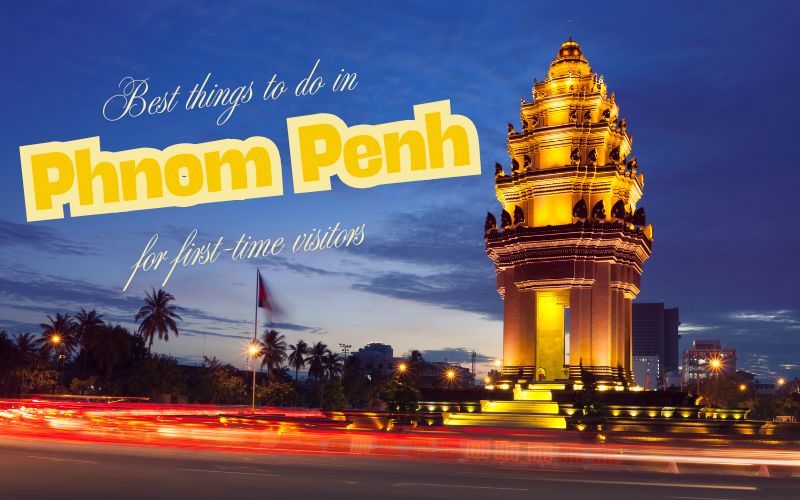
The best things to do in Phnom Penh include visiting the Royal Palace, learning about Cambodia’s recent history at Tuol Sleng and the Killing Fields, walking along the riverside, exploring local markets, and discovering authentic Khmer cuisine. These experiences offer first-time visitors a balanced introduction to Cambodia’s royal heritage, tragic modern history, spiritual life, and everyday culture.
Phnom Penh is not a city built around spectacle alone.
As the capital of Cambodia, located at the confluence of the Mekong, Tonle Sap, and Bassac rivers, it reflects the country’s past and present more clearly than anywhere else. For first-time travelers, understanding which places truly matter and how to structure your time can transform what might feel like an intense city into a meaningful and memorable journey.
What Are the Best Things to Do in Phnom Penh?
The absolute must visit attractions in Phnom Penh are the Royal Palace and Silver Pagoda, Tuol Sleng Genocide Museum, Choeung Ek Killing Fields, and Wat Phnom. Together, these sites give first time travelers a complete introduction to Cambodia’s monarchy, modern history, and spiritual traditions.
1. Royal Palace and Silver Pagoda
The Royal Palace, built in 1866 under King Norodom, remains the official residence of the Cambodian monarch and is one of the most important symbols of the nation. Its golden roofs and classic Khmer architecture stand in striking contrast to the modern city around it.
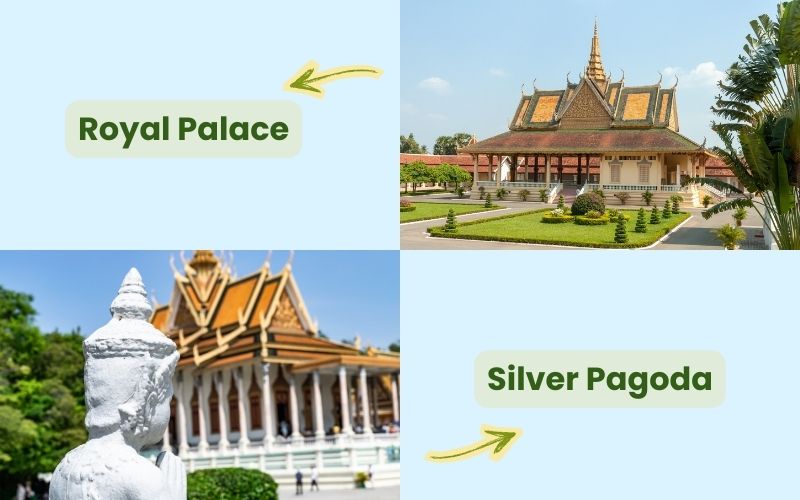
The Royal Palace and Silver Pagoda showcase classic Khmer architecture and royal heritage.
Inside the same complex, the Silver Pagoda preserves Cambodia’s most sacred treasures. The floor is inlaid with more than five thousand silver tiles, and the temple houses a solid gold Buddha weighing around ninety kilograms, decorated with thousands of diamonds, as well as a life sized crystal Buddha. This is not simply a photo stop. It is a functioning royal and religious compound, so visitors must wear clothing that covers shoulders and knees.
Morning visits are recommended, both for cooler temperatures and fewer tour groups.
2. Tuol Sleng Genocide Museum
Tuol Sleng Genocide Museum, formerly known as Security Prison 21, is one of the most important historical sites in Cambodia. Between 1975 and 1979, during the Khmer Rouge regime, thousands of prisoners were detained and interrogated here.
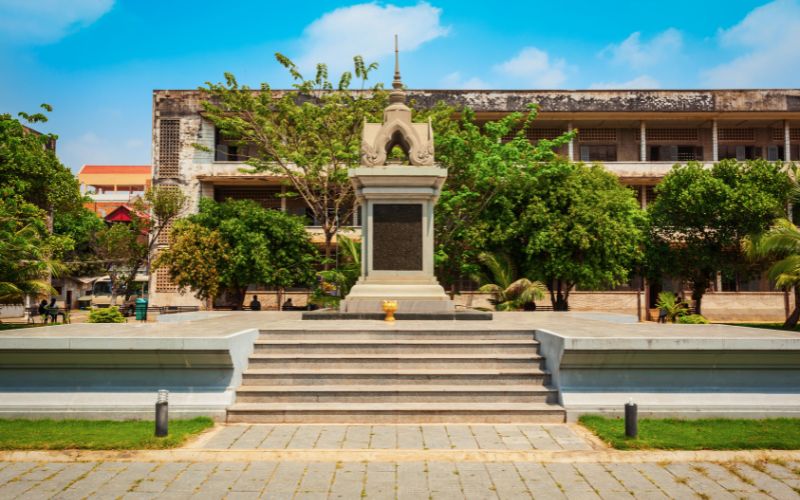
Housed in a former school, Tuol Sleng Genocide Museum documents a difficult chapter in Cambodia’s history.
Today, the preserved classrooms and photographic archives serve as a powerful reminder of this period. Visiting Tuol Sleng requires time and emotional readiness. An audio guide is strongly recommended to understand the documented testimonies and historical context accurately.
3. Choeung Ek Killing Fields
Located approximately 17 kilometers south of the city center, Choeung Ek is the best known of the Killing Fields. A memorial stupa filled with victims’ skulls stands at the center of the site, honoring those who lost their lives.
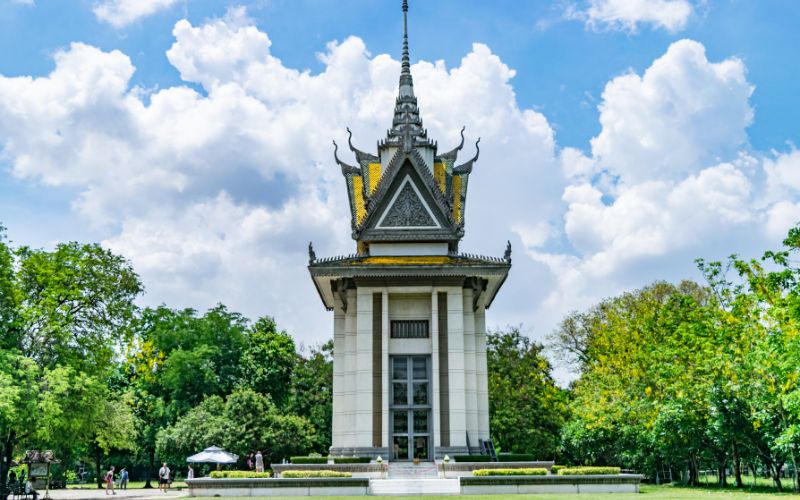
Choeung Ek Killing Fields is an important historical site that helps visitors understand Cambodia’s recent past.
Most travelers combine Tuol Sleng and Choeung Ek in the same half day, as the two locations are historically connected. Doing so helps visitors understand the broader impact of the Khmer Rouge period without fragmenting the story.
4. Wat Phnom
Wat Phnom sits on a small hill and is widely considered the spiritual heart of the capital. According to local legend, a woman named Penh discovered sacred Buddha statues here in the XIV century, giving the city its name.
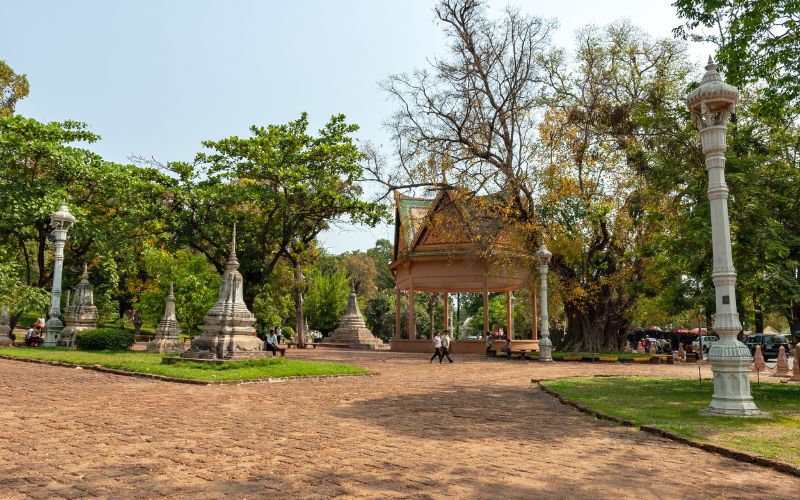
Wat Phnom, the city’s namesake temple, sits on a small hill and offers a peaceful atmosphere in the heart of Phnom Penh.
Unlike many historical monuments, Wat Phnom remains active. Local residents visit daily to pray for good fortune, business success, or exam results. Spending even a short time observing the rituals here offers insight into contemporary Cambodian spiritual life.
>>> If you prefer to explore these landmarks with structured historical context and efficient transportation, you may consider joining a Phnom Penh 4-day tour that connects the Royal Palace, Wat Phnom, and the main historical sites in one thoughtfully designed itinerary.
How Many Days Do You Really Need in Phnom Penh?
Two to three days is the ideal amount of time for first time visitors to Phnom Penh. This allows you to explore the city’s major landmarks, understand its historical context, and still experience its everyday rhythm without feeling rushed.
If You Have Two Days
With two days, you can cover the essential highlights in a balanced way.
On the first day, visit the Royal Palace and Silver Pagoda in the morning, followed by Wat Phnom. In the late afternoon, walk along Sisowath Quay by the Tonle Sap River and watch the sunset. This combination introduces you to Cambodia’s royal heritage and spiritual life while giving space to absorb the city’s atmosphere.
On the second day, dedicate time to Tuol Sleng Genocide Museum and Choeung Ek Killing Fields. These two sites require emotional focus and should not be squeezed between other activities. In the evening, consider a short Mekong river cruise to decompress and reflect.
If You Have Three Days
A third day gives you room to go beyond the main checklist.
You might visit Silk Island, also known as Koh Dach, located along the Mekong River. The island is known for traditional silk weaving and offers a glimpse of rural life near the capital. Alternatively, you can explore local markets more deeply or spend time in the BKK1 neighborhood, where contemporary cafés and restaurants reflect Phnom Penh’s evolving urban culture.
If You Have More Than Three Days
If you have more than three days, Phnom Penh becomes a base for deeper cultural exploration and nearby excursions.
You can take a day trip to Oudong, the former royal capital located about forty kilometers northwest of Phnom Penh. The hilltop stupas there offer panoramic views and historical context predating the current capital. Another option is visiting Phnom Tamao Wildlife Rescue Center, operated by Wildlife Alliance, which focuses on animal rehabilitation and conservation education.
With additional time, you can also explore contemporary Cambodian art spaces such as the National Museum of Cambodia more thoroughly, attend a traditional dance performance, or participate in a Khmer cooking class to better understand local culinary traditions.
Staying longer shifts your experience from sightseeing to immersion.
>>> If you are designing a flexible Cambodia itinerary, our customized Phnom Penh travel packages can incorporate day trips, cultural activities, and private transportation according to your schedule.
Where Can First-Time Visitors Experience Khmer Culture in Phnom Penh?
First time visitors can experience authentic Khmer culture in Phnom Penh through its local markets, active temples, traditional cuisine, and everyday river life. These places reveal how modern Cambodians live, work, worship, and eat beyond the historical landmarks.
Explore Local Markets
Phsar Thmei, commonly known as Central Market, is one of the most recognizable buildings in the city. Built in 1937 during the French colonial period, its Art Deco dome structure reflects Phnom Penh’s architectural heritage. Inside, you will find jewelry, textiles, household goods, and fresh produce. While it is popular with visitors, it remains a functioning market for residents.
Phsar Toul Tom Poung, widely called Russian Market, offers a more compact and lively atmosphere. Originally frequented by foreign residents in the 1980s, it is now known for handicrafts, silk products, spices, and street food stalls. It is a practical place to observe daily commerce rather than a staged cultural show.
For a more local experience, Orussey Market is less oriented toward tourism. Here, you will see wholesale produce, garment materials, and everyday shopping activity that reflects the city’s working life.
Visit Active Temples
Beyond Wat Phnom, smaller neighborhood temples provide a quieter cultural encounter. These are places where monks study, families make offerings, and ceremonies take place regularly. Visitors should dress modestly and behave respectfully, remembering that these are living religious sites.
Discover Khmer Cuisine
Phnom Penh’s food scene combines traditional Khmer recipes with influences from neighboring countries and France. Fish amok, a steamed curry typically made with freshwater fish and coconut milk, is considered one of Cambodia’s national dishes. Kuy teav, a noodle soup commonly eaten for breakfast, is widely available at morning stalls throughout the city. Num banh chok, often referred to as Khmer noodles, is another staple dish served with fresh herbs and light curry sauce.
>>> Read more: Khmer Cuisine: Discover 10 Best Dishes in Cambodia
Spending time at local eateries rather than only international restaurants gives first time visitors a more accurate understanding of contemporary Cambodian life.
Authentic culture in Phnom Penh is not confined to museums. It is visible in market conversations, temple rituals, and the rhythm of daily meals.
>>> If you would like a structured introduction to local markets, temples, and Khmer cuisine, our Phnom Penh cultural tour experiences combine guided visits with authentic local interactions for a deeper understanding of the city.
What Is the Best Way to Explore Phnom Penh Without Feeling Overwhelmed?
The best way to explore Phnom Penh without feeling overwhelmed is to balance historical visits with relaxed riverside time and neighborhood exploration. This helps first time travelers understand the city without turning the experience into an emotional overload.
1. Do Not Stack Heavy Historical Sites Back to Back
Tuol Sleng Genocide Museum and Choeung Ek Killing Fields are essential visits, but they are emotionally demanding. It is practical to see them in the same half day because they are historically connected, yet it is not advisable to schedule additional major attractions afterward.
Leave the afternoon or evening open. Give yourself time to reflect rather than rushing into another monument.
2. Use the Riverside as a Natural Break
Sisowath Quay, located where the Tonle Sap meets the Mekong River, is one of the best places to slow down. Early morning and late afternoon are the most pleasant times to visit.
You will see residents exercising, families walking, and small vendors selling snacks. Spending time here allows you to observe daily life rather than simply ticking off landmarks.
A short sunset river cruise can also provide perspective after a day of historical exploration.
3. Explore by Neighborhood, Not Just by Attraction
Instead of moving randomly across the city, focus on one area at a time.
The Royal Palace, National Museum, and Wat Phnom are relatively close to each other in the central district. The BKK1 neighborhood, on the other hand, reflects a more contemporary Phnom Penh with independent cafés and modern restaurants.
Exploring by area reduces travel time and makes the city feel more coherent.
4. Slowly Visit Phnom Penh
Unlike cities built purely for tourism, Phnom Penh carries historical depth and emotional weight. Moving too quickly can make the experience feel intense and fragmented.
A slower rhythm helps the city reveal its human side.
>>> If you prefer a thoughtfully paced schedule that balances history, culture, and time to relax, our customized Phnom Penh travel itineraries are designed to help first time visitors explore the city without feeling overwhelmed.
Should Visitors Visit Silk Island on Their First Trip to Phnom Penh?
Yes, you should visit Silk Island if you want to see rural life and traditional craftsmanship just outside the capital. Silk Island offers a calm contrast to Phnom Penh’s historical sites and urban pace.
Silk Island, locally known as Koh Dach, is located on the Mekong River and can be reached by road and short ferry crossing from the city. The journey typically takes between thirty and forty five minutes depending on traffic and departure point.
What Makes Silk Island Worth Visiting
Koh Dach is known for its traditional silk weaving. Many families on the island continue to produce silk using techniques passed down through generations. Visitors can observe the weaving process, from spinning and dyeing threads to working on wooden looms.
Unlike large scale souvenir shops in the city, many workshops here are small and family run. This makes the experience feel more personal and less commercial.
The island also offers a glimpse into rural Cambodian life. Wooden houses on stilts, small temples, rice fields, and quiet riverbanks create a setting very different from central Phnom Penh.
Is It Suitable for First Time Visitors
Silk Island is suitable if you have at least three days in Phnom Penh and want to balance history with something lighter. After visiting Tuol Sleng and the Killing Fields, many travelers appreciate spending time in a calmer environment.
It is not a major tourist attraction in the traditional sense. There are no large monuments. The appeal lies in observation, conversation, and slower exploration.
Alternative Day Trips Near Phnom Penh
If you have additional time, Oudong, the former royal capital located around forty kilometers northwest of Phnom Penh, offers historical stupas and panoramic views. Phnom Tamao Wildlife Rescue Center is another option for visitors interested in conservation and wildlife rehabilitation.
These day trips provide context beyond the capital and show different layers of Cambodia’s history and environment.
Phnom Penh is worth visiting because it helps you understand Cambodia beyond Angkor Wat. The capital tells the story of the country’s royal heritage, modern history, spiritual life, and contemporary transformation in one compact but meaningful destination.
Unlike resort cities or temple complexes, Phnom Penh feels lived in. It is where history is preserved, where national institutions operate, and where daily Cambodian life unfolds along the Mekong River. For first time travelers, it provides essential context before continuing to Siem Reap, the southern coast, or a Mekong cruise. Spending two to three well planned days here creates a deeper and more balanced Cambodia experience.
If you are planning your first trip and want expert support with transportation, guided visits, and flexible scheduling, contact us to design your Phnom Penh tour package tailored to your travel style and timeframe.
Read more: