

Cambodia runs on two modes: dry and wet. Get the season right, and you spend your days at Angkor Wat in clear morning light with manageable crowds. Get it wrong, and you are sweating through flooded roads in 38°C (100°F) heat, wondering where the path to the temple went.
This guide breaks down Cambodia weather month by month, covers what to expect at each major destination, and gives you the honest picture on the best time to visit Cambodia so you can plan around it.
Cambodia Weather Overview: Understanding the Two Seasons
Cambodia has a tropical monsoon climate with two seasons that shape everything about a visit: the dry season and the wet season. Unlike some Southeast Asian destinations where rainfall is spread more evenly through the year, Cambodia’s rainfall is concentrated and can be intense when it hits.
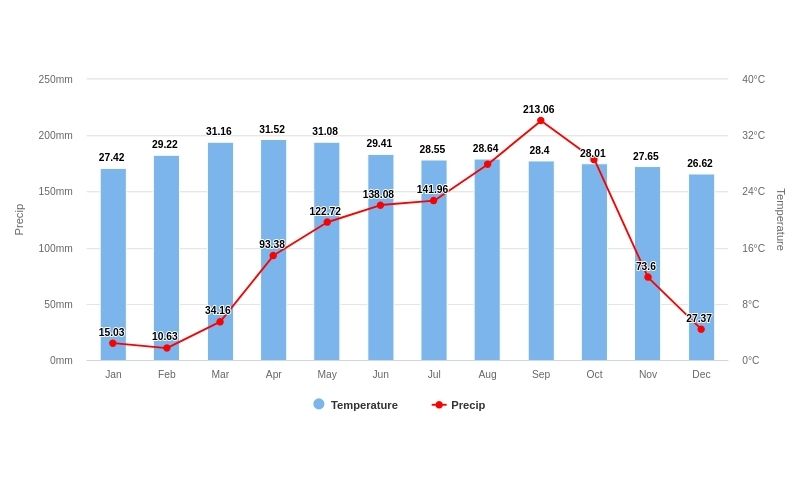
Cambodia weather graph
Dry season (November to April) is when most international visitors arrive. Temperatures range from a comfortable 25°C (77°F) in December to a punishing 38°C (100°F) or higher by April. Humidity is lower, roads are accessible, and Angkor Wat is at its photogenic best.
Wet season (May to October) brings the southwest monsoon. Rain falls mostly in the afternoon, not all day, which surprises many first-time visitors. Mornings are often clear and good for temple visits. Prices drop significantly, crowds thin out, and the countryside turns an impossibly deep green.
Month-by-Month Breakdown of Cambodia Weather
November to February: The Best Time to Visit Cambodia
- Best for: Temple visits, beach trips to Sihanoukville and Koh Rong, overland travel, first-time visitors
- Average temperatures: 25°C (77°F) to 32°C (90°F)
- Rainfall: Very low
- Crowds: High, especially December to January
This window is the sweet spot. Temperatures sit between 25°C (77°F) and 32°C (90°F), humidity is manageable, and the light at Angkor Wat in December and January is genuinely beautiful. Early mornings at Angkor are cool enough that you can walk between temples without stopping to recover.
November is a transition month. The tail end of the wet season means the landscape is still green and Tonle Sap Lake is at its fullest, which makes boat trips to floating villages on the lake worth doing specifically at this time of year. By December, it is fully dry season and the busiest period begins. Siem Reap fills up fast around Christmas and New Year, so book accommodation and Cambodia tours three to four months out if you are traveling then.
January and February are arguably the most comfortable months overall. The heat has not built to its April peak, the rains are gone, and if you travel in early February you miss the Chinese New Year rush that affects some accommodation prices.
March and April: Hot Season, Not for the Faint-Hearted
- Best for: Budget travelers, early risers, sunrise temple visits, travelers who want lower prices without wet season rain
- Average temperatures: 35°C (95°F) to 40°C (104°F)
- Rainfall: Very low to none
- Crowds: Moderate (lower than peak season, but Khmer New Year in mid-April brings domestic travel surges)
This is Cambodia at its most extreme. April is the hottest month of the year, with temperatures regularly hitting 38°C (100°F) to 40°C (104°F) in Phnom Penh and Siem Reap. Khmer New Year falls in mid-April and is the most important holiday in the Cambodian calendar.
This is also the cheapest period to book flights, since fewer international visitors choose these months. Some travelers with high heat tolerance specifically target March for that reason.
May to October: Wet Season Cambodia
- Best for: Budget travelers, photographers (green landscapes, dramatic skies), Tonle Sap boat trips, fewer crowds at Angkor
- Average temperatures: 28°C (82°F) to 35°C (95°F)
- Rainfall: Moderate (May to August) to heavy (September to October)
- Crowds: Low
May is the transition into wet season. Rain starts, prices drop noticeably, and the countryside begins to revive. This is when locals who know Cambodia well start to quietly recommend it. A midrange guesthouse that costs $60 to $80 USD in December might run $35 to $45 USD in June or July.
Where to Go in Cambodia by Season
1. Siem Reap and Angkor Wat
The dry season (November to February) is best for Angkor. The moats are full from the wet season rains, the temperature is bearable before 9 a.m., and the light for photography is at its clearest. The downside is crowds. Angkor Wat draws over a million international visitors a year, and a significant share arrive in December and January.
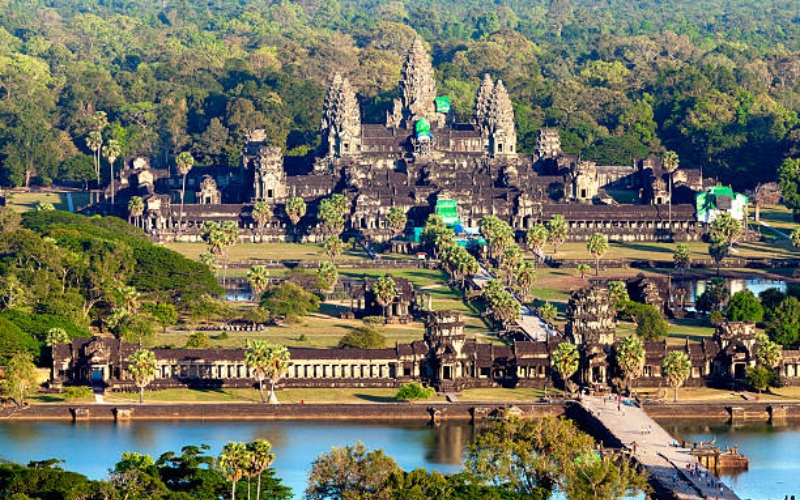
Angkor Wat’s grand temple complex
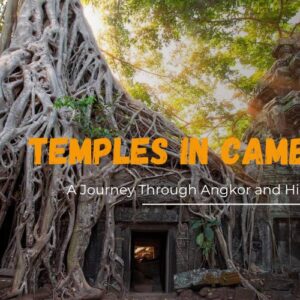
Wet season Angkor has its own appeal. Fewer tour groups, greener surroundings, and the reflection pools around Angkor Wat fill up properly after the rains. Some of the smaller jungle temples like Ta Prohm look genuinely atmospheric with mist rising off the vegetation. Visiting Angkor Wat in July or August is a legitimate choice if you do not mind rain in the afternoons.
2. Phnom Penh
Cambodia’s capital works year-round. The city has more indoor attractions (museums, restaurants, markets) and is less dependent on perfect weather than Siem Reap. November to February is the most comfortable for walking the riverside promenade and exploring the city on foot. The Genocide Museum and Killing Fields sites are open every day regardless of season.
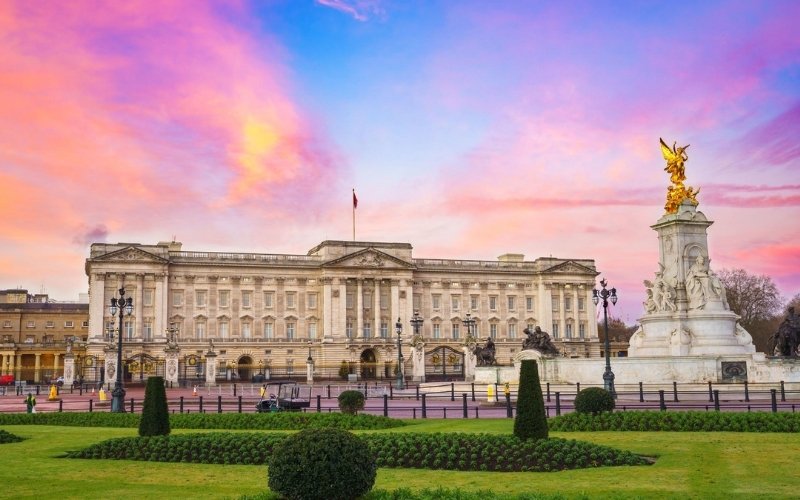
The Royal Palace in Phnom Penh, Cambodia, glowing beautifully under the pink and orange hues of the evening sky.
3. Sihanoukville and the Southern Coast
The best time for beaches along the Gulf of Thailand coast is November to May. The sea is calm, visibility for diving and snorkeling is good, and islands like Koh Rong are at their most accessible. From May to October, seas can be rough and some boat services to the outer islands reduce frequency or stop entirely during bad weather windows.
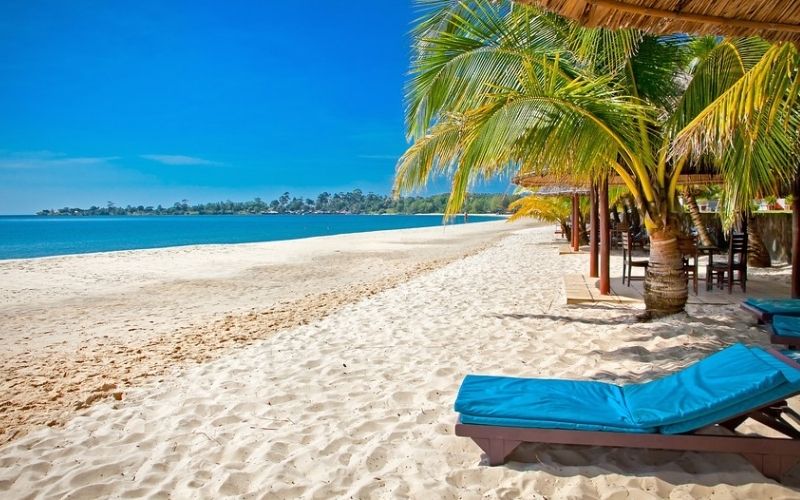
Relaxing paradise — a sunny day on the pristine beaches of Sihanoukville, Cambodia.
4. Kampot and Kep
These laid-back towns in the south work well in the dry season. Kampot’s river is particularly pleasant in November and December. If you visit during the wet season, the surrounding pepper farms are lush and green, and the Bokor National Park above Kampot is dramatically misty.
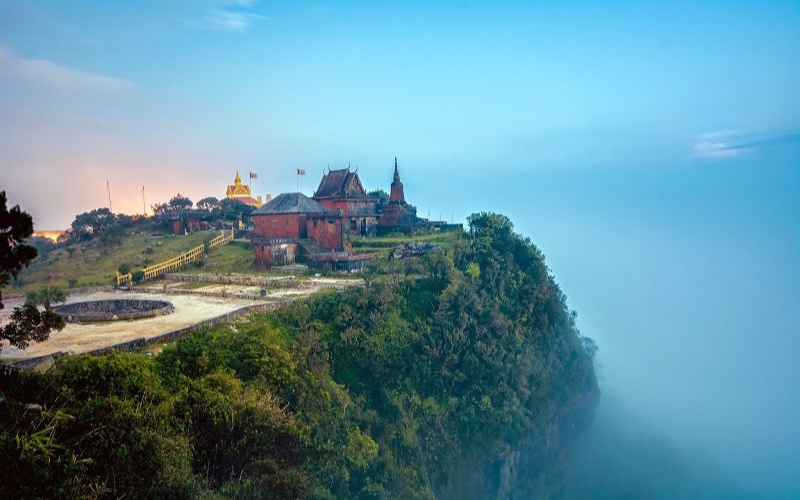
Kampot is a perfect rainy season escape, with lush landscapes, and a cool break from the tropical heat
How to Get to Cambodia
Most international visitors arrive at Phnom Penh International Airport (PNH) or Siem Reap International Airport (REP). Direct flights operate from Bangkok, Ho Chi Minh City, Singapore, Kuala Lumpur, and Hong Kong, among others. Flight prices tend to be 15 to 25% cheaper if you book during the wet season (June to September).
Overland entry is also common. The most popular crossing points are:
- Poipet (from Thailand via Bangkok): busy but well-organized
- Bavet/Moc Bai (from Vietnam via Ho Chi Minh City): good road connections to Phnom Penh
- Kaam Samnor (river crossing from Vietnam): less traveled, scenically different
Visa on arrival is available at major land and air crossings. The standard tourist e-visa ($30) is available online and valid for 30 days. If you are combining Cambodia with neighboring countries, a multi-entry or extended visa gives more flexibility.
Best Time to Visit Cambodia and Vietnam Together
If you are combining both countries, November to March is the most reliable window. By traveling south to north through Vietnam and finishing in Cambodia (or reversing that), you can mostly stay ahead of the regional weather patterns. December is good in both Phnom Penh and Ho Chi Minh City. February works well for both Hoi An and Siem Reap.
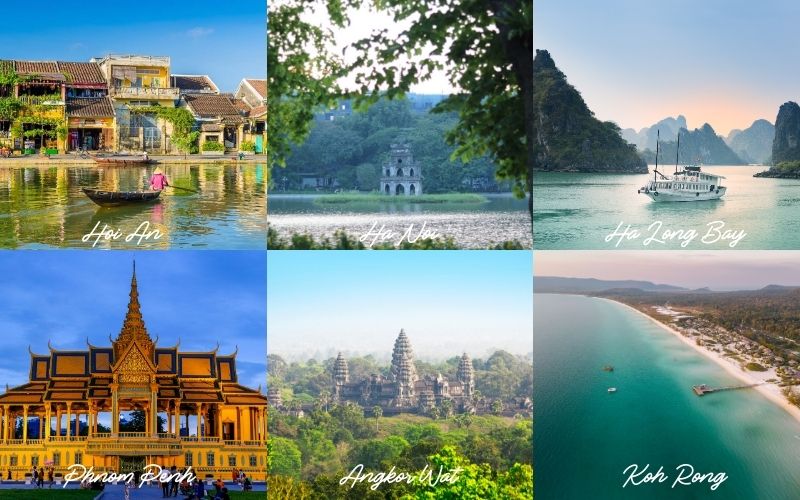
Famous destinations in Vietnam and Cambodia
Avoid combining central Vietnam (Hue, Hoi An, Da Nang) with Cambodia in October and November. Central Vietnam’s typhoon and heavy rain season runs from September to December, while Cambodia is dry. You would either rush through Cambodia to get back for Vietnam’s dry period, or sit out in the rain in Hoi An after pleasant days in Siem Reap.
>>> Check out Vietnam and Cambodia tours for itineraries that account for regional weather patterns.
Best Time to Visit Cambodia and Thailand Together
Thailand and Cambodia share the same general dry season timeline, which makes November to February a natural window for combining the two. Bangkok in December is manageable (less humid than July), and the overland Bangkok to Siem Reap route via Aranyaprathet and Poipet takes around eight hours by bus or can be split with a night in the Thai border town.
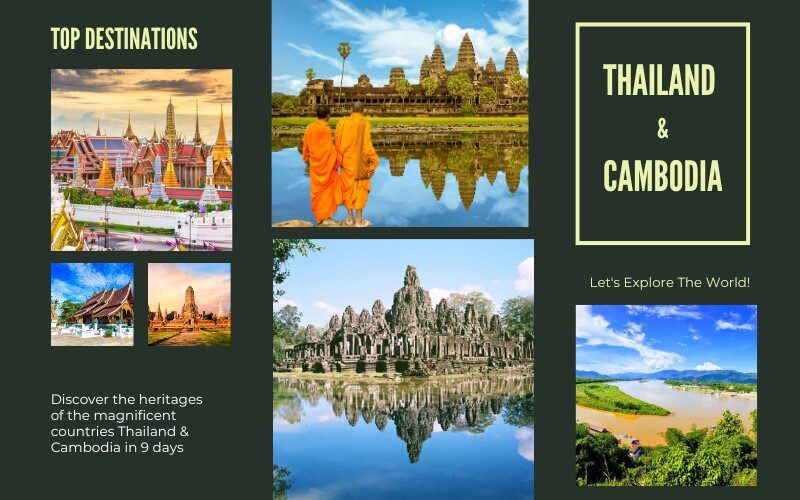
Thailand & Cambodia Excursion
If you are doing southern Thailand beaches (Koh Samui, Koh Phangan), note that the Gulf of Thailand side has its own wet season that runs October to December, while the Andaman coast (Phuket, Krabi) is dry from November to April. Plan the Cambodia leg for January or February if you want to combine it with western Thailand beaches.
>>> IDC Travel offers Thailand and Cambodia tours with cross-border logistics handled.
Best Time to Visit Cambodia and Laos Together
Laos and Cambodia share the same seasonal structure. The November to February dry season works well for both. Luang Prabang in northern Laos is actually cooler and more pleasant in December and January (evenings can drop to 15°C (59°F)), while Cambodia is warm but not hot. Phnom Penh and Vientiane are both very comfortable in this window.
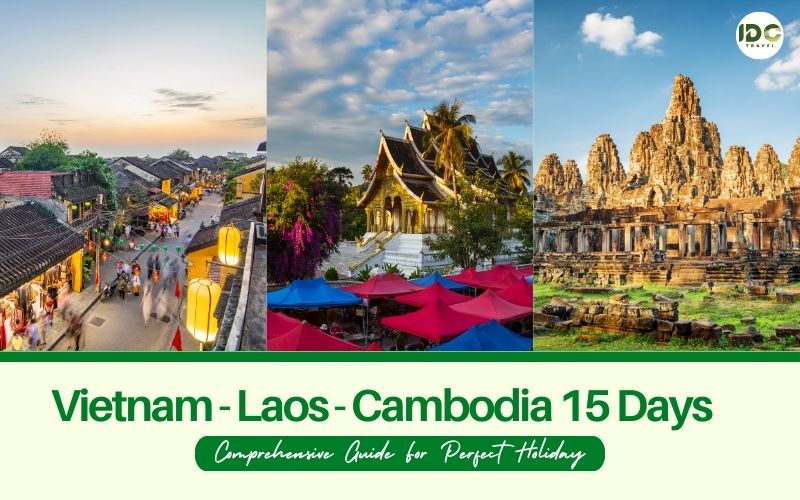
Vietnam Laos and Cambodia in 15 Days
The wet season combination works too, especially for travelers who want to see the Mekong at full flow. Both countries are less crowded, cheaper, and greener from June to September.
>>> Check this Vietnam, Cambodia and Laos in 16 days if you interested in traveling those countries.
What Is the Cheapest Month to Go to Cambodia?
June, July, and August consistently offer the lowest prices across flights, accommodation, and tour packages. A $70 room in Siem Reap in December might cost $30 to $40 in July. Tuk-tuk drivers negotiate more. Restaurants are less crowded. Angkor Wat in July, with clouds building over the temples in the late afternoon, is one of those travel experiences that sticks with you.
The trade-off is real: rain is likely every afternoon, some rural areas are harder to access, and September to October can bring genuine flooding in lower-lying parts of the country. But for travelers who are flexible, wet season Cambodia represents good value.
Approximate cost comparison (Siem Reap, per night, midrange):
- December to February: $60 to $120
- March to April: $45 to $80
- May to August: $30 to $60
- September to October: $25 to $50
Worst Time to Visit Cambodia
April is the most challenging month overall. The heat is punishing, Khmer New Year disrupts services, and there is no rain relief yet. If you have no flexibility, April is manageable, but it requires planning around the heat and checking holiday schedules in advance.
September and October are the months most prone to flooding, particularly in the lowlands around the Tonle Sap basin and some routes in rural Kampong Cham and Prey Veng provinces. Road conditions can deteriorate, and some boat routes are modified or suspended. These months are still fine for Phnom Penh, Siem Reap (which drains reasonably well), and Sihanoukville.
Conclusion: Quick Reference Guide to Cambodia Travel
Before booking, here is a snapshot of what each major season offers:
| Factor | Nov to Feb (Peak) | Mar to Apr (Hot) | May to Oct (Wet) |
| Temperature | 25°C to 32°C (77°F to 90°F) | 35°C to 40°C (95°F to 104°F) | 28°C to 35°C (82°F to 95°F) |
| Rainfall | Very low | None to low | Moderate to heavy |
| Crowds at Angkor | High | Moderate | Low |
| Accommodation prices | High | Medium | Low |
| Best for | First-timers, families, beach | Budget-conscious, early risers | Photographers, budget, Tonle Sap |
| Beach accessibility | Excellent | Good | Limited (Sep to Oct) |
| Road conditions | Excellent | Excellent | Variable (Sep to Oct) |
The honest answer to “best time to visit Cambodia” is November to February for most people. The weather is cooperative, the temples are accessible, and the overall experience is the smoothest. But wet season Cambodia (May to August) is underrated, genuinely affordable, and less crowded. April is the one month I would personally try to avoid unless the price difference is too good to ignore.
If you are planning a Cambodia trip and want help matching your dates to the right itinerary, IDC Travel’s team in Siem Reap and Phnom Penh can put together a tailor-made schedule around your travel window. Browse Cambodia holidays or get in touch to start planning.
>>> Refer to Cambodia Current Weather | AccuWeather.
Read more:
I’ve been debating whether to go in November or February. Do you think one month has fewer crowds around Angkor compared to the other?
Dear Jamie,
Thank you for your question! Both November and February are excellent months to visit Angkor, but they do have some differences in terms of crowds.
November marks the start of the dry season, with pleasant weather and lush scenery following the rains. It’s a very popular time for travelers, so you may find more visitors at the main temples, especially around Angkor Wat at sunrise.
February is also in the dry season, with slightly cooler mornings and lower humidity. By this time, the peak holiday crowds of December and January have eased, so in general, February tends to feel a little less crowded compared to November.
If you’d like, we’d be happy to help design a custom itinerary that balances the must-see highlights with quieter corners of the Angkor complex, so you can enjoy the magic of the temples without feeling rushed. Contact us anytime and we’ll guide you toward the best timing and experiences for your trip.
Best regards,
IDC Travel Team