


The best museums in Laos are the Royal Palace Museum in Luang Prabang, the COPE Visitor Centre and the Lao National Museum in Vientiane, the Traditional Arts and Ethnology Centre (TAEC) in Luang Prabang and the temple museum of Wat Si Saket. Most are small, cheap and closed over lunch, so a little planning goes a long way. This guide covers 12 museums in Laos with opening hours, entry fees and tips. Fees are in Lao kip (LAK) for foreign adults, with US dollar ($) equivalents; $1 is about 22,500 LAK.
| # | Museum | City | Best for | Opening hours | Time needed | Fee |
| 1 | Lao National Museum | Vientiane | History lovers | – Daily – 08:00-16:00 – weekends from 09:00 |
1-1.5 hours | 30,000 LAK |
| 2 | COPE Visitor Centre | Vientiane | Everyone | – Daily – 08:30-16:00 |
1 hour | Free |
| 3 | Wat Si Saket | Vientiane | Temple and art lovers | – Daily – 08:00-12:00 – 13:00-17:00 |
45 minutes | Small fee |
| 4 | Haw Phra Kaew | Vientiane | Buddhist art | – Tue-Sun – 08:00-12:00 – 13:00-16:00 |
30-45 minutes | Small fee |
| 5 | Kaysone Phomvihane Museum | Vientiane | Modern history | – Tue-Sun – 08:00-12:00 – 13:00-16:00 |
1 hour | Small fee |
| 6 | Lao Textile Museum | Vientiane | Craft lovers | By arrangement | 1-2 hours | Ask when booking |
| 7 | Lao Art Museum | Vientiane | Art lovers | – Daily – 08:00 – last entry at 16:00 |
2 hours | 220,000 LAK |
| 8 | Royal Palace Museum | Luang Prabang | First-timers | – Daily – 08:00-11:30 – 13:30-16:00 |
45-60 minutes | 60,000 LAK |
| 9 | TAEC | Luang Prabang | Culture lovers, families | – Tue-Sun – 08:00-17:00 |
1 hour | Small fee |
| 10 | UXO Laos Visitor Centre | Luang Prabang | Everyone | – Mon-Fri – 08:00-11:30 – 13:00-17:00 |
45 minutes | Free |
| 11 | MAG UXO Visitor Centre | Phonsavan | Plain of Jars visitors | – Daily – 08:00-17:00 |
45-60 minutes | Free |
| 12 | Vat Phou Museum | Champasak | Archaeology lovers | – Daily – 08:00-16:30 |
2 hours with site | 50,000 LAK incl. site |
State museums may close on public holidays, so if you are planning a long trip out of town, ask your hotel or guide to call ahead.
12 Best Museums in Laos by City
This list of the best museums in Laos starts in Vientiane, which has the widest choice, then moves to Luang Prabang and 2 museums linked to famous heritage sites. The order follows location, not ranking.
Museums in Vientiane
Vientiane has more museums than anywhere else in Laos, from war history to Buddhist art and textiles. Wat Si Saket and Haw Phra Kaew face each other in the centre, while the Lao National Museum, the Kaysone Phomvihane Museum and the Lao Art Museum are on the outskirts, so plan your day by area. Our Vientiane travel guide covers the rest of the city.
1. Discover Lao History at the Lao National Museum (Vientiane) – From Prehistory to the Present
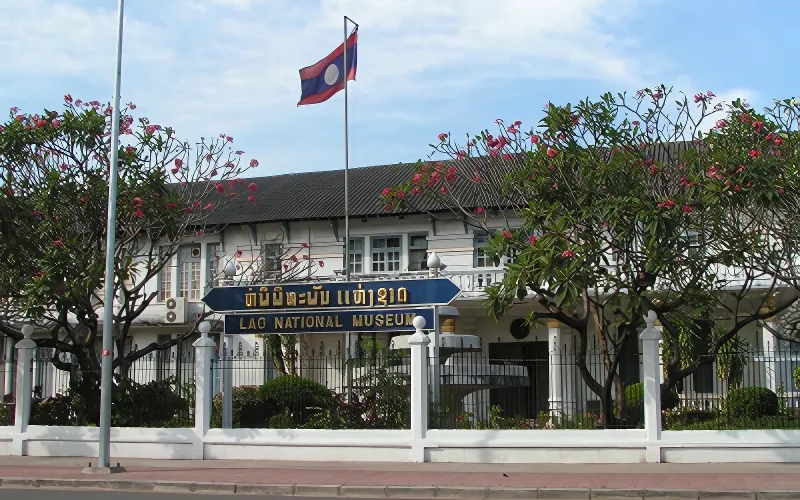
Lao National Museum
The Lao National Museum tells the story of Laos from prehistory to the founding of the Lao PDR, with archaeological finds, royal and religious objects and galleries on the fight for independence. It has moved from its old French colonial building in the centre to a larger new home on the edge of the city.
- Location: Kaysone Phomvihane Avenue, Ban Sivilay, Xaythany district, about 6 km from the city centre
- Best for: history lovers and first-time visitors who want an overview of the country
- Opening hours: Monday to Friday 08:00 to 16:00; Saturday and Sunday 09:00 to 16:00
- Time needed: 1 to 1.5 hours
- Cost: 30,000 LAK (~$1.30)
- Getting there: tuk-tuk, taxi or the LOCA app from the centre
- Tip: Pair it with the Kaysone Phomvihane Museum on the same avenue, and show your driver the new address, as many old maps still mark the former site on Samsenthai Road.
2. Learn About Unexploded Bombs at the COPE Visitor Centre (Vientiane) – Free and Moving
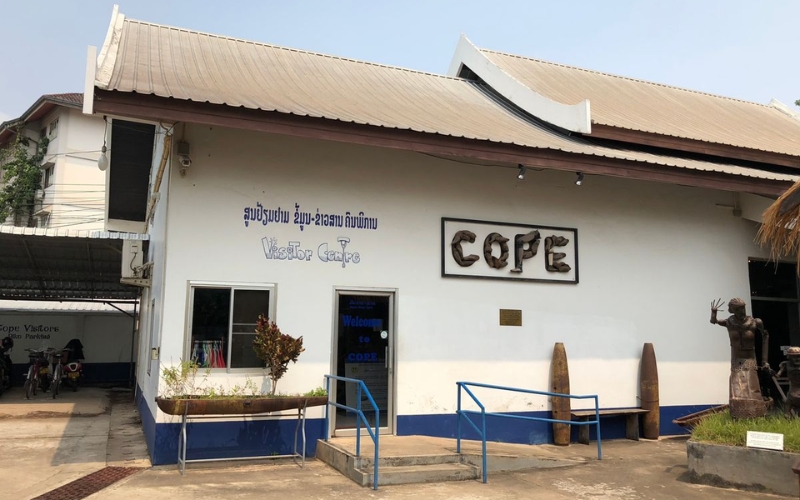
The COPE Visitor Centre in Vientiane, which tells the story of Laos’ unexploded ordnance legacy and supports survivors with prosthetic care.
Laos is one of the countries most affected by unexploded bombs left from the Indochina War. The COPE Visitor Centre explains the bombing, the clearance work and the lives of survivors through exhibits, prosthetic limbs and short films. It is one of the most powerful museums in Laos and suits most ages, although some stories are hard to hear.
- Location: Khouvieng Road, in the grounds of the Centre for Medical Rehabilitation, opposite the Green Park Hotel
- Best for: all travellers, including families with older children
- Opening hours: daily, 08:30 to 16:00
- Time needed: about 1 hour
- Cost: free; donations support rehabilitation services
- Getting there: a short tuk-tuk ride from the riverside
- Tip: Leave time for the short films, which let survivors tell their stories in their own words.
3. See 6,840 Buddha Images at Wat Si Saket (Vientiane) – The Capital’s Temple Museum
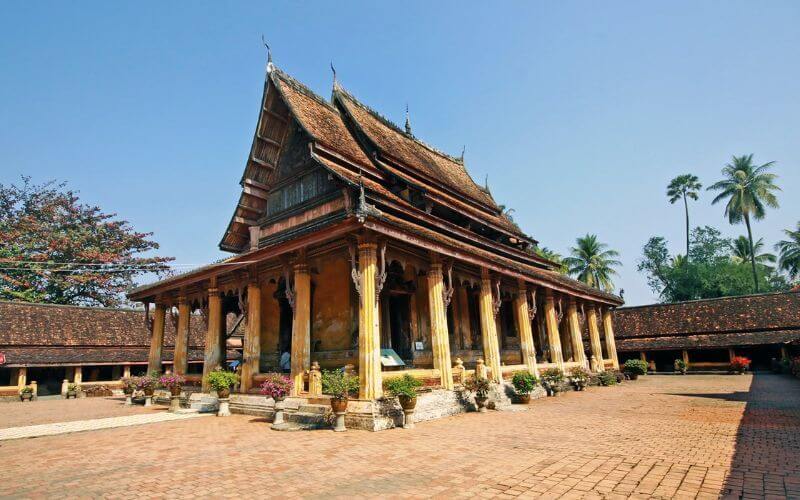
Wat Si Saket, the oldest surviving temple in Vientiane, known for its cloister walls lined with thousands of Buddha images.
Wat Si Saket was built in 1818 under King Anouvong and now works as a museum. Its cloister walls hold 6,840 small Buddha images in niches and on shelves, alongside larger statues and faded murals in the main hall.
- Location: Setthathirath Road, opposite the Presidential Palace
- Best for: temple and art lovers
- Opening hours: daily, 08:00 to 12:00 and 13:00 to 17:00; closed on public holidays
- Time needed: about 45 minutes
- Cost: a small fee in kip, paid at the gate
- Getting there: walking distance from the centre and the Mekong riverside
- Tip: Cover your shoulders and knees, and visit Haw Phra Kaew across the road on the same trip.
4. Explore Haw Phra Kaew (Vientiane) – A Royal Temple Turned Museum

Haw Phra Kaew in Vientiane, once home to the Emerald Buddha and now a museum of Lao religious art and sculpture.
Haw Phra Kaew was built as a royal temple to house the Emerald Buddha, which was later taken to Bangkok. Today it is a museum of Buddhist sculpture, with bronze and stone images set around a raised terrace and garden.
- Location: Setthathirath Road, opposite Wat Si Saket
- Best for: lovers of Buddhist art and architecture
- Opening hours: Tuesday to Sunday, 08:00 to 12:00 and 13:00 to 16:00; closed on Mondays
- Time needed: 30 to 45 minutes
- Cost: a small fee in kip, paid at the gate
- Getting there: walking distance from the city centre
- Tip: Haw Phra Kaew, Wat Si Saket and That Luang sometimes waive entry fees during Lao New Year (Pi Mai) in mid-April.
5. Visit the Kaysone Phomvihane Museum (Vientiane) – The Life of the Lao PDR’s Founding Leader
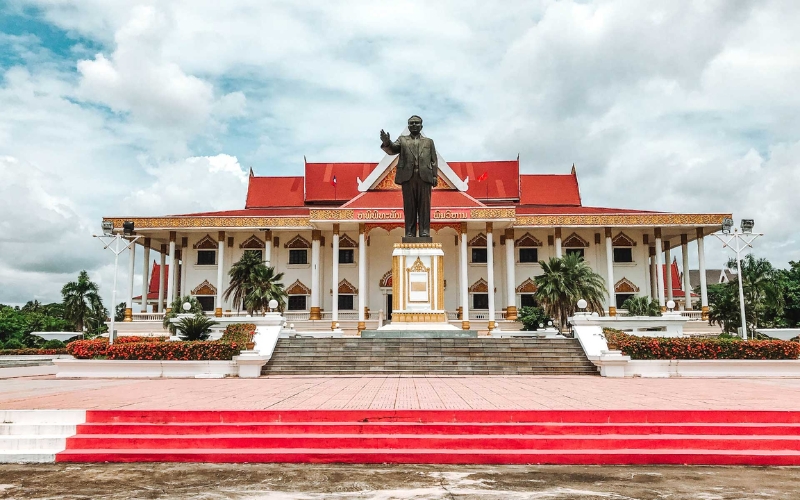
The Kaysone Phomvihane Museum in Vientiane, dedicated to the life of the former Lao leader and the country’s modern political history.
This museum is dedicated to Kaysone Phomvihane, the revolutionary leader who became the first Prime Minister of the Lao PDR and later its President. Photographs, documents and personal objects trace his life, including a large exhibition created for the 50th anniversary of the Lao PDR.
- Location: Kaysone Phomvihane Avenue, on the outskirts of Vientiane, near the Lao National Museum
- Best for: travellers interested in modern history and politics
- Opening hours: Tuesday to Sunday, 08:00 to 12:00 and 13:00 to 16:00; closed on Mondays and public holidays
- Time needed: about 1 hour
- Cost: a small fee in kip, paid at the gate
- Getting there: tuk-tuk or taxi, combined with the Lao National Museum
- Tip: Labels are mainly in Lao, so a guide adds a lot to the visit.
For an English-speaking guide at both museums, you can contact us.
6. Watch Silk Weaving at the Lao Textile Museum (Vientiane) – A Family-Run Silk Museum

The Lao Textile Museum in Vientiane, set in traditional wooden houses where visitors can see weaving, dyeing, and antique Lao fabrics.
The Lao Textile Museum was the country’s first private museum. Set around a traditional wooden stilt house, it shows how silk is made, from mulberry and silkworm to indigo dyeing and mat mi weaving, with demonstrations and a shop.
- Location: Ban Nongtha Tai, Chanthabouly district
- Best for: craft and textile lovers
- Opening hours: visits are by arrangement, so ask your hotel or guide to book ahead
- Time needed: 1 to 2 hours
- Cost: confirmed when you book
- Getting there: by tuk-tuk or taxi; the museum is outside the centre
- Tip: Ask whether a dyeing or weaving demonstration can be part of your visit.
7. See Lao Woodcarving at the Lao Art Museum (Vientiane) – The Capital’s Newest Museum
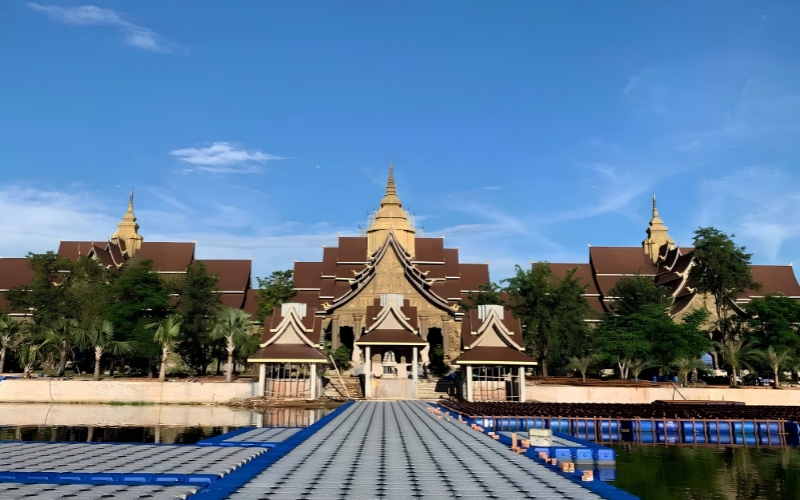
The Lao Art Museum, built in traditional Lao architectural style with gilded spires and tiered roofs, approached across a floating bridge.
The Lao Art Museum, also called the Vientiane Museum of Contemporary Arts, is a huge museum and park of about 80 hectares north of the city. It opened in 2025 and is best known for its collection of traditional Lao woodcarvings.
- Location: Ban Nonsaart, Xaythany district, north of central Vientiane
- Best for: art lovers and travellers with extra time in the capital
- Opening hours: daily from 08:00, with last entry at 16:00
- Time needed: about 2 hours
- Cost: 220,000 LAK (~$9.80), far more than other museums in Laos
- Getting there: by taxi; it is a long ride from the riverside
- Tip: Wear comfortable shoes, as the site is large and takes time to explore on foot.
Luang Prabang Museums
Each Luang Prabang museum is small and close to the others in the UNESCO-listed old town, so you can see the main 2 in a morning.
8. Tour the Royal Palace Museum (Luang Prabang) – The Luang Prabang National Museum
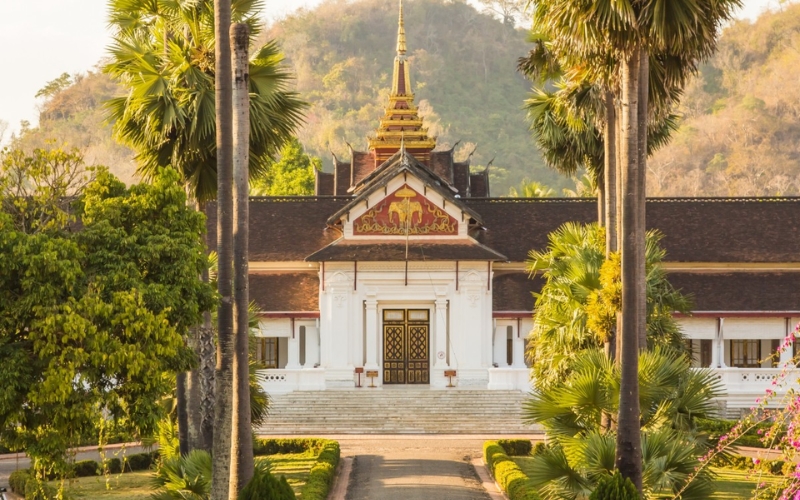
The Royal Palace Museum in Luang Prabang, former residence of the Lao royal family and home to the sacred Phra Bang Buddha.
The Royal Palace was built in the early 1900s for the Lao royal family and became the Luang Prabang National Museum after the monarchy ended. Inside are throne rooms, royal gifts and living quarters. In the grounds, the gilded Haw Pha Bang temple houses the Pha Bang Buddha, the 83 cm image that gives Luang Prabang its name. Our Luang Prabang travel guide has more on the town’s temples, markets and day trips.
- Location: Sisavangvong Road, the main street, near Mount Phousi
- Best for: first-time visitors and history lovers
- Opening hours: daily 08:00 to 11:30 and 13:30 to 16:00, with tickets sold until 11:00 and 15:30; closed on the last Thursday of each month
- Time needed: 45 minutes to 1 hour
- Cost: 60,000 LAK (~$2.70)
- Getting there: walking distance from anywhere in the old town
- Tip: Cover your knees and shoulders (skirts can be rented at the entrance), remove your shoes, and leave cameras and phones in the lockers, as photos are not allowed inside.
9. Discover Ethnic Cultures at TAEC (Luang Prabang) – The Traditional Arts and Ethnology Centre
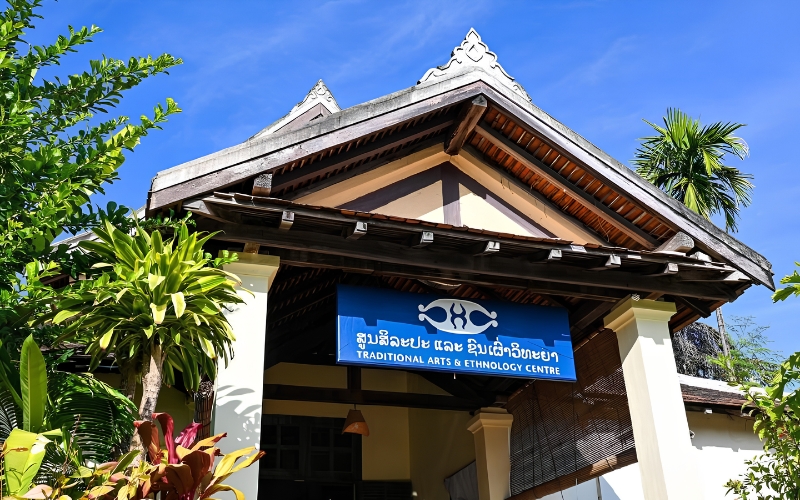
The Traditional Arts and Ethnology Centre in Luang Prabang, dedicated to the crafts, textiles, and daily life of Laos’ ethnic minority groups.
The Traditional Arts and Ethnology Centre (TAEC) is the best place in Laos to learn about the country’s many ethnic groups. Its galleries show costumes, textiles, tools and ceremonial objects, and it has a café and a fair-trade shop.
- Location: behind Dara Market, Ban Khamyong
- Best for: culture lovers and families
- Opening hours: Tuesday to Sunday, 08:00 to 17:00; closed on Mondays
- Time needed: 45 minutes to 1.5 hours
- Cost: a small fee in kip; free for Lao citizens
- Getting there: a short walk or tuk-tuk ride from the Royal Palace Museum
- Tip: Check the events page on TAEC’s website for free talks and craft activities during your stay.
10. Visit the UXO Laos Visitor Centre (Luang Prabang) – The Town’s Bomb Museum
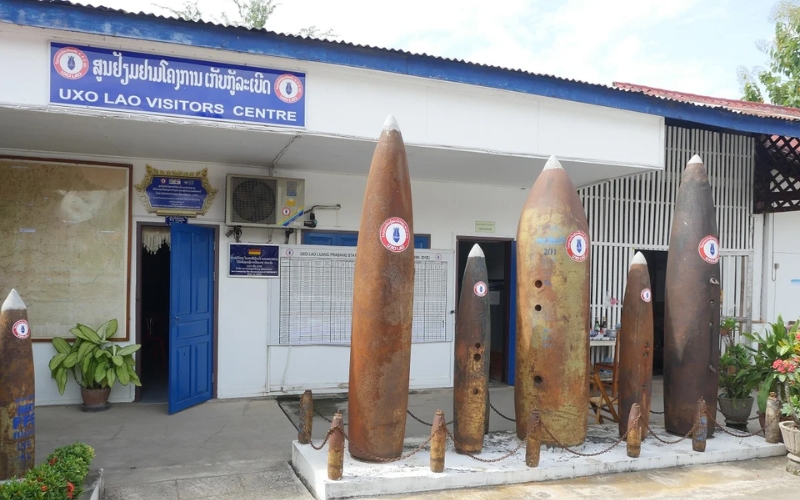
The UXO Lao Visitors Centre in Luang Prabang, documenting the clearance of unexploded ordnance left across the country.
Run by UXO Lao, the national clearance agency, this centre explains how unexploded bombs still affect northern Laos. Deactivated bombs, photographs and textiles are on display, and a video room shows documentaries such as Invisible Scars.
- Location: Ban Naviengkham, on the road behind the Souphanouvong Monument, about 12 minutes’ walk from the centre
- Best for: all travellers, as a shorter alternative to COPE
- Opening hours: Monday to Friday, 08:00 to 11:30 and 13:00 to 17:00
- Time needed: about 45 minutes
- Cost: free; donations are welcome
- Getting there: on foot or by tuk-tuk from the old town
- Tip: If you are travelling on to the Plain of Jars, visit this centre first for background.
Museums in Phonsavan and Champasak
Two smaller museums are worth a stop because they explain Laos’s most famous heritage sites outside the main cities.
11. Visit the MAG UXO Visitor Information Centre (Phonsavan) – Before You See the Plain of Jars
Xieng Khouang province was one of the most heavily bombed areas of Laos, and the Plain of Jars, a UNESCO World Heritage Site, sits among cleared ground. The MAG centre in Phonsavan explains the bombing and today’s clearance work with exhibits, films and survivor stories.
- Location: Phonsavan town, Xieng Khouang province
- Best for: anyone visiting the Plain of Jars
- Opening hours: daily, 08:00 to 17:00
- Time needed: 45 to 60 minutes
- Cost: free; donations and shop purchases support clearance work
- Getting there: in the centre of Phonsavan
- Tip: Visit before the jar sites, and stay on marked paths at every site.
12. Explore the Vat Phou Museum (Champasak) – Khmer-Era Finds at a UNESCO Site
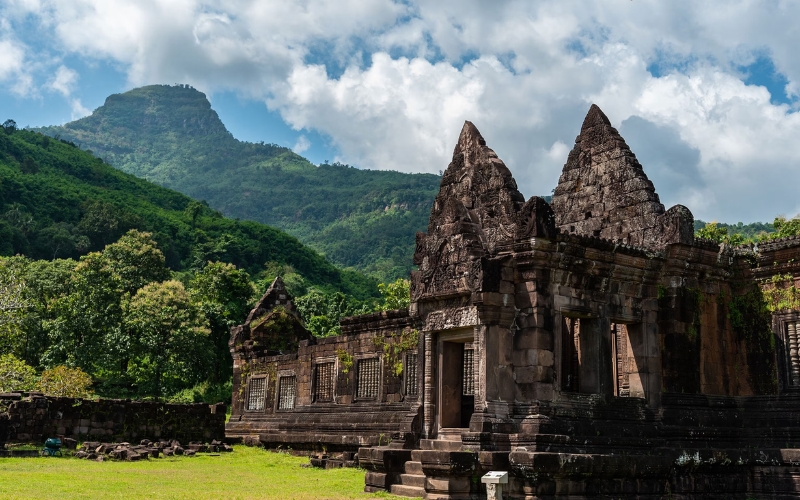
Vat Phou in Champasak, a UNESCO World Heritage site and one of the oldest Khmer temple complexes in Southeast Asia.
Vat Phou is a Khmer temple complex at the foot of a mountain and part of the Champasak Cultural Landscape, a UNESCO World Heritage Site. The museum near the entrance displays carvings and other finds from the site.
- Location: Champasak district, south of Pakse
- Best for: archaeology and history lovers
- Opening hours: the museum opens daily from 08:00 to 16:30, and the temple site from 08:00 to 17:00
- Time needed: about 2 hours with the temple
- Cost: 50,000 LAK (~$2.20), covering the site, the museum and the electric shuttle
- Getting there: by car or tuk-tuk from Pakse or Champasak town
- Tip: Start early, as the climb to the upper temple is hot and steep by midday.
Tips for Visiting Museums in Laos
Visiting a Laos museum is cheap and rewarding, but opening hours catch out many travellers. These tips will help you plan.
Plan around Lunch Breaks and Closing Days
- Many museums close for lunch, usually from 12:00 to 13:00. The Royal Palace Museum closes for longer, from 11:30 to 13:30.
- Avoid Mondays for some museums. Haw Phra Kaew, the Kaysone Phomvihane Museum and TAEC close on Mondays, and the UXO Laos Visitor Centre opens on weekdays only.
- The Royal Palace Museum closes on the last Thursday of each month, and stops selling tickets 30 minutes before each closing time.
- Public holidays can mean closures at state museums, but also free entry at some temple museums during Lao New Year.
Dress Code, Photos and Bags
- Cover shoulders and knees at the Royal Palace Museum, Wat Si Saket and Haw Phra Kaew. The Royal Palace Museum rents skirts at the entrance.
- Photos are banned inside the Royal Palace Museum, and cameras and phones go in lockers. Ask before taking photos elsewhere.
- Remove your shoes where asked, and carry only a small bag.
Money and Donations
- Carry kip in small notes. Most fees are under 60,000 LAK (~$2.70), and small museums rarely take cards.
- Free museums depend on donations. COPE, the UXO Laos Visitor Centre and the MAG centre welcome donations or shop purchases that support their work.
Our Laos travel tips cover money, temple etiquette and safety in more detail.
Planning a Day at the Museums in Vientiane
Group the museums by area to save time. In the centre, Wat Si Saket and Haw Phra Kaew face each other, and COPE is a short tuk-tuk ride away. On the outskirts, the Lao National Museum and the Kaysone Phomvihane Museum are on the same avenue, so visit them together in the morning, before the lunch break. Allow about 1 hour for each museum, plus travel time between the 2 areas.
Best Time to Visit Museums in Laos
Museums are a good choice in the hot season from March to May and on rainy afternoons from June to October, but remember the lunch closures. Lao New Year in mid-April brings crowds and occasional free entry. For weather by month, see our guide to the best time to visit Laos.
IDC Travel Tours for Museum and History Lovers
If you would like a guide to explain the history behind the exhibits, these tours pair well with the museums above:
- Laos highlights in 5 days: best if you want the top museums on a short trip. A guide takes you round the Royal Palace Museum and TAEC in Luang Prabang, then Wat Si Saket, Haw Phra Kaew and That Luang in Vientiane. From $583 per person.
- Vientiane in 4 days: best if you want to explore the capital slowly. It covers Patuxay, Buddha Park, That Luang and Wat Mahathat, with time for the city’s museums. Past travellers singled out the thousands of Buddha images at Wat Si Saket.
- Plain of Jars in 3 days: best if you are curious about war history beyond the cities. Local guides explain the history and legends of the stone jars, and the trip takes in villages and countryside in the north.
- Classic Laos in 9 days: best for a complete first trip. It links Luang Prabang, Phonsavan, Vang Vieng and Vientiane, so you can see the museums in each town at an easy pace.
See the Best Museums in Laos with IDC Travel
From the throne rooms of Luang Prabang’s Royal Palace to the survivors’ stories at COPE and the Khmer carvings at Vat Phou, these 12 museums show how much history Laos packs into small, quiet spaces. With lunch breaks, Monday closures and labels mostly in Lao, good timing and a good guide make all the difference.
When you are ready, design your Laos holiday with our local team, and we will plan each museum visit around opening hours and the sights nearby.
Read more:

Do any of the museums in Laos offer English-language guided tours or audio guides?
Yes! Many of the major museums in Laos, especially in Luang Prabang and Vientiane, do offer English-language guided tours or audio guides. For example, the national museum in Vientiane often has a guide who can speak English (sometimes at an additional fee). Smaller regional museums may have limited or no English services, so I recommend contacting ahead if you want an English-language tour.
I wish I had read this before my trip to Laos last year! I only made it to one or two museums, but clearly, I missed out on a lot. The descriptions you gave really highlight the diversity of Laos’s history and culture. Great job with the recommendations!
Thank you so much for your kind words! We’re glad you enjoyed the post and found the descriptions helpful — Laos truly has so much to offer beyond the well-known spots. Don’t worry, it just means you have a perfect reason to go back and explore more! If you ever plan a return trip, we’d be happy to help you uncover more hidden gems and cultural experiences across the country.
Best regards,
IDC Travel Team
I visited the Royal Palace, and it is fair to say that this place offers rich insight into Lao’s history and royal heritage. When entering, I was greeted by the King’s reception hall, which was adorned with murals depicting traditional Lao life, and the tour guide said that this was painted in the 1930s. This visit was so fascinating, highly recommend to visit!!!
Thank you so much for your fascinating sharing. We are pleased to hear that you embarked on an exciting trip to Laos and had an unforgettable experience. If you ever plan a trip to Indochina, do not hesitate to contact us for dedicated assistance!
Best regards,
IDC Travel Team.