
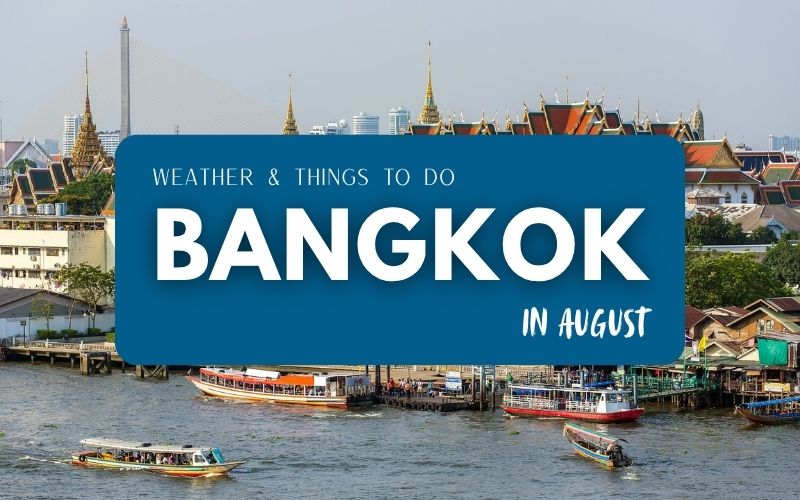
August is not Bangkok’s most popular month, and that is honestly a point in its favor. The city gets fewer international visitors, hotel rates drop noticeably, and the temples, markets, and riverfront are easier to navigate without the peak-season crowds. Bangkok in August is hot, occasionally wet, and completely manageable if you know what to plan around.
This guide covers the weather in Bangkok in August region by region, the best things to do, where to go, what it is like with kids, and everything you need to make the most of a Thailand trip this month.
Bangkok in August Weather: What to Actually Expect
Bangkok sits in central Thailand and follows the southwest monsoon pattern, which runs from May through October. August is one of the wetter months of this cycle, but the rain behaves differently from what many visitors imagine.
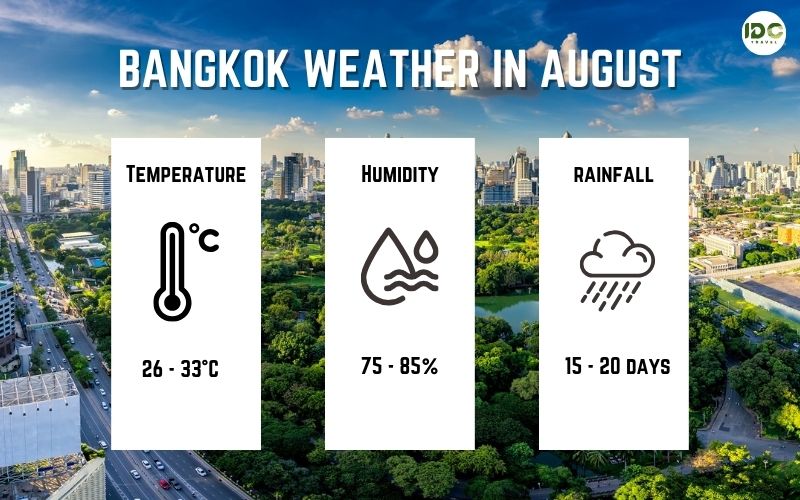
Bangkok weather in August
The temperature in Bangkok in August sits between 26°C (79°F) and 34°C (93°F) on most days. Humidity runs high, typically 80% to 85%, which makes the heat feel more intense than the numbers suggest. Feels-like temperatures often push past 38°C (100°F) by midday.
Rainfall averages around 175mm to 200mm for the month, spread across roughly 18 to 20 days. Most of those are not all-day rain events. A “rainy day” in Bangkok usually means a heavy downpour for 90 minutes, not a grey drizzle from morning to night.
| Detail | Information |
| Average temperature |
|
| Humidity | 80 to 85% |
| Average rainfall | 175 to 200mm |
| Rainy days (approx.) | 18 to 20 days |
| UV index | Very high (8 to 10+) |
| Sea/river temperature | 29 to 30°C (84 to 86°F) |
| Best time of day outdoors | 6:00 AM to 10:30 AM |
One thing worth knowing from experience: the rain in Bangkok is rarely a reason to cancel plans. It is a reason to adjust the order of your plans. Start outdoors early, take cover in the afternoon, then head back out. The city does not shut down when it rains.
Is It Worth Going to Bangkok in August?
Yes. Prices are lower. Mid-range hotels in Sukhumvit and Silom that cost 3,500 to 5,000 THB (~$97 to ~$139) per night in December often drop to 2,000 to 3,200 THB (~$56 to ~$89) in August. Flights are cheaper too. Tourist sites are quieter. The Grand Palace, which sees long queues from November to February, is noticeably calmer.
Where August makes less sense: if you specifically want beach days in and around Bangkok. Pattaya’s beaches are rough in August, with choppy water and jellyfish. If islands and beaches are the main goal, the eastern Gulf coast (Koh Samui, Koh Tao) is better positioned in August than the western Andaman coast. But Bangkok itself, as a city destination, loses very little in August compared to peak season.
Where to Go in Bangkok in August
Bangkok has more indoor and rain-proof attractions than almost any city in Southeast Asia. The rain in August actually pushes you toward some of the best experiences in the city.
1. The Grand Palace and Wat Phra Kaew
Located on Rattanakosin Island in the historic center of Bangkok, the Grand Palace is the single most visited site in Thailand. Go before 9:00 AM. The compound opens at 8:30 AM, and the gap between opening and the arrival of organized tour groups is your window for calm exploration.
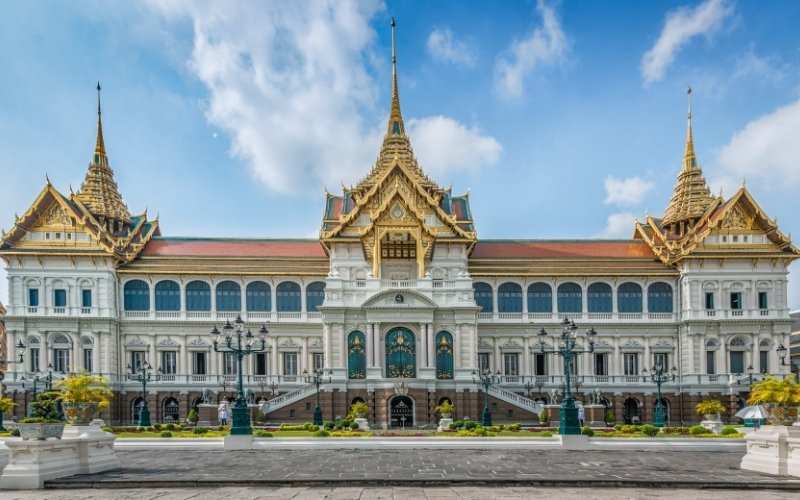
The magnificent Grand Palace in Bangkok – a historic symbol of Thailand’s royal heritage and architectural splendor.
The 500 THB (~$13.90) entrance fee covers Wat Phra Kaew (the Temple of the Emerald Buddha), the palace buildings, and the Queen Sirikit Museum of Textiles. In August heat, the museum is a welcome break from the sun. Dress code is non-negotiable: shoulders and knees covered for everyone, regardless of temperature.
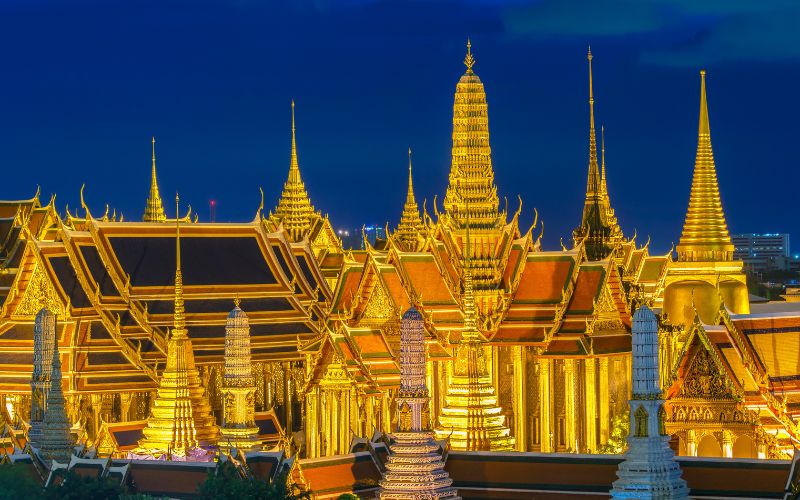
The breathtaking spectacle of Wat Phra Kaew and the Grand Palace illuminated at dusk.
The palace is about 5 km from Khao San Road and around 15 km from the Sukhumvit hotel district. BTS Skytrain does not reach the area directly; the most practical options are the Chao Phraya Express Boat to Maharaj Pier, or a taxi from downtown (budget 150 to 250 THB / ~$4.17 to ~$6.94 depending on traffic).
2. Wat Arun (Temple of Dawn)
Directly across the river from the Grand Palace on the west bank of the Chao Phraya, Wat Arun is one of Bangkok’s most photographed landmarks. The central prang (tower) is covered in fragments of Chinese porcelain and rises 86 meters above the riverbank.
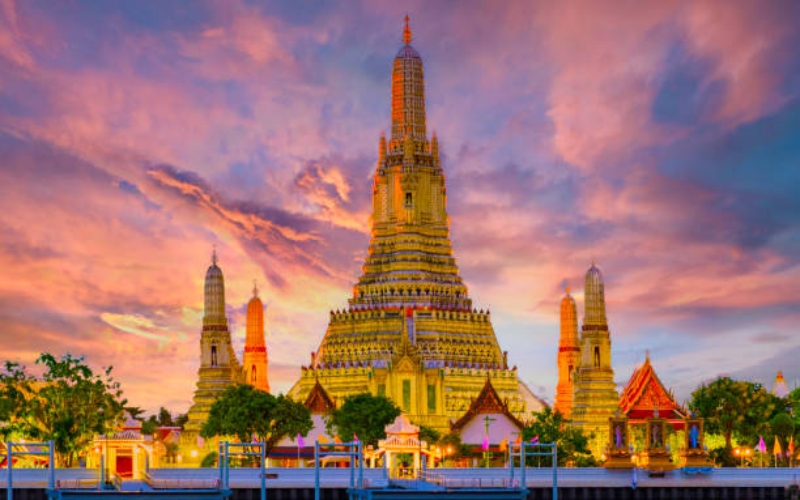
Wat Arun temple at sunset in Bangkok
Entrance is 100 THB (~$2.78). Take the ferry from Tha Tien Pier; it costs 5 THB (~$0.14) and takes about three minutes. The best light for photography is in the early morning from the east bank (before you cross) or at sunset from the temple grounds looking back across the river.
Wat Arun is an active temple, not just a tourist attraction. Dress appropriately. If you arrive without suitable clothing, sarongs are available to rent at the entrance for 20 THB (~$0.56) plus a 100 THB (~$2.78) refundable deposit.
3. Chatuchak Weekend Market
One of the largest weekend markets in the world, Chatuchak Weekend Market has around 15,000 stalls across 27 hectares in the northern part of Bangkok. It opens on Saturdays and Sundays, roughly 9:00 AM to 6:00 PM.
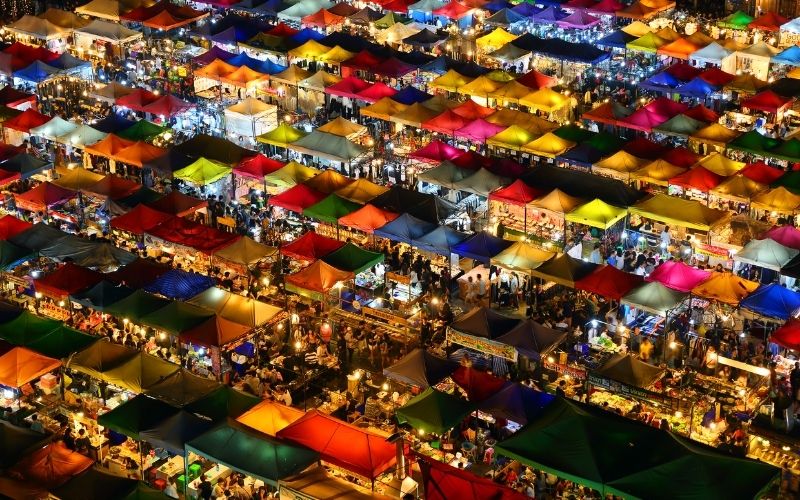
Chatuchak Weekend Market with 12,000 stalls
August is actually a good time to visit because some regular visitors skip it in the rainy season, which makes the lanes slightly less shoulder-to-shoulder than in peak months. It is still busy. Come with a plan: the market is divided into numbered sections, and having a rough map helps enormously.
Getting there is easy via BTS Skytrain to Mo Chit station or MRT to Chatuchak Park. Both stations are a 5-minute walk to the main entrance.
Budget tip: food stalls inside the market are excellent and cheap. A bowl of boat noodles runs about 60 to 80 THB (~$1.67 to ~$2.22). A fresh coconut is 30 to 40 THB (~$0.83 to ~$1.11).
4. Jim Thompson House Museum
Jim Thompson’s House is one of Bangkok’s best indoor cultural experiences and genuinely worth two to three hours. Jim Thompson was an American businessman who helped revive the Thai silk industry after World War II. His house is actually six traditional Thai teak homes joined together and filled with his personal collection of Asian art and antiques.
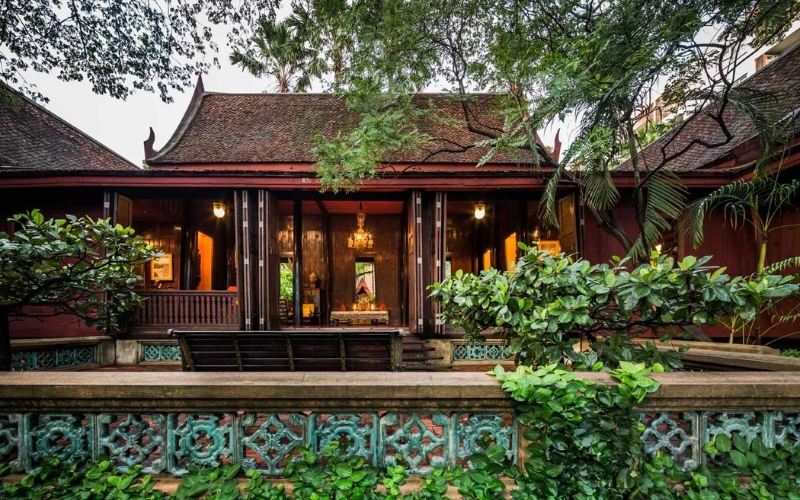
Jim Thompson House
Located in the Bang Rak district, a short walk from National Stadium BTS station. Entrance is 200 THB (~$5.56) for adults and 100 THB (~$2.78) for children under 12. Guided tours run approximately every 20 minutes. The canal-side garden is worth exploring before or after the house tour.
5. Damnoen Saduak Floating Market
About 80 km southwest of Bangkok in Ratchaburi province, Damnoen Saduak is the most photographed floating market in Thailand. Wooden boats carry tropical fruits, cooked food, and souvenirs along narrow canals lined with vendors.
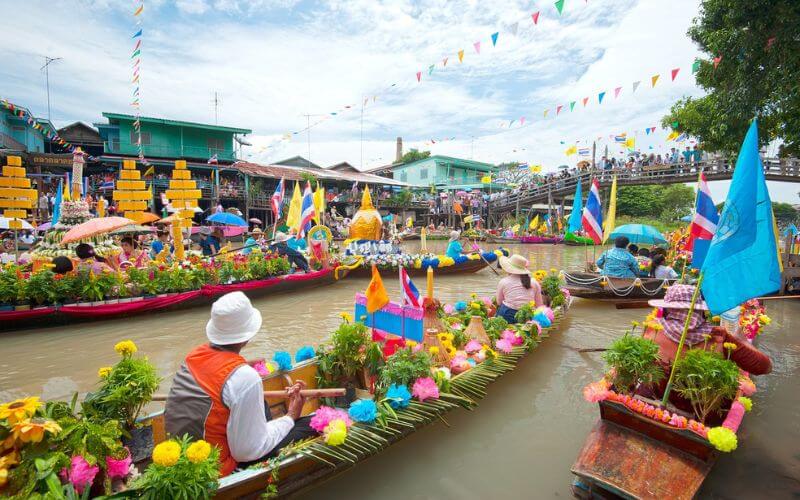
Damnoen Saduak Floating Market
Go early. The market is most authentic between 7:00 AM and 9:00 AM, when local traders outnumber tourist stalls. By 10:30 AM it leans more heavily toward souvenir shopping. A dedicated day trip from Bangkok takes about two hours each way.
Our tour typically combine Damnoen Saduak with the Grand Palace for a full day that makes the long drive worthwhile. Budget for boat hire inside the market: 300 to 500 THB (~$8.34 to ~$13.90) for a 30-minute private longboat.
6. Lumpini Park
In the heat of August, Bangkok’s largest park is one of the nicest places to be between 6:00 AM and 8:00 AM. The park covers 57 hectares in the central Silom/Sathon district and has running paths, rowing boats, outdoor exercise areas, and a large lake where water monitors (large lizards) are common enough to be unsurprising.
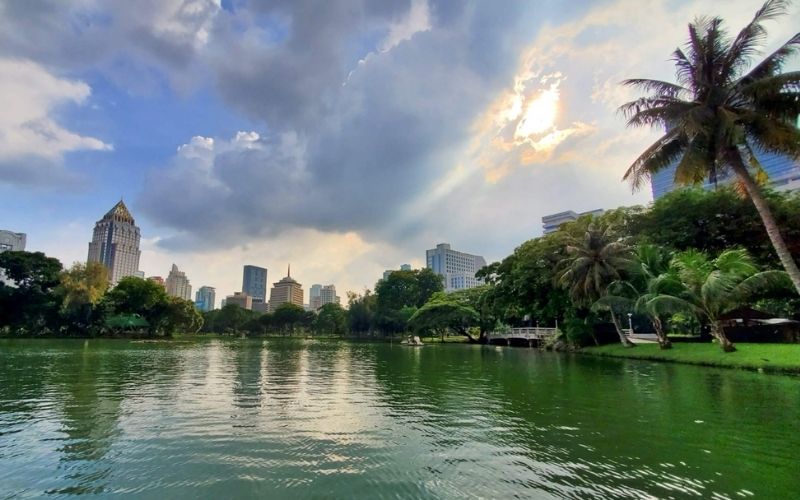
Escape the urban bustle at Lumpini Park, Bangkok’s green oasis where you can jog, cycle, or simply relax by the lake with a stunning view of the city skyline.
By 10:00 AM the heat makes the park uncomfortable. This is a morning activity. If you are staying near Silom, it is an easy walk. MRT Lumphini station is directly adjacent to the park’s south entrance.
7. Chinatown (Yaowarat)
Bangkok’s Chinatown along Yaowarat Road is one of the best streets in Southeast Asia for food, and it is best experienced after 6:00 PM when the heat drops and the street stalls open. Roast duck, char siu pork, fresh seafood, mango sticky rice, egg waffles, and dozens of other dishes line the road and side streets.
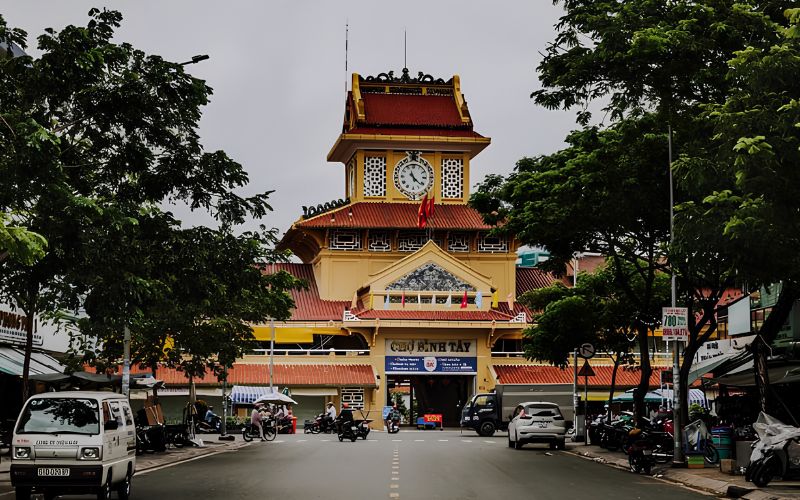
Binh Tay Market stands as a historical symbol and a bustling center of trade within the Cho Lon area.
The Gold Exchange section of Yaowarat is worth a short detour during the day. Thailand is one of the world’s largest gold jewelry markets, and the concentration of gold shops here is like nothing else you will see in the city.
Getting there: take the MRT to Hua Lamphong station, then a short tuk-tuk ride. Or take the Chao Phraya Express Boat to Ratchawong Pier, which puts you right at the river entrance to the neighborhood.
8. Muay Thai
Watching a live Muay Thai match is one of the best things to do in Bangkok in August precisely because it is fully indoor and unaffected by weather. Rajadamnern Stadium, which opened in 1945 and is the older of Bangkok’s two main venues, hosts fights on Mondays, Wednesdays, and Thursdays. Lumpinee Stadium runs Tuesday and Friday evenings.
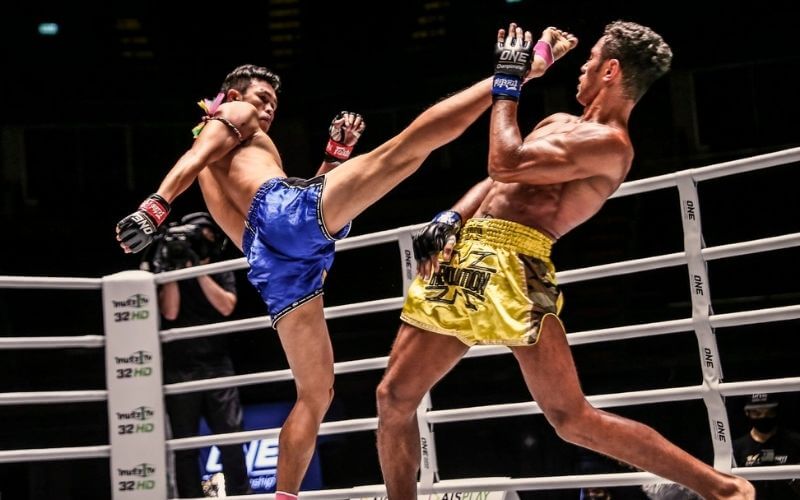
Watch A Muay Thai Match
Tickets at Rajadamnern start at 1,000 THB (~$27.80) for ringside seats. Foreign visitor pricing applies, but the atmosphere and production quality are worth it.
Things to Do in Bangkok in August: A Practical Day Shape
The August weather in Bangkok rewards travelers who plan around it rather than fight it. Here is what actually works:
- 6:00 to 9:00 AM: Outdoor temples and markets. The air is cooler, the light is better for photography, and crowds are smaller.
- 9:00 to 11:30 AM: Outdoor sites you have not finished, or transfer time between neighborhoods.
- 11:30 AM to 3:30 PM: This is when the heat and likelihood of rain peak. Museums, shopping malls, the Jim Thompson House, air-conditioned street food courts, or a long Thai lunch.
- 3:30 to 6:30 PM: Outdoor activities resume as the afternoon cools. Chinatown from around 5:30 PM, river walks, rooftop bars (which are genuinely good in Bangkok).
- Evening: Night markets, Muay Thai, dinner cruises on the Chao Phraya, or the food streets of Sukhumvit.
Traveling to Bangkok This August: Practical Tips
Getting to Bangkok. Suvarnabhumi Airport (BKK) handles most international flights. Don Mueang Airport (DMK) handles low-cost carriers. Both are connected to central Bangkok by rail: the Airport Rail Link from Suvarnabhumi runs to Phaya Thai station in about 30 minutes for 45 THB (~$1.25). A taxi from Suvarnabhumi to central Bangkok costs 300 to 450 THB (~$8.34 to ~$12.51) plus expressway tolls of around 75 THB (~$2.09).
Getting around. The BTS Skytrain and MRT Metro are the fastest ways to move around the city in August. Tuk-tuks are fun but slow in traffic; use them for short distances or novelty rather than practicality. The Chao Phraya Express Boat is excellent for reaching riverside temples and is far less affected by traffic jams than road transport.
Packing for August weather in Bangkok. You do not need much, but a few things matter:
- Lightweight, loose-fitting cotton or linen clothing
- A compact umbrella or packable rain jacket (smaller and faster to use than a poncho in Bangkok’s sudden showers)
- Sunscreen SPF 50+ and a hat for morning outdoor time
- A light cardigan or long-sleeve shirt for air-conditioned interiors (malls, restaurants, and hotels are often very cold inside)
- Comfortable walking shoes that can get wet without being ruined
Visa. Many nationalities receive a 60-day visa exemption on arrival in Thailand. Check the current Thai Immigration Department rules before you travel, as exemption rules vary by passport and are subject to change.
Money. Bangkok in August weather does not affect your spending, but ATMs do charge foreign withdrawal fees of around 220 THB (~$6.12) per transaction. Bring some cash or use a bank with low foreign ATM fees. Most hotels, larger restaurants, and shopping malls accept cards. Street food, tuk-tuks, and smaller vendors are cash-only.
Water. Tap water in Bangkok is not safe to drink. Buy bottled water (7 THB / ~$0.19 at 7-Eleven) or bring a filter bottle. Staying hydrated in August heat is not optional; the combination of 34°C (93°F) heat and 85% humidity causes dehydration faster than you expect.
August Events and Festivals in Bangkok
Queen Sirikit’s Birthday / National Mother’s Day (August 12). The birthday of the late Queen Sirikit, celebrated as National Mother’s Day in Thailand, falls on August 12. The Grand Palace area and Sanam Luang park are lit up and decorated. It is a public holiday, so some government-affiliated sites have modified hours, but most tourist attractions remain open. Expect more local visitors than usual at temples and parks on this day.
Thailand Yacht Show (dates vary, often August or September) brings sailing and marine-themed events to the Chao Phraya area in some years. Check current listings when planning.
August also sees regular food festivals at major shopping malls including CentralWorld, Siam Paragon, and EmQuartier. These are not major cultural events, but if you are food-curious, the weekend food markets outside Bangkok’s larger malls often feature regional Thai cuisines worth exploring.
Combining Bangkok with Wider Thailand Travel
Bangkok is almost always the entry point for a Thailand trip, but it pairs well with other destinations even in August.
Chiang Mai is in northern Thailand and has a different monsoon pattern. August is genuinely green and lush in the mountains, with fewer tourists than the November to February peak. The temples, Sunday Walking Street, and elephant sanctuaries all operate normally in rain.
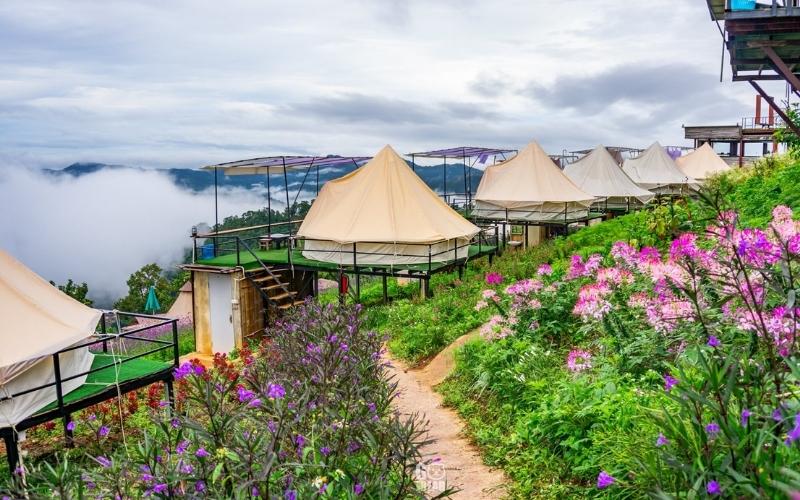
Wake up above the clouds! Glamping with a view in Mon Jam, Chiang Mai.
Phuket and the Andaman coast are in their monsoon season in August, with rough surf and limited beach usability. Not the best month for a beach focus. The Gulf coast islands (Koh Samui, Koh Phangan) are better positioned in August.
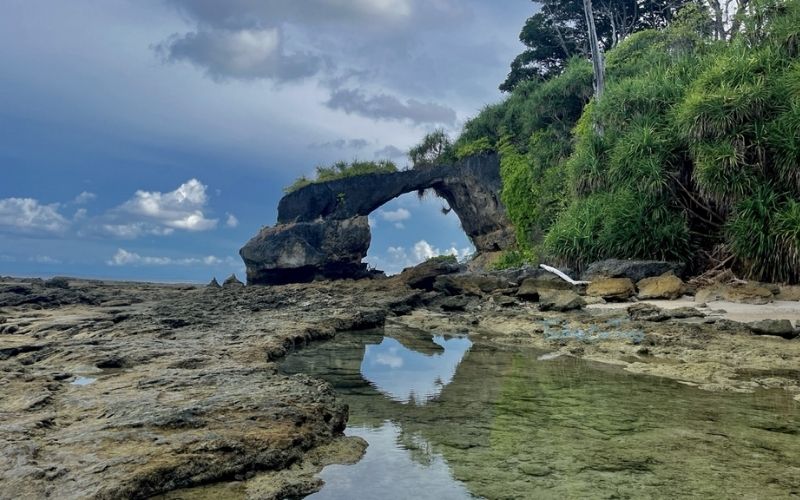
The iconic Natural Bridge (Howrah Bridge) rock formation on Neil Island (Shaheed Dweep), an impressive geological sight during low tide in the Andaman Islands.
Ayutthaya, the ancient capital about 80 km north of Bangkok, makes an excellent day trip in any weather. The ruins are largely outdoor, but August rain adds atmosphere to a site that was already flooding and burning centuries ago. A Bangkok Pattaya 7-day tour or a Bangkok and Phuket 8-day package can be shaped around August weather with the right advice from a local specialist.
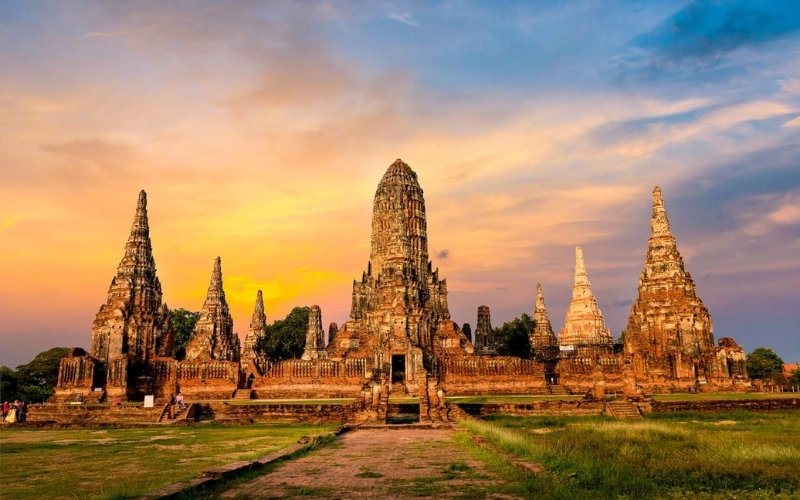
The ancient ruins of Wat Chaiwatthanaram glow under a stunning sunset.
For travelers combining Thailand with neighboring countries, the Vietnam and Thailand tours that route through Bangkok typically place the capital at the start of the itinerary, which works well in August given Bangkok’s indoor options.
Conclusion: Bangkok in August at a Glance
Bangkok in August rewards travelers who adapt to its rhythm. Mornings are for temples and markets. Afternoons are for culture, food, and air-conditioned spaces. Evenings are for the city’s real personality: street food, river views, and a pace that does not exist in the peak-season rush.
The heat and rain are real. So are the lower prices, smaller crowds, and the version of Bangkok that belongs more to locals than to tour groups. Whether you are traveling solo, as a couple, or with children, the city has more than enough to fill a week and send you home with a full memory card and a genuine appetite to come back.
| Detail | August at a Glance |
| Average temperature | 26°C to 34°C (79°F to 93°F) |
| Humidity | 80 to 85% |
| Rainfall | 175 to 200mm, approx. 18 to 20 rainy days |
| Rain pattern | Short, intense afternoon/evening showers |
| Best time outdoors | 6:00 AM to 11:00 AM and from 5:00 PM |
| Hotel price vs. peak season | 30 to 45% lower on average |
| Major holiday | Queen Sirikit’s Birthday / Mother’s Day (Aug 12) |
| Best neighborhoods | Silom, Sukhumvit, Rattanakosin, Chinatown |
| Best for | Culture, food, indoor attractions, family trips |
| Less suitable for | Beach holidays near Bangkok (Pattaya) |
If you want to take the planning off your hands, the Thailand holidays packages from IDC Travel are built around local knowledge and can be tailored to your travel dates, group size, and interests. August is a month that rewards good planning more than most. Contact us for more information!
>>> Refer to Thailand Current Weather | AccuWeather.
Read more:

I’m curious how crowded are the temples in August compared to the cooler season? I’d love to avoid long queues if possible.
Dear Ruby,
Thank you for your question! August in Bangkok falls right in the rainy season, which generally means the temples are less crowded compared to the cooler, peak months of November through February. While you may still encounter tour groups at the most famous sites such as the Grand Palace or Wat Pho, the queues are usually shorter, and the overall atmosphere is more relaxed.
To make the most of your visit, we recommend going early in the morning when the temples first open. This way, you can enjoy the serenity before both the midday heat and the larger crowds arrive. Carrying a light raincoat or umbrella is also helpful, as short afternoon showers are quite common.
Best regards,
IDC Travel Team
We’re planning to visit Bangkok this August, and we’re a little upset knowing it’s rainy season. But your information and tips lift our mood. Thank you for your informative sharing!
Hi Klein, you’re very welcome! Bangkok is lively even in rainy season, with great food, markets, and indoor attractions. Enjoy your trip!