


10 days is enough for Vietnam and Thailand if you choose one focused itinerary and treat the flight between the two countries as part of the journey in this Thailand and Vietnam in 10 days guide. A practical plan gives Vietnam 5 or 6 nights and Thailand 3 or 4, with different arrival and departure gateways to reduce backtracking. The first itinerary combines Northern Vietnam with Chiang Mai and Bangkok for nature and regional culture, while the second adds Southern Vietnam before finishing with Bangkok and Ayutthaya. For land arrangements, plan roughly USD 750-2,200 per person, excluding international, domestic and cross-border flights, visas, insurance and personal shopping.
Two Realistic Itinerary for Thailand and Vietnam in 10 Days
- An Ultimate Escape to Nature of Northern Vietnam and Thailand 10 Days
- A Vibrant Cultural Exploration of Vietnam and Thailand in 10 Days
- Vietnam & Thailand Culinary Adventure: A Flavorful 10 Days Journey
- 10 Days Central Vietnam Healing & Relaxing Experience
- 10 Days Thailand Adventure Tour: From Chiang Mai to Phuket
| Itinerary | Main stops | Best for | Main advantage | Honest limitation |
| Northern Nature Route | Hanoi, Ba Vi, Ninh Binh, Ha Long Bay, Chiang Mai and Bangkok | Nature lovers, active couples and travelers who prefer regional depth | Strong landscapes with one direct country-to-country flight | Bangkok is mainly an exit stop, not a full city stay |
| Classic Culture Route | Hanoi, Ha Long Bay, Ho Chi Minh City, Mekong Delta, Bangkok and Ayutthaya | First-time visitors who want famous highlights in both countries | Covers North and South Vietnam plus a focused Thailand finale | Two flight days and a very fast pace |
Ten days is not the time to add Hoi An, Phuket or another island to either route. Those destinations require at least one more flight or a major detour. If beach time is non-negotiable, remove Northern Thailand or Southern Vietnam rather than compressing every stop.
Itinerary 1: Northern Vietnam and Northern Thailand for Nature
- Route: Hanoi, Ba Vi, Ninh Binh, Ha Long Bay, Chiang Mai, Doi Inthanon and Bangkok
- Best for: Active travelers who value countryside, karst scenery, a cruise and mountain landscapes
- Strengths: Regional depth, fewer major cities and a direct Hanoi-to-Chiang Mai connection when available
- Weaknesses: Several active days; Bangkok receives little sightseeing time; air schedules can change the route
- Best time: November to March for a useful weather compromise, while checking Ha Long visibility and Northern Thailand haze separately
- Should avoid: A plan with no backup for Ha Long weather, or March and April if northern Thai heat and haze are major concerns
Day 1 | Arrive in Hanoi and Taste the Old Quarter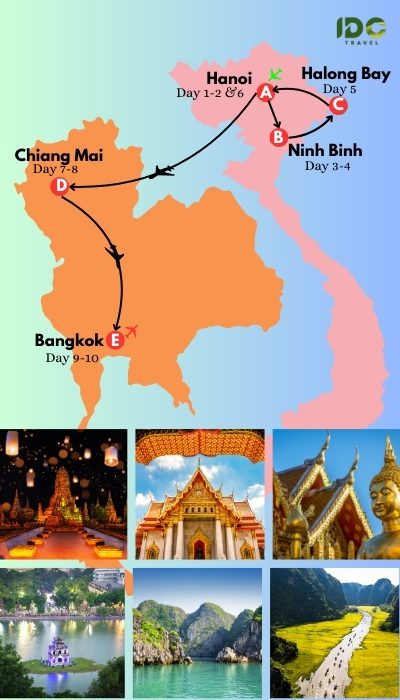
Transfer to the hotel, recover and take a short guided food walk if arrival time allows. Do not commit to a long evening after an international flight.
Day 2 | Ba Vi Countryside
Leave Hanoi for a community and agricultural experience around Ba Vi. A private guide helps explain rural life without turning local homes into casual photo stops.
Day 3 | Hanoi to Ninh Binh
Travel south to Ninh Binh and begin with one temple, village or viewpoint suited to the arrival time. Staying locally avoids a rushed round trip from Hanoi.
Day 4 | Ninh Binh by Bicycle and Boat
Combine a gentle countryside ride with a rowboat journey through the karst landscape. Adjust walking and cycling distances for heat, rain and fitness.
Day 5 | Ninh Binh to Ha Long Bay
Transfer to the coast and board an overnight cruise. The exact bay route, cave, kayaking and swimming program depends on the vessel and current conditions.
Day 6 | Ha Long Bay to Hanoi
Enjoy the morning cruise program, disembark after brunch and return to Hanoi. Keep the final Vietnam evening free for packing and rest.
Day 7 | Fly from Hanoi to Chiang Mai
Use a nonstop flight when the seasonal schedule supports it; otherwise, the connection can consume most of the day. Settle in Chiang Mai and keep any evening temple visit optional.
Day 8 | Doi Inthanon National Park
Explore waterfalls, trails and highland landscapes according to current park and weather conditions. Carry a light layer because elevation can change the temperature.
Day 9 | Responsible Elephant Visit and Flight to Bangkok
Choose an observation-led program with no riding, tricks or forced bathing. Fly to Bangkok later and stay near the airport or a convenient district according to the departure plan.
Day 10 | Depart Bangkok
Use any free hours close to the hotel, then transfer to the airport with a generous traffic buffer. This route does not promise a complete Bangkok visit.
>>> Want this nature-focused route arranged with the flights protected? Review IDC Travel’s live Northern Vietnam and Thailand 10 Days Tour. Ask the team to confirm the Hanoi-Chiang Mai flight, ethical wildlife standard and an alternative if the cruise or mountain program changes.
Itinerary 2: Vietnam Highlights with Bangkok and Ayutthaya
- Route: Hanoi, Ha Long Bay, Ho Chi Minh City, Cu Chi, Mekong Delta, Bangkok and Ayutthaya
- Best for: First-time visitors who want famous cultural and historical contrasts in both countries
- Strengths: Strong headline experiences, clear open-jaw structure and two full Thailand sightseeing days
- Weaknesses: Two flights within the itinerary, minimal downtime and only one night on Ha Long Bay
- Best time: December to February often offers the most practical overall compromise, though Northern Vietnam can be cool and misty
- Should avoid: Adding another city or island, or booking the final long-haul departure on a separate tight connection
Day 1 | Arrive in Hanoi and Join a Food Walk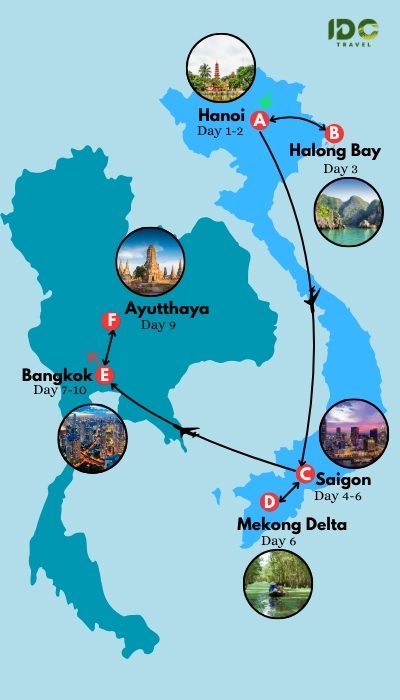
Transfer to the Old Quarter and rest. If energy allows, explore a small set of street-food dishes with a guide who can manage dietary needs.
Day 2 | Hanoi History and Daily Life
Visit selected heritage, civic and cultural sites rather than every headline attraction. Market or neighborhood time helps balance formal monuments.
Day 3 | Overnight Cruise on Ha Long Bay
Travel to the coast and board the cruise. Kayaking, caves and deck activities vary by boat and conditions, so confirm the actual program.
Day 4 | Return to Hanoi and Fly to Ho Chi Minh City
Disembark after the morning cruise, transfer to the airport and fly south. This is a demanding transition day and should end with hotel check-in.
Day 5 | Cu Chi and Ho Chi Minh City
Explore the Cu Chi site with historical context, then return for selected city landmarks. Travelers who dislike confined spaces can remain above ground.
Day 6 | Mekong Delta
Travel to a suitable delta area for boat and village experiences, then return to Ho Chi Minh City. Choose a program with meaningful local interaction and avoid animal performances.
Day 7 | Fly from Ho Chi Minh City to Bangkok
Treat immigration, airport transfer and check-in as the day’s main logistics. Use the evening for one nearby market or a relaxed meal, not a full city tour.
Day 8 | Bangkok Palaces, Temples and Food
Visit a carefully selected palace and temple group, then explore river or neighborhood life. Dress respectfully and avoid crossing the city repeatedly.
Day 9 | Ayutthaya Day Trip
Travel to the former capital for its major ruins and historical context. Return to Bangkok for a final evening and pack before departure.
Day 10 | Depart Bangkok
Transfer to the airport with enough time for traffic and international check-in. Keep the departure morning free of distant sightseeing.
>>> Prefer the classic first-time highlights? Explore IDC Travel’s live Vietnam and Thailand in 10 Days Cultural Tour. Ask for the current cruise, baggage allowances, included flights and a realistic airport buffer to be written into the final proposal.
Estimated Budget for Vietnam and Thailand in 10 Days
Vietnam and Thailand should not be priced as one identical destination. The following USD ranges are planning estimates per person, assuming two travellers share a room. Each total represents a typical full sightseeing day plus one hotel night. Arrival, transfer and free days may cost less.
Daily travel costs in Vietnam
| Daily cost category | Budget | Mid-range | Premium |
| Accommodation share per night | USD 20-45 | USD 55-120 | USD 150-350 |
| Meals and non-alcoholic drinks | USD 15-30 | USD 35-60 | USD 70-130 |
| Local ground transport | USD 8-25 | USD 25-60 | USD 70-180 |
| Guides, entrances and activities | USD 20-60 | USD 70-150 | USD 180-400 |
| Typical daily land total | USD 63-160 | USD 185-390 | USD 470-1,060 |
Budget travel means simple accommodation, local meals and shared or public transport. Mid-range assumes comfortable hotels, a mix of private and shared transfers and selected guided visits. Premium allows upscale hotels, private vehicles and more privately guided experiences.
Daily travel costs in Thailand
| Daily cost category | Budget | Mid-range | Premium |
| Accommodation share per night | USD 25-60 | USD 70-170 | USD 220-650 |
| Meals and non-alcoholic drinks | USD 15-35 | USD 40-80 | USD 90-180 |
| Local ground transport | USD 8-30 | USD 25-75 | USD 80-240 |
| Guides, entrances and activities | USD 25-80 | USD 80-200 | USD 220-500 |
| Typical daily land total | USD 73-205 | USD 215-525 | USD 610-1,570 |
Thailand can cost more when the itinerary uses private Bangkok transport, a specialist guide or premium city hotels. Chiang Mai and locally focused meals may sit closer to the lower end, while major holidays and high-demand dates can lift accommodation above the planning range.
For either sample route, begin with approximately six Vietnam day-and-night units and three Thailand units, then add the costs that occur only once. Cross-border and domestic flights, checked baggage, the Ha Long cruise package, visas, insurance, shopping and premium nightlife are excluded from both tables. A cruise quote may already include one night’s cabin, meals and activities, so remove those overlapping daily items before adding it. Route 2 normally costs more because it adds a domestic flight within Vietnam and covers a wider spread of private touring.
>>> Don’t forget to browse IDC Travel’s Vietnam and Thailand tour collection, which allows you to explore various combinations of destinations, travel styles, and trip durations before selecting the itinerary that best suits you.
Entry Requirements and Payment in Both Countries
Vietnam entry and payments
- Entry permission: Requirements depend on nationality, passport and length of stay. Travellers who need an electronic visa should use the official Vietnam eVisa portal. An eVisa may be issued for up to 90 days with single or multiple entry, but the approved dates and port must match the itinerary. Check every name, passport number and date before submitting the application.
- Currency and everyday payment: Vietnam uses Vietnamese dong, or VND. Established hotels, larger restaurants and many tour services accept cards, while street food, local markets, small shops and rural stops often require cash. Read more in our Vietnam Currency Guide: Cash, Cards and ATM Tips in 2026.
- ATM planning: Withdraw from an ATM attached to a bank or inside a secure location. Read the displayed operator charge and your home bank’s foreign-use terms before confirming. Carry a second card separately and keep small VND notes for short local purchases.
Thailand entry and payments
- Visa or visa exemption: Rules depend on the traveller’s passport and trip circumstances. Check the official Thai e-Visa website before booking around an assumed exemption.
- Thailand Digital Arrival Card: Non-Thai nationals must submit the TDAC online before entry. The official TDAC guide allows submission within three days before arrival, including the arrival date. TDAC is an arrival form, not a visa.
- Currency and everyday payment: Thailand uses Thai baht, or THB. Cards are practical at many hotels and established businesses, but markets, small food vendors and some local transport still need cash. Use Thai baht in Thailand rather than carrying leftover VND across the border. Read more in our Thailand Currency Guide.
- ATM planning: Check the machine’s fee and exchange-rate screen before accepting the transaction. When offered a home-currency conversion, compare it with your card provider’s rate rather than accepting automatically. Keep a backup card and do not carry the entire trip budget in cash.
Flight Logic Matters More Than Map Distance
An apparent 90-minute flight can consume half a day after hotel checkout, airport travel, check-in, immigration and the transfer at the other end. Protect the route with these principles:
- Start in Hanoi and finish in Bangkok to avoid returning to the first country.
- Prefer Hanoi to Chiang Mai or Ho Chi Minh City to Bangkok nonstop services when current schedules fit.
- Put the international departure after a Bangkok night, not immediately after a separately ticketed regional flight.
- Compare baggage rules before combining airlines; a cheap fare can become expensive after checked luggage.
- Never put a Ha Long cruise return and a tight international departure on the same unprotected ticket.
Best Time for These Vietnam and Thailand Itineraries
November to February is generally the best shared travel window for a Thailand and Vietnam in 10 days journey, but the ideal months depend on which itinerary you choose. Vietnam stretches across several climate zones, while Northern Thailand follows a different seasonal pattern from Bangkok and the country’s southern islands.
For the Northern Vietnam, Chiang Mai and Bangkok itinerary: November to February usually offers cooler conditions for Hanoi, Ninh Binh and Chiang Mai. Ha Long Bay may still be misty or cool, especially in December and January, but cruises normally remain possible when conditions are safe. March and April bring increasing heat, and seasonal haze can affect visibility and outdoor comfort in Northern Thailand.
>>> Travelers planning the Vietnamese part around a particular region can compare seasonal differences in IDC Travel’s best time to visit Vietnam guide.
For the Hanoi, Ha Long Bay, Southern Vietnam, Bangkok and Ayutthaya itinerary: December to February provides the most comfortable overall balance. Southern Vietnam is generally drier, Bangkok is less humid than in the hottest months, and walking around Ayutthaya is more comfortable. Hanoi and Ha Long Bay can be cooler, so a light layer is useful.
Weather patterns are not guarantees. Check short-range forecasts before cruises, countryside excursions and outdoor temple visits, and keep one activity that can move if conditions change.
>>> For a closer look at regional seasons, heat, rain and island conditions, see IDC Travel’s best time to visit Thailand guide.
Dishes That Give Each Country Its Own Voice
Vietnam flavors
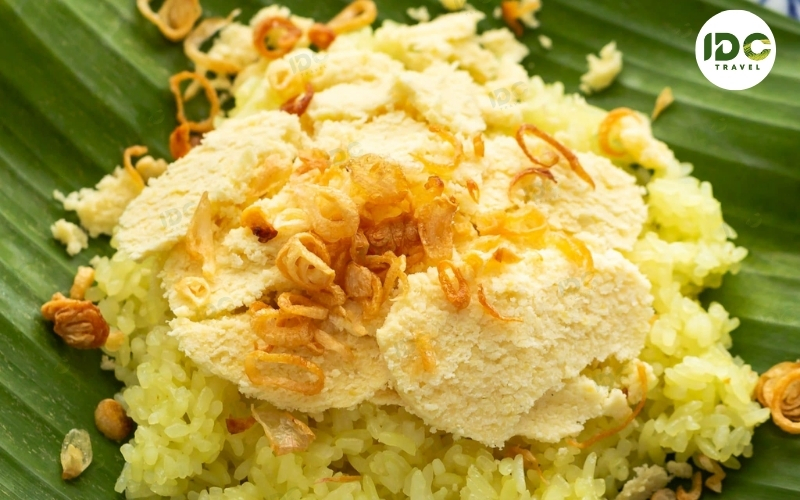
- Xoi xeo (mung bean sticky rice): Glutinous rice topped with sliced mung bean, fried shallots and savory additions, often eaten for breakfast in Hanoi.

Xoi xeo (mung bean sticky rice)
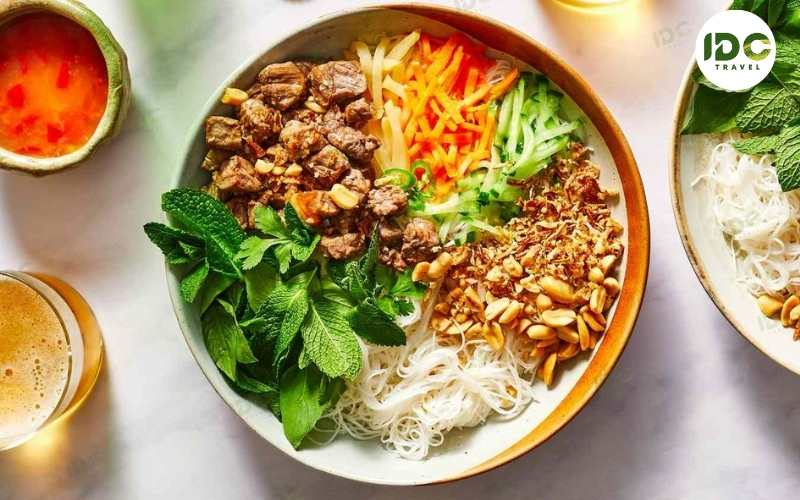
- Bun thit nuong (grilled pork noodle bowl): Rice noodles with grilled pork, herbs, pickles and a sweet-savory fish-sauce dressing, common in Southern Vietnam.
Bun thit nuong (grilled pork noodle bowl)
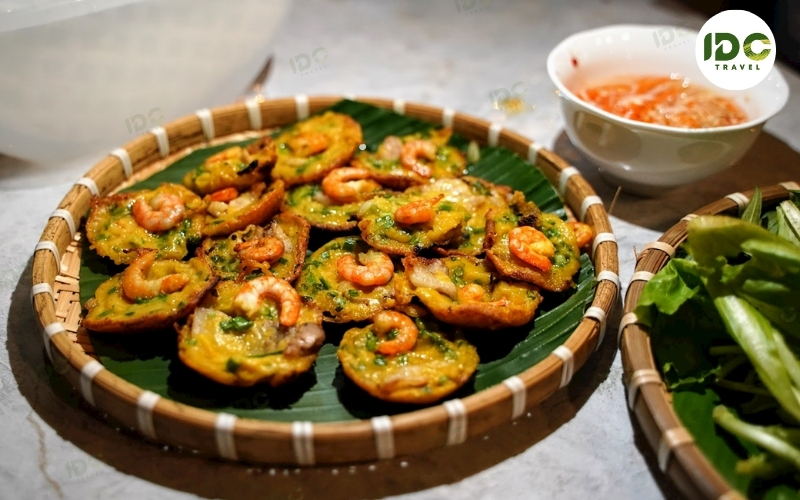
- Banh khot (mini savory rice pancakes): Crisp-edged rice pancakes commonly topped with shrimp and eaten with herbs and dipping sauce.
Banh khot (mini savory rice pancakes)
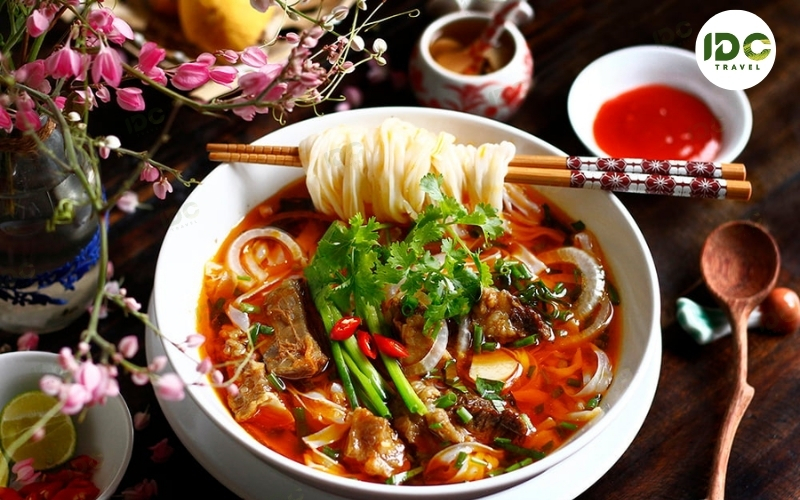
- Pho bo sot vang (beef stew noodle soup): Rice noodles served with a fragrant, slow-cooked beef stew, found in parts of Hanoi’s food scene.
Pho bo sot vang (beef stew noodle soup)
Thailand flavors
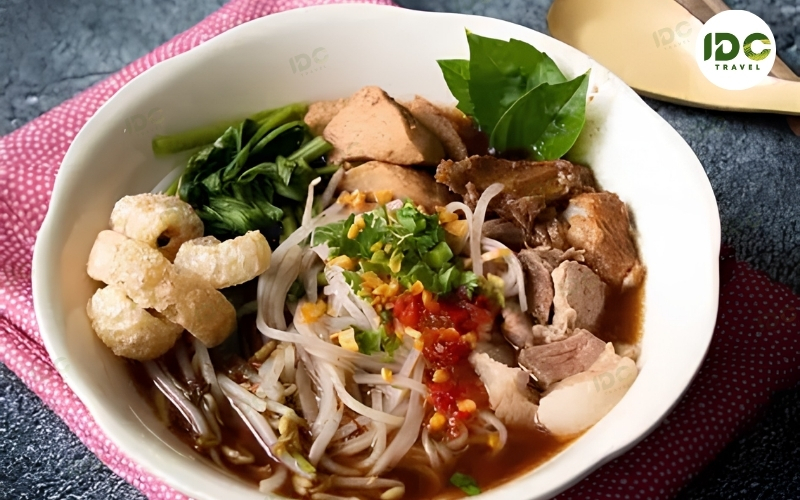
- Kuai tiao ruea (boat noodles): Small bowls of noodles in a richly seasoned broth, associated with Bangkok’s canal-side trading culture.
Kuai tiao ruea (boat noodles)
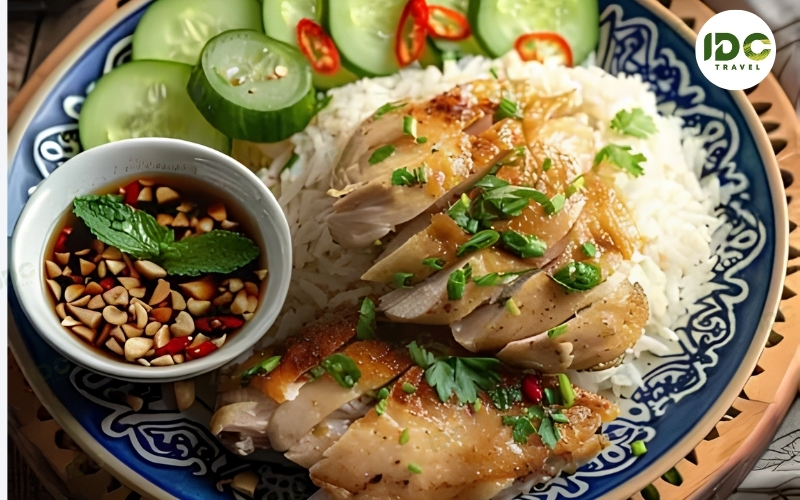
- Khao man gai (Thai chicken rice): Poached chicken with fragrant rice, broth and a punchy fermented-soy dipping sauce.
Khao man gai (Thai chicken rice)
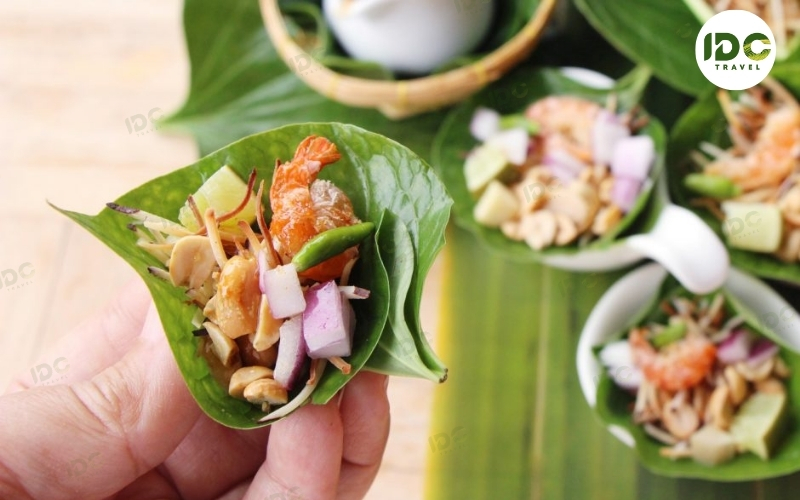
- Miang kham (leaf-wrapped savory snack): Wild pepper leaves wrapped around coconut, lime, peanuts, ginger and sauce.
Miang kham (leaf-wrapped savory snack)
- Khanom krok (coconut rice pancakes): Small griddled pancakes with crisp edges and a soft coconut center.
Khanom krok (coconut rice pancakes)

Travelers with allergies should carry translated cards in Vietnamese and Thai. Ask about fish sauce, shrimp paste, peanuts, shellfish and shared cooking oil even when they are not visible.
Decide What to Remove Before You Add Anything
10 days gives travellers an inclusion limit, not ten complete sightseeing days. An international arrival, the Vietnam to Thailand flight and the final departure already consume parts of three days. Every extra region also creates a hotel checkout, an airport or station transfer and another period of waiting. A destination that looks close on a map can therefore remove more usable time than expected.
Choose one non-negotiable experience in each country before comparing long attraction lists. The route should protect those two priorities and remove any stop that requires a third major flight, leaves fewer than two nights in a new base or places an important activity immediately after a difficult transfer.
- Keep Itinerary 1 for nature and regional depth: Remove Southern Vietnam when Ninh Binh, Ha Long Bay, Chiang Mai and Doi Inthanon matter most. This preserves one coherent northern journey and avoids a domestic flight within Vietnam.
- Keep Itinerary 2 for first-time contrasts: Remove Chiang Mai when Hanoi, Ha Long Bay, Ho Chi Minh City, Bangkok and Ayutthaya are the main priorities. Accept that this route is faster and protect the flight days from extra sightseeing.
- Make room for a beach properly: Add Phuket, Krabi or another coast only by removing Chiang Mai or Southern Vietnam. A beach stop with one usable day rarely compensates for the additional flight and airport transfers.
- Slow the trip without losing its purpose: Drop one day trip before shortening every major base. A free evening in Hanoi or Bangkok can make the overall journey more enjoyable without changing the route’s identity.
- Move the missing region to another holiday: Hoi An, Phuket and a second Thai base fit more naturally into a 14- to 16-day journey. Saving them for a later trip is usually better than reducing every stop to a checklist.
Use a simple final test: if a new destination forces a same-day cruise return and flight, a separately ticketed connection with little buffer or a one-night stay after a long transfer, remove it. Only after the core route is clear should you compare IDC Travel’s best places to visit in Thailand for a possible substitution rather than another addition.
Create a Two-Country Trip That Still Feels Like a Holiday
A Thailand and Vietnam in 10 days journey when flights connect regions instead of forcing the map. IDC Travel can adjust the country split, hotel level, activity intensity, cruise and flight plan around your arrival city and interests. Create your tailor-made Vietnam and Thailand holiday to turn either route into a protected, bookable itinerary.
Read more:

Just finished reading this and it brought back so many memories! I did a similar trip last year—loved the mix of buzzing cities, peaceful temples, and amazing food. Vietnam and Thailand are such a great combo for a 10-day adventure. Would totally do it again with more beach time next round!