


Vietnam’s coastline runs for over 3,200 kilometers, and if you have not spent time along it, you are missing one of Southeast Asia’s best-kept open secrets. A beach holiday in Vietnam offers something genuinely hard to find elsewhere: the combination of turquoise water, affordable luxury, excellent food, and almost no crowds at the right time of year. This guide covers the 10 most beautiful beach destinations in the country, ranked roughly from the most iconic to the hidden gems, with practical advice on when to go and who each spot suits best so you can easily plan your beach holiday to Vietnam.
Vietnam’s Coastline at a Glance
Vietnam stretches in a long S-curve from the Chinese border in the north to the Gulf of Thailand in the south. The coastal geography breaks into three broad zones, each with its own climate and character.
- Northern Vietnam runs from Ha Long Bay down to Thanh Hoa. Water temperatures are cooler, the scenery is dramatic limestone karst, and the beach season is shorter, concentrated between May and September.
- Central Vietnam covers the long stretch from Da Nang through Hoi An, Hue, and Quy Nhon down to Nha Trang. This is where most international beach tourism concentrates. Rainfall patterns here are tricky: when the north and south are dry, the central coast can be wet, and vice versa.
- Southern Vietnam includes Mui Ne, Vung Tau, Con Dao, and Phu Quoc Island. The dry season runs from November to April, which conveniently lines up with European and Australian summer holidays. Phu Quoc, in particular, has transformed over the past decade into one of Southeast Asia’s more polished beach destinations.
Understanding this geography saves a lot of frustration. Many travelers arrive in Da Nang in October expecting sunshine and find rain instead. Matching your destination to the season is the most important thing you can do before booking.
Top 10 Most Beautiful Beach Spots in Vietnam
1. Phu Quoc Island
- Location: Gulf of Thailand, off the southwest coast of Vietnam, An Giang Province (Kien Giang Province, before 2025 Vietnam provincial merger)
- Best time to visit: November to April, with December to February being the driest and clearest
- Suitable for: Couples, honeymooners, families, luxury travelers, first-time visitors to Vietnam
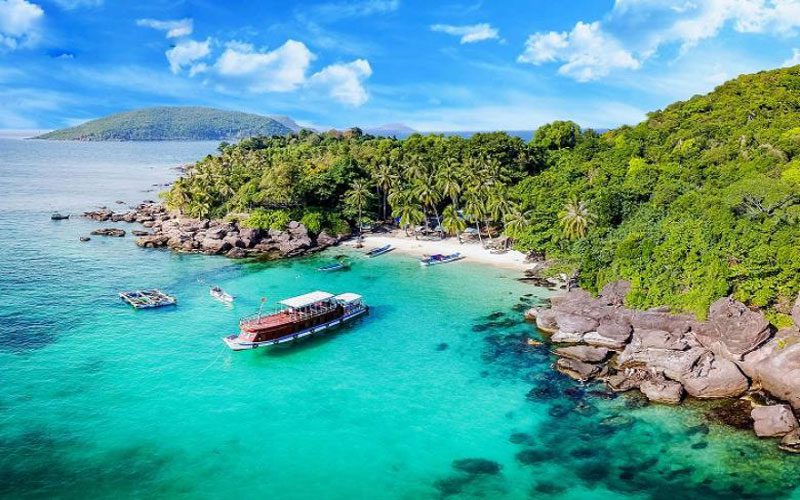
Phu Quoc is a perfect option for relaxing after a long trip
Phu Quoc is Vietnam’s largest island and, for many international travelers, the country’s easiest beach introduction. Long Beach (Bai Truong) on the west coast catches remarkable sunsets, while the beaches on the north and northeast sides (Bai Dai, Bai Thom) are quieter and more suited to people who want actual calm. The water on the west side is warm and flat for most of the dry season, around 28°C (82°F), and visibility for snorkeling runs to 10 meters or more near the An Thoi archipelago in the south.
Practical tips: Rent a motorbike for a day and head to the northern part of the island where roads thin out and beaches are empty. The fish sauce produced on Phu Quoc (nuoc mam Phu Quoc) is considered the best in Vietnam. Buy a bottle from a local producer, not a souvenir shop.
>>> See one of our best Vietnam beautiful beaches tour for 14 days.
2. My Khe Beach (Da Nang)
- Location: Central Vietnam, Da Nang City, approximately 800 km south of Hanoi
- Best time to visit: March to August, with May and June being near-perfect conditions
- Suitable for: Surfers, families, city-beach travelers who want culture alongside the coast, business travelers
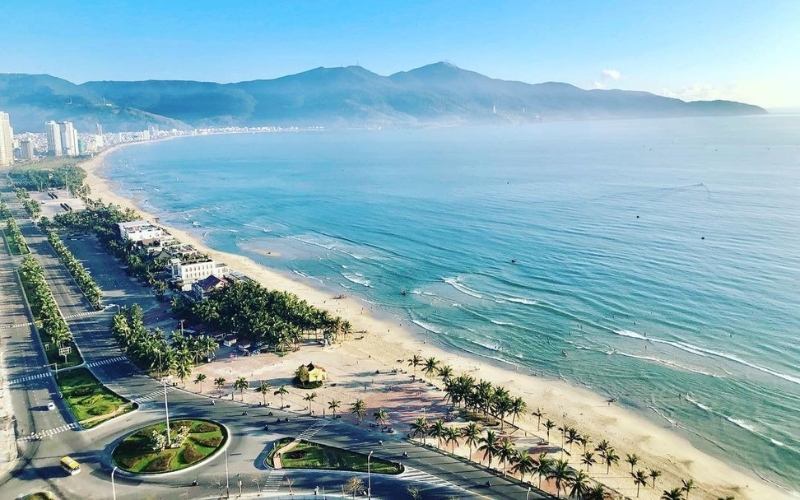
My Khe beach, one of the most beautiful beaches in the world
My Khe Beach is not a hidden gem. It is one of the longest, most accessible urban beaches in Asia, running for about 30 kilometers along the eastern edge of Da Nang City.
The sand is white and fine, the water conditions are consistent from spring through late summer, and the infrastructure is genuinely good. There are outdoor showers, changing facilities, and dozens of seafood restaurants right on the shoreline. Surf quality runs from small and choppy to legitimate 2-meter swells depending on the season, making Da Nang one of the few places in Vietnam with a real surf scene.
If you are interested in learning, the holiday surf Da Nang season peaks between September and November when swells arrive from the northeast.
Practical tips: Da Nang is also a gateway to Hoi An (30 minutes by road) and the Marble Mountains, so a week here works easily without feeling like you are just sitting on the beach. The Holiday Beach Da Nang area has some of the more competitively priced beachfront hotels in central Vietnam, including the Holiday Beach Danang Hotel. If staying in a Danang beach resort, book rooms on the upper floors for unobstructed sea views without paying suite rates.
3. Con Dao Islands
- Location: Con Dao Archipelago, Ho Chi Minh City (Ba Ria – Vung Tau Province, before 2025 Vietnam provincial merger), approximately 180 km south of Vung Tau
- Best time to visit: March to September; May to July for turtle watching
- Suitable for: Couples seeking seclusion, divers, nature travelers, those who want the opposite of a resort strip
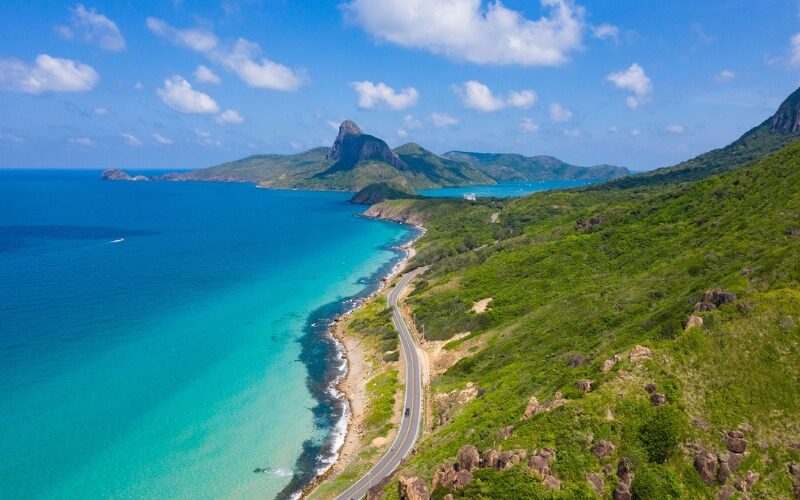
Con Dao island in Vietnam
Con Dao is not convenient to reach, and that is precisely why it remains one of Vietnam’s most unspoiled beach destinations. Flights from Ho Chi Minh City take about 45 minutes. Getting there requires booking in advance because seat availability is limited. The reward is a group of 16 islands with genuinely clear water, a national park covering most of the land area, and beaches where sea turtles still nest between May and September.
The most famous property here is the Vietnam Six Senses Con Dao, which opened in 2010 and still sits on a private bay with direct beach access. It is expensive by any standard (rooms start around 600 USD per night in peak season), but it regularly appears on lists of the best resorts in Vietnam for a reason: the location is extraordinary and the service is serious. Less expensive options exist in the main town, Con Son, where guesthouses run 20 to 60 USD per night.
Practical tips: Bring cash. ATMs exist but availability is unreliable. The national park entrance fee is 20,000 VND (~$0.77) per person. Rent a bicycle in Con Son town to reach the quieter beaches on the island’s south side. Con Dao does not have a party scene, which is either a flaw or a feature depending on your preferences.
4. Nha Trang
- Location: Khanh Hoa Province, South Central Coast, approximately 450 km northeast of Ho Chi Minh City
- Best time to visit: February to August; avoid October to December when rains can be heavy
- Suitable for: Families, budget travelers, divers, anyone wanting a full-service beach city
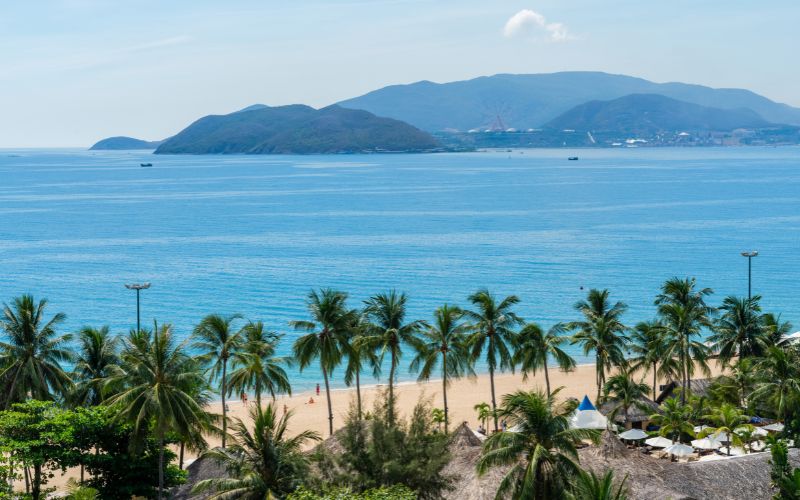
Pristine beach in Nha Trang City
Nha Trang is Vietnam’s most established beach city, with a long arc of public beach in the middle of town and a dense concentration of hotels, restaurants, and tour operators. The city gets a lot of visitors, and the atmosphere in peak season can feel crowded. That said, the water quality is good, the offshore islands offer solid snorkeling and diving (visibility around 15 meters on a clear day), and the value for money is hard to beat.
For Vietnam beach resorts at the higher end, the Mia Resort Nha Trang (Cam Ranh Peninsula, about 25 km south of the city) offers a different experience from the urban beach scene: quiet, private beach, good food, and a clientele that skews toward couples rather than package tourists.
Practical tips: Book island-hopping tours directly with operators at the pier rather than through hotel concierges; prices are usually 30 to 40% lower. The Vinpearl cable car across the bay to Vinpearl Island is worth doing once, especially with children. Water temperature stays around 26 to 28°C (79 to 82°F) for most of the year.
>>> Maybe you enjoy this luxury Vietnam’s beaches vacation in 13 days!
5. Hoi An Beaches (An Bang and Cua Dai)
- Location: Da Nang City (Quang Nam Province, before 2025 Vietnam provincial merger), Central Vietnam, approximately 5 km east of Hoi An Ancient Town
- Best time to visit: February to July; April and May are particularly good
- Suitable for: Culture-focused travelers, couples, those pairing beach time with the UNESCO Old Town experience
Hoi An’s beaches sit about five kilometers from the ancient town, easily reached by bicycle or motorbike.
An Bang Beach has the better atmosphere of the two main options, with a string of low-key beach bars and restaurants right on the sand.
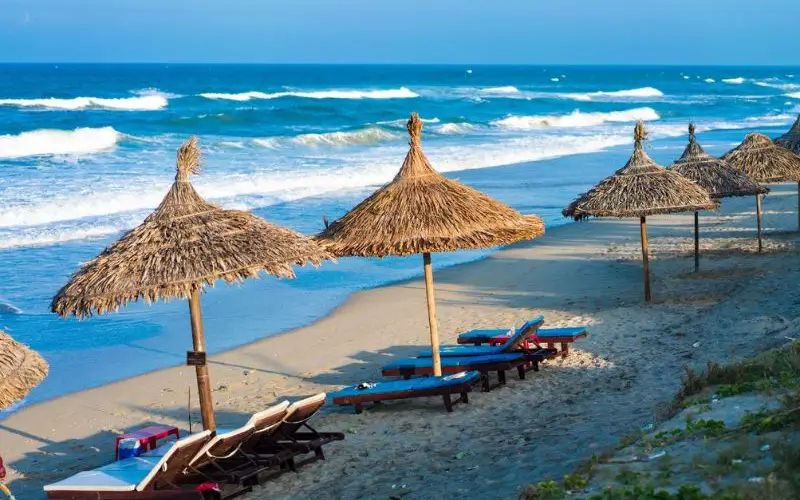
An Bang Beach, Hoi An, Vietnam
Cua Dai Beach has lost much of its original shoreline to erosion over the past decade (a real problem here), so An Bang is now the more reliable choice.
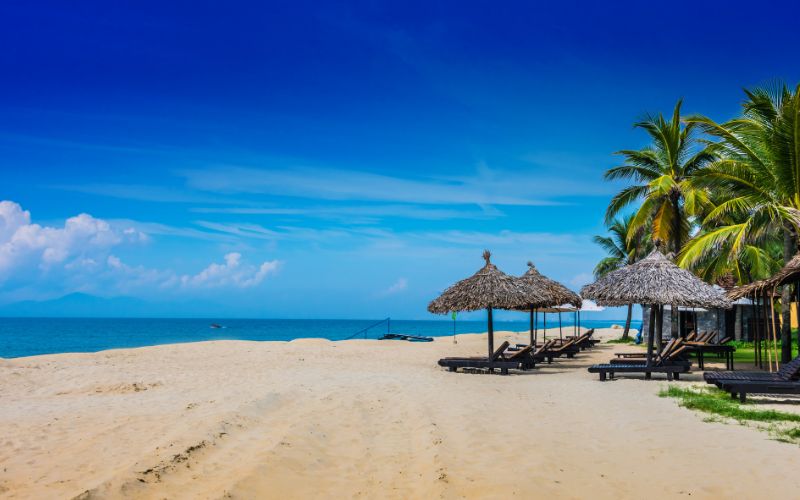
Cua Dai Beach, Hoi An, Vietnam
What makes these beaches work especially well is the combination. You can spend the morning wandering Hoi An’s lantern-lit streets, have lunch at a local restaurant for 50,000 to 80,000 VND (~$1.92 to $3.07), and be on the beach by early afternoon. The beaches are not as spectacular in purely visual terms as Phu Quoc or Con Dao, but the overall experience of pairing them with Hoi An town makes this one of the best beach destinations in Vietnam for first-time visitors.
Practical tips: Bicycle rental in Hoi An costs around 30,000 to 50,000 VND (~$1.15 to $1.92) per day. The ride out to An Bang takes about 20 minutes through rice paddies and village roads, and it is a good way to see the countryside. Several Hoi An with Da Nang Tours, which makes geographic sense since the two towns are only 30 km apart.
>>> Check this Vietnam family holiday in 14 days!
6. Mui Ne
- Location: Lam Dong Province (Binh Thuan Province, before 2025 Vietnam provincial merger), 200 km northeast of Ho Chi Minh City
- Best time to visit: November to April; December to March for best wind conditions
- Suitable for: Kitesurfers, windsurfers, independent travelers, budget backpackers, couples
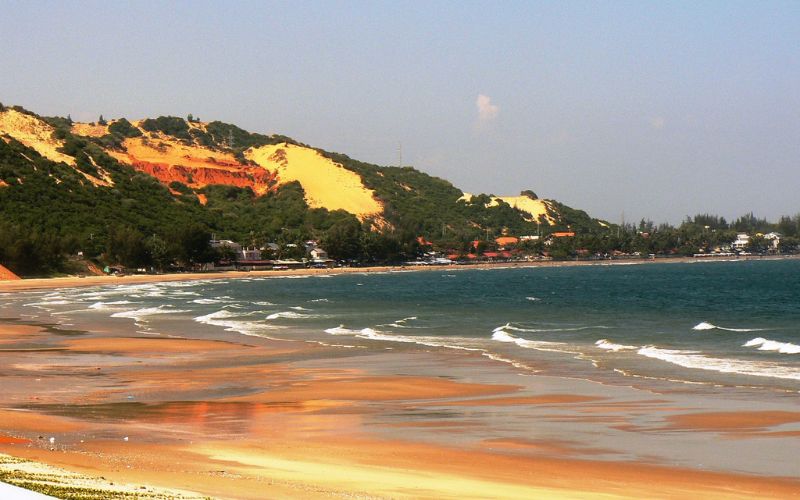
Mui Ne Beach, Vietnam
Mui Ne is the kite and wind capital of Vietnam. Between November and April, steady offshore winds make the bay one of the best kitesurfing locations in Southeast Asia, drawing serious riders from Europe and Australia. The main tourist strip along Nguyen Dinh Chieu Street is unpretentious: mostly small hotels, restaurants, and kite schools strung along a few kilometers of coast.
The beaches here are not conventionally beautiful in the postcard sense. The sand is mixed, the water can be choppy, and there is a working fishing village that gives the place a grittier character than, say, Phu Quoc. But Mui Ne has something the polished resorts do not: genuine local texture. The red and white sand dunes about 30 km north of town are genuinely unusual, and the fairy stream (a shallow waterway you walk through barefoot between sandstone formations) is worth an hour of your time.
Practical tips: Kite schools charge around 50 to 70 USD per day for beginner lessons. Accommodation on the main strip is reasonably priced, with decent guesthouses running 20 to 40 USD per night.
The south Vietnam beach combination of Mui Ne plus Ho Chi Minh City is a natural pairing for travelers with limited time.
>>> Check out Vietnam beaches holiday in 9 days!
7. Ha Long Bay (Bai Tu Long Bay)
- Location: Quang Ninh Province, approximately 160 km east of Hanoi
- Best time to visit: October to December and March to May; avoid the very hot July-August period
- Suitable for: Cruise travelers, photographers, couples, adventure seekers, those who want a beach experience combined with dramatic scenery

Bai Tu Long Bay
Ha Long Bay is listed as a UNESCO World Heritage Site and gets roughly 5 million visitors per year. That number sounds alarming, but the bay is vast (1,553 islands across 1,500 square kilometers), and the experience depends heavily on which cruise operator you choose. The best overnight cruises go to the quieter Bai Tu Long Bay to the northeast, where limestone karst scenery is equally dramatic with far fewer boats.
Swimming and kayaking in the bay is genuinely good. Water temperature averages 25°C (77°F) in spring, and calm conditions in sheltered coves make it suitable for non-swimmers too. The sandy beaches on the islands (like Titop Island and Monkey Island) are small but clean, and the combination of emerald water against gray limestone is unlike anything else in Southeast Asia.
Practical tips: Overnight cruises start from around 100 USD per person for budget options and run to 350 USD or more for premium vessels. Spending two nights rather than one makes a significant difference to the experience.
>>> Check out Vietnam beaches holiday in 17 days!
8. Quy Nhon
- Location: Gia Lai Province (Binh Dinh Province, before 2025 Vietnam provincial merger), Central Vietnam, approximately 650 km south of Da Nang
- Best time to visit: January to August; March to June is ideal
- Suitable for: Independent travelers, those seeking uncrowded beaches, travelers with Cham history interest
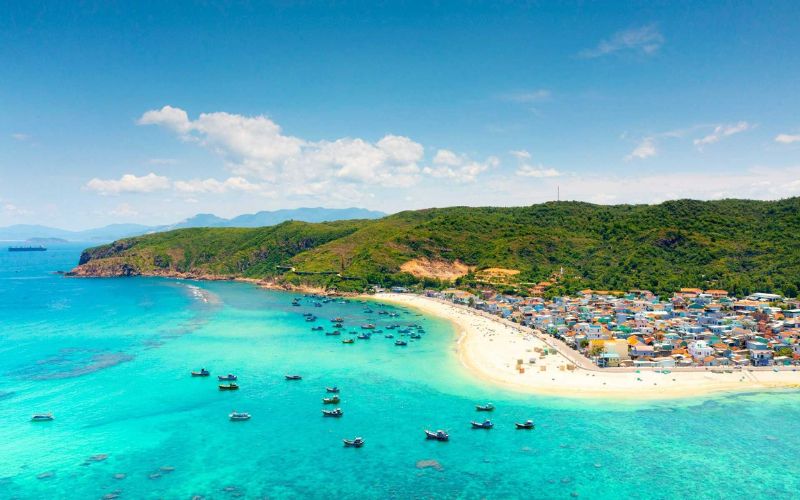
Quy Nhon Beach, Vietnam
Quy Nhon is one of Vietnam’s genuinely underrated beach cities. It has long stretches of good beach (Bai Xep and Queen’s Beach being the best), a small but interesting old town, and a collection of ancient Cham towers (Thap Doi) within the city limits. The crowds here are mostly domestic Vietnamese travelers, which means the atmosphere is more local and the prices are noticeably lower than in Da Nang or Nha Trang.
The AVANI Quy Nhon Resort opened here and put the city on the radar for international luxury travelers. The property sits on a private cove with its own beach and excellent water conditions. But you do not need to stay there to appreciate Quy Nhon. A guesthouse in town (30 to 60 USD per night) and a rented motorbike gives you access to all the same beaches.
Practical tips: Quy Nhon has an airport with connections to Hanoi and Ho Chi Minh City. The drive north to Da Nang along the Hai Van Pass road is one of Vietnam’s most scenic coastal routes, around four to five hours. Worth doing if you have a flexible itinerary.
9. Ho Tram
- Location: Ho Chi Minh City (Ba Ria – Vung Tau Province, before 2025 Vietnam provincial merger), approximately 120 km southeast of Ho Chi Minh City center
- Best time to visit: November to April; December to March for clearest water
- Suitable for: Ho Chi Minh City residents on weekend breaks, families, golfers, resort travelers
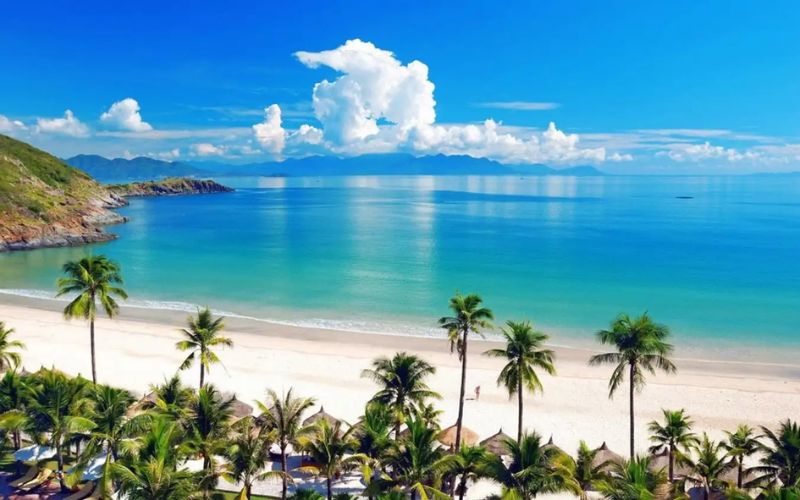
Ho Tram Beach, Vietnam
Ho Tram is a long stretch of relatively uncrowded beach about two hours by road from Ho Chi Minh City. It lacks the dramatic scenery of Con Dao or Phu Quoc, but it has two things those places do not: proximity to the city and some genuinely good resort infrastructure.
The Holiday Inn Ho Tram is the most recognizable international brand here, positioned toward families and business travelers on getaways.
The Grand Ho Tram Strip next door has a casino and a golf course designed by Greg Norman.
For a quick two or three-night escape from Ho Chi Minh City, Ho Tram makes sense. Water quality varies; the southern end of the beach tends to be cleaner than the stretch near the main development. Wave action is gentle, suitable for children.
Practical tips: Buses to Ho Tram leave from Ho Chi Minh City’s Mien Dong Bus Terminal. Journey time is around two hours. The Southern Vietnam tours from Ho Chi Minh City sometimes combine Ho Tram with Vung Tau for a coastal loop that works well in three to four days.
10. Lang Co Beach
- Location: Thua Thien Hue Province, Central Vietnam, between Da Nang and Hue, approximately 70 km north of Da Nang
- Best time to visit: March to August; April to June for the calmest conditions
- Suitable for: Travelers passing between Da Nang and Hue, those who want a relaxed pace, road trippers on the Hai Van Pass route
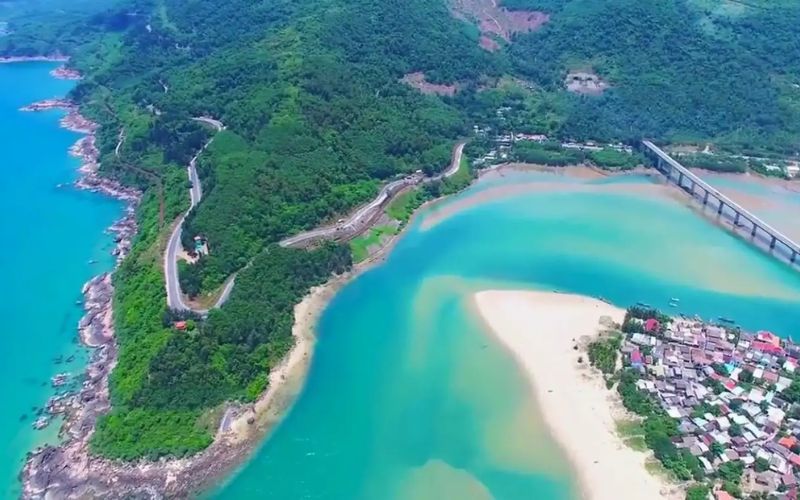
Lang Co Beach, Hue, Vietnam
Lang Co is technically a peninsula rather than a beach town, with the South China Sea on one side and a lagoon on the other. The beach runs for about ten kilometers and is largely undeveloped, which is either its greatest appeal or its main limitation depending on what you are looking for. There are a few midrange resorts (Vedana Lagoon is the standout) and a handful of simple local guesthouses, but not much in the way of nightlife or restaurants.
The main reason most visitors end up here is geography: Lang Co sits right at the northern end of the Hai Van Pass, one of the most celebrated road routes in Vietnam. If you are taking the train or driving between Da Nang and Hue, stopping at Lang Co for lunch or an afternoon swim costs nothing extra and adds a lot to the journey.
Practical tips: The Hai Van Pass road (closed to trucks; passenger vehicles and motorbikes only) takes about 30 minutes to drive and offers extraordinary views of the coastline below. Lang Co by train is equally beautiful; the coastal rail segment between Da Nang and Hue is consistently rated one of the most scenic train rides in Southeast Asia.
Essential Travel Tips for Your Beach Holiday in Vietnam
Planning a beach holiday in Vietnam does not need to be complicated, but a few practical points make a real difference.
- Timing is everything. Vietnam’s beaches are spread across a country with three distinct climate zones. The rough rule: go to the north in summer (May to September), the center in spring and early summer (February to June), and the south in winter (November to April). These windows overlap, so a trip combining all three regions requires careful sequencing.
- Sunscreen and UV awareness. Vietnam sits close to the equator. UV index values regularly exceed 10 between 10am and 3pm, even on overcast days. Bring high-SPF sunscreen from home; local options are available but often contain whitening agents that are not what most international travelers want.
- Water and food safety. Tap water throughout Vietnam is not safe to drink. Bottled water is cheap (5,000 to 10,000 VND, ~$0.19 to $0.38 per 500ml bottle) and available everywhere. Seafood quality at beach destinations is generally excellent, but choose restaurants with high turnover rather than places where the fish in the display case looks like it has been sitting since morning.
- Currency. The Vietnamese dong (VND) is the only currency accepted in most places. ATMs are available in all major beach towns, but Con Dao and some parts of Phu Quoc’s outer areas have limited access. Bring enough cash before heading to remote spots. Exchange rates at banks are consistently better than at hotel reception desks.
- Getting around. Motorbike rental is available at almost every beach destination for 100,000 to 200,000 VND (~$3.84 to $7.68) per day. International driving licenses from most countries are accepted in practice, though technically not in Vietnamese law. For those not comfortable on a bike, taxis and ride-hailing apps (Grab is Vietnam’s dominant service) work well in larger towns.
- Local SIM cards. Buy a local SIM on arrival at the airport. Viettel and Vinaphone offer data packages from 50,000 VND (~$1.92) that cover most of the country with decent 4G speeds.
Conclusion: Planning Your Perfect Beach Holiday in Vietnam
| Beach Destination | Region | Best Season | Ideal For | Approximate Budget per Night (USD) |
| Phu Quoc | South | Nov to Apr | Couples, families, luxury | $50 to $600 |
| Da Nang / My Khe | Central | Mar to Aug | Surfers, city-beach mix | $40 to $250 |
| Con Dao | South | Mar to Sep | Seclusion, diving, luxury | $30 to $600+ |
| Nha Trang | Central | Feb to Aug | Families, budget, diving | $25 to $300 |
| Hoi An beaches | Central | Feb to Jul | Culture + beach combo | $30 to $200 |
| Mui Ne | South | Nov to Apr | Kite/windsurfers, budget | $20 to $150 |
| Ha Long Bay | North | Oct to Dec Mar to May |
Cruise, photography | $100 to $350 (cruise) |
| Quy Nhon | Central | Jan to Aug | Off-beaten-path, local feel | $25 to $200 |
| Ho Tram | South | Nov to Apr | Ho Chi Minh City escapes | $50 to $250 |
| Lang Co | Central | Mar to Aug | Road-trippers, transit stop | $30 to $150 |
A beach holiday in Vietnam rewards travelers who plan thoughtfully. The country’s coastline is long enough that very different experiences are possible within the same trip, from the limestone-framed waters of Ha Long Bay to the turtle nesting beaches of Con Dao. The key decisions are when to go, which region to prioritize, and how much time to allow between destinations.
For those combining a beach holiday with the rest of Vietnam’s interior, Vietnam tours that sequence beaches with cities and cultural sites make the logistics much smoother than trying to piece together transport independently. If you are looking specifically at the coast, the Vietnam beach holidays packages available through IDC Travel can be tailored to fit specific dates, group sizes, and accommodation preferences, from budget guesthouses to six-senses-level luxury.
The beaches are there. The planning is the part worth getting right.
Read more:




Does you know if Hoi An’s beaches are still nice in October? I’ve seen mixed reviews about the rain.
Dear Cleo,
Thank you for your question! October in Hoi An marks the tail end of the rainy season, so while there may still be occasional showers, the weather often begins to improve toward the latter half of the month. Many travelers still enjoy the beaches during this time, especially on clearer days.
If you’re planning to visit in October, we recommend staying flexible with outdoor activities and choosing beachfront accommodations that offer both beach access and indoor relaxation options. We’d be happy to help you plan around the weather and suggest the best spots to make the most of your stay! Let us know if you need further assistance.
Best regards,
IDC Travel Team