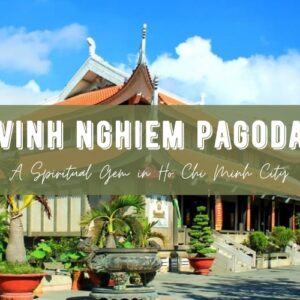
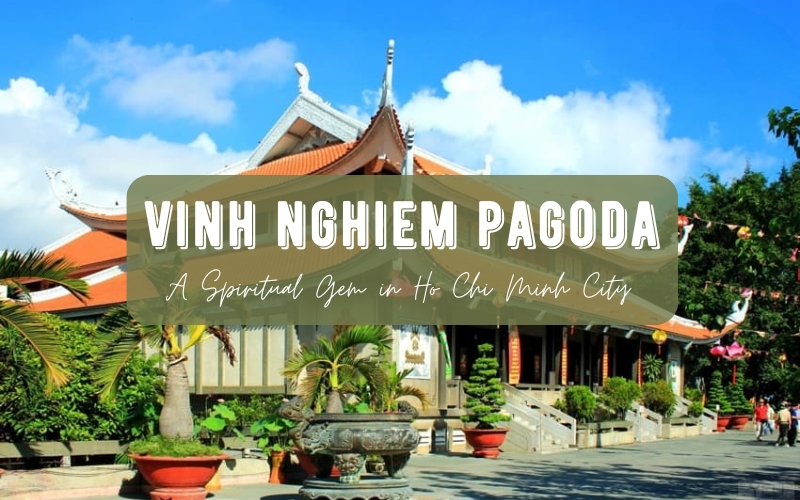
Few places in Ho Chi Minh City stop people in their tracks the way Vinh Nghiem Pagoda does. You come around the corner on Nam Ky Khoi Nghia Street, and there it is: a nine-story tower rising above the city traffic, its silhouette a mix of Vietnamese and Japanese Buddhist architecture you don’t quite expect in southern Vietnam. For anyone planning Vietnam travel with more than just tourist checkboxes in mind, this pagoda deserves a proper visit, not just a drive-by photo.
This guide covers everything worth knowing before you go: the pagoda’s history and design, exactly where it is, what to look for inside, how to get there, and when to time your visit.
What Is Vinh Nghiem Pagoda?
Vinh Nghiem Pagoda (officially Chua Vinh Nghiem in Vietnamese) is one of the largest Buddhist temples in Ho Chi Minh City and one of the most architecturally distinctive pagodas in all of southern Vietnam.
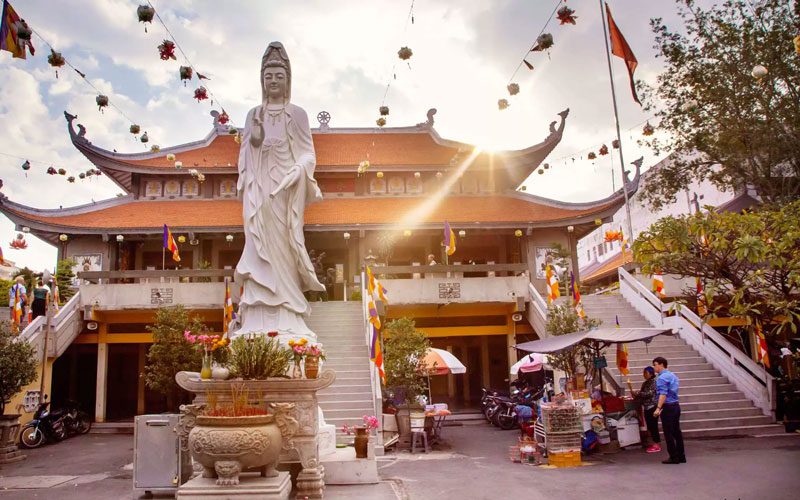
The majestic statue of Quan Am stands at Vinh Nghiem Pagoda, a cornerstone of Buddhist architecture and spirituality in Ho Chi Minh City.
It was built between 1964 and 1971 on the site of an earlier, smaller pagoda, with construction overseen by two influential Buddhist monks: Most Venerable Thich Tam Giac and Most Venerable Thich Thanh Kiem.
The design draws on traditional Vietnamese Buddhist architecture but incorporates Japanese influences, the result of a collaboration between the Vietnamese Buddhist Congregation and the Japan-Vietnam Friendship Association. That unusual combination is part of what makes this pagoda stand out among the Vietnam pagodas visitors see on a typical itinerary.
The pagoda belongs to the Lieu Quan school of Zen Buddhism, one of the major lineages in Vietnamese Buddhist practice. Today it functions as both a working temple and the headquarters of the Vietnam Buddhist Sangha’s Ho Chi Minh City chapter, so on most mornings you will find monks in residence, chanting services underway, and lay worshippers moving through the grounds with incense.
Where Is Vinh Nghiem Pagoda?
- Address: 339 Nam Ky Khoi Nghia Street, Xuan Hoa Ward, Ho Chi Minh City.
It is on one of the city’s main north-south arteries, roughly midway between the downtown core (District 1) and the residential neighborhoods of District 3. The location makes it easy to combine with other District 3 sites on the same half-day circuit.
Getting there:
- By taxi or ride-hailing app (Grab): from Ben Thanh Market in the central, the trip takes roughly 10 to 15 minutes depending on traffic. Contact us to travel without fumbling around on unfamiliar apps!
- By motorbike: Nam Ky Khoi Nghia Street has a dedicated lane; parking at the pagoda is available for a small fee of around 5,000 VND (~$0.19).
- On foot: about 30 to 40 minutes from Ben Thanh Ward, which is manageable in the dry season but not recommended in midday heat between April and June when temperatures hit 35-38°C (95-100°F).
The pagoda is easy to spot from the street. The tower is visible from several blocks away.
Best Time to Visit
Ho Chi Minh City has two seasons: a dry season from December to April, and a wet season from May to November.
For comfortable sightseeing: December to March is the most pleasant window. Temperatures run between 25-30°C (77-86°F) with low humidity and almost no rain. This is also peak season for Vietnam travel generally, so the city is busy but the weather is reliable.
For avoiding crowds at the pagoda itself: weekday mornings between 8:00 and 10:00 am are quieter than weekends. The forecourt and tower area are largely empty on an ordinary Tuesday morning; on Sunday afternoons the grounds fill with families and young visitors taking photos.
Weather caution: from April to June, midday heat regularly reaches 36-38°C (97-100°F). If you visit in this period, go early (before 9:00 am) or late afternoon (after 4:00 pm).
Entrance and Practical Information
Vinh Nghiem Pagoda is open daily from 7:00 am to 6:00 pm, and entry to the grounds is free. You do not need to book in advance or purchase a ticket at any point during the visit.
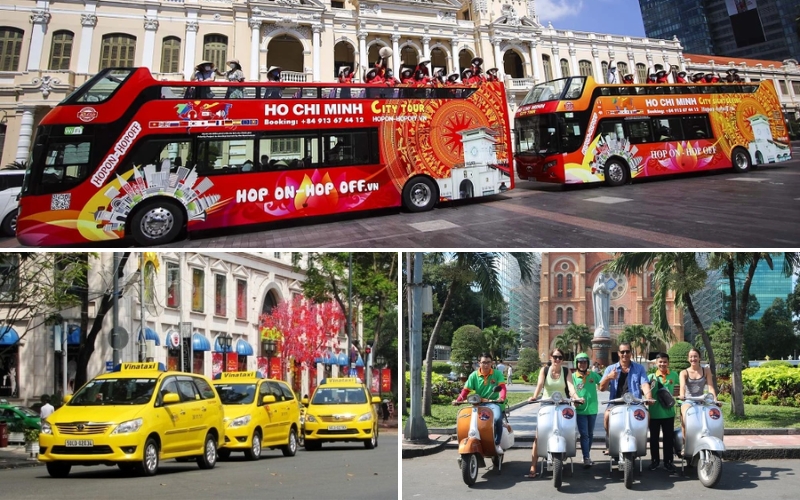
Getting to Vinh Nghiem Pagoda is easy with many convenient options, from tour buses and taxis to adventurous motorbike tours.
If you arrive by motorbike, parking is available on-site for a small fee of 5,000 VND (~$0.19).
A few things to keep in mind before you go:
- Dress code: Shoulders and knees must be covered. Light long trousers and a short-sleeved shirt are the practical choice given the heat.
- Photography: Permitted in most areas of the complex. Avoid photographing monks or worshippers during prayer without permission.
- Shoes: Remove them before entering the main hall. Racks are provided at the entrance.
The best time to visit for a quieter experience is on a weekday morning between December and March, when temperatures stay around 25-30°C (77-86°F) and the forecourt is largely free of weekend crowds.
Architecture and Layout: What to Look For
This is the section that rewards slow walkers.
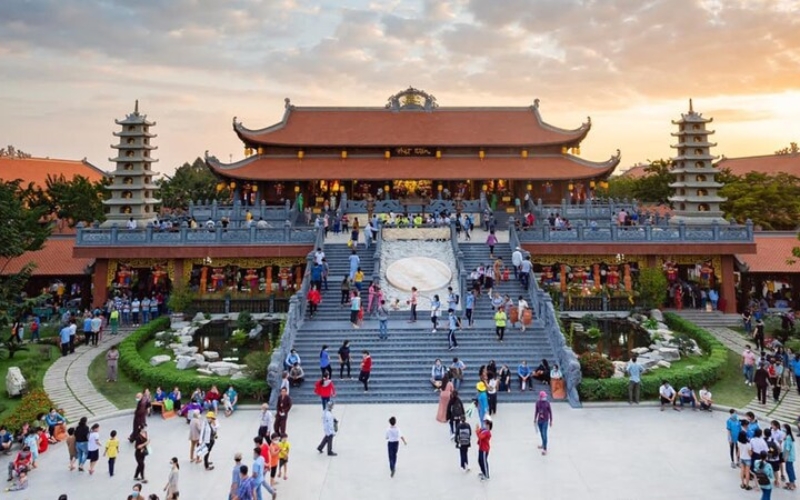
The impressive main hall of Vinh Nghiem Pagoda serves as a stunning center of worship and architecture.
1. The Main Gate and Forecourt
The entrance gate faces Nam Ky Khoi Nghia Street and follows classic Vietnamese Buddhist temple design: a three-door gateway (tam quan) with upswept tiled roofs and ceramic ridge decorations. The central door is wider than the two flanking ones, and traditionally the central door opens only during major religious festivals. On ordinary days, visitors enter through the side doors.
Just inside the gate, the forecourt gives you the first good view of the tower and the main hall together. This is a good place to pause. The scale of the complex is larger than it looks from the street.
2. The Nine-Story Tower (Thap Xa Loi)
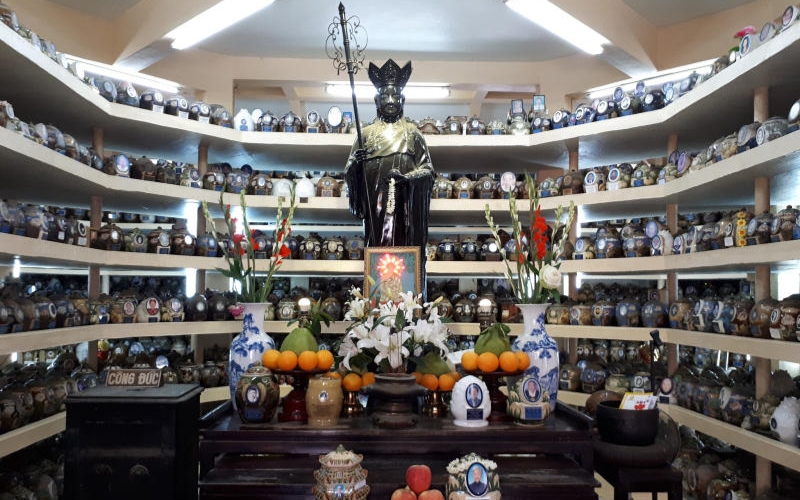
The interior of Xa Loi Cong Dong Tower at Vinh Nghiem Pagoda serves as a sacred space for remembrance and ancestral worship.
The tower is the most photographed feature of the pagoda and the reason it appears on so many lists of must-see Vietnam travel landmarks. It rises approximately 40 meters (131 feet) and is constructed in a style that blends Vietnamese Buddhist pagoda architecture with Japanese influences, most visibly in the proportions of each story and the way the eaves taper.
Each story of the tower contains a shrine dedicated to different Buddhist figures. Visitors can climb the tower, and the views from the upper floors look out over the rooftops of District 3 toward the skyline of District 1 in the distance. The climb is narrow and the stairs are steep in places, but manageable for most visitors.
A point worth knowing: the tower houses urns containing the ashes of deceased worshippers and donors, which is common in Vietnamese Buddhist practice. If you notice families placing offerings at the tower shrines, this is why.
3. The Main Hall (Chanh Dien)
The main sanctuary sits directly behind the forecourt and is the largest interior space in the complex. The hall can accommodate hundreds of worshippers during major ceremonies.
Inside, the central altar holds a large statue of Shakyamuni Buddha flanked by Bodhisattvas. The altar arrangement follows Vietnamese Mahayana Buddhist convention, with the seated central Buddha surrounded by standing attendant figures. The craftsmanship in the lacquerwork and gilding is detailed and worth examining up close.
The ceiling is coffered wood with painted lotus motifs, a feature that appears in several of the most respected Vietnamese pagodas built during the same mid-20th century period. Natural light enters through tall windows on both sides of the hall, which keeps the interior from feeling dark even on overcast days.
Etiquette inside the main hall:
- Remove shoes before entering (racks are provided at the entrance)
- Dress modestly; shoulders and knees should be covered
- Photography is generally permitted, but avoid photographing monks or worshippers in prayer without permission
- Silence is expected during chanting services
4. The Side Halls and Ancestral Hall
Flanking the main hall are two side buildings: one used for Buddhist classes and community activities, and one that functions as an ancestral hall where memorial tablets for deceased community members are kept. Vietnamese Buddhist pagodas typically serve this dual function, acting as both a place of worship and a community center.
The ancestral hall is one of the more quietly moving parts of the visit. The tablets line the walls in rows, and families come regularly to light incense and leave offerings of fruit or flowers.
5. The Gardens
The grounds include a small garden area between the main hall and the rear buildings. It is not large by the standards of temple gardens in central or northern Vietnam, but there are several old trees and a quiet bench area that most visitors walk past without stopping. Worth a few minutes if you want a break from the noise of the street outside.
Buddhist Art and Religious Objects
Beyond the architecture, several specific objects inside the complex are worth looking for.
- The large bronze bell: Hung in a dedicated bell tower to the right of the main hall, this bell is rung during morning and evening services. The sound carries well into the surrounding neighborhood. If you are in the area around 5:30-6:00 am or 5:30-6:00 pm, you will hear it from outside.
- The ceramic mosaic panels: Several exterior walls of the main hall have ceramic tile mosaic panels depicting scenes from Buddhist scripture. These were installed during the original construction and have a visual style characteristic of 1960s Vietnamese religious art.
- The gilded Bodhisattva statues: The side altars in the main hall hold several standing Bodhisattva figures that are notably well-executed. The Quan Am (Guanyin) statue near the left altar is one of the more photographed interior objects.
Religious Life and Ceremonies
Vinh Nghiem Pagoda holds daily services and observes the full calendar of Vietnamese Buddhist festivals. For travelers on Vietnam holidays who want to see active religious life rather than an empty monument, timing your visit around a ceremony can change the experience considerably.
Daily schedule:
- Morning service: ~5:30-6:30 am
- Evening service: ~5:30-6:30 pm
Major annual events:
- Vesak (Phat Dan): the Buddha’s Birthday, celebrated on the 15th day of the 4th lunar month (usually May). The pagoda is decorated with lanterns and the tower is lit at night. Large crowds, but worth it.
- Vu Lan (Ghost Festival): the 15th day of the 7th lunar month (usually August or September). This is one of the most attended events at Vinh Nghiem, drawing thousands of worshippers for memorial rites honoring deceased ancestors.
- Tet (Lunar New Year): the pagoda opens very early on the first three days of Tet, and many Ho Chi Minh City residents come to pray for good fortune in the new year. Expect dense crowds on the first and second days.
If you visit during any of these periods as part of a Ho Chi Minh City tour, ask your guide about the ceremony schedule in advance. Arriving at the right time is the difference between watching daily life at a working temple and watching an empty courtyard.
Nearby Attractions to Combine
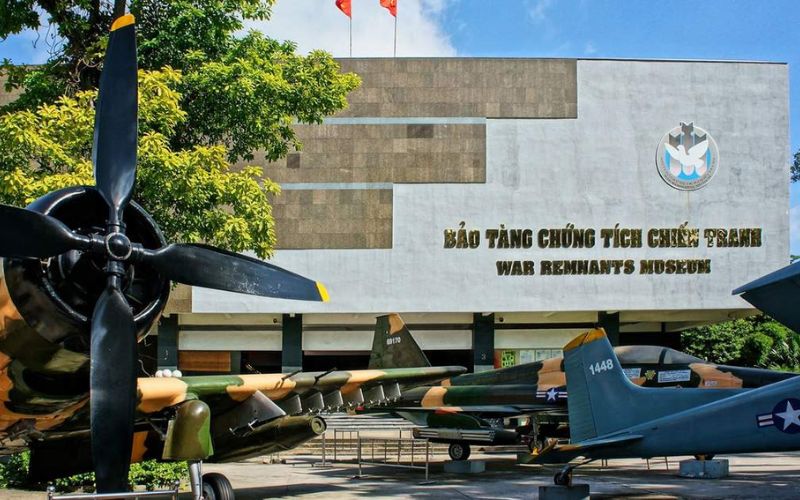
While the outdoor display of military planes and tanks is fascinating for all ages, the interior exhibits of the War Remnants Museum contain powerful and graphic content that may require parental guidance for children.
Vinh Nghiem Pagoda is in Xuan Hoa Ward, which gives easy access to several other sites worth including in a half-day or full-day itinerary.
- Jade Emperor Pagoda (Phuoc Hai Tu): about 2.5 km north in Xuan Hoa Ward. One of the most atmospheric and ornate Taoist-Buddhist temples in the city. A logical pairing with Vinh Nghiem for anyone interested in religious architecture.
- Reunification Palace: about 1.5 km south. The former presidential palace of South Vietnam, now a museum. Most Vietnam tours include this as a standard stop.
- War Remnants Museum: about 1.2 km south of the pagoda on Vo Van Tan Street. Heavy subject matter, but one of the most visited museums in southern Vietnam.
- Ben Thanh Market: about 2 km south, in the center of Ben Thanh Ward.
For travelers doing Southern Vietnam tours with a day or two in Ho Chi Minh City, this covers a lot of ground without requiring a car for most of the day.
Why Vinh Nghiem Pagoda Belongs on Your Vietnam Itinerary
Most visitors to Ho Chi Minh City spend their time in District 1: the War Remnants Museum, Reunification Palace, Ben Thanh Market, the Notre-Dame Cathedral area. These are all worth seeing. But the city has a religious and community life that is harder to find in the tourist district, and Vinh Nghiem is one of the places where that life is most visible.
The pagoda is large enough that a visit has real content (the tower, the main hall, the ancestral hall, the grounds), but not so large that it becomes exhausting. The combination of Japanese-influenced architecture and Vietnamese religious practice is genuinely unusual among Vietnam pagodas, and the active congregation means you are visiting a place that functions, not just a monument that has been converted into a museum.
For anyone on Vietnam holidays with more than a passing interest in culture, it is one of the better half-mornings you can spend in Ho Chi Minh City.
If you want to include Vinh Nghiem Pagoda in a broader Ho Chi Minh City visit, or combine it with a Vietnam trip that covers the south, the Mekong Delta, and beyond, the team at IDC Travel can put together a private itinerary around your schedule and interests.
Summary: Vinh Nghiem Pagoda at a Glance
| Category | Details |
| Full name | Vinh Nghiem Pagoda (Vietnamese: Chua Vinh Nghiem) |
| Location | 339 Nam Ky Khoi Nghia, Xuan Hoa Ward, Ho Chi Minh City |
| Built | 1964-1971 |
| Architectural style | Vietnamese Buddhist with Japanese influences |
| Buddhist tradition | Lieu Quan Zen (Mahayana Buddhism) |
| Tower height | Approx. 40 meters (131 feet), 9 stories |
| Admission | Free |
| Opening hours | 7:00 am to 6:00 pm |
| Best months to visit | December to March |
| Ideal visit temperature | 25-30°C (77-86°F) |
| Key annual events | Vesak (May), Vu Lan (Aug/Sep), Tet (Jan/Feb) |
Vinh Nghiem Pagoda rewards visitors who slow down. The tower is the first thing that catches the eye, but the main hall, the ancestral shrine, and the rhythm of daily religious life are what make it worth the trip. If your Vietnam travel has so far been mostly war history and street food, this is a good corrective. Contact us for more detail!
>>> Refer to Vĩnh Nghiêm Pagoda, Ho Chi Minh City – Wikipedia.
Read more: