
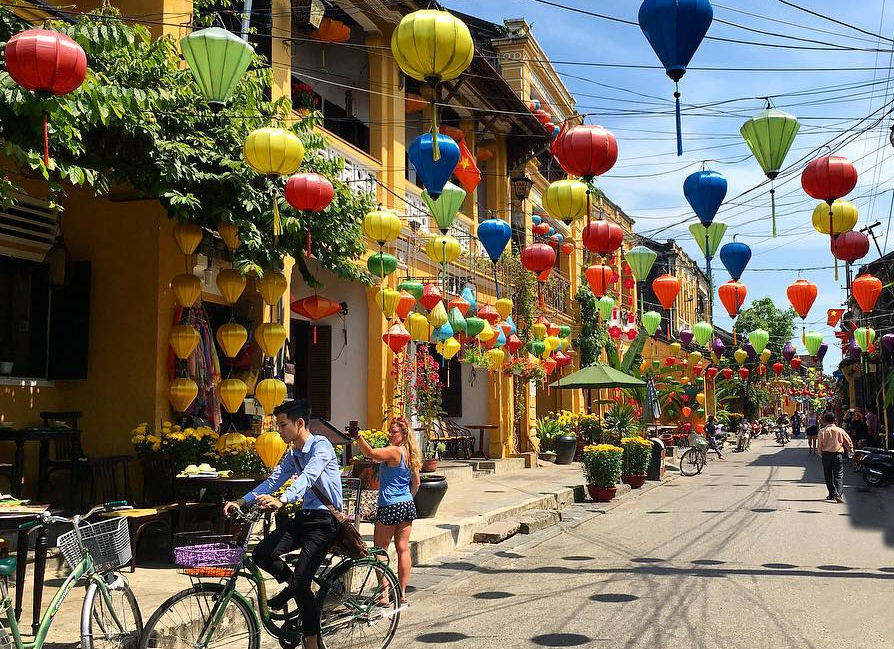
Hoi An is one of those places that earns its reputation. The Ancient Town genuinely looks the way the photographs suggest, the lanterns glow over the Thu Bon River at dusk, and the food is as distinctive as anything you will eat in Vietnam. It is also heavily visited, especially in high season, and the commercial pressure on the streets closest to the river is real. Knowing that in advance helps: arrive early, stay a night or two rather than rushing through on a day trip, and you will find a town that is still very much worth the visit.
Between the 15th and 19th centuries, Hoi An was one of Southeast Asia’s most active trading ports. Japanese, Chinese, Dutch, and Portuguese merchants kept warehouses and residences here, leaving behind a town with genuinely mixed architectural DNA: Chinese merchant houses, Japanese covered bridges, French colonial facades, and Vietnamese tube houses within a few meters of each other. That layering is what the UNESCO designation in 1999 was protecting, and it survives well enough to justify the recognition.
Where Is Hoi An Located?
- Location: Da Nang City, central Vietnam
- Area: 11832.6 km²
- After 2025 provincial merger: Da Nang City merged with Quang Nam province.
- Population: 3.065.628
- Population density: 237 person/km²
- UNESCO status: Hoi An Ancient Town, World Heritage Site (1999)
- Airport: Da Nang International Airport (DAD), 30 km north
- Known for: Ancient Town architecture, tailor shops, lantern festival, An Bang Beach, Cao Lau noodles
- Best for: History, food, tailoring, cycling, beach day trips
Hoi An is a ward, located in Da Nang City in central Vietnam, approximately 860 km from Hanoi to the north and 865 km from Ho Chi Minh City to the south.
How to Get to Hoi An
There is no train station or airport in Hoi An itself. Da Nang is the practical entry point.
- From Da Nang Airport: Grab or taxi to Hoi An takes 40 to 50 minutes and costs around 250,000 to 350,000 VND. This is the standard option for most international arrivals.
- From Da Nang city: Same journey, slightly cheaper by Grab. Many travelers base themselves in Da Nang for the beach and day-trip to Hoi An, though staying in the Ancient Town itself gives access to early mornings and evenings when it is at its best.
- From Hue: About 2.5 hours by private car, with the option of crossing Hai Van Pass on the scenic coastal route, one of the most dramatic drives in central Vietnam. Our Vietnam tours include private transfers with stops at the pass viewpoint.
- From Ho Chi Minh City or Hanoi: Direct flights to Da Nang from both cities take 1 to 1.5 hours.
Best Time to Visit Hoi An
February to May is the optimal window: dry, warm (around 26 to 29°C), and before peak summer crowds. March and April are particularly good, beach weather and comfortable sightseeing temperatures together.
June to August is hot and busy with domestic tourism. The beaches are at their best, but the Ancient Town streets are crowded through the afternoon.
September to November brings the rainy season and a significant flood risk. The Thu Bon River regularly inundates the streets closest to the water in October and November. The town still operates during minor flooding and some visitors find the submerged lantern street atmosphere oddly beautiful, but check local conditions before booking.
December to January is cooler, drier after the rain season ends, and noticeably quieter. A good time to visit if beach swimming is not the priority.
Top Things to Do in Hoi An
1. The Ancient Town
The UNESCO-protected core covers about 30 blocks and is most rewarding on foot. Key sites include the Japanese Covered Bridge (Lai Vien Kieu), built in the early 18th century and the town’s most recognized image; the Phuc Kien Assembly Hall, built by Fujian Chinese merchants in 1697 and still used for active worship; and the Tan Ky Old House, a remarkably preserved merchant home showing the Japanese and Chinese influences on Hoi An’s domestic architecture in the same rooms.
A combined ticket covers entry to several of these sites and is available at the Ancient Town ticket booths (about 120,000 VND).
Morning and late afternoon are the best times to walk the core streets. Midday gets hot and congested on the main tourist arteries; moving into the residential blocks north of Tran Phu Street gives a quieter version of the same architectural experience.
2. An Bang Beach
About 4 km from the Ancient Town by bicycle, An Bang Beach has a relaxed character that the more developed Cua Dai (4 km east) has partially lost to erosion and commercial development. The restaurants and beach bars behind the sand are mostly independent operators doing straightforward grilled seafood and cold beer.
A half-day here: cycling out in the morning, eating lunch at the beach, cycling back is one of Hoi An’s most consistently satisfying combinations.
3. Cooking Classes
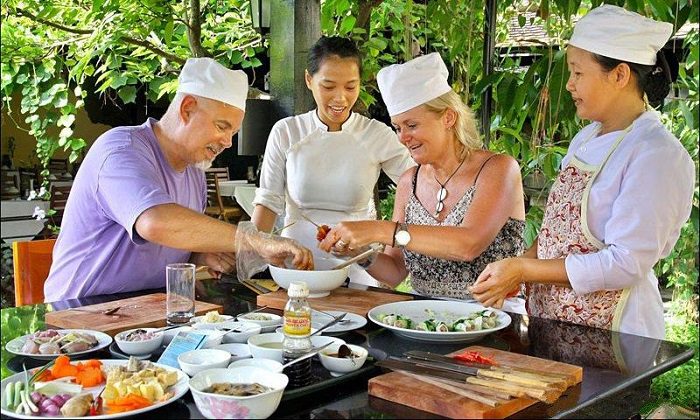
Hoi An has a justified reputation as one of the best places in Vietnam to learn Vietnamese cooking, and the cooking class circuit here is genuinely worth doing rather than an afterthought.
The Morning Glory cooking school (run by chef Trinh Diem Vy, who has been central to the Hoi An food scene for three decades) and the Red Bridge School (which includes a boat trip to the cooking facility) are consistently the most recommended. Classes typically include a market visit, preparation of four to six dishes, and the obvious reward at the end.
4. Tra Que Vegetable Village
About 3 km north of town, Tra Que is a centuries-old farming community that has been growing organic herbs and vegetables for the Hoi An market using the same riverbank composting and flood-irrigation methods for generations. A morning visit on bicycle: watching the farmers work, trying your hand at raking compost, and eating breakfast at one of the village restaurants gives a direct experience of the agricultural life that underpins the food the town is famous for.
5. Lantern Festival Night
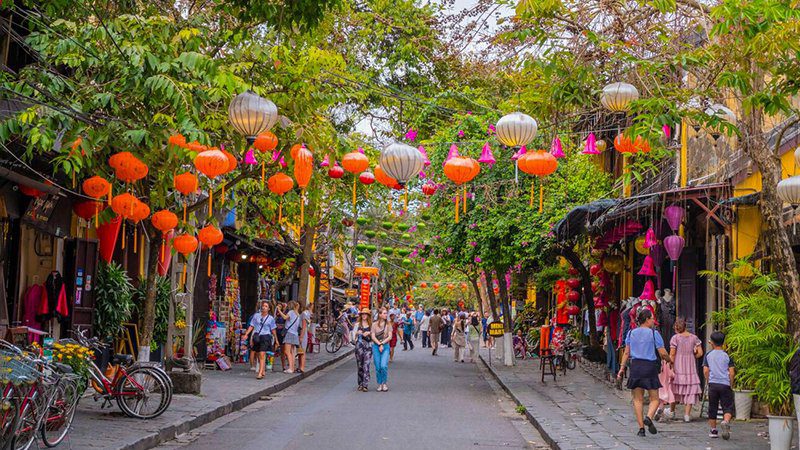
On the 14th day of each lunar month (full moon), the Ancient Town switches off its electric lights and the streets are lit only by the silk lanterns hung from every building and set afloat on the Thu Bon River.
The effect is genuinely magical and worth planning a visit around if your dates allow. It is crowded; arriving by 5pm and walking the less-visited western streets before circling back to the river gives a better experience than pushing through the main tourist corridors at 8pm.
>>> See more about Hoi An Lantern Festival.
Hoi An Food
Hoi An’s cuisine is specific to the town in ways that go beyond marketing claims.
Cao Lau is the most distinctively local dish: thick rice noodles made using water from a specific ancient well in the town (a claim that is more significant than it sounds, the mineral content gives the noodles a texture that cannot be replicated elsewhere), served with sliced char siu pork, bean sprouts, and rice crackers in a small amount of deeply reduced broth. Find it at the market stalls and the dedicated Cao Lau shops on Tran Phu Street.
Banh Bao Vac (White Rose Dumplings) are shrimp dumplings wrapped in translucent rice paper and steamed to a shape that resembles a rose. Lightly oiled and served with a light dipping sauce, they are elegant, specific to Hoi An, and genuinely delicious. The family that makes most of the genuine white rose wrappers for the town’s restaurants operates from a house near the Japanese Bridge.
Banh Mi Hoi An has a specific character relative to other Vietnamese cities: the bread is crispier and thinner-crusted, the fillings more restrained. Phuong’s Banh Mi stall on Phan Chau Trinh Street has been used as a benchmark for the style by Anthony Bourdain and others; the queue is real and the reputation is deserved.
Estimated Travel Costs in Hoi An
Hoi An sits slightly above the central Vietnam average in price, driven by the boutique hotel concentration in the Ancient Town and the popularity of the tailoring industry. Street food and cycling remain extremely affordable. Costs spike on full-moon lantern festival nights and during peak season from February to April, book accommodation well in advance for those dates.
Prices below are estimates for international travelers and may vary by season and booking time.
| Category | Budget | Mid-Range | Luxury |
| Accommodation (per night) |
250,000 – 500,000 VND (~$10-$20) |
800,000 – 2,000,000 VND (~$31-$79) |
2,500,000 – 6,500,000 VND (~$98-$256) |
| Ancient Town entry ticket | 120,000 VND (~$4.72) |
120,000 VND (~$4.72) |
120,000 VND (~$4.72) |
| Meal per person | 25,000 – 60,000 VND (~$0.98-$2.36) |
150,000 – 350,000 VND (~$5.91-$13.78) |
400,000 – 1,000,000 VND (~$15.75-$39.37) |
| Cooking class (half-day) |
– | 600,000 – 950,000 VND (~$23.62-$37.40) |
1,000,000 – 1,800,000 VND (~$39.37-$70.87) |
| Bicycle rental (per day) |
50,000 – 70,000 VND (~$1.97-$2.76) |
80,000 – 150,000 VND (~$3.15-$5.91) |
– |
| Grab/taxi (to Da Nang Airport) |
250,000 – 320,000 VND (~$9.84-$12.60) |
300,000 – 380,000 VND (~$11.81-$14.96) |
450,000 – 700,000 VND (~$17.72-$27.56) |
| Cham Islands boat trip (full day) |
500,000 – 650,000 VND (~$19.69-$25.59) |
700,000 – 1,000,000 VND (~$27.56-$39.37) |
1,200,000 – 2,500,000 VND (~$47.24-$98.43) |
| Tailoring (basic garment) |
600,000 – 1,200,000 VND (~$23.62-$47.24) |
1,300,000 – 2,800,000 VND (~$51.18-$110.24) |
3,000,000 – 8,000,000 VND (~$118.11-$314.96) |
| Total 5-day trip | 2,500,000 – 5,000,000 VND (~$98-$197) |
7,500,000 – 15,000,000 VND (~$295-$591) |
19,000,000 – 45,000,000 VND (~$748-$1,772) |
| Total 7-day trip | 3,500,000 – 7,000,000 VND (~$138-$276) |
10,500,000 – 21,000,000 VND (~$413-$827) |
26,000,000 – 63,000,000 VND (~$1,024-$2,480) |
| Total 14-day trip | 7,000,000 – 14,000,000 VND (~$276-$551) |
21,000,000 – 42,000,000 VND (~$827-$1,654) |
52,000,000 – 126,000,000 VND (~$2,047-$4,961) |
Tailoring costs vary enormously by fabric quality and shop reputation. Full-moon festival nights see accommodation prices surge. Always recheck costs at time of booking.
Hoi An Travel Tips
- The Ancient Town entry system requires tickets. Keep yours as it is checked at each major site entrance.
- Tailors are everywhere in Hoi An and the quality varies enormously. A made-to-measure garment requires at least two fittings over 48 hours; a single-day visit does not allow for this properly. Avoid the fastest-turnaround shops.
- Bicycles are available throughout the town for around 50,000 to 80,000 VND per day and are the best way to explore the surrounding villages and beaches.
- The streets immediately around the Ancient Town are pedestrianized in the evening; traffic increases in the residential areas beyond. Cycling at dusk requires lights.
- Book accommodation in the Ancient Town itself, not in Da Nang, if you want the full Hoi An experience. The early morning alley walk before the town wakes is worth the hotel premium.
Plan Your Hoi An Trip with IDC Travel
Our central Vietnam tours include Hoi An in all Hue-Da Nang-Hoi An circuits, with tailor-made itineraries combining the Ancient Town, cooking classes, and beach time. Contact us to build your Vietnam itinerary.
Top Hoi An Tours & Packages



Start planning your tailor-made tour with 1-1 help from our travel advisors.
- Plan your tailor - made trip with a local expert
- Book securely with money-back guarantee
- Travel stress-free with local 24/7 support