
Vietnam is a land of brilliant flowers, naturally blessed with a warm and humid monsoon climate. As each season passes, nature puts on a new coat with flowers of different colors. Below is an ultimate guide to exploring Vietnam flower seasons, with information about their characteristics, blooming areas, best viewing times, and cultural significance.
What Is Vietnam Weather Like?
Vietnam’s weather changes a lot from one region to another, so there is no single climate pattern for the whole country. This is one of the main reasons Vietnam has flower seasons almost all year round. For travelers, the key is not only choosing the right month, but also choosing the right region.
Base on National Center for Hydrometeorological Forecasting, Vietnam is usually divided into three main climate zones:
Northern Vietnam
Northern Vietnam includes places such as Hanoi, Ninh Binh, Sapa, Ha Giang, and the Northwest. This region has the clearest four-season pattern.
Spring is often mild, fresh, and slightly humid. Summer is hot, with frequent rain. Autumn is generally pleasant and comfortable for travel. Winter can be cold, especially in mountain areas such as Sapa, Ha Giang, and Mau Son.
Because the North has clear seasonal changes, it is one of the best places in Vietnam to experience flower seasons linked to each time of year, from peach blossom in early spring to wild daisies in early winter.
Central Vietnam
Central Vietnam includes destinations such as Hue, Da Nang, Hoi An, Quang Binh, and the Central Highlands if considered in broader travel planning.
This region can be more complex for visitors because the weather does not always follow the same rhythm as the North or the South. The first half of the year is often better for beach travel and outdoor sightseeing in coastal areas. Later in the year, especially from around September to November, heavy rain and storms can affect parts of the central coast.
At the same time, upland areas in the Central Highlands have their own seasonal beauty, especially during flower periods such as coffee blossom, wild sunflower, and Da Lat cherry blossom.
Southern Vietnam
Southern Vietnam includes Ho Chi Minh City, the Mekong Delta, Can Tho, Dong Thap, and Phu Quoc.
The South is warm throughout the year, so travelers do not usually think in terms of spring, summer, autumn, and winter as clearly as in the North. Instead, the weather is mostly divided into two main periods: the dry season and the rainy season.
This stable warmth allows many flowers to bloom beautifully in the South, especially around Tet and in wetland areas. It is also why southern flower experiences often feel greener, softer, and more tropical.
Why does Vietnam’s weather matter for flower season travel?
Vietnam’s flower calendar is closely connected to regional climate. The same month can look completely different depending on where you go.
For example:
- January in northern Vietnam is known for peach blossom, in southern Vietnam is the season of yellow apricot blossom.
- July is famous for lotus in many parts of the country.
- October is the right time for buckwheat flowers in Ha Giang.
- Late autumn and early winter bring different flower seasons around Hanoi and the northern highlands.
This means travelers should not ask only, “When is the best time to visit Vietnam?” A better question is, “Which flowers do I want to see, and where should I go to see them at their best?”. And you will find your answer with us in this guide. Let’s go for January first!
January
January is one of the most beautiful months to see flowers in Vietnam, especially as the country prepares for Tet, the Lunar New Year. This is the time when many cities, villages, home gardens, and flower markets become brighter and more festive.
Yellow apricot blossom in Southern Vietnam
Yellow apricot blossom, known in Vietnamese as “hoa mai”, is one of the clearest signs that Tet is coming in the South. In Ho Chi Minh City, Can Tho, the Mekong Delta, and many southern provinces, families place apricot branches or potted apricot trees in their homes as an important New Year decoration. The bright yellow color is associated with luck, prosperity, and a hopeful beginning to the year.
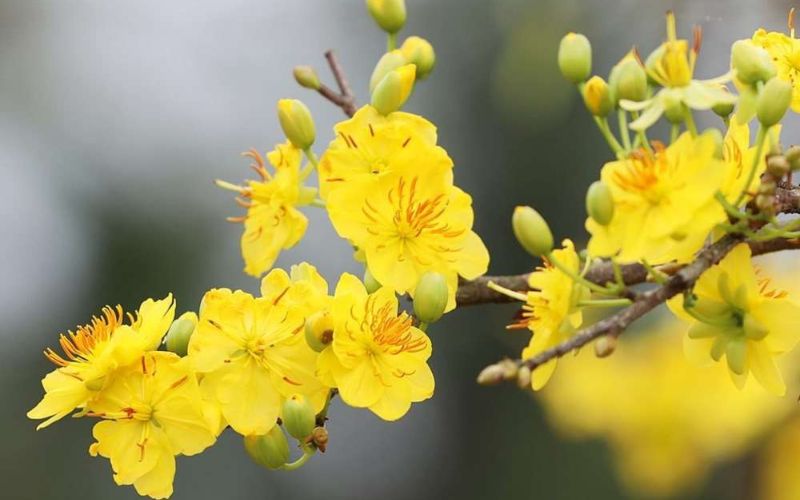
Yellow apricot blossoms (hoa Mai vàng).
For many southern Vietnamese families, “hoa mai” is not just a decorative flower. It is part of the emotional atmosphere of Tet. People often look closely at the buds and hope the flowers open at the right moment, especially around New Year’s Eve and the first days of the Lunar New Year. A tree in good bloom is often seen as a positive sign for the months ahead.
For travelers, the best places to feel the beauty of yellow apricot blossom are flower markets, public parks, local neighborhoods, and traditional homes in the South. The flower is especially striking because it appears during a season when the weather is warm and sunny, creating a bright and welcoming image of spring that feels very different from East Asia’s colder winter landscapes.
Peach blossom in Northern Vietnam
In Northern Vietnam, January is the season of peach blossom, or “hoa dao”. If yellow apricot blossom is the flower of Tet in the South, peach blossom plays that role in the North. Its pink and soft red tones can be seen in Hanoi, nearby villages, and especially in mountain regions where peach trees bloom across hillsides and valleys.
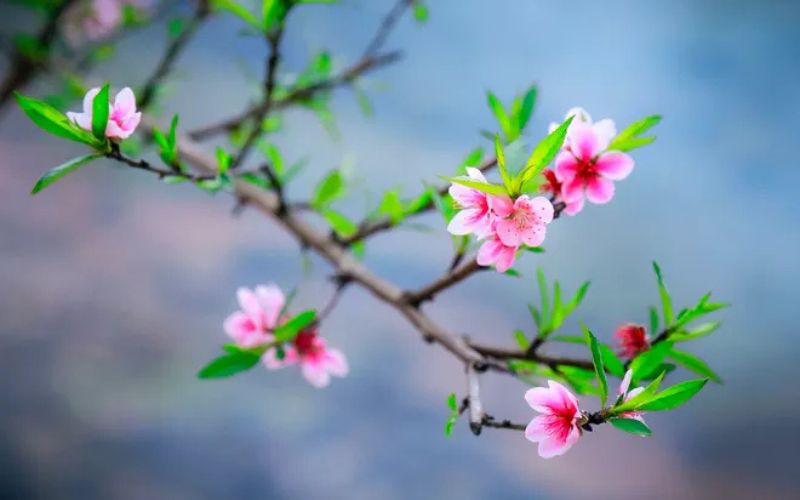
Peach blossoms (hoa Đào).
Peach blossom is closely tied to the image of northern spring. It appears in homes, in flower markets, in front of temples, and along village roads during the weeks before Tet. Many families choose a peach branch or a small peach tree for the living room because it represents luck, renewal, and the arrival of a new year.
For international visitors, peach blossom season offers one of the most photogenic moments of the Vietnamese year. In Hanoi, the atmosphere is festive yet elegant, with flower markets full of pink branches and local people shopping for Tet decorations. In the northern mountains, especially in places with ethnic minority communities, peach blossom adds a softer and more poetic layer to the winter landscape.
Chrysanthemums in Tet flower displays
Chrysanthemums (a.k.a. “hoa cuc”) are also very visible in January, especially in the weeks leading up to Tet. You can see them in homes, pagodas, cemeteries, public flower arrangements, and seasonal markets across the country. Yellow chrysanthemums are the most common during this time, although white and other colors also appear depending on the region and the purpose.
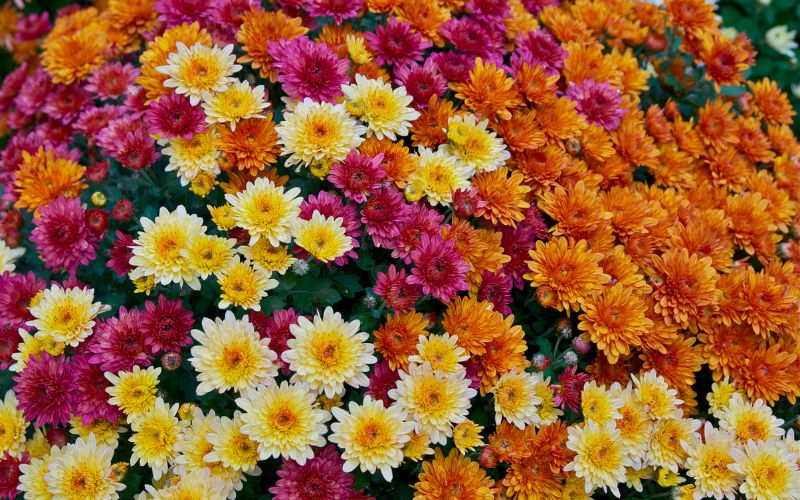
Chrysanthemum flowers (hoa Cúc).
In Vietnam, chrysanthemums are often linked with respect, longevity, and family values. That is why they are commonly used both for home decoration and for offerings on ancestral altars. During the New Year season, pots of chrysanthemums are arranged neatly in front of houses, shops, and temples, adding a rich golden tone to the festive landscape.
For travelers, chrysanthemums may not attract attention as quickly as peach or apricot blossom, but they are an important part of the visual identity of Tet. If you walk through traditional flower markets in January, you will notice that chrysanthemums help create the full New Year scene. They make streets and homes look more complete, more welcoming, and deeply rooted in local tradition.
Poinsettias in winter and New Year decorations
Poinsettias, known in Vietnamese as “hoa trang nguyen”, are another flower often seen in Vietnam around January. Their strong red color makes them especially suitable for the winter festive season and the approach of the Lunar New Year. Although they are not as symbolic as peach blossom or apricot blossom, they still play an important decorative role in gardens, entrances, courtyards, and seasonal flower displays.
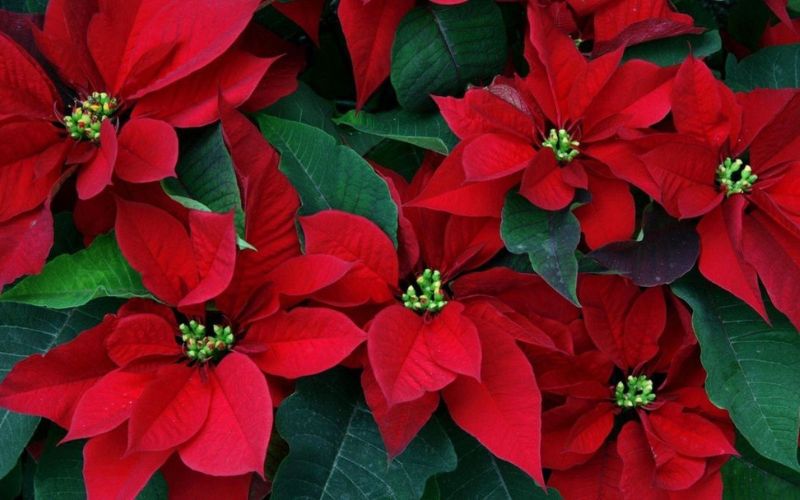
Poinsettia flowers (hoa Trạng Nguyên).
The bright red leaves of poinsettias stand out clearly against the softer tones of winter and early spring flowers. In cooler parts of the country, especially in the North and in upland areas, they are often used to create contrast in flower beds and ornamental displays. Their appearance also fits the spirit of celebration, warmth, and seasonal change.
For foreign visitors, poinsettias are easy to recognize, but seeing them in Vietnam offers a slightly different experience. Here, they are part of a wider floral landscape connected to Tet, local markets, and seasonal street decoration rather than only Western holiday traditions. They help complete the visual transition from the old year to the new one.
>>> Planning around Vietnam flower seasons starts with choosing the right region at the right time. If you want help matching weather, bloom season, and your travel style, our team can help you build a smoother and more rewarding Vietnam itinerary.
February
February is when spring becomes more visible across many parts of Vietnam. The air is fresher, the landscape looks softer, and flower seasons in the mountains and highlands begin to reach one of their most beautiful moments. This is a particularly attractive month for travelers who want to see rural scenery, local life, and seasonal landscapes beyond the major cities. Together, they create some of the most memorable spring views in Vietnam.
Bauhinia flowers in the Northwest
Bauhinia, known in Vietnamese as “hoa ban”, is one of the signature flowers of the Northwest. It is especially associated with provinces such as Dien Bien and Son La, where it blooms across hillsides, valleys, and mountain roads in late winter and early spring. In February, many parts of the region begin to turn white with bauhinia flowers, creating a very gentle and elegant landscape.
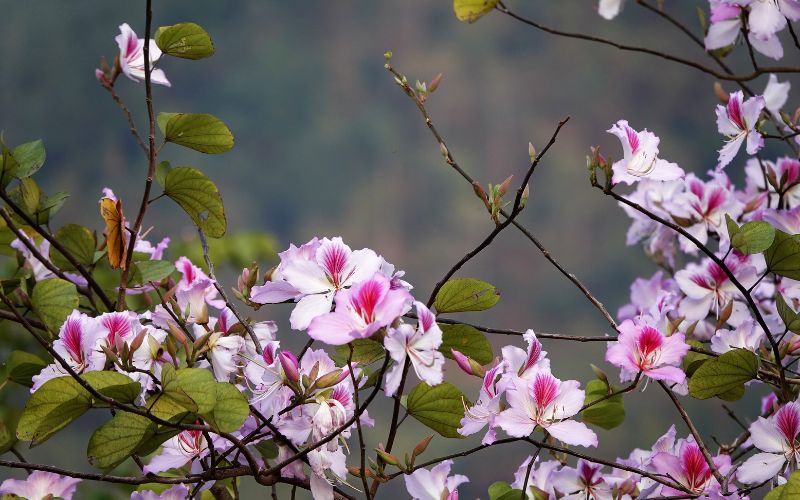
Bauhinia flowers (hoa Ban)
This flower is deeply connected with the culture of ethnic communities in the Northwest, especially the Thai people. In local life and folklore, “hoa ban” is often linked with love, loyalty, and the arrival of a new season. That is one reason why it is more than just a beautiful flower. It also carries cultural meaning that gives more depth to the travel experience.
For international travelers, bauhinia season is a good reason to visit the Northwest in spring. The scenery feels peaceful, open, and very different from the more crowded destinations in the lowlands. If your trip combines nature, photography, and local culture, February is a very rewarding time to explore this region.
Plum blossoms in the northern highlands
February is also one of the best months for plum blossoms (a.k.a. “hoa man”), especially in places such as Moc Chau and other northern highland areas. During the bloom, plum trees cover hills, gardens, and village surroundings with a layer of soft white flowers. The effect is simple but very striking, especially when seen across large valleys and sloping fields.
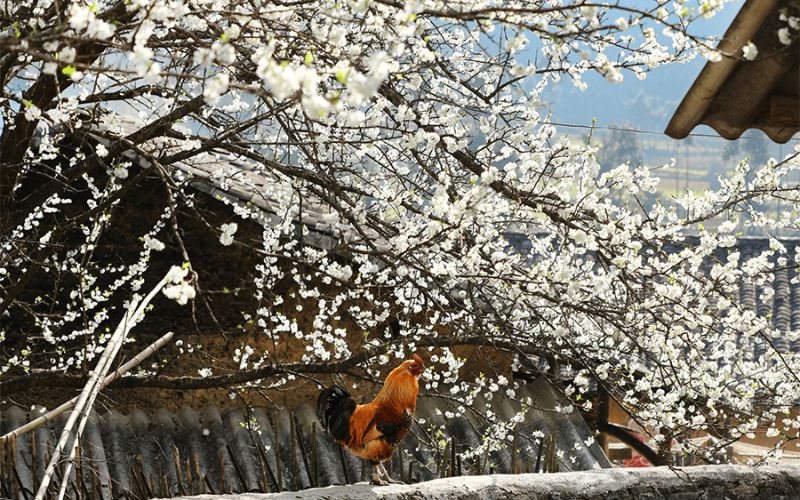
Plum Blossom (hoa Mận).
Plum blossom season does not usually last very long, which makes timing important. When the flowers are at their peak, the landscape can look almost completely white in some areas. This short but beautiful period attracts many domestic visitors every year, especially those looking for fresh mountain air and seasonal photography.
For foreign travelers, plum blossom season offers a side of Vietnam that feels calm, natural, and deeply local. There is no need for complicated sightseeing. Sometimes the best experience is simply driving through the countryside, stopping in small villages, and enjoying the contrast between white blossoms, green hills, and traditional homes.
>>> If you want to see quiet mountain roads, white blossoms, and some of the most beautiful spring scenery in the North, February is a wonderful time to travel. Let us help you design a route through seasonal highlights.
March
March is one of the most graceful months for flower travel in Vietnam. The cold of winter has already faded in the North, the air feels softer, and many landscapes begin to shift from early spring into the approach of summer. This is when travelers can see some of Vietnam’s most poetic seasonal flowers, especially in the North and the northern plains.
Red kapok flowers in the countryside
Red kapok flowers, known in Vietnamese as “hoa gao” or “hoa moc mien”, are among the most recognizable flowers of March in Vietnam. They usually bloom when the tree has already shed most of its leaves, so the bright red or orange-red flowers stand out strongly against the sky. This creates a dramatic image that is easy to notice from far away, especially in villages, rice fields, temple yards, and old communal spaces.
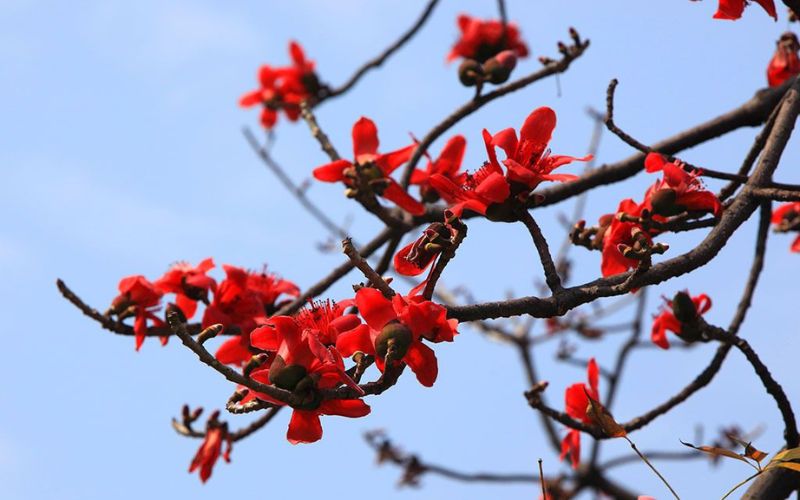
Red kapok flowers (hoa Gạo/hoa Mộc Miên).
For many Vietnamese people, the kapok tree is linked with childhood memories and the traditional countryside. A tall tree with red flowers beside a village gate, a pond, or a communal house is a familiar image in older rural landscapes. Because of that, kapok flowers are not only beautiful but also emotional. They often bring a sense of nostalgia, especially for people who grew up in northern villages.
For foreign travelers, March is a very good time to explore the rural side of Northern Vietnam. You may see kapok flowers on quiet roads, near ancient pagodas, or rising above green fields as the season changes. The beauty is strong but not overly polished. It feels natural, local, and full of character.
White sua flowers in Hanoi
If kapok flowers are bold and dramatic, “sua” flowers are the opposite. In late March, parts of Hanoi become softer and more elegant when “sua” trees bloom with small white flowers. The blossom is light, delicate, and short-lived, which is exactly why many locals look forward to it each year.
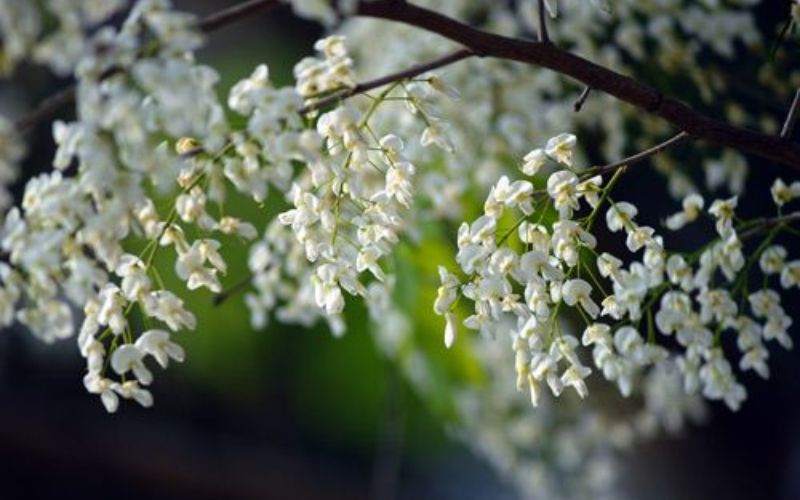
Sua flowers (hoa Sưa).
“Sua” flowers do not usually appear in one large concentrated field. Instead, they bloom along certain streets, near lakes, and in scattered corners of the city. When the season arrives, the branches seem to be covered with a fine white cloud. The effect is especially beautiful in the gentle light of early morning or late afternoon, when the flowers make the urban landscape feel quieter and more refined.
For travelers visiting Hanoi in March, “sua” season offers a very different side of the capital. It is not loud or festive. It is subtle. You notice it while walking, cycling, or passing through older neighborhoods. That quiet beauty is part of what makes spring in Hanoi so memorable.
Pomelo blossoms in gardens and village homes
Another flower that quietly defines March in Northern Vietnam is pomelo blossom, or “hoa buoi”. Unlike flowers that are admired mainly for visual effect, pomelo blossom is loved as much for its fragrance as for its appearance. The flowers are small, white, and simple, but their scent is fresh, sweet, and deeply associated with spring in many Vietnamese homes.
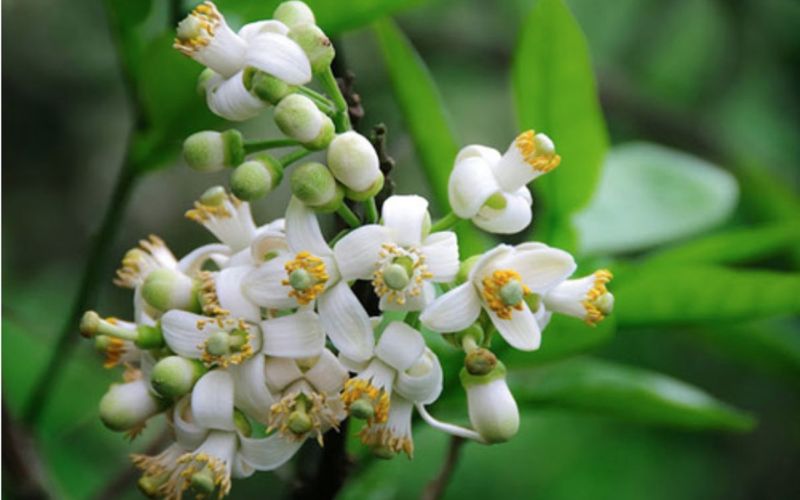
Pomelo blossoms (hoa Bưởi).
Pomelo trees are common in home gardens and village compounds, so their flowering season often feels intimate and close to daily life. In some places, just walking along a quiet lane in March is enough to catch the scent in the air. For many locals, this fragrance is one of the most familiar signs that spring is reaching its mature stage.
For international visitors, pomelo blossom may be less immediately visible than larger flowers, but it offers one of the most authentic sensory experiences of the season. It is especially meaningful for travelers who enjoy slower cultural travel, traditional neighborhoods, and moments that are felt rather than simply photographed.
>>> March is ideal for travelers who love subtle beauty and authentic local landscapes. Get in touch with us for a spring Vietnam itinerary that blends Hanoi’s seasonal charm with peaceful countryside experiences.
April
April is a lovely month for flower travel in Vietnam because it stands between spring and summer. The weather in many places is still comfortable enough for sightseeing, while the landscape begins to change in color and mood.
Easter lily in Hanoi
Easter lily, known in Vietnamese as “hoa loa ken” or “hue tay”, is one of the most recognizable flowers of April in Hanoi. It blooms only for a short period each year, but its presence is strong enough to define the month for many local people. The flower is simple in form and pure white in color, yet that simplicity is exactly what makes it so elegant.
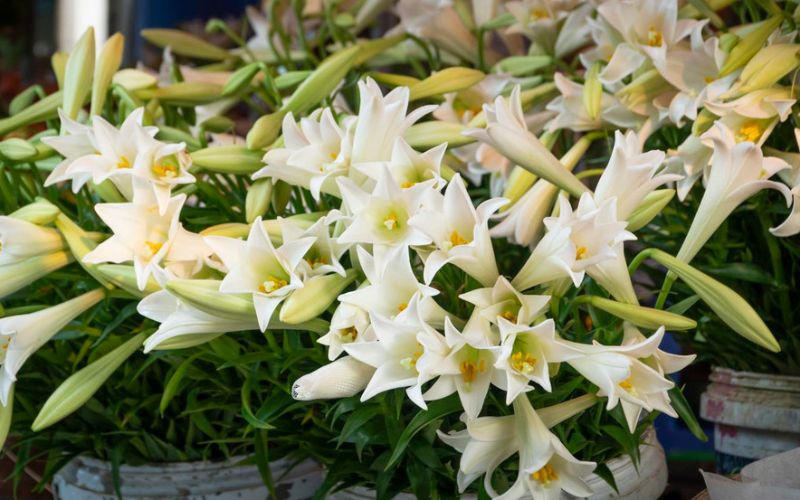
Easter Lily flowers (hoa Loa Kèn/hoa Huệ Tây).
During lily season, the streets of Hanoi feel softer. Bicycles and street vendors carrying bundles of white lilies become a familiar sight in the morning. The flowers appear in homes, small shops, local markets, and photo corners across the city. They are not loud or dramatic, but they bring a refined beauty that suits Hanoi’s calmer spring atmosphere.
For foreign travelers, Easter lily season is a beautiful reason to spend time in the capital beyond the main landmarks. This is the kind of seasonal detail that gives Hanoi its character. It does not depend on a major event or festival. It lives in ordinary streets, daily routines, and small visual moments that make the city feel deeply local.
Rhododendrons in the mountains
April is also a good month to see rhododendrons, especially in Vietnam’s higher mountain areas. In Vietnamese, “hoa do quyen” is often associated with cool upland regions where the climate allows these flowers to bloom well. Depending on the location, rhododendrons can appear in different shades, including red, pink, white, and purple.
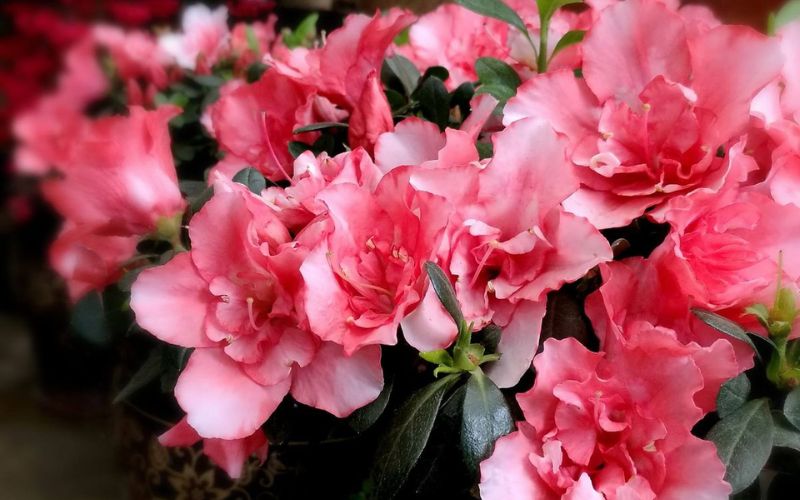
Rhododendron flowers (hoa Đỗ Quyên).
These flowers are most often linked with mountain landscapes rather than cities. In the northern highlands and some elevated forest areas, they add bright color to slopes and trails during the transition from spring to early summer. The effect is especially attractive in places where the air is cool, the forest is thick, and the scenery still feels wild.
For travelers who enjoy trekking, mountain roads, and highland scenery, rhododendron season can add another reason to travel in April. The flower itself is beautiful, but the experience is also about the setting. Seeing blossoms in the mountains feels very different from seeing decorative flowers in urban spaces. It is more natural, more remote, and often more rewarding for those looking for a deeper landscape experience.
Sea poison tree flowers on Vietnam’s islands
One of the more unusual flowers of April is the sea poison tree flower, known in Vietnamese as “hoa bang vuong”. This flower is strongly associated with Vietnam’s islands and coastal outposts. It is not as widely known among casual travelers as lotus or peach blossom, but it has a special place in Vietnam’s maritime imagery.
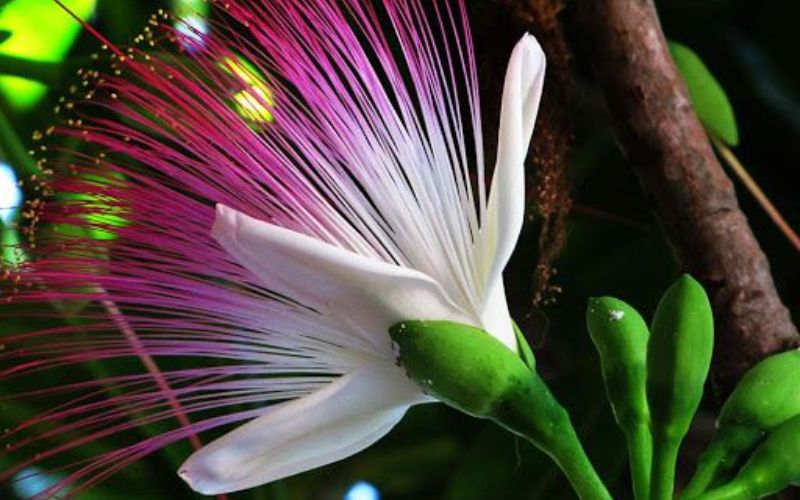
Sea poison tree flower (hoa Bàng Vuông).
The flowers usually bloom in coastal and island environments, where they become part of a much larger story about sea life, distance, and resilience. Their appearance is often linked with places such as the Truong Sa archipelago and other remote island landscapes. Because of that, the flower carries a symbolic meaning that goes beyond simple ornament. It is often associated with endurance, vitality, and the spirit of life in difficult natural conditions.
For most international travelers, this is not the easiest flower season to experience directly in a casual itinerary. Still, it deserves a place in a guide to Vietnam’s flowers because it shows that Vietnam’s floral identity is not limited to gardens, villages, or mountain valleys. It also extends to the sea and islands, where flowers become part of a very different landscape and emotional world.
May
May is when summer truly begins to show itself in Vietnam. The heat becomes stronger, school terms approach their end, and many streets across the country start to look brighter and more emotional at the same time. This is the month of two of Vietnam’s most familiar summer flowers: flamboyant flowers and purple crape myrtle.
Flamboyant flowers on school grounds and city streets
Flamboyant flowers, known in Vietnamese as “hoa phuong do”, are among the most iconic flowers of summer in Vietnam. Their bright red clusters begin to appear strongly in May, often covering schoolyards, roadsides, parks, and residential streets. Few flowers in Vietnam are as visually striking. When they bloom at full strength, they seem to set entire corners of the city on fire.
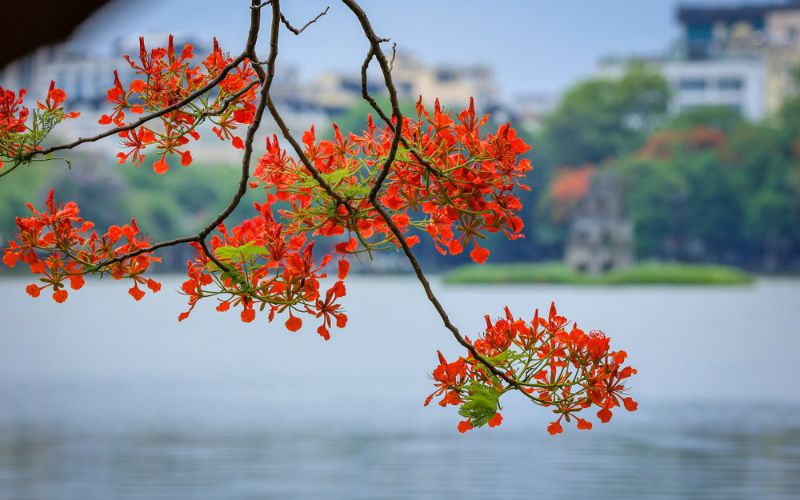
Flamboyant flowers (hoa Phượng).
For Vietnamese people, flamboyant flowers are deeply connected with school life. They bloom at the time when students prepare for the end of the academic year, graduation, and summer break. Because of that, they often carry a strong emotional meaning. For many adults, the sight of flamboyant flowers brings back memories of classrooms, school uniforms, old friends, and the feeling of growing up.
Hai Phong is the city most strongly associated with flamboyant flowers, so much so that it is often called the city of flamboyant blossoms. However, travelers can also see these trees in many other parts of Vietnam during May. In practical travel terms, this means you do not need to go to one specific place to enjoy them. They are part of the everyday summer landscape in many Vietnamese cities.
For foreign visitors, flamboyant season offers more than just colorful streets. It gives a glimpse into a very emotional part of local life. This is one of those flowers that people in Vietnam do not simply admire for beauty. They remember it, they write songs about it, and they connect it with a particular season of life.
Purple crape myrtle along urban roads
At the same time as flamboyant flowers bloom, purple crape myrtle, known in Vietnamese as “hoa bang lang tim”, begins to color many roads and neighborhoods across the country. The purple tone is softer and more reflective than the bold red of flamboyant trees, which is why the two flowers are often remembered together as the flowers of the Vietnamese summer.
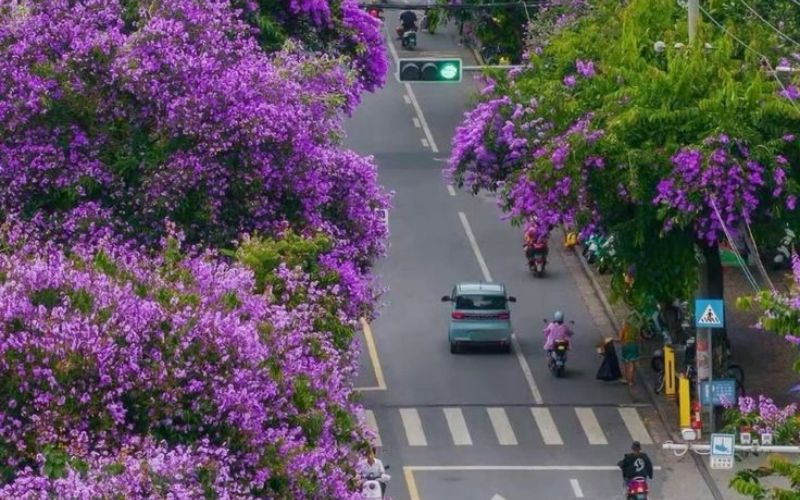
Purple crape myrtle (hoa Bằng Lăng Tím).
Crape myrtle can be seen in cities such as Hanoi, Hue, and Ho Chi Minh City, as well as in many smaller towns. When the trees bloom, they create a lighter and more romantic atmosphere along the streets. Their purple color stands out beautifully against the bright summer sky, but in a gentler way than the dramatic red of flamboyant flowers.
Like flamboyant flowers, purple crape myrtle is also linked in many people’s minds with youth, school years, and first emotions. It often appears in memories of student life, especially in writing, songs, and visual culture. That emotional connection gives the flower a special place in the Vietnamese summer imagination.
For travelers, purple crape myrtle may not always be the main reason to plan a trip, but it adds a lot to the atmosphere of the places you visit in May. A familiar street, a lakeside road, or a quiet residential area can feel much more memorable when these purple blooms are in season.
June
June brings a fuller summer mood to Vietnam. The days are brighter, the sun is stronger, and many landscapes across the country start to feel more vivid and alive. This is also a month when some of Vietnam’s most loved flowers come into view.
Lotus in lakes and ponds across Vietnam
Lotus, or “hoa sen”, is one of the most meaningful flowers in Vietnam. It is often regarded as the country’s national flower and is admired not only for its beauty, but also for its symbolic value. In June, lotus season begins to show its best side in many parts of the country, especially in ponds, lakes, temple areas, and wetland regions.
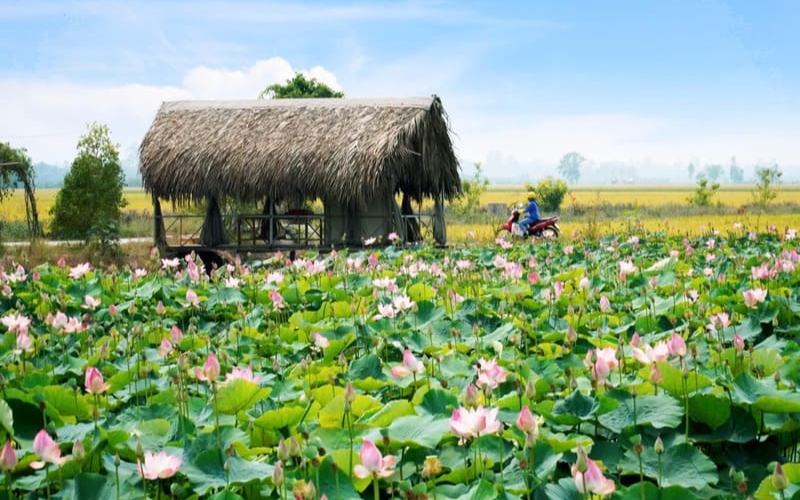
Lotus flowers (hoa Sen).
The flower usually appears in soft pink or white, rising above broad green leaves and calm water. Its beauty feels clean, balanced, and peaceful. That is one reason why lotus is so deeply respected in Vietnamese culture. It is often associated with purity, dignity, resilience, and inner calm.
For travelers, lotus season can be enjoyed in different ways depending on where they go. In Hanoi, lotus ponds around West Lake become especially popular in early summer. In the Mekong Delta and Dong Thap, lotus fields create a wider and more natural landscape experience. In both cases, the flower is more than something to photograph. It is connected to daily life, traditional tea, food, religious offerings, and the visual identity of Vietnam itself.
Sunflowers in bright summer fields
June is also a good time to see sunflowers or “hoa huong duong” in some parts of Vietnam, depending on local planting schedules. These flowers bring a completely different feeling from lotus. They are bold, cheerful, and full of movement. With their large yellow faces and strong upright stems, sunflowers create a scene that immediately feels energetic and open.
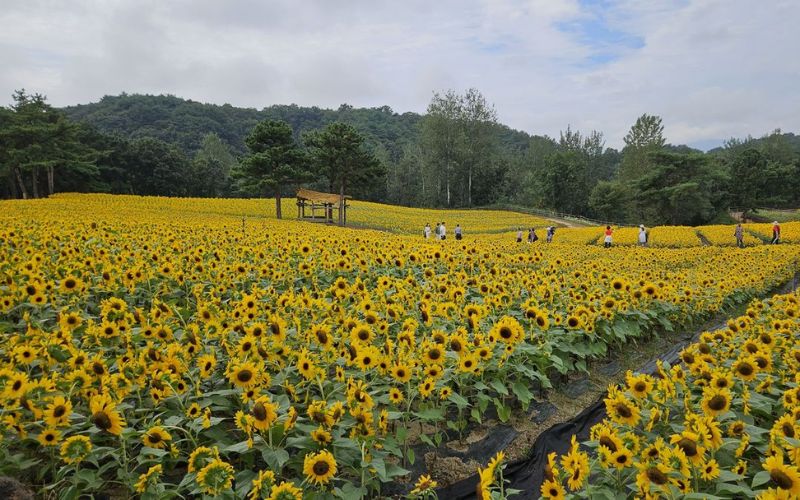
Sunflowers (hoa Hướng Dương).
Sunflower fields are popular because they are easy to enjoy visually. Even travelers who are not especially interested in flowers often stop for them because the color is so striking. Against blue sky and summer light, the yellow tones look especially vivid. In some places, sunflower gardens are also arranged for seasonal visits, local photography, and weekend outings.
For international travelers, sunflower season works well as part of a countryside drive, a day trip, or a short stop outside city centers. It is not always the most deeply cultural flower experience, but it is one of the easiest and most joyful to appreciate.
Bougainvillea on streets, homes, and seaside roads
Bougainvillea, known in Vietnamese as “hoa giay”, is one of the flowers travelers are most likely to notice without even planning to look for it. In June, it continues to bloom strongly in many warm parts of Vietnam, especially in cities, beach destinations, residential areas, and traditional courtyards. Its colors can vary, but bright pink, magenta, red, orange, and white are the most common.
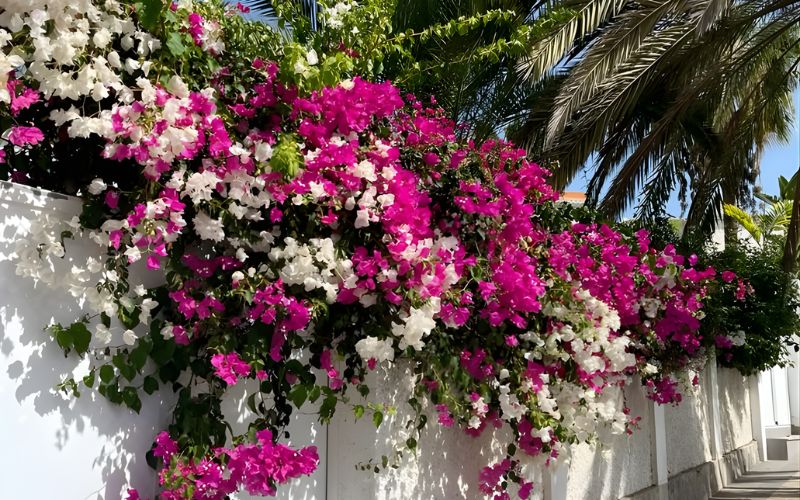
Bougainvillea flowers (hoa Giấy).
What makes bougainvillea special is how naturally it fits into everyday Vietnamese scenery. It climbs over gates, walls, balconies, fences, garden entrances, and roadside structures. In places such as Hoi An, Nha Trang, Phan Thiet, and many southern towns, bougainvillea helps create some of the most charming street views of the dry and sunny season.
For travelers, bougainvillea often becomes part of the background beauty of a trip. Later, when they remember an old yellow wall, a quiet lane, or a sunny guesthouse entrance covered in pink blossoms, they are often remembering bougainvillea.
July
July is one of the richest months for flower travel in Vietnam because nature feels full and mature by this point of the year. Summer is at its peak, the countryside is lush, and many water landscapes look especially alive.
Golden shower flowers along summer streets
Golden shower flowers, known in Vietnamese as “hoa muong hoang yen” and sometimes called “osaka vang”, are one of the clearest visual signs of midsummer in many parts of Vietnam. When they bloom, long hanging clusters of yellow flowers fall from the branches like bright curtains, making streets, parks, school grounds, and public spaces look lighter and more vivid.
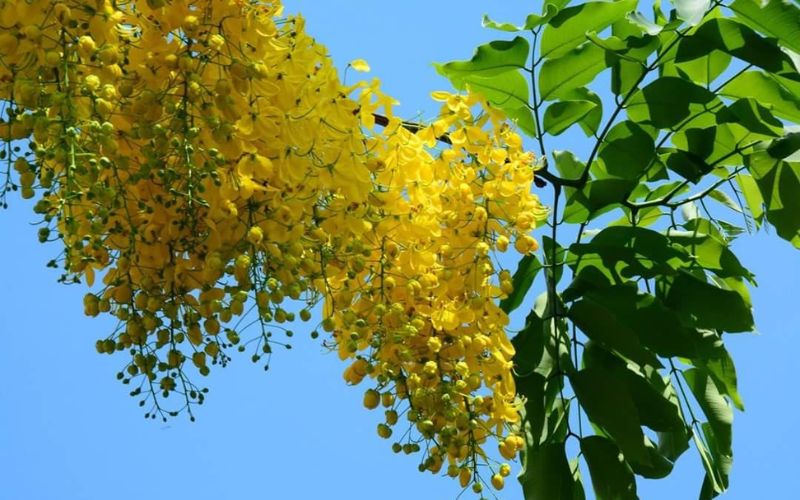
Golden shower flowers (hoa Muồng Hoàng Yến).
This flower is easy to notice because its color is so strong. Against a grey sky after rain or under a bright break of sunshine, the yellow blooms stand out immediately. In cities, they often line roads and pavements, where they soften the concrete landscape and add a more tropical character to the season. In quieter residential areas, the effect can feel even more charming, especially when the flowers arch over small streets or garden walls.
For travelers, golden shower season is appealing because it does not require a special detour. You are likely to see these trees in everyday settings as you visit Vietnamese cities and towns in July. That makes the experience feel local and natural. It is not about going to one famous flower field. It is about noticing how seasonal beauty appears right in the middle of daily life.
Madagascar periwinkle in gardens and roadside spaces
Madagascar periwinkle, known in Vietnamese as “hoa dua can”, is a much smaller flower, but it plays an important role in Vietnam’s summer landscape. It usually blooms in shades of pink, white, red, or pale purple, and it appears widely in gardens, traffic islands, parks, temple grounds, schoolyards, and residential flower beds.
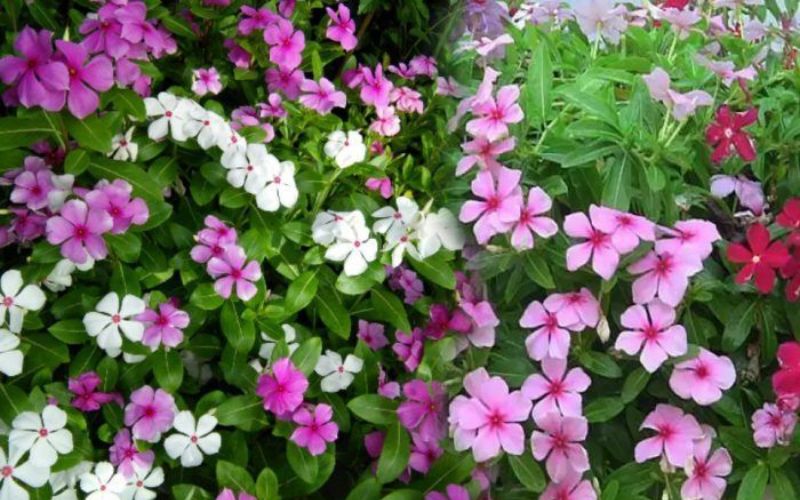
Madagascar periwinkle (hoa Dừa Cạn).
Unlike large seasonal trees, periwinkle is appreciated for its quiet persistence. It blooms steadily, handles heat and rain well, and helps keep urban and semi-urban spaces colorful even in the wetter part of the year. Because of that, it becomes part of the familiar visual background of life in Vietnam during July.
For foreign travelers, this is the kind of flower that may not appear on a classic sightseeing list, but it helps shape the feeling of the places they visit. A hotel entrance, a pagoda courtyard, a roadside café, or a neighborhood park often looks more welcoming because of these small clusters of flowers. They add color without demanding attention, and that understated beauty suits the slower rhythm of July.
August
August is a gentle turning point in Vietnam’s flower calendar. Summer is still present, but in some places the light becomes softer and the atmosphere begins to change. This month does not usually bring the most famous large-scale flower landscapes of the year, yet it offers a quieter kind of beauty that many travelers appreciate.
Tigon flowers on walls and garden fences
Tigon flowers, known in Vietnamese as “hoa tigon”, are one of the most delicate flowers travelers may notice in August. They usually grow as climbing vines, with small clusters of pink or rose-colored blossoms hanging lightly from walls, fences, balconies, and garden structures. The flower itself is not large, but its appearance is graceful and memorable.
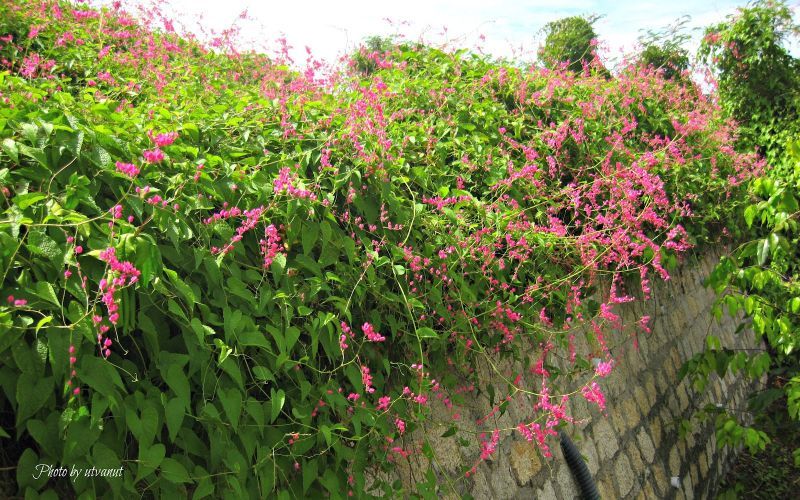
Tigon flowers (hoa Tigon).
In Vietnam, tigon flowers are often associated with tenderness, longing, and romance. They appear in poems, old songs, and personal memories, which gives them an emotional place in the floral imagination of many Vietnamese people. Their soft shape and gentle color help explain why they leave such an impression.
For travelers, tigon flowers are less about grand scenery and more about atmosphere. They fit naturally into older residential neighborhoods, quiet gardens, and traditional houses. You may not travel a long distance just to see them, but once you notice them, they can become one of the most charming details of an August trip.
September
September brings one of the most distinctive seasonal moods in Vietnam, especially in the North. The heat of summer begins to ease, the air feels lighter, and in cities such as Hanoi, people start to notice the first clear signs of autumn.
Milk flowers and the scent of Hanoi in early autumn
Milk flowers, known in Vietnamese as “hoa sua”, are one of the clearest symbols of autumn in Hanoi. Visually, the flowers are small and not especially striking. Their real presence comes from their fragrance, which becomes noticeable in the evening and at night when the weather begins to cool. For many locals, this scent is inseparable from the feeling of Hanoi in autumn.
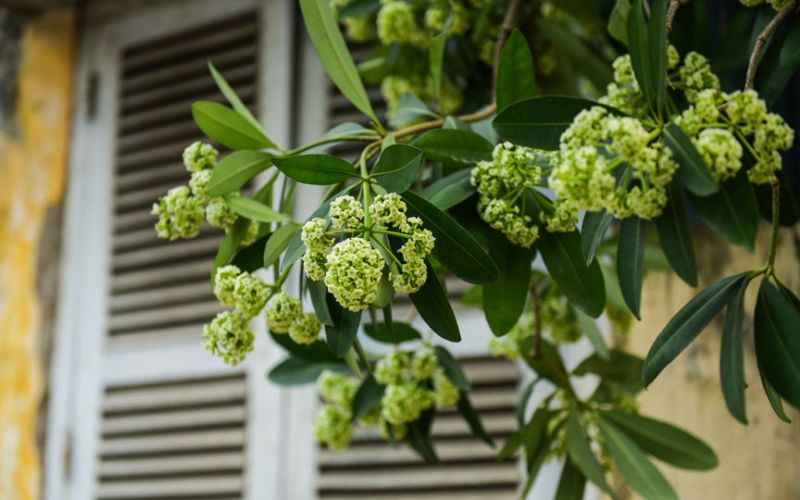
Green milk flowers (hoa Sữa).
You will not always notice milk flowers by looking up at the trees first. Very often, you notice them through the air. On certain streets, especially in the evening, the scent can feel soft and nostalgic, though sometimes quite strong depending on the area and the number of trees. That is part of what makes them memorable. They are not a flower people admire only with their eyes.
For international travelers, milk flower season offers a cultural experience as much as a floral one. It helps explain why Hanoi in autumn is so often described in an emotional way. The season is not defined only by cooler weather or yellow leaves. It is also defined by scent, memory, and atmosphere, and milk flowers play a major part in that.
Falling-water flowers with their rich red clusters
“Hoa loc vung”, sometimes called the falling-water flower, is another flower associated with this period of the year. Its long hanging flower clusters, often in shades of red or deep pink, create a very different visual effect from the small white milk flowers. When in bloom, loc vung trees can look elegant and slightly theatrical, especially near lakes, temples, old gardens, and quiet public spaces.
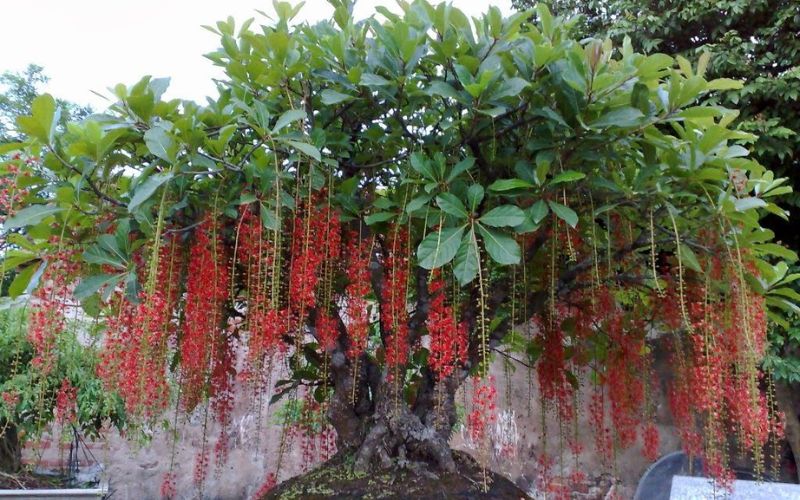
Falling-water flowers (hoa Lộc Vừng).
In Vietnam, loc vung is often appreciated not only for its beauty but also for the way it suits traditional landscapes. It is a tree that seems to belong naturally beside water, in older residential compounds, or near heritage spaces. Because of that, the flower often feels connected to stillness, reflection, and a more classical sense of beauty.
For travelers, loc vung is one of those flowers that adds depth to the places they are already visiting. You may see it while walking around a lake, visiting a temple courtyard, or moving through a quieter historical neighborhood. It is not always the main attraction, but it often becomes a memorable visual detail of the season.
Golden chrysanthemums in homes, markets, and worship spaces
September is also a good time to notice golden chrysanthemums (a.k.a. “hoa cuc vang”). They may not dominate public scenery in one single dramatic way, but they are very present in Vietnamese life. In homes, flower markets, temple spaces, and family altars, chrysanthemums appear regularly as both decorative and symbolic flowers.
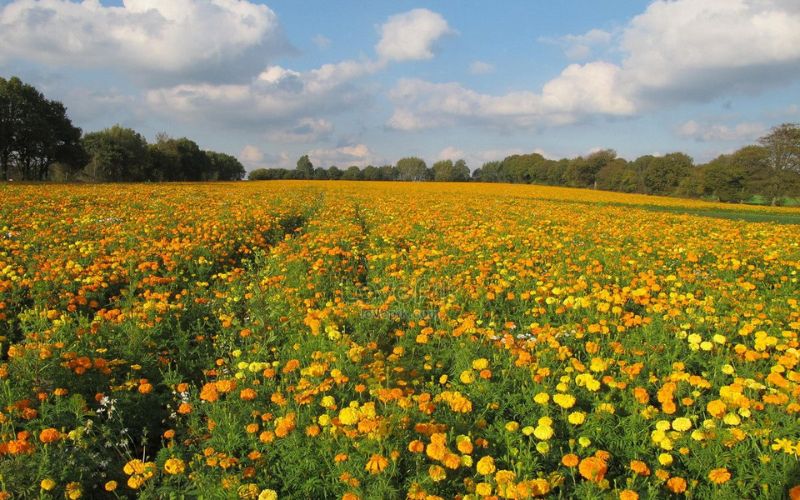
Golden chrysanthemums (hoa Cúc Vàng).
Their golden color adds warmth to the softer light of early autumn. In visual terms, they brighten corners of the city and home life at a time when the year is beginning to turn. In cultural terms, chrysanthemums are often associated with dignity, longevity, and respect. That is why they are so commonly used not only for decoration but also in spiritual and family settings.
For foreign visitors, chrysanthemums may seem more familiar than some other Vietnamese seasonal flowers, but seeing how they are used in everyday life gives them a different meaning. They are not just ornamental. They are part of the emotional and cultural texture of the season.
>>> September is a lovely time to discover Northern Vietnam in early autumn, when flowers, fragrance, and cooler air shape the mood of the city. Contact us if you would like a well-balanced itinerary in Mai Chau that combines seasonal charm with history, food, and local life.
October
October is one of the most exciting months for flower travel in Vietnam because it brings together mountain scenery, cooler air, and some of the country’s most photogenic seasonal blooms.
Wild sunflower in the Central Highlands
Wild sunflower, known in Vietnamese as “hoa da quy”, is one of the signature flowers of October in the Central Highlands. When the season begins, roadsides, slopes, and open hills in places such as Da Lat and nearby upland areas start to glow with rich yellow color. The flowers do not create a polished garden effect. Instead, they spread across natural landscapes in a way that feels wild, generous, and full of energy.
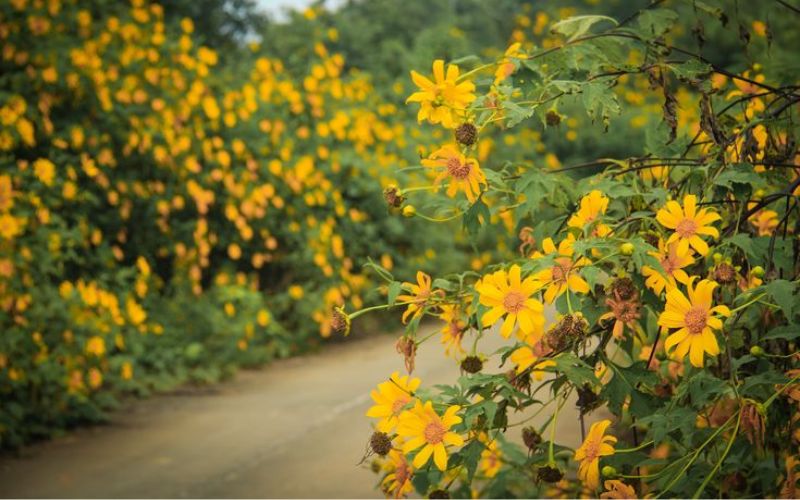
Wild sunflower (hoa Dã Quỳ).
This is part of their appeal. Wild sunflower belongs to the road, the hillside, and the changing season. It appears at the time when the rains begin to ease and the landscape opens up again under clearer skies. For many Vietnamese travelers, the sight of wild sunflower is one of the strongest signs that the highland dry season is approaching.
For international visitors, wild sunflower season is an excellent reason to explore the Central Highlands by road. The experience is not only about stopping for photos. It is also about driving through mountain routes, enjoying cooler weather, and seeing how the flower transforms ordinary hills and roads into something memorable. Among Vietnam’s flower seasons, this is one of the easiest to combine with a wider itinerary that includes nature, coffee culture, and highland towns.
Buckwheat flower in Ha Giang
If one flower defines October in Northern Vietnam, it is the buckwheat flower of Ha Giang. Known in Vietnamese as “hoa tam giac mach”, this small flower has become one of the most famous seasonal attractions in the country. During the blooming season, valleys and rocky slopes across the Ha Giang plateau begin to change with soft fields of white, pink, and light purple tones.
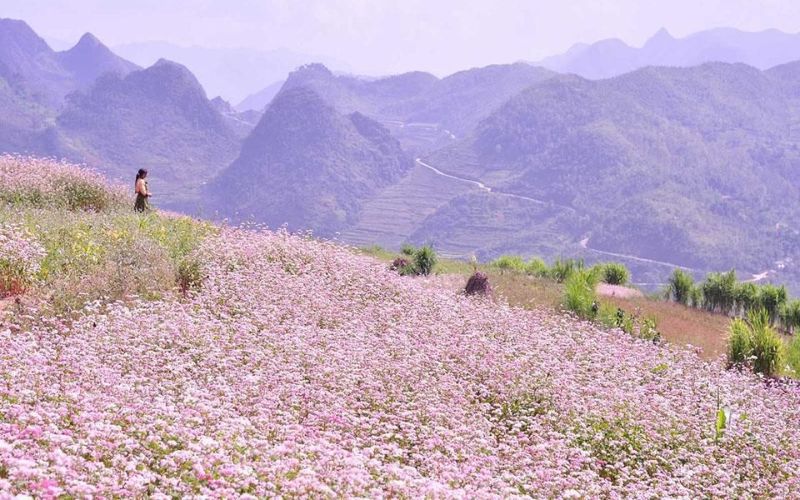
Buckwheat flowers (hoa Tam Giác Mạch).
What makes buckwheat especially attractive is not only the flower itself, but the setting. In Ha Giang, the fields sit among limestone mountains, high passes, ethnic villages, and winding roads. The contrast between delicate flowers and rugged stone landscapes creates a scene that feels unique to this far northern region. It is one of the clearest examples of how flowers in Vietnam are deeply shaped by geography.
Buckwheat season also has a strong local identity. The plant was once grown more for practical use, especially for seeds and traditional food, but today it has become one of Ha Giang’s best-known cultural and tourism symbols. For travelers, visiting during buckwheat season offers much more than a flower stop. It is a chance to experience one of Vietnam’s most dramatic landscapes at one of its most beautiful times of year.
>>> October is one of the best months for scenic flower travel in Vietnam, especially in Ha Giang and the Central Highlands. If you are dreaming of buckwheat fields, mountain roads, and unforgettable landscapes, check this 10 Days Trekking Viet Nam Tour.
November
November is one of the most charming months for flower travel in Vietnam. The air in the North becomes cooler, the light feels softer, and many destinations begin to take on the quiet beauty of late autumn and early winter.
White daisies in Hanoi and nearby flower gardens
White daisies, often called “hoa cuc hoa mi” in Vietnamese, are one of the most beloved flowers of November in Northern Vietnam. Their season is short, which is one reason people look forward to them so much every year. When they bloom, they bring a simple and very gentle beauty, with small white petals and bright yellow centers that stand out in the cool light of the season.
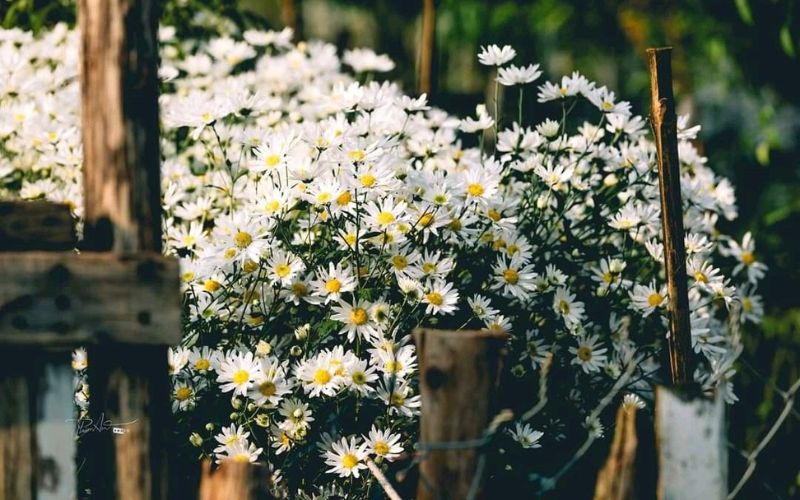
White daisies (hoa Cúc Hoạ Mi).
In and around Hanoi, white daisies appear in flower gardens, roadside stalls, neighborhood markets, and on bicycles carrying fresh bouquets through the city. They do not transform the landscape on a grand scale, but they completely change the mood of the streets. Suddenly, the city feels softer, quieter, and more reflective.
For foreign travelers, white daisy season is one of the easiest and most pleasant seasonal experiences to enjoy in Hanoi. It does not require a long trip or a special route. You simply need to walk slowly, visit a flower market, or spend time in local areas where seasonal flowers are part of daily life.
December
December closes the year with a very different floral mood in Vietnam. In the North, the weather turns colder and the landscape becomes quieter, especially in mountain areas and highland plateaus. This is when mustard flowers begin to attract attention, poinsettias return to seasonal displays, and Da Lat starts to show the soft pink beauty of cherry blossoms.
Mustard flowers in northern highlands
Mustard flowers or “hoa cai vang” are among the most recognizable flowers of December in northern Vietnam. Depending on the place, travelers may see yellow mustard flowers or white mustard flowers spreading across valleys, hillsides, village roads, and open fields. In places such as Moc Chau and Sapa, this season creates some of the most photogenic winter landscapes of the year.
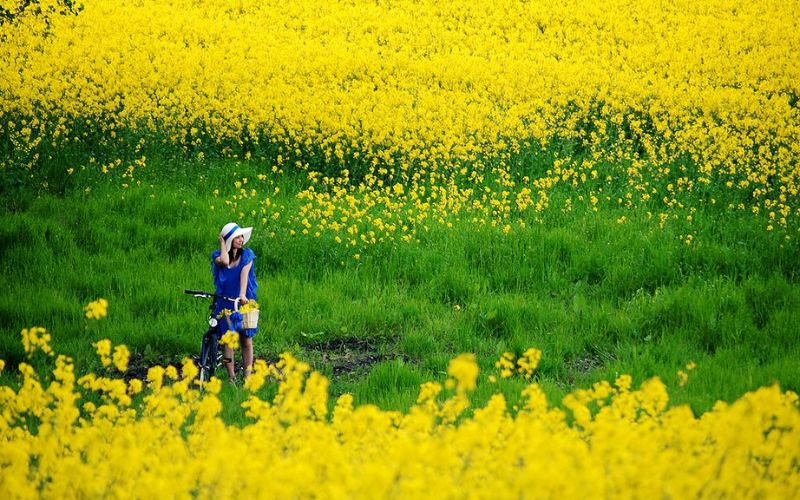
Mustard flowers (hoa Cải Vàng).
Yellow mustard flowers bring warmth to the cold air of early winter. Their bright color can make an entire hillside feel lighter and more cheerful. White mustard flowers, by contrast, create a softer and more poetic scene. When they bloom in large numbers, they can make the fields look almost like they are covered in a thin white cloud.
For travelers, mustard flower season is especially appealing because it fits naturally into highland travel. It is not only about looking at flowers. It is also about the mountain roads, the village atmosphere, the cold morning air, and the slower rhythm of northern winter. This makes December a very rewarding time for those who enjoy scenic countryside travel rather than only urban sightseeing.
Da Lat cherry blossoms in the Central Highlands
One of the most beautiful flowers of December is the Da Lat cherry blossom, or “hoa mai anh dao”. This flower is closely associated with Da Lat and some nearby highland areas where the cooler climate allows it to bloom well. Its soft pink color gives the city a romantic and very recognizable seasonal character.
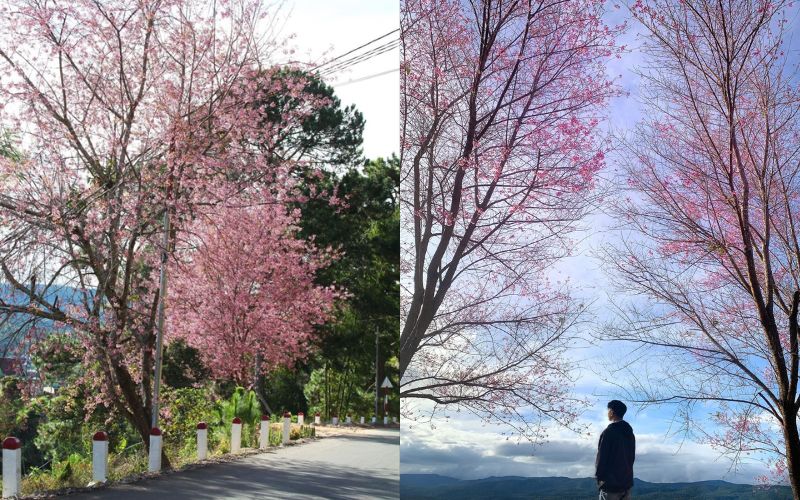
Cherry blossoms (hoa Mai Anh Đào).
Da Lat cherry blossoms do not look exactly the same as the peach blossoms of Northern Vietnam. Their appearance has its own highland charm, especially when seen along roads, around lakes, near pine-covered slopes, and in the quiet morning light of Da Lat. The blooming season often begins toward the end of the year and can continue into the next months, depending on weather conditions.
For travelers, this is one of the best reasons to visit Da Lat in winter. The city already has a cooler atmosphere, colonial-era charm, gardens, and mountain scenery. When the cherry blossoms begin to appear, the experience becomes even more distinctive. It is one of the clearest examples of how Vietnam can offer a very gentle, almost temperate flower landscape in certain upland regions.
Helpful Advice Foreign Travelers Should Know Before Visit Vietnam
A flower season trip in Vietnam can be beautiful, but it works best when expectations are realistic and timing is planned carefully. Flowers do not bloom in the same way every year, and the best viewing time can shift slightly depending on weather, rainfall, temperature, and local planting conditions. For foreign travelers, the smartest approach is to treat flower season as a special highlight within a well-planned trip, not as a promise that every destination will look exactly like photos online.
Choose the destination first, not just the month
One common mistake is to choose a month and assume the whole country will have the same seasonal experience. Vietnam is long and climatically diverse, so the flower calendar changes greatly from region to region. January in Hanoi is very different from January in Ho Chi Minh City. October in Ha Giang is not the same as October in Da Lat.
A better way to plan is to decide which flower you most want to see, then build the route around the place where that flower is most meaningful or most beautiful. This will give your trip a clearer focus and a much higher chance of success.
Check bloom timing close to your departure date
Even if a flower usually blooms in a certain month, peak bloom can still move earlier or later. That is especially true in mountain areas and in short flower seasons such as buckwheat, white daisies, or plum blossoms. Travelers should check local updates shortly before departure instead of relying only on a general travel article published months earlier.
This matters most if flowers are one of the main reasons for your trip. A difference of one week can sometimes change the experience a lot.
Do not plan your trip around only one photo spot
Some travelers choose one famous location they saw on social media and expect the entire area to look the same. In reality, flower seasons in Vietnam are often more rewarding when experienced as part of a wider region. A flower field may be beautiful, but the full experience usually includes village roads, markets, local food, weather, and the atmosphere of the season.
This is especially true in places such as Ha Giang, Moc Chau, Da Lat, or the Northwest. The journey, the landscape, and the local rhythm are just as important as the flowers themselves.
Travel early in the day when possible
Morning is often the best time for flower viewing in Vietnam. The air is cooler, the light is softer, and popular spots are usually less crowded. This is especially useful for places such as lotus ponds, flower gardens, highland valleys, and urban roads where flowers are best appreciated in natural light.
If you enjoy photography, early morning also gives better color, clearer atmosphere, and a more peaceful travel experience.
Wear appropriate clothes for the region
Many foreign travelers think only about Vietnam as a warm country, but flower trips often involve mountain areas or seasonal transitions. If you go to Sapa, Ha Giang, Moc Chau, or Da Lat in flower season, mornings and evenings can feel cold, especially from late autumn to early spring. Comfortable walking shoes, a light jacket, and simple layers are often more useful than fashionable clothes chosen only for pictures.
Practical clothing makes a big difference, especially when your trip includes road journeys, village walks, or outdoor flower gardens.
Respect local life and flower areas
Many beautiful flower places in Vietnam are not formal tourist parks. They may be village roads, private gardens, farm fields, temple grounds, or community spaces. Travelers should avoid stepping on flower beds, blocking local paths, flying drones carelessly, or turning quiet places into noisy photo zones.
Respect matters even more in ethnic minority regions and rural communities. A flower season trip should not only be beautiful for visitors. It should also remain comfortable for the people who live there.
Final Advice From IDC Travel
A good flower season itinerary should include more than bloom-chasing. Combine flower viewing with local food, markets, scenic drives, cultural sites, village visits, and time to simply enjoy the region. This gives the trip more depth and protects you from disappointment if the bloom is slightly early or late.
In Vietnam, the most memorable journeys are rarely about one single stop. They are about how the season, the place, and the local way of life come together.
If you want to see Vietnam at its most seasonal and photogenic, contact us! Our team can help you build an itinerary that matches the season, your budget, and your travel style.
Read more:
This article is very detailed. I have been in Vietnam for over a year, and Hanoi has many flower seasons. It’s March now, and the streets are full of Bauhinia and Sua flowers. Never stop being amazed at the beauty of Hanoi streets!
Hi Élodie, thank you so much for sharing that! Hanoi really does know how to show off in every season. It’s amazing how even after a year, Hanoi still finds new ways to surprise you. Hope you’re enjoying every moment!