
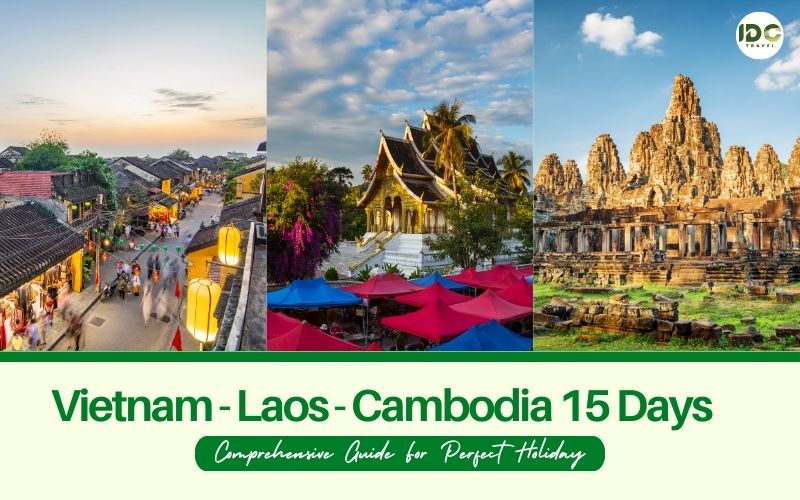
Planning a trip across Vietnam, Cambodia and Laos in 15 days can feel exciting and overwhelming at the same time. These three countries sit close to each other, but each offers a very different travel experience. Vietnam stands out for its variety, from heritage cities to dramatic bays and lively modern centers. Laos feels slower, calmer, and more spiritual, with historic towns and beautiful natural scenery. Cambodia leaves a strong impression with its temple heritage, layered history, and warm local culture.
This guide is designed for international travelers who want a realistic and rewarding 15-day journey across Indochina, with clear advice on timing, route planning, and what is truly worth seeing first.
Is 15 Days Enough to Explore Vietnam, Cambodia And Laos?
- A Memorable Trip to Laos, Vietnam & Cambodia in 13 Days
- Essentials of Indochina in 14 days: Vietnam, Laos & Cambodia
- Discover Wonders of Vietnam, Laos, and Cambodia in 15 Days
- Highlights of Laos, Vietnam and Cambodia in 15 Days
- Discover Splendors of Cambodia, Vietnam and Laos in 16 Days
- Customized tour to Vietnam, Cambodia and Laos in 17 Days
Yes, 15 days is enough for a first trip to Vietnam Cambodia Laos if you focus on the highlights and keep your route efficient. It is not enough for a deep, slow journey through all three countries, but it is enough to experience their most memorable places in one well-planned holiday. In practical terms, this means choosing a small number of major destinations instead of trying to cover too much.
- Vietnam alone can easily fill two or three weeks, so on a 15-day Indochina trip, it is better to concentrate on a few iconic stops such as Hanoi, Ha Long Bay, Hoi An, or Ho Chi Minh City. That approach makes sense because Ha Long Bay remains one of Vietnam’s signature travel experiences on the official national tourism site, while Hoi An is still recognized by UNESCO as an exceptionally well-preserved historic trading port.
>>> Source from: Hoi An Ancient Town – UNESCO World Heritage Centre.
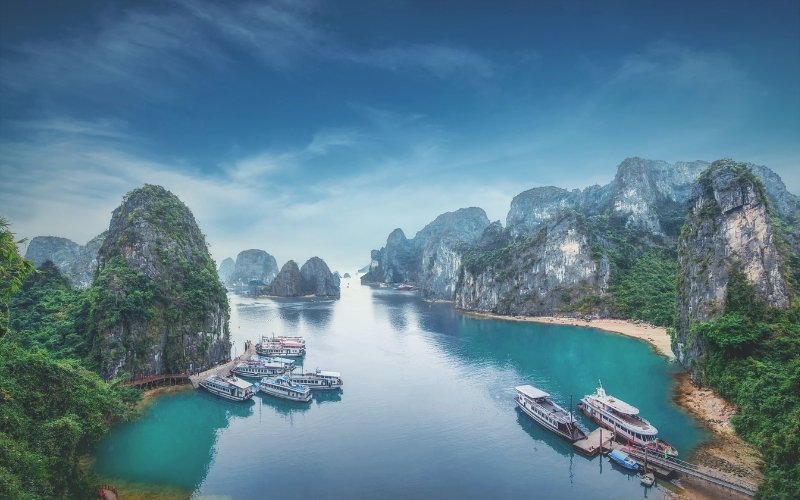
Majestic Ha Long Bay, where emerald waters meet towering limestone cliffs, offering one of Vietnam’s most breathtaking natural wonders.
- Laos also rewards a shorter but focused visit. For most first-time travelers, Luang Prabang is the best choice because it combines culture, atmosphere, and easy access to nature. UNESCO continues to recognize Luang Prabang as a World Heritage city, and the official Laos tourism platform still presents Kuang Si Falls as one of the essential experiences near town.
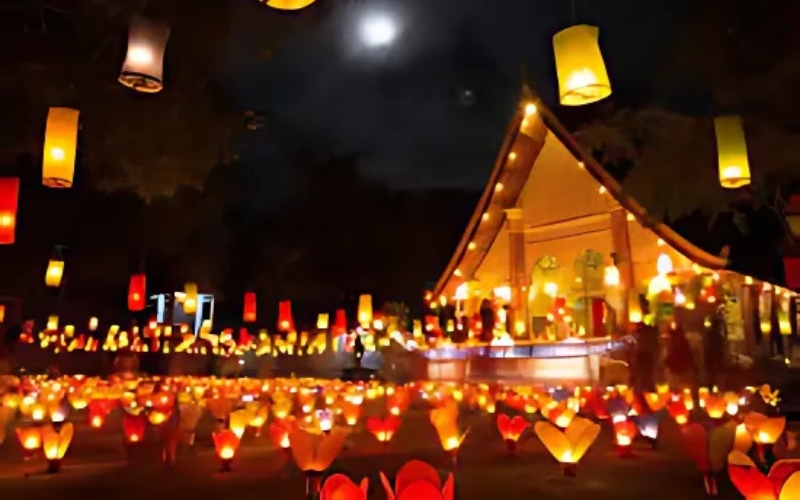
>>> Source from: Town of Luang Prabang – UNESCO World Heritage Centre.Awk Phansa Day in Laos
- Cambodia can also be approached this way. If you have limited time, Siem Reap and Angkor should be the priority. UNESCO describes Angkor as one of the most important archaeological sites in Southeast Asia, and it remains the country’s must-see destination for most international visitors.
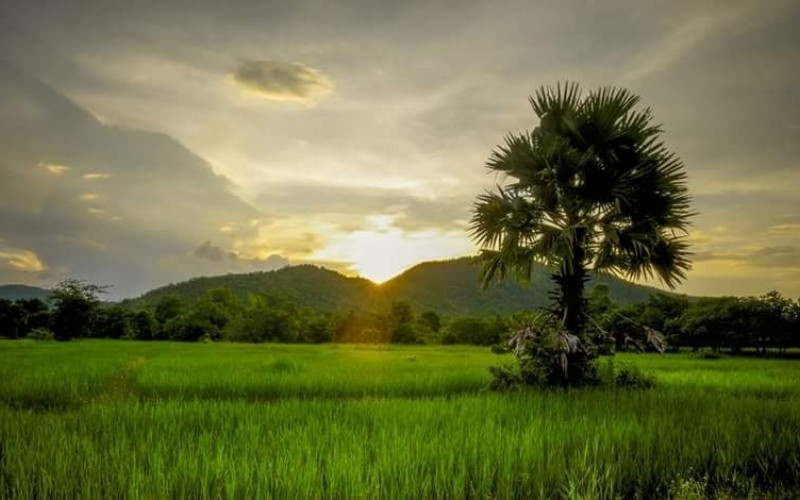
>>> Source from: Angkor – UNESCO World Heritage Centre.A serene view of Cambodia’s countryside at sunset, showcasing lush rice fields and natural beauty.
For a balanced 15-day trip, a good rule is to divide your time by travel style rather than by country size. Many travelers do well with about 5 to 6 days in Vietnam, 3 to 4 days in Laos, and 4 to 5 days in Cambodia, depending on flights and personal interests. This gives you enough time to enjoy the major highlights without turning the holiday into a rushed checklist.
That said, transport planning matters more than many travelers expect. As of this year, flight schedules, border procedures, and regional connections can still change depending on season, airline operations, and local conditions. For the most accurate route planning, it is best to confirm the latest transport options before booking, or contact us for updated travel advice tailored to your travel dates.
In short, 15 days is enough to discover the spirit of all three countries, not every corner of them. If this is your first time in Indochina, that is often the best way to travel: see the essentials, enjoy the contrasts, and leave room to return for a deeper trip later.
When Is the Best Time to Visit Vietnam Cambodia and Laos in 15 Days?
The best overall time to visit Vietnam Laos Cambodia together is from November to April. This is the easiest period for a multi-country trip because Laos and Cambodia are generally in their dry season, while much of Vietnam also has favorable weather, especially for classic first-time routes. That said, Vietnam has strong regional climate differences, so the best month depends on whether your itinerary focuses on the north, central coast, or south.
Vietnam does not have one single weather pattern. The north, center, and south can feel very different at the same time, which is why route design matters so much. According to the official Vietnam tourism, March to May often brings the best weather across much of the country, but there is no single bad time to visit because some regions stay favorable year-round.
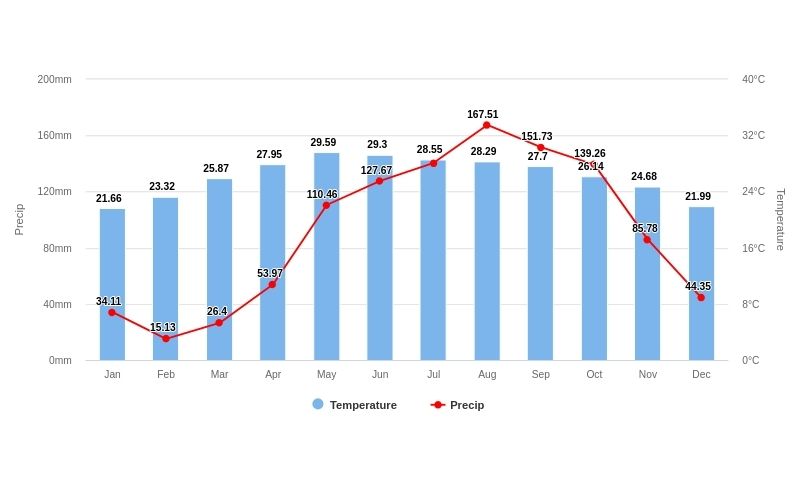
Vietnam weather graph
- For Northern Vietnam such as Hanoi and Ha Long Bay, the most pleasant months are usually October to April, when temperatures are cooler and sightseeing is more comfortable. Spring and autumn are especially attractive for first-time travelers who want clearer skies and easier walking conditions.
- For Central Vietnam including Hoi An, Da Nang, and Hue, the drier and sunnier period is generally from February to August. This is usually the best time for beaches, old-town visits, and coastal travel. Late-year rain and storm risks can affect this region more than many travelers expect.
- For Southern Vietnam such as Ho Chi Minh City and the Mekong Delta, the dry season usually runs from November to April. This is the easiest period for river excursions, city touring, and general travel comfort. The rainy season can still be enjoyable, but afternoon showers are more common.
Laos
Laos is easier to understand climatically than Vietnam. In most years, the country is best visited during the dry season from October or November to April, with the most comfortable conditions usually falling between November and February. These months are cooler, drier, and better for temple visits, river journeys, and time outdoors in places like Luang Prabang and Vang Vieng.
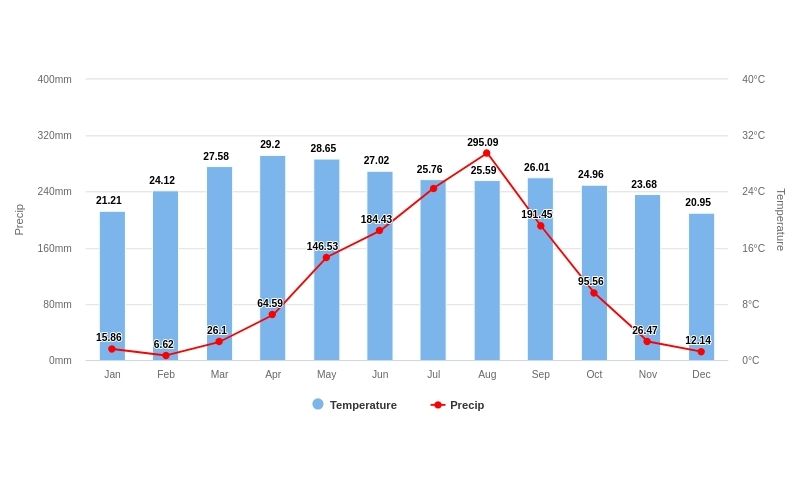
Laos weather graph
The rainy season from May to October brings greener scenery and fewer tourists. This can be a good option for travelers who prefer quieter landscapes and do not mind occasional heavy rain. River conditions may also be attractive in some periods, especially after the wet season, but local conditions vary by month and route.
Cambodia
Cambodia is usually most comfortable during the dry season from November to April. For many travelers, December to February is the best period because temperatures are lower, humidity is less intense, and temple touring is easier. This is particularly important around Angkor, where long outdoor visits can become tiring in hotter months.
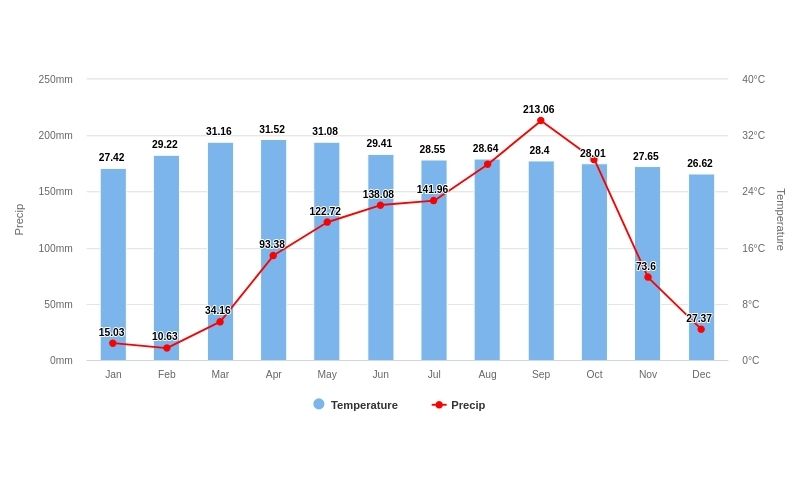
Cambodia weather graph
From March to April, Cambodia becomes much hotter, but travel is still possible if you start early and rest during the hottest part of the day. The rainy season from May to October brings greener scenery and fewer crowds. For some travelers, this creates a more atmospheric experience around temple sites, though showers can affect sightseeing schedules.
What Are the Best Things to Do in Vietnam Cambodia and Laos in 15 Days?
In a 15-day Indochina trip, the best activities are the ones that show the character of each country without wasting too much travel time. In Vietnam, that usually means a mix of scenery, heritage, and local life. In Laos, travelers often look for calm cultural experiences and time in nature. In Cambodia, the highlights are more historical and emotional, especially around the Angkor region and Phnom Penh. If you are visiting all three countries on one journey, it is better to choose a few strong experiences in each destination rather than try to see everything.
Vietnam
Vietnam is usually the most varied part of this three-country trip. Even in a short itinerary, you can combine natural beauty, historic towns, and daily local culture in a very satisfying way.
Cruise through Ha Long Bay

Romantic cruise through Halong Bay at sunset
A cruise in Ha Long Bay remains one of the classic experiences in Vietnam, and for good reason. The bay is famous for its limestone islands, calm emerald waters, caves, and dramatic seascape. Vietnam’s official tourism site continues to present Ha Long as one of the country’s essential destinations, especially for boat trips, kayaking, and cave visits, while UNESCO recognition of the wider Ha Long Bay and Cat Ba Archipelago further confirms its global value. For most travelers on a 15-day trip, an overnight cruise is the best option because it allows enough time to enjoy the scenery, a cave excursion, a short kayak session, and sunrise on the water without rushing.
>>> Source from: Ha Long Bay – Cat Ba Archipelago – UNESCO World Heritage Centre.
Explore Hoi An Ancient Town
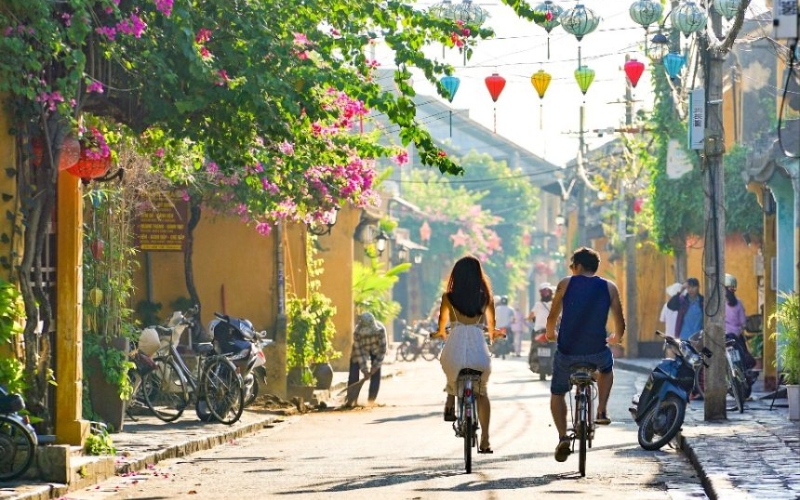
Romantic ride through Hoi An Ancient Town
Hoi An is one of the easiest places in Vietnam to enjoy as an international visitor. It is walkable, visually beautiful, and rich in history. UNESCO describes Hoi An as an exceptionally well-preserved Southeast Asian trading port, which explains why the old streets, merchant houses, assembly halls, and riverfront atmosphere still feel so distinctive today. In practical terms, Hoi An works very well in a multi-country itinerary because it offers culture, food, shopping, and a relaxed pace all in one place. Spending an evening in the lantern-lit old town, trying local dishes such as cao lau, and joining a simple hands-on activity like lantern making can add real depth to the trip without requiring extra travel time.
Visit Cai Rang Floating Market if your route includes the Mekong Delta
If your Vietnam section goes south, Cai Rang Floating Market in Can Tho is one of the most memorable ways to experience Mekong Delta life. It is not the easiest addition to every 15-day route, so it makes the most sense for travelers already starting or ending in Ho Chi Minh City.
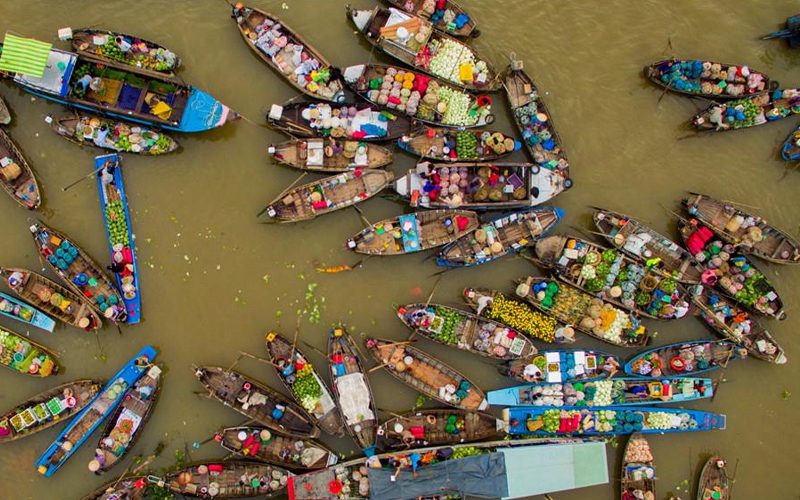
Cai Rang Floating Market
The experience is strongest early in the morning, when boats gather for trade and the river feels most active. It is less about a polished tourist attraction and more about seeing a working waterway culture. For many first-time visitors, that contrast between northern heritage cities and the southern delta lifestyle is one of the most rewarding parts of Vietnam. This activity is also one of the original article’s main Vietnam highlights, so it remains a good fit here for travelers who want more local character in their itinerary.
Laos
Laos brings a very different mood to the trip. Compared with Vietnam, the pace is slower and quieter, which is exactly why many travelers remember it so fondly.
Experience the morning alms giving in Luang Prabang respectfully
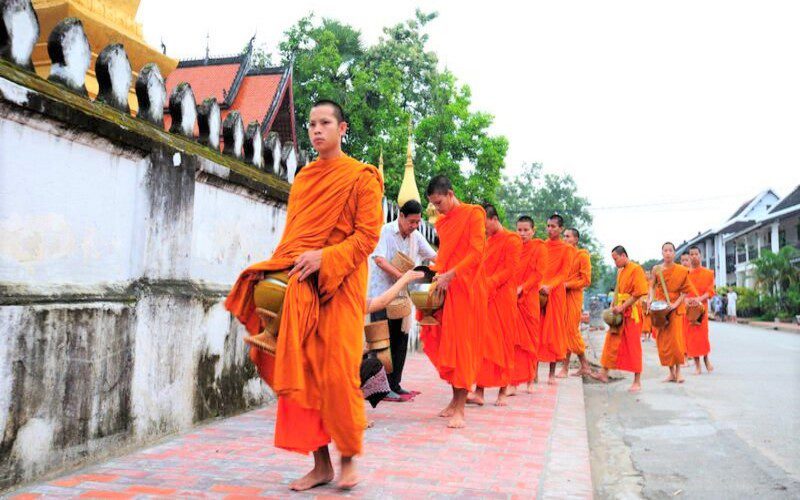
Monks give alms in Luang Prabang
The morning alms giving ceremony in Luang Prabang is one of the best-known spiritual experiences in Laos. It is not a performance, but a living religious tradition, so visitors should treat it with care and respect. This experience is meaningful because it gives travelers a closer view of everyday Buddhist practice and the calm rhythm of the city in the early morning. The original article is right to stress respectful behavior here. If you want to observe, dress modestly, stay quiet, avoid flash photography, and do not step into the monks’ path.
Visit Kuang Si Waterfalls

The breathtaking Kuang Si Waterfall, where crystal-clear waters flow gracefully through layers of limestone amid vibrant jungle greenery.
Kuang Si Waterfalls is one of the most rewarding excursions from Luang Prabang. The official Laos tourism site describes it as a three-level waterfall about 29 kilometers south of the city, with turquoise pools and a main drop of around 60 meters. For most travelers, this is the best nature experience to pair with Luang Prabang because it is scenic, easy to reach, and suitable for a half-day or full-day outing. The nearby bear rescue center also adds educational value to the visit. If your schedule is tight, this is usually a better choice than trying to add too many secondary stops elsewhere in Laos.
Enjoy a river and countryside experience near Luang Prabang or along the Nam Ou
The original article suggests kayaking on the Nam Ou River, and that is a good example of the kind of experience Laos does well. Whether by kayak, boat, or a simple countryside excursion, time on the river helps travelers appreciate the slower rural life that makes Laos feel so different from its neighbors. This part of the journey is less about ticking off major monuments and more about atmosphere: mountain scenery, riverside villages, caves, and quiet landscapes. For travelers with limited time, this kind of soft adventure balances very well with the heritage focus of Luang Prabang.
Cambodia
Cambodia gives the trip a powerful finish. It combines world-famous temple heritage with modern history and everyday local life in a way that feels both beautiful and deeply human.
Watch sunrise and explore the Angkor complex
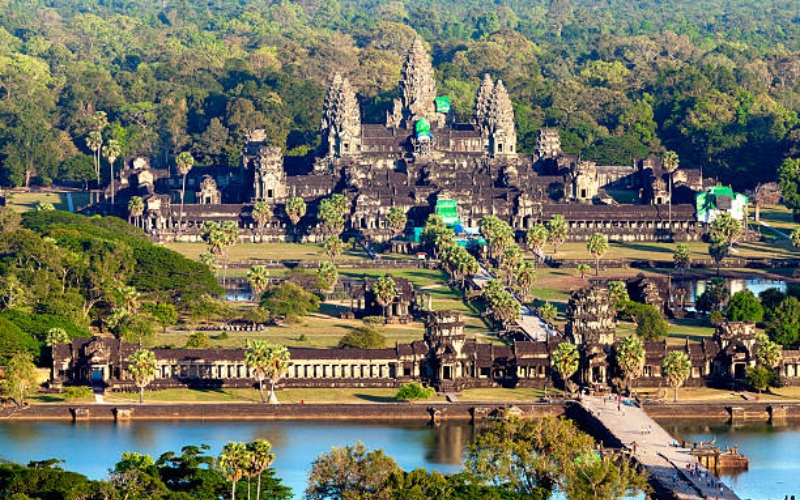
Angkor Wat’s grand temple complex
Angkor is the single most iconic travel experience in Cambodia and one of the most important archaeological sites in Southeast Asia. UNESCO describes Angkor as a vast archaeological park with the remains of Khmer capitals from the 9th to the 15th century, including Angkor Wat, Angkor Thom, and the Bayon. For first-time visitors, an early start is worth it. Sunrise at Angkor Wat is popular because the light over the temple towers can be extraordinary, but the broader value of the day is in exploring the wider complex, not only one viewpoint. If time allows, pairing Angkor Wat with Bayon and Ta Prohm gives a much fuller understanding of the site.
Visit the Toul Sleng Genocide Museum for historical context
Toul Sleng is not an easy visit, but it is an important one for travelers who want to understand Cambodia beyond temple tourism. The original article correctly treats it as a serious and meaningful stop rather than a casual sightseeing item. A visit here adds depth to the trip because it helps explain the country’s modern history and the resilience of its people. For many international travelers, combining Angkor with one modern-history site creates a more balanced understanding of Cambodia.
Explore a local market for daily life, food, and shopping
A good market visit can round out the Cambodia section in a very natural way. Russian Market in Phnom Penh, which remains a practical choice for handicrafts, textiles, souvenirs, and casual local food. This kind of stop works especially well at the end of a more history-heavy day because it gives travelers a more everyday view of urban Cambodia. It is also a good place to pick up gifts without forcing a separate shopping-focused excursion into the itinerary.
How Much Does A Trip to Vietnam Cambodia and Laos in 15 Days Cost?
For a 15-day trip across Vietnam, Laos, and Cambodia, most travelers should plan around $900 to $1,600/person for a budget to mid-range trip, excluding international flights. If you prefer better hotels, private transfers, and more comfortable services, a more realistic budget is $1,800 to $2,800+/person.
Estimated cost for 15 days
| Expense category | Budget | Mid-range | Luxury |
| Accommodation | $280 to $490 | $700 to $1,050 | $1,500 to $3,000+ |
| Food and drinks | $150 to $300 | $300 to $525 | $600 to $1,050 |
| Local transport | $60 to $120 | $120 to $220 | $250 to $500 |
| Regional transport | $180 to $350 | $300 to $550 | $500 to $900 |
| Attractions | $80 to $180 | $150 to $300 | $250 to $500+ |
| Visa and entry costs | $55+ | $55+ | $55+ |
| Estimated total | $805 to $1,495 | $1,625 to $2,700 | $3,155 to $5,950+ |
Note: Prices may change depending on season, hotel standard, flight availability, nationality, and exchange rates. Please contact us for the most accurate quote for your travel dates.
To keep costs reasonable, choose fewer destinations, book transport early, stay in well-located 3-star hotels, and mix major attractions with simple local experiences.
Helpful Travel Tips to Vietnam Cambodia and Laos in 15 Days
A 15-day trip across Vietnam, Laos, and Cambodia can be smooth and very rewarding if you prepare for fast regional travel, different weather patterns, and a few practical entry rules. The original article already points in the right direction with planning, food, weather, and local connection. This rewritten version keeps those ideas, but makes them more useful for international travelers.
- Plan a focused route, not a rushed checklist: in 15 days, you should choose a few major stops in each country instead of trying to see everything. A balanced first trip usually works better when you focus on one clear route such as North or Central Vietnam, Luang Prabang in Laos, and Siem Reap or Phnom Penh in Cambodia. Too many flights or long transfers will reduce the quality of the trip.
- Check entry rules before booking flights: visa and arrival procedures can change, and the rules are not always the same for Vietnam, Laos, and Cambodia. Vietnam continues to use its official national e-visa system, Laos uses the official Lao eVisa platform, and Cambodia uses its official e-Arrival system for arrival processing. Always verify your nationality, entry point, and latest requirements before departure.
- Keep your passport validity comfortably ahead of your travel dates: for Laos eVisa, the official guidance states that your passport should be valid for more than 180 days from the date of arrival. Even when traveling to all three countries, it is wise to keep at least six months of passport validity and a few printed backup documents.
- Travel light, but pack for different conditions: Vietnam, Laos, and Cambodia can feel very different in temperature, humidity, and rainfall during the same trip. Bring light clothing, one modest outfit for temples, comfortable walking shoes, a small rain layer, sun protection, and insect repellent. This matters even more when your route includes cities, countryside, waterfalls, and temple sites in one itinerary.
- Use simple local phrases: a few basic words can make your trip easier and more human. Hello in Vietnamese is “Xin chao”, in Laos is “Sabaidee”, and in Cambodia is “Sous-dey”. You do not need long sentences. Even a polite greeting often leads to warmer service and better local interactions.
- Start sightseeing early: this is one of the easiest ways to travel better in Indochina. Early mornings are cooler, light is better for photos, and major sites are usually less crowded. This is especially useful for temple visits in Cambodia, old-town walks in Vietnam, and outdoor excursions in Laos.
- Do not skip street food, but choose carefully: street food is one of the best parts of this journey. Try pho and banh mi in Vietnam, laap in Laos, and amok in Cambodia, but eat where turnover is high and food is freshly prepared. Busy stalls with local customers are usually a better sign than empty places aimed only at tourists.
- Respect temple and religious etiquette: dress modestly when visiting temples and religious sites. Cover shoulders and knees when appropriate, speak quietly, and follow local signs about shoes, photography, and restricted areas. This is particularly important in Luang Prabang and at temple sites in Cambodia.
- Leave room for slow moments: the trip will be more memorable if you do not treat it like a race. A quiet evening in Hoi An, sunset by the Mekong, or a simple local market visit often becomes just as meaningful as the famous attractions. The best Indochina trips are not only about what you see, but also about how much time you allow yourself to feel the place.
- Keep some flexibility in your schedule: flights, weather, and local conditions can shift, especially on multi-country trips. Try not to fill every hour. A little flexibility makes it easier to adjust if a transfer changes or if you want to stay longer somewhere you really enjoy.
Newest important note: entry procedures, e-visa eligibility, and digital arrival systems may change depending on nationality, border point, and government updates. Please contact us before booking if you want the most accurate travel advice for your exact dates and passport type.
Final Thoughts
A 15-day trip through Vietnam Laos Cambodia is enough to see some of the most memorable highlights of Indochina if you plan your route well. With the right balance of culture, nature, food, and local experiences, this journey can be both rich and manageable for first-time travelers. We’re here to ensure all of that for you, so let’s plan your trip together.
Read more:

Hola, me gustaría presupuesto mes de Marzo o abril, Vietnam, Camboya, Laos, viajo desde argentina pero sola, no sé si hay posibilidad de compartir con alguien, desde ya gracias
Thank you for reaching out. Our team of expert consultants will contact you via email shortly to provide a more detailed consultation about your trip. Hope to see you !
Would love to know if vegetarian options are widely available on this route?
Dear Nayeli,
Thank you for your question! Yes, vegetarian options are widely available throughout Laos, Cambodia, and Vietnam, especially in major cities and tourist-friendly areas. Many local dishes can be adapted to vegetarian versions, and there are also plenty of restaurants catering to plant-based diets. Let us know your preferences, and we’d be happy to customize your 15-day itinerary with delicious vegetarian-friendly stops!
Best regards,
IDC Travel Team
I’m really curious, during this 15-day journey across Vietnam, Laos, and Cambodia, did you notice any big cultural differences or similarities between the three countries that travelers should be aware of?
Hi Jonas Müller, thank you for reaching us. Your question is very interesting. Absolutely, even though Vietnam, Laos, and Cambodia share some cultural similarities, each country has a distinct character. Vietnam feels lively and fast-paced, with a strong mix of modern energy and traditional values. Laos is much more laid-back and spiritual; everything moves slowly, and there’s a calm, reflective atmosphere, especially in places like Luang Prabang. Cambodia stands out with its deep historical roots and quiet resilience. Visiting Angkor Wat and learning about its past really leaves an impression. So yes, you’ll notice both shared roots and striking cultural contrast throughout the trip.
Hope this answer sheds light on you. If you need any further information, please contact us.
Best regards,
IDC Travel Team.