
For most first time visitors, 3 days in Vientiane is enough to see the city’s main cultural landmarks, understand its calmer rhythm, enjoy classic Lao food, and add one easy excursion outside the center. Vientiane is the capital of Laos, but it feels slower and more relaxed than many other capitals in Southeast Asia, which is exactly why a short stay can work so well. Laos’ official tourism platform also presents Vientiane Capital as one of the country’s key central destinations, within a wider national tourism offer built around culture, nature, history, and a laid back travel style.
When Is the Best Time to Visit Vientiane?
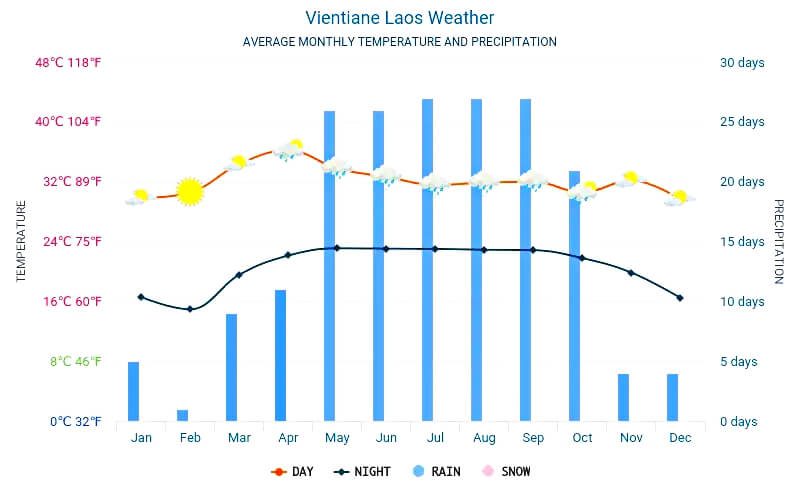
The best time to visit Vientiane is usually from November to February, when the weather is drier, temperatures are more comfortable, and sightseeing is easier.
For most travelers, this is the most practical season for a Vientiane itinerary. Days are generally warm rather than extreme, and walking between temples, monuments, and museums is much more comfortable than in the hotter months. This period also fits well with the broader travel season in Laos, when many visitors choose to explore the country’s cultural cities and natural landscapes under more favorable conditions. Official Laos tourism channels continue to promote year round travel, while global climate references for Vientiane show the coolest part of the year falls around December to January.
Weather in Vientiane
If you prefer greener scenery and fewer visitors, the rainy season can still be worth considering. Travel during this period is possible, but it needs more flexibility. Rain usually comes in showers rather than constant all day downpours, yet humidity is higher and some outdoor plans are less comfortable. This season can work well for travelers who care more about atmosphere, lower crowd levels, and value for money than perfectly dry weather.
Where Should You Go During 3 Days in Vientiane?
For a well balanced 3 day trip, you should focus on Vientiane’s religious landmarks, civic monuments, one museum, one local market, and only one or two out of town excursions. The city itself is not large, so the real challenge is not distance but choosing the right mix. In most cases, the best short itinerary includes Wat Si Saket, Wat Si Muang, Pha That Luang, Patuxai, the Lao National Museum, Talat Sao, and Buddha Park, then adds either Nam Ngum Lake or Phou Khao Khouay if you want more time in nature. Laos’ official tourism channels highlight Vientiane for exactly this combination of temples, monuments, markets, and easy access to nearby attractions.
1. Wat Si Saket
Wat Si Saket is one of the most important temples to include in a 3 day Vientiane itinerary because it is widely recognized as the city’s oldest surviving temple. It is especially worth visiting if you want a quieter, more reflective stop rather than only large national monuments. The temple is known for its cloister walls and its large collection of Buddha images, and it gives visitors a stronger sense of historical continuity than many newer sites in the capital. Laos’ official tourism site also lists Wat Sisaket among Vientiane’s key heritage attractions.
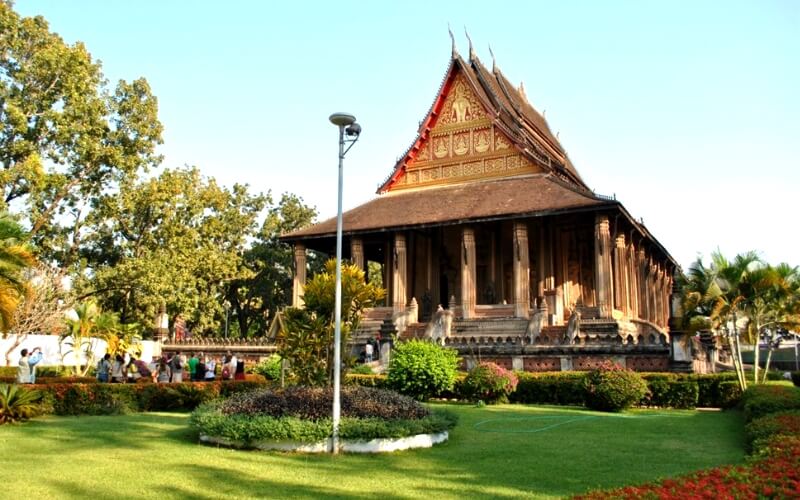
Wat Si Saket temple in Vientiane.
A practical local tip is to visit Wat Si Saket early in the morning, before the heat builds and before larger tour groups arrive. The atmosphere is calmer then, and the softer light makes the temple details easier to appreciate. It pairs naturally with nearby Ho Phrakeo and the central part of the city, so it is easy to include on your first sightseeing day.
2. Lao National Museum
The Lao National Museum is one of the best places in Vientiane to add historical context to your trip. It was first established in 1980 in the former French Governor’s Residence, a colonial era building constructed in 1925 on Samsenthai Road. According to the official Laos tourism website, this building also holds an important place in national history because Laos declared independence from France there on 12 October 1945.
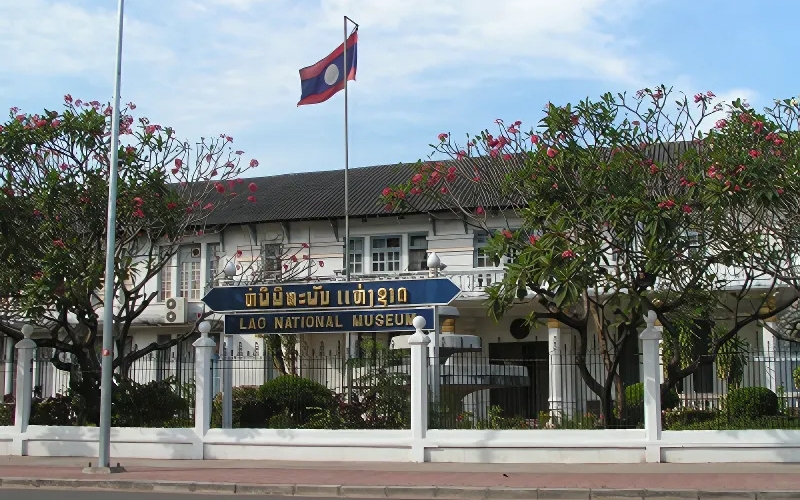
Lao National Museum in Vientiane.
This is a useful stop for travelers who want more than photos of temples. The museum helps explain the country’s colonial period, revolution, and state formation, which makes the rest of your sightseeing more meaningful. For a short trip, it works best as a one to two hour visit rather than a half day stop.
3. Wat Si Muang
Wat Si Muang is one of the most spiritually important temples in Vientiane and one of the best places to observe living local religious practice. Official Laos tourism materials describe it as the site of the Lak Meuang, or city pillar stone, and as the home of Vientiane’s guardian spirit. The temple is also closely connected with local beliefs about good fortune and fulfilled wishes, which is one reason it remains busy with Lao worshippers every day.
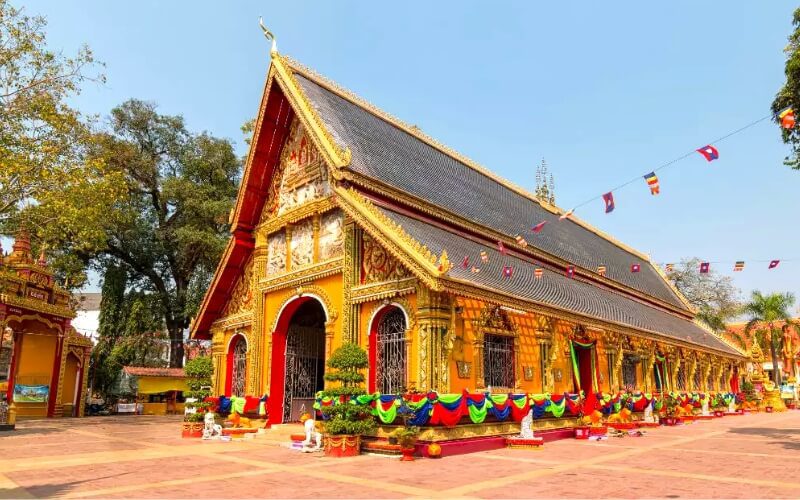
Wat Si Muang temple in Vientiane.
For international visitors, Wat Si Muang is valuable because it feels active and local rather than only monumental. Dress modestly, keep your voice low, and watch how residents make offerings before moving through the temple space. If your trip overlaps with the That Luang Festival period, this temple becomes even more significant because festival processions are tied to it.
4. Pha That Luang
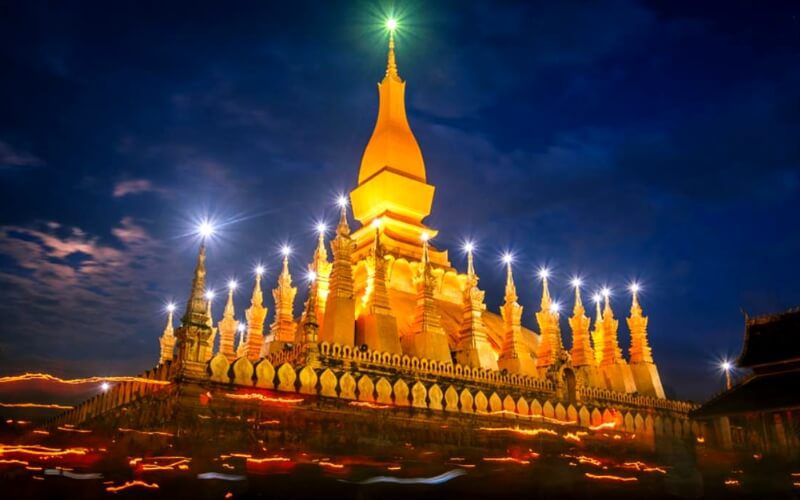
Pha That Luang is the single most important landmark in Vientiane and one of the clearest symbols of Laos as a nation. UNESCO’s tentative listing states that the current monument was built in 1566 by King Setthathirath after he moved the capital to Vientiane, and Encyclopaedia Britannica identifies it as the country’s great stupa and a central religious site.
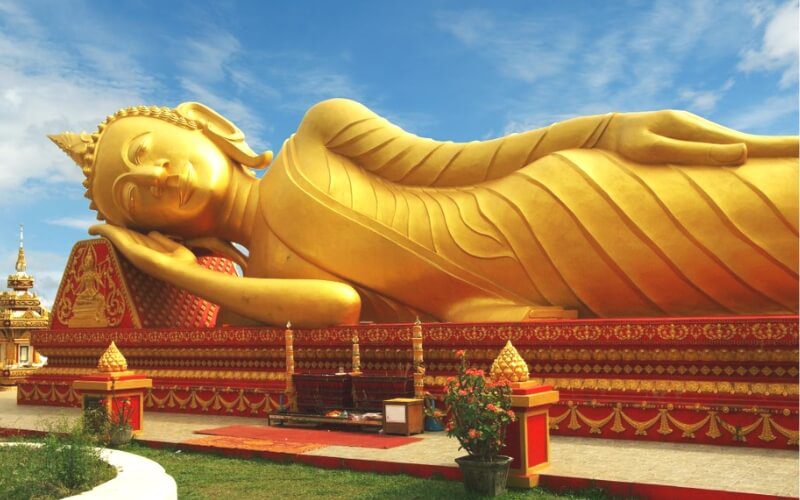
Pha That Luang Stupa
This is not a place to rush. It is best visited when you have enough time to walk the grounds slowly and understand why it matters beyond its gold exterior. For many travelers, this is the emotional center of a Vientiane trip. It is also linked to the That Luang Festival, one of the country’s most important annual religious events, usually held around the full moon of the twenty fifth lunar month, often in November and sometimes late October.
Important note: festival dates and some ceremonial schedules can shift each year based on the lunar calendar and local planning. If you want to travel specifically for the That Luang Festival, please contact us before booking so we can confirm the latest official timing.
5. Buddha Park (a.k.a. Xieng Khuan)
Buddha Park is one of the easiest half day excursions from central Vientiane and remains one of the city’s most unusual attractions. Laos’ official tourism website describes it as a sculpture park with more than 200 religious statues, including a large reclining Buddha, and notes that it has national heritage recognition in Vientiane Capital.
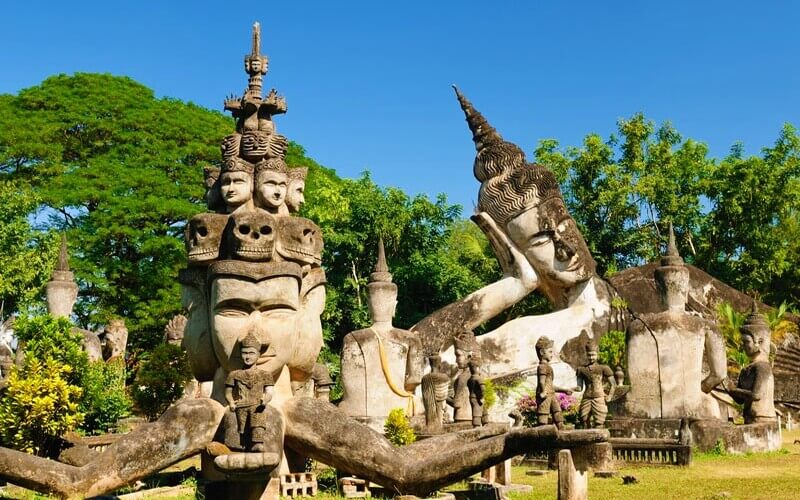
Sculptures at Buddha Park near Vientiane.
This stop works well for travelers who have already seen several temples and want something visually different. The park mixes Buddhist and Hindu imagery, so it feels less like a conventional temple visit and more like an open air symbolic landscape. It is located about 25 kilometers southeast of the city, so it fits well into the same half day as other lighter activities rather than as a full day trip.
6. Phou Khao Khouay National Park
Phou Khao Khouay is the best choice near Vientiane for travelers who want forests, waterfalls, and a more natural setting after time in the city. The protected area lies roughly 40 kilometers northeast of Vientiane and was redesignated as a national park in 2021 after earlier protection status. It is known for sandstone cliffs, river gorges, forest landscapes, and wildlife habitat.
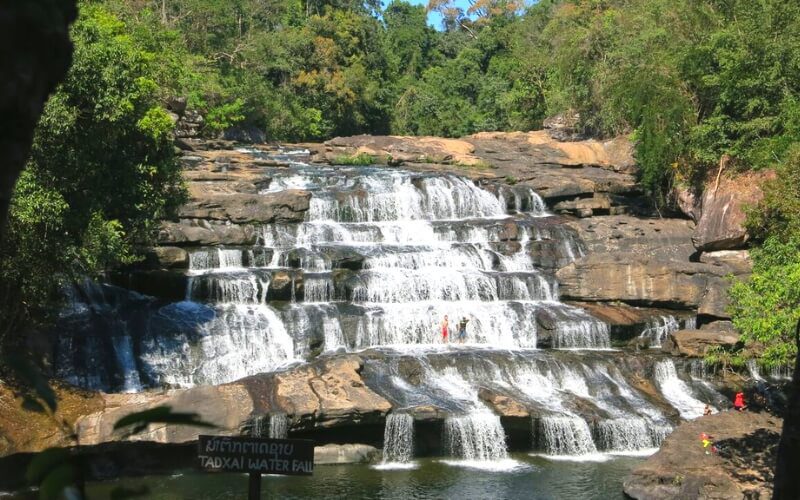
Tad Xai waterfall in Phou Khao Khouay National Park
That said, for a classic 3 day Vientiane itinerary, this is better treated as an optional full day nature excursion rather than a core city sight. Choose it only if you are willing to reduce time in central Vientiane. From a practical travel planning perspective, most first time visitors get better value from Buddha Park or Nam Ngum Lake unless they are specifically interested in hiking or countryside scenery.
7. Patuxai Victory Monument
Patuxai is Vientiane’s best known civic monument and one of the easiest landmarks to combine with a city center route. Official Laos tourism information says the monument was built between 1957 and 1968, and the name means “Gate of Triumph” in Lao. It is often compared with the Arc de Triomphe because of its overall form, but the decorative details are distinctively Lao.
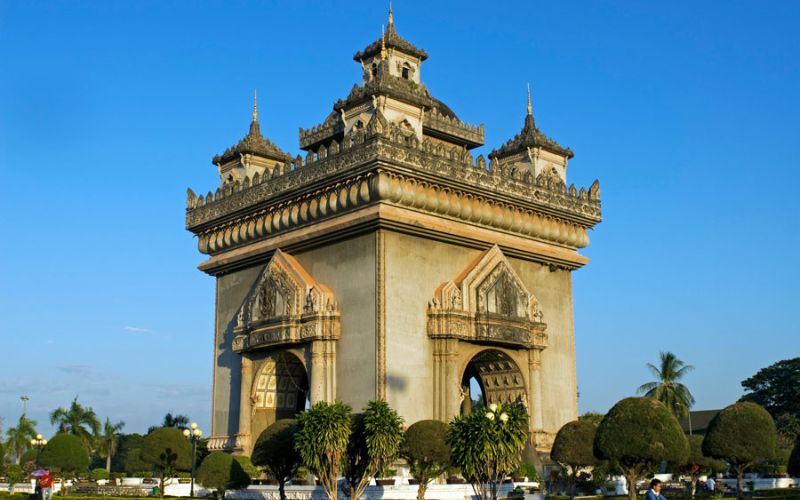
Patuxai Triumphal Arch
This is one of the best places in Vientiane for a broader city view. Climbing to the upper level is worth it if visibility is good, but even from the base the monument helps visitors understand the civic layout of the capital. It is most rewarding when paired with Pha That Luang or Talat Sao on the same day.
8. Talat Sao, the Morning Market
Talat Sao remains one of the most practical places in Vientiane to shop for textiles, clothing, gifts, and everyday items. Even though the area has modernized over time, it still works well for travelers who want a local shopping stop rather than a polished boutique experience. The market is also easy to combine with Patuxai and other central attractions, which makes it useful in a short itinerary.
For visitors interested in souvenirs, this is one of the better places to look for Lao fabrics and small locally themed items. As always in a market setting, quality can vary, so it is worth comparing stalls before buying. This is a good final day stop, especially before heading to the airport or train station.
9. Nam Ngum Lake
Nam Ngum Lake is a reasonable day trip from Vientiane for travelers who want a more relaxed outing with open scenery rather than more city landmarks. The reservoir was created by the Nam Ngum hydropower project and became one of the largest lakes in Laos. It has long been associated with boat trips, lakeside views, and a slower pace than the capital.
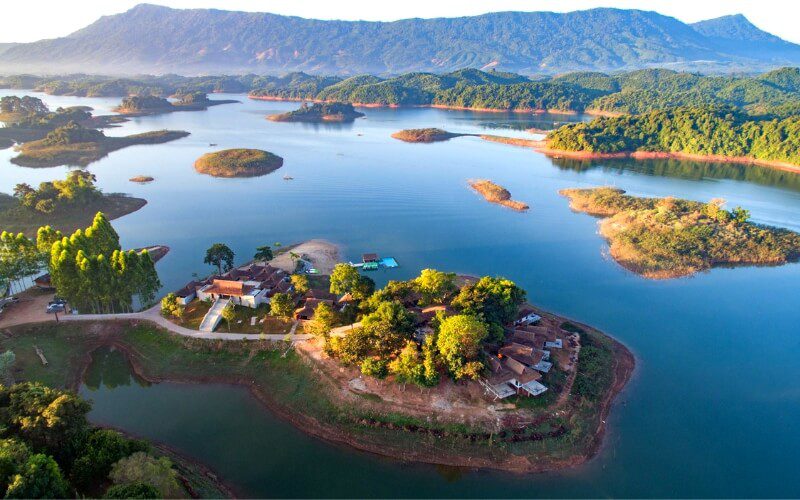
Nam Ngum Lake
In a 3 day itinerary, Nam Ngum is best kept as an optional excursion, not an essential stop. It suits travelers who have already seen enough temples and want a change of rhythm. For most first time visitors with limited time, however, the city’s core heritage sites should still come first.
What Should You Eat During 3 Days in Vientiane?
During 3 days in Vientiane, you should focus on a few classic Lao dishes rather than trying to order randomly. Lao food is built around fresh herbs, sticky rice, grilled or steamed proteins, dipping sauces, and strong contrasts of sour, salty, spicy, and bitter flavors. Laos’ official tourism website describes sticky rice as the staple of most meals and highlights larb and tam mak hoong among the country’s best known everyday dishes.
For international visitors, one practical thing to know is that Lao food can be stronger and more fermented in flavor than many first time travelers expect. Some dishes include padaek, a traditional fermented fish seasoning, which gives food a deep savory taste. That is part of what makes Lao cuisine distinctive, but it is also worth asking your server if you prefer something milder. In Vientiane, this is easy to manage because many restaurants are used to serving foreign guests while still offering authentic local flavors.
Laos Papaya Salad (a.k.a. Tam Mak Hoong)
Tam Mak Hoong is one of the most recognizable Lao dishes and one of the best foods to try in Vientiane if you want something fresh, spicy, and unmistakably local. Official Laos tourism materials list tam mak hoong among the country’s signature dishes and describe it as a fiery, sour green papaya salad often served as part of a typical Lao meal.
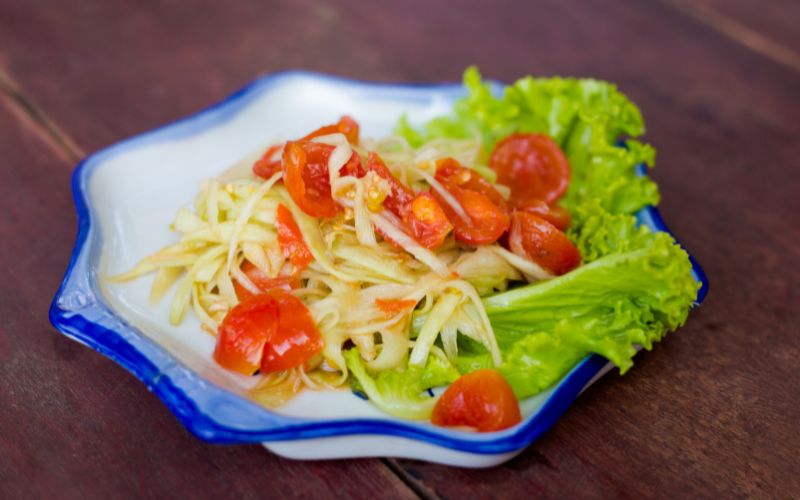
Tam Mak Houng (Laos Green Papaya Salad)
Compared with versions some travelers know from neighboring countries, the Lao style can be more pungent and more intense. It is often a good idea to order it with sticky rice and another milder dish so the meal feels balanced. If you do not eat very spicy food, ask for less chili from the start rather than trying to adjust later.
Larb (a.k.a. Laap)
Larb is the one dish most travelers should not miss in Vientiane. Laos’ official tourism site describes it as a richly spiced minced meat or fish salad and presents it as a core part of a common Lao meal. Tourism Laos has also referred to larb as the country’s unofficial signature dish in coverage of international food rankings.
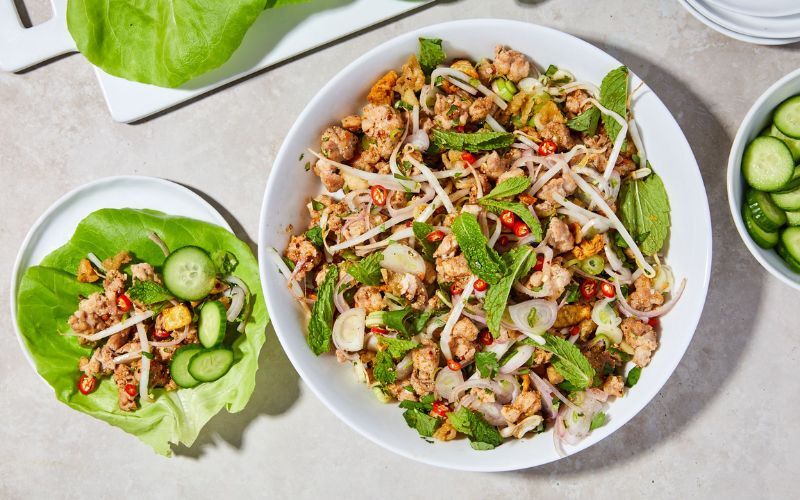
Larb
What makes larb stand out is not just the minced meat itself, but the balance created by lime, herbs, and toasted flavors. It is usually eaten with sticky rice, and that combination gives you a better sense of how Lao meals are actually enjoyed. In Vientiane, you will commonly see versions made with chicken, pork, beef, duck, or fish.
Mok Pa, steamed fish in banana leaves
Mok Pa is a very good choice if you want a Lao dish that feels more delicate than papaya salad or larb. It is usually made by wrapping seasoned fish in banana leaves and steaming it, and common descriptions of Lao cuisine identify mok pa as one of the country’s notable fish dishes.
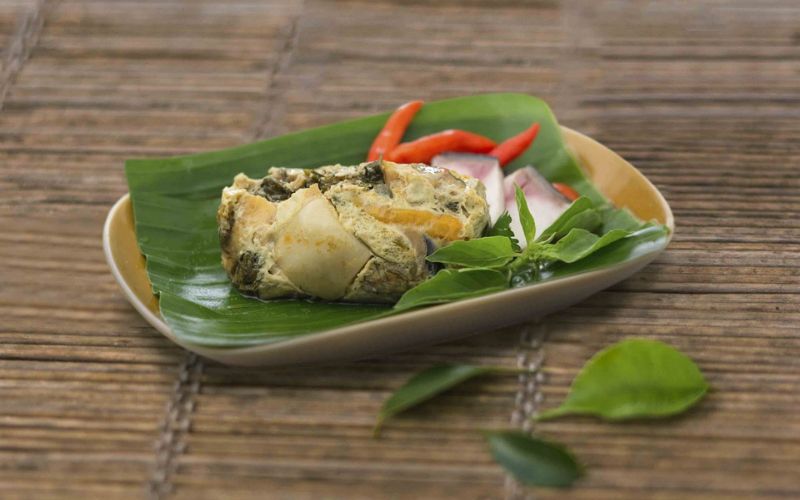
Mok Pa (Lao Steamed Fish)
This dish is especially suitable for travelers who enjoy herbs and soft textures rather than grilled or heavily fried food. It is often served with sticky rice, which helps absorb the aromatic juices. In a short Vientiane trip, Mok Pa is a smart dish to order for dinner after a full day of sightseeing because it feels traditional without being too heavy.
Sticky rice and dipping sauces
Even when travelers focus on famous named dishes, the real foundation of Lao eating is sticky rice. Official Laos tourism information states clearly that sticky rice is the staple of most meals in Laos. It is not just a side dish. It is central to how food is shared and eaten.
In many meals, sticky rice comes with jeow, or Lao dipping sauces, plus fresh herbs, grilled meat, or vegetables. This is one of the easiest ways to understand Lao food more locally. If you only try one formal dish and then skip sticky rice, you miss a large part of the real eating experience.
>>> Read more: A Muslim Traveler Guide: Top 8 Halal Food Restaurants in Laos.
A useful local food tip for international visitors
In Vientiane, a good meal strategy is simple: order one salad, one cooked dish, one basket of sticky rice, and something grilled or steamed to share. That gives you a more complete picture of Lao food than ordering only one main plate. It also makes the meal easier if one dish turns out hotter or stronger than expected. Laos’ official tourism content consistently presents Lao cuisine as a shared table experience built around several dishes eaten together rather than a single standalone plate.
If your trip happens to overlap with a food event, Vientiane also hosted the Lao Food Festival at Chao Anouvong Park from 26 to 30 January 2026, with more than 180 stalls according to the official tourism site. That is useful context for travelers planning around seasonal experiences, although future editions may follow different dates and formats.
What Is the Best Suggested 3 Days in Vientiane Itinerary?
The best 3 days in Vientiane itinerary is simple: spend your first day on the city’s main landmarks, use the second day for a relaxing trip to Nam Ngum Lake, and keep the final morning for shopping before departure. This plan works well for first time visitors because it combines culture, local life, and a short countryside escape. Recent tourism updates also show Nam Ngum 1 Reservoir has reopened with upgraded visitor facilities, making it a more relevant excursion for current travel planning.
Day 1: Arrival and Vientiane City Highlights
After arriving in Vientiane, transfer to your hotel and take a short rest. Then begin your first sightseeing tour with the city’s most important landmarks: Wat Si Saket, Wat Ho Phra Keo, Pha That Luang, and Patuxai. This route gives you a good introduction to Vientiane’s religious, historical, and cultural identity. Stay overnight in Vientiane.
Day 2: Nam Ngum Lake Excursion
After breakfast, travel to Nam Ngum Lake, one of the most classic day trips from Vientiane. On the way, you can stop at Ban Keun, a place often associated with local salt production and Lao rice whisky. Once at the lake, enjoy the scenery, pass fishing villages and small islands by boat if available, and experience a quieter side of Laos outside the capital. Return to Vientiane in the late afternoon or evening and stay overnight in the city.
Day 3: Morning Market and Departure
After breakfast, visit Talat Sao, the Morning Market, to shop for Lao fabrics, local products, and souvenirs. If time allows, you can also stop at Ban Nong Bouathong, a weaving village known for traditional Lao textiles. Then return for check out and transfer to the airport for your next flight.
Note: Opening hours, lake boat services, and handicraft village visits may change depending on season and local conditions. Please contact us if you would like the most accurate itinerary for your travel dates.
How Should You Plan a Trip to Vientiane?
To plan a smooth trip to Vientiane, focus on five basics: entry documents, season, local etiquette, packing, and advance bookings. Vientiane is an easy capital to explore, but a little preparation makes the trip much more comfortable, especially for first time visitors to Laos.
Check your passport, visa, and travel insurance
Make sure your passport is valid for at least 6 months after arrival and has enough blank pages. Laos also has an official eVisa system, which many travelers use before departure, but entry rules can vary by nationality and entry point, so it is best to confirm your own requirements before booking flights. Travel insurance is strongly recommended for medical needs, delays, and unexpected changes.
Choose the right season
The most comfortable time for sightseeing in Vientiane is usually the cooler dry season, especially from November to February. March to May is much hotter, while the rainy season from around May to October brings more humidity and wetter afternoons.
Respect local culture
Vientiane is relaxed, but respectful behavior matters. Dress modestly when visiting temples, remove your shoes when required, keep your voice low in religious spaces, and avoid touching monks. Learning a few basic local manners helps visitors feel more welcome and makes the experience smoother.
Pack simply and practically
Bring light clothing for the heat, comfortable walking shoes, sun protection, and a reusable water bottle. In the rainy season, add a light rain jacket or compact umbrella. If you visit temples, clothing that covers shoulders and knees is a better choice.
Book early in busy periods
If you travel in the peak dry season or around festivals, it is wise to book hotels, transport, and tours in advance. This is especially useful if you want a better located hotel, private transfers, or a day trip such as Nam Ngum. Some schedules and local services can still change, so checking details shortly before arrival is always a good idea.
Final Conclusion
3 days in Vientiane is enough to enjoy the city’s main highlights, taste classic Lao food, and experience a slower side of Southeast Asia. With the right plan, this short trip can feel both relaxing and meaningful. If you would like a smoother journey with private transfers, guided visits, and a well arranged itinerary, please contact us for a customized Vientiane tour.
Read more:
We ( Me and my wife ) are planning to visit Vientiane around the third week of FEBRUARY 2025.
We are Canadian Citizens residing in Toronto.
it will be a 3 DAY VISIT 3 days / 2 Nights in TOTAL.
it will also be convenient for me to discuss few things on WHAT”S APP
My What app # is +1 647 887 0786
if you can plan this tour for us and advise accordingly.
Thank you so much.
Hi Mustali,
Thank you so much for reaching out to us!
Our travel expert will contact you through WhatsApp soon.
Best regards,
IDC Travel Team.
We are a family of 5 people planning to visit Laos in January 2024. What are the best places to visit in this country?
Hi Machelle,
The most beautiful destinations in Laos are Vientiane, Vang Vieng, Luang Prabang, the Plain of Jars, Wat Phou, etc. If you like adventurous activities, consider the Kuang Si Falls and 4000 Islands.
Laos is a family-friendly country with welcoming people and thrilling activities to join. However, always remember to pack your essentials when visiting this country.
You can refer to our well-crafted Laos tours for some itinerary suggestions. Or, contact us for a tailor-made tour program so that you can enjoy the best of Laos with ease.
Thank you so much for reaching out to us!
Best regards,
Alice Pham.