

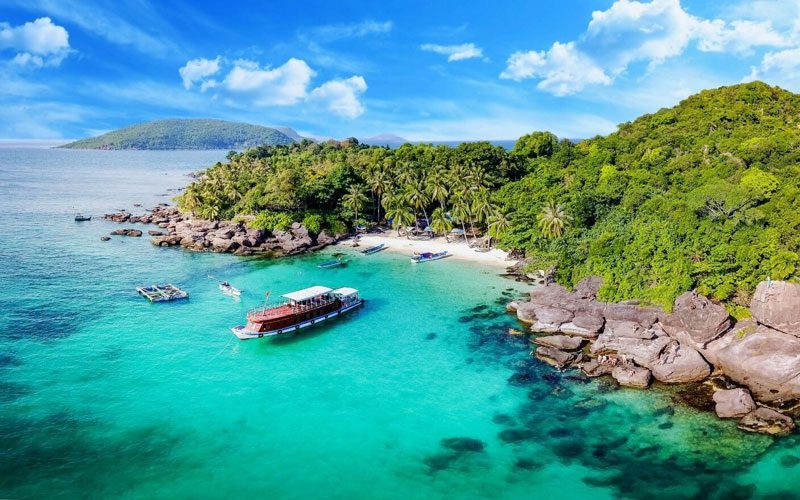
If you are planning a Vietnam beach holiday, timing your trip to visit Phu Quoc can make or break the experience. Go during the right window and you get calm turquoise water, clear skies, and long beach days. Go at the wrong time and you may spend a week dodging afternoon downpours and choppy seas.
This guide breaks down Phu Quoc weather month by month, covers when prices peak and dip, and gives you honest advice on how to get there and what to expect to plan the best Phu Quoc trip.
Overview of Phu Quoc
Phu Quoc is Vietnam’s largest island, located in the Gulf of Thailand off the southwestern tip of the country, in An Giang Province. The island covers roughly 574 square kilometers and sits about 45 kilometers west of Ha Tien on the mainland. It is part of an archipelago of 22 smaller islands, often grouped together under the name the An Thoi Islands.
For a long time, Phu Quoc was one of those places travelers mentioned in hushed tones, a quieter alternative to Bali or Koh Samui. Since 2014, international flights have made it far more accessible, and in 2021 the island received special economic zone status. Despite the growth in tourism infrastructure, large parts of the northern island remain protected under Phu Quoc National Park, which covers about half the island’s land area.
The island is widely known for two local products that have nothing to do with beaches: its fish sauce (nuoc mam), considered by many cooks to be among the best in Vietnam, and Phu Quoc black pepper, which grows across the island’s hillsides. Both are worth picking up before you leave.
Phu Quoc Weather: A Month-by-Month Overview
Phu Quoc has two seasons: a dry season running roughly from November to April, and a wet season from May to October. The island sits close enough to the equator that temperatures stay fairly consistent throughout the year, hovering between 25°C (77°F) and 33°C (91°F). What changes dramatically is humidity, rainfall, and sea conditions.
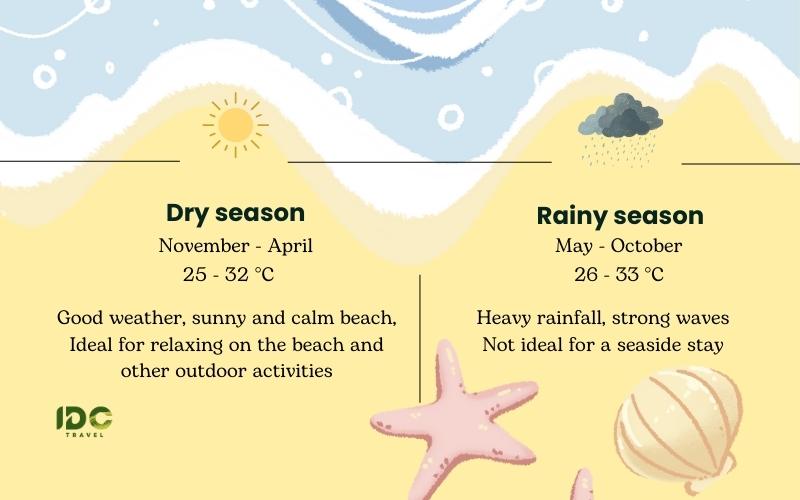
Phu Quoc weather overview
November to April: The Dry Season
This is the period most travelers aim for, and with good reason. Rainfall is minimal, sea conditions on the west coast are calm enough for snorkeling and island hopping, and humidity drops to levels that feel genuinely comfortable rather than oppressive.
- November and December bring the first real stretch of settled weather after the wet season winds down. Temperatures average around 27°C (81°F). Sea visibility improves significantly, making these two months good for diving around the An Thoi archipelago.
- January and February are peak dry season. Days are sunny, breezes keep the heat manageable, and Long Beach and Sao Beach are at their best. February also sees Tet (Vietnamese Lunar New Year), which falls between late January and mid-February depending on the year. During Tet, domestic tourism surges, prices rise sharply, and some smaller restaurants and shops close for several days.
- March and April remain dry but temperatures climb. By April you are looking at daily highs around 33°C (91°F). The water is still clear and calm, and crowds begin to thin slightly after the school holiday rush.
Peak season runs from December to March. Hotel rates during this period can be two to three times higher than wet season prices, and popular properties book out weeks in advance.
May to October: The Wet Season
The wet season in Phu Quoc is not a wall-to-wall monsoon. Rainfall tends to come in heavy afternoon or evening bursts rather than lasting all day. Mornings are often clear, and many travelers find the trade-off between occasional rain and lower prices, thinner crowds, and greener scenery quite acceptable.
- May and June are the transition months. Rain increases but the sea is still reasonable for swimming on calm days. Prices drop noticeably and accommodation is easy to find without advance booking.
- July and August see the heaviest rainfall and roughest seas on the west coast. Many boat trips to the outer islands are suspended during this period. That said, the east coast is sometimes calmer, and the lush interior is worth exploring if beaches are washed out.
- September and October are the wettest months on average. Some smaller guesthouses and tour operators reduce their operations. Traveling during this window requires flexibility and a readiness to change plans at short notice.
The wet season is the cheapest time to visit Phu Quoc. A good beachfront hotel room that costs 3,000,000 VND (~$115) per night in January might go for 800,000 VND (~$31) in September.
Best Time To Visit Phu Quoc
The best time to visit Phu Quoc is between November and April, when the island gets consistent sunshine, calm seas, and low humidity. Within that window, the specific “best” month depends on what you are optimizing for.
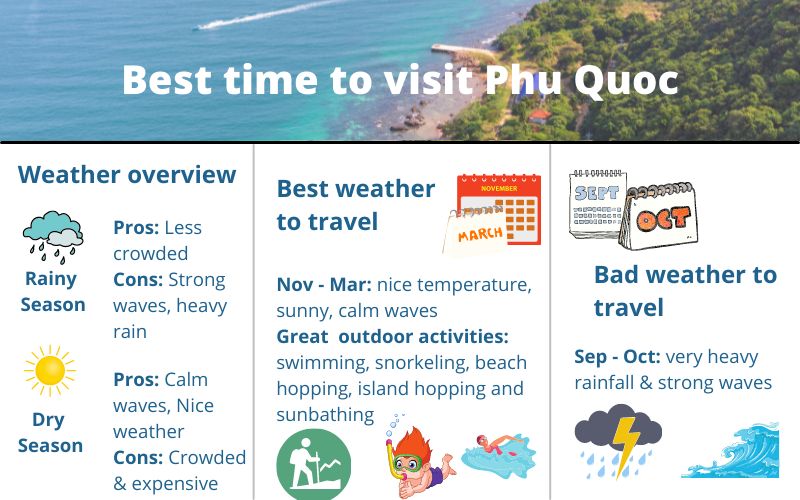
Phu Quoc Weather and Best time to visit
- For the ideal balance of good weather and manageable crowds: November, early December, and March are your best options. You get dry season conditions without the full-peak-season hotel pricing and packed beaches of January and February.
- For families with school-age children: The Christmas and New Year period (late December to early January) is popular for a reason. Weather is reliably good, and the island has a festive atmosphere. Book accommodation at least two to three months ahead and budget for higher rates.
- For budget-conscious travelers: May and early June offer a workable compromise. The dry season has just ended, prices have dropped, and the rain has not yet reached its peak intensity. You will need some flexibility, but you can find excellent value.
- For divers and snorkelers: November through April gives the best underwater visibility around the An Thoi Islands. The reefs south of Phu Quoc are not as dramatic as those in places like the Coral Triangle, but the calm conditions and warm water (around 28°C / 82°F) make for pleasant diving without much current.
One honest note: even during peak season, Phu Quoc can feel crowded at the most accessible spots like Sao Beach and the Phu Quoc Night Market. If you want quieter beaches, the northern part of the island near Ong Lang Beach or Cua Can River is worth the extra travel time, regardless of what month you visit.
Worst Time To Visit Phu Quoc
September and October are the hardest months to recommend without significant caveats. Rainfall averages between 350mm and 400mm per month during this period, which is roughly the same amount London receives in a full year. Seas on the west coast can be genuinely rough, and strong winds make many beach activities impractical.
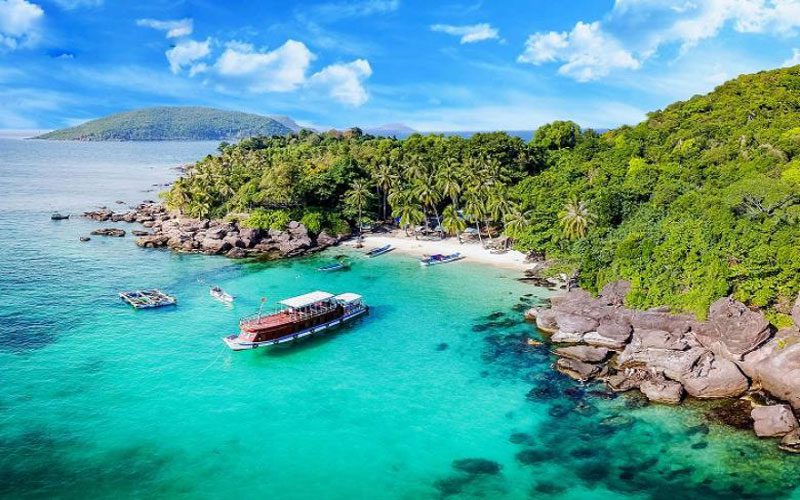
Phu Quoc is a perfect option for relaxing after a long trip
That said, “worst” is relative. Travelers who have gone in October report that the island feels like a different place: quiet, green, and unhurried. If your goal is exploring the pepper farms, visiting Phu Quoc National Park on foot, or spending time in Duong Dong town rather than lying on a beach, the wet season has its own appeal.
What makes September and October genuinely difficult:
- Many snorkeling and island-hopping boat tours are cancelled or suspended
- The roads in the north of the island can flood briefly after heavy rain
- Jellyfish presence increases in some coastal areas
- A small number of guesthouses and tour operators close for the season
How To Get to Phu Quoc
Phu Quoc has an international airport, Phu Quoc International Airport (PQC), located about 10 kilometers from Duong Dong town. It is the main entry point for most travelers.
By air from Ho Chi Minh City: This is the most common route. Multiple airlines operate the roughly 1-hour flight daily, including Vietnam Airlines, VietJet Air, and Bamboo Airways. Flight frequency increases during peak season and drops somewhat in the wet season.
By air internationally: Phu Quoc receives direct international flights from several cities in Asia, including Singapore, Bangkok, Kuala Lumpur, Seoul, and Taipei. The number of routes and frequencies has expanded significantly since 2021.
By ferry from the mainland: If you are already in the Mekong Delta region, ferries run from Ha Tien (about 1 hour) and Rach Gia (about 2.5 hours) to Duong Dong Port. The Ha Tien crossing is the shorter and more comfortable option, particularly for travelers coming overland from Cambodia. Ferry services can be reduced or suspended during the roughest months of the wet season.
Once on the island, renting a motorbike (around 150,000 VND/~$5.75 per day) is the most practical way to get around, particularly for reaching beaches in the north and south. Taxis and ride-hailing apps (Grab) are available for those who prefer not to ride.
Phu Quoc Tours and What To Do
Phu Quoc works well as a standalone beach destination or as part of a broader Southern Vietnam tour. Most travelers combine it with Ho Chi Minh City, the Mekong Delta, or both.
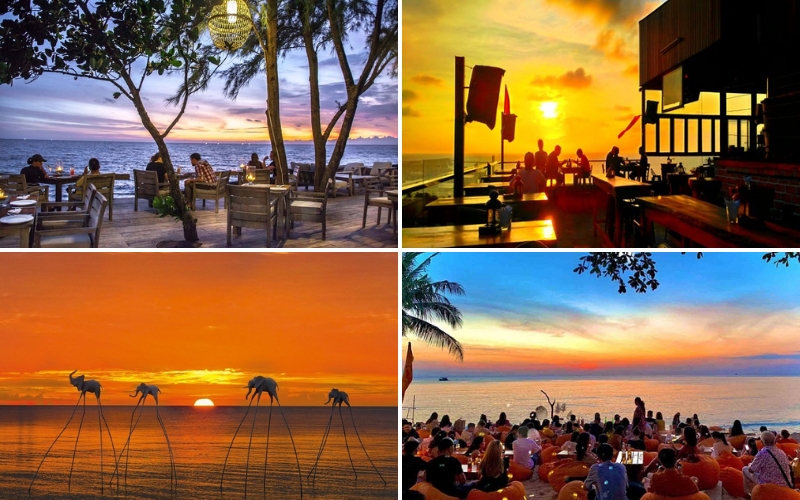
Unwind with cocktails and the best sunset views at Phu Quoc’s beachfront clubs
The island’s main activities break down roughly by season:
| Dry season (November to April) | Wet season (May to October) |
| Island hopping to the An Thoi archipelago, with snorkeling stops at Fingernail Island and Bamboo Island | Phu Quoc National Park trekking and waterfall visits (easier and greener after rain) |
| Diving around the southern reefs | Pepper farm tours in the center of the island, |
| Sunset kayaking from Long Beach | Fish sauce factory visits near Duong Dong |
| Visiting Vinpearl Safari, a large open-format zoo in the north | Cua Can River kayaking |
| Cable car ride to Hon Thom Island (the longest non-stop cable car in the world at 7.9 kilometers) | Exploring the Phu Quoc Prison Museum (a sobering but historically significant site) |
>>> For a structured itinerary that covers both the island and the wider region, Phu Quoc tours can be combined with Mekong Delta cruises or Vietnam beach holidays for a more complete southern Vietnam experience.
Conclusion: Planning Your Phu Quoc Trip
Here is a quick-reference summary to help you decide when to go:
| Factor | Best Period | Notes |
| Weather | November to April | Dry, sunny, calm seas |
| Beaches and swimming | December to March | Peak conditions on west coast |
| Snorkeling and diving | November to April | Best water clarity |
| Budget travel | May to June, September | Lower prices, some weather risk |
| Fewest crowds | May, October, November | Shoulder season sweet spots |
| Families and school holidays | Late December to January | Book well ahead |
| Worst weather | September to October | Heaviest rain, roughest seas |
| Cheapest flights | September | Significant price drops |
The best time to visit Phu Quoc for most travelers is November through March. The weather is reliable, the sea is calm, and the island offers enough variety that even a week feels well spent. If your dates are flexible, November and early March give you solid conditions at prices that have not yet climbed to full peak-season levels.
If you are putting together a Vietnam trip and want to include Phu Quoc, our team can help you fit it into a broader itinerary that works around your travel dates and interests. Contact us now!
>>> Refer to Phu Quoc, An Giang, Vietnam Weather Forecast | AccuWeather.
Read more:




Could you share typical accommodation cost ranges for Phu Quoc?
Here are approximate accommodation cost ranges for Phú Quốc Island:
Low-season (rainy season, e.g., May–October): budget guesthouses might start around US$20-30 per night, mid-range hotels US$50-80, higher end resorts US$120-200+.