If you visit Ho Chi Minh City and walk away without seeing Nguyen Hue Street, you’ve missed what the city looks like when it actually exhales. This 670-meter pedestrian boulevard in the heart of the centre is where locals come to breathe, gather, eat, argue, perform, and people-watch on any given evening.
For travelers on Saigon tours or broader Vietnam tours, it’s the kind of place that shows up on every itinerary for good reason. This guide covers everything from the street’s colonial past to its best food stalls, plus practical tips on when to go and where to stay nearby.
What Is Nguyen Hue Walking Street?
Nguyen Hue Walking Street, also written as Nguyen Hue St or officially Nguyen Hue Boulevard (Duong Nguyen Hue), is a pedestrian promenade in Sai Gon Ward, Ho Chi Minh City.
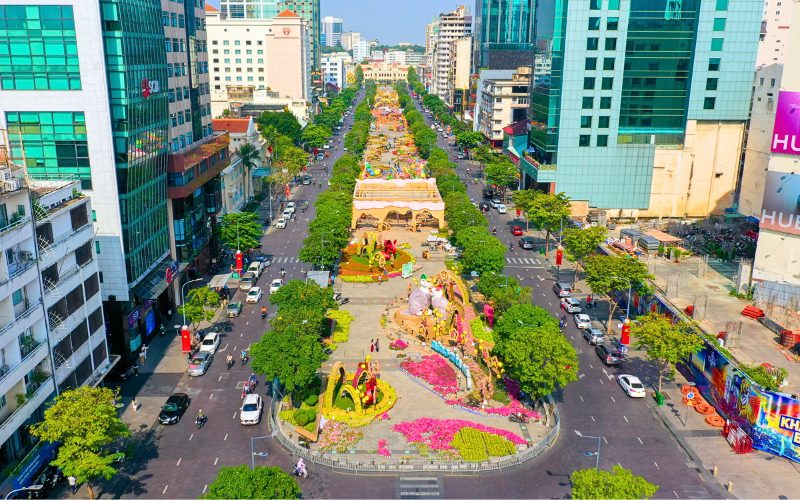
A Panoramic View of Nguyen Hue Walking Square
It stretches 670 meters in length and 64 meters in width, connecting the Ho Chi Minh City People’s Committee building at its northern end to Ton Duc Thang Street and the Bach Dang Wharf on the Saigon River at its southern end.
The street was officially inaugurated on April 30, 2015, after roughly seven months of construction. It is divided into two sections:
- President Ho Chi Minh Monument Park runs from Le Thanh Ton Street (in front of City Hall) to Le Loi Street, centered on the 2015 statue of Ho Chi Minh.
- Nguyen Hue Square stretches from Le Loi Street south to Ton Duc Thang Street, ending near the riverfront.
The entire surface is paved in modern granite. A mist-emitting cooling system runs along the street, a genuinely welcome feature given the city’s heat. On weekdays, vehicle traffic is permitted on the side lanes. On weekends, the street becomes fully pedestrian from 6:00 PM to 10:00 PM, when it gets considerably more crowded.
Location and Getting There
- Address: Nguyen Hue Boulevard, Sai Gon Ward, Ho Chi Minh City, Vietnam.
The street sits roughly 8.5 km southeast of Tan Son Nhat International Airport (SGN). From the airport, a taxi or ride-hailing service (Grab) takes about 25 to 35 minutes depending on traffic. The street is in the geographic center of Sai Gon Ward, within walking distance of Ben Thanh Market, the Opera House, the Saigon Central Post Office, and Notre-Dame Cathedral.
Getting there by public transport: Several bus routes stop near the street, including lines 3, 4, 19, 36, 93, 104, and 152. Routes are clearly searchable on Google Maps. For most visitors, Grab (the regional equivalent of Uber) is the easiest option for a direct, metered ride.
On foot or bike: If you’re already in Sai Gon Ward, most major landmarks are within a 10 to 15-minute walk. The street also has a public bicycle rental system: 5,000 VND (~$0.19) for 30 minutes, 10,000 VND (~$0.38) for 60 minutes, though bikes sell out quickly on weekends.
Parking nearby: Motorbike parking is available at Ho Tung Mau Street, Tao Dan Park, and 23/9 Park, with fees ranging from 5,000 VND (~$0.19) to 20,000 VND (~$0.76) depending on the time of day.
Best Time to Visit
Evening is the practical answer. The street is open all day, but it genuinely comes alive after dark. The lights come on, street performers appear, vendors set up, and the temperature drops enough to make walking comfortable. On weekdays, expect a smaller crowd and a more relaxed pace. Weekends from around 7:00 PM to 9:30 PM are the busiest, which is either appealing or not depending on how you feel about crowds.
- By season: Ho Chi Minh City has two seasons. The dry season runs from December to April, with temperatures averaging around 27 to 29°C (81 to 84°F). The wet season runs from May to November, bringing afternoon rains that usually clear within an hour. The street itself has no shade to speak of during the day, so visiting midday in the dry season means dealing with heat that can reach 35°C (95°F) or higher. The mist-cooling system helps but doesn’t fully compensate.
- For value: May, June, and September tend to have lower hotel prices nearby, with visitor numbers slightly reduced compared to peak months like December to January and March.
- During Tet: If you want to see the Flower Street, plan well in advance. Hotels in Sai Gon Ward fill up quickly and prices rise significantly during the Lunar New Year period.
A Brief History of Nguyen Hue Street
The history behind Nguyen Hue Walking Street is older than most visitors realize. The street’s origins go back to the late 18th century, when this corridor was a functioning canal called Kinh Lon (Grand Canal), which drew water from the Saigon River into the heart of Gia Dinh Citadel. Chinese merchants from Guangdong traded along its banks, making it one of the most commercially active waterways in early Saigon.
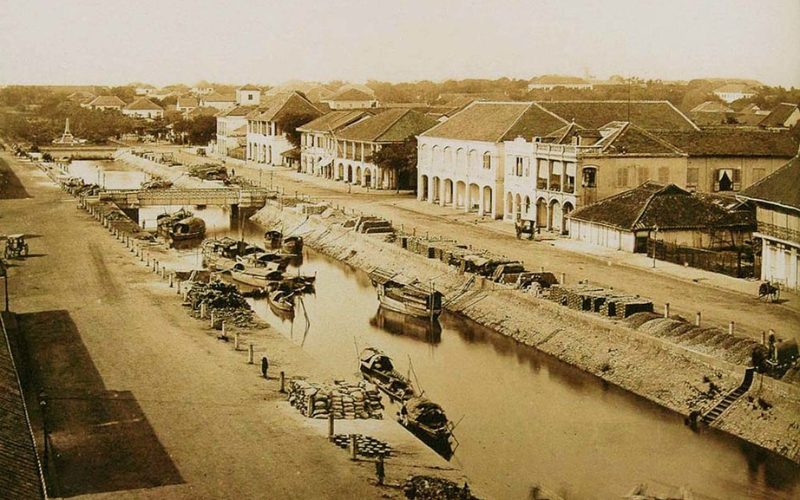
Charner Canal in 1870s
After the French conquest of Saigon in 1861, Admiral Leonard Charner ordered the canal renamed Charner Canal, and by the 1870s it was filled in and converted into Charner Boulevard, a proper colonial avenue lined with modern buildings. The street took on the name Nguyen Hue in 1955, after the Tay Son military commander Nguyen Hue, following the end of French colonial rule.
The street became a public space tradition in 2004, when the city first set up a flower market along its length during Tet (Vietnamese Lunar New Year). This eventually evolved into the annual Nguyen Hue Flower Street event, which draws enormous crowds during the festival week. In 2014, the city began a full reconstruction project to convert the boulevard into a dedicated pedestrian zone. The project was completed and the walking street officially opened on April 30, 2015.
Highlights of Nguyen Hue Walking Street
This is the part most guides rush through with a bullet list and move on. The walking street has a handful of genuinely distinctive spots, and they’re worth looking at individually.
The People’s Committee Building
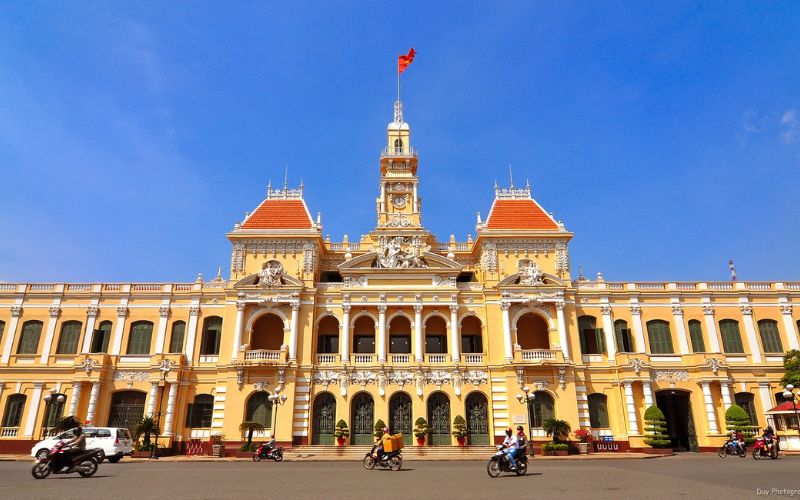
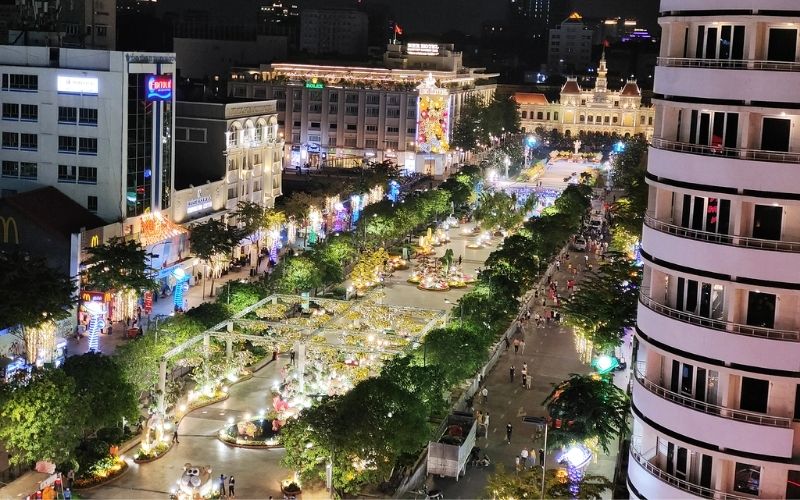
The Ho Chi Minh Statue and the beautifully lit People’s Committee Building are icons of Nguyen Hue Walking Street.
The French colonial Hotel de Ville anchors the northern end of the street. Built between 1901 and 1908, it has housed the Ho Chi Minh City People’s Committee since 1975. Lonely Planet has described it as one of the city’s most prominent landmarks, and from a design standpoint, the neoclassical facade with its yellow-painted stone and arched windows holds up well against anything else in Sai Gon Ward.
From 2024, the building opens its doors on the last weekend of each month for free 60-minute guided tours, which is worth knowing if your schedule lines up.
The Ho Chi Minh Statue
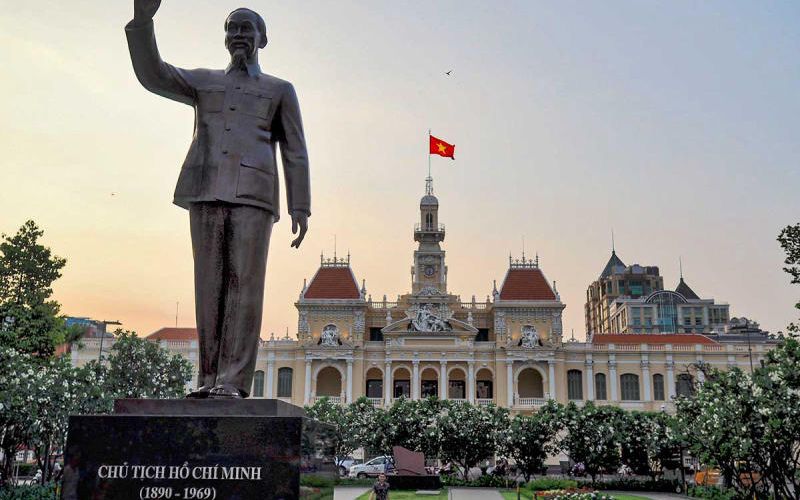
The Ho Chi Minh Statue
The bronze statue of Ho Chi Minh at the square’s center was unveiled in 2015 to mark the opening of the walking street. It replaced a smaller, older statue that had stood at the site for decades. The placement is deliberate: Uncle Ho stands with one hand raised, surrounded on both sides by luxury retail flagships. In 2024, the People’s Committee’s ground floor was occupied by a Rolls-Royce showroom. The juxtaposition is exactly as strange as it sounds, and exactly as Saigon as it sounds.
The statue and small surrounding park are a popular meeting point in the evenings and one of the most photographed spots in the city.
Café Apartment (42 Nguyen Hue)
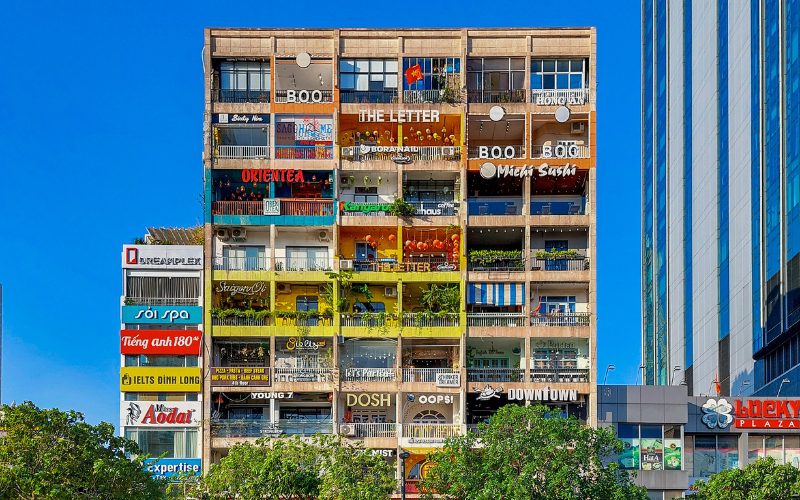
The Vibrant 42 Nguyen Hue Apartment Building
An old residential apartment block at No. 42 Nguyen Hue that might look unremarkable from the street has become one of the most distinctive café clusters in Vietnam. The building’s balconies on each floor are occupied by independent cafés and small boutiques, all with different interior styles and views overlooking the walking street below.
It draws a mix of locals in their 20s, Instagram photographers, and curious travelers who just want somewhere quieter to sit. Getting a balcony seat in the late afternoon, before the main evening crowd arrives, is probably the most comfortable way to watch the street come alive without standing in the middle of it. Coffee prices run from about 50,000 VND (~$1.90) to 90,000 VND (~$3.45) depending on the café.
The Nguyen Hue Bookstore
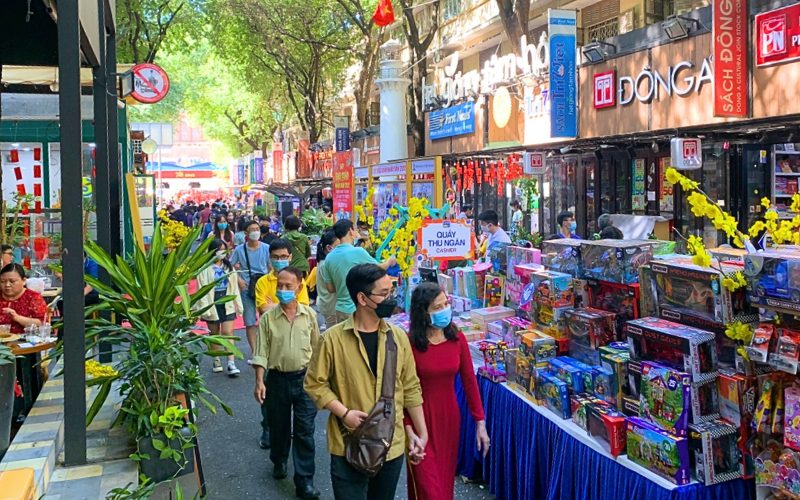
The Book Street – Which Attracts Several Book Lovers
Located along the street, the Nguyen Hue Bookstore covers more than 2,000 square meters and is one of the larger bookstores in Ho Chi Minh City. It carries Vietnamese and foreign titles, with a decent English-language section. For visitors who want a contrast to the evening crowds, the bookstore is quieter, cooler, and worth half an hour.
The Bitexco Financial Tower
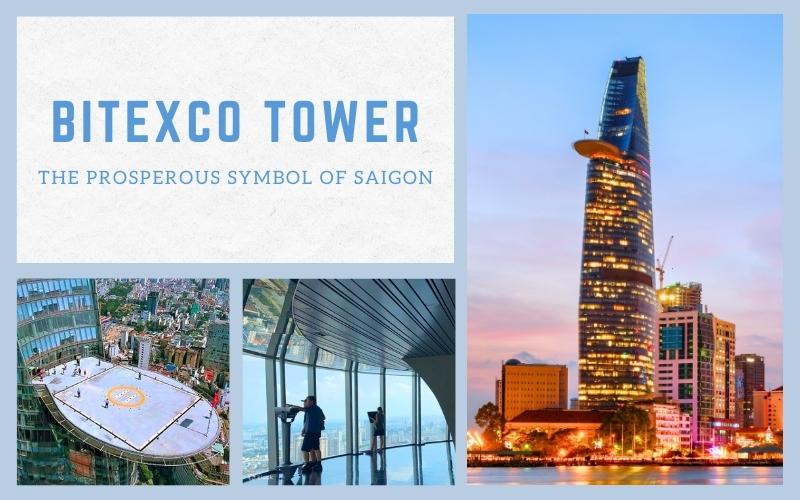
The Bitexco Tower is a modern architectural icon, a symbol of Ho Chi Minh City’s progress and the highest point on the Street.
Visible from most of the street, the Bitexco Financial Tower stands at 262 meters and is one of the defining features of the Saigon skyline. The Skydeck on the 49th floor offers panoramic views of the city, Saigon River, and surrounding districts. Admission costs around 200,000 VND (~$7.70) for adults. It’s a short walk from the southern end of Nguyen Hue and gives you a completely different angle on the street and city below.
Street Performances
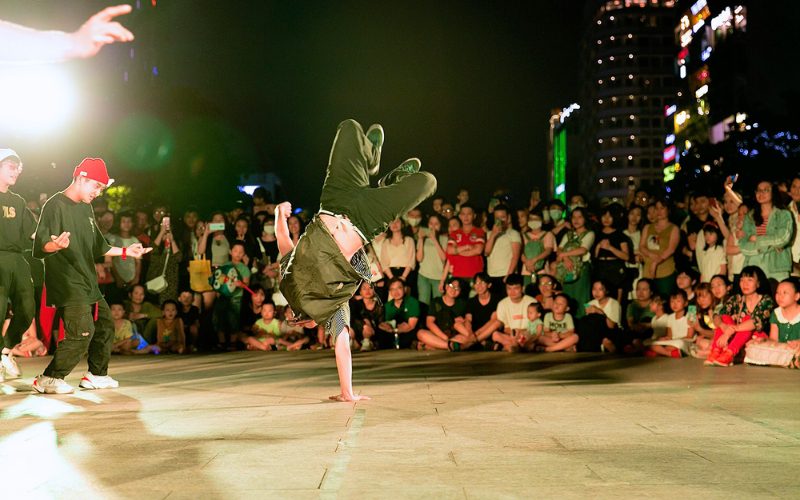
Night Performances in Nguyen Hue Square
On weekend evenings especially, the walking street hosts a rotating cast of performers: acoustic bands, B-boy dance crews, pop-art installations, magicians, and traditional music groups. There is no ticketed venue or fixed schedule. Performers set up along the promenade and crowds gather organically. This is consistently one of the better free entertainment options in the city, and the variety on a busy Saturday night is genuinely impressive.
The Nguyen Hue Flower Street (Tet)
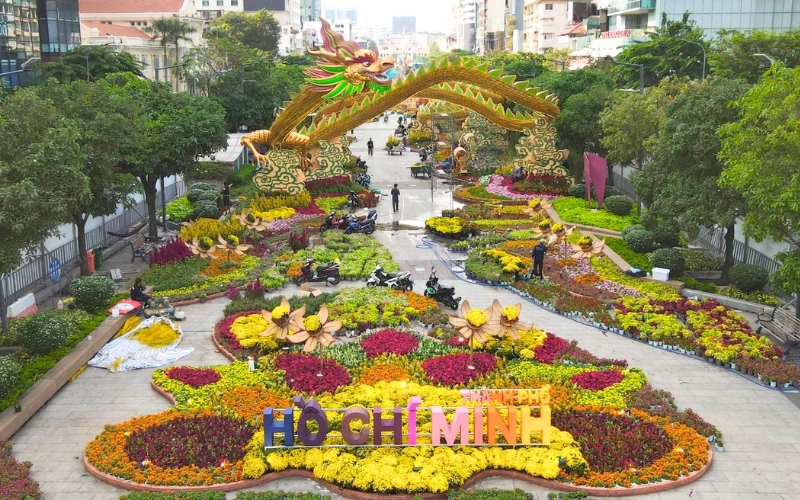
Nguyen Hue Flower Street, a symbol of Saigon at Tet
Every year during the Lunar New Year period (Tet), the entire walking street is transformed into an elaborate flower market and exhibition for approximately one week. The tradition dates to 2004. Thousands of flower arrangements, themed sculptures, and light installations fill the street, with the surrounding lanes also closed to traffic. It attracts enormous numbers of visitors, including overseas Vietnamese returning home for the holiday. If your trip overlaps with Tet (typically late January or February), seeing the Flower Street is one of the better cultural experiences Saigon offers.
The Saigon River Waterfront
Follow the street to its southern end and you reach the Bach Dang Wharf and the Saigon River promenade. This riverside walkway is less crowded than the main street and offers a calmer setting for an evening stroll. Several river cruise operators depart from here, ranging from one-hour dinner cruises to longer tours. A basic river cruise runs from around 300,000 VND (~$11.50) per person.
Hotels Near Nguyen Hue Walking Street
Staying within walking distance of Nguyen Hue Street puts you in the center of Sai Gon Ward, close to most of the city’s major attractions. The trade-off is higher prices and, on weekends, some noise from the evening crowds.
Luxury options (within a short walk):
- The Reverie Saigon (22-36 Nguyen Hue Street): consistently one of the top-rated hotels in the city, with opulent interiors and river views.
- Park Hyatt Saigon (2 Lam Son Square): directly beside the Opera House, about a 5-minute walk from the street. Quietly elegant.
- Caravelle Saigon (19-23 Lam Son Square): a Saigon institution since 1959, with a rooftop bar that has one of the best views in Sai Gon Ward.
- Hilton Saigon (11 Me Linh Square) and Sheraton Saigon Grand Opera Hotel (88 Dong Khoi Street) are both within a 5-minute walk and well regarded for service.
Mid-range options:
- Saigon Prince Hotel (63 Nguyen Hue): boutique-style, directly on the boulevard and within walking distance of Ben Thanh Market and the Opera House.
- Rex Hotel Saigon (141 Nguyen Hue): a historic 5-star hotel with a famous rooftop bar, right on the walking street.
Budget options: Several smaller hotels and apartment-style stays are available in the streets immediately surrounding Nguyen Hue, with rooms starting from around 500,000 VND (~$19.25) per night. The Café Apartment building itself (42 Nguyen Hue) has guesthouse accommodation on its upper floors, which is among the most convenient addresses you can book.
Food and Drinks on Nguyen Hue Street
Nguyen Hue Walking Street food is a genuine draw, not just an afterthought. The street runs from street-side vendors to rooftop restaurants, and the range is wide enough that two people with completely different budgets can both eat well here.
In the morning, the walking street is mostly quiet, with coffee shops doing the bulk of the business. Vietnamese iced coffee (ca phe sua da) is available from vendors at around 30,000 VND (~$1.15) to 50,000 VND (~$1.92). From late afternoon onward, the food options expand considerably.
Street food to try:
- Banh trang tron (rice paper salad with dried shrimp, mango, and herbs): approximately 20,000 to 40,000 VND (~$0.77 to $1.54).
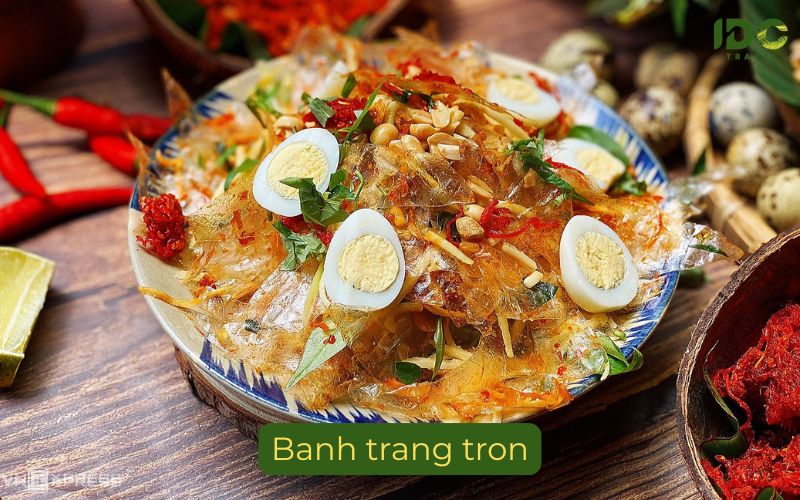
Banh Trang Tron is a perfectly balanced mix of sweet, sour, spicy, and salty flavors, a quintessential Vietnamese street snack.
- Banh trang nuong (grilled rice paper with toppings, sometimes called “Vietnamese pizza”): 15,000 to 30,000 VND (~$0.58 to $1.15).

Banh Trang Nuong is a beloved Vietnamese street food, featuring savory, smoky toppings on a crispy rice paper crust, often cooked on charcoal.
- Bingsu (Korean-style shaved ice, widely popular here): 50,000 to 90,000 VND (~$1.92 to $3.45).

Cooling down with Mango Bingsu, a refreshing shaved ice treat loaded with fresh fruit and creamy toppings.
- Tra sua tran chau (Bubble tea) and tra hoa qua (fruit teas) from multiple vendors: 35,000 to 60,000 VND (~$1.35 to $2.31).

Satisfying a sweet tooth with Tra Sua Tran Chau, the popular Asian milk tea with its signature chewy boba pearls.
- Thach suong sao nuoc cot dua (grass jelly with coconut milk): around 30,000 VND (~$1.15) per serving.
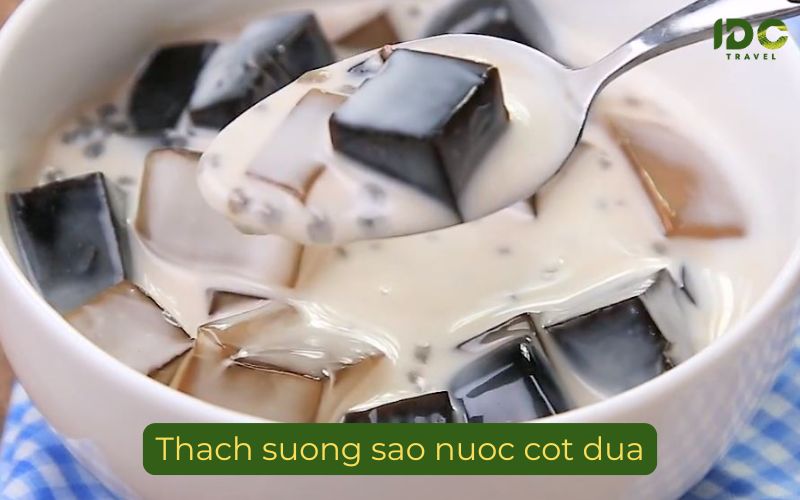
Thach Suong Sao Nuoc Cot Dua is a traditional dessert of black grass jelly and small basil seeds served in creamy, sweet coconut milk.
For a sit-down meal, the Café Apartment building has options at various price points, and the side streets running parallel to Nguyen Hue have more substantial restaurant options including Vietnamese noodles and hotpot.
Attractions Nearby Nguyen Hue Walking Street
Nguyen Hue Walking Street is surrounded by a cluster of Sai Gon Ward landmarks, most reachable on foot:
- Ben Thanh Market (10-minute walk): the central covered market with local produce, street food, clothing, and souvenirs.
- Saigon Opera House (5-minute walk): a restored French colonial theater from 1897, with regular AO Show and other cultural performances.
- Reunification Palace (15-minute walk): the former presidential palace of South Vietnam, now a museum open to visitors.
- War Remnants Museum (20-minute walk): one of the most visited museums in Vietnam, with exhibits focused on the Vietnam War.
- Saigon Central Post Office (8-minute walk): a functioning post office inside a beautifully preserved French colonial building, designed by Gustave Eiffel’s firm.
- Notre Dame Cathedral (8-minute walk): the most recognizable church in Ho Chi Minh City, currently under restoration.
- Bui Vien Walking Street (20-minute walk or short Grab ride): Saigon’s backpacker street, known for a more raucous bar scene if that’s what the evening calls for.
Practical Tips for Your Visit
A few things worth knowing before you go:
- The street is free to enter and open every day. No tickets, no queues at the gate.
- On weekends after 6:00 PM, motorcycle access is blocked, making the pedestrian experience much better. Arrive by Grab or on foot.
- The granite surface can be slippery after rain. Comfortable walking shoes make a difference on a long evening.
- Bag security: the centre is generally safe, but pickpocketing does happen in crowded areas. Keep phones in front pockets or inside bags, particularly during busy weekend evenings.
- ATMs are available along and near the walking street. Most cafés and restaurants in the area accept card payments, though smaller vendors are cash-only.
- If you’re sensitive to heat, visiting between November and February gives the most comfortable outdoor conditions.
- Public restrooms are available near the street, though quality varies. Cafés along the route are generally a more reliable option.
Planning Your Visit as Part of a Wider Vietnam Trip
| Detail | Information |
| Full name | Nguyen Hue Walking Street (Pho di bo Nguyen Hue / Duong Nguyen Hue) |
| Location | Sai Gon Ward, Ho Chi Minh City, Vietnam |
| Length | 670 meters |
| Width | 64 meters |
| Opened | April 30, 2015 |
| Opening hours | Open daily; pedestrian-only on weekends 6:00 PM to 10:00 PM |
| Entrance fee | Free |
| Nearest airport | Tan Son Nhat International (SGN), approx. 8.5 km / 25 to 35 min by car |
| Best time to visit | Evenings; dry season (Dec to Apr) for most comfortable weather |
| Average temperature | 27 to 29°C (81 to 84°F) in cool months; up to 35°C (95°F) in April |
| Nearby landmarks | People’s Committee Building, Opera House, Ben Thanh Market, Bitexco Tower |
| Bike rental | 5,000 VND (~$0.19) / 30 min; 10,000 VND (~$0.38) / 60 min |
Nguyen Hue Walking Street works well as an evening activity on a broader Ho Chi Minh City itinerary, or as part of a Southern Vietnam tour that takes in the Mekong Delta, Cu Chi Tunnels, and the city’s historical sites over several days. For travelers doing a full north-to-south route, it’s typically the final highlight before a flight home, which makes it a satisfying note to end on.
IDC Travel offers private and tailor-made Vietnam holidays and Ho Chi Minh City tours that can be built around your dates, travel style, and budget. If you’re considering a longer journey, Vietnam travel packages covering both Southern and Northern regions are also available with flexible departure schedules.
Read more: